Subscribe
Share
Share
Embed
EEShow (Everything’s Energy Show)
EEShow is Everything’s Energy Show, a long-form interview podcast hosted by Michael Scalar. The official site is ee.show.
Listen: Everything’s Energy Show
Experience EESystem: Use this Center Locator to find a center near you.
Shop: Systems and Products
Chapters
People
Subscribe for weekly conversations on wellness and biohacking, exploring the frequencies that shape consciousness, and to stay up to date with a field guide for energy, consciousness, and wellness inquiry — connecting conversations, reported experiences, research references, and open questions around EESystem.
Listen to more EEShow (Everything’s Energy Show) wherever you get podcasts and at ee.show.
Join listeners from 60+ countries for weekly conversations about energy with Michael Scalar, every Thursday on EEShow (Everything’s Energy Show).
Want to appear on EEShow? Get in touch!
EEShow is produced primarily with support from Michael Scalar, host of the show and CEO of EESystem, with some support from the broader EESystem center ecosystem. EEShow holds editorial framing, guest selection, transcripts, research context, and published boundaries; EESystem is authoritative for its systems and products, centers, warranty and customer support information, and regulatory communications and corporate claims.
Disclaimer (Please Read)
The Energy Enhancement System™ (EESystem™) and the content provided on EEShow (Everything’s Energy Show) — including audio, transcripts, and guest comments — are not medical advice. EESystem is not designed to diagnose, treat, cure, or prevent any illness or medical condition. The information presented is for educational and wellness purposes only. If you have or suspect any medical condition, please consult a qualified healthcare professional.
© 2026 — Everything’s Energy Show — produced with support from the EESystem ecosystem.
Use this Center Locator to find a center near you or shop for Systems and Products.
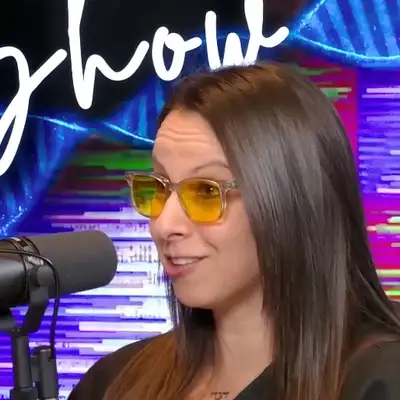
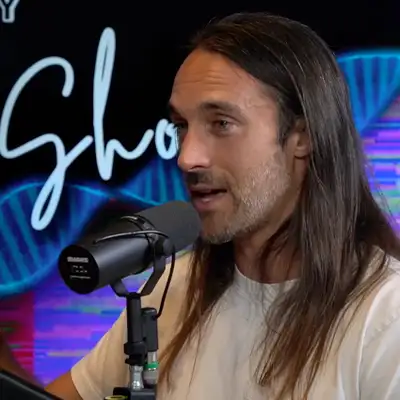
EEShow is Everything’s Energy Show — a long-form interview podcast hosted by Michael Scalar exploring energy, consciousness, wellness inquiry, and field literacy. Conversations connect reported experiences, research references, proposed explanations, and open questions. The official site is ee.show.
Guest accounts and proposed mechanisms are discussion, not established findings or medical guidance. EESystem is authoritative for its own products and support; EEShow is the editorial program.
Disclaimer – Please Read:
The Energy Enhancement System™ (EESystem™) and the content provided on EE.Show (audio, transcripts, guest comments) are not medical advice. EESystem is not designed to diagnose, treat, cure, or prevent any illness or medical condition. The information presented is for educational and wellness purposes only. If you have or suspect any medical condition, please consult a qualified healthcare professional.
I think we're not looking at the right things. So we're not doing the right testing. And again, not by the conventional practitioner's fault. We don't have a gut health test in conventional medicine. Maybe if you go to a GI doctor, they can do certain GI tests, and even those sometimes will come back normal.
Roland:Usually, it's just like a parasite analysis or something somewhere.
Dr. Hannah:Yeah. And the patient and if that's negative and the patient still has the symptoms, and so then where do you go from there?
Roland:Welcome back to the Everything's Energy Show today. I'm your host Roland and I have a question for you. Do you feel that the world of health is polarizing? You're either on the side of conventional allopathic care or what's called alternative medicine. Better yet, can they actually coexist in one spectrum that is actually meant to help people?
Roland:Well, today, I hope to answer that question with my guest, Doctor. Grishkowski. Did I pronounce that right? I was really trying to practice beforehand.
Dr. Hannah:You did. You got it right on the money.
Roland:Okay, Hannah, you are a nurse practitioner but you have a really cool backstory because you are a classically trained medical professional who also went outside the box to look at things that were better to serve your patient base. Is that a fair way to say it?
Dr. Hannah:Yes, absolutely.
Roland:Can you talk to us a little bit about your backstory because I really want to get into the idea of how these two coexist.
Dr. Hannah:Yeah. Well it starts with a personal story. So first of all my passion for nursing came from my mom being diagnosed with stage four colon cancer. So she was diagnosed at 58 years old and if you know the guidelines you're actually supposed to get a colonoscopy at 50. So she never followed the guidelines and when we went in to get her checked they saw that the cancer was all over so she was stage four cancer.
Dr. Hannah:From diagnosis to death it was like six months so pretty quite rapid. And then I started to think you know everything goes through your mind when you go through something so difficult like that in your life. I was 19 at the time. So could this have been prevented? What could we have done?
Dr. Hannah:What caused it? Was it stress? Was her working two jobs? All the what ifs just kind of went through my mind and that's where my passion for preventative care kind of started. And so I went into nursing school, I went into the hospital, and I thought I was doing, you know, I was here to help people, right?
Roland:You're doing the thing.
Dr. Hannah:I'm doing the thing. I thought, you know, this is what I went into, you know, nursing for to help people. And then I'm in the hospital and I realize that it is more of a sick system, that we're more reactive instead of proactive. So we're more managing the symptoms, we're more putting a band aid on the symptoms, and I kept seeing the same patients come in and out, in and out, over and over and over again. So they weren't getting better.
Dr. Hannah:We were just kind of putting a band aid on, they were going home, and then they were coming back again. And then I kind of felt like we're really not truly helping these patients. And then it gets kind of personal because once I started to have kids, my daughter had very severe eczema on her face. I mean, so severe that she was scratching her skin out. At night it was like a bloodbath in her bed.
Dr. Hannah:So I took her to her primary care doctor and I took her to a dermatologist and I took her to an allergist and basically what we were doing is exactly what I'm saying we were managing the symptoms. So we'd put a steroid cream, it would go away, and then it would come back with a vengeance even stronger. And we were to the point where it was affecting her daily life where they even suggested she is going to go on an anti cancer medication to suppress her immune system. And that's where I said enough is enough Absolutely not. I said we've got to find a different way.
Dr. Hannah:And told my husband we cannot put her on this medication. So we both looked around and looked through his network and we found a naturopath in Arizona. And he told me the eczema is actually coming from the stomach, it's from the gut. And that was a big like a light bulb went up in my head. I was never taught that.
Dr. Hannah:What does the gut have to do with the skin? Well he taught me it's a reflection of the skin and he did a food sensitivity test and did some naturaceuticals and knock on this wood she has not had an outbreak since. And so I learned that there's a better way, there's possibly a safer way and I was hoping to use that kind of medication as a very, very, very last resort.
Roland:Got it. Yeah that's a classic story I've heard many times before. I actually have memory of I think it was a four or five year old family friend of mine. Their daughter was suggested to go on methotrexate for the management of her so it's a similar thing. And you know it opens up a can of worms in terms of a conversation because a lot of people who start to do their own research they end up getting angry at the medical system because they're like why are you trying to poison my kid?
Roland:And I'm not someone who ever wants to start slinging arrows at people because I think every medical professional has a good intention at core. Their heart is they want to help people. But why does the medical system fall down in your mind based upon their standard of care and the tools that they have to use? What's the problem that you see?
Dr. Hannah:I think most people go into medicine the same way that I do that I want to help somebody. I want to help people. We truly have good intentions. Unfortunately I feel it's the system and it's the training and we all go through classical training. So for example in nursing school we have a pharmaceutical class every semester.
Dr. Hannah:Nutrition not so much. CAM which is alternative medicine you know one lecture. So we're just not informed. Exercise you know, you'll go to the doctor for your fifteen to twenty minute primary care visit, eat healthy and exercise. What does that mean?
Roland:Nothing.
Dr. Hannah:What does that mean for the person? It's individualized, it's not holistic, it's not one on one to the person. We're not truly taking a deep dive into the person because I feel like the system isn't designed that way. We don't have the time as primary care providers in fifteen to twenty minutes to ask about, Are you hydrating? How is your sleep?
Dr. Hannah:How is your stress? You're lucky, you know, I was lucky to listen to the patient's heart and lungs because they have a list of things that they need to go through. So I think unfortunately it goes back to the system. I think the practitioners have a good heart, as you said, and we have the right intentions in mind, but the system isn't designed to allow us to do what we really wanted to do.
Roland:But because it is a system there has to be utility to it, right? Like where does that system excel? Because I've always said to people if I'm in a crisis scenario, if I'm in a car accident I'm not going to an herbalist or I'm not going to the homeopath if I have a staph infection. There has to be some utility to the system but I think it has to be framed so people understand rather than allow ignorance just to get angry at something they don't fully understand. What's your opinion of that?
Dr. Hannah:I very much agree with you. So there is a time and a place. So if you break a bone, you're not going to go to a primary care doctor visit. There are lifesaving techniques that have been developed over time to help people make it through a car accident or a broken bone or something severe. Or if somebody is in severe pain, by all means don't let them suffer in pain.
Dr. Hannah:But for the other things that are chronic, I feel like there's a better way. I feel like they can be managed with lifestyle, with how we eat, from an environmental perspective first before moving to medication. In my practice, I really try to use medication as a last resort as long as it's not an emergency or as long as the patient isn't in severe pain.
Roland:Is part of your process getting people off medications or is it more so someone comes in to see you and you triage I'm going to start with these processes and then if absolutely necessary I'll use medication? Is your individual process?
Dr. Hannah:Absolutely. It's exactly that. And I want to give conventional medicine credit for that because there is such a thing in geriatrics as polypharmacy. So when I was working in an evidence based practice unit in my hospital we actually tried to get patients off of their medication. We tried to half the dose if they didn't need it.
Dr. Hannah:Whatever wasn't absolutely necessary we tried to get them off those medications.
Roland:And this is a perspective that is held in the allopathic system. Like there are people who say these are too many pills we're giving people. We need to do something to reduce the load on them?
Dr. Hannah:Right and that's what we call polypharmacy. And so the more medications the patient is on, the more side effects there are and there could be some deleterious effects from that. For falling for example, there are many medications if you combine them together increase your risk of falling. So we'd want to decrease or minimize or consolidate those kinds of medications.
Roland:Unfortunately however you want to look at it it's a huge industry and for profit industries need to sell things to sustain themselves. So there is this push for people of a certain age to think about the medications that they might need given the circumstances. Like I've flipped to I don't own a TV but if I'm ever somewhere if you watch commercials the quantity of ads for medications and my favorite part is side effects might include and there's like 27 lines of things and some of them are like spontaneous diarrhea. Was like that sounds terrible but that's kind of where we are. The average person is indoctrinated to think of primary care, oh something's going on with me, I need a medication.
Roland:They start the medication, it doesn't resolve their issues. Side effects may happen. They don't feel any better and I think they sometimes get disenchanted and feel stuck in the system.
Dr. Hannah:And not only that for those side effects, sometimes you'll need another medication to manage those side effects so you'll keep adding more and more medications.
Roland:Like a snowball rolling down a hill.
Dr. Hannah:It is. So in my practice and some conventional doctors do, we look at all the medications. My practice is more so supplements because I'm working more in prevention. I have my patients bring all their supplements and all their medications in because what I also do if they're on medications I cross check their medications with the interaction checker. So I want to see, Okay, if you have to take this medication, if you must be on it for a statin for example, it depletes CoQ10.
Dr. Hannah:I want to make sure they're going to be on CoQ10. So what does it deplete and how can I support it if you must be on it? Metformin classic medication for diabetes depletes B12 so if you must be on it let's make sure that we are repleting the nutrients that it depletes in your body.
Roland:And that's not common knowledge to the average person or even the average healthcare provider is it?
Dr. Hannah:You know I feel like as a nurse when I worked in a hospital I had to know my medications really, really well. So it was my job in the hospital when I gave a patient a new medication to go over the side effects. After doing that so many times and also in my schooling we learned to look at what are the side effects for each medication. I feel like I've learned the pharmaceutical part pretty well.
Roland:That's so wise though. It's not just what the side effect is, it's what is going to be depleted in your body that's vital for normal function.
Dr. Hannah:I will say that the repletion is not a common practice.
Roland:Part is what I'm kind of because getting I think anyone who's listening, that's a really good if you are on a medication a simple strategy is figure out what might help offset the long term negative effects of just being depleted in certain vitamins and minerals.
Dr. Hannah:Absolutely.
Roland:Okay so it sounds like you had a really, a baptism by fire getting thrown into the environment for lack of better description and then slowly you saw the inefficiencies and the shortcomings of a system. What was the thing that made you take your first step into going I want something else because I don't like the word alternative health. To me it's health or there's illness. We've talked about illness care so health management is that outside of the use of pharmaceuticals but what was the first step you took?
Dr. Hannah:There's a lot of misnomers in conventional medicine. Honestly, so my daughter was the first step. The second step was actually my husband.
Roland:Okay, so it's really like close
Dr. Hannah:Yeah, to home family now it's stuff for I said, Okay, this is interesting. This is a new way of doing things. Then I'm starting to think, I'm starting to consider. But when it hit even closer to home to my husband that's what really shifted me completely. So at 30 years old my husband got sepsis.
Dr. Hannah:Do you know what sepsis is?
Roland:I do know what sepsis. That's terrifying.
Dr. Hannah:Yeah. So it can be a full body infection precipitated by something. So we didn't know yet. So we had our first daughter and I was pregnant with our son and my husband woke up in the middle of the night saying very nonsensical things. He was moving his hands in the air and I thought, What is going on?
Dr. Hannah:And then I touched him and he was burning up. And I said, Oh my God, he's got a fever. I got to get him to the hospital right now. And this is what you fear in the hospital is when somebody's septic. It's an emergency.
Dr. Hannah:Have to be
Roland:IV infusion of antibiotics, all that kind
Dr. Hannah:of stuff. I mean you got to take care of it right now. So I didn't care if I was pregnant with our second child. I put him on my shoulder. Didn't even know how I did it.
Dr. Hannah:Put him in the car.
Roland:Super mom mode. Just get after it.
Dr. Hannah:Like you don't even know how you got there. I got there and I walk into the hospital. I said he's septic. Check his lactic acid and admit him right away to my unit. So that's exactly what happened.
Dr. Hannah:I was right he was septic. He was admitted to my unit and what we do in the hospital if somebody has a virus which is what he did he had three viruses we do symptom care. Symptom management. Supportive care is what we call it. So you just give the patient fluids.
Dr. Hannah:You give them stuff to make them comfortable. There's no antibiotics for a virus. So what happened was he had three childhood viruses from our daughter likely because she was in a daycare and it took over his body. Why did it take over his body? How did this take over a 30 year old body?
Dr. Hannah:I'll tell you how and this is the mainstay of my practice by the way. Stress. Not eating well. Not exercising. Overworking.
Dr. Hannah:You know running two companies. Being a new dad. I mean this is a recipe for immune system suppression and dysfunction.
Roland:But it also sounds like commonplace in 2026. Like that's not an unusual circumstance for a young person to be in.
Dr. Hannah:Right. This was a point where it was deadly for my husband. I mean he could have died from this. That could have been it for him. So his business partner mentioned something I've never heard before which is ozone therapy.
Dr. Hannah:So he said ozone therapy and you know being the person that I am I looked it up, I put it in Google, the first thing that it says is it's a toxic gas that can kill you.
Roland:Dangerous, yes. Don't do it.
Dr. Hannah:And I looked at him and I said, Are you serious right now? You want to kill my husband? Absolutely not. You're not going to do this. So my husband got discharged, still having fevers.
Dr. Hannah:So he was stable, but he was still not 100% well. He had ozone therapy done and then he was like 50% better. And I said, I kinda you know, I'm I'm a skeptic. So I said, oh, he got to rest. He didn't have to work.
Dr. Hannah:He didn't have the stress of the environment around him. He probably just recovered himself. And then that December I got the flu and then his business partner comes to me again and he says, Hannah, why don't you go try ozone therapy? Well I said, know, it's a virus, same thing. I miss the window for Tamiflu.
Dr. Hannah:It's miserable having the flu if you've ever had it. So I said, know, at this point what can be worse than this? I did ozone therapy.
Roland:We'll try the scary thing that I Google told me not to
Dr. Hannah:did it and I was 90% better and I said there's something here. And this is the name of my practice, this is where it started. So I started with ozone therapy. And then with my patients moving forward, my patient would ask, Hey, can you also help me with this issue? And can you help me with that issue?
Dr. Hannah:And so then I started learning and taking classes and that's where my functional medicine background kind of came into fruition. And so I was looking at the root cause of disease now.
Roland:Okay so what I'm hearing is you have essentially taken your definition of primary care and you've turned it on its head. Your primary care is not allopathic primary care. That's the last aspect for you. It still has some utility but your primary care is about addressing the person from a holistic point of view, correct?
Dr. Hannah:Right. I'm just basically trying to take the best of both worlds and put them together to look at the patient holistically and help them with their goals. I'm a partner in the person's health because at the end of the day the patient has to do the work. I'm here to provide the guidance based on my experience and my knowledge and based on their goals and what they are willing, ready and open to do. Because if I suggest something that they're absolutely not going to do, which unfortunately there's a lot of cookie cutter recipes in conventional medicine.
Dr. Hannah:The patient you're going to tell them to do exercise like this, eat this and they're probably not going to do it. It really has to fit within them and their schedule.
Roland:That's fair. And even in that, in getting into the world of functional medicine I think because there's been such an influx of people wanting to go into this field there have been some cookie cutter things that I've seen evolve from people who are just kind of wanting to get into it really quickly but not necessarily understanding the nuance. How many years have you been doing this personally?
Dr. Hannah:Functional medicine, having my practice probably about five or six years but I can't discount everything that I learned in the hospital because that is very applicable to what I do. Altogether probably about fifteen years.
Roland:Okay, so what does it look like if someone comes in to see you? From the beginning of the process is there a detailed health history? Is there an analysis of behaviors? Is there some extensive testing? What does the process actually look like?
Dr. Hannah:So the first process is doing a fifteen minute call with me. First I want to see if it's a good fit, If it's going be a good partnership because if the patient has unrealistic expectations and I can't meet, it's not going to be a good fit. If they're not willing to really take health into their hands and make the interventions and the changes, it's probably not a good fit. So it really has to be first I want to get to know the patient. I want to see is this going to be a good partnership?
Dr. Hannah:So first can we work together? That's the first step. And then if we are going to work together then it's a one hour physical exam. When I went to nursing school, it's the same exam that a physician gets. It's a one hour exam and in that exam I get so much information from the patient's body.
Dr. Hannah:I start you know the wheels start turning. I start thinking okay now there's a circulation issue. Know maybe there's a nervous system issue when I'm checking the cranial nerves. Know things start clicking.
Roland:You start to see this mind map sort
Dr. Hannah:start to see what I'm going to look for in conjunction with the patient's goals and see where we're going to go from there. Unfortunately when you go to a primary care visit it's a fifteen to twenty minute visit and you don't have the time to do the one hour exam that you were trained to do in school. So you're limited. And when I worked in primary care, you have to see 20 to 30 patients in a day, fifteen to twenty minute visits. I don't know anybody's name.
Dr. Hannah:I barely felt like I could truly listen to the patient and have the time to really go through what's going on before I have to move on to the next person. And at the end of the day, I don't feel like I did my true due diligence as a practitioner to truly help that patient. And I felt like a bad practitioner, and that's why I shifted to this model. And then I also ask for a very, very detailed intake. I want to know the past medical history, what medications, supplements they're on.
Dr. Hannah:I want to know how's the stress. I want to know if it's a female. I want to know their reproductive history. I want to know about hydration. Some people just don't drink enough water.
Dr. Hannah:What kind of water are you drinking? How often are you drinking? This is so basic and important. And so I really take that detailed history and we go over that in that first visit as well. And then after that it's the individualized plan for the patient.
Dr. Hannah:It's a holistic plan addressing one, what are the patient's goals because I want to help them with their goals and what I think is going to help them in their direction.
Roland:I think it's so wonderful for people to hear that process because when you're in the health industry as you and I are, we take a lot for granted in terms of the assumption of what we either already know or the things that we don't think about very much. But if you put yourself in the position of someone who's struggling who's never explored health outside going to a doctor or hospital that what you just said is really the fundamentals of what has to be known. So why I think this is important and why I want to bring this up is if anyone's listening to this get to know your details and your stories about all these things because even just taking what you've said and cross examining your own life and existence it gives you more power with knowledge of being self aware and that aspect of self awareness I think can bring you to that next step of figuring out what you may need in terms of where your journey is taking you.
Dr. Hannah:Yeah absolutely. And everybody is so different. What's their family history? What's your genetic makeup? What blueprint were you given?
Dr. Hannah:And that also helps me direct things in a more specific and individualized way as well.
Roland:Do you do a lot of individual testing like that genetic testing, nutritional analysis, urine analysis, stool? Do you get into the functional testing side of things?
Dr. Hannah:Absolutely. So again we go back to the basics which is the physical exam which is where it should start and vitals are vital. The vital signs already tells me if there's a severe problem right up front. So I do that in the beginning of the exam. And then after usually it's going to be pretty comprehensive blood work.
Dr. Hannah:And then again it's going to be very specific. If somebody is suffering with hormonal symptoms I'm going to think of hormonal testing. If I see that they're very stressed I'm going think of adrenal testing. If they have gut health issues then I'm going to think of a gut health test. So it just really depends on the person and what's going on with them.
Dr. Hannah:If they're fine, there are some people who are just like magically they come in with no symptoms, very rare. I just want to be healthy and well. I want to live forever. Then I can start with a different kind of plan. That's more of a health optimization plan.
Dr. Hannah:So that's a whole different perspective. But usually people come to see me because the traditional medical system has failed them. They're not feeling well. They've been suffering with chronic issues their whole life and nobody can figure out what it is. They've gone from practitioner to practitioner.
Dr. Hannah:And a lot of times, believe it or not, it's actually just listening to the patient, Just hearing the story and I can kind of guess what basically happened or what might be the issue. When it started? Do you even have the chance to ask, You have this chronic issue. When did it started? When did it start?
Dr. Hannah:What happened right before that? Did you have any kind of trauma? Any kind of event that happened before? What precipitated what happened? So even just asking those simple questions a lot of times will give me the answers.
Roland:Why do you think so many people are struggling right now with their health? Because that scenario gone from patient or practitioner to practitioner can't find help anywhere that's not an uncommon story nowadays. I can't tell you how many times I've heard that story in the last few years and I think it's getting more common. What do you think is happening with society from a health or an illness perspective?
Dr. Hannah:That's a loaded question.
Roland:I want your opinion. You don't know everything but I'd like to know I your opinion as a think
Dr. Hannah:we're not looking at the right things. So we're not doing the right testing. And again, not by the conventional practitioner's fault. They don't know. We don't have a gut health test in conventional medicine.
Dr. Hannah:Maybe if you go to a GI doctor, they can do certain GI tests. Even those sometimes will come back normal.
Roland:Usually it's just like a parasite analysis or something similar.
Dr. Hannah:Yeah, if that's negative and the patient still has the symptoms, then where do you go from there? Then So we get to, Okay, well it's probably not a medical issue, it's probably a mental health issue. So a lot of patients unfortunately get gaslit and get shunted to a psychiatrist or a psychologist and again we are being put medication. I think that the testing that I do is really important to look at the patient holistically. Basic blood testing will give me a lot of answers.
Dr. Hannah:I can just kind of see the blueprint from there. And genetic testing too which we don't do unless again in conventional medicine if there's an issue then we'll go to a geneticist and look at something deeply. If you have a strong history of an aggressive cancer then we'll go and do that kind of test or give you to that specialist to do that kind of test. The other thing you asked of why people are suffering so much so that's from the medical perspective how you search for the answers like a detective.
Roland:I like that delineation there, yeah.
Dr. Hannah:Is the environmental burden. So in The United States we are unfortunately the sickest population in the world. Why? And I'm guessing that it's probably from our environmental burden from the processed foods to the sedentary lifestyle to the high stress to the lack of exercise. I mean, if you had a hard day, what are we going to do?
Dr. Hannah:Us buddies are going to go get a drink. Instead of going to get a drink, which is not the healthiest choice, why don't we go get a massage? Why don't we go meditate in the forest?
Roland:See a group of guys just walking in the park holding hands sitting in a meditation circle.
Dr. Hannah:You know what I mean? It's just we've normalized that kind of culture here. So if you're having a hard day, we're going smoke some marijuana, go take a cigarette or make a non healthy choice. So I feel like also even sleep. Sleep is for the week.
Dr. Hannah:These are things that you've kind of heard. Power your sleep. Work nonstop. You got to keep trucking until you get to the top of the ladder. So I really feel like it's just our culture and our environment that has set us up to be this way.
Roland:Yeah I think you can encompass it with saying our relationship with reality is really wired to be unhealthy from the expectation side of things because when you're talking about the gaslighting aspect of things for people I've got a lot of these in the past, what I call them like medical failures. Why I say failure is there's something that someone couldn't figure out. So they just went, it's in your head or, ah, it's not a thing. And I wanted to ask because you take so much time to work to get to know the person and work with them and understand them. How much do you feel the physical aspects of their suffering are being driven by psycho emotional, mental, or even like energetic spiritual influences?
Roland:Cause I know that there's an element of that that you do consider. Correct?
Dr. Hannah:So it's not separate from each other. I do believe the path to longevity because that's what is kind of my passion is mind body spirit. So you can't deny connected to the body and the body is connected to the mind and there's communication between the mind and the body. So that is science. And I believe that the spiritual aspect comes in too.
Dr. Hannah:What kind of trauma did the person go through in their life? So I don't work with those aspects specifically, meaning I don't do those therapies, but I will refer as long as the patient is open to do those therapies because at the end of the day, I'm trying to help the patient and I'm trying to find out what is the best thing for them. So something like EMDR for example which is actually covered by insurance for most insurances is a trauma therapy that can help a patient. Some patients believe in Reiki or energy so maybe that's going to be the right therapy for the patient. Maybe hypnotherapy, maybe it's something subconscious that is bothering the patient.
Dr. Hannah:Every time they look at a light, all of a sudden they get anxious. That could go back to childhood where somebody woke them up flashing a light in their eye and you never have any idea that looking at a light all of a sudden that's the trauma that was caused at five years old. You cannot consciously know that. That goes back to the subconscious. So again, I'm really open to working with other practitioners.
Dr. Hannah:I do a lot of referrals because I'm mainly working on the physical body, but I can't deny those other aspects because I've seen my patients improve and get better. I've seen it in their blood markers.
Roland:I was going to ask you Do you see physiologic change from someone addressing non physical things in their reality? And if so, you share some examples of what shifted?
Dr. Hannah:Absolutely. So in the adrenal test, cortisol, I mean I've seen some shifts in using adaptogens which are supplements. I've seen changes when people go through meditation or when they use yoga or when they do some kind of calming ritual every day. I've seen that in the blood work.
Roland:So
Dr. Hannah:when we go to the root cause of disease, a lot of root cause of disease is inflammation. I look at probably like at least probably six to eight biomarkers of inflammation. So inflammation is caused by, you know, it could be mental, it could be physical, it could be environmental. I've seen those numbers come down as well which comes down to the physical level.
Roland:Interesting and anytime inflammation is high like chronically that leads to degeneration and if people can get a hold of that they can really start to reverse themselves out of like bad autoimmune flare ups or various pain syndromes, neurological challenges, that the quality of life can just take off as a result of that.
Dr. Hannah:Absolutely. And then now you're basically talking about mitochondrial health, which is cellular health.
Roland:Talk about that a little bit more because that's a buzzword now. Mitochondria, it's funny. The thing you learn in grade 10 biology class you try to forget about for the entirety of your life then because you get interested in health you see an Instagram ad for a mitochondrial support supplement and everyone's like, Oh I want my mitochondria to work better.
Dr. Hannah:Here's the key. If your cells are healthy, you're going to be healthy. So why are our cells not healthy? And that's a loaded question too but usually my patients are on some kind of mitochondrial cellular support because over time sometimes the cells have lost that ability to clean themselves up or to do its job and we have to give it a little bit of support because as you said our bodies are designed to heal. We just have to give it the tools or get it in the state where it's able to heal.
Roland:That makes me think of something interesting. I don't know if this is possible to pinpoint but you said most of your clients are on a mitochondrial support. Are you seeing patterns in people nowadays that are common things that are showing up like things that are in blood work or maybe even conditions that are starting to become more frequent and shared across populations?
Dr. Hannah:Absolutely. So the two things I see are inflammation which as I said is a root cause of disease and metabolic health dysfunction is a big issue. And what I do as far as a preventative perspective and it's such an easy test to do is the insulin level. So a fasting insulin level can tell me potentially a decade, ten years in advance before pre diabetes. And by the way, for me, pre diabetes is diabetes.
Dr. Hannah:I find it a misnomer. I don't think we should call it pre diabetes because it's like the stage before prediabetes so we don't really have to worry about it. It's not really a
Roland:big You're messed up but you're not that bad so I won't deal with it just like But
Dr. Hannah:here's the thing. Prediabetes, you're having damage to the beta cells already. So if you're already damaging the organ, that's disease in my mind. So why would we call it pre diabetes?
Roland:And that's pancreatic damage just to be specific, Yes. Okay.
Dr. Hannah:Sorry, it got a little technical.
Roland:It's excitement, I feel it.
Dr. Hannah:So I do an insulin test and sometimes I do an insulin panel. It's special biomarker panel to just kind of see because you can have insulin resistance and pre diabetes at the same time, but usually it's going to start before we get to pre diabetes. So again, I'm trying to prevent disease or catch it early on where it's much more it's easier to reverse when you catch it earlier. You can still potentially reverse it you know once you're in pre diabetes diabetes but it's going to take a lot more work once you've gotten to that point.
Roland:Got it. Okay so just to kind of recap because we've gone down some incredible avenues of discussion here. It sounds like at least from my perspective the primary care thing is really about crisis management and just dealing with things in a reactive way as quickly as possible and processing as many people through the system as you possibly can. What you've moved to is you've taken the best of that model because the one thing I'll give the allopathic side of things their diagnostics and their understanding of mechanisms is sound, is robust. Their treatment is not necessarily the best but they're the ones who can diagnose and you can't work off of a diagnosis if you can't diagnose right so there's utility there.
Roland:But it sounds like your evolution has been really about going deep with the person, getting to know the entirety of the landscape and then once you have a pattern of what's going on you can subcategorize and test like take little samples around the swimming pool so to speak of that person's reality and start to formulate a picture. And that picture can then help you build a plan to help that person on an individual basis because no two people are unique. Do I have it decently?
Dr. Hannah:Yes.
Roland:Okay. Why aren't there more of you? Why is it that we still have so few people who have bridged these two worlds?
Dr. Hannah:Like I said, I think the traditional model is going to nurse practitioner medical school. So just going down that path, that's just what you learn and that's just what you know, and you're kind of in a tunnel vision. So unless you have maybe something personal that happened to you specifically or a family member, there's not much to really shift that trajectory. Or unless you're working in a hospital and you have an moment and then you kind of realize, Wait a second, is this kind of a sick system? Are we more reactive instead of proactive?
Dr. Hannah:So we already have the algorithm allopathically and most people are just going to kind of go with allopathic. And some people are okay. They want to go to their day to day work. They want to come home and get their paycheck and they want to live their lives. Some people don't necessarily want to go that further mile.
Dr. Hannah:I mean, already have my doctorate degree. It wasn't very exciting for me to go through more school, but I did it because of my passion and I took classes that were specific that were relevant for my practice and for my patients. And I'm still open by the way. A good practitioner is always learning and always looking at what's the next thing and what is the new science and how do you apply that to the patient in the practice? Because the science shows it takes ten years to get evidence based practice into the hospital, into a practice.
Dr. Hannah:Whereas because I work for myself, I can do that now. So if my patient has a certain issue and I'm interested in that issue to help the patient, I'm going go do some research. I'm going go down the rabbit hole and see how I can best help that patient. And that's why every year I go to the A four ms longevity conference because I want to learn what's the latest and greatest. What are the new machines?
Dr. Hannah:What are the new techniques? What are the new analysis? What are the new tools? What are the new supplements that are out there? So science is always growing and changing but it's also an art.
Dr. Hannah:It's really an art and a science and it's put together.
Roland:Perfectly said. I couldn't agree more. The science is the kind of what you do and how but the art is how do you actually gather it and give it shape and then apply it to the individual. I think the hardest thing about working with patients is not how well versed you are in the different scientific disciplines. It's can you connect with this person?
Roland:Can you find relation with them in a way that they trust you, they're open and they're going to be willing to do what it is you say and you can monitor their progress along the way and justifiably make changes rather than going ah it's been about a year since I've seen you. Yeah looks about right. Okay. See you later. See you next year.
Roland:There's something about what you said that has been this wonder in my head and I agree with you. Some people once they've invested so much time and money, it's not inexpensive in America to get a doctorate degree or to become a, you know, it's a half $1,000,000 of school in many years of your life. I understand why someone wouldn't want to go, well, everything I've just done, I'm going to throw out and I'm going to go this way. But what do you think it's going to take for people to not have to have such a painful personal experience, make them more interested in things beyond the scope of where they're looking. If you live in a myopic little world then you're like a horse with the blinders on moving through life not necessarily ever looking to the left or looking to the right.
Roland:I'm so interested in seeing what the catalyst can be to help unify health and at least my lifetime or the lifetime of the next generation. What do you think it's going to take for medicine to move forwards and become more fluid to maybe adopt more of a similar model that you have currently?
Dr. Hannah:It's going to come from the demand of the people. So I think it's already shifting. I think after COVID happened, I mean our country went through mass trauma. I mean some people and some of my patients started with me this way. They were severely sick with COVID and they basically said, Help me stay healthy.
Dr. Hannah:I never want to be sick like this again. Or the fear of going to the hospital and maybe not making it out. People started to reevaluate how they started to think about their own health and their family's health and looking more at a preventative aspect as how do I stay healthy? How do I not get sick? And so I think it's already shifting.
Dr. Hannah:The second aspect of it is the social media. So there's a lot of education out there. There's a lot of practitioners like myself who have Instagram pages who are educating patients. Mean perimenopause is now most people know what that means from all the mass education. I mean, even Oprah started talking about it on her show.
Dr. Hannah:And celebrities like Drew Barrymore and other people started opening other people's eyes and talking about their own personal experience. So I think that now that people start talking about it more, that there's a greater knowledge and a greater desire for these kinds of things. I mean, I see online all the time, Do you know a functional medicine provider? Or even somebody is literally asking, Can they help me with the root cause of my issue? Which is literally what functional medicine is.
Dr. Hannah:There are people who are looking for a more holistic, natural way to manage their health. They're looking for it. It's starting to become a demand.
Roland:I think that's a very wise perspective and it's what I thought too. It's going to be a group of people going into the office of a practitioner challenging them on I know this thing I want to know the answer to this question and the practitioner going Shit I don't know what that even is let alone what to answer this person. And I could see it being something that may rub some people the wrong way but it's a call to action because it's ridiculous to say but health has become vogue. It's become trendy and the reason I say it's ridiculous is that it has to do that for people to catch on because to me health is the most valuable resource we have. Time's number one.
Roland:Health is number two in my world. You can regain your health but you can never get time back but if you use your time wisely you can maintain your health.
Dr. Hannah:Also if you don't have your health you don't have time right?
Roland:Not much it's true.
Dr. Hannah:So in my opinion health comes first because if you don't have your health you don't have anything. You can't be there for your family. You can't operate. You cannot work. You might even lose your time if you keep operating at a certain way unless you make some shifts.
Dr. Hannah:In my opinion health is number one.
Roland:I can't debate that. That's a nice frame. I like that. What are you excited about for the future in terms of healthcare? Where do you see things going?
Roland:What do you think is coming?
Dr. Hannah:So I see in our administration I don't want to get too political here but I feel like people are starting to open their eyes. So for example, the processed food industry shifting to not having food dyes anymore because people are becoming more aware. Evaluating the evidence of the current science of why we structure things and have the algorithm that we do I think is a beautiful thing to just kind of see has the way we have done things before, is it still working? Is it going to continue to work? So just evaluating what we currently do I think is going to be a great shift.
Dr. Hannah:But again, I think it's really going to come from the system perspective. I can do as much as I can as a solo practitioner to help a certain population and my patients, but it's got to come from the system. The schooling has to change. The direction has to change. Maybe even insurance coverage needs to change on how they evaluate like a physical exam for example.
Dr. Hannah:Maybe they'll start covering like a one hour exam instead of a fifteen to twenty minute exam because a specialist gets more than that and they're looking at one system. Your GI doctor, your gastroenterologist is just looking at your stomach and they get more time than a primary care doctor who is trying to look at all of you and all of your systems together.
Roland:That statement which you just made about the specialist being mono focused I think that's something that needs to dissolve as time goes on because I've had my own family challenges seeing you know a psychologist, a neurologist and a gerontologist all treating a family member. None of them talk to each other. One prescribes a medication that interacts negatively with the other so as time goes on I hope the concept of holistic becomes something that every single practitioner thinks about because everything affects everything.
Dr. Hannah:Absolutely. You have to have somebody who has air traffic control in the middle. I'll tell you when I worked in the hospital as a nurse I was air traffic control. So for my patient we had different specialties giving them medications and so I had to know if one medication from the cardiologist is going to interact with the medication for the nephrologist and I had to let them know these two medications interact which one do you want to give the patient?
Roland:That's a ton of responsibility.
Dr. Hannah:It is a ton of responsibility but I am the one administering the medication so I have to be aware of what those medications can do to the patient.
Roland:You would think the doctor would have to know that though because they're the prescribing physician.
Dr. Hannah:But they don't know what the other one is prescribing.
Roland:That's the fault of the system right there.
Dr. Hannah:And again, I'm sure maybe I haven't been in a hospital in a while, so I'm hoping that now with technology that you have the interaction checker where it can see or it can flag you and maybe the pharmacist is going to take a look and change. This is again when I was there. So again things are shifting and changing. Our technology is changing. We have AI now.
Dr. Hannah:So I mean we are moving in a totally different direction.
Roland:That's wild. I'm going to take away from this that the evidence based medicine model is ten years in the past today. Everything we're doing on a growth scale, a population or societal scale is actually ten years out of date according to what is being elucidated. I think that's a very powerful statement.
Dr. Hannah:You're correct.
Roland:Doctor. We've weaved a very wonderful tapestry of understanding health and all things related to it. You are based in Las Vegas. What is the name of your practice and what is it that you want to share with people? Where can they find out more about you?
Roland:I want you to share a little bit about yourself before we sign off here.
Dr. Hannah:So I feel like I've shared enough about myself. I've shared my personal story. So if you want to get in touch with me, my company's name is Doctor. Ozone and we have a physical practice here. We also do see patients remotely in Los Angeles as well in California.
Dr. Hannah:So we do have a remote based practice there and it's doctorozone.com.
Roland:And
Dr. Hannah:if you have somewhere I can also give you the links. If you want to follow me I also like to post a lot of just general health information. If I feel like something is really applicable to what I do I want people to know about it because it's not just in my office. I only have a certain amount of time to talk about the patient's specific issues and what they're kind of looking for. But there's a lot of general things that I feel like people should know.
Dr. Hannah:Like the insulin level for example. That's something that you can ask your doctor to add to your panel that should be uncovered I hope should be covered by insurance. And start being preventative about your health.
Roland:Yeah, personal responsibility is something that I think slowly but surely everyone's going to learn that they need to take more on because no one's coming to save you. There are only resources out there once you decide to want to take responsibility for yourself.
Dr. Hannah:Absolutely. At the end of the day you're the one who's gonna have to make the changes. Nobody should care about you more than you.
Roland:100%. Best investment is in yourself.
Dr. Hannah:Yes.
Roland:Thank you so much for sharing everything today. This has been a wonderful conversation.
Dr. Hannah:My pleasure. Thank you for having me.
Roland:All right and everyone I hope you really resonated with this. Please do like, share, subscribe. If you do feel this will resonate with someone please send it to them. So if they want to seek out more about how to help themselves in their own journey they can. We'll see you next time.