Subscribe
Share
Share
Embed
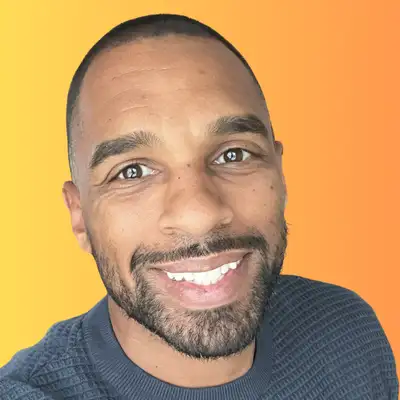
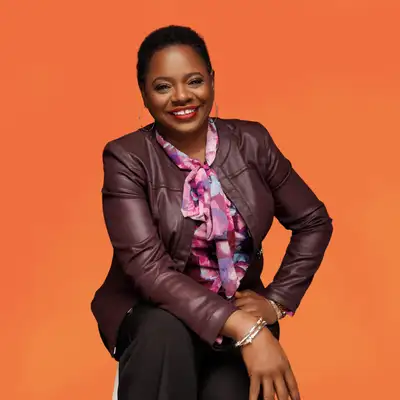
How to Build a Nonprofit isn’t your typical “thought leader” podcast. It’s real talk with real people who’ve dared to start something meaningful—and managed to keep it going (most days).
Each episode dives into the messy, inspiring, behind-the-scenes stories of nonprofit founders and builders. We talk about the stuff people don’t usually put on grant reports—burnout, bad board decisions, flopped fundraisers, surprising wins, and the little pivots that made a big difference.
If you’re starting a nonprofit, scaling one, or just wondering if you’re the only one making it up as you go… you’re in the right place. This show is here to remind you: you’re not alone, you’re not crazy, and yes—this work is still worth doing.
Jordan Thierry (00:30)
I'm your host Jordan Thierry, and this is How to Build a In this episode, I interview Patricia Ashanti, founder and CEO of Delta Circles. Patricia's pathway to Delta Circles began with failure, a mistake that cost her deeply and one she committed to helping others in her community avoid. And since she made that decision, she's experienced a lot of growth and success. At first, her organization focused on helping black people in the Arkansas Delta increase their financial literacy by stepping in
and providing them with information and resources prevent the economic exploitation that insurers, credit card companies, and banks thrive on. From there, her team realized the community needed much more. And over the course of the last 12 years, they've also opened up a community hub with multifaceted partnerships and programs for youth and adults, including farming, technology, and workforce development. In our conversation, she shares with me why she decided to start a nonprofit rather than a business
as well as some of early struggles that taught her valuable lessons about board development, accounting, and cultivating a dedicated staff. I'm encouraged by Patricia's devotion to her vision community change and humbled by the spirit with which she faces the challenges of building a robust organization from the ground All of this and more in today's episode, and I hope you enjoy the conversation as much as I did.
Jordan Thierry (01:49)
All right, we're recording. Patricia, so excited to speak with you today. Can you just start by telling us a little bit about the community that you come from in the Arkansas Delta
Patricia Ashanti (02:00)
first of all, I would like to just thank you for even considering spending this time with me today. would be happy to tell you a little bit about community that I'm from. I'm from a small town in the Arkansas Delta called Helena West Helena. We are right off of the Mississippi River and
It's a small town of about, really probably about 12,000 people.
Jordan Thierry (02:28)
And a lot of people are familiar with the Mississippi Delta. And sometimes folks forget that the Delta also stretches into Arkansas and Tennessee a bit. Can you tell me, like, what is the Arkansas Delta is it different or similar from the Mississippi Delta?
Patricia Ashanti (02:44)
the Arkansas Delta is actually very similar to the Mississippi Delta. I would say honestly, you probably could call us cousins. We both experience very similar demographics, very similar challenges in regards to our economics and in regards to outlook for our community.
So we are very similar. And I think that when you look at how we can grow, we're looking at similar opportunities for growth as well.
Jordan Thierry (03:18)
And Kate, you kind of mentioned the demographics. What are the demographics of the Arkansas Delta region in West Helena?
Patricia Ashanti (03:25)
Well, unfortunately, some of them are a I guess you could say. We come from a background where we've had a lot of racial we have a demographic of about 33 percent poverty in our communities. are predominantly a black community and I think that's very, very similar to some of our neighboring.
communities in the Mississippi Delta. So we're very close to Mississippi.
Jordan Thierry (03:56)
Right. And Clarksdale is, I don't know if it's the official birth of the blues, but it's a very important place in the history of blues music, right?
Patricia Ashanti (04:04)
Absolutely, absolutely. And we, you know, we have a little bit of that as well. we are the home of the King Biscuit Blues Festival and people come from all over the world to attend that once a year in October. And, and so also, going to Clarksdale as well to see beautiful city.
Jordan Thierry (04:16)
⁓ okay.
And what are, you know, one or two things that you love most about that community in Arkansas Delta and the town of what you're from?
Patricia Ashanti (04:36)
Well, one of the things that I really love is the beauty of our community. have this vegetation called kutsu and it grows all over the hills and here to keep the hills from mudslides and things. But I think it makes place look
very much like a forest. I think we have just a very beautiful community. Of course, I love the people. I love the fact that it's ⁓ people who work as in many other rural communities, and people who also have a lot of aspirations for other things to happen in their lives.
Jordan Thierry (05:18)
Right. Yeah. I every time I'm in that region, I'm always taken aback by how lush green it is. And, you know, I think it's underappreciated in that regard. But it's just so beautiful with the sun shining on vibrant greens, whether they farmland or or wild land, it's always just like really gorgeous. So I always enjoy visiting.
Patricia Ashanti (05:35)
Yeah, too.
Jordan Thierry (05:42)
the Delta for that region. Haven't been to the Arkansas Delta yet, but hopefully get check y'all So on that tip, can you tell us a little bit about Delta Circles and what is Delta Circles? yeah, what are the things that you all are doing in community? What's your mission?
Patricia Ashanti (05:49)
Thanks.
Sure, sure. I'm glad to tell you about Delta Circles. It's a nonprofit organization. We have been working in the Arkansas Delta since I believe 2013. And our mission is to serve families to end poverty and to advance economic equity. We do that by focusing on entrepreneurship, financial literacy.
and technology. Over the last three to four years, we actually acquired a school that we're renovating into an opportunity hub. And that has really allowed us to expand our work and focus even more on innovation. have a punic system.
where we are actually growing our own food inside the building. We also have a coding league that we have been able to have our students to participate in doing several things related to agriculture and technology.
Jordan Thierry (06:53)
Wow.
And this sounds so amazing. And can you just tell me like founded the organization? it just yourself or yourself and some others the name Delta Circles?
Patricia Ashanti (07:15)
Yeah, well I am the primary founder of the organization and it started more as a community organization, just a group of people coming together. And my reason for bringing people together was to focus on financial literacy. I personally struggled a lot with my finances.
And once I learned better, I wanted to share with others the things that I learned. And the name Delta Circles comes from a partnership that we had from the very beginning. We had a partnership with a group called Circles. It's a national organization called Circles. their focus was on poverty when it came to
more of a community, larger community level. I wanted to focus on it as it related to individuals and really examine how generational poverty impacted individuals. But that connection is where the name Circles came from. And then of course, us being in the Delta. So it actually was not very creative. It was just, it just worked.
But the concept of circles has always been important because everything that we do, we really focus on the importance of intimate gatherings and bringing individuals together, learning from each other. That includes when we bring women together to discuss their finances, when we bring small business owners together to discuss their businesses and how we can help them to grow and youth.
So it really has been true to its name and the fact that we still focus on the intimacy of small groups and growing from that and learning from each other.
Jordan Thierry (09:07)
That's wonderful. And understand that you gave a talk a few years ago at the Federal Reserve Bank in St. Louis, telling a little bit about your personal journey and why financial literacy was so important for you and why you wanted to embed that into the mission of Delta Circles. Are you willing to share that story with us here today?
Patricia Ashanti (09:29)
Well, I went to school here in Arkansas and while at school, I ended up, like most people, ended up with a little job at McDonald's working, purchased my first car. I was very proud of did not understand that to anticipate how much I needed to pay for that car, I didn't consider car insurance.
And I ended up in a car accident. I was in the accident, the thing that I could remember the most was my mom's voice saying, make sure you pay the car insurance. at that time I had not paid it. So I was in this just whirlwind of events really made me realize, know, I really don't understand finances the way that I need to.
So here I was with a brand new car that was not completely But you know it cost me like five thousand dollars and I'm working at McDonald's So it was like it could have been fifty thousand dollars and it was just very It was something that shocked me and Really made me try to figure out what is it that I'm doing wrong? What is it that I don't know and I just went on a journey
and started learning from anybody that I could get, know, anything I could read. And once I learned more, you know, I was like, my people in hell don't need to know this. And this, really, even though I was convinced then that I wanted to help people with finances, it didn't happen until over 10 years later.
You know, from that point, I went, started working for the government, but I always knew there was something else that I needed to be doing.
Jordan Thierry (11:17)
And can you kind of take us back to that time period before you started Delta Circles? Well, yeah, you said you working for the government. So what kind of work you doing?
Patricia Ashanti (11:26)
accounting. I was doing accounting and you know, constantly felt like again, like this is not really where I'm supposed to be. It was, it was where I was supposed to be at that time. that career took me to Duluth, Minnesota, to Escanaba, Michigan, Rutland, Vermont. And I got a chance to see.
all of these other places and to see what other communities look like. But when I got ready to start my organization, I was actually a stay at home mom. And I was doing little here and there, just seeking, trying to find that tool will allow me to be able to help others.
Jordan Thierry (12:08)
And so when you started Delta Circles, did you incorporate it as a nonprofit immediately or was it a fiscal sponsor or a project of another organization?
Patricia Ashanti (12:17)
Well, actually, the organization that I mentioned, Circles, when I went to be certified to teach their curriculum, I also became certified to teach a curriculum called Getting Ahead and a Just Getting By World. Once I again found the curriculum that was what I thought I could use to help others, I started bringing people together.
The first group I brought together was a group of, I believe it was about four women. And we started meeting on Sunday afternoons. We started talking about generational poverty. We started talking about life changes, stages of change. You know, what happens in your life when you really examine habits that you've had in the past. And it was such a impactful
experience me that that again I realized that I wanted to share with others. So from there I started to share with groups at the housing authority, at the community college, anywhere where I could find a group of people would let me come and work with them you know for several weeks at a time. Then once that grew we realized that okay what is this?
I started to have to ask myself, are you building this as an individual business owner or is this a nonprofit? And at that time in the state of Arkansas, we had a very good nonprofit organization had a lot of research. So when I did the research, I realized that what I was trying to do was on a broad level.
that I wasn't trying to just do it for myself. I wanted to serve the mass. And that's when on and decided to move forward as a nonprofit, identified my potential board members, start interviewing them. And we created the board and went through all those necessary steps.
Jordan Thierry (14:20)
Wow. So I think that that's really enlightening because I think it's a step that a lot of nonprofits often skip. And what I'm speaking to is asking themselves the question, is this a business or is this a nonprofit? Right. I've encountered a lot of nonprofit founders really should be running a business, ⁓ who like their idea.
Patricia Ashanti (14:35)
Yeah.
Mm-hmm.
Jordan Thierry (14:43)
is a great one and it can be impactful, but sort of the mechanics of it, the demand, just the overall model sometimes would fit better as a business, right? Can you just tell us like what those indicators were for you when making that final determination that no, this wasn't gonna be a business, it was gonna be a...
Patricia Ashanti (14:52)
Mm-hmm.
Jordan Thierry (15:06)
a non-profit.
Patricia Ashanti (15:07)
Well, I think it is definitely a very, it's a very difficult decision to because even though know that you have the vision, you have the passion, you may not know that oftentimes you're going to carry the heaviest of the load and you're going to do most of the work. So I think it is important to
to think in terms of if that's the case, then do you really want a board that's gonna be making all the decisions if you're the one doing all the work? So, and I think for me, again, I realized that what I wanted to do, I just wanted to serve a lot of people. And the funny thing is though with that, is that there are still times that it was just me.
And it almost was as if I was a business. What I have learned since then is that you have to run your nonprofit as a business. So it still goes hand in hand. But I was very fortunate that from the very beginning, my board was a board that supported me, that supported my vision. had confidence in me. So
That support never made me feel like, you know, it had to be one or the other. I felt like I had made the right choice.
Jordan Thierry (16:28)
Absolutely, you're right. And when you start a nonprofit over a business, you are giving up that power and autonomy to the organization and the board. And, you know, it's not just you running your show, doing whatever it is that you want to do, right? You're held accountable to the mission and to a board of directors. can you tell us a little bit about your board? How you that first board that you developed, how did you go about identifying
Patricia Ashanti (16:36)
Alright.
Nah.
Jordan Thierry (16:54)
who those members were, why did you think that they would be great stewards of your organization?
Patricia Ashanti (17:00)
Well, I thought about, you know, I knew what we wanted to do. So I started the board off by trying to create some diversity in terms of I made sure I had an accountant, made sure I had an attorney, educator, a business owner. And so I looked for those people, a medical doctor. And so those people
were the ones and then that I looked for and sometimes when I got one that person would help me consider someone else and so it sort of grew from that and from the beginning we had a board that really you know we opened in prayer you know we ended in prayer we all knew that it was a long journey. When you look at
the issue, know, our logo said that we're ending poverty. Well, that's saying a lot because we're not going to end poverty. So it's a big over the years, when I've looked back over, you know, just my history and what I came from, when I look at the Depth
Jordan Thierry (17:59)
Right.
Patricia Ashanti (18:14)
of the poverty that I came from, it reminds me that this is a real rooted thing, you know, and it takes people who are committed long term and I was fortunate to have.
Jordan Thierry (18:26)
Wow, that's amazing. Did you encounter resistance from board members at all in those early years? And was it healthy resistance or painful resistance or both?
Patricia Ashanti (18:38)
I really did encounter a The biggest that I had is I had my board member that was my accountant. hopefully nobody will ever know who this person is. But somehow, somewhere along the way, there was a misunderstanding.
about who makes sure that this 990 is done. It's a tax form that every nonprofit has to do. We weren't making any no one thought that you had to file anything. But I didn't know So I thought the person I my side would know that.
What ended up was we ended up actually our 501C3 status was restricted for a while. That was devastating and it just really it shocked me so much that it made me almost just stand still for a while you know for like half a year. I didn't have confidence in the board. I didn't have confidence in the people.
that I had chosen. But after we got past that and getting past that meant that I had to act like I was the boss again and do the things that I needed to do to get us back on track. And I did that, got other board members on there, and we've been able to continue to thrive since then.
Jordan Thierry (20:04)
So if I'm understanding correctly, you went multiple years the 990. Even though you didn't have money, you still have to basically say, we didn't make no money, right? Right, right, yeah.
Patricia Ashanti (20:16)
Who knew? You know?
But that's a, it's an error that a lot of new nonprofits make. And because the crazy thing about that particular error is that the IRS will let you do it for three years without telling you that, you know, you need to, they don't tell you until you're in trouble. And then there was like, wait, wait a minute, you're supposed to do this.
Jordan Thierry (20:24)
Yeah.
Right.
Patricia Ashanti (20:42)
And so just being new to nonprofit and being so passionate about what it is that we were trying to do, I didn't know that I didn't have the right person in my corner to know that either. So that person was right for a lot of other reasons, but we just didn't know that.
And so that was something that was a big growing moment for me.
Jordan Thierry (21:07)
Absolutely. And I think it's a common misconception among many people that if someone's a lawyer or attorney, they must know about nonprofit law, but it's not the case at all. There's so many areas of law and people really have specified expertise in their particular area of law and may not the very basics of nonprofit law if that's not something they've worked in or studied.
Patricia Ashanti (21:15)
as this.
Mm-hmm.
Exactly.
Jordan Thierry (21:31)
⁓ So
it's good to have a lawyer, but also it's good to have a lawyer that knows something about nonprofit law,
Patricia Ashanti (21:38)
Yeah, and it's funny because, you know, he were over 10 years later and I'm looking for a lawyer right now. And I'm keeping all of that in mind right now. You know, so it's really the due diligence that I have to do I understand more how important it is to have someone that has worked with other nonprofits that have.
seeing things because I don't know everything. There's no way that I could. So I do need a team around me that does no more than I do in certain areas.
Jordan Thierry (22:16)
Absolutely. law schools have nonprofit law clinics. So you may, you know, look into some of the law schools in your state to see if they have nonprofit law clinics and know, law students that are planning to go into nonprofit law. And, you know, they're just board members, so they don't need to be, you know, barred or anything yet. But they're just bringing in the expertise. So maybe even a.
Patricia Ashanti (22:25)
Mm-hmm.
Exactly.
Jordan Thierry (22:41)
a student or recent law graduate could be helpful. yeah, that's super, that's a great insight to share. And so for several years, you didn't have any money, right? No money to report. ⁓ So you were operating Delta Circles just, you know, on a volunteer basis, right? Without getting paid. How long until you got your first
Patricia Ashanti (22:44)
Yeah.
Yeah. Yeah.
is done.
Jordan Thierry (23:06)
you know, significant grant or donation.
Patricia Ashanti (23:09)
Well, was over three years before I got a grant that would pay me anything. There were times where I would get grants for like $2,000 or, you know, would be grants that were big enough to buy curriculum, but my time was still free. But the first grant came really crazy. It was supposed to go to someone else.
And ended up, before I started my nonprofit, I worked as a financial manager for another nonprofit. And that was, I think, it was my training ground. Because this nonprofit leader, didn't play. And I learned a lot about how to manage things from her. But...
grant came through and someone that was supposed to do the work did not do it. So they was looking for someone else. And so they gave me the opportunity. So that was my first grant where I had some funds to pay myself something. It was even longer before I had a chance to really pay myself a salary. And that one came through.
the Rockefeller Foundation. worked with their program manager. He kept telling me, he said, I don't want to give little small grant. I want to give you something that's going to be multi-year that's going to actually, you know, help you to be paid and help you to, took us almost two years to get that worked out, but it And I'm still receiving,
multi-year funds from that organization now.
Jordan Thierry (24:49)
Well, that's phenomenal. And it also goes to show that it does require patience and that money doesn't come overnight. Right. ⁓ And so at some point, it sounds like you were when you first got some resources to pay yourself, you did so as a contractor to the organization. ⁓ And then when you finally got some multi-year funding, we're able to set yourself up as an employee of the organization. Is that right?
Patricia Ashanti (24:55)
it does. Yes, that's true.
Yes. Yes.
Yes, yes. And still, you know, being the primary employee, you know, occasionally hiring other people on contractual basis. And just about three years ago, about the time that we acquired the facility that we have now, a different funder.
so that we needed to have more staff to advance, which of course I agreed with totally. And so the position of administrative assistant went from a part-time position to a full-time, and that has really been a game changer for us.
Jordan Thierry (25:59)
That's excellent. what would you say at this point, how many sort of, you know, what are you like 10, 12 years in as an organization?
Patricia Ashanti (26:07)
Yes, yes. And right now we have ⁓ four employees. And then we still have some that are part time. They have other jobs. But it's funny because it's like I joke with them sometimes. It's like they're working full time for me, but they're just getting paid part time salaries until we can get
those salaries up. But yeah, have a team, as I am building our team, try really hard to build it with people who care about the mission. Because I know that at any given year, I may not have a salary to pay you. You know, usually the only way
I have you now is because of a grant for whatever project we're working on, you know, like for this year. they know that, you know, because that's what their contract would say. But even though people know that, when funds run out, that impacts their lives. So some of them will stick with me, you know, for those months until
you know, else comes some cannot. I try really hard to get individuals who really believe in this mission. know, they, I don't expect them to sacrifice the way I would sacrifice, but that they do want to see this move forward.
Jordan Thierry (27:36)
how can you tell they care about the mission? What are the things that you kind of look for to see, their real investment in the mission of the organization when you're getting to know them, interviewing them, et cetera.
Patricia Ashanti (27:47)
Honestly for me, it is them giving up their time before they can get paid. You know, showing up on a volunteer basis and I get to see their character. You know, some of it could be them showing up for programming that we're doing. Some of it right now with us having a facility. There's so much, know, especially
for guys that we need help with. And when I see that that person is willing to be there without asking for anything, then when I see an opportunity to be able to pay them for their services, then those are the first individuals that I look to.
Jordan Thierry (28:29)
So basically volunteers, right? People that are willing to invest their time. And what would you say is the most challenging part of being a leader of a team and building a team within the nonprofit context?
Patricia Ashanti (28:32)
volunteers. Yeah.
For me, there are two challenging things. One is I want our people to be paid what they're worth. And I know that that's a gradual thing, especially being a black led nonprofit organization. We just don't get the type of funding right off the bat that some others might.
And so that is a challenge for me, always wanting that. And then also just really, for me, I really want to be able to see everybody on our team grow. I also, I work really well by myself sometimes. And so,
It's a little bit of challenge for me to make myself available as much as they need because that's important, but then I also feel like I got so much other work I need to be doing too. So there's a balance that I'm always trying to sort of balance out.
Jordan Thierry (29:50)
Absolutely. with that, there's the hub, right? On top of managing and supervising this team and making sure people get paid right. Tell us about this hub, because it's an amazing story. It's super exciting for you personally and professionally. So tell us all about the hub.
Patricia Ashanti (29:54)
Thank you.
Yes. Yes.
Well, the hub is a 20 acre campus with four buildings on it. And it came because I was actually, we were in a we had for free, but someone decided they were going to sell the building. So then we were like, okay, where are we going to go? We ended up doing, at that time we were doing a series of entrepreneurship classes for youth.
and there was a school that was about to be closed that somebody was renting space. So we went there. eventually we found out that the school was going to go up for a bid. We were challenged one of your partners with Casey Foundation to try to get people in our communities to go to another community.
Kentucky and see what they were doing with schools that were being abandoned. And I got a group of people together, we went we were like, we can do this. So we came back, we worked together for a year, came up with a proposal, showed that school board that we could offer more to our community if it was given to us than if they were to sell it to someone or tear it down.
and we received the bid. We got the campus for 50 years at no we owners of the entire campus along with another nonprofit organization and we're doing it. And that's where my administrative assistant comes in really well.
she manages the actual facility where I'm doing all these other things.
Jordan Thierry (31:47)
incredible. mean, so many nonprofit founders, I know just dream of being able to get a 50 year agreement, no cost and a set of buildings, right? On 20 acres to do amazing things with the, with their community and with the youth. Tell us a little bit about like what goes on at the hub and what, tell us the full name of the hub too.
Patricia Ashanti (32:00)
Yeah.
Yeah.
Yeah, yeah. So we the hub is called the Eliza Miller Opportunity that is Eliza Miller is the name of the school that it was. That was the only agreement that we keep Eliza Miller in the name, which is perfectly fine because she was a black philanthropist who gave who donated the first land in our community for an African-American high school. Her reason
for
doing that was so that our children can stay and be educated, stay home to be educated. And we are actually about to celebrate 100 years of that since she built that first, since she donated the first land.
And 100 years later, we're still doing what she was doing back then. We're creating a space our children can be educated. When it comes to technology, when it comes to science, finances, there are opportunities that happen outside of rural communities that our children are not exposed to. Even our adults are not exposed to, because
they're not accessible. And we are creating that with the space that we have. We also, in our community, there aren't a whole lot of spaces for black families to come together. And we have filled that gap as well. The cafeteria is now an event center. We have a, one of the classrooms is a conference room.
anybody can use at any time. The gym is used for people who just want exercise, community volleyball team, and ways again for the community to come together. Then the Delta Circles programming continues to focus on entrepreneurship, on innovation, on even health. we're doing a little bit of everything.
Jordan Thierry (34:14)
Wow, that's incredible. what would you say is the, what's your organizational budget size roughly right now?
Patricia Ashanti (34:21)
now, our budget is about now.
Jordan Thierry (34:25)
So which is misleading,
right? Because with the space, you basically have, you know, I don't know what the property values are out there, but you know, at least probably a million dollars or something, right?
Patricia Ashanti (34:32)
Yes, at least, yeah, yeah, at least.
It's like three million is what the insurance would say. But yeah, absolutely. And then...
You know, one of the things that I am working on right now, was telling you, we're talking to attorneys for different reasons. But I want to make sure that we have it beyond 50 years, that it's indefinite. And I'm going to fight that battle now so that 50 years from now that battle won't have to be fought. Because we know that the investment that we're making in the community, in the space,
is one that will be here for generations.
Jordan Thierry (35:16)
Yeah, absolutely. And it's beautiful because you also have a personal connection to the school, right? You and your family.
Patricia Ashanti (35:22)
Absolutely, absolutely. The school, so many people, story is part of that school. I went the seventh and eighth grade. know, my children gone to school there. My actually, she was in the fourth grade there. So I have memories of myself, know, in the cafeteria friendships and relationships that are
in my life today other rooms. have members of being at PTA meetings, you know, for her or watching her receive awards in the gym. So yeah, it is definitely a place, a great deal of history and meaning for our community.
Jordan Thierry (36:06)
And what I am seeing here is you have the ingredients for a really powerful fundraising campaign, 100 years, Eliza Miller School Opportunity and all the programming that you're doing, the story of this school being founded by a black philanthropist and now...
Patricia Ashanti (36:23)
Thank
Jordan Thierry (36:29)
being by a black led organization for the black community with an executive director who has personal connection to the school in Delta Circles. And this story is all, it's coming full circle.
Patricia Ashanti (36:38)
Mm-hmm.
Well, I
am hearing a volunteer who's willing to help make that happen.
Jordan Thierry (36:49)
Absolutely. You count on me. I'm there. Let me know how I can help. I'm willing to chip
in
we're seeding something here, Patricia, something powerful. Yeah, for the future of your community. Wow.
Patricia Ashanti (37:00)
Yes, absolutely.
Yes.
Jordan Thierry (37:06)
Absolutely, and I see you got the you laid it out for us to be a part of this. So thank you sincerely, you you can count on me, you can call me, I'll help you out. I wanna be a part of this story, final question I'd like to ask you is just, you know, your growth as a leader into, the role of executive director, what...
Patricia Ashanti (37:14)
And I appreciate it. Yeah.
Jordan Thierry (37:27)
would you say has been the most, what's contributed most growth and your leadership over tenure as the founder and executive director of Delta Circles?
Patricia Ashanti (37:37)
I think there were two turning points for me. was, you remember I was telling you about the really down time when we actually, our 501C3 was lost for a moment. I really thought about, know, is this what you should be doing?
And I asked myself a question. There's a book, Good to Great, and one of the questions in the book can you be the best in the world at?
And I thought about myself. I consider real estate for a while. I out, got my real estate license. So I was like, OK, you have an accounting degree. it be accounting? Could it be real estate? Could it be nonprofit work? And the answer was the nonprofit I felt like I could be the best.
And so I pursued it. went to my masters in public service because I wanted to understand the language.
of philanthropy, the language of nonprofit sector. Because even though Little Rock is just two hours from us, when I would go to Little Rock and have meetings there, it was like they didn't get us. But I didn't know the language to speak so that they could understand what we were doing and what we needed. So when I realized that that was a turning point for me,
One my biggest turning points occurred through a storytelling exercise. I had a lady to teach our team how to tell their own personal story. So I did the pre-work before the next day when we were going to have the class.
And the prompt was, you know, to think of something in your life that you'll never a moment that you'll never forget. And I thought about this moment, which was really crazy. And that's how I told her, I said it was a crazy moment. But I remember sitting on the side of my bed and having this sort of epiphany of just being in like this cave, but getting out.
and then going back and getting my children out and going back and getting others out. And I remember thinking, but you know, that could not have happened because I was married and I was like, if I was in a cave, my husband would have gotten us out. It wouldn't be me. And I felt even a shame. was like, you know how, you know, I just felt like I was being arrogant. I didn't know.
that within a matter of years I would not be married, that we would have gone through a divorce, that I would have gotten my family out of a very uncomfortable situation. But that story reflecting on that helped me to see that I have already always been a leader.
And at first I didn't see that. was just sort of stumbling my ability as a leader. I gave myself the title of being a CEO, but I didn't really feel like a CEO. And when I realized and looked back, I was like, wait a minute, all that I have been doing, I am that was a turning me.
and how I started to see myself, how I started to operate, again, as a making tough I think it really changed how my organization moved forward.
Jordan Thierry (41:10)
Wow, thank you. That's a really beautiful story and I appreciate you sharing that with us and your vulnerability. Definitely some lessons to be taken there from your experience and perspective on that. And again, I wanna thank you for coming on the podcast. Is there anything else you'd like to share before we wrap up the episode?
Patricia Ashanti (41:31)
I again would just like to thank you for even having me. And I just appreciate that. I appreciate all that you do.
Jordan Thierry (41:38)
Well, it's a pleasure and I'm grateful to you for coming on and having the opportunity to work with you and continue to work with you in the future. Yeah. All right, Patricia, thank you so much. put this out there, tell people to support your work, Delta Circles, and yeah, have a great rest of your day.
Patricia Ashanti (41:47)
Okay, thank you.
Okay.
Okay, thank