Subscribe
Share
Share
Embed
Spring is in the air, and just like nature, it's time for us to grow and bloom!
I've been on a journey, balancing PhD life with family changes, and let me tell you, it's been a wild ride. But, as the seasons change, so does my capacity to dive back into what I love most - supporting museum educators.
Lately, I've been reflecting on how we can simplify our work, make it more joyful, and avoid burnout. It's heartbreaking to see passionate educators feeling overwhelmed, and I'm here to say: Let's make things easier on ourselves!
In this episode, you'll discover three tips to embrace the spring energy and rejuvenate your passion for museum education!
Here's to making big things happen, one small step at a time!
For full show notes and a transcript, visit modernmuseumeducation.com/podcast/008.
Spring is in the air, and just like nature, it's time for us to grow and bloom!
I've been on a journey, balancing PhD life with family changes, and let me tell you, it's been a wild ride. But, as the seasons change, so does my capacity to dive back into what I love most - supporting museum educators.
Lately, I've been reflecting on how we can simplify our work, make it more joyful, and avoid burnout. It's heartbreaking to see passionate educators feeling overwhelmed, and I'm here to say: Let's make things easier on ourselves!
In this episode, you'll discover three tips to embrace the spring energy and rejuvenate your passion for museum education!
Here's to making big things happen, one small step at a time!
For full show notes and a transcript, visit modernmuseumeducation.com/podcast/008.
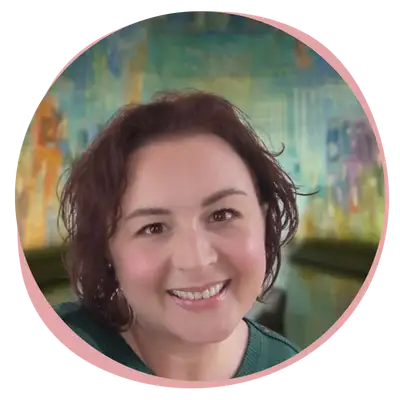
Rachel Gibson is a museum education researcher, consultant, and former frontline educator helping museum professionals create engaging, sustainable programs for children and families. On the Modern Museum Education Podcast, she explores topics like family learning, audience engagement, museum strategy, program design, intergenerational learning, and the real-world challenges museum educators face every day.
Part conference session and part coffee shop chat, each episode blends research-backed insights with practical strategies you can actually use—whether you're planning field trips, designing family programs, leading education teams, or trying to keep your creativity alive in a stretched-thin museum world.
If you believe museum education matters deeply—and that your work isn’t childish just because you work with children—you’re in the right place. Discover more at modernmuseumeducation.com!
Hi, I am Rachel, a resource expert and
career coach for museum educators who
are stretched thin, but long to fall
in love with their world-changing work.
After over 15 years with my own hands
in the glitter, I know how it feels
when your Board thinks your work is
childish because you work with children.
I know how hard it is to lead a
tour on a difficult subject, and I
know the frustration of waiting on a
school bus that is 20 minutes late or
worse, 10 minutes early as I'm heading
towards the second half of my career.
I find myself with a passion to
help my fellow educators reverse the
chronic state of being overworked and
underappreciated so that they can reclaim
their creativity and emotional energy.
Join me and my museum buddies as
we share our best tips, tricks, and
techniques for modern museum education.
Hello!
Hello friends.
Welcome back to the Modern
Museum Education podcast.
My name is Rachel and I'm your host.
So as I'm recording, this is currently
the spring time here in North America.
And I have really grown to love spring.
It wasn't always my favorite season.
But as I have gotten older, it
has become my favorite season.
And I think it's because spring is
so full of possibility, in a real
grounded way that like the New Year
season, for example, is not to me.
New Year's is a great time for thinking
about, you know, big pie in the sky
dreams and the aspirations that you
have, but you know, it happens in the
middle of winter, which is for me...
I really, you know, of course I,
like I said, I live in north America.
The that, you know, January time,
the beginning of the year, it happens
right in the middle of winter, which
is a time for hibernation and kind of
hunkering down and not taking risks and
not actually taking a lot of action.
That's like the energy that
winter has for me, it's a very.
It's a time of the year where I spend
a lot of time just being not really
doing a whole lot, but in the spring,
as things start to grow and they bloom
and they sprout, it just feels like
there's an energy, like an energy of
growth, but it's all very small and
like baby leaves and little flower buds.
And it's like, it's all this just kind
of early spring, buzzy excitement that
really gets my active juices flowing.
So it's no surprise that here
in the spring is when I finally
couldn't take it anymore.
And I had to just get back up on
the horse and record a new podcast.
If you have followed my work at all,
you know I put out I think maybe
seven podcast episodes in 2023.
And then all of that came
to a screeching halt.
At the end of the summer
when I went back to school.
So I don't know if you know this,
but getting a PhD is no joke.
It is a lot of work.
And I went back to school to get my
PhD at the same time that we had a big
family kind of change in our lives.
And.
Anyways, life in the last six months
has been kind of bonkers in my house.
And.
You know, the podcast was just kind of
put on hold and a lot of my big plans and
dreams and goals for the Modern Museum
Education space were also put on hold.
And I was doing some smaller work and
really leaning into my schoolwork,
especially, but with this new season I
have, you know, now, a semester and a
half of school sort of under my belt,
I have kind of figured out the rhythm
for how to keep up with my coursework.
And I'm feeling like I have a
little bit more capacity in my
life to restart a lot of the things
that I kind of teased last year.
Cause I, the thing is, I so deeply
believe in the power of museum education.
And it makes me so, so sad to see
my fellow museum educators getting
burnt out and leaving the field.
Or just sort of like, you
know, phoning it in at work.
It just, it, that just breaks my heart.
And I have such a passion to
advocate for the work that we do in
museums, specifically with children.
So I've done a lot of, while I haven't
been really active you know, out on the
interwebs with Modern Museum Education.
And I haven't been putting out a
podcast, I have been thinking so much
about what it is that our field is and
can be, and should be and what we need.
And a lot of this has informed by the
work that I am now doing in my PhD.
So I'm not sure if I really talked
about this much before, but.
I've gone back to school.
To get a PhD specifically in
educational leadership and policy.
So it's a sort of broad,
interdisciplinary education degree.
But my research is focused specifically
on education in the museum space.
And that research and that work,
it is lighting a fire under me,
Even more so than before, when I
was just sort of thinking about
going to get my PhD in this.
Earlier this week I had the opportunity
to speak on a virtual panel for the EMP
network for emerging museum professionals.
And it was all about the, sort of
the experience of being an IMP, an
independent museum professional.
And as I was putting together my
thoughts to speak on that panel, I was
reflecting a lot about my motivations
to get into independent museum work.
And I was personally motivated,
internally and externally, and I think
I may have talked a little bit about
this in some of the earlier episodes
of my podcast about what, you know,
kind of what drove me towards wanting
to do museum education consulting.
And my vision for what that can look like.
And You know, really, I was so driven
by this desire to dive deep into the
theory behind what we do in museum
education, why we do it, how it can be
better, how it can be easier, how we can
advocate for the resources that we need.
Yeah, I was really on fire for this
and over the years over the last, I
would say probably like four years,
of my time working full-time in a
museum, just increasingly every day
I felt a pull to work with museum
education in a broader context.
So not just inside the four walls of
my institution, but in the wider field.
So as I was thinking about my motivations
and what it is that I want to do.
And why I want to do it and why
I'm so passionate about museum
education consulting and why I'm so
passionate about educating museum
educators about the work that we do.
And all of these thoughts are kind of
swirling around as springtime is, is
emerging and there's this kind of shift
in the energy of, you know, around me.
I'm not feeling like I want
to hibernate all the time.
I'm feeling like I want to get
out and I want to do things.
And so I've really been thinking
about how I can create the space
with the resources that I have,
like, what is my capacity right now?
And as I was thinking about this,
like a mantra came back to me that
I heard, I don't even know where.
You've probably heard it.
It it's said a lot.
I think I've heard people
talk about it on podcasts.
I think I probably read about it.
But the question is:
what if this was easy?
And I kind of went back to all of my big
plans and goals and dreams and aspirations
for the independent work that I'm
doing, for elevating the field of museum
education, for my PhD, for my family.
And trying to fit all of
those pieces into the box
that is the shape of my life.
What if it were easy?
What if I could do these
things in a way that freed up
a little bit of space and time.
What if it was easy?
What if it was fun?
And so I went back kind of to
the drawing board to think about
what, what if it were easy?
And I realized that what I love, I
really, really, really love to do, I do
love to write about museum education.
But to be honest, I'm writing about museum
education a freaking lot every week.
I'm writing pages and
pages and pages for school.
I just can't I can't blog about
museum education right now.
I just, I simply cannot.
But I really do love putting out the
podcast, but, you know, I had some
voices that I was listening to last
year that said, if you're not doing
a video podcast, there's no point.
And I couldn't really, I didn't
have the truth is I didn't have the
capacity in my home to put together
a really nice looking video podcast.
And so I tried to kind of bootstrap it.
And I was never really
happy with the results.
So I that's another reason why I
kind of stopped doing the podcast.
Cause I didn't, I didn't love the output.
So as I was sort of thinking about this,
I thought, well, how can this be easy?
It can be easy if I just forget the
video part, because the way that my
life works right now, I'm not often
in a position or a place where I
can put out a nice video podcast.
But I can put out a nice audio podcast.
So I thought, why am I, why
am I making this harder?
I'm going to make it easy and
I'm going to do what I can
within the capacity that I have.
So that's just one example of how I
am taking action now inspired by this,
the spring time growth to get back to
what it is that I really want to do,
which is to support museum educators.
So as I was thinking about
this, I thought well, okay,
how would this apply to me,
like, how would this message have
applied to me if I was still a
full-time museum education director.
So I have three tips for embracing
springtime energy and taking action.
Number one is to avoid
a full-on systems reset.
I am the absolute worst about
wanting to replan everything that
I've already planned because somehow
planning feels like productivity.
But for me, it often becomes
productive procrastination.
So I am consciously trying to
avoid resetting all of my systems.
I actually put a lot of really great
systems in place for myself last fall
and over the winter when I started
school and realized that my capacity
for work had shrunk considerably.
What I didn't do was take
action on those systems.
I like set them up and then
just kind of looked at them.
I didn't actually use them.
I did not work my plan.
So I am recommitting to working the
plan that I have already set up.
I am not going to re-do all of my systems.
I'm going to work the
systems that I have in place.
And then as I find things that could be
tweaked, of course, I'm going to tweak
them, but I'm not starting from scratch.
That is not what this is about.
I think that sometimes we confuse
starting small and starting over.
And I don't think that you
always have to start over.
Sometimes, sometimes you totally have
to start over and I've been there.
I've started completely over.
More than once.
But this moment for me at least
is not a moment for starting over.
This is a moment for starting
small, taking the good foundation
that I have and just taking action.
Which leads me to my second point.
And my second point is,
what am I over-complicating?
How can this be easy?
As an education director, how could I
have stopped over complicating things?
Well, for one thing, I would be kind
of feast or famine, all or nothing,
when it came to tracking metrics.
I never tracked my metrics in terms of
the number of students I was seeing,
the number of teachers, I was seeing
the number of different schools,
the number of repeat schools, the
amount of money we were making, the
amount of money we were spending.
I would set up systems to track
those and then I wouldn't use them.
And then I would go backwards and try
to track like six months of metrics.
All at once.
And that was so complicated and
it was literally the worst thing.
Anyone who's ever worked with me can
attest to this fact, I would store all
of my receipts for the entire year.
I would store them in a single file
folder, literally just pile them up.
And then the museum where I worked
at our fiscal year began on July 1st.
So I had to have all of those receipts
filed and organized before the audit.
And, you know, maybe if our CFO had
pushed a little harder and been a little
bit more like "you have to have these
in every month," I would have done it.
But I didn't have that
external accountability.
And the only, only external
accountability was it had to
be in by the end of the year.
So I would I would put off doing
this until the very end of the year.
And I would have to take an entire
week and spread out receipts over my
whole desk area and sort them into month
and take the credit card statements.
And y'all, it was such a nightmare.
And every year I kicked myself for
doing it and every year I did it again.
And if I would have stopped over
complicating it, if I had just taken the
action when I should've taken it, it would
have just completely turned it around.
And part of the reason why that I put
it off is because I complicated it.
I had this like complicated spreadsheet.
I didn't really need to know how
much money, for me, I didn't need to
know how much specific money I was
spending on this one specific supply.
What I really should have been
tracking was just, how much
was I spending on this program?
How much was I spending on this program?
If I had thought about it, and if I asked
myself, how can I make this simpler?
I could've done it much more
efficiently and much more effectively.
I could have gotten the answers I
needed without all the extra work.
So that is the question to ask,
what are you over-complicating?
What do you actually need and how
can you actually make it happen?
For me?
I actually needed to put a podcast out.
I didn't need it to be a video podcast.
I just needed it to be out there.
So here it is.
When I was doing budget reports, I didn't
need to know what, how much money was
actually going to construction paper.
I just needed to know how
much was going to supplies for
this one particular program.
And so if, once I, eventually I
did sort of settle into a less
complicated budgeting system.
But even still, I never quite.
I never quite made that a good habit.
And that was, that's a sort of a different
problem, but the question here is what
is one small thing that you can do to
make the work you're doing easier, even
if it feels at first, like it's a little
bit inferior, maybe it's not exactly
the way you want it ultimately, you can
always grow forward when you start small.
And the third point is to
just be bold and do it messy.
Embrace that messy action.
For me, that means pushing
myself out of my comfort zone.
Putting myself out there.
Maybe for you, it means getting
honest about what demographic
audience is not coming to your
site and asking yourself why.
How can you reach that audience?
But remember, how can you do it in a
way that it's not over complicated?
How can you do it in a way
that is simple to start?
I think also sometimes when we
think, how can this be simple,
we believe that we are settling.
But I'm not encouraging us to settle.
I'm encouraging us to start small,
start simple, give ourself a runway,
give yourself a place to grow.
I was just talking to my husband
about this because he does a lot of
creative writing in the RPG space.
And
he was just talking about how there's
a tendency sometimes to want to
fill in like all the gaps of the
story all at once, in the beginning
before the story actually takes off.
But that what you really need to do
is just paint with a broad brush and
leave yourself space to grow your story.
And I think that that is also true as
we're running education departments.
Give yourself space to grow.
You don't have to have a program
that is completely sold out
the first time you launch it.
You don't have to have the
most perfect classroom space.
You don't have to have the most
elaborate gallery interactives.
But, but you can have something.
How can you make it simple?
How can you work within the
capacity that you currently have?
So that is my encouragement to
you today is to just start small.
There's nothing wrong with starting small.
That's another lesson that I think
we can learn from the spring time.
Everything in the spring
time starts small.
All the little baby animals that
are born in spring are baby animals.
All the little flowers are buds.
All the grasses are just sprouting.
All the leaves are just little
bitty, tiny baby green leaves.
Everything's in nature starts small.
There's nothing wrong with starting
small and if there was anything I
wish I could go back and tell myself
in 2016 when I inherited an education
department that was kind of in shambles.
I wish I could go back and tell
myself it's okay to start small.
It's okay to make it simple.
It's okay for it not to be what
your be all end all dream right now.
It's okay to spring clean this.
To get rid of the cobwebs,
to just wake everything up.
Take small steps, baby actions.
And that is essentially
what I am doing now.
So I am kind of restarting the work
that I began last year with Modern
Museum Education, with the podcast.
So let's all take our
cue from the spring time.
Let's recognize that it is now time to
grow and no longer time to hibernate.
So we're going to put hibernation
time aside, and we're going to take
action on the things that we want
to take action on, but when you're
taking action, think about, ask
yourself, how can this be simple?
How can I make this easy,
so that taking action is easy and doable.
And then done.
How can I take those messy actions?
Those baby steps that aren't maybe
where I ultimately want to go.
But they are just the small steps.
Like what if this were easy?
And what if it could be fun.
And so here is to embracing
this early spring, buzzy energy
and making big things happen.
Thank you so much for joining us.
If this episode has been helpful to you
or interesting, please take a minute
to like subscribe and leave a review.
Which will help other museum
educators find this resource.
As always, if you would like to work with
me more directly, have any questions or
would like to be a guest on the podcast,
you can find links to all that and more
on my website, modernmuseumeducation.com.
I'll see you back here next time.
And in the meantime, please remember
that your work is not childish,
just because you work with children.