Subscribe
Share
Share
Embed
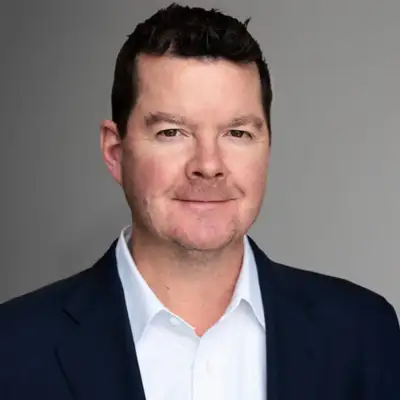
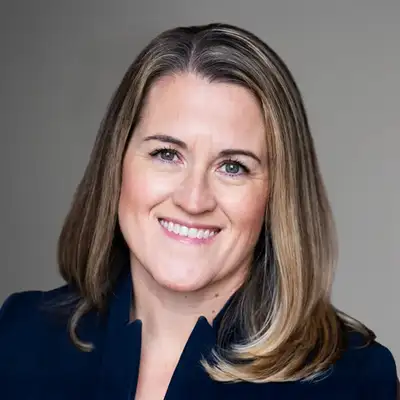
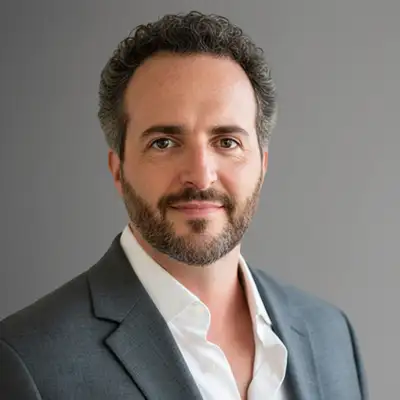
Meet the Insiders rewriting the rules of influence. Pulitzer Prize-winning journalist Brody Mullins and veteran DC strategist Lisa Camooso Miller interview the leaders who shape perception, move policy, and win when it matters. Not pundits or commentators – these are the operators driving some of the most critical strategies and outcomes in today's Washington.
Rhonda Growing up on prison grounds, you're surrounded by the worst criminals on the face of the earth. It sort of messes with your fear quotient, and so I've sort of been more prone to take risks that probably others wouldn't.
ANNCR Behind every major policy decision, every corporate strategy, every Washington power play are the insiders shaping the game and the new rules to win it. The Deciders with Pulitzer Prize winning journalist Brody Mullins and veteran DC strategist, Lisa Camooso Miller.
Lisa Welcome to The Deciders, where we talk to the insiders rewriting the playbook for effective advocacy in Washington. Today we're joined by Rhonda Bentz, who's the Executive Vice President of Public Affairs for the Consumer Brands Association. Rhonda, it's great to have you.
Rhonda Thanks for having me.
Brody Thanks for joining us. So Rhonda, you're the first guest we've had who grew up on the grounds of a prison. Tell us this story.
Rhonda That's why you invited me, I think. Well, my mother and stepfather worked for the Department of Corrections. In fact, my mom was one of the first female correctional officers in history. And they, Hollywood decided to make a movie, a made for TV movie about her life and experience, and it was called Women of San Quentin, which is not a porn flick. It's an actual movie. You can look it up. But it was a, you know, sort of interesting experience, you know, when you're surrounded by the worst criminals on the face of the earth. It sort of messes with your fear quotient. Like, you analyze fear differently. And so throughout life, I've sort of been more prone to take risks that probably others wouldn't.
Brody So tell us about your journey from there to Washington.
Rhonda Well, not surprisingly growing up on prison grounds, I sought a career in politics. And did political campaigns in California, state legislative, gubernatorial, worked for Pete Wilson, and then I went on the Bush 41 reelection campaign. And I thought, "I really like this campaigns and politics. I think I'll go out to Washington, DC." And so I packed up my car and drove across the country in February of 93, right after Bill Clinton got elected. And I thought, naively, I'm a Republican from California. People will want to hire me. And I was met with a lot of, like, she's adorable, adorably naive. But I did end up with an association, a public affairs firm, and then I got recruited by Visa USA to run their public affairs in DC.
I left Visa right before they went public to go work for another lobbying firm. And then went out on my own and did that for a number of years. I did a lot of crisis work for corporations as well as private equity firms and their portfolio companies. I got connected to a group of SEAL Team six operators that were making the transition from military to civilian life. Rob O'Neill, who was the SEAL Team six operator that shot and killed Osama bin Laden. But that isn't all of Rob's story. He was in every mission that we've seen the movies on. Lone Survivor, like, all of them, Captain Phillips, and he has great stories. And we negotiated a book deal for him, which was fascinating.
And then that got optioned by Lorne Michaels of Saturday Night Live fame. Like, negotiating a movie deal is bizarre. It's about the most technical thing I've ever experienced. And I've worked in the oil and gas industry. I worked in financial services industry, and now I work in the consumer packaged goods industry. And you think there's technical aspects to all of those things. It's got nothing on looking at a movie contract and going, "Oh my God, this is not my world, but we figured it out."
Lisa Rhonda, so many of our guests talk about their mentors. Tell us about someone that helped you through your transition to Washington.
Rhonda It's a bit of a challenge because my mentor was earlier in life. It was political campaigns in California who basically hired me on the Pete Wilson campaign. His name's Marty Wilson. And one thing he used to say to me, he's like, "I don't care what you were taught in school. There is such a thing as a stupid question and don't ask me." You know, like, in other words, sit, listen, you know, absorb, and then ask questions. But if your first sort of thing is to hear the sound of your own voice because you want to be present in a meeting and show yourself as present, the reality of that is you're going to ask something stupid and that is going to impact how people view you going forward.
Just don't ask the stupid question, which is his way of saying, "Shut up and listen," right?
Lisa There's something about being on a campaign too that — yeah, really, there's a finite amount of time, and there's not a lot of time to waste. So listen first, ask the question next. That's a great lesson.
Brody You mentioned Bush 41 is your first sort of foray into politics. The Republican Party back then and the Republican Party today are two completely different parties. Tell us about what changes you've seen and what has driven those changes in the party.
Rhonda For those of us who represent the business community, the old playbook that we've had, it's out the window. Like, you can't do the same old things because they expect you to do the same old things. And once you do the same old things, it's like they've sort of boxed you into a place that you can't get out of. So you really have to think differently. And I tell people this, for this administration, this sort of Republican party, how Trump has shaped it is really in sort of the deal making space, right? He's a guy who likes to make a deal. He wrote a book on it. And I've encouraged people to read that book because it does give you somewhat of a pathway in terms of not necessarily where they're going to land on issues, but how you sort of come to the table and negotiate with this administration, which is highly different.
The president in his heart is a businessman, right? It's what he knows and what he does well. And so to the extent that you sort of come to the table trying to make every policy argument you can think of without thinking about how to package this in the form of a deal is going to net you the wrong result, right? He's shaping the Republican Party for a longer term sort of repositioning and a reset that I think isn't just going to go away once he leaves office.
Lisa The Consumer Brands Association represents the most recognizable brands in the country and really the globe. Talk a little bit about what it is you do at the association specifically.
Rhonda Well, one of the most important things we do is defend their freedom to operate, right? This is one of the most, if not the most regulated industry. It's food, beverage, home and personal care company. So it's really the products that you have in your home. And it's incredibly important for us to maintain the amount of trust we've built with consumers. We have studies that say that consumers interact with our products 42 times a day. So you don't buy a car every day. You don't get on a plane every day. You don't even fill your car with gas every day, but you do buy our products every day. You interact with them in some way, shape, or form, 42 times a day. Our companies take it very seriously, but we also have a job to do in terms of advocating for the industry.
And advocating for the industry also means advocating for the consumer. Because we don't move without the consumer. There's really no one closer to the consumer. We know that consumer. It's our job to know that consumer, right? We have to meet them where they are on any given day, in any given moment. And so innovation is key. But our job is to advocate and tell the industry story and defend the industry's positions and maintain their freedom to operate.
Brody You talked about one of your jobs being to defend the freedom to operate, which is sort of an incredible thing to say with Republicans in charge of the House, Senate, and the White House, of course. We also talked about how the Republican Party is changing. How has that affected your day-to-day job?
Rhonda What's happening is really at the state level. States being much more aggressive and pursuing policies and proposals that in typically red states they weren't interested in pursuing before. It's a reflection of a very sort of vocal MAHA, Make America Healthy Again movement. A lot of Republican legislators wanting to align with that. And by doing so, aligning with the president or aligning with Secretary Kennedy. We've seen an explosion of legislation in the states. The challenge with that is it creates a patchwork. And any company trying to do business operating under a patchwork is just incredibly challenging. It contributes to cost. It contributes to consumer confusion. It impacts the supply chain. All of those things which are incredibly important. What companies love most is stability, right? How do I sort of long-term plan? How do I make sure I'm making investments and innovating in the right place?
I can't do that if the policy environment and the regulatory environment is unstable. And if you have 50 different state laws on how you label a product, I mean, that becomes impossible. But the most important thing is it becomes impossible for the consumer who is buying something in Louisiana that looks a lot different than it and could cost a lot different than what it does in Texas. And I think for the industry, the most important thing is to have, and for the consumer, sort of one source of truth to ingredient safety and disclosure. And that really should be determined by the FDA. They are sourced for it. They have the expertise on it. Because for us, I mean, product safety is non-negotiable. That's just the sort of table stakes. But managing all these other regulations has to have some sort of consistency and uniformity to them.
Lisa We'll be right back.
Brody Welcome back to The Deciders.
Lisa Rhonda, tell us more about the Consumer Brands Association. Who are the members?
Rhonda Well, first, I mean, the industry, the consumer packaged goods industry, which is food, beverage, home and personal care companies. It's an economic powerhouse. We have the largest workforce by employment. 22 million people work for the industry or connected to the industry. That's huge. Contribute $2.3 trillion to the economy. Those are real numbers. And they make their products here and sell their products here. That's really super important because Made in America was something that the industry has been part of since their inception.
Lisa Talk to us a little bit about the challenge to consumers that the MAHA movement has presented.
Rhonda Well, I think the first thing they're viewing this is it's not a blip on the radar screen. It's not going away anytime soon. And I think they're trying very hard to understand what this means and what impact it's going to have on the consumer writ large. There's much more interest in understanding what's in the products that they're buying. We want to sort of say transparency is at the heart of what we do. It's part of what builds that consumer trust. So the industry is invested in a lot of different places on transparency, facts upfront. There's Smart Label, which is the QR code where you can sort of do a little bit more research and understand really what's in these products. We have a website, foodprocessingfacts.org. And then we also have a website called Truth About Ingredients, which helps clear up some of the myths or the misinformation out there about what these ingredients do, what critical role they play within the product.
So we're really trying to sort of say, look, the consumer wants more. We're going to give them more. And the heart of that is really focusing more so than we ever have before on transparency.
Lisa What is your view of the MAHA movement? Do you feel as if they're giving clear direction?
Rhonda I think that there is a lot of passion behind the movement. I think there's a lot of sincerity behind the movement. My concern is there, it's also ripe for being co-opted by, you know, influencers that claim to sort of want to be in the wellness space. You know, if you look at a lot of their Instagram feeds and you click on their bio, they're selling products of their own. I think the movement has to be always making sure that they speak with a credible voice, that they are using sound science, risk-based science, that they're not being co-opted by those who sort of see an opportunity to grift, essentially.
Brody There's also, I feel like a communications issue. So I have a brother who buys Froot Loops for his kids, and he says, you know, there's like 19 ingredients in the Froot Loops in the US. And they went on a trip to Canada and there's only three ingredients. And he says, "Well, this shows that in America, we're putting all these needless chemicals in." But I think in reality, it's more that the FDA, our FDA has the resources to approve more of these ingredients. And in Canada and other countries, they don't.
Rhonda There's a lot of that. There is a lot of the misinformation. Brody, thanks for bringing that up. We get the same sort of critique about Europe. Why are there so fewer ingredients in Europe or Canada than there are in the US? And the reality is, the labeling laws are different. The FDA has far more detailed requirements for labeling in the US than any other sort of regulator around the world. And in some cases, yes, the US population is different. Their tastes are different than Europe and Canada. And so we have to, as an industry that again wants to meet the consumer where they are, we develop products specifically for different regions based on what they like, what their culture's like. All of those things have to factor into how the industry thinks about providing these products to the consumer.
Brody You've talked about with the rise of all the new regulations in the states and the need for certainty in any industry that you want the FDA to be the preeminent regulator. Is it harder to do that in a world where Republicans control Washington and Republicans are inherently skeptical of big government agencies?
Rhonda Yes and no. I think in order to support some parts of the MAHA agenda that I think we're willing to come to the table on, recognizing they're hugely popular, some of these policies that the Republicans want to pursue as well, they need a strong FDA in order to do that. Without that, you know, it's hard to sort of pursue a national MAHA agenda that doesn't include a strong FDA. And a strong FDA means being well-resourced, being given adequate authority. All of those things matter. And so I think tying those two things together for Republicans is part of what we communicate. And I think they get that.
Lisa We'll be right back.
Brody Welcome back to The Deciders with Rhonda Bentz.
Lisa Rhonda, it's widely expected that there will be a shift in who controls Congress after November. Could be the Democrats take over the House, maybe the Senate. How does the change in Congress affect your industry?
Rhonda Well, I think with, particularly in the House, with the margins the way they are, and I think we're going to be seeing regular shifts in the Congress, particularly the House. And so you're going to be playing within those margins and developing your advocacy strategy with the recognition that could be every two, four, six years, there's going to be a change in leadership, a party change in leadership. And so always sort of preparing and making sure that you always operate in a bipartisan fashion. That constructive engagement isn't just limited to who's in charge. Constructive engagement is with all stakeholders, with both parties, and making sure that you sort of build up that reputation of these are honest brokers. They have solid, credible information that they're providing. Their data is accurate. We trust these guys. That's how we have to operate whether, no matter who's in charge.
And so that's how we operate.
Brody How does an industry like yours work to sort of bring that bipartisan pro-business center back? Or is that possible?
Rhonda You know, I think there's a realization that the number one issue on voters' minds, on Americans' minds, on American families' minds is grocery affordability. And that is felt very acutely by the consumers. I think both parties respect and appreciate the pressure that the American consumer is under. And so can we come to the table with some solutions? And that's why we think promoting and passing a uniform federal standard on ingredient safety and disclosure is so critical to sort of achieving that. And that should not be controversial and it should be bipartisan, because at the end of the day, we're here to service the consumer. And that's what they want and need.
Lisa Rhonda, we ask every Decider the same three questions. The first one is, what's a decision from the past year that you're especially proud of?
Rhonda One of the things I'm most proud of is I've built a really, really strong team. And how you sort of recognize that is when a strong team member leaves and whether things collapse or people just pick up and you just keep rolling. And I had an incredibly strong senior person leave to go work for a member company and we didn't miss a beat. People stepped up without being asked. And just demonstrating that you have a strong bench. And I've been reflecting on that over the past several weeks as we continue our search for a senior vice president of federal affairs, that we haven't missed a beat. We've shown up where we've needed shown up. We haven't lost any ground. The position is incredibly important. But it was a demonstration that you made some of the right choices and your instincts were right.
And so I'm very proud of building that team and giving them all sort of pathways for success. Because when I think about my legacy, it's not, yes, I'd love to pass federal uniformity. But my most important legacy is making sure that everyone on the public affairs team at Consumer Brands has a pathway for success.
Brody It's the first job listing we've had on the show.
Rhonda So anyone—
Brody Hopefully people are watching. What's one thing you wish you could have done over?
Rhonda I guess I would start with maybe waiting a little bit longer before I left Visa to enjoy the organization going public. I think I left a little too soon and, you know, that was a timing question and I should have been more patient.
Lisa What would you say is something that Washington is not thinking about, but they ought to be?
Rhonda I think there's a lot of people in town who think that once President Trump is out of office, things will go back to quote, unquote, normal. I think this is our new normal. I think we need more than ever, people who appreciate and can build creative solutions, but do it quickly. I tend to over-index looking for people who have campaign experience for this reason. Really people who can adapt well to change, and understand that even a new president, I think, is going to take some of the lessons of the Trump administration and carry that forward. And so I don't think this sort of will go back to normal is going to be how we operate in DC. I think there's still so many people who are in denial about the new way of Washington.
And look, I think it's important that our government gets that disruption every so many years is important. It's healthy. Those things matter. I think this is something we have to get a little bit more accepting of, that this is going to be the way forward.
Brody Rhonda, thanks so much for joining us on The Deciders.
Rhonda Thanks so much for having me. I had a great time.
Lisa Welcome back to The Deciders. That was Rhonda Bentz. Brody, what did you think?
Brody This is the new normal. I thought that was my biggest takeaway that, you know, so many people think, well, once Trump leaves, everything goes back to normal. And she doesn't think that's the case, and I agree with her. I think this is the new normal. And that's a real problem for almost everyone in Washington, for every big company, because you've got the Republicans becoming more populist, and now the Democrats also turning against companies. And if this is the new normal, then the stability that Rhonda was talking about that businesses want, we're not going to have for a long time.
Lisa It strikes me, too, that the advocacy piece of what she does is very consumer-focused. Every day we wake up and we interact with the products that they represent. And that presents, I think, a bit of an opportunity, but could also be a challenge.
Brody Thanks for joining us on The Deciders.
ANNCR The Deciders is hosted by Brody Mullins and Lisa Camooso Miller, and produced by Dave Tobey. Subscribe wherever you get your podcasts. Find more online at deciders.show and follow The Deciders on YouTube, LinkedIn, and X.