Subscribe
Share
Share
Embed

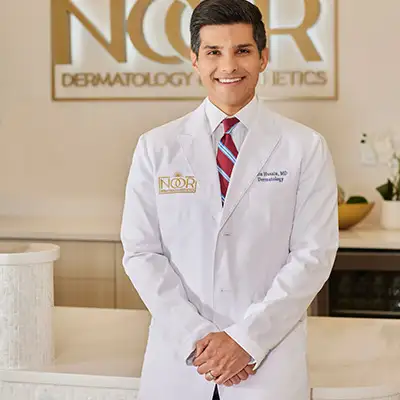
Welcome to Skinside Out, where science meets beauty, the ultimate dermatology podcast! Dive deep into the fascinating world of skin health with expert insights, evidence-based discussions, and myth-busting truths. Each episode explores the medical, cosmetic, and surgical aspects of dermatology, while keeping you informed about trending skincare topics. Whether you’re a skincare enthusiast, medical professional, or just curious about how to achieve your best skin, Skinside Out is your go-to resource for staying informed and inspired.
Real skin, real science, real confidence with Dr. Zaid Hussain. Welcome to- Skin Side Out
[00:00:07] Speaker: Welcome to Skin Side Out. I'm your host, Dr. Zane, with Heather and Courtney. So today, we're talking about how to optimize your fall treatments. We're gonna go over how to use certain products, medications, and also just some good tips
So you're ready for fall. Let's get right into it. So Heather, what should we be doing to help our skin for these treatments?
[00:00:27] Speaker 2: The biggest thing is optimizing your skincare.
Um, so... And i- it really just depends on what conditions you have and what procedures you're prepping for. Um, but I think having a good base of, like, a vitamin C serum, a retinoid, sunscreen, that can, um, really save you in the long run, but it can also prepare you to get the best benefit out of procedures, especially retinoids, because they're gonna keep the skin cells turning over faster, and so that can help just, um, kickstart things before your procedure even happens.
[00:01:01] Speaker: Yeah, fall's a interesting season. It's a transition from, you know, warmer, more humid, um, weather to a little bit more cooler and drier weather, so our skin tends to be reactive. So I do think that the hallmark of prepping for your treatments and getting the best results possible is optimizing your skincare.
I completely agree. Now, we talked about retinoids, vitamin C serums, and, you know, that's a mainstay of a good regimen.
[00:01:28] Speaker 2: Mm-hmm.
[00:01:29] Speaker: However, what can we do in addition to that to further optimize and stimulate?
[00:01:34] Speaker 2: there's lots of different products that can help regenerate or even help to set back the skin cells so you're, um, almost feeling like you're aging backwards, or your skin is aging backwards.
Um, there are topical biostimulators that can help, pre-treatment for whatever you're getting done to just kickstart that glow. Um, so there's lots of different things that we'll kinda talk about.
[00:02:02] Speaker: Yeah.
[00:02:02] Speaker 2: And discuss.
[00:02:03] Speaker: Courtney, what about you?
[00:02:04] Speaker 4: skincare-wise- Mm-hmm ... using things like, um, growth factors exosomes, peptides, I think those are all really good adjacent skincare treatments to utilize pre-treatment.
Um, I think, number one, it will help with your recovery from different types of lasers, microneedling, and then I think it will also amplify the amount of collagen that we're kind of getting from those treatments, um, as well as just, um, overall skin health in general.
[00:02:30] Speaker: Yeah. So let's go into specific, um, problems that we see that people want to correct or improve with their procedures.
I think pigment's a big one. Mm-hmm. So we're just getting out of summer, a lot of sun exposure. You may have forgotten to use your sunscreen, and you see some hyperpigmentation and some other, like, sunspots coming out. So where do we go from there in terms of skincare?
[00:02:54] Speaker 2: Hydroquinone is a big one.
We use a lot of hydroquinone in our practice. Um, so this is a brightening agent that can be used topically, and it is really good pre-procedure, um, especially if you are prone to hyperpigmenting with certain procedures. , You have to be careful with hydroquinone because you don't want to use it forever.
But it is a really nice, um, complement to a lot of different procedures. And ideally, you're using it for a few months, um, with a break in between. But if you're in a time crunch and you really want to get a procedure done, I would say if you're... especially if you're targeting pigment, try to do it for at least two weeks.
[00:03:32] Speaker: Yeah. And hydroquinone is a prescription, so it's definitely a good idea to see your board-certified dermatologist, make sure that it's an appropriate treatment. And obviously, if there's something else going on pigment-wise, um, you know, we can discern what it is and the proper treatment, because hydroquinone is not the answer to all your hyperpigmentation problems.
Mm-hmm. Sometimes it can al- actually cause more problems. Yeah. Yeah. Mm-hmm. Um, what other agents do we like?
[00:03:58] Speaker 4: , I love tranexamic acid, so TXA, um, arbutin, kojic... I love kojic acid azelaic acid. Um, but especially arbutin and TXA, they are, um, great for pre-treating. Um, they're great for those breaks that you want to take from hydroquinone.
So when you don't want to overuse it, I think it's a great, you know, substitute. Um, the kojic acid and the T- TXA I tend to use, like, a lot pre, um, pre-peels if they don't want to do hydroquinone. And then, um, yeah, azelaic acid, not as much, but I think it can be helpful when used, like, as like a- Mm-hmm ... like a mix.
Like, I think our TXA has azelaic acid in it. Yeah. And I think when used combined, it does really nicely.
[00:04:38] Speaker: And I love glycolic. Mm-hmm. Um, I think that does a really nice job with brightening the skin-
[00:04:42] Speaker 4: Mm-hmm ...
[00:04:43] Speaker: and allows better penetration of other ingredients- Mm-hmm ... To help-
[00:04:47] Speaker 4: Mm-hmm ...
[00:04:47] Speaker: maximize their effect.
Um, obviously retinoids, cell turnover, helps with exfoliating, helps with pigment reduction, so that's always a good option. But you have to be careful, obviously, with sun protection. It does make you more sensitive to sunlight-
So those are some topical agents that we routinely recommend to patients.
Are there any treatments that we would recommend in prep for more intensive treatments in the fall?
[00:05:15] Speaker 4: There are definitely a few different things. Um, I mean, any, I
[00:05:19] Speaker: think- Like pre-treatments.
[00:05:20] Speaker 4: Okay. Yeah. Um-
[00:05:22] Speaker: Not like full-on, like, you know, extremely extensive treatments, but treatments that can really help to optimize the future treatments.
[00:05:30] Speaker 4: I think it's always a great place to start with something like microneedling or, um, something I've been really liking lately is the PRX peel, um, to help stimulate collagen. It's a 33%, um, TCA, trichloroacetic acid, with hydrogen peroxide just to help drive the, the acid in without disrupting the skin barrier.
But I think those are great. Anything that kind of initiates that collagen production and starts that process to- Mm-hmm ... you know, start going, I think is always a great, like, pre-treatment to whatever you're doing.
[00:05:58] Speaker: And what I love is that you can do it any time of the year.
[00:06:00] Speaker 4: Mm-hmm.
[00:06:01] Speaker: There's no downtime. And the results are pretty pronounced.
Mm-hmm. Like, you see it pretty quickly. Mm-hmm. Like, by the next day, like, I see a glow.
[00:06:09] Speaker 4: Mm-hmm.
[00:06:09] Speaker: And, um, I think most of our patients have been really pleased with the results, and it kind of complements a lot of the procedures that we do. So I think it's great getting a series in before, you know, some more intensive lasers or, you know, ablative treatments, things like that.
Um, I do think that that will complement the skincare and boost collagen synthesis and a lot of other things to help optimize results. Mm-hmm.
[00:06:31] Speaker 2: Yeah, and you can do it, you know, weeks ahead, or you can even do it on the same day as most procedures. Um, I think one thing that- W- we should preface, too, going back to the topicals, like we're not telling you to use your retinoid right before your procedure.
Like you do wanna give yourself a break, but- Mm ... we're thinking, you know, if you have some time before you're planning on doing procedures, these are things that you can kind of kickstart. But there are certain things like glycolic acid, like retinoids, that you would wanna stop a few days before certain procedures.
[00:07:09] Speaker 4: I think it's definitely, I feel like, provider dependent. I feel like, you know, I have some people who've gotten laser hair on the face in the past and have, you know, stopped their retinoid a week before. I've never had an issue with, with laser hair patients. I, I think it's definitely provider dependent.
One thing I definitely don't play about is the chemical peels. Although I feel like the last time I did your chemical peel, you started frosting and I was like, "When's the last time you used your retinoid?" Last night. Last night. So I don't know. I think also when you get to know someone's skin too, like there are actually patients that I do have continued using their retinoid before a peel, especially my male patients, um, just because their skin is a little bit thicker- Mm
more oily. And if I want that peel to really penetrate, then the retinoid does help to kind of like help drive that in.
[00:07:49] Speaker: Yeah,
[00:07:49] Speaker 4: I,
[00:07:49] Speaker: I actually prefer it. I feel I get more deeper peel, um, in a sense and more of a result. Mm-hmm. So I'm on board with it. If they're ready
[00:07:57] Speaker 2: for that.
[00:07:58] Speaker: Yeah. Um, what else can we do? Um, can we start with lighter peels- Mm
getting ready for like more intensive peels or other procedures?
[00:08:07] Speaker 4: Yeah, I love over the summer, I- Mm ... I have most of my, I would say like definitely a lot of my melasma patients, but just anyone who's trying to maintain during summer, I think glycolic peels are phenomenal, and I'm actually a huge fan of mandelic acid, too.
Um, I think it's definitely mo- a lot more gentle. But, um, if someone's just looking to do a little something to help refresh throughout the summer and kind of prime the skin, then yeah, I think mandelic acid or glycolic acid is a great, great option. Low downtime, you know, low risk, um, and just getting that overall like brightening to the, to the skin.
[00:08:37] Speaker: Yeah. And going back to tranexamic acid, so you were talking about topical tranexamic acid, so you can take it orally. Mm-hmm. It's a prescription. And I think it works really well for a lot of my stubborn melasma patients. So that's always an option. And you know, seeing your dermatologist, um, we can see if that would be a good option for you, and a lot of my patients have had good success with
[00:08:56] Speaker 4: it.
Glutathione's another one. Mm-hmm. Um, you know, supplements or injectable, we offer the injections in the office. But I think we've had a lot of patients that have had really nice results with the glutathione.
[00:09:06] Speaker: And I really do like thinking about supplements also to help prep your skin. So I like antioxidants, pro and prebiotics, and certain extracts that can really optimize and also protect you.
So one of our favorites is Inner Glow Age Defense, and I love it. It's all plant-based, got great antioxidants, pro and prebiotics for your gut and your skin health, reducing inflammation, and it's got this extract called polypodium leucotomos. It's derived from the fern plant, and it has a lot of unique properties.
It reduces your risk of burning. It helps to reduce the oxidative damage from UV light and a lot of other processes. So I do think that that's a great option to consider, um, before, after the treatments, and you can actually continue it.
[00:09:52] Speaker 4: Mm-hmm.
[00:09:53] Speaker: Yeah. Um, anything else from a pigment standpoint that we can do?
[00:10:02] Speaker 4: Sunscreen. Yes. Can never forget- Yeah. ... that sunscreen.
[00:10:05] Speaker: That's a must.
[00:10:06] Speaker 4: Yeah. Um- Trying to avoid burning at the, the beach, you know, all summer and then trying- Yeah ... to come in in, like, October for your laser treatment-
[00:10:12] Speaker: Yeah ...
[00:10:13] Speaker 4: still with tan.
[00:10:14] Speaker: And although I recommend mineral sunscreens, any sunscreen that you're gonna use is beneficial.
So just find one that you like, be consistent with its use. Um, I really do like the Isdin sunscreen. Isdin. Um, the Eryfotona Actinica, and the reason why is it has these repair enzymes in it that can help to reverse DNA and cellular damage from UV light, like, while you're wearing it. So it protects and repairs.
Mm-hmm. So it's pretty cool.
[00:10:39] Speaker 4: That and the Inner Glow I feel like is such a good combo- Mm-hmm ... for especially people prone to, to sun and pigment, and, and skin cancers too, I think.
[00:10:46] Speaker: Yeah. Okay. So moving on from pigment, let's talk about vascular reds. So many of our patients also, you know, start getting sensitive to the changes in weather.
We start seeing more redness, more flares of rosacea, more skin sensitivity. Heather, how do we approach these patients?
[00:11:05] Speaker 2: Um, I think it's patient-dependent. There are lots of great topical options that you can do to help really calm down the redness, whether it's kind of a maintenance thing or, like, a pre-event kind of calming.
Um- As far as topicals, there's, you know, there are sulfur-based products. There's the tried and true ivermectin, azelaic acid, like we mentioned. Um- Metronidazole. Metronidazole is really great for calming down the inflammation. But then you also have things like Rhofade, which are really great, like, pre-event.
Like, let's say you're going to a wedding and you wanna drink wine, and you flush very easily if you drink wine. And so that can really help, um, vasoconstrict your blood vessels too. Some people do use that more on a regular basis, but it is really good for, like, an event, um, kind of use. Um, and then of course lasers.
I think the lasers are really great at, um, vascular, um, conditions like rosacea. So, like IPL, DermaV®- Mm-hmm ... those can really help make a big difference.
[00:12:09] Speaker: Yeah. And then oral antibiotics can play- Mm-hmm ... a huge role in reducing inflammation in the skin. So doxycycline is one of our favorites. Um, it really does a nice job with reducing redness, flushing.
Um, it also kinda halts the progression of, you know, those changes. And then also with breakouts, you know, there are some forms of rosacea where you get some pustules and papules that can be really bothersome to a patient, so doxy's really good at shutting that down pretty quickly. And honestly, rosacea's kind of...
You know, it's a balance, right? So you're gonna be using medical therapy, but often marrying it with, you know, cosmetic treatments like lasers, and I find that those patients tend to do the best. Mm-hmm. Yeah. Um, Courtney, anything with your facial patients? Do you change anything prior, um, or for your treatments?
[00:12:58] Speaker 4: I, again, I really like the mandelic acid- Mm-hmm ... for my rosacea patients. I find it's gentle. Mm. I find that almost always they're coming back and saying, "Oh, I really liked what we did last time." Mm-hmm. I think it's a little anti-inflammatory, and I think that just helps with some of the redness. So- Yeah ... yeah, I love mandelic acid peel.
[00:13:13] Speaker: The PRx, um- Mm ... did you like that one?
[00:13:15] Speaker 4: Yeah, absolutely. I think, you know, r- one concern I would say rosacea patients always have is, "Oh, I'm sensitive" and they fear that whatever you're gonna do. When you start throwing the word peel around- Yeah ... they're like, "Oh, you mean acid? Like, I can't... You know, my skin's sensitive, I can't do acid."
But I think when you start to kind of explain the science and how it works, and that it's not really disru- It's not really a peel ... it's not really a peel. Yeah. Yeah. I, and I- I've actually started straying away. Even when I say things like glycolic peel or mandelic, I find myself saying, like, enzyme treatment because when I use- Hm
the word peel, people think they're gonna peel. Mm. And I am like, "No, with this, I promise you're not gonna have downtime. You're not gonna peel." So it just is a little bit- Yeah ... less scary than if I jump in and I'm like, "Oh, we're gonna do a glycolic peel," even though I might just do a 20%. Mm-hmm. Mm-hmm. That you're not gonna have any redness or downtime.
Yeah. But it feels less scary saying enzyme. Yeah. I
[00:14:00] Speaker: mean, I feel like patients really think that they're gonna get the results like a deep peel that they see on social media, like, like they look like a burn victim. Yeah.
[00:14:07] Speaker 4: Mm-hmm.
[00:14:07] Speaker: That is not what we're doing-
[00:14:08] Speaker 4: Yeah, yeah ...
[00:14:09] Speaker: at all. So-
[00:14:10] Speaker 4: People are always shocked when they leave after a peel.
Mm-hmm. They're like- Does it? ... "Wait, I- Does it? Yeah, that's it. I don't look crazy. Mm. I look just a little red. Mm. And I'm like, "Yep yeah, told you." Yeah.
[00:14:20] Speaker: Um, so now moving on to the next concern, so skin laxity, um, fine lines, wrinkles, textures, pores. Like, what do we do for these patients prepping them for their treatments?
[00:14:34] Speaker 4: Topically, um, as we kind of mentioned earlier, growth factor serums for sure. Um, things like Bio Serum from NeoCutis I really love. Um, exosomes again, and then, you know, products, um, I was gonna say products like ReQ, but there's really no product like ReQ. Mm-hmm. Yeah. But ReQ is a, a newer product out there to help you know, stimulate your own fibroblast and produce, you know, your own collagen.
So I think topically definitely, um, you wanna stick to your own collagen production-
[00:15:02] Speaker: Yeah ...
[00:15:03] Speaker 4: serums. I
[00:15:03] Speaker: mean, I've been using ReQ, um, as well as Plated-
[00:15:06] Speaker 4: Mm-hmm.
[00:15:07] Speaker: Mm-hmm ... um, for the past few months, and I definitely have noticed a difference in my skin. Mm-hmm. And it also prepped me for my Nanoblade fractional treatment that I had last week.
So- I
[00:15:17] Speaker 2: feel
[00:15:18] Speaker: like you had a
[00:15:18] Speaker 2: really quick recovery.
[00:15:19] Speaker 4: You did, yeah. Yeah, yeah. You recovered fast.
[00:15:21] Speaker: And a lot of people have given me compliments. Um- Yeah ... like, "Your skin looks really great." And I really think that the combination of the two did a really good job.
[00:15:28] Speaker 4: Mm-hmm.
[00:15:28] Speaker: Yeah. Um, I bounced back a lot faster.
[00:15:30] Speaker 2: Yeah.
[00:15:31] Speaker 4: Mm-hmm. Yeah. Well, and w- then we also did use the exosomes post-procedure, which I think were probably really- Mm-hmm ... helpful as well. So, and we'll, I'll probably get into- Yeah ... what you do after treatments, but
[00:15:40] Speaker: yeah.
[00:15:40] Speaker 4: Yeah. Great combo.
[00:15:42] Speaker: Um, anything else that you can think of that will help
[00:15:45] Speaker 2: them? We mentioned retinoids earlier.
I think that's great- Mm ... for texture, too. Um- Yeah. I think like Courtney mentioned, um, the growth factors, the ReQ and Plated, those are probably gonna be like- Mm-hmm ... the most effective.
[00:16:00] Speaker: Yeah. So there's a lot of, you know, similarities between, you know, optimizing for specific concerns. There are nuances like pigment- Mm-hmm
versus vascular, and that's where you really should seek guidance, because you can definitely worsen rosacea and flare that up if you're using the wrong treatments. Yeah. And you can also make melasma worse using the wrong treatments, and then it's harder to treat, becomes more expensive to treat. So you probably would've saved yourself a lot of grief, aggravation, and also time-
[00:16:31] Speaker 2: Mm-hmm
[00:16:31] Speaker: by, you know, s- tailoring the treatment according to your actual problem.
[00:16:35] Speaker 2: Yeah.
[00:16:36] Speaker: So, um, I think that we're all ready for our fall treatments with this episode. If you have any questions, please feel free to comment, like, and subscribe. But until next time, Skin Side out.
Thanks for listening. This episode of Skin Side Out is complete. If you enjoyed today's episode, don't forget to subscribe, rate, and leave a review wherever you listen to your podcasts. For more tips, updates, and behind-the-scenes content, be sure to see what fun we're up to on TikTok. Follow us on Instagram and Facebook at Noor Dermatology and Aesthetics.
Check us out online at norderm.com. Discover why our patients give us five stars on Google. Call us today at 919-617-0717