Subscribe
Share
Share
Embed
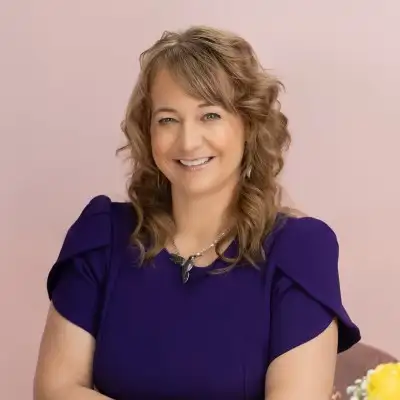
Welcome to "The Hummingbird Effect," a podcast dedicated to uncovering the subtle yet powerful ways that small innovations can transform your business. Hosted by Wendy Coulter, CEO of Hummingbird Creative Group, this show delves into the stories and strategies behind successful brand building.
For over 25 years, Wendy has helped CEOs and business leaders redefine their brands through innovation and compelling narratives. In this podcast, she shares the insights and lessons learned from her extensive experience, exploring how a strong brand orientation can significantly increase the value of your business.
Each episode features engaging conversations with industry leaders, business advisors, and innovators who have harnessed the power of branding to make a substantial impact. Discover how focusing on core values, mission, and vision can drive your brand beyond mere marketing tactics, fostering a culture that resonates with your audience and enhances your business's reputation.
Inspired by the concept of the Hummingbird Effect—where small, adaptive changes lead to remarkable outcomes—this podcast aims to help you understand and implement the incremental innovations that can elevate your brand and business.
Join Wendy Coulter on "The Hummingbird Effect" and learn how to evolve your brand, attract more customers, and ultimately enhance the value of your business through strategic branding.
33 Hummingbird Effect - Kate
===
[00:00:00]
Wendy: Hi, I'm Wendy Coulter, president of Hummingbird Creative Group, where we help CEOs and marketing leaders unlock the hidden power of their brands. For years, business leaders have focused on marketing tactics, but what truly matters is building a strong brand. Have you experienced a hummingbird effect, like the co-evolution of the hummingbird and the flower? This is when small innovations in branding. Marketing or sales can lead to surprisingly big results in other unrelated areas of the business, like an increased valuation, a [00:01:00] stronger culture and operational breakthrough, or even a new product or service launch. I have hummingbirds marketing strategist Hannah GaN with me as usual today. Hey, Hannah.
hanna: Hi, Wendy.
Wendy: I am super excited about today's guest, um, because I met her through, uh, Nabo Circle. She came in and did a recent, uh, training with us. That was, uh, very insightful. Um, and I'm super excited to have her own with us today.
But I know you always do a little bit of research ahead of time. So tell us some, uh, fun facts and tell us about Katie.
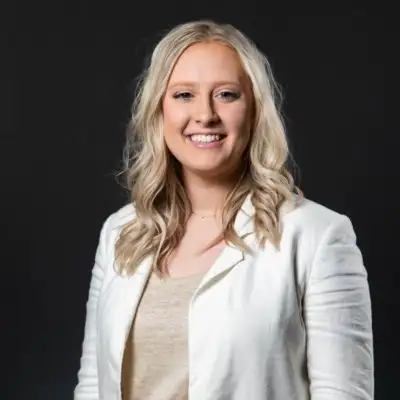
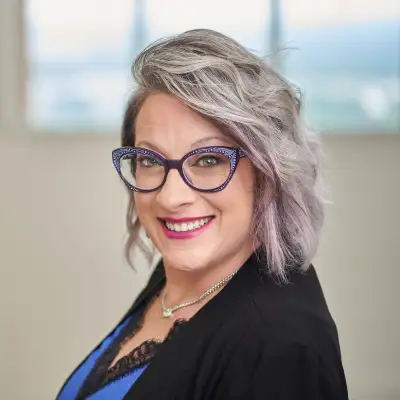
hanna: Yeah, and I'm excited to speak with Katie after Wendy came back from meeting you and everything that she learned. So I know that today's gonna be a wonderful conversation. But we have Katie Nelson. She's a CEO at Sales Uprising. Um, she is the current president of Nabo DC or the DC chapter of Nabo. [00:02:00] She has been doing business development for 20 years and has founded multiple companies, and if you can't tell, she's also a purple enthusiast like Wendy.
Um, her hair, you can't see it as much, but there is some pictures. Of just bright purple and so very exciting. Um, and so she's going to dive deeper into the world of branding and how seemingly small innovations in branding, marketing, or sales can lead to big wins in other areas of the business. So welcome, Katie.
We're so excited.
Katie: Well, thank you
so much, Hannah, Wendy. I so appreciate the opportunity to be on your show. I'm really looking forward to the conversation.
Wendy: Oh, awesome. We are to Katie. Um, welcome to the show and go ahead and tell our listeners a little bit more about you and your work at Sales Uprising.
Katie: Sales Uprising is the third business that I've owned, and it's the first one that I've owned wholly. [00:03:00] I own it wholly. So instead of having a co-founder or a business partner, and we just turned nine a couple of months ago, I'm very excited about that. Uh, you know, anytime you hit a five year mark and beyond as a smaller business, you get super excited.
And I'm a business coach. I'm a business coach that has a. An absolute driving need to support solopreneurs and micro businesses so that they can be successful. I want Main Street America to stay as strong as it can in terms of cash flow and revenue and all of those good things. Probably because my parents that I grew up with had their own businesses.
So it hearkens back to that and I, everything that I've done in my life career wise goes to that end.
Wendy: That's awesome. That's awesome. So we both come from family businesses. Katie, what was your family's business?
Katie: So my, uh, mom [00:04:00] and her siblings owned a fencing company, so not, um, like guardrail and highway signs, not on guard. Uh, so,
hanna: Thank you.
Katie: It's always interesting to say that. So they were like a competitor of long fence or if you guys have that where, wherever you are in the world, listeners. Um, so yeah, that's what they did.
So a lot of metal and rebar in my formative years.
Wendy: Oh my goodness. And you also, I mean you mentioned that you're a business consultant, but talk to us a little bit about just your experience in sales. 'cause that's what I think like really. Makes you shine, um, in your presentations and other things. Is that background that you have in business development?
Katie: Thank you very much. I appreciate that. Uh. I started selling when I was 15 and a half. It was the legal age. You could get a job in Tempe, Arizona where I grew up, and I went to go work for a call center halfway [00:05:00] between my house and my high school. I had to promise my parents I would continue to get good grades and do all my extracurriculars, but I really was a very independent person and I wanted to just go make my own way, whatever that means When you're in your, your teens, um, it probably looked like I didn't wanna ask for movie money, is what it meant. So, uh, that was my first experience at sales and that particular experience lasted until my, not at that company necessarily, but lasted me until my early twenties through college because I, uh, got really good at it. And then, you know, you call sales business development. Did you know that?
Wendy: I know I used both words.
Katie: so business development traditionally, for anybody listening, the biggest difference between business development and sales that I've ever been able to see over the course of my sales career is that business [00:06:00] development is just a bigger organization or a more complex sell, right? It just requires more relationship development than a traditional sale. Uh, and I've sold both products and services. When I first. Moved to Northern Virginia. I was a boots on the ground salesperson for an office supply company.
Wendy: Wow.
Katie: So you're like hustling catalogs that are 7,000 pages. You're directly in competition with the, it's the easy button that we all know that like is out there from a marketing perspective.
A brilliant, by the way, brilliant marketing. Uh, and so even though product is much more transactional, even in those relationships, they were relationships. And so that's, I think probably what you're talking about is that I look at everything through a relationship lens in business.
Wendy: Yes, absolutely. Well, let's jump into a hummingbird effect. And [00:07:00] ask you to please share a specific instance where a seemingly small change in a marketing, branding, or business development strategy led to a significant and positive outcome or results for a business in a way that was a little unexpected.
Katie: Uh, this is a really interesting one, and I remember in getting the brief, I was like, oh my gosh, this is so complicated. Like, how do I, how do I track little things all the way back? Right? It's so much easier to think about the big happenings.
Um, so it's gonna, it's a little convoluted, Wendy, so if I lose the thread, please feel free to pull me back.
You ready?
Wendy: You're good. So.
Katie: So, uh, over the course of the nine years in business, I've actually, um, had the opportunity to have staff work with me and things like that. So we have even had an, another coach. Um, she has gone on to do [00:08:00] different things. Now she's moved out of the state and all of the staff. And so when I had to announce to the world on my website that there was this. Change in my staff, which was just a little thing. It was just a little thing. When I added her, it was just a little thing to take her off. What I found it was, um, just really interesting because there'd been like a two year break where it had had, it was just me, and then there was me with staff, and then there was just me again. But over the course of that two years, whatever we chose to put forward afterwards was so much richer in terms of. Authenticity, who you are in the business, the clients that you've served, the experiences that you've held. And so when I look back at why the company is still successful, even after like a loss, right?
It was a loss. Uh, I think it's because of that. And I think that actually is [00:09:00] true for all of us, right? When we, but we would never think of it that way. We would never, um, the richness that you can continue to bring over the course of multiple years and experiences of you as the CEO and how that reflects back into your company. Right. I think is what I'm trying to get at.
Wendy: Absolutely. So talk to me about innovations in your space. Like do you feel like you've been innovative in some way in.
Katie: So this is always so difficult for me because when I think of innovation, I think of like cutting edge technology, right? It immediately, my brain immediately goes to like mathematical equations that I'm never going to understand Wendy. Like truly it goes to like things like that. So when I think about innovation in the coaching space or the consulting space, how tech has been able to support us has been around for a while. With buy now buttons [00:10:00] or even CRMs that also have the ability to send out proposals so that the process is a little bit more seamless to the customer. Things like that. Those have been around. Uh, if I think about my business, uh, I'm what one would call a late adopter. I am not a cutting edge technology individual, and I blame sales.
I'll be honest, the reason why I blame sales is because sales is a, an institution out of all of your business functions. That probably is at its base, the least innovative thing. Um, and I know look, that's like hashtag unpopular opinion. Um, so, and I'm very, very aware of that. But let me tell you why. And that's because humans are the connecting pieces of a sale, and humans [00:11:00] only change so much.
We change very slowly, even with technology. So the, Hmm. The technology you use to connect with another human being. At the end of the day is still connecting with another human being. And how you do that is something as old as time.
Wendy: So walk us through that a little bit. Um, how do you do that, Katie?
Katie: Well, me personally, with a smile usually, and a lot of self-deprecating humor. Um, no. So. If, if in a, in a business context, we'll, we'll keep it in the business realm if you have a, they call them high ticket offers. Right. And someone recently said to me, Katie, I've just recently heard of high ticket offers because high ticket offers is very specifically language that's used in coaching and [00:12:00] consulting in my previous businesses. It would never be discussed that way, even though we're selling $150 million contracts. Right? So is $150 million a high ticket offer? Yes, but the government's never going to say it like that. And the contractors that are looking to get those dollars aren't going to discuss it that way. So I understood where the person was coming from. When I say high ticket dollars, we're talking about five figures or more. Now, for your business, maybe it's a four figure offer. Right. Um, if we go with the four figure offer as a high ticket offer, the part about the humans, and this is services, not product, product, looks differently, right? So if you're selling a Lamborghini, the relationship that you need to create. As a salesperson looks different than if you're selling a high ticket service. if we're talking about services, [00:13:00] the correlation for humans between. like, and trust and the amount of money that they're willing to cut a check for. There's a direct correlation. And you can go online and you can go on Instagram and you'll see people tell you that, uh, no, like, and trust is what's slowing down your marketing efforts, and all you need to do is this.
And then they actually do the same exact thing that they're telling you not to do. So quit giving away everything for free, but go ahead and click on my links below for, for my free stuff so that you can see why I am right. I mean, it's a fascinating thing if you pay attention to it. Um, but where the no leg and trust really starts, it can start in one of multiple places.
You, as the business development person, are the one who has to take it out of a 2D format. Um, and let's be clear, a video is still a 2D format. A conversation is not two dimensional. This is what I'm talking about, texts [00:14:00] 2D format. So you are the one who has to pull the relationship through the prospect portion of your funnel into a three dimensional conversation, and that's really where it all starts. You've had conversations your whole life, Wendy, you know how to do this. And that's what I would tell anybody.
Wendy: Well, I think something that came out, uh, when you did the training with uh, SUT Nabo Circle was about just making sure, and to me this is a hummingbird effect, right. To make sure that you are focusing on some sort of sales activity every single day continuously in order to see the effects of that. Um, and I'm gonna speak a little bit towards like business owners who are doing their own sales.
I happen to be one of those,
Katie: Get it, mama. I'm get shout out to Wendy. CEOs are the number one salesperson in their business. If you [00:15:00] run a small business, if you have taken your eye off that ball, it will have a hummingbird effect in the direction you may not want it to go.
Wendy: Yes. We don't want that hummingbird effect. So talk to me, if you don't mind, maybe you have some client stories that you can share about how you've seen just that little thing of I need to work on this every day. 'cause that to me is like this small thing that I've seen great results from. Um, but I'd like to hear maybe some results that you've seen from that, that are just super impactful.
And I know that sounds like, oh, okay, I am supposed to focus on sales and then I'm gonna get sales. That doesn't seem all that impressive. Right? But
Katie: Uh, I think it's.
Wendy: mind, it's mindset, right? And making this deliberate decision, and you push that so well to the group. So talk a little bit more about that.
Katie: Well, thank you and I appreciate that you can see the hummingbird effect of that, right? So I would call it a [00:16:00] compounding effect,
right? That's how um,
a little bit everyday creates a bigger thing, creates a bigger universe. So, um. First and foremost, the majority of clients that come to me love their businesses. Some of them are in places where they're absolutely devastated because they don't think it's gonna be able to work anymore, right? And some of them come to me and say, it's working great and it's not gonna be able to continue working this way if I don't do something differently. Um, as an example, earlier this year. I had a client who has a three quarters of a million dollar run rate. She's only been in business a little bit like three years. At three years, runs an amazing consultancy, and came to me and said, I don't think that this is sustainable at this rate, because it's all built on referrals. I don't have the expertise, like I don't know what to do as in terms of business development or selling. So you take that from where you're [00:17:00] at and the, over the course of the first six months of this year, uh, chunking away at it, little by little, looking back at it, six months later, she has this pipeline that's two to three layers deep. And what I mean by that is. Actual clients. And then the outer ring of that is the COIs that give you those clients.
And then further out from that are the strategic partners that get you to continual COIs or, um, centers of influence. Right. So now, because she just paid attention and to your point did a little bit every day, now she has this book. That she can pay herself from that does not require referrals. Um, another example of that is. And she wasn't even a client. She, I did a talk for Ty SoCal, which is an entrepreneurial organization and a really dear friend of mine from 15 years ago who is a mindset coach and [00:18:00] executive coach. She's brilliant author. All of these things. She, and she's one of those people who just gives, we all know this, right? I wanna help, I wanna give, like it's my passion to do this. I can just eat off of my own energy, like, you know. They have a really big garden and they can just go in the back and pull dinner out of their garden. Like, I don't have that. I have to pay for my dinner at the grocery store. So she was just giving and giving and giving.
And so she and I had a consultation after, uh, she put me on one of her stages and I said, how much do you think about generating revenue? There's so much focus on having the passion for what we deliver and who we serve. That I love, and I'm exactly the same way. You'll hear me using the same language. I love my clients.
I love the support I can provide them, the things I can teach them and where they can get to if they do it right. And she said, yeah, I don't think about it very much. And I said, I, I just, I'm gonna offer you a challenge. [00:19:00] I want you to have a little piece of paper, you know, just a little pad of paper. And every day I want you to consistently write down the activities that you do to just see what you do instead of selling. And she called me, I don't know, two weeks ago when she goes, Katie, I haven't been able to stop thinking about sales since you gave me this. And now I find sales everywhere. You're not gonna believe it. And she goes on to tell me that all of these relationships that were kind of as business owners, dear listeners, you know this, we have so many relationships if we're doing it right.
And she just had a different lens in which she looked at those relationships. Some of them are exactly as she had seen them previously, and some of them were just potential clients hanging out, waiting for her to say, Hey, you wanna do some business together? Those are probably two examples of the smallest things you can do. I do wanna say something though, Wendy. Yes. It is mindset what you think about, you bring [00:20:00] about. Right? What you focus on becomes closer and we can't just manifest anything out of thin air. Mindset and action are the, is the winning combination.
Wendy: Yes.
Katie: you just think about it, it gets to be analysis paralysis. If you do things, if you're just doing your day by rote and not paying attention, dollars are slipping away from you. Relationships are slipping away from you. So it really is the mindset and the action that make up the whole thing that works best for every business.
Wendy: No, that, that makes total sense. And I think mindset without action to the things that you're. You're working on, you're never, you're never gonna, never gonna achieve those goals.
[00:21:00]
Wendy: you have said that only 10% of entrepreneurs in the United States ever hit six figures in revenue.
Katie: So let's talk about that.
Wendy: crazy.
Katie: Um, yeah, so there's some wide swaths of studies that aren't included. So for example, I'm talking about bootstrapped businesses.
It is very specific and we should absolutely give context, right? I can literally hear all my tech startup friends being like, you're full of it. You know? And so I'm, I'm not talking about tech startups or anybody who has to go [00:22:00] through, um. Rounds of funding. I'm talking about those of us who literally like decide to pick up our pen and go to the streets with our expertise. We go to our, you know, we get our business name, we do all the things. We get our tax ID number, and it's just us. So I'm talking about bootstrapped startups. two, uh, bootstrap startups that have the most potential of success are in financial and technical services. Right. Our world is run by tech and money. True, true. Uh, everybody else. Yep. A hundred grand in sales. Now, and this isn't just the parentheses, right? So if we were focused on the parentheses of the United States or the coasts, the statistics would be much, much different.
We're talking about the entirety of the United States, um, as studied by the Marian Ewing Kaufman Foundation, which is the foundation that studies entrepreneurship.
Wendy: Awesome. Well thank you for that. So, [00:23:00] another question, um, I think you talked a little bit about the CEO that you, um, talked to from stage and how, that person had a lot of relationships. Um, but didn't really have focus on what to do with that. And I think oftentimes about, um, this word leverage. Can you talk a little bit about how people need to leverage opportunities to get to the next level when it comes to business development and relationships?
Katie: Absolutely. Uh, what a great. Pluck for you, right? Like, I see your brain, Wendy. I love your brain. Um, so, and I will say, do you ever notice that when it comes to sales, things like negotiation, [00:24:00] leverage, technically we're manipulating a situation. And if you look at those words, they're neither good nor bad.
They're very neutral words, but everyone who does not like sales or who has never seen it done immediately thinks that they're. Negative. When you apply leverage to something, uh, you have the ability to release it, right? So if you think about a crowbar providing leverage for you to lift up a car so that you can change the tire, right? Leverage provides you access in certain, um, spaces, and so you're not gonna like the answer, dear listener. But before you can ever get to leverage, you have to know about you and your business first to know how to guide, direct, or even ask the person in front of you that you want leverage from. So if you don't know those things, don't play at it.
Just be a [00:25:00] student of your own business. Ask a lot of questions. Be as authentically curious as you can possibly be about every blessed thing that has to do with you, how you deliver your clients. All of it. Once you have gotten in your business where you're like, okay, I get this, and generally you guys, if you're a solopreneur and you do services, this is around the time you make 250 K.
Just in general, your business is now, you're picking up speed baby. Now is when leverage really has the ability to come into play. The thing about leverage is you have to know the person. If you don't know the person, you can use flat out curiosity and just ask. So, for example, well, Wendy, I'll take you.
Wendy: Okay,
Katie: Wendy has, right, Wendy has a podcast. Uh, you may or may not know her audience, right? As if I just met her in an, we're networking together. We went to a [00:26:00] conference, ran into each other. I may not know anything about it, but I know she has a podcast Now, if I know what I do and I say, so, Hey Wendy, can you tell me about your podcast?
And she says, oh, well, yeah, it's. Um, I have listeners of all kinds, but we really, really focus on marketing and branding. And I say, oh, so business owners? And she's like, yeah. I say, Ooh, so what are the chances you and I can get to know each other a little bit better? Because I think I may have a topic for your listeners that they could really sink their teeth into. Would that be of interest to you? So that's how I actually
Wendy: And here we are. And here we're right? Imagine
Katie: that.
So it's literally a real time example of how this happened, right? Um, but I have to know something about her, but I really need to know who I am and what I can bring to bear. What, what do I have to give?
What is of a benefit to Wendy? It's not about me first. It's about [00:27:00] her first. I have to know me first, but it's all about her first and her audience.
Wendy: Yeah, I love.
Katie: seamlessly.
Wendy: So you've kind of given me a different perspective on leverage, right? So being a part of a lot of groups, like I know so many people and I'm connected to so many people. Um. And a lot of, a lot of, um, consultants and people I've talked to about business development activities are like, well, why aren't you leveraging your networks more? And I think to your point, we have networks, but we don't necessarily know those people that well. And so leveraging. Needs more than just, I've got the network. Right. Am I hearing you right on that? I need to like really and, and like looking back, the people that I have been able to leverage are people that I [00:28:00] actually got closer to.
I. And understood their value proposition and what they were looking for or what they needed as well. So I love that piece of advice. the other question I have for you is, you know, it's a very fast-paced business environment right now. You've got AI spinning around in all of our heads. Um, there's just like so much change around us every day. What do you, what kind of advice can you give to, um, A CEO or, um, you know, someone responsible for the business development and sales activities within an organization to encourage them to stay nimble and adaptable? Um, talk to me about whether you feel like being nimble and adaptable is really important in the, the world today of sales.
Katie: 100%. So if as always, like it just always is, even if [00:29:00] you're, even if you're not a business owner, if you're just a human, the world today would say nimbleness and adaptability are your friends. Right. So, um, there is a lot of, here you go. I'm gonna use an analogy involving trees.
Wendy: Okay.
Katie: You're ready?
Wendy: Sounds good.
Katie: Okay. So we want the wisdom of the oak staunch there forever.
It's beautiful. It, that's a wonderful, wonderful thing. But an oak tree can be felt by lightning and strong storms, especially if it's been rainy. The ground is wet. Birds got to it. There's rot on the inside. Oaks can be fell and when they are, it's very painful. In business, you wanna be like a willow tree. Wind blows all the time and you wanna be able to blow with it. You wanna be able to bend in into the wind in the same direction so that it doesn't cause [00:30:00] you so much stress. No, I am not saying change your opinions or change your culture. I'm saying that everything will pass. This too shall pass. I remember my very first business. Ended, I know obviously I'm in my third iteration of a business, so my very first business that I started ended because of a government shutdown in 2012.
Wendy: Hmm.
Katie: We had, yeah, we had, I know.
Wendy: Do you have PTSD right now?
Katie: just don't look like I'm that old, do I? Oh, that's what you were going with. Um, so do I have PTSD? No, this is not the first, you know, so I don't know when this is gonna air, but this is like the 21st shutdown we've had since 1973.
The government shuts down every once in a while. Is it always painful? Yes. Is it super expensive? Oh my god, we really don't wanna talk about that. Um, it's. it's. not really what anyone wants, um, in terms of the American people, but we, [00:31:00] this too shall pass. It has happened before. In terms of what happens to the business, um, when the government shuts down, my business ended. I didn't have enough runway. We had generated six figures within a year. Everything was looking sexy. But then when all of your money, like the faucets turn off, like there's no, like your plane is like just about to go take off, and then there's no runway anymore. So you just stay grounded. And that's literally what happened to my business.
It wasn't in my business plan. It didn't occur to me. And I could have taken a, a wild, very, very hard, 90 degree turn and done something that my business wasn't ready for in terms of culture, ideal client, and I didn't wanna do that. So we went with the wind, right, and took everything that that business was and put it into the next business. That was just a little bit bigger and had a, [00:32:00] a sturdier foundation. So this too shall pass. Uh, be nimble, be adaptable, but don't change the core of you, I think is what I would give you. Your SAP doesn't change. Right. Like what, what keeps you moving and motivated in terms of your business? The passions that you bring, the expertise that you have. Um, while it can grow, it's, and it'll, um, morph so it'll become stronger and more flavorful and have more dimension to it. Um, and when that happens as a business owner, sometimes we say, oh, well, this business no longer serves me, so I'm gonna. Uplevel it and turn it into something else. I would say, do you really need to ditch everything that you were or can you uplevel your business at the same time?
You yourself are upleveling, right? I think we're so, um. [00:33:00] Humans such fickle creatures. Were like, oh, so hey. Yeah. So I did this for a really long time, but now I don't. And I don't even do that anymore. So now I do this whole other thing and we just kind of put that past experience behind us. Take it for granted, stop talking about it, even though it's what built us up to who we are, grew our roots stronger, right? Um, and go after the newest, shiniest thing. I don't know. I don't really ever think that that's necessary.
Wendy: So Katie, how do you feel about experimentation, um, as a CEO who's doing sales? Myself. I feel like I have to experiment so much with so many things now. 'cause maybe nobody's answering the telephone or maybe those emails just aren't resonating or those LinkedIn messages. Um, is that the right way to approach it?
Is look at it as an experiment and just keep trying what we think is a [00:34:00] better solution and see if that one works. Next is experimentation really a big part of it.
Katie: I think that's a great question, and I think of experimentation as like just in its purest form, creativity. Right. So as long as you are utilizing your creativity in a way where you are collecting the data so that you actually get the answers you're looking for, I think where CEOs can, uh, get off the beaten path or, or fall off the tracks, is when we, now we're just experimenting for experimenting sake, right?
Uh, if you can run a true AB test. Test things against it all the while collecting the data that you need that will show you or illuminate the appropriate path for you, knowing that it can also change in a heartbeat. So you just spend all this time, money, effort into creating the next beautiful marketing path for you and then that whole thing gets blown up.
Say algorithms [00:35:00] change, you know, like you something you have zero control over. So is all of that time, money, and effort wasted? Maybe, maybe not, because what I do know, Wendy, is that there are buyers of all kinds. For the thing that you do. Right. Um, in as much as we talk about, I talk about target market or niching more than most, I think. Um, but there is a buyer for everyone. That pushy salesperson that your audience doesn't wanna be. There's a buyer for that,
Wendy: Absolutely. That's
why they're still around. Right? It worked for someone for sure.
Katie: And it still is, you know, that that man or woman has still got their name at the top of the list at that car dealership. That's what those people want. You know, like it's, it's okay.
There's no quit judging someone else's way of making money and focus on how you're gonna make yours. Um, so I love [00:36:00] experimentation. I also think in its own way, it has the ability to keep us behind our computers and not out with our people. What I have found to be the most successful is for me to be, um, intertwined with my client journey. So much so that I can then go back to my team that sits behind the computers and inform them as to what's going on, right? I need to be out there getting real time data. What is important to my client right now? Which pain point are they talking about the most? Do I hear them? What do I hear them talking about?
What are the things that keep them up at night? I'm not gonna know that unless I am with them or amongst them, and. In that we don't really need to be creative. We just need to be there and be authentic and curious and listen.
Wendy: Awesome. So Hannah, I know you always take everything in.
Um, do you think about what Katie [00:37:00] shared with us today?
hanna: Um, well, I want to kind of go back and ask you one more question, and it was kind of, I'm glad I waited because I've adapted it as we've gone. Um, but can you talk about You said that action and mindset go hand in hand and that we can miss big opportunities if we're not paying attention.
So for business owners or maybe someone in my position listening who feel like they're stuck in the day-to-day or just like deep in the weeds or don't know what to focus on next, or maybe just. Don't wanna put something else aside to refocus, where do you recommend that they start, or what is maybe one thing that they can pay closer attention to that might reveal those hidden opportunities like that one person was able to find?
Katie: I love your [00:38:00] question, Hannah, and I'm gonna ask you what could possibly be more. Now, this is all in the realm of business development, right? So I'm gonna ask you what's more important than feeding your business cash, right? Your business dies if it doesn't get fed cash. The only thing the business function. The business of business, not the humans of business, but the business cares about, is that you continually feed it so that it can pay everything inside of it, right? The CEO, the employees, the all of it. So why would anything be prioritized over that? I know.
hanna: trying to make another connection and Joe, sorry, you'll have to cut this, but I, I don't know if I can do it quickly enough. Ugh.
Katie: Oh girl,
I've got all day. This is my favorite thing. Come on, give it to me baby.
hanna: maybe you can kind of help this. [00:39:00] So something that I really kind of grabbed onto that you were saying earlier is like your roots. And instead of just saying, okay, this isn't working, and let me tell you where my questions stemming from it.
Obviously if you're a business owner, you know that you need to feed your business cash, but what if the passion or just you're burnt out? How do you. Shift, like you've talked about your mindsets. How do you refocus and know, okay, this is what you're good at. You don't need to just ditch it, but maybe you need to look at this a different way.
Can you kind of elaborate on that a little bit?
Katie: Yes. Okay. So, um. There are two things that I heard when you were talking. Um. So if we're talking about the trees and the roots,
what makes you a stronger tree is the water that your roots drink up. The water for a business is literally cash flow, so your roots are
hanna: We're still feeding
Katie: right? Your [00:40:00] roots are gonna grow in that direction.
They're constantly
searching for different paths to water. When we're talking about, uh, refocusing how, if, if burnout, that's one thing. When burnt out, I would say go rest, like outside of cashflow. The one thing that the business needs even more than cashflow is you as the CEO. So if you are in a place where it's, um. I'll give you a personal example, Hannah. Uh, seven years ago my mom had a stroke. I had just started the business. I was a baby business. I was only two years old. I was a toddler. Um,
and she had a stroke, and my whole trajectory of my life changed, right? I'm now traveling an hour and a half to and from her place to take care of my bonus dad who had dementia to make sure that she was safe [00:41:00] and cared for and taken care of. We sold her house within six months and maybe a year and a half later. I was trying to explain to someone. Because it didn't end. It got less intense, but the caretaking didn't end. I tried to explain it to someone that like, I don't know what happened. It used to be, and maybe I was just getting older. It used to be that I could sleep on the weekends and rest and relax and read a book, and I would be rip roaring and ready to go for the business on Monday, and it just hadn't felt like it had been that forever.
And how she described it to me was perfect. She's like, oh, it's like you have an old battery. So like your battery drains so much faster and you plug it in and it takes longer to recharge. And then as soon as you unplug it, it drains so much faster. And I've never been able to get that visual out of my head. So when you're in that place, understand you have the ability to harm your business more than help it. So get the to the thy spa, get thy woods, get the to thy beach. Like [00:42:00] whatever makes you. Be able to breathe again, set aside all of the mind gremlins that we have as business owners, as employees, we wanna do our best.
There's such striving, we just want it so badly. So take a deep breath and go get some rest. Because that will help you refocus in times of overwhelm or burnout. There's no such thing as focus. We think there is, like we think multitasking is awesome, but neither one of these things are true. Right?
hanna: And I mean, and I take away from that as someone that's not a business owner like you both is. What can I do to support Wendy? I'm not brown-nosing, but like, you
Katie: ah.
hanna: she needs to go to the spa. Maybe she'll take me with her if I pointed out. know, uh, but that's something. So if anyone's listening that maybe is kind of on their way or in the position to support someone understanding that that's their focus, and that can sometimes get [00:43:00] lost in the weeds for anyone that's not the owner.
So that's a really nice insight to have. So thank you.
Katie: Well, you're welcome, and it's just important, Hannah, don't forget those of us that are business owners and have amazing teams like you. are only as good as our team if we're helping to have our team burnout, or if they're so stressed that they can't do their best for the client, it doesn't work either.
That's where there's a disconnect and, and dollars fall into the void,
right?
hanna: We're not feeding,
we're not watering the tree.
Katie: is on poof, it's all evaporated. Um, and so no strength is growing from that. So it's a literally, we are the. We're the main character of our own story. So business owner or not business owner. It doesn't work without you.
hanna: Fun. I love it. Well,
Wendy: you so much, Katie.
Hannah, do you have anything else to
hanna: Yeah, I just kind of wanted to pull it all together from everything that I've heard. [00:44:00] Um, so your hummingbird effect, uh, wasn't as we've normally heard about a flashy pivot or a rebrand or anything large and large in the sense of like big and noticeable. It was really about returning.
To what worked and staying rooted in your values and making small, consistent choices that ultimately led to a big impact. Um, I think when you stepped back into running your own business, uh, doing this by yourself, even when you built a team, it created more clarity and alignment and more connection with your audience because it was.
Your, your passion. Um, and then that ripple effect just kind of kept going. But you also reminded me to remember that experimentation doesn't have to mean chaos. Um, it can be creative and intentional and it needs to help you collect information, not just keep moving [00:45:00] forward. And then what I really loved.
About your approach, and all of your answers were how clear and simple your advice was. You didn't overcomplicate any, any of your answers. Uh, if your business needs money, make money. If you're burnt out, go rest. If it's some, if something isn't working, pay attention to it and shift it. Um, so that clarity.
Paired with the consistency and staying curious is what helped your business grow. And it should show us all that. If we actually support the things that we need and the things that we're good at, we're gonna succeed. So thank you. I would, it was very insightful.
Katie: lovely. I love that I said all those things
hanna: Yay. You. You did.
Katie: I like the way your brain works too. That's amazing.
Um, and it is true. Uh, simple is always
better. Honestly. Name something that's been improved by complications,[00:46:00]
Wendy: Not much.
hanna: Mm-hmm.
Katie: but we forget it. Right. We think that growth means complicated. We think growth means difficult. I mean, we're, we think a lot of weird things as humans, and there are amazing marketing campaigns that keep us on that track and keep us unfocused from what we really want if we're not paying attention.
Wendy: Well, thank you so much Katie. This has been a great episode. Lots of insights from you, which I knew would happen if we got you on the show. Um, we so appreciate your time and helping us explore a hummingbird effect in action. Um, I would love for you to share your contact information with our listeners 'cause you offer a lot of things and um, maybe even talk about the Mastermind and other things that you've got going on there at Sales Uprising.
Katie: Well thank you for the opportunity. If anybody is looking to get in touch with me, they can just send an email to info at [00:47:00] Sales uprising and say Hummingbird Effects. Uh, and I will know. Exactly where they came from. Um, you can also find basically Google sales uprising. I'm, because I am a, a registered trademark, uh, or registered copyright, right? I, um, I can be found at Instagram, Facebook, LinkedIn. I have both personal and professional profiles since it's all me and, um. far as what I offer, I've got two amazing masterminds. One is very specifically to get you to 250 K very specifically, uh, because there's such a specific set of learning that you need to do as a business owner to get to that space.
And then the next level of learning that you do looks very different, but is equally as important if you want seven figures, seven figures and beyond all of that great stuff. Um. I host retreats. There are two of them, uh, per year. [00:48:00] There's the business planning retreat and the midyear business planning retreat because business planning is super important and we tend to treat it like it's something we can just keep in our heads.
I'm sure you know nothing about that. Wendy, um,
Wendy: I have too much stuff written down actually, Katie, like it's some days it's um, it's overwhelming 'cause we are revisiting the business plan a lot in the
marketing plan a lot here. But I think it's really important to do that all the time.
Katie: From a marketing perspective, absolutely. From an all the time perspective. Can I give you something? I would say, um, much like when you were me when I was a teenager and I wanted to lose weight, staring at myself in the mirror all of the time, never showed me that that worked.
So
hanna: I wish it.
Katie: uh, right.
Wendy: So you were telling me to let it go.
Katie: I would say, um, like good wine, give it some air to let it breathe.
Wendy: Awesome.
Katie: I would say so that you can get the richness and depth of flavor of all of [00:49:00] the things that you've created. That's what I would say there. Uh, take it or leave it. That's just for you. Um, but yeah, you can find me anywhere. I have a mastermind. I do retreats, I do speaking events, uh, all of which are listed.
Go visit LinkedIn, jump on my newsletter, and you can, uh, we do a section called Katie in the Wild, and it's basically me everywhere. And this month I think it's actually me in a safari. So.
Wendy: Wow. That's cool. Very cool. Well, thank you so much again, and a big thanks to all of our listeners for giving us your time and energy today. I hope that we have brought you some joy through this episode, and you can take what you've learned today from Katie and go find your own hummingbird effect.
[00:50:00]