Subscribe
Share
Share
Embed
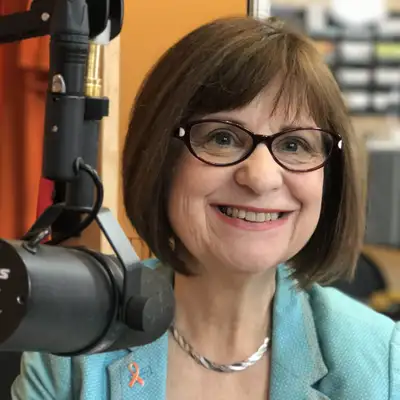
The Global Center for Women and Justice launched the Ending Human Trafficking podcast in April 2011. Our mantra is Study the Issues. Be a voice. Make a difference. We believe that if you do not study first, you may say or do the wrong thing. The National Family and Youth Services Clearinghouse promoted EHT as “a good way to get up to speed on human trafficking”. Our audience includes students, community leaders, and even government leaders. EHT listeners come from all corners of the world, which accomplishes our mission of building a global community that works together to end human exploitation.
[00:00:00] Brenden Billinger: If a grandparent can't verify who the kid is talking to, if you went to a park and played with other kids at a playground, that seems totally normal, kids playing with kids. But an adult stranger that you don't know going to a playground and playing with your grandchild, that's going to be a little odd.
[00:00:17] Now, it's the same thing online. The world around our kids is changing. Our kids haven't. Our kids are still innocent. Our kids are still vulnerable. Our kids are still genuinely wanting to have fun relationships. But what I got to look at as a parent and as an investigator presenting and teaching to grandparents and other people, it's we have to be aware that the kids could be 10 feet away from us, door open in a room, but yet we don't know who they're talking to.
[00:00:52] Elisha: Your child could be 10 feet away, door open and playing a game that you've seen 100 times, and still be talking to a stranger who wants to exploit them. Cases like this reach Brenden's desk every week. He shares the warning signs, like a kid who panics when the phone goes off, and how to respond if it happens.
[00:01:10] Hi, I'm Elisha. I'm a student here at Vanguard University, and I help produce the show. Today, Sandie talks with Brenden Billinger, a senior sheriff's investigator on the Orange County Sheriff's Department's Special Victims Detail. He leads his department's crisis negotiation team and trains adults on how offenders use apps and games to reach kids.
[00:01:30] And now, here's their conversation.
[00:01:34] Sandie Morgan: I'm very interested in our conversation today with Special Investigator Brenden Billinger. He is part of our Orange County Sheriff's Department, works in the Special Victims Detail investigating child sexual abuse, sexual assault, online exploitation, sextortion, and grooming cases.
[00:02:05] But the most intriguing aspect since I met Brenden is that he speaks from the dual perspective of an investigator, a husband, and a father. So he frames prevention as a shared responsibility beyond enforcement alone. And welcome so much to the Ending Human Trafficking podcast. This is such a pleasure because we don't want to just train law enforcement or just train parents.
[00:02:43] We want everybody working together.
[00:02:46] Brenden Billinger: Thank you so much. I'm proud to be here.
[00:02:48] Sandie Morgan: All right, so let's just dive right in, because I do want that dual perspective in our interview. I feel like parents and other law enforcement representatives will want to share this conversation in their own communities. So when and how did this issue become important to you?
[00:03:14] Brenden Billinger: I started noticing a lot of my cases happened to deal with mostly junior high and high school kids, and my kids are right around that same age. It was something that was easy to relate to. A lot of the victims were right around the ages of my two daughters. And seeing how easy it was for me to get involved and make an impact in the victims' lives, I also applied what I was seeing at work and took it also into home.
[00:03:45] So trying to put rules, actually some people might call it being a helicopter parent, but actually just being present. It was being present and sharing the communication with the kids and just putting safeguards up for myself as well as being an example to them of what would normal look like for us.
[00:04:05] Sandie Morgan: So because you have this insider view, what do you think are some of the misconceptions among adults and especially parents right now?
[00:04:17] Brenden Billinger: Biggest misconceptions is everyone on the internet's safe. If you're on social media, for example, then if you're just talking with a bunch of your friends and kids from school that they're all safe. But a lot of times it may not be who we actually know we're talking to. It's sad how easy and how fast it is to get into a teen group chat and how quickly you could infiltrate that and just start manipulating and grooming people.
[00:04:46] Sandie Morgan: So was there a particular investigation that made you realize how significantly the field is changing?
[00:04:57] Brenden Billinger: Sadly, I've had multiple investigations that are mirroring each other. I see so many of them that match, and I see so many of them that are the same circumstances. We'll see many kids on basic gaming platforms like Roblox and Minecraft, and they get into a group chat, and it's an innocent game on its face value, and then someone messages them in the game like you would message someone back in the day on AOL Messenger, and then they move to another chat room, and then they move to an encrypted chat platform, and then it's bribes for money.
[00:05:38] The grooming starts, and then they exploit children as young as six years old was the youngest I've seen.
[00:05:44] Sandie Morgan: So, this sounds really logical and normal to you, but I'm a grandparent, and what I've begun to understand is lots of grandparents are providing after-school childcare for their grandkids, and they don't understand if you're moving from one room to another, but the kids are still sitting there, I'm supervising.
[00:06:11] What do you mean they move from one room to another?
[00:06:15] Brenden Billinger: So I love that I'm seeing more and more grandparents get involved, and I love that because I believe that that generation grew up with the proximity predator. It was, "Don't get into a stranger's car. Don't talk to strangers. Don't take anything from strangers," which is a great advice.
[00:06:33] That still hasn't changed. It's just the location has. So what we have to do is verify everything. If a grandparent can't verify who the kid is talking to, if you went to a park and played with other kids at a playground, that seems totally normal, kids playing with kids. But an adult stranger that you don't know going to a playground and playing with your grandchild, that's going to be a little odd.
[00:06:58] Now, it's the same thing online. The world around our kids is changing. Our kids haven't. Our kids are still innocent. Our kids are still vulnerable. Our kids are still genuinely wanting to have fun relationships. But what I got to look at as a parent and as an investigator presenting and teaching to grandparents and other people, it's we have to be aware that the kids could be 10 feet away from us, door open in a room, but yet we don't know who they're talking to.
[00:07:29] And because of that, we need to be involved. And it might just be sitting with them and asking, "Who is that? What is that game? What do you do with that? Who are you talking to?" The same thing as if you were at that park and you would ask those same questions. Just 'cause I can't see them doesn't mean I don't know who they are, but it might be a friend from school.
[00:07:50] How do we know that? Did we check with those parents? Did the parents of the child confirm, "Okay, you guys can talk with one another"? It's this online open share which is the scariest part because we're opening up the entire world to the kids.
[00:08:06] Sandie Morgan: So when you're talking about that entire world, now it's not even just what I can see. Right now in our conversation, I see you, I can see your office. I know pretty much what things are. But with AI, you could create an entirely different context, and I could see you at the library or whatever.
[00:08:37] So what role does AI play in all of this? And what's happening with the laws if there's any way to protect us?
[00:08:49] Brenden Billinger: So luckily last year a couple laws were in place that got enacted with the assistance of Sheriff Barnes and his counsel and many of the staff around him. We saw that AI was moving forward and there's so many... You and I could AI ourselves in the Bahamas right now instantly.
[00:09:08] Wouldn't even be... I know, right? But that's a good version. We're thinking of something wholesome, something that would be enjoyable. But there's always a dark side out there. There's always someone trying to exploit. There's always someone trying to utilize it in a sexual gratification way. We've had a few of these cases recently where you could have homecoming photos, and that's the big thing right now, with all the girls in their dresses lined up in front of a fountain to take a pretty picture.
[00:09:38] And sadly, someone could AI that and make it a sexually explicit image without any of the girls' knowledge, without any of their consent, and it's just that easy and that fast. And there's no verification. If you go onto a lot of these adult AI platforms, it's put in your age. You have to be over 18.
[00:09:57] You just scroll to what 18 is, and then you're in. So luckily we do have new laws in place that if there is sexually explicit images of a real person on an AI created model, we can actually start charging for those crimes.
[00:10:12] Sandie Morgan: Okay, so let's talk about how you're gonna make those charges stick. Let's talk about the investigation. What happens when you get presented with this AI-generated exploitation?
[00:10:32] Brenden Billinger: So I don't mean to smile in a bad way, but I do enjoy my job. I enjoy the people I work with. I enjoy the people I work for. My biggest thing, and you and I had talked about this in person, is I love taking victims and moving them to be survivors. And with that it's, "Hey, we're gonna move forward. We're going to take this image."
[00:10:54] And I get to start doing the digging. I get to start doing the deep dive in where did it come from, what sources. Without giving away too many investigative techniques, I'm gonna be writing the search warrants. And the biggest thing is we get out of our office, we go knock on doors, and we try to start talking with people to figure out where the root of this came from.
[00:11:14] Once we figure that out, if it's... Sadly what we're seeing with those types of cases, it's all local, which is in one way a good thing, 'cause I could narrow down who my possible suspects are. The bad thing is that it's too easy for anyone to just take any image off the internet and turn it into something explicit. Fingers crossed, hopefully it stays local where it's maybe more kids within the school, and I could address that with those kids, express to their parents, and then present it if we need to do filings or whatnot. But it's one thing to speak with the suspect. I still have a victim that has to live with this.
[00:11:54] I still have a family that in their own right is a victim as well.
[00:11:58] Sandie Morgan: So if a minor is being exploited or they suspect that someone is trying to exploit them or groom them, what should they do to protect themselves and even maybe preserve the evidence? What are you going to need from them?
[00:12:19] Brenden Billinger: So the biggest things that I'm gonna need from the beginning is where did all this occur? I'll give you a very generalized case example that we see a lot of. We'll have a teen possibly on TikTok, and they're posting, and then a female, maybe attractive... Say it's a boy's TikTok.
[00:12:48] And a female comes in, starts chatting with him. She appears to be older, maybe a little bit more busty and showing her personality to say, and they start DM'ing. So now they're in their direct messages, they're talking, and I know her username, her handle, he has all that, and he saves that. Then they move to off-site messaging platform, whether it be Discord, Signal, WhatsApp, or Telegram.
[00:13:21] Those are the most common ones we see, and now those messages are encrypted where I can't get those messages. It's common, that's the basic knowledge, and that's why these bad guys are taking them there. They start sending images back and forth. Once they get a few images of the boy's exposed genitalia, then the grooming or the threats come in.
[00:13:43] It starts to turn into, "You're now gonna give me $1,000 or however much in gift cards or whatever it may be, and if you don't, I'm gonna send this to everyone at your school." So we will follow that trail, and we will do the investigative techniques for each one of those platforms. What I would need is, okay, how did it start?
[00:14:05] What were the messages? How long were you messaging for? I do need to know exactly what was sent. If I have the images that were sent, I do notify the National Center for Missing & Exploited Children and put it into a database, so if these ever get flagged, that we know where they came from. We know who the true person is.
[00:14:24] There is a victim behind this. And then I start doing my investigative techniques, and I start going down the rabbit hole of seeing where this is coming from, whether it's I'm writing search warrants for the IPs of where the messages came from, each of the platforms to see who the users are, try to see if they're speaking with anyone else, and try to identify additional victims.
[00:14:47] Biggest thing is preserve everything we can. Don't delete any of the apps. Don't delete any of the conversations. Try to hold everything as it is until we get there, and then we will guide you through it. The patrol officers or our patrol deputies are doing a great job just preserving evidence and reassuring our victims on scene.
[00:15:07] But then I'll come in and it's like, "Hey, let's bring the family into this." My biggest thing when we have these victims, if the families are willing to share, and that's the biggest thing, it's a community effect. The more the community knows, the better the community could help the kids in it. So as long as we're sharing in those intimate groups or the people that we can trust, "Hey, be aware these things are happening.
[00:15:30] "Hey, don't delete anything if it does happen." My biggest thing is we could see the kids that are being groomed, we could see the kids that are being exploited, but do the kids feel safe enough to come and tell the parents, or are we looking at there's gonna be a disciplinary action? So that's where we have a lot of kids that don't report it or don't notify.
[00:15:50] Sandie Morgan: So how would you advise parents to build that element of transparency between a 12, 13-year-old, 14-year-old? They don't want to tell their parents when they have a problem.
[00:16:10] Brenden Billinger: And I think you and I have touched on this before. It's not just the parents. It could be the grandparents. It could be the guardians. It could be whoever that child feels safe to speak with. But with those that are in the home, it's setting those boundaries early, and those boundaries come with rules.
[00:16:27] And those rules, it's not have consequences, but have requests, have barriers to protect. And if I say, "Hey, there's no phones allowed in any room in this house. There's no electronics allowed in any room with a door in this house. You can use them in the open space. It is my passcode. It is my thumbprint.
[00:16:48] "It's my facial rec. You are borrowing my phone. I have no problem with you using this device, but at nighttime, it charges in my room. At any point in time during the day, I could review these messages." Now, the reason we do that, and now we go into explaining why. We wanna use open communication. We wanna show them, "If something happens, I want you to know that I'm gonna be the first person to help you.
[00:17:16] "I just need you to be honest. It's not to be in trouble, it's to protect you." And it may be hard. A 13-year-old, I have one too, is sometimes difficult. Sometimes they don't wanna talk. Sometimes they don't wanna stop talking. But it's to be available to them and let them know that, "You're not in trouble. We are gonna get through this.
[00:17:36] "We are gonna make sure that everything's gonna be okay, and you're not gonna be punished for any of this. We wanna make sure that you can move forward and not have this be held against you." And it's a partnership. You're standing side by side with your child. You're trying to teach a teen how to become a young adult, and the best way to do that is show them, "Hey, there's vulnerability with me as well.
[00:17:56] "But as a parent, I love you, and I want to protect you."
[00:17:58] Sandie Morgan: So this idea of transparency, is this... I think I'm trying to wrap my head around the fact that we here in Orange County, not that big a county, 3 million people, 450,000 kids in our public school system, we have a special victim unit, and your whole job is investigating these cases. So this is happening to kids in my community, and I really want people to think about the fact that this is not something happening just over there on another continent and all the social media images of a poor child.
[00:18:54] This can happen to a kid in your kid's school, in your neighborhood, and it's almost invisible. So give us some context for Orange County. What are the ages of the kids that are the cases you're investigating? And how compliant are parents, and are parents involved in the investigation process?
[00:19:22] Brenden Billinger: We have great parents. We have great kids in this county. Let me go broad and then narrow it down back to us. So I know that there was 1.4 million online enticement reports made last year alone through the National Center for Missing & Exploited Children.
[00:19:39] Sandie Morgan: That number one more time.
[00:19:41] Brenden Billinger: 1.4 million online enticement reports, that...
[00:19:47] Yes, there are new reporting standards, so the numbers did go up, but it's good that we are still getting those reports. That's pretty much 137 a day of financial sextortion reports. That's strictly just those types of reports. Now, you narrow it down to Orange County, I'm just one agency in the county. We have 13 contract cities.
[00:20:09] We have two unincorporated areas. There's nine of us assigned to our unit. So of that, I'm just one of the investigators working caseloads. I have a caseload where I'm constantly talking with people every day, and these cases are sadly in my queue at least weekly. What I could see and where we're seeing the parents, it's almost a shock.
[00:20:37] I brought it up earlier, but the parents are a victim as well. As a parent, my sole goal is to protect my child. I don't want anything to happen to my kids, so allowing this to happen, I grew up in that proximity predator era, don't talk to strangers and whatnot, but how am I supposed to do that? My kids are great at not talking to strangers, but I don't know who they're talking to behind the screen.
[00:21:00] I don't know who's trying to talk to them. I don't know who's pretending to be that kid when it may actually be an adult. So seeing where we're at, I think the biggest thing is we gotta pop the bubble, and we're giving our kids these devices, and I will be the first one to stand in front of everyone, and I was like, "Oh, if I had that screaming toddler, and I gave them the tablet for a little bit," yeah, it helped.
[00:21:23] But that tablet wasn't linked to the internet. It was maybe just a game, a bubble game or something like that. Now it's you're on TikTok, you're on Snapchat, you're on Instagram, you're on all these platforms, which could have good use. But what are we really providing them for? We have to be honest with our kids and be telling them, "Your phone is for me to get ahold of you and for you to get ahold of me.
[00:21:47] "Anything extra is extra. It's not needed."
[00:21:50] Sandie Morgan: So I've talked to some parents and their conversations with kids have gone in various directions. One 12-year-old said, "I don't want a phone," 'cause he'd heard about a 14-year-old boy who had been sextorted, and he just... It did scare. I don't wanna use fear-mongering, so what's a better way to have that conversation?
[00:22:24] How do you talk to your 13-year-old?
[00:22:27] Brenden Billinger: It's been years in the making, and you gotta try to build that trust. You gotta try to show them, "Hey, I'm here to listen first." And if I'm gonna come in, and as a parent, there's times I tell, and then there's times I listen. When it comes to devices, I gotta think of it as I'm trying to teach my kids about a new type of relationship, and if I'm asking them to... If you're interested in a relationship, you wanna listen.
[00:22:56] What are you hearing? What are you seeing? When you're online, what are you controlling? So when I come in, I need to make sure that I'm not overpowering. I'm not, "You need to do it this way," because I'm coming in, I'm trying to clean up everything that I missed. A lot of the times, and this is personally as a parent, if I see something that they're messaging or texting or they sent to someone, I might get upset with the way that they responded, acted, because I didn't catch it early enough.
[00:23:26] It's more of how I feel in my own response, not what my kid did. My kid's still a child. They're not developed enough. They don't understand relationship boundaries. They don't understand how to navigate certain situations, and then I get mad because as an adult, I know that, but I only learned that within the last few years or so, and I'm expecting my child at 13 to completely understand.
[00:23:49] I need to have patience. I need to give them grace. I need to be able to slow down and understand, okay, if I was 13, where would I be? I'm not just giving them whatever they want, but I got to give them grace in that area that as a parent, I'm much older. I've made more mistakes. My goal is to have them not make the same mistakes and learn from mine, not make their own.
[00:24:11] Sandie Morgan: So good, good content, good coaching for parents about how to have these conversations. But now I've just discovered that my son is a victim of sextortion. What is the first thing I do? Step one. 'Cause this is something we learn in crisis management. Practice what you're going to do, and I think that's an important piece of having conversations with our teens.
[00:24:48] If this happens, here's what we're going to do, and they know that when they tell you that we're gonna put this action plan into play. It's not gonna be, "Oh my gosh, is the roof gonna cave in on me?" So step one.
[00:25:05] Brenden Billinger: Step one, we stop everything. We stop the communication. We don't delete it, we just stop all communications with that...
[00:25:11] Sandie Morgan: Who do they call?
[00:25:13] Brenden Billinger: Well, at that point, we're not even calling anyone yet. This is just the parent making notification. "Hey, we're aware." It's just mom and the kid, dad and the kid, whatever it might be.
[00:25:23] "Hey, we stop communication." As hard as it may be, parent needs to take the phone. Just hold onto it, don't delete anything. We delay responding in any way, 'cause it might be cases where we have tactics where I come in and then I move forward with the case based off of me being the kid.
[00:25:44] Now, we're gonna preserve everything, so they're calling 911. They're gonna let them know, "Hey, my kid was sextorted or extorted for this amount of money. We have the phone with us. We know the usernames. We need to get a report so this could be documented." Once that report is in place, the wheels start turning and it goes really fast for some families.
[00:26:08] So I think the biggest thing at that point is support. So you're gonna stop everything that's happening. You're gonna preserve what we have. You're gonna start that report, call us, and then you're gonna look for support. You need to support this child. You need to support the family. We have great advocates in this county.
[00:26:26] We have a ton of resources. So it's not just law enforcement doing this. It's a whole community around our victims at this point. But when we talk about support, it's... Don't forget there's a child that's in the middle of all this, and what we need to do is, "Okay, where are you at?" There's a lot of times we'll be seeing it and we'll get notified right after school, and the wheels are moving and it's now 9:00 at night, and we gotta look over and like, "Did you guys eat dinner?
[00:26:55] "You guys hungry?" Something that's like, we don't think about those little things, but it's, "Okay, what do we need to do and how do we get back on what does a normal day look like? All right, let's have dinner. Let's slow this down. I can take care of the rest. Let's move you guys back into what normal looks like as best we can."
[00:27:15] So again, that whole community effect. We have the liaisons, we have the advocates, we have support, we have everything that we can. My biggest thing is the hardest part is making that report, is telling mom, telling dad, "I made a mistake. Something bad happened. I did something I shouldn't have."
[00:27:33] Sandie Morgan: That's why we have to have the conversation way before it actually happens so they know what to expect when we hear that from our kid, and then it's safe. We do Ensure Justice every year. You were there last year. You're gonna be there again this year. A year or so ago, in one of the breakout sessions with a victim advocate, four of the families right here in Orange County had children who had been teen victims of sextortion, and half of those, so two out of four, had never reported, had never told anyone, and the difference was actually an opportunity for the victim advocate to become involved in that conversation, because it meant those kids didn't get the follow-up care that they needed from the advocates, the conversation, the support to strengthen them and not have them stuck in that victimization.
[00:28:52] My hope in all of this is that we build what you talked about, this safe community around our kids. What gives you hope in the face of the kind of work you're doing every single day?
[00:29:11] Brenden Billinger: So I actually recently spoke at a meeting for our SART, our Sexual Assault Response Team's quarterly meeting, and it was more of a call to action. I'm not gonna be teaching everyone in that room about sexual assault investigations. We all do that already. My biggest thing is why are we not communicating better?
[00:29:33] There's communication, but how do we make that better? And that's not better for me to get a stat. That's not better for another agency to be the best ones in investigating these things. It's how do we get better at sharing the information that we have, sharing our goods, sharing our bads, and exposing what we could do for the victims.
[00:29:57] It's a multidisciplinary response. The more that we could incorporate every piece of this actual community together, more of us are gonna be able to assist and help. 'Cause the other thing is at the end of the day, I take my cop hat off. The advocates take theirs off. A lot of the people that are involved in these cases are parents, they're coaches, they're teachers, they're volunteers in the community, and what we're looking at is not just the report being made and law enforcement gets involved.
[00:30:30] We all see something at a different point in time in the timeline that's... this has been affecting that child. We might see a certain portion of what's happening. I might come in for the investigation or the disclosure. The advocates might come in on the recovery side. But the offender, our suspect in it, has seen this child the entire time.
[00:30:54] They know what the likes and dislikes are. They know where that child is feeling vulnerable and what makes them happy. If they're already at the point of grooming and exploiting them, we need to come in and take our professional hats off and look at, okay, what's making this child a little different today?
[00:31:15] So if we have kids that are in sports, is something bothering them? A teacher seeing a kid that maybe is normally volunteering in class no longer. If we see that they are getting panicked when that phone goes off and they're trying to be secretive about it when normally it wasn't as big of a deal, when they're not sleeping at night, or you could tell that they're just in a nervous state at all times, or they've been crying longer.
[00:31:43] These are signs that we need to look at, and it's not just in our professional setting. It's when we are at home and we could share this, and this is from a grandparent all the way to siblings when they hear, "Hey, so and so at school is not doing too good," and we notice these things. It's everyone, and that's what I'm trying to push at with the community response, helping look for the victims and helping with the victims in recovery.
[00:32:08] Sandie Morgan: That is such a substantive response to what gives you hope. It really is. We've been talking about hope in action, and you've definitely found a pathway for us. The multidisciplinary team approach that's so professional transfers very easily to your community, the block you live on, the apartment complex you're in.
[00:32:42] The mailman sees things, the coach. We as a community need to use our own observations and learn what those signs are. I loved that list of concerns. Does this kid startle when his phone rings instead of run to answer it? Those kinds of things, and wow. Brenden, I could just keep talking to you, but I know you've gotta go to work, and we need your expertise right here in Orange County.
[00:33:19] But we're gonna share this conversation with our listening audience, and we look forward to having you back.
[00:33:28] Brenden Billinger: Thank you so much. You have a great day.
[00:33:32] Elisha: Thank you, Brenden Billinger. His advice for parents is simple. Tell your kids now that they won't be in trouble and that you'll be the first person to help them if something goes wrong. Listeners, if you enjoyed this conversation, make sure you check out our website at endinghumantrafficking.org for tons of in-depth show notes and other resources.
[00:33:51] If you'd love to help us grow this podcast, you can start by sharing this with someone and connecting with us on Facebook, Instagram, or LinkedIn. And as always, thank you for listening.