Subscribe
Share
Share
Embed
Since 1986, Convene has been delivering award-winning content that helps event professionals plan and execute innovative and successful events. Join the Convene editors as we dive into the latest topics of interest to — and some flying under the radar of — the business events community.
Convene Podcast Transcript
Convene Interview, ep. 30
*Note: the transcript is AI generated, excuse typos and inaccuracies
Magdalina Atanassova: This is the Convene Podcast.
Today, we’re exploring what it really takes to move events from execution to strategy—and why great experiences are no longer enough on their own.
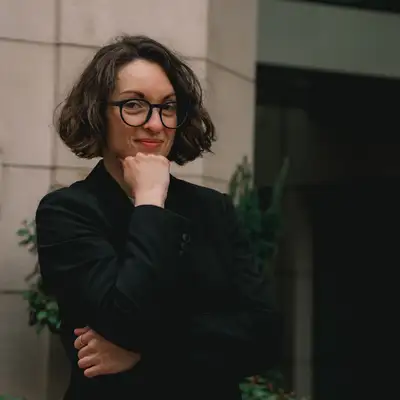
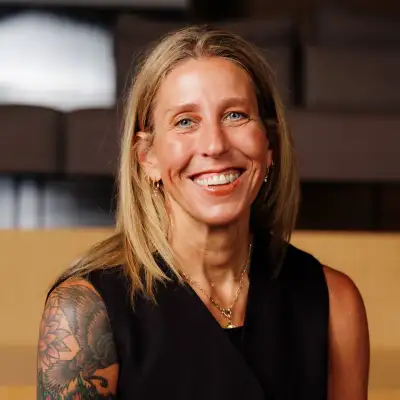
My guest is Sarah Reed, CEMA Summit speaker and an event leader who’s built global programs at high-growth tech companies like Zendesk, Braze, and Procore—designing experiences that don’t just engage, but drive pipeline, accelerate deals, and strengthen customer relationships.
In this conversation, we talk about why event leaders need to think like business strategists, not just planners, how to prioritize outcomes over perfection, and why saying no is one of the most powerful leadership skills. We also explore the role of emotion in creating unforgettable moments, how AI is reshaping team workflows, and what it takes to earn a seat at the decision-making table.
We start now.
Hi Sarah, and welcome to the Convenience Podcast.
Sarah Reed: Thanks, it's very nice to be here.
Magdalina Atanassova: Sara, you said that your career started in the global contact centers where people make decisions in real time with imperfect information.
How has that experience shaped the way you lead event teams today?
Sarah Reed: Starting my career in contact centers is certainly not very orthodox when you consider how most people get into events.
But I wouldn't have had it any other way because contact centers are where I learned. Learned just no matter how much you plan and train people and have contingencies, there are things that are always wildly out of your control.
There are things like weather,
which, you know, can take down an entire coast, right? And suddenly every airline's customer service is just flooded with calls. You can't really prepare for that.
Or I will never forget one Christmas day where a commercial shipping vessel actually broke an undersea Internet cable and wiped out.
You have all of connectivity on multiple countries.
And so it's stuff like that which seems extreme, but it happens all the time.
And people rarely have perfect information.
They never have unlimited budgets, they never have unlimited time.
And you have to make all of these decisions in real time with a lot of ambiguity and events are no different.
And so it really taught me how to optimize for outcomes, not perfection. Because nobody attending your event knows that the signage behind Main Stage was supposed to be 2ft taller or that, you know, the orange is, you know, the wrong pantone hue.
Like, nobody knows that stuff except for you.
And they're just, they're going to remember how you made them feel whether they were there to solve a problem.
So contact centers just framed everything perfectly for me that, you know,
customer service is a human business, events are a human business.
And so from that Perspective, you know, we have to approach them with a lot of grace, a lot of empathy and be prepared for everything to happen.
Magdalina Atanassova: I feel that was actually a great start to move into events afterwards. So, yeah, it's not that far fetched now that you're explaining this way.
And you often talk about turning events into business strategy.
So what's the biggest difference between an organization that sees events as a marketing tactic versus one that sees them as a strategic business function?
Sarah Reed: It really comes down to what are the big questions that the company that you're with is asking? Are they asking things like how many people are registered? Is the room going to be filled so that the CEO doesn't flip out when he gets on main stage?
Those are very tactical questions that get asked and then you know immediately. If those are the primary questions that your CMO is asking,
you're coming from an organization that's going to approach your event probably in the wrong way. But if your CMO is asking, you know, what's the business problem we're trying to solve here?
What difference is this event going to make for us?
Then you know, you're in an organization that's approaching your events from a strategic perspective because we all know that our events are going to move deals,
they're going to solve problems, they're going to strengthen customer relationships, they're going to build executive trust.
But none of that matters if your organization isn't also thinking about it in that way and appreciating that way.
So, you know, I always say, if the event disappears tomorrow, does it matter?
And if the answer is no, then you probably don't need to do it or you're in the wrong organization where events are never going to be a strategic outcome.
Magdalina Atanassova: I like where you're leading us because event leaders have the power to bring that to the senior leadership team and to say, we need to move into this strategic business function.
Sarah Reed: Yes.
Magdalina Atanassova: So they need a seat at the leadership table.
Sarah Reed: Yes.
Magdalina Atanassova: And in your experience, what do they need to stop doing and start doing to earn that seat?
Sarah Reed: Stop saying yes to everything.
And I know that that sounds very counterintuitive, but I've seen the best event leaders are the ones who know how to say no.
And they know when to push back on things that are simply not logistically sound,
necessary,
going to cost too much, don't provide the right value back.
And they also,
they, they're able to come back to the table with,
oh, I have a better alternative, like, let me provide you with different ways of approaching this.
That's Actually going to give us the value that we're looking for.
And we should be there to solve hard problems,
not just about how well did we execute that event.
And I think we get so wrapped up in that mindset of execution rather than strategic outcome.
And, you know, if you execute well,
the event can still be a failure.
So you have to be, you have to know why it is that you're doing that event at the forefront.
Execute it well,
and ****, it's going to like, provide,
you know, the outcomes that you're, that you're hoping for.
So I think we just, we as leaders have to be willing to push back. If we just say yes to every single thing that an executive or someone on the C suite has in their brain, we're never,
ever going to create the event that we know we need to.
Magdalina Atanassova: I love that and I love how you stress it. Even if a perfectly executed event can still be a massive failure. And I feel sometimes we forget it. We're so obsessed with,
you know, how everything's moving, if everything flows well in the program. But there is a much bigger picture.
And speaking about that bigger picture,
when
Magdalina Atanassova: business priorities shift unexpectedly, how do you
Magdalina Atanassova: decide what deserves your team's attention and what can wait?
Sarah Reed: That's such a great question because, I mean, do priorities ever, ever stay the same? Right?
And you know, we're always planning for events, you know, multiple months out, even years out, right? And so product announcements change. I, I don't think I've ever worked for a tech company, for example, where,
you know, the product announcement that we say we're going to, that this is going to be our priority and this is going to be the big announcement that we have.
It changes, right? And sometimes it's going to change a week before the event and suddenly you're like, oh, well, we've got to switch up our demo stations and our CEOs keynote is changing and signage needs to change all that stuff.
So, yes, priorities are going to change,
but it really comes down to, you know, what are we optimizing for right this moment? You know, is it growth? Is it retention? Is it customer trust? Is it pipeline?
Is it employee engagement? Because as we,
when everything is important, nothing is important.
And so you really have to hone in on, you know, going back to what we were talking about earlier.
Why are we doing this event to begin with?
And that's really going to help you funnel,
you know, your,
like, the work, your team's work, their direction into a lane so that, you know, there's not all These other distractions that are going to, you know, be inhibiting you from actually getting the work done.
It comes down to again, being able to say no because, yeah, we're going to get hit with all these things, right? So we're not going to just suddenly incorporate this new speaker, this new idea, or this new thing that's going to take your team away from the core work that they need to be doing,
or it's going to be forcing everyone to spend so much time and money,
you know, in a spin or a swirl.
Magdalina Atanassova: I feel that we need to make a stop here and say that the no is not a no for the sake of it, but it's very informed and aligned and it has to be a reminder to the senior leadership team or whoever is making the request that this is just not aligning.
It's not. No, because we're trying to be difficult at work and create those awkward situation. But no, because we have certain things we've agreed on in vans and in order to get there, we need to focus.
Sarah Reed: And that is a hard thing to do. Right? Especially it's always one of those, like, fascinating things to me where, you know, you don't get any more money until someone in the C suite has this, you know,
this light bulb idea that they wake up with in the middle of the night and they're like,
I really want this activation.
And suddenly they've got $60,000 that they can just hand to you. And you're like, you know what I could really do with that extra $60,000?
Let me show you the other things. If we suddenly have money, which I believe are going to be, you know, a bigger value add.
So that is like one of those you should always have in your back pocket that list of here's really where I want to spend that money and why.
Magdalina Atanassova: Yeah. And we've all been in that situation where money suddenly appear in the picture and you're like.
So speaking about those lists and checklists you describe pushing teams to think beyond execution own outcomes instead of checklists,
what's
Magdalina Atanassova: a mindset shift that helped you make
Magdalina Atanassova: that transition in your own career?
Sarah Reed: That's such a tough question.
You know, how do you, how do you move your mindset to just beyond an execution? Right. Because as we were just talking about, you know, execution matters, but without that strategy, it's just an expensive activity.
Right.
It's, you know, events are one of the most expensive thing that is part of your marketing portfolio. Right.
And so if you are just thinking about, how do I deliver, how do I execute that.
You're going to put on a really great event,
but you're probably not going to move the needle dramatically within the organization.
You never want someone in your C suite to question why your event exists.
So if you approach it from that direction,
right out of the gate,
then you're never going to get caught off guard. And no CMO, CEO, CTO is ever going to go,
why are we spending $8 million on this? Because you already know the answer to that.
And so it's really around reframing of.
My job isn't an event leader.
It's creating business outcomes.
And therefore I can challenge things with,
you know, and feel very strong and supported when I'm challenging and pushing back because I know what the outcomes need to be for that event.
Magdalina Atanassova: And speaking of being in such a situation where you're standing ground,
I feel that aligns very well with what you've mentioned, that you're not being afraid of taking smart risks. So can you share a decision that others question at a time, but that ultimately proved to be the right call?
Sarah Reed: Anytime you can bring an emotion into an event,
I think it's a smart risk because I have this theory that one of the things that events are so magical for is that they actually create human connection back to your customers and your, your prospects.
And they,
they help you overcome some of the,
the things that are just going to go wrong in your long, hopefully long relationship with that company, with that person.
And here, here's what I mean by that. Where we all know that at some point in time the company is going to screw up, right? It could be there's, you know, an outage,
the product fails,
you know, a release doesn't happen on time when it's supposed to.
A salesperson over promises and a success person under delivers like all of that is going to happen. It's just a given, right?
And if, and if your customers don't have an emotional attachment to you, it makes them so much easier to attrition.
If they don't care about who you stand for as a company or don't care about like how you align to their values or you know, that they have experienced something that is so memorable to them.
You're just,
you're a vendor, you provide a service.
But events can create that emotional attachment that they never ever, ever, ever forget about.
And because of that, they're going to forgive you when you inevitably screw up,
because it's going to happen.
I have always believed that the more emotion I can create is in an event and I can make you feel something for the company that I work for.
You're going to remember that and you're going to forgive me. Somewhere down the line at Zendesk, this was years ago. We were doing our biggest customer event in San Francisco,
and we were talking about the diversity of thought,
the importance of having diversity in your customer service centers because it created those connections back to your. To your customers and your audience.
And our CEO was talking on stage with the executive director of the San Francisco Gay Men's Chorus.
And what was not on the agenda?
That was on the agenda, but what was not on the agenda was the fact that we had a hundred members of the chorus backstage and we had one chorus member in the audience.
This is a tech conference, so it is, you know, filled with customer service leaders, with engineers,
with people who are there for a tech conference.
And suddenly the house lights go down,
a soloist stands up in the audience and starts to sing.
The piano rolls on stage and a hundred members of the chorus come out and start to sing.
And 1500 people at a tech conference start to cry.
Like just. And it was. You could tell they didn't even know why it was that they were suddenly just. Just filled with this emotion. It was surprise, it was wonder,
it was watching that unfold. And it was such a risk because it could have gone horribly awry,
but it did not. And that has been like one of those moments where I'm like, I want to be able to recreate that feeling for people at every event.
Magdalina Atanassova: When you were explaining it, I got goosebumps. So I can imagine the feeling filling the room.
Sarah Reed: Well, and then this is wild. So our closing speaker that day was Mindy Kaling.
And Mindy was in the green room backstage, and she too had no idea that this was going to unfold. And she was coming on after this,
having a sit down conversation with our CFO, who's this incredible woman.
And there is Mindy backstage,
sobbing,
literally sobbing. And so for the.
Of her conversation, her fireside chat, she just couldn't stop talking about this experience that she had just had. And I was like,
Mindy's gonna remember that.
Magdalina Atanassova: Yes.
Sarah Reed: It's so important.
Magdalina Atanassova: Those moments of surprise and delight. You will always remember the, the event that you experienced at, which is you won't remember anything else from that event.
Sarah Reed: Probably you're not gonna remember the demo you had or, you know, the,
the.
Yeah. Or the lighting in the keynote hall or the food that you ate. Like none of that is, you know, and that event was probably,
you know, let's say 10 years ago,
maybe even longer.
But it is so sharp in my brain. And I guarantee you that for every single person who is in that room, it is equally as sharp. And granted, not everything has to be so big and, you know,
and cost money. Like, there are also those moments that people are going to remember that are way less expensive,
but also create that emotion.
Absolutely.
Magdalina Atanassova: What's a hill you're willing to die on when it comes to events? Something you believe strongly that not everyone in the industry agrees with.
Sarah Reed: All right, well, I got. I have many,
but there are a few that we could probably like, you know, narrow this down to. One is a super easy one, and that is clinking badges.
I do not.
And every person who has ever worked for me knows this.
The sound of those cheap metal hooks on lanyards against plastic badges,
it sends me off the ledge because it's just, it's so distracting. Whether you've got a hundred people in a room or you've got 5,000 people in a room, that's all you hear is this ting, ting, ting, ting, ting.
And it's distracting for speakers. It's disrespectful for the people who have to walk around and wear this thing.
And it's so unnecessary. It's like, no, no, no, no. Just.
Just go up one level in lanyard and you will avoid this. So clinking badges hill, I will die on. They are not allowed. Like, it's just. I will rip and replace a bigger one.
Panels.
Panels are lazy.
I've seen a few work,
but most of the time they are with subpar moderators.
It is just a way for people to get as many customers and as many partners on stage. And people don't believe that they should be as much work as what they really are.
And so if you're just going to grab an executive out of your company who needs to be on stage and. And then you put them, you know, up there and you're just doing around Robin.
No, like, that's lazy.
Just don't do it. Your audience, I guarantee you, they're all taking a nap. They're all on their phones. No one is listening.
So if a panel is not some of the hardest work you have to put into content,
then you're doing it wrong and you're doing an absolute disservice for everyone who's on stage, because then it's just a check in the box and you aren't really putting the effort.
And then my most expensive hill is the Expo.
I genuinely believe that that space should be the heart of your event.
It should be the center of your event. It should be the place where people want to go.
They're not running back up to their rooms, they're not wandering off and going back to the office if they happen to be in the same city.
And they want to go into that space. So you need to make it immersive, you need to make it full of activations, you need to make it fun.
You need to give people reasons to spend time in that space.
And if it is,
you know, just lines and lines of booths and it feels like, you know, hawkers at a night market.
Oh,
just don't do it, you know, theme it. Make it fun, make it like just exciting. So that's where I want to spend my money.
And that's really the thing that I am, you know, most passionate about is just, yeah,
disrupting how we think about that space.
Magdalina Atanassova: I love it. I think I would join you on a few of those hills.
And speaking about disruption,
AI is now becoming a part of everything that we do.
Sarah Reed: Everything.
Magdalina Atanassova: So what parts of the event leaders role, not the events themselves, but the leaders role would become more valuable and what parts would become less important, do you think?
Sarah Reed: Oh, I love the fact that I can just plug into Claude and I can say I need you to build me out, you know, a run a show framework.
I love that he is helping me with massive schedules. Whether it be staffing schedules or just work back schedules, like that stuff. If we think about the amount of time, even with templates that that took us just six months ago is glorious.
And so it is all of that framework stuff that was just administratively heavy and,
and I still think that as leaders we need to be paying attention to that. Of course, like,
but now I can be more of a reviewer and I can be, you know, I can look at that stuff and use it honestly for what I need to do, which is just like, where do I see gaps, you know, do I see challenges?
Like, one of my favorite things to do with AI is I drop every one of my contracts into it from every single partner vendor that we have for an event.
And I start to ask questions and I'm like,
where? What are some red flags I should be aware of? Are there any scheduling challenges that you see between,
you know, where the venue thinks that we're going to be loading in and where my production team thinks that they're loading in? You know, is there, is there a misfire?
Is there a miscommunication somewhere and just have,
you know, I just rip through all that and go, hey, here are the top five things that I think you need to be concerned about for this event. And you're like,
oh, you're right. Like somewhere down the line we had some miscommunication between contracts and procurement and this and that. And it's like, oh, we can solve those well before they ever actually become a problem.
Like, that's lovely. And that took no one's time.
And so that allows us then to concentrate on all the things that, you know, we need to do from a human perspective.
So far,
we still have, I would say, better taste and better judgment and we're still better storytellers. And we're the ones, you know, who are doing the relationship building. And we're the ones who can walk into the room and read it appropriately and go,
oh, I think I need to, you know, shorten that bit on stage because it's not landing correctly in real time.
Or,
you know, I need to make that break longer in real time because this is how happening.
That's the cool stuff that we're now getting to balance with AI.
Magdalina Atanassova: When you look ahead to 2030, what skill, mindset or behavior will event leaders wish they had started developing today?
Sarah Reed: I've said this part for years, which is the business acumen thinking beyond being planners, right? And at one point in time,
not that long ago, I used to argue that our event planners really all needed to be event marketers. No matter what your role was, you could be fresh in this business or you could be that person who's been running logistics and has been an executive producer for 20 years.
You needed to start thinking about, how can I be an event marketer? I have to understand Aud dev and I have to understand purpose and I have to understand campaigns and all the elements that go into to a successful event.
I think now business acumen means you also have to be an event strategist. And you do need to be thinking beyond just the marketing elements. You have to be thinking about the outcomes, the purpose to the entire company and to your entire portfolio of attendees.
So that's the first thing. The second curiosity, like we have to be always asking who's doing what and why.
And there are such CEMA, PCMA,
Executive Leadership Forum, like all of these places, Club Ichi, like, that's where you need to be. You have to carve out time to be networking and talking to people and asking them questions.
And likewise, you have to be willing to respond and, and give part of your time back to your community because that's how we all learn. And that's how we're going to, like, continue to make events that aren't boring.
And so have that curiosity, lens and then courage, like,
be willing to gamble and take a risk and spend money on things that you're like, I don't know if this is going to work or not.
And it's, you know,
who cares? Try it.
You know, carve out some of your budget and try something wild.
And if it doesn't work, you don't do it again.
You know, that's really it.
It's like,
you know, no harm, no foul, but if it worked,
whoa, do you have a story to tell and an impact that got made? And that's.
That's what you're going to want to talk about in 2030. You're going to want to talk about the San Francisco Gay Men's Chorus, you know, on stage at a tech.
Magdalina Atanassova: So tell me.
Magdalina Atanassova: SIMA summit.
Magdalina Atanassova: Yes. You'll be joining other global event leaders to discuss what you're navigating right now.
Sarah Reed: Yes.
Magdalina Atanassova: And it's a panel, so now.
Sarah Reed: I know, I know. But then we won't be a lazy panel, I promise.
Magdalina Atanassova: I'm sure you're on the hook. Like, you said it yourself.
So.
But, Naomi, what excites you most about that panel discussion and what do you hope the audience takes away?
Sarah Reed: Oh, I love that we all come from varying viewpoints and different size companies like that to me is, you know, we're different industries, different companies,
and you need that diversity of thought and you need divergent thinking right now because. And it. Yeah, I've said this, I've said this in my RFPs. I say this on stage all the time.
Like,
there are so many boring events right now, and we have just got to, like, we gotta mix it up and we have to learn from each other, and we've gotta take the best things that we're all doing and I just get it in front of our audiences and remind them of why it is that they're showing up in person and why they're investing their time with us.
You know, I.
And so I'm there to learn as much as I am to hopefully impart some wisdom. But, yeah, yeah, I'm excited that it's such a diverse, cool group of people. And I think we're gonna, we're gonna have a fun conversation.
And I give total credit to,
to Seema for,
you know, the questions that they've even posed to us to start to think about.
Like, they're good,
they're. They're not Just, you know, how do you drive more registrations to your event? It's like, no, we're not going to talk about that. Right? I mean,
that's important to every event, but that's not why we're doing this.
So, yeah, it'll be a good one.
Magdalina Atanassova: I'm excited for all of you because I have the opportunity to speak with each of you individually and I'm here. Sure it will be such an incredible panel. And now that you've raised the level a little bit,
I'm sure it will be.
Sarah, was there anything we didn't mention, but we definitely should before we wrap
Sarah Reed: up,
I would just say, and we touched on this a little bit, but it's not every risk or everything that you and I have been talking about today or that we're going to talk at CEMA needs to cost a lot of money.
And I do think it's really important for event leaders to constantly be thinking about what are the things that I can incorporate into my strategy, into my event, into my agenda.
That is a super low lift because those are, you know, by. That allows you to have these moments and these experiences where then, you know, you're going to have wow moments with that.
But it's such a value add and you can spend your money then elsewhere where you need to. Like, I was just reminded of this that an old colleague of mine sent me a card very recently and it was a card that we had created for Zendesk,
their Relate Conference back in, let's say, 2016.
And we used to make these cards that we would like, have, you know, scattered throughout the event and there would be stations and you could go up to them and you could fill them out and either hand them to someone, you know, that you met at the event as,
as a, as a thing to remember and go home with,
or you could send them back to your office to people that you work with, to whomever.
And they were so wildly successful. Like, some of them were, were super charming and some were snarky, some were like, they were hilarious.
And she saved them and just sent me one. And it said, you know, thanks for being my work spouse,
I love you in an HR appropriate way.
And it was, you know, and I got it and all the emotions came flooding back, right? And I remembered the event and I remembered how important,
you know, that moment in time was and how, you know, and I thought about her and that experience and I was like, yeah. And all that cost Zendesk was the cost of printing a card and a stamp.
Like Not a lot.
And, you know, 10 years later, there again, it was still something that created an impact.
So we can, we have that ability and it doesn't have to cost a lot of money.
Save that for. Yeah,
revitalizing your, your Expo Center.
Magdalina Atanassova: I really love this idea of just thinking more strategically where to reallocate your budget.
Doesn't have to go to super expensive speaker per se, but it can be spent in so many better places.
Sarah Reed: Oh, one of my favorite things to do right now are what I'm calling walking workshops.
And, you know, with weather being, you know, if weather is good, if not, you can even do them. Like you can carve pathways throughout a convention center or a hotel, but it's taking smaller groups of people and having a really strong facilitator.
And instead of them sitting in, you know, a room having a conversation, you take them on a walk.
And that inspires so much conversation and inspires people to think in ways that they don't. If they're just sitting at a desk or sitting in a theater, you know, on this little uncomfortable chair and, you know, we know they're going to be on their phone and they're not when they're on a walk,
they're actually having conversations with people and they're meeting people.
And that is, you know, again,
low lift, low cost.
Just needs a good facilitator.
Magdalina Atanassova: Yeah,
I love that. Well, Sarah, thank you so much for all the inspiration, the ideas,
and really the excitement for that panel and for CEMA Summit overall. So thank you so much for being on the podcast.
Sarah Reed: You are so welcome. This has been a delight and I'm so excited to see everyone at CEMA Summit this year.
Magdalina Atanassova: Thank you.
Remember to subscribe to the Convene Podcast on your favorite listening platform to stay updated with our latest episodes. For further industry insights from the Convene team, head over to PCMA.org/convene. My name is Maggie. Stay inspired. Keep inspiring. And until next time.