Subscribe
Share
Share
Embed
One of the most essential ingredients to success in business and life is effective communication.
Join Matt Abrahams, best-selling author and Strategic Communication lecturer at Stanford Graduate School of Business, as he interviews experts to provide actionable insights that help you communicate with clarity, confidence, and impact. From handling impromptu questions to crafting compelling messages, Matt explores practical strategies for real-world communication challenges.
Whether you’re navigating a high-stakes presentation, perfecting your email tone, or speaking off the cuff, Think Fast, Talk Smart equips you with the tools, techniques, and best practices to express yourself effectively in any situation. Enhance your communication skills to elevate your career and build stronger professional relationships.
Tune in every Tuesday for new episodes. Subscribe now to unlock your potential as a thoughtful, impactful communicator. Learn more and sign up for our eNewsletter at fastersmarter.io.
Matt Abrahams: Communication can
sometimes be chaotic, especially when
setting others up for success and
managing spontaneous conversations.
But with a little work, we can
all find composure and clarity.
My name is Matt Abrahams, and I
teach strategic communication at
Stanford Graduate School of Business.
Welcome to Think Fast
Talk Smart, the podcast.
As part of our four part miniseries on
spontaneous speaking, we introduced you
to a number of coaches whose jobs require
successful in the moment communication.
So many of our listeners found value
in our coaches' advice that we wanted
to provide you with an opportunity
to hear our complete interviews.
So today I'm excited for you
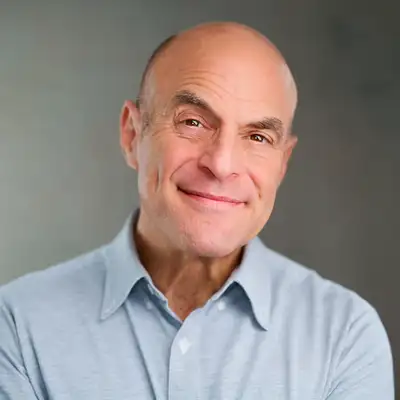
to learn from Peter Sagal.
Peter is a humorist writer and the
longtime host of the popular NPR News
quiz show, Wait Wait... Don't Tell Me.
He's also an accomplished author of
several books and a marathon runner.
Let's jump right in and learn from Peter.
Peter, welcome.
I look forward to our conversation.
Peter Sagal: Well, thank you.
I do too.
Matt Abrahams: Should we get started?
Peter Sagal: Absolutely.
I, I should say for all listeners that
I am here with my one and a half year
old who is a very well-behaved little
boy, but like all little boys of that
age demands pretty constant attention.
Matt Abrahams: To start, I am
a big fan of Wait Wait... Don't
Tell Me, a show that is part news,
part comedy, and part interview.
How would you define your role as host?
Peter Sagal: Hosting a show like,
Wait Wait... Don't Tell Me, not
something I ever trained to do.
I kind of had to learn it on the fly.
My first role on Wait Wait... Don't
Tell Me was being one of the panelists.
So there I was having been a playwright,
a screenwriter, and then a panelist on the
show, and now I'm the host of the show.
I do not recommend going back and
listening to the shows from that
era in 1998 as I was learning it.
My job was no longer to be funny as
it had been when I was a panelist.
My job was to make funny possible.
I had to understand and internalize
that if somebody else in the show did
something, said something funny, even
if I didn't say it, that was still to
my credit, I had been doing my job.
The second thing I had to learn
was that on the radio cleverness
and wit, people enjoy, but what
they really wanna hear is you.
My job was to be somebody and
to be a part of something that
people wanted to spend time with.
And even once I had figured
that out, was hard to do.
Matt Abrahams: I am really
impressed with the, the level
of reflection and introspection
that you've done about your role.
The notion that your job to be
effective is to enable others to
be effective is really important.
I hear you, Peter, saying a lot
that applies not just I think
to radio and podcasting, but I
think to communication in general.
You're in service of the audience that
you're speaking to, and that's that
connection that gives you permission
to have that communication with
the audience you're speaking to.
I really appreciate that.
Now, clearly some of what you do
is planned and scripted, but a
fair amount happens in the moment.
Can you share a story of a time where
you had to adjust your communication
in real time when things didn't go
as you had expected or predicted?
Peter Sagal: It's not so much
I can share a moment, I can
share any given show that we do.
Because our show, we're
unique in a couple of ways.
First of all, we're an ensemble show.
I'm not John Oliver speaking into
directly into a microphone or Seth
Meyers doing his closer look, which
is very similar and quite brilliant.
I'm a guy on stage with other people,
three panelists, one judge, and
scorekeeper, sometimes a special guest.
And we're all talking together.
And what that means is at any
moment, any one of those people
could derail what I'm out to do.
I could say to myself, I'm
going to talk about that.
And the panelists could
decide, no, no, no.
We're gonna talk about this.
Happens all the time.
Secondly, we do write a script.
I have very talented colleagues
with whom I research and write and
rewrite and rewrite a script over the
course of the week, very much like a
standard comedy shows writer's room.
But what makes my show different is we
then take that script and I have to be
ready at any minute to throw it out.
In fact, one of the things that we see
as a failure on our show is if I were to
do all the jokes written in front of me,
and the panelists don't really chime in.
Because we're very fond of the jokes.
We wrote them, we worked on them.
But if it's just me talking,
then it's not our show.
Our show is a conversation.
So what that means is I could
start off talking about whatever.
So we happen to be talking in a day
after we taped the show on the week
of the vice presidential debate,
so we knew we were gonna talk
about the vice presidential debate.
We wrote jokes about the
vice presidential debate.
I ended up about with five or six of 'em.
Hello Teddy.
I'm talking about the
vice presidential debate.
Did you watch it?
No.
So I had all these jokes that we
had written together about the
vice presidential debate, but
I had three panelists and they
were gonna do their own thing.
So I told a joke.
I maybe did another joke.
I got a laugh.
I got us started.
I turned to the panelist.
Did you watch it?
Well, yes I did.
Well, this is what I thought.
This is what they thought.
Now I am, my first mode
is guy delivering jokes.
My second mode is guy hosting a
conversation, and that was where we get
back to what we talked about before.
I wanna get their ideas.
I wanna have them land jokes.
If they start a line of commentary,
my job is to make a judgment
as to whether that's valuable.
Usually out of respect to them, I
say, okay, we'll see where it goes
and encourage them to follow it.
Really?
What do you mean by that?
Is that what you thought?
Really?
Part of the reason I'm able to do
this is 'cause the show is edited.
So yeah, I mean, I do that
planning for A and instead X
happening is not only a common
occurrence, it's essentially my job.
Matt Abrahams: The thing that you said
there that I think is so important
for others who find themselves in
situations where they have to respond
is that preparation is key, but being
willing to let go of that preparation
and follow what's happening and needed
in the moment is really important.
And in fact, you optimize for that and,
and that's how you're defining success.
I find it interesting that you feel
you wouldn't be successful if you
actually got through the script.
And that's an important
mindset and approach that I
think many people can adopt.
Do you do specific things to
help you prepare for that?
So for example, I don't know if
you get nervous or anxious anymore.
Is there anything you do to help
set yourself up for success?
Do you get very present oriented?
Do you do something to
manage your anxiety?
Peter Sagal: The way I prepare to go
on stage and be confident and in the
moment and not perturbed by the stress
is by doing it for twenty-six years.
But there is definite, I
do have a little ritual.
It's not that much of a ritual, but
it's, it, it kind of works for me.
We do a lot of prep right up to taping.
We write, we rewrite, and then there's
sometimes other things I need to do.
I need to talk to the panelists, talk
to them about whatever we're gonna
do and we don't give them the answers
to the questions that they're gonna
answer, but we sometimes warn them as
to what our top stories are gonna be.
So they get in the right mindset.
And this is what I do, we always start
with what we call the warmup in which I
come out and I just chat with the audience
a little bit before actual taping starts.
And that has a bunch of purposes.
To let them know how the evening's gonna
play out, to introduce to them to the
people who are gonna be there to tell
'em who our special guest is gonna be.
But it's also a moment for
them to just spend with me.
So what this is all about was,
that's what I think about.
I take a few minutes, I say, okay,
everybody, and I walk backstage
and I just start thinking about
what my jokes are gonna be.
Okay, I'll do, I'll mention that.
I'll mention this.
This is funny.
Okay.
And I focus on that.
And I get that little two, three minute
monologue in my head ready to go.
I've got the points I wanna make.
I go out, I do those
jokes, they usually work.
And then the audience
is ready and I'm ready.
And I'm confident because
I've got this good script.
I got these great talented
people to my left, the panel.
I got Bill Kurtis, who's
always a rock to my right.
What do I gotta worry about?
Let's do this.
Matt Abrahams: It sounds to me like
preparation is really important.
You help prepare the guests
to give them topics and focus.
You prepare the audience to be
participants actively in what it is you're
doing, and then you prepare yourself.
I think many of us, especially when
we think about spontaneous speaking,
speaking in the moment, we don't
think about the prep work that
we could do to help us get ready.
And I think a ritual like you have
can be very helpful for all of us.
We, we can think about what are the things
I can do to help get myself present,
get myself focused, perhaps help prepare
other people to maximize the experience.
So I appreciate that.
One of the things that many people
struggle with, especially when
put on the spot, is introducing
not just themselves, but others.
You can imagine sitting in a meeting
and your boss turns to you and
says, hey, you know that person?
Why don't you introduce them to the group?
You do a lot of introducing on the show.
Peter Sagal: I do.
Matt Abrahams: You introduce
yourself, you introduce guests,
you introduce the participants.
You even talk about your production staff.
To your mind, what makes
a good introduction?
Peter Sagal: Here's the secret.
People think that the focus
of an introduction should be
the person you're introducing.
I wanna make this person feel good.
I wanna say that this person has
all these important qualities.
So, just like you said, if you asked me to
introduce my friend in a meeting, I'd be
thinking about my friend, and I'd think,
okay, how can I make my friend happy?
But here's the trick.
You shouldn't think about
making your friend happy.
You should think about
making the audience happy.
You guys are so lucky because I've
got this person, this person for you.
And that affects everything in terms
of the words I choose to introduce
them, how I choose to describe them,
but even more importantly, my attitude.
So for example, if I'm introducing
Paula Poundstone, who's been
on our show, I never wanna say,
and here's Paula Poundstone.
You know her, you'll love her.
Isn't she great?
I wanna say, guys,
here's Paula Poundstone.
She's here, in front of you.
And that, I think, it not only lets the
audience know that this is a privilege,
this is a present, they get to see
this person just based on my attitude.
But it also lets, in a roundabout way,
like a ricocheted way, the person I'm
introducing know what I think of them.
So it serves that purpose as well.
Matt Abrahams: I really like that
you're introducing, not just the
person, but the experience that you
want the others to have of that person.
And the way in which you focus your
attention, not on the person, but on
those you are introducing them to,
helps you make that experience possible.
I really appreciate that and I
will look at how you introduce
people differently now as a result.
Peter Sagal: That really is my secret.
I just want everybody to
know, man, you are lucky.
Isn't this great?
And you have to mean it too, as, as
I think George Burns is most often
credited with saying about acting.
The most important thing is sincerity.
If you can fake that, you've got it made.
Matt Abrahams: Speaking of
humor, uh, you are certainly
funny and you use humor so well.
What advice do you have for
people who try, or need to be, or
want to be funny in the moment?
Are there things, are you judging
and saying, yeah, that's gonna
work, that's not gonna work.
And based on your experience, or
how do you coach people, if you
were, to be funny in the moment?
Peter Sagal: There's a old
saying that writing can't be
taught, but it can be learned.
And to whatever extent that's true,
it's quadrupley true for humor.
I don't think you can
teach somebody to be funny.
The only way to succeed in the arts is
figure out what you want to see in the
world that's not there yet, and make it.
And then hope that other
people agree with you.
That's it.
There's no other way.
And same with humor.
The only way to make an audience
laugh is to do something that
you legitimately think is funny
and hope they agree with you.
You know, I'll give you an example.
So I was interviewing Bob Seger and
I said, man, you were out there in,
in like the rock and roll scene in
the seventies in Southern California.
It was crazy, right?
And he says, yeah.
He says, you know, I went out there and
I, and I borrowed this guy's mansion and
he had this like amazing TV setup and
he had all these like cable channels.
I had never seen anything like it.
I said, so you're telling me that you
went out to the bacchanal, the drug
and sexual bacchanal of seventies
Hollywood music scene, and the thing
that you enjoyed most was cable tv?
And it got a big laugh because it
was both kind of funny and also true.
So that's what I'm always looking for.
Matt Abrahams: So it's about
being committed and being
authentic to what's true for you.
Peter Sagal: Yeah.
You have to be present.
I think that is the key, as Ram
Dass told us, being here now.
Being attuned to the possibilities
where this could go, steering it
toward the choice that you prefer.
You're talking to somebody, they
say three things, my job is to make
sure if I'm gonna follow up with
one of those three things, to follow
up with the one that will lead to
the best outcome for my audience.
Matt Abrahams: Are there things you
do to help you get present oriented?
I know you're a runner and for many
people, running helps be present oriented.
Peter Sagal: Yeah, it's very meditative.
For me, one of the things that really
helps is just the adrenaline of being
in front of an audience, is focusing.
But I gotta tell you,
sometimes even that fails.
There have been times when something
has gone wrong or when something
happens to just knock me off my game
and I'm standing on stage and I'm a
million miles away and that is bad.
We also found out, by the way, that Rod
Stewart and his band were also banned
from all Holiday Inns, and they got
around it by checking in as Fleetwood Mac.
Oh my God.
I am so sorry.
Bill Kurtis: You just
gave up the next one.
Peter Sagal: I just gave up the next
one because what happened was we had
talked about this and then since we
talked about it, it got written up as
the next question and I didn't know that.
So can you imagine my shame
just now, looking down at my
script and seeing this question.
But what we're gonna do is we're just
gonna go through with it because this is
show business and the show must go on.
Yeah.
Alright, here's your next question.
Matt Abrahams: So, when something like
that happens where you do get knocked
off your game, what helps you come back
is what I'm hearing, is to just remind
yourself that I have to be present and
I just have to handle what's going on.
Peter Sagal: Yes.
Let's say like you say something
that is just the wrong tone
and it brings the room down.
And you have two choices if
you're me at that moment.
You can say, oh God, that was terrible.
Or you can say, well, we got
thirty more minutes of show,
and that can still be good.
Matt Abrahams: I'm sure you're
familiar with a famous basketball
coach, Mike Krzyzewski.
He had this notion that he would
teach his players of next play.
If something goes abysmally wrong
or even if it goes amazingly,
well, move on to the next play.
Peter Sagal: Yeah.
I'm more of a baseball guy.
And one of the things I've come to learn
about baseball players is one of the
things that teams look for in players,
especially pitchers, is the ability to
shake off a mistake, be that a bad pitch
that gets hit outta the park for a home
run, be it an error if you're a fielder.
The ability to shake it off,
say, okay, that happened, but
now I'm going to pitch well.
And one of the things I've learned
about elite athletes is that their
mindset is such that if something
goes wrong, it's an anomaly.
Maybe because the ref got it wrong,
but it doesn't reflect on them.
And in a weird way that's kind
of delusional, but in other
ways it's absolutely necessary.
Matt Abrahams: The, the approach
and the mindset really makes a big
difference in terms of success in these
moments, Peter, you are very gracious
in the way you interview people.
Demonstrating graciousness can be tricky.
You don't want to come off
as too effusive, nor do you
wanna be too matter of fact.
Any suggestions for how to be
gracious in our communication?
Peter Sagal: Well, lemme start
off by talking about myself.
It entirely depends on
what your job is, right?
My job is not the job of the people
on 60 Minutes, or even the people who
interview folks for the new shows on NPR,
All Things Considered Morning Edition.
My job is not Steve Inskeep's.
My job isn't even Terry Gross's.
My job is to offer a good time
to our guest, to make them happy,
to make them happy they came.
So my job is to make them comfortable,
to put them at ease, to joke around
with them in a way that they appreciate.
How do I do that?
First of all, I try to find things
that they will enjoy talking about.
I try to find things that they
don't always have to talk about.
One of the things I promise people
who are coming onto our show is I
say, I hope this will be the most
enjoyable stop on your publicity tour.
I, I wanna get them off their talking
points, but not specifically to
make them uncomfortable, to give
them something else to talk about.
I get interviewed a lot and being asked
a different kind of question, like for
example, these, is really a pleasure.
If people are asking me different
questions than I normally
get, I'm like, oh, okay.
Well this is fun.
This is interesting.
I'll like, this is fun to talk about.
Sometimes you think to yourself, well, I'm
gonna make this person happy by explaining
to them how much I appreciate their work.
But what you're really trying to
do is show the person that you're
special, that they should like
you just as much as you like them.
This is in particularly referring
to those situations where you're
interviewing somebody you really admire.
That's not a gift, showing
yourself off to them.
Even if you think it is, because
what you're showing them is
how much you appreciate them.
What is a gift is to let them
express themselves by being genuinely
interested in what they have to say
about this, that, or the other thing.
For example, I noticed that when you're
playing this role, you have a tendency to
do X. Uh, that struck me as really smart.
Where did that come from?
Oh, well, uh, they might say,
uh, thank you for noticing that.
That's something I actually thought about.
Or they might say, really, I
never thought about that at all.
And that's a fine answer too, you know?
The best way to be gracious is
to turn the attention as much
as you possibly can to them.
Matt Abrahams: It's being other focused,
but also being appreciative of making the
moment special, is what I heard you say.
Not just run of the mill.
Peter Sagal: Make it special for them.
And if you can do that, you're gonna
make it special for your audience.
Matt Abrahams: So before we end, I'd
like to ask you three questions that
I'm asking everyone who's part of this
mini series on spontaneous speaking.
Is there somebody that jumps to
mind as a really accomplished
communicator in that regard?
Peter Sagal: Stephen Colbert, although
weirdly, that's not nearly as much on
display now as it was when he was doing
The Colbert Report, but what he was
doing every night, especially in his
interview segment, was so astonishing.
He was having a conversation with
a real person who had something
important to say and he was doing
it improvisationally in character.
To do that and still get a good interview
was an act of prestidigitation that
I don't think we'll ever see again.
I actually have spoken to him and
one of the things he told me, which
I thought was so fascinating, was the
only people he had trouble interviewing
was the people he genuinely admired
because his character wouldn't.
Matt Abrahams: Wow.
Peter Sagal: And I
thought that was amazing.
Matt Abrahams: Question number two, what
advice would you give our listeners to
just become better speakers in the moment?
Peter Sagal: I think there are two things,
both difficult, but both important.
A, confidence.
We, human beings are so good
at reading social cues that if
you're sending out social cues of
discomfort, of nervousness, that's
all people are gonna pay attention to.
And the second one is kind of connected,
is you have to say something of value.
And that's really hard.
Just like I was talking about with
comedy, there's a tendency to just
do something that you know the
audience always thinks is funny.
That's what she said.
Coming up with something that is
both valuable and something that your
audience has never heard before is
really hard, but absolutely essential.
That's the job.
I mean, one of the things that's
really an advantage if you're speaking
to somebody is if you know something
that they don't, and if you can do
any one of those things or anything
related, you'll be a lot better off.
Matt Abrahams: So to really help
people be better in the moment,
you have to have confidence in that
moment, and you have to provide value.
So, I'd like you to give
me some homework, Peter.
If you were to assign me one thing
that would help me do something that
you do regularly, what would it be?
Peter Sagal: So, one of the things that
I might suggest is if someone has to
give a speech on any given topic, either
sit down and write out your speech, or
if you really want to be daring, record
it, and then listen to it with a very,
or read it, with a very critical eye.
The critical eye has to
be focused on what's new.
What do I have to say that nobody
else can offer this audience.
Could be your personal perspective
because of the experiences you've had.
It could be knowledge that you've
researched and discovered that you believe
your audience doesn't have access to.
Or it can be an insight that
you have faith in and also know
that is new to your audience.
And everything that isn't one of those
three things, personal experience, genuine
knowledge that you've discovered, or
insight that no one else to your knowledge
has had, if not that, strike it out.
See what you got left.
Matt Abrahams: That advice to record
yourself and to listen critically
for what's new is homework that I
will absolutely put into practice.
Peter, this has been fantastic.
The insights you provided in terms of
connection, in terms of making others
look good, to help you be successful,
and to really add value by providing
something new or something insightful
or a different perspective can help
make us all better spontaneous speakers.
Thank you for your time.
Peter Sagal: My pleasure.
And also open with a joke.
That always works.
Matt Abrahams: Thank you.
Thank you so much for joining
us for another episode of Think
Fast Talk Smart, the podcast.
To learn more from our
spontaneous speaking coaches.
Listen to our four-part miniseries
episodes, 197, 198, 199, and 203.
You can also go to
fastersmarter.io/spontaneous.
This episode was produced
by Katherine Reed, Michael
Riley, and me, Matt Abrahams.
Our music is from Floyd Wonder.
With thanks to Podium Podcast Company.
Please find us on YouTube and
wherever you get your podcasts.
Be sure to subscribe and rate us.
Also, follow us on LinkedIn and Instagram.
Check out fastersmarter.io for
deep dive videos, English language
Learning content, and our newsletter.
Please consider our premium offering
for extended Deep Thinks episodes,
Ask Matt Anythings, and much
more at fastersmarter.io/premium.