Subscribe
Share
Share
Embed
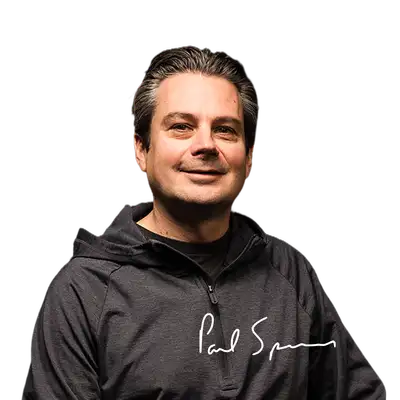
From Paul Spencer of Second Nature Solutions, a conversation about the complexities and nuances of building resilient family enterprises, especially in the face of economic and political uncertainties that loom on the horizon. See more at secondnature.solutions.
Welcome to Resilience Talk hosted by
Paul Spencer of Second Nature Solutions.
Let's dive in.
Sometimes there are things that we're
told or maybe even mentioned, um, from
friends advisors about, um, maybe advice
around how to do something a little
differently that runs counter to what
we would normally, um, think about
taking the approach or runs counter to
our values about how we were taught.
To run the business or how
things are meant to go.
Um, so that's what I
wanna talk about today.
Last time we were talking about Deming
and the, uh, seven deadly sins, and
there's an interesting, um, comment
that he makes in his 14 points.
And again, that's in the, out of, out
of crisis book, uh, that he wrote in 83.
And so one of his points in his 14 points.
Is to to end the practice of awarding
business on the basis of a price tag.
Um, and what he means by that is we
do spend a lot of time in business
and as owners to get the best deal.
Um, and we even have created
whole departments, uh, that
come out of the accounting side.
Called procurement and their
entire aim is to get the best deal.
And if you've ever, um, normally,
um, uh, the family businesses
do not have procurement offices.
So you are normally on the other
end of a procurement interaction.
Um, doesn't, doesn't say that you're
not looking for your best deal, um,
but when procurement gives you a call.
From a current customer of yours
and says, Hey, we need to, um,
cut your overall cost by 10%.
They're looking to get their best deal.
And so what is their
input in their system?
Well, they have an aim to reduce
costs, and they're probably
most likely incentivized.
And so if they can save.
A thousand dollars.
If they can save a million dollars,
whatever that range is, then they may
get a a, a commission on that, right?
And so that is very normal, unfortunately.
And this is what Deming is talking about.
So in the practice of awarding
business on the basis of price
tag, and why does he say that?
So let's think about that.
Why?
Why does that even matter?
Well, Paul, why would I not want to
cut my expenses, increase my margin
right by getting a low, um, instead
of spending, uh, $2,000, I can spend
$1,200 and book the $800, right?
Why wouldn't I do that?
Well, maybe that's, uh, um,
maybe in the short term, right?
Just like what we talked about last
time with the dead deadly sins.
Is emphasis on short term profits.
Same thing here.
Uh, sure.
That may, they may help, uh, for you in,
um, this month, maybe even this quarter,
maybe even this year, uh, that does have
an effect on your overall profit margin.
Um, but one thing that we, we
did talk about in the deadly
sins is management by use.
Only of visible figures.
I'm not sure if I mentioned that before.
Um, but the whole concept there is that,
um, there's a lot of emphasis on that.
Uh, our customer's $2,000 price
tag and can we get it to $1,200?
Can we save $800?
Which is a big percentage, but we don't
spend a lot of time on what Deming calls.
The figures that are unknown or maybe
even unknowable, and you say, well, Paul,
how can I run a business on things that I
don't know or that are not even knowable?
And that's his point.
His point is, uh, what are the
unintended consequences of reducing,
uh, that cost the $800 from a.
Primary supplier of yours,
what are they going to do?
Right?
So now you've said, geez, we've won.
And Paul, the procurement officer,
gets a nice, uh, incentivized check
for saving, say, $800,000 this
year, uh, from a key supplier.
And the key, what's the key
supplier's, uh, perspective of this?
Well, geez.
We just lost a huge percentage of our
income and our revenue, which is going
to affect, uh, our labor and our costs.
So what are they going to do?
They're going to cut costs, right?
And so what happens in the long term?
Uh, their quality goes down, and then
what happens in the long term for you?
Your quality suffers because now
the supplier, um, is giving you
products or services that aren't
as good as they used to be.
And you may say, well, we didn't
need that high quality of product,
we just need a bare minimum product.
Um, and that may be the case,
but if you're doing that across
all of your customers and
across all of your suppliers.
Which again is to, uh, award
business based on price tag.
Uh, the unknowable or the unknown
figure in this case is quality
of your own services and your
own products will go down.
And, uh, we saw a little blip
of this with, uh, Boeing a few
years ago when they were having
all these quality issues, right?
You go back in and you dig into
a lot of the stories from there.
And they had made some
changes based on price.
They had made changes based
on labor, based on price.
So, um, it's very interesting.
It's very counter right?
It's a counter thought.
Um, and so Deming would say, um, why
don't we move towards a single supplier?
Now, this is a very thought
provocative term, right?
He says, instead of award
business based on, um.
Basis of price tag alone.
He says, move towards a single
supplier for any one item and build a
long-term loyalty and trust with them.
Build a long-term relationship.
And, uh, and so what does that counter?
The counter of that is risk
management and redundancy.
And having flexibility with multiple,
um, suppliers, having redundancy.
What if that supplier goes outta business?
What if that supplier,
um, is unable to provide?
Then I'm, I'm SOL, right?
And those are worth those thoughts and
those conversations are worth having.
But Demming is counter that and saying
that if you de build a deep relationship
with a single supplier on a single item.
Um, then your quality will go up.
Um, you may pay more for that, that item,
but the interaction that you're having
with that customer, the relationship
that you're having with that com
customer becomes, and you think about
it as part of our system, is now we
get closer and closer and closer, and
now our supplier is actually giving
us what it, what we really need, what
fits within our own business, our own
infrastructure, um, our own services.
It's increasing the unknown
and unknowable, right?
Those unknown unknowable
figures, which is quality.
And with those quality things go up,
uh, things tend to snowball, right?
Here's another example is that, uh,
we often talk about, uh, within the
Deming world about sub-optimization.
And, uh, the, the counter thought to that,
the typical thought is we need efficiency.
And this is all in the same,
it's all in the same realm.
Um, because when we talk about price
tag, um, then typically that's, um, a
mandate that's coming down that says
that we need to be more efficient.
What does that mean?
That means let's not spend as much time.
Let's reduce our labor costs, right?
Let's reduce our expenses.
Let's do it in the most thinnest
way possible through the p and l
so that we can increase our margin.
And, um, and so that's the way we,
we tend to think of our business
and that's the way we're taught.
Um, so the counter thought
from Deming is to suboptimize.
And what does that mean?
That means that, um, instead of.
Thinking about each part of your business.
Um, and we, uh, from a corporate
standpoint, you think about them as, as,
um, departments, but, um, we have those
departments, even though they may just
be one person in our family businesses.
So you have the accounting side, right?
They're doing their taxes, the end
of year taxes, um, payroll, all of
those things kind of fit together.
You have the delivery side.
Uh, you might have a, um,
technology side or an IT side.
Uh, you have the sales, you
have the marketing, right?
All of that is your system.
And, um.
If we were to crank up, meaning let's
be super efficient with every single
one of those, uh, departments, which
again is how we're taught and what
we're what we're told to do is that,
uh, we want the technology innovation
IT side to do be the most efficient.
And we want delivery to be most efficient
and we want sales to be most efficient.
And what happens is that
they tend to make decisions.
On their own, in their
own unit to be sufficient.
Right?
And we can go right back to, to
procurement with this, right?
So in procurement, they're
looking to be efficient.
And what's their efficiency
is to save the company money.
That's their aims.
Save money for the company.
And so what do they do?
They go, and here's a nice story
that, uh, they go and they, um,
they cut back on travel expenses.
They, um, they get the, uh,
the, the red eye flights.
Um, this is for their internal team.
So sales is, is traveling
across the country.
Um, they've got a big, uh, $20
million deal that they're working on.
And what does the, uh,
travel agency work on?
Their efficiency is to save money,
and so, um, they, they link the
sales team through multiple stops.
Um, at weird hours, they arrive
late, um, uh, in the evening.
Uh, they're not in a very great
hotel 'cause they're saving money.
They don't get a good night's sleep.
They don't get a nice breakfast.
Um, they're not really close to the
customer or wherever the meeting might be.
And so it's a, it's a nice 35, 45
minute drive, uh, without traffic.
But.
There's lots of traffic where they are.
So it takes them an
hour and a half, right?
And then they get into the meeting.
You can just see how that's not
efficient for this customer, their
internal customer, which is the
salespeople, but they're winning.
They're optimized, they're efficient.
And so in this case, we would say,
let's sub to optimize the travel
team, the travel agency, right?
Whoever the travel, whoever the
person is, is responsible for travel.
Suboptimize that spend the extra
$350 and put 'em in a nice hotel
close to where the customer is so
that they can walk across the street.
Right.
Spend another $1,800 to get
them to direct flight, uh, at
one o'clock in the afternoon.
So when they get there, um.
It's before dinner.
They can have a nice meal, settle in,
prep, get be well rested for their
meeting in the morning and just walk
across the street that is sub-optimizing.
That is super important.
We do this all the time in our businesses,
and that's a great physical example,
but we're doing this everywhere.
Within all of, um, all the
aspects of our business.
We're optimizing, optimizing,
being efficient, being efficient.
Going back to what Deming talks about
with the seven, seven deadly sins.
These are the unknown and
unknowable figures, which
is what I just talked about.
The, uh, the rest or lack of rest
for your sales team to go close A
hoe up high profile client, right?
That is not tracked anywhere
on a spreadsheet, and it's
not anywhere in our EOS.
Uh.
Um, meetings on our rocks to
be able to improve that number.
It's not recorded anywhere.
It's unknown or unknowable.
Right.
Unknowable meaning that it's so far
through so many variables, so much
complexity that you can't measure it.
And why would you, it would take
you forever just to measure it.
So anyway, this is important to understand
that sub-optimizing is actually better
for your business than going through.
We talked about this too, but
Right, right around accountability.
Um, efficiency is another word that we
throw around pretty, pretty, uh, easily.
Like, let's be more efficient,
let's be more efficient, let's be
counter thinkers, and let's say,
let's sub, let's sub-optimize that.
Hmm Interesting.
What if we suboptimize that that
is counter thinking and that'll
get people thinking about all the
things that we just talked about?
What are the things that we're doing
where we're so focused on being
efficient and so focused on the price
tag that it's creating unknown and
unknowable figures around our business?
This is counter thinking.
And another one other one.
Um, just one last one is, um, to
embrace the competition, right?
Uh, Deming talks about this all the time.
That the, that your competition is within
the system of your, your business, right?
So we think about the system, you
have your business, and then you
have your customers, your suppliers.
Okay.
Um, you have your vendors, then you have
the government, meaning you have might
have state, city, and local regulations.
Uh, even if you're not in a regulated
industry, you have your taxes,
right, all fit within that system.
Um, and then you have your competitors
and they're all within the same system.
So being aware of all of that
and embracing the competition
and understanding where they are.
Maybe even working with them
all creates a better ecosystem.
Um, again, very counter
thinking, counterintuitive.
Um, and it's worth spending some
time thinking about these things.
And I would encourage you to, um, I think
out of all of these, probably the, um.
Well, they're all, they're all doable.
Um, I would say the easiest
one to experiment with is
the sub-optimization aspect.
And so anytime somebody says something
about efficiency or you and your
brain is thinking efficiency or
it comes outta your mouth, is to
stop yourself and say out loud.
Um, instead of us being efficient,
I know I just mentioned efficiency.
Let's think about how we can best
sub-optimize our organization.
And then let's see what, what
kind of outcomes we get from that.
You'll enjoy it.
It's fun, and I guarantee you you'll
get better outcomes than optimizing
everything in your business and
being quote unquote more efficient.