Subscribe
Share
Share
Embed
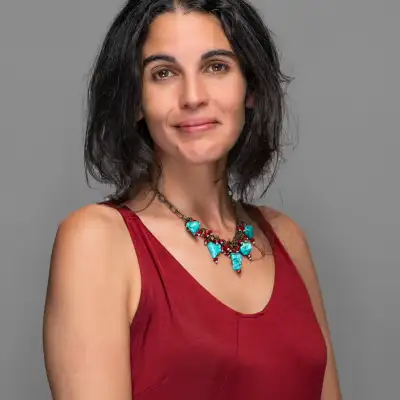
Welcome to Chattering With iCatCare, the official monthly podcast of International Cat Care, hosted by Yaiza Gomez-Mejias (Veterinary Community Co-ordinator). Each month, we chatter about cats and cat-friendly practices with industry experts and contributors to The Journal of Feline Medicine and Surgery. If you would like access to our members episodes become an iCatCare Veterinary Society Member and get in touch.
Hi, I am Yaiza Gomez and this
is Chattering with iCatCare.
I hope you started 2026 very, very well
and full of curiosity about cats because
as you may have heard from February
we'll be offering feline medicine CPD
in an easier and more digestible format.
If you want to find out more, follow
us on our social media and take a look
at our website portal.icatcare.org.
Today, Kelly St. Denis and Dr Sonya
Gordon will discuss the practical use
of pimobendan in cats, the topic of
this month's JFMS spotlight article.
But first, Sarah Ellis will
interview Morgane Van Belle on her
iCatCare Welfare Research Award.
Enjoy.
Morgane, I'm absolutely
delighted to talk to you today.
I'm just gonna tell our listeners
a little bit about the iCatCare
Welfare Research Award, because
this is only its second year.
It's designed to recognize and
celebrate individuals who've
dedicated a piece of research to
improving domestic cat welfare.
When we think about cat welfare, we
think about the physical health and
mental wellbeing of the cat, that
real integrated, holistic view and the
research may come from any discipline
within animal welfare, including
behavioural medicine, ethics, and law.
Our award aims to encourage researchers
from a variety of disciplines
to conduct cat welfare research
and to disseminate such research
in ways that make meaningful,
positive differences to cat welfare.
That's really important for us at
iCatCare because learning new knowledge
is fantastic, but if we can't put that
knowledge into action to drive change and
improve welfare for cats, then really it's
not doing the job it was intended for.
So we're big fans of applied
research at iCatCare.
The award is given at the European
Veterinary Congress this year, and your
winning abstract was part of your PhD
research and it was entitled Ethogram
of domestic cat intraspecific social
behaviour in multicat households.
A huge congratulations again for
that award and for some of our
listeners, they might not necessarily
know what the word ethogram means.
Not all of our veterinary
audience will have that kind of
behavioural understanding or maybe
wouldn't have used an ethogram.
So can you give us an overview
of what an ethogram is?
So an ethogram is actually like a
list of behaviours and definitions
for a specific like animal.
So we have ethograms for monkeys or dogs
but also for cats, and it's important
to have these fixed behaviours or terms
because that way we can describe things
uniformly across studies or across people.
So we are like talking about the
same thing by using same words.
Yeah.
Okay.
That makes complete sense because
behaviour is quite complex and if we're
not calling it the same things, then how
do we know we are talking about the same
thing or we've identified the same thing.
So that ethogram is like a
description of what a behaviour
is with some visuals to help?
Yeah, so for our ethogram, it, it
focuses on social behaviour in cats.
We identified behaviours that might
be relevant in cat encounters, and we
also try to not only define them, but
also provide visual illustrations via
drawings or video clips to show people
how the behaviour actually looks.
Nice.
I think the video clips are crucial
because behaviour is not static, isn't it?
And there's only so much
an illustration can do.
I love the fact that you are focusing
on multicat households because we are
seeing that they are extremely popular
across the world, and we hear from our
behaviourists that inter cat tension, so
problems between cats, are quite common,
whether that's overt, biting, scratching,
wrestling, or more subtle stuff around
them blocking access and cats urinating
outside the litter tray, for example.
So it feels very pertinent.
I think as humans, we just so often
take for granted in our social
relationships if somebody walks in
the house after being out for a day,
we just say, hi, how was your day?
We don't avoid them or attack them.
So it could be complex
for us to understand.
So I understand that this particular study
in the development of ethogram is one part
of your PhD, which is focused on social
behaviour in cats and multicat households.
But can you summarise for us
a specific piece of research
that you got the award for?
My whole PhD is focused on
understanding social behaviour, and
social bonds in multicat assaults.
But for doing so, we need a way to
describe our behaviour of the cats.
Because I'm working with videos of cats,
I'm doing behavioural observations,
and we then need a tool to describe
what is happening in these videos.
And for that, we needed a ethogram.
We have quite some ethograms available
on cat behaviour, but most of them were
focusing on old behaviour of cats, like
all their general behaviour and not like
really specifically on the social context.
And because these ethograms are focusing
on every behaviour cats can possibly
do, they're also very extensive and
it makes it difficult from my point of
view, for this research to use it on
a day-to-day basis for these videos.
So we needed our ethogram for that.
So we decided to develop one
ourselves and also try to validate
it so it would be stronger case.
Yeah.
Then we had like multiple staff in which
we assessed our face validity of the
ethogram and also if it was reliable
across researchers from different people,
would you would score the same behaviour?
Are they seeing the same?
We use literature search in our first
steps, and then we went to watching videos
together with multiple people to see if
our definitions work, if we have like
correct labels and really try to fine tune
it and after our different people looked
at it, we tested it with independent
people if it was a reliable tool, if
people can use it to score behaviour
and as that in the beginning, we also
wanted it to be as practical as possible.
So we tried to cluster our behaviours
into meaningful categories like not
too much behaviours and illustrate
our behaviours with drawings or video
clips so people can see the behaviour.
I think that really helps.
When I've looked at ethograms in the
past when I was more research active and
there was just written descriptions of
the behaviour and maybe an illustration,
I really struggled to tell the difference
between things like a cat batting or
a cat coughing, and I couldn't work
out are these two distinct behaviours?
Or are these just two researchers calling
the same thing by different names?
When you see the videos that
really enhances the descriptions
and you say, oh, okay, I get it.
This is the same thing, or this
is a different thing, but having
that singular language, that common
terminology, that we can all use just
takes away that cognitive unpicking
that we have to do to go, hang on a
minute, what do they mean by this?
What is actually the thing?
And I think the ultimate goal is
if we could get our veterinary
professionals and our caregivers,
whether they're the owner of the cat
or somebody that cares for it in a
homing centre or a shelter, for example.
If we could all speak the same language
when describing cats, then that would
be absolutely a wonderful foundation on
which to build our cat welfare practices.
Now Kelly St. Denis, JFMS editor, will be
interviewing Dr Sonya Gordon, first author
of the article titled Use of pimobendan in
cats: a practical evidence-based review.
Dr. Gordon, thank you so much for
joining us today, and thank you to
you and your co-authors for such an
amazing clinical spotlight article.
We don't really talk about pimobendan
a lot, and there seem to be widely
differing opinions regarding the use
of pimobendan and cats, its efficacy,
safety, and I wonder if we can just
touch on some of the concerns or even
controversies that surround its use
or application in the feline species?
I think the most obvious concern or
starting point would be that we have
a species that has a disease that is
characterised mostly by thick heart walls
that apparently squeeze quite well, right?
Like good contractility and
pimobendan is an inotrope.
It strengthens the heart muscle and
it's hard on the surface to see a role.
I think that initial part of like how
is it possible this could play a role
is probably one of the controversies.
Yeah, and that's certainly one of the
most common diseases I guess, that we see
in cats is hypertrophic cardiomyopathy,
so it's gonna be problematic.
But I guess what we're understanding
is that this application is
for congestive heart failure.
So what sort of application would
we use if we have a cat that's
got congestive heart failure?
Is it regardless of the cause of the
heart failure or the limitations to
the use, depending on the diagnosis?
So someone in clinical practice has
a cat with congestive heart failure.
Do they need to have a diagnosis of
the cause before they can even consider
using something like pimobendan?
We don't always have a for sure diagnosis,
medicine is acceptable uncertainty.
Having said that, it is really a drug
that if we're gonna use it in the cat,
we're already trying to take advantage
of some of its other properties, like
the fact that it can maybe improve
relaxation of these sick hearts.
It might strengthen the contractility
of the actual atrium, which tends
to get dilated in these cats and not
squeeze well and puts them at risk
for thrombus as well as heart failure.
And then at the same time, as long
as a little after load reduction is
tolerated lower resistance downstream.
Maybe that does make it more ideally
or optimises forward cardiac output.
So I think there's a constellation
of things that, it's not really just
about the fact that everybody thinks of
pimobendan as an inotrope, but it actually
has a lot of other things that might
benefit and it's not just obviously heart
failure characterised by obvious weak
pumps where the heart does not squeeze.
And that's an obvious indication,
but that's the rarity in cats
and requires echo to diagnose.
And so I think it's really about
how do you leverage this medication
in the right situation clinically.
And I think for me, I would say
I fit in the middle of the pack.
And I think as we wrote this, we all did,
that we believe there's clear indications
and then there's probably some that are a
little more grey zone and we used clinical
studies or a little case vignettes in
the paper to try to show those off a bit.
But the easiest way to say it
would be if you're treating a cat
with heart failure and he's not
doing well on standard treatment.
He may never get an echo by the
way, but he's getting Lasix and his
pleural effusion keeps coming back,
or he's even got large volume pleural
effusion at the outset and he doesn't
tolerate the high diuretic doses.
I think as a rescue treatment, little
to lose, but as a first line, that's
where people get a little twitchy.
So as a rescue treatment then, and some
of these cases, I've noticed that it's
with client awareness that you're using
something that is a rescue treatment that
may or may not be effective, presumably
not necessarily harmful though, is
that, would you say that's correct?
Unless we have certain situations
happening with the heart?
Yeah, I think, like I said,
the safety data is pretty good.
The concern around safety would be that
if you take a heart and make it squeeze
harder, and it's already squeezing
anyway, the contractility is good and
you make it hyper dynamic, can you
exacerbate or even cause obstruction of
the type we see in cats with hypertrophic
cardiomyopathy, so the obstructive form
where they have abnormal mitral valve
motion, systolic anterior motion of
the mitral valve, or they even have a
segment of their wall at the base of
their heart, there's, at the base of
the septum there that's quite thick.
As soon as you make them
squeeze excessively, perhaps
you can exacerbate that.
So that's the concern.
The problem is, it's hard.
I think if you echo a cat and you
show that he has that obstruction,
you know he can do it, but it's
very hard to rule it out in any
given cat because it's situational.
And that's why cats can have murmurs
that are louder and softer, or
one of the reasons they can have
murmurs that are louder and softer.
So if you're being the safety person and
you're like, you want some, ability to
assess this cat is tolerating the drug.
It's easy to do by measuring a blood
pressure after you dose them or a few days
after and listening to see if the murmur
gets louder or a new murmur develops.
But I think if they tolerate it and
that they don't show any tachycardia
or new murmurs that are louder, I
think you should have confidence
in the chronic dosing, at least
Like I said, with the safety.
Many of these retrospective studies
that we talked about that that have
people reported using it do include
cats that have had obstruction and
a primary hypertrophic phenotype,
and they certainly didn't seem to
show any adverse effects, but that
is the concern that surrounds this.
That's that conundrum, that controversy.
Right.
Echocardiogram is not
available for everyone.
I live in Northern Ontario.
We don't have a cardiologist at hand,
and not everyone can go for referrals.
So sometimes we're basing it on
pocus or no echocardiogram or
ultrasound of the heart at all.
So I appreciate that list of things
that you would be looking for if
you were gonna try to use it to
see if it was making things worse.
So heart rate, blood pressure.
New or louder murmur.
We know enough about dosing that the
oral dose is available quite quickly.
So if you were quite nervous, you
could literally give the first
dose in the hospital and before
you release them, re-listen and I
don't believe that a single dose
is gonna be detrimental anyway.
So if that's your concern, it's easy
to, couple hours, two three hours
after the first oral dose to listen.
And if you're really worried,
measure blood pressure and such.
We tried to show people where we
thought a good stepping off point
was, but showed them that there's
a lot of places where you don't
need to consider it at the outset.
Yep.
I really appreciate that, and I
certainly would say to our readers,
like when you're using this, I love
these clinical spotlight articles
as resources in my practice too.
This one's a gem from that perspective
because we are confronted with these
things and in the middle of a day
and we don't always know what to do.
So it's really good to have access
to just even those case studies
pimobendan aside, which is, I found
them very helpful and interesting.
I think sometimes if you can read
something, and I thought like the clinical
studies at the end that I really felt
strongly about including in this paper
were really just to show an application
of what they read in a way that was
probably digestible for a clinician.
Yes, and very much so in that good
thinking process of, like you said,
going through, is it a first timer?
Have they relapsed?
What do we know about their heart?
Do we know anything situation so.
What do we know about the
owner relationship with the cat
and the ability to medicate?
Yeah.
This is so much more than we, I think
I've been a, a vet for 25, 26 years
now, and we've really gotten good
at thinking about spectrum of care
and that caregiver and caregiver
burden as well as the patient, right?
So I think that's, those are
really important considerations
to, to take into as well.
Glad that you guys touched on that.
So I just wanted to say thank you.
I think I could ask questions
all day about not just
pimobendan, but cardiology.
So thank you to you and your authors for
giving us this clinical spotlight article.
I really appreciate it, and it's
gonna be very well received.
We enjoyed the opportunity to put it
together and the chance to talk about it
with
you
today.
Did you like it?
Join us again next month and
listen to more interviews about
feline medicine and welfare.
In the meantime, feel free to
leave a comment wherever you're
listening to this podcast.
We're always happy to receive feedback.
We'll be back in February.
Until then, you take care.