Subscribe
Share
Share
Embed
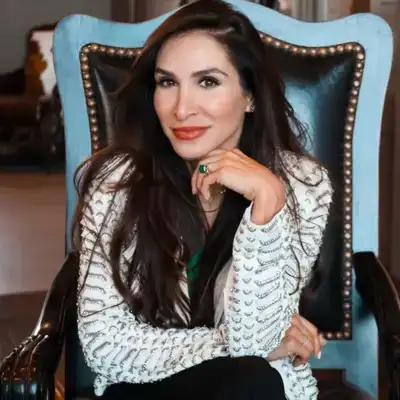
Join host Sarah Zubiate Bennett on Let’s Talk Local as she uncovers the stories, people, and places shaping Dallas, fostering a stronger and more connected community—let's get to know the real Dallas!
Hi. I'm Sarah Zubiate Bennett, and somehow we've already reached the end of 2025 and are gearing up for 2026. Before we head into a brand new year, I wanna take a moment to look back at some of the episodes you watched and listened to the most over these past twelve months. Our top audio moments and top video moments aren't always the same. So today, we're mixing in a little bit of both.
Sarah Zubiate Bennett:Before we jump in, I have to say thank you. Every single one of you who watches, listens, and shares, and supports this show has helped Let's Talk Local grow faster than I ever imagined. I'm truly so grateful. To kick things off, we're putting the NFL Network's Jane Slater in the hot seat. She joined me in the off season to share more than a decade's worth of behind the scenes insight on the Dallas Cowboys.
Sarah Zubiate Bennett:And with this being Shoddy's first season as head coach, I had questions, lots of them. Would this finally be the season the Cowboy fans have waited decades for? What did she think of the draft, and how confident was she heading into week one? Now that we're deep into the season, let's take a look back and see how her predictions are holding up.
Jane Slater:You know, I was critical of the Cowboys the last couple seasons, so much so that, you know, I heard it from Steven at Combine.
Jane Slater:But my argument was, you can't find good people at training camp or during the season, And you're not giving your team the best chance to build, gel the culture if you're doing this so late.
Sarah Zubiate Bennett:That's right.
Jane Slater:And this year, they went out and I think they did a really good job of finding some really they called it selectively aggressive. Uh-huh. Some really smart pieces for each position that they were missing. And then they were able, because they did it early, to draft with intention. The Cowboys are a different team in the sense that of all the 32 teams I cover, there's not a lot of turnover in the front office.
Jane Slater:It the way they do things is very different. Oh, okay. And I think a lot of outsiders that come in don't quite get that, They get frustrated that there's all these leaks, whatever. Reporters and people have been here for forever.
Sarah Zubiate Bennett:And
Jane Slater:I think Shoddy gets that, but I think Shoddy also appreciates, like when you ask him questions, when you and I sit in an interview, don't you find yourself buying in or listening to what people have to say when they're giving you complete answers? They're thoughtful answers. They want to talk to you. That's how he is with us in the media. That's how he is with the team.
Jane Slater:Now, I continue to couch this by saying, I have no clue how that's going to translate throughout the season. Because I think we prematurely say, oh, the Eagles are gonna repeat or Washington's the team to watch. I think we should watch out for the Giants, quite frankly. I think Jackson Dart's got a little something to him with Cam Scatabow, the running back up there. But I keep saying, as much as I've talked about energy and culture feeling different, this because I feel like he really authentically wants to be.
Jane Slater:I asked him in the introductory press conference, when this is all said and done, what do you want to be known for? And he said, for having the best culture in all of sports. I It was such an interesting answer to me. It wasn't Okay. It wasn't obviously that comes with all of that.
Jane Slater:But if you look at these teams who, you know, they'll go back and they'll be like, that was the greatest season. Or we had like, if you look at the Eagles, they had a bunch of adversity in the beginning. Yeah. They were they had a really young defense. They were struggling.
Jane Slater:Vic Fangio was kind of an older coach who'd come in, and they turned the season around. If you ask any of those guys, it was culture. And so everyone kind of rolls their eyes when you say culture because it's one of those intangible things. Can't Can't buy it. Can't just you can't buy it.
Jane Slater:You can't explain it. It's organic. And I think there's something special happening around there. I think a lot of those guys feel like they've got something approved too. I think Dak feels like he's got something approved.
Sarah Zubiate Bennett:Next up is a moment from episode 26, where I had the pleasure of welcoming both my husband Monty Bennett and influencer Alex Stein into the studio. This conversation was such a blast. We covered so many topics and the energy was nonstop. And honestly if I didn't know better, I think Monty was trying to take over the host of this show. You'll see exactly what I mean in this next clip.
Sarah Zubiate Bennett:I wanna play this. And it's from the Jewish Journal. And it was a it's AI that is reading your whenever you were in scrubs
Roland Warren:at the was the first one that blew up. And one thing I want
Roland Warren:to say earlier, Monty, when you were talking about my process, when I first spoke at these meetings, it was during COVID. I spoke serious. I said some sarcastic stuff, but I was dead serious. They shut down the bathrooms. Shut I live by Bachman Lake.
Roland Warren:I was like they shut down the bathroom Bachman Lake. This is an open air bathroom like how is this you know?
Sarah Zubiate Bennett:The colostomy
Roland Warren:The colostomy That's what saying. There's an 80 year old guy Rudy who walked all the time and I'd see him. I became Facebook friends with him and I'm like he was 80 and he walks. I was like, this guy has so much energy for an 80 year old. But you know, he had a colostomy bag and I stopped seeing him.
Roland Warren:I messaged him on Facebook. I'm like, Rudy, I never see you at bogged my leg. Never see in the morning anymore. Are you okay? Because I've kinda worried he died.
Roland Warren:I'm course, not even trying to be sad. I was like, are you okay? He's like, yeah, but you know I have the colostomy bag. I can't use the bathroom there, so I don't walk at Bachman. I just walk on the treadmill at my house.
Roland Warren:And I'm like, you've got to be kidding me. Like, this is the house
Sarah Zubiate Bennett:Is there a treadmill in his house?
Roland Warren:Yeah. I mean, I just remember he just said he walked at his house.
Harrison Polsky:Or maybe he got one. Right?
Roland Warren:Yeah. I think he might have got one. He said he got a treadmill. And I'm like, that really kind of made me mad because I'm like, 80 year old guy who doesn't even want to walk? How is this better for our health telling us not to exercise?
Roland Warren:And so I spoke serious, and they didn't even listen. They could care less. They were obviously going to shut everything down because they were worried. And it didn't have any effect. It just didn't hit.
Roland Warren:And then, before the one you're about to play the the transcript from, I had a video where I was when the heartbeat bill passed and and I'm really anti abortion. I understand why somebody might wanna have one, they don't have the money, but I'm really I I do believe that, you know, you're murdering a baby, you know. I I don't know how else to describe it. But they had the heartbeat bill. It just got passed and I went up there and I said because everybody was mad about this heartbeat bill and I and I said I I'm so mad.
Roland Warren:I was talking to the Dallas City Council that you guys are, you know, making it abortion so hard. I love abortion. It's the safest form of
Sarah Zubiate Bennett:heard you.
Roland Warren:And I was like, you know, I'm about to go on a trip to Cancun. I got multiple baby mamas, know, I said all this this, you know, inflammatory things, all this this crazy stuff. And Charlie Kirk shared it, and that was one of the first videos that got a million views. I was oh, this is what I need to do. This is what I need to do is I need to kind of put a mirror up to the most egregious and craziest things of our society, and that is how we bring attention to it.
Roland Warren:So it shows the absurdity of it. So that motivated me, and then I kind of started that process. And then that, I think it was like of less than a month later I went there in scrubs and that's when like the height of COVID and they were doing all of the vaccine, know, get vaccinated in Fair Park, get vaccinated here. So I went up there and I I sang How
Sarah Zubiate Bennett:you come up with this?
Roland Warren:I mean, I just kind of freestyle that I was in.
Roland Warren:I was
Sarah Zubiate Bennett:This was a freestyle? A lot of it was.
Harrison Polsky:Yeah. I actually come up with my favorite famous line is, you know, doctor Fauci give me that ouchie. I I thought of that before. I had that before. I still remember that.
Harrison Polsky:I'm like, I'm trying to get something to rhyme with Fauci.
Sarah Zubiate Bennett:That was the one thing that I wanted to have played.
Harrison Polsky:Oh my god.
Sarah Zubiate Bennett:It's fine, it's fine, it's fine. It's okay, it's okay. But it was hilarious. One of the biggest topics Texans grappled with in 2025 was school choice. As many of you know, Texas officially became a school choice state after Governor Abbott signed Senate Bill two back in May.
Sarah Zubiate Bennett:It remains a topic that's quite controversial, but regardless of where you stand, the state has allocated $1,000,000,000 in funding for the twenty twenty six-twenty twenty seven school year. To help bring clarity to what all of that really means, I invited someone who was widely recognized as one of the leading voices on school choice, Corey DeAngeles. I wanted to ask him the questions so many parents have, especially how these changes will affect students with special needs. Here's a part of that conversation. What about the fact that many of these private schools oftentimes cannot handle or teach or educate kids who have severe learning difficulties.
Sarah Zubiate Bennett:My daughter she has dyslexia but she is in the talented and gifted space as well. So she's able to do Okay in a public school setting, in a private school setting where accommodations are less readily available. What happens to these kinds of kiddos who have severe autism and need for early intervention, ages three and up to allow them to be contributive members of society, dollars 10,000 per student is oftentimes not enough. And they've suffered tremendously on shortfall, funding shortfall in the public school system even now for these types of students. Where do they fall in this whole space?
Sarah Zubiate Bennett:Yeah I would argue that the traditional system fails those kids more than anybody else. So, argument applies to the status quo as well and I will say the bill that just passed in Texas, it is an average of $10,000 scholarship per student for the education savings accounts. But like they did in Arizona, they're tying that amount to what would have been spent in the public schools and students with special needs oftentimes could get about $30,000 in the traditional setting so that amount could follow the child into the private setting as well which
Sarah Zubiate Bennett:That's right.
Sarah Zubiate Bennett:Would allow the private schools to afford more of these services that they couldn't before. I mean, currently, the private schools, it's amazing that any of them exist at all because they're having to compete with a free good that, let's be real, in Texas public schools, the average spending per student is near $20,000 per student per That's right. And so they're spending a ton of money
Sarah Zubiate Bennett:With all the local taxes contributed to that baseline of what 6,000 whatever.
Sarah Zubiate Bennett:Yeah, even before this program passed, there's actually a nationwide provision in the Individuals with Disabilities Education Act, IDEA. It's the federal education law. And there's a stipulation in there. A lot of parents don't know this. But you can use this even in blue states like California and New York.
Sarah Zubiate Bennett:If you have a student that is labeled with a special need in the traditional public school system, you can make an argument that your federal education rights are being violated in the traditional public school system if they can't meet your special need for whatever reason.
Sarah Zubiate Bennett:For sure.
Sarah Zubiate Bennett:Yeah. Obviously, the school district will fight that and because they get more money per student for those kids. And so they fight as hard as possible to say, No, we checked these boxes. We're meeting their needs. We hired XYZ person.
Sarah Zubiate Bennett:But that's just a form of box checking. Doesn't actually mean that they are filling that gap and meeting the needs of those children. So, in that provision, if you can prove to a judge or get the district to admit that they are Which not doing the right thing very hard to do. Some family Yeah, it is very hard to do especially if you had to pay for a lawyer to do that, jump through all these hoops. But you do have some families who do have the money to pay for these lawyers who are currently, even in blue states, able to have the money follow the child in But some you shouldn't have to prove that to a judge.
Sarah Zubiate Bennett:That's right.
Sarah Zubiate Bennett:You shouldn't who are the most likely to be able to afford this? It's the most advantaged in society. So I think these proposals like we passed in Texas with the money following the child, this makes it easier for less advantaged families to access school choice too. So, in a sense, these policies are an equalizer.
Sarah Zubiate Bennett:Now, let's jump in to one of our more personal episodes. This one's from January and it's called Terror in Highland Park. In this conversation, I brought my daughter Liliana into the studio to revisit a really frightening moment we experienced during a tennis lesson. I shared this story as a reminder to always stay aware and vigilant, even in a place that feels safe. Here's a look back at that episode.
Sarah Zubiate Bennett:Tell me what you remember about that particular day when you were there taking your lesson and I had joined you.
Roland Warren:Well, so, you know, I kinda just sort of like we started warming up, and then we started just passing. Then you joined us after several thirty minutes. And then there was these guys and remember they like Of course. Came down when they they walked and say, I think they were trying to get into the gate.
Sarah Zubiate Bennett:They did. So they they walked directly on the eastern side of the chain link fence. There was a chain link fence there. And I don't know what caused me to sprint from the northern side of the court over to the southern side. Remember my purse was over at the bench?
Sarah Zubiate Bennett:Mhmm. So I sprinted over to it. And then I had you and Alicia stand to the side and behind me. What else do you remember after that?
Roland Warren:I remember that they
Sarah Zubiate Bennett:How many were there?
Roland Warren:There was six, I think six to eight. There was a lot of them. There was like whole group.
Sarah Zubiate Bennett:Do you remember how old they looked?
Roland Warren:They looked, like, 25.
Sarah Zubiate Bennett:Yep. Looked
Roland Warren:young. Had, like, baggy clothes on.
Sarah Zubiate Bennett:Really baggy.
Roland Warren:Like, dirty and, like, all I was just, like they looked, like, in the hood. I'm sorry. They were.
Sarah Zubiate Bennett:It's no secret that I believe our city has incredible potential. We just have some big city challenges that our leaders need to solve. Unfortunately, these solutions often seem harder to reach than they should be. Damian Leveque, better known as Dallas and Fuego NX, has become known for calling out these issues head on. His videos break down what's happening in Dallas and offer his unfiltered take on why it matters.
Sarah Zubiate Bennett:I invited Damian into the studio to talk about his process, his motivation, and what drives him to speak so bluntly. And let's just say, a few of his comments definitely struck a nerve. Let's take a look. You recently put your city of Dallas, leaders hate you. Citizens passed prop u,
Sarah Zubiate Bennett:a referendum on public safety, begging city leaders to hire the 900 police we need, and yet they're still dragging their feet. With attrition, the city will only gain, at best, 256 cops this year. And then
Sarah Zubiate Bennett:you put exactly what the pay was as of, I guess, as of very recent. And you said this gaslighting is egregious. Where are you gathering all of your statistics? Because we have them. Right?
Sarah Zubiate Bennett:And they're publicly available. Yep. How much time does this take you?
Dallas En Fuego:It takes a lot of time.
Sarah Zubiate Bennett:It does, doesn't it?
Dallas En Fuego:It takes
Dallas En Fuego:a lot of time.
Sarah Zubiate Bennett:It's buried.
Dallas En Fuego:I I get them I I gather them myself. Mhmm. I, you know, my wife helps me dig up stuff. You know, the more people you have doing it, the better.
Sarah Zubiate Bennett:Of course.
Dallas En Fuego:And then sometimes I have, like, primary sources that are actually giving giving them to me saying, like, hey, you might wanna look at this because this is what the numbers actually are. You know, as far as the police thing is concerned, it's very it's a very important issue for me. I lived in LA for twenty two years.
Sarah Zubiate Bennett:Yes.
Dallas En Fuego:Police staffing is
Sarah Zubiate Bennett:a big issue this.
Dallas En Fuego:Well, there's a there's
Dallas En Fuego:a so a lot of the passion that I have
Sarah Zubiate Bennett:Density.
Dallas En Fuego:It comes directly from having lived in that city for twenty two years. And I say, I don't want Dallas to become this.
Sarah Zubiate Bennett:Same.
Dallas En Fuego:Because LA is facing a housing crisis. It has a homeless crisis. It I I don't know actually where LA is on cops, but there was a period of time about four years ago where they were talking about slashing the LAPD budget.
Sarah Zubiate Bennett:They did.
Dallas En Fuego:So when I look at what the police in in Dallas are being paid compared to surrounding cities, it is it's it's crazy. Infuriating. If you're a young man and you wanna be a police officer, why would you choose to put your life at higher risk in Dallas when you could get paid $1,015,000 dollars more go working in Plano and you know, or Garland or something like that. It doesn't make any sense.
Sarah Zubiate Bennett:While Dallas certainly has its challenges, this city also has some major strengths, especially when it comes to building a career. Dallas is one of the strongest business and financial hubs in the country, which is exactly why it's home to the Texas Stock Exchange or TEXI. Nicole Chambers, the global managing director of listings for TEXI, was part of an MCBA panel where she explained why Dallas is the ideal city for the Texas Stock Exchange headquarters. She broke down the momentum, the opportunity, and the reasons our region is perfectly positioned for this next chapter. Here's how that unfolded.
Nicole Chambers:I am originally from San Diego and came to SMU and like most SMU grads now are from California or Florida. But you know, I really recognized coming from a city that was very specific in industry, tourism, military, biotech, fantastic. Love being from San Diego, it's great to visit especially in August. But really understanding what my education allowed me was to be in a city that had such opportunity across the entire board. Whether you wanna go into the legal profession, HR, finance, civic duty, you name it, it's available here.
Nicole Chambers:And so I think, you know, as I look at that, I've only seen Dallas grow. We hope to be part of the skyline. We are looking currently at where we will have our official headquarters. So we hope that people sitting on the steps of Dallas Hall will be able to see the techy logo and signs and all the fun things that go along with having a stock exchange. We wanna have the bell or as many people have asked for a cannon.
Nicole Chambers:We're gonna we're gonna need some permits, permit person in the room or you know whatever else comes with that. We see a great opportunity to have that fanfare of just people watching. Right? If you're in Times Square, you can watch the Nasdaq Bell. If you're watching TV and you see the Dallas Cowboys ringing the bell, we want to be able to have that community be a part of what we're building here.
Nicole Chambers:So we will have the Texas market center in the skyline, we will have a Texas business museum that will highlight all the great work that's been done in the state from the spindle top to the Gigafactory and all that's to come. So there is a tremendous opportunity still. I mean, I was graduating SMU and took a job at NASDAQ, I would have never guessed that there'd be a stock exchange here.
Sarah Zubiate Bennett:One of our most watched and most listened to episodes of 2,025 featured Father Josh Whitfield, my pastor at Saint Rita Catholic Church. He's also the author of Why Sunday Matters and several other books. Father Josh isn't your typical priest. He's married, has five kids, and you're just as likely to spot him on the sidelines of a youth game as you are to see him at Mass. That's exactly why I wanted to talk to him about the real world issues, including the pressures so many families feel around youth sports.
Sarah Zubiate Bennett:I'll admit, it took a lot of prayer and some heartfelt conversations with my husband Monty before I could fully see things the way father Josh does. But now, I truly do. Here's part of that conversation.
Father Josh:Often, a first blush criticism of youth sports today would be the fact that families are not going to church on Sundays because Sundays are tournament days or this sporting event or that sporting event has pulled them away. And how do you combat that? Well, you get rid of sports on Sunday. Maybe you tell Christians that they should separate themselves from participating in youth sports. And that's a nonstarter for Christians, if you take a breath and think about it for a second, because of what sports and play can be in their full beauty.
Father Josh:When played well, when engaged well, sports belongs to the whole development of the child and to the person. And if you see the history of, if if you if you explore the history of sports, you you see that without Western Christianity, we wouldn't have we wouldn't have sports today. Right? Sports began as play on Sunday afternoons after everybody went to mass. And this parish would would want to play that parish in a game of stick or whatever.
Father Josh:And and that evolution become those games that were played by medieval peasants on Sunday afternoons evolved to become the sports we play today. And and and you see how sports has been the aggregate, a truly good thing for human beings, for society, for children developing. In the twentieth century, The Catholic church encouraged youth sports in Italy to fight fascism. But we've clearly turned youth sports into something it never should have become. And that is something like work.
Father Josh:Is, we've turned sports into we've pushed it into the cult of achievement to be something on the ladder towards whatever we consider success today. And in that, it's become its own business, and it's become something very exclusionary to kids who don't have the means.
Sarah Zubiate Bennett:Can't afford it.
Father Josh:Right? And there are fewer kids playing sports today than there were fifty years ago. If you come across the word elite in youth sports, it simply means someone can afford it. It doesn't have anything to do with quality of the athletics. And so clearly sports, even people who aren't religious or who have a religious understanding of the value of sports, will tell you that something is wrong with the youth sports world today.
Father Josh:In that it's not something that contributes to human flourishing or the flourishing of families. So I would call it a crisis.
Sarah Zubiate Bennett:Kelly Sirna is a creative force behind Studio eleven design, with more accolades than I could possibly list in just one episode. When she joined me earlier this year for an interview, I asked her which project she's most proud of. Her answer not only revealed the heart behind her work, it made me respect her even more.
Torry Cray:I have different properties I'm proud of for different reasons.
Sarah Zubiate Bennett:Uh-huh.
Torry Cray:Nothing this is not the most iconic project, but my project in Haiti, to me was an incredibly pivotal time of my career. Yep. And a time where and a place that has so much sadness and poverty
Torry Cray:I was able to create something beautiful. And to the point where I was going down in a bulletproof armored vehicle with armed guards to go to Croix Du Bouquet to work with the artist, and every piece of art in that hotel was made from a local artist. And to see how Oh, resourceful they are with absolutely nothing. Uh-huh. The art the hotel has recycled tires.
Torry Cray:Yep. T shirts that were donated that were dyed and woven and made. I mean, you name it and just like things, recycled oil barrels, and then they're finding forks and things and Uh-huh. Making beautiful masks. Yep.
Torry Cray:And so, I think that project, it wasn't the fanciest. But it was it was a project that will ever touch that. I got to meet the people. I did a whole huge column of photography Uh-huh. And we explained to a group of of students, photography students that didn't ever have their own cameras.
Torry Cray:Yep. A lot of these kids, some of them haven't even like had a mirror to see themselves.
Torry Cray:And we said, go show the world the beautifulness. Like you know, everybody shows the sadness of Haiti. Go show them And the we bust them all in, and they I get it's I get goosebumps on my head every single time I think about this, because I'm right there like now. They all came in and they were tears just strewing down their face. As they found on this wall of like 500 pieces of photography.
Torry Cray:They found on this wall their photograph, their the pride that they had. But then, you know, when you're talking about operations, I know I'm going off a little bit.
Sarah Zubiate Bennett:No no.
Torry Cray:But like, there was somebody in housekeeping. Uh-huh. And she just went home and you know, hosed her home down, you know, and that's how she cleaned it.
Torry Cray:So she goes in our bathroom, know, the guest bath, and takes a hose and or not a hose, but somehow got water Uh-huh. And just took like the water and watered down the whole bathroom. So everything's shorting out. We flooded the 2nd Floor. Had it.
Torry Cray:Gosh. But I mean like they had like a big huge rice and bean thing and a woman's whole job was to sit there and and people are taking their rice and beans, putting it under a napkin over to take it home and share with their families. And there will be nothing. I don't think that I've I will ever experience to my beautiful Thompson Hotels or some of these incredible projects that I've been so blessed to be a part of that will be as beautiful as that.
Sarah Zubiate Bennett:When you think about real estate and DFW, one name consistently rises to the top, Kandi Evans, the powerhouse behind Kandi's dirt. With her deep expertise and sharp eye on the market, I invited Kandi to join me for a conversation about what to expect in 2025 and the years ahead. And because Kandi loves nothing more than a good industry deep dive, I brought in Harrison Polsky, luxury builder, realtor, and fellow market expert to round out the discussion. Together, we explored where Dallas real estate is heading over the next five years. Here's what they shared.
Harrison Polsky:It's it's still going up. I mean, in December, there was a lot on Beverly that traded at $4.25 a foot. Mhmm. And then two weeks before that, it was $3.85 a foot, and a week before that, $3.25 a foot. Mhmm.
Harrison Polsky:Like, that's still $60 a square foot higher than it was a year ago.
Harrison Polsky:I mean, she knows this just as well as I do. Six years ago, you could buy a house in the Fairway Of UP, 4,200, 4,500 square feet, one 7. Now they're trading for $3.02, $3.04. So you're gonna sell that house to buy the same house? No.
Harrison Polsky:Plus your kids gotta go to school, and they can't all jump up to $67,000,000. Mhmm. Then if you're not in Highland Park, you know, Park Cities and your kids are going to private school, where are you gonna live? Preston and Hollow Bluff you because you're not gonna schlep from all over the metroplex forty minutes in the morning, unless you unless you wanna get divorced. So you're gonna live in Preston Hollow, so you're close to schools.
Harrison Polsky:And where are all the good schools? In Preston Hollow. So I don't see that changing anytime soon, and especially as more people keep coming, it's just gonna get more congested. Now the bullseye's moving north, but you need more schools up north to kinda offset that. So until that happens, I'm not buying it.
Sarah Zubiate Bennett:Okay. Well, okay.
Harrison Polsky:So I disagree.
Candy Evans:I have
Sarah Zubiate Bennett:comments about this. So I wanna hear your perspective, Candy. Why do think the bullseye is moving north?
Candy Evans:Define north for me. I would say North Of Dallas. Northward of North Dallas, Northward of Plano even. Because Frisco Fields is going to be amazing when that is fully developed and done. So it's early yet.
Candy Evans:But eventually we will have, I think, the luxury of Highland Park Village at Frisco Fields. Those communities up there are really You really think? I think so. I think what they're building, what the developer told us was kinda funny. He said if you like if you think Legacy West is great, he said what I'm doing at Frisco Fields is in terms of retail is going to make Legacy West look like the ugly stepsister.
Candy Evans:So it's going to be a very huge thing. But it needs time because you've got the PGA up there, you've got all the entertainment. Universal is coming up there, there's so much up there. The schools up there are have you been to the PGA?
Harrison Polsky:My passport expired a little while ago.
Candy Evans:Well, I went up there and I turned around as I was leaving this beautiful contemporary building. And I said, oh my gosh, what is that gorgeous building right across the street? That is the high school. So in Frisco now, if you have a child who's very interested in golf, you can send them to school there and they go to the PGA and play golf as their sport. I'm telling you, parents who want a scholarship for their kiddo, they're gonna go there.
Candy Evans:They're gonna love it. That's that's where I see it going. But do I think that Park Cities is ever gonna lose its lesser? No. I call that blue chip real estate just for that reason.
Candy Evans:I've got studies that I can share with you showing that the younger people, they're finding now, they're going out of the city. So you know how we once thought about ten years ago, oh, everyone's gonna be urban. Yeah. I'm gonna live down. No.
Candy Evans:And COVID is what kind of accelerated that because a lot of young people, millennials said, you know what, we don't really like this living on top of everyone. We kind of want to get out and be out there and that's why we're seeing, I think that's what's going to help drive the North.
Sarah Zubiate Bennett:Our most watched and most downloaded episode of 2025 was also the one that caused me the most anxiety. My conversation with Rollin Warren, President and CEO of Care Net and the author of The Alternative to Abortion, Why We Must Be Pro Abundant Life was the most vulnerable I've ever been on the show. Sharing the trauma I went through as a teenager, trauma that led to my decision to terminate a pregnancy was incredibly difficult, but it was also unexpectedly healing. We all face painful decisions and deeply personal challenges throughout life and my hope is that resources like CareNet and leaders like Rollin who offer support without judgment can make those moments a little less isolating. Thank you for being here.
Sarah Zubiate Bennett:This interview I think is the most it's the one that has made me reflect the most. Oh. And because it's a very difficult topic for me as I mentioned to you via email. But growing up, I never knew that I was adopted. My parents were always older.
Sarah Zubiate Bennett:And so when I found out that I was adopted, my goodness, it was a little earth shattering for me. Because I identified such similarities between myself and my parents who raised me, but I was still very different. I was a little bit of a hellion. I was strong willed, hot headed. All the things that I guess my mother wasn't, but my father was the hot head, unfortunately.
Sarah Zubiate Bennett:But it made a lot of sense to me when I found out I was adopted. But it was a turning point for me, so to speak, because I then immediately wanted to know who my biological mother was, who my biological father was. I still don't know who my biological father is, but I do know my biological mother. But the story of life is one that is deeply meaningful and very personal to me. And I mean, just reading so much about you, and when Monty first said, I really think that you should interview him, You'd really, really like him.
Sarah Zubiate Bennett:And I looked at him and I said, this topic is gutting for me.
Roland Warren:Yeah.
Sarah Zubiate Bennett:But let me pray about it. I need to muster up some courage and do it because it's your work is inspiring.
Roland Warren:Oh, thank you.
Sarah Zubiate Bennett:Work is inspiring. Your story is profoundly inspirational. And, when I read the story of you and your wife in your book, I want to know what prompted you to write it. You kind of alluded to it, right? It's your choice to choose life when the nurse was suggesting to your wife, oh, you will not do this.
Sarah Zubiate Bennett:Your dreams, goodbye. Right? All the things that we experience. But my experience was different from you and your wife in that when I found myself pregnant, I was 15 years old. And the situation was very it was different and rooted in pain and just disgusting parts of humanity.
Roland Warren:And
Sarah Zubiate Bennett:so my mom, when she was the very first person I told, the only person I believe, and at that point, I did not realize that I was adopted when I was 15. They had not told me.
Roland Warren:Wow.
Sarah Zubiate Bennett:And so she because of the situation in which my teenage pregnancy arose from, she was like, no. No. No. No. And I thought to myself, well, maybe I would hate.
Sarah Zubiate Bennett:Hate is a strong word, but you still worry whenever it comes from a situation born out of certain circumstances. You think, well, maybe I would have hate for this child. And I was gripped with fear. That graph that you show is so true and so worrisome, even though I was top of my class. Was Right?
Sarah Zubiate Bennett:There were many similarities between your wife and myself. But at that point, I hadn't even considered telling anyone else because it was so difficult to find myself in that situation. So my mother took me from my termination, my abortion at 15, and she said some really hateful things afterwards. And I couldn't understand it for the life of me.
Sarah Zubiate Bennett:I was like, why would she say these things? My mother was a very elegant woman, a passive aggressive. My father abused her growing up. It was a really chaotic family environment that I was raised in, so there was no stability in my family. I mean, was more stable than the environment I would have been raised with had my biological mother not given me up for adoption.
Sarah Zubiate Bennett:But she chose life. And I didn't know it. I did not know that at the time. So two years later, when I found out that I was adopted
Roland Warren:Wow. That
Sarah Zubiate Bennett:Yeah. Was hard. Yeah. Because for all intents and purposes, I mean, it would have been much easier for her to have terminated me. But she didn't.
Sarah Zubiate Bennett:And it took a lot of reconciliation in my life, and it wasn't until my father passed away I found myself in treatment for workaholism and just trauma. Really, really, really bad trauma in my life.
Sarah Zubiate Bennett:that's when I was able to reconcile a lot of this pain that I had just stuffed down. And my biological mother being so courageous and having chose life for me, giving me up to my parents. She worked as a maid, as a housekeeper for my aunt. And she met my parents, knew that they wanted a child so badly they couldn't have one. So she asked, Would you be willing to raise this child of mine and give them the life that I can't?
Roland Warren:Wow.
Sarah Zubiate Bennett:She was struggling to feed my older two siblings back in Jimenez Chihuahua. I mean, true poverty. Those are my beginnings.
Roland Warren:But
Sarah Zubiate Bennett:I find myself here today and think, okay, the way you pieced together that book, it was not with judgment or
Roland Warren:mean,
Sarah Zubiate Bennett:you you speak about the importance of leading with kindness. And so I appreciate you Well thank you for very much. What you packed so much into 2025 for you and honestly there was even more that we didn't get to launch. Today, I wanted to give you a little peek at one of those pieces. Our studio sits right off the Tollway and Spring Valley and just a mile north is a brand new healthy eatery called Cafe Olivia.
Sarah Zubiate Bennett:We had the chance to step inside and film the day before they opened their doors to the public and let me tell you, the space is stunning and the coffee and food is absolutely incredible. I'm genuinely excited to have this spot within a good mile or so of walking distance. Get all the info at cafeoliviatx.com. But first, take a look at this. Oh my god.
Sarah Zubiate Bennett:I'm so excited. You guys, I feel like the worst friend because I was just telling Adrian, I had no idea that you guys were even freaking opening this. And you were so beautiful and wonderful both to kind of not bail Monty and I out a few weekends ago, but you made sure that we had the ability to execute a five star experience at the ranch. So thank you for being those friends that we can always call in a bind.
Adrian Verdin:With food and beverage. With food and beverage. Other binds. Food and beverage binds.
Sarah Zubiate Bennett:Some other binds. Some other binds when we need bodies buried. Just kidding.
Adrian Verdin:Yes. That I can do. That I can do.
Sarah Zubiate Bennett:But this is remarkable. And I Tory mentioned none of this. First, how did you come up with the name Cafe Olivia?
Adrian Verdin:So Olivia was a name that we were contemplating on naming our child. I don't. Yeah. We were working on a couple of different projects in Dallas. And then we created the kind of the base of this brand, this concept, and we decided, hey, let's name it Olivia, and it became kind of the working title.
Adrian Verdin:And then, eventually, we found this spot and we opened the first location of more to come.
Sarah Zubiate Bennett:I love it. And you two are brilliant hospitality minds. What gave you the idea to open this particular concept? And are you gonna let us go upstairs to look at the Sure. The event space?
Sarah Zubiate Bennett:Yeah. Okay. Good. So what what gave you this idea?
Adrian Verdin:So a couple of things. One is I feel like there was a lack in our market for a cafe with chef driven food. Mhmm. A lot of the coffee shops out there have really great matcha, really great coffee, but just pastries or an avocado toast, but there's nothing coming from a a real kitchen. And so and vice versa.
Adrian Verdin:There's like really good healthy cafes, but they don't have a robust coffee or matcha program. So we needed to combine something that offered that. And not only that but also give an opportunity to people that wanna come to a venue, work for three, four hours, have a nice drink, you know, snack on something and have an environment that's like inviting and warm and just somewhere they can like, you know, put up their laptop and and hang out for a while. And I feel like this is it embodies that.
Torry Cray:It does. Truthfully, we are always looking for a place to go and do that. Yes. We couldn't ever find one. So we're like, you know know what?
Torry Cray:We'll just
Torry Cray:do it ourselves.
Sarah Zubiate Bennett:Yes. Because to that point, I mean,
Sarah Zubiate Bennett:it's remarkable. I mean, it of course, anything that you all would have ever created especially together is gonna be gourmet and top of the line. But to have this just, at least selfishly for me, within walking distance from where we office and meet this type of need in the market, I'm so grateful because there's nothing like this.
Adrian Verdin:I I think that there's at the end of the day, restaurants are a business and people try to have a margin on them. And you know, the consumer kinda dictates where they wanna spend their money for lunch or for a coffee. And it's hard to introduce organic food, non seed oil products, locally sourced, you know, produce, and all that gets expensive. And it's hard for a business to justify it, you know, when you're charging, you know, closer to $20 for a lunch. And it's, you know, it's kind of a it's a risk.
Adrian Verdin:It's a risk that you have to you have to take. But I think that there is a consumer base out there that wants and demands this type of food, and we're here to kind of per you know, provide that for them.
Sarah Zubiate Bennett:Okay. I I love it. Tori. Hi. How are you?
Sarah Zubiate Bennett:This is something funny. So I'll go through their names later, but Tori Adrian. Tori over here, whenever I asked her to please sit with Adrian and I, she was like, but I'm so good at spreadsheets. Do I have to sit there? And I was like, of course you have to sit and talk.
Sarah Zubiate Bennett:Tori Yeah. Can you tell us what your involvement in this with Adrienne has been?
Torry Cray:Oh, sure. I control the budgets mainly attempt to. I'm just kidding. So Adrian does a lot of the concepting and design and menu development and the like what I do in my involvement is really like SOPs and front of house management and kind of just managing staff and hiring and things like that. So really like day to day operations, accounting and and you know spreadsheets.
Torry Cray:Do. Yeah. Anything involving a computer and numbers. Technology, a budget, a bank
Adrian Verdin:account. Yeah. She can handle that.
Torry Cray:Don't know that Adrian's ever logged into the bank account actually, which honestly, is I adore him for that. What a blissful life.
Sarah Zubiate Bennett:It is a blissful life. You are such a beautiful couple because you complement each other so well. And okay. So was it planful or was it on accident that you all have this event space that you're about to show me?
Torry Cray:So Adrian tours restaurant spaces six times a day, eight days a week. So he's very specific on which restaurants because he's seen all of them a couple times. Yeah. So he's actually very good at finding kind of like, let's call it the best deals or the best spots and he has a very close real estate broker and friend is she a broker?
Adrian Verdin:Shout out to Elizabeth.
Torry Cray:Shout out Elizabeth Colton. CBRE. So he always knows all the up and coming best spots really. Yeah. So he kinda he just knew.
Torry Cray:He you know was kind of on the up and up and Yep.
Torry Cray:the Lots of perks.
Adrian Verdin:One of the big things is event spaces are huge and like underrated in the market. And when you can create a restaurant that is flexible being an event space and a restaurant, you can maximize your space. And I think that's we look for spaces that can do that, have that flexibility. And this venue happens to have a beautiful outdoor patio that can become an event space.
Sarah Zubiate Bennett:How many people can you host in this entire space?
Adrian Verdin:So between upstairs, downstairs, and the patio, you're you can go 300 plus. Ideally, we wanna handle around a 150 interior and a 150 in the balcony and then another hundred and fifty hundred outside. So you could you could do quite a bit.
Sarah Zubiate Bennett:Great. And are you guys planning to expand to other locations or is this just gonna be a one stop? So we do have
Torry Cray:another location already in lease in Downtown Dallas in the old Chase Tower, which is now the Dallas Arts Tower. So that should open at the beginning of next year?
Adrian Verdin:Yep. We'll open springtime. So it's an exciting building. It's the original Chase Tower. People know what it is.
Adrian Verdin:It changed recently to the Dallas Arts Tower. Mhmm. We'll have about the same size. It's about a 4,000 square foot building or space in the lobby on the 1st Floor right on Ross And Pearl, really high traffic part of downtown. So we're excited about that spot.
Sarah Zubiate Bennett:Amazing. And okay. Is it gonna be the same menu or a different menu?
Adrian Verdin:Same menu.
Sarah Zubiate Bennett:Same menu. Did you all develop the menu? It's spectacular. And does it change in the afternoon or is it just one menu all So
Adrian Verdin:we're it's gonna be a menu that we provide only for breakfast and lunch. Mhmm. When we do events, we will cater more to the event itself or what type of event it is, but the menu will remain the same. And it's just a wellness driven menu that feels light but hearty at the same time where you get all the health benefits that you're looking for but you can walk away and be full?
Torry Cray:To answer your question, we do have a breakfast menu and a lunch menu. So they have a lot of the same items but different at the same time. So at lunch we'll add on like more robust options
Roland Warren:Mhmm.
Torry Cray:And like shareables. We feel like people will come in bigger groups for lunch. Mhmm. And then breakfast will be more breakfast driven items.
Sarah Zubiate Bennett:Okay. Perfect. And you guys are open five days a week, Monday through Friday. What time do you open?
Torry Cray:Open at 7AM.
Sarah Zubiate Bennett:And you close at six?
Torry Cray:Yes. And we're gonna from three to six, we'll do like light bites. So the main full kitchen will close at three but we'll still do small light bites between three and six. Got you. Okay.
Adrian Verdin:I think the other like part of it is our industry is overworked. Yep. This is a seven day a week, three hundred and sixty five days a year.
Sarah Zubiate Bennett:It
Adrian Verdin:is. You know, a lot of kitchens that do breakfast, lunch, and dinner. You know, you open at five in the morning to to prep everything. You're closing at two, three in the morning. And so very little time for people that work at that traditional forty, fifty hours a week.
Adrian Verdin:You're working sixty, seventy hours a week. On a schedule like this, this allows us to give a more life balance to our industry people, to our community. So we have chefs that have families that wanna spend time with them on the weekend. So we just doubled down on saying, hey, we wanna do something for our industry that that, you know, gives them work life balance but yet provide something that's just all in on breakfast and lunch and do a really good job there.
Sarah Zubiate Bennett:Spoken like a wonderful dad. It's true. It's absolutely true. And you and I have spoken about this, Adrian, how I'm I love this industry. It's something that I've always been so passionate about.
Sarah Zubiate Bennett:And you both have varied but kind of similar hospitality backgrounds. Can you independently tell me and our viewers and listeners what your background looks like?
Sarah Zubiate Bennett:What does your background
Torry Cray:look like? I know this one. Okay. So I was born and raised in Vegas and I studied hospitality at UNLV. Both of my parents were in hospitality slash production and I worked in restaurants and hotels in Vegas briefly between '16 and '22.
Torry Cray:Left at 22, moved to LA. It wasn't good. Don't move to LA. I'm just kidding. I love LA, but not not for a 22 year old fresh out of college.
Torry Cray:And then I moved to Dallas about ten years ago. I have opened a couple of different restaurants here. I was part of the opening team at the major food group restaurants. I was the opening food and beverage director at the Statler Hotel, so I opened all of the concepts there as well. What else?
Torry Cray:That's that's good.
Adrian Verdin:That's good.
Torry Cray:Yeah. Those are the main ones. Yeah. And we do a lot of consulting still as well and caterings.
Sarah Zubiate Bennett:That's amazing. And Adrian?
Adrian Verdin:So I think being Mexican and of Mexican culture, you're you grow up around food. My mom made breakfast, lunch, and dinner. And just being around food the whole time, it was I was the kid that just fell in love with the process and the ingredients and the making of everything. And I think at a really young age, I knew that hospitality was something I wanted to do. So I in high school, my high school program actually offered a hospitality Oh.
Adrian Verdin:Which is really unique for a high school to offer that. It is. So that tied into me getting a scholarship to University of North Texas and attending UNT for their hospitality program. And I opened up my first restaurant in the year 2000 and have done all aspects of it from owning to consulting to creating, you know, cocktail mixers for hotels and casinos. The spectrum of different aspects of it are there.
Adrian Verdin:But I think I've I've now in my forties, I've really understood kind of what what I'm good at and it's not accounting and budgeting and bank accounts.
Torry Cray:That is correct.
Adrian Verdin:It's developing it's developing the idea and bringing it to life from, you know, what's what's the music, what's what's it feel like, what are the colors, what's the story behind it. And those are things that I think a lot of restaurants miss is like the authenticity of a brand and like why you, why does it work and what's the story you're trying to tell. And if you ask those questions and all the questions, you can you can offer something that's authentic.
Sarah Zubiate Bennett:I love both of those answers. Thank you for that honesty and transparency. And I have another kind of selfish question. Let's say someone is opening a restaurant or a hotel or something, in Dallas, and they wanna use you all in some capacity. Are you going to be tied up in, you know, this concept which is like a child to you all.
Sarah Zubiate Bennett:Right? You've you've birthed this together or are you gonna be able to have that freedom to actually do that consulting work outside of it?
Torry Cray:So a lot of the consulting that we do is about putting systems in place to help the restaurants essentially be self sufficient. Right? And so we will definitely use all of those systems here to allow the the restaurant to run on its own. Of course, we would never turn a blind eye to anything that happens here, but, we are both multi unit operators, so we'll both definitely be available for anybody and everything that needs to happen in Dallas.
Sarah Zubiate Bennett:I love that. I hope that every episode of Let's Talk Local leaves you with the feeling that we're all in this together. Whether you're on your own personal or spiritual journey or you simply want to see DFW grow and thrive, my hope is that you find something in each conversation that truly resonates. Most of all, thank you for your incredible support throughout 2025. It's meant more than you know.
Sarah Zubiate Bennett:I hope you'll join us again in 2026 because we have so much in store. Until then, cheers to a safe, prosperous, and happy new year.