Subscribe
Share
Share
Embed
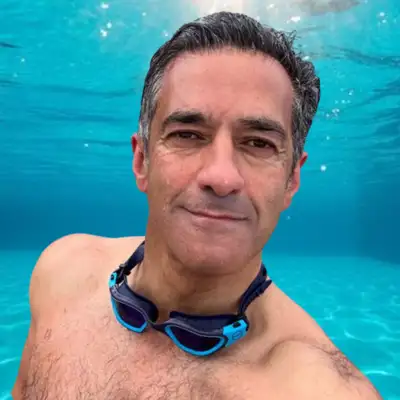
Inspring journeys from the pool to the everyday. Hosted by Salim Ahmed, a lifelong swimmer and swim coach with over 22 years experience, the show dives into the human stories behind the sport. Not just times and techniques, but the moments when water became an anchor, a lifeline, or a turning point.
Each episode features honest, intimate conversations with everyday swimmers, Olympians, well-known names and unheard voices, all united by the role swimming has played in their lives. These are stories of resilience and reinvention, of grief and joy, of quiet victories and near-impossible comebacks.
From open-water epiphanies to childhood pool memories, In at the Deep End explores how swimming steadies us, challenges us and carries us through life’s waves.
If you love inspiring stories with depth, this is where you dive in.
Salim Ahmed (00:20)
Welcome back. You're listening to In at the Deep End. I'm Salim Ahmed, swim coach, and someone who genuinely believes that what happens in the water is never really just about the water. If you enjoyed today's episode, please do follow the show on whatever platform you're listening on. It means you'll never miss a story. Today's guest walked into my sessions, able to do exactly one stroke, breaststroke, or as she'd call it, old lady breaststroke.
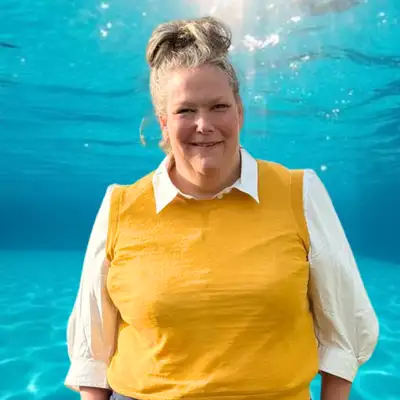
Kind swimming you learn as a child and then stick with for life. Since then, though, she's taken on triathlons, championed movement for women in midlife through her enormous social media reach, and become a regular at my open water training sessions. That gap between where she started and where she ended up is why I wanted to welcome her on In at the Deep End. Lisa Thorne is the entrepreneur behind Walking This Way.
The Instagram community and podcast that's built a genuinely loyal following talking honestly about midlife, the juggle, the reinvention, the bits nobody puts in the brochure. Hundred kilometer trail walker challenge across the South Downs is what set the whole walking this way project in motion in the first place. So when someone with that track record for taking on big physical challenges tells me she'd quietly avoided front crawl her entire adult life.
I wanted to know why and what changed. This one's about technique, but it's also about recognizing our weaknesses, being brave enough to do something about it, and the amazing things that can happen when you do. So here's what's coming up.
Salim Ahmed and Lise Thorne (03:15)
Lisa Thorne turned up to her first session with me having made peace she thought with being a breaststroke swimmer for life. Head up, gentle, functional, fine for a holiday, not much use for anything else. She'll admit now she'd been quietly dreading front crawl and hoped she could avoid it for decades. Outside the pool, Lisa has never really done things by heart. She's built Walking This Way, an Instagram community championing midlife and movement.
with a hundred thousand followers and a podcast that's become a must listen for women navigating midlife without the gloss. I have to admit here, it's not just women. I listened to it too and I think it's bloody brilliant and more men should. But the swimming is where this conversation really starts. Since we began working together, Lisa hasn't just picked up front crawl. She's taken on swimming challenges she never previously thought possible.
I've wanted to sit down with Lisa to properly unpick it all for some time. What it took to become a beginner again on purpose, what the training actually felt like, and whether any of it changed how she thinks about starting things from scratch elsewhere. Lisa, welcome to In at the Deep End. Salim, thank you. What a pleasure and an honor to be here. As I always say, you're one of the few honored men on Walking This Way.
I adore you. So to be invited on is a real privilege for me. So thank you. And that made me feel a bit teary, to be honest. This is going to be a bit of a love fest, isn't it? Really? Let's do it. I don't care. We don't care about the audience. It's just great. Have a bit of a chat. You've got a fabulous story that I want to go through and there's a lot of key learnings and brilliant things that I want to go through with you. There is a theme that I'm going to come back to and that's
do with letting go and I want to come back to it. But somewhere in the beginning part of our interview, our chat, I want to talk about something in your backstory that's made you the woman you are. And I want to really tap into that because I think it's underpinning quite a lot of things. Now, I don't think you talk about it enough personally, even though I've seen your podcast a lot. There are some underpinnings that are brilliant and absolutely
amazing that I've picked up on as a friend and as your coach that I want to revisit. But let's go back to the beginning. Take me back to that first session we had. You'd been a breaststroke-only swimmer for years. What finally got you to book a lesson with me and what did it feel like when you turned up? Salim, even when you asked the question, my chest just tightened and I had that
sensation of that very first going into the water with you. And if I'm right, I was probably wearing a surfing wetsuit. I wore a shorty surfing wetsuit to start and some quite big goggles, not the swimming goggles, just, I don't know what they were, but they were big. And I came into the water with you and I was at pains to explain to you that I just did breaststroke and I was very unsure about front crawl and I said, can't like...
There was lots of kind of, can't, you know, I'd done my first triathlon. So the reason I fell at your door and swimming has been such a huge part of my mental and physical transformation. And a lot of that is thanks to you. So I did put my big girl pants on. I did a first triathlon, which was, looked it up yesterday, actually, September the 24th, 10 years ago. So almost to the day.
I swam that in this surfing wetsuit with these big goggles on. I mean, my bike had a pannier on. was, and I, but I just decided I had to do a triathlon scared. I just had to do it scared, slow, scared, whatever it took. I wanted to do one and I was so, so nervous. And I'd swum that triathlon and most other people, not all, but most other people do triathlons front crawl. And
I'd heard about you at the lake and I thought, maybe I should try and do some training if I'm going to go on and do another triathlon. So I booked you and I turned up at the lake and I was at pains to tell you that I thought I was going to be faster at breaststroke than I was at front crawl. And, know, I wasn't really sure why everyone did front crawl because definitely that wasn't my thing. And I couldn't do a length of a 20 meter pull front crawl. I could not. I had tried lots of times.
So when you said to me, but we're going to try and do front crawl today, I don't know what I thought you were going to do with me, but I was just like, you said, well, let's try. And I was like, okay, but I can't do it. And you're like, all right, do like four strokes of front crawl and then breath stroke and get your breath back and then go again and then go again. And I think you took me straight on the 750 meter loop at Shepperton. think I did, yeah. Yeah, at the deep end. Yeah, in at the deep end.
and we got to the furthest point from the entry exit beach. And at that point I decided I was still panicking a bit. So we'd probably done 300 meters. The most I'd ever really swum before that was 400 meters. So actually that loop was probably my longest swim ever to date, but we're at 300 meter point and I felt like my breath was beginning, I was beginning to panic and the wetsuit felt tight.
I was sort of pulling it away and I saw, thank you very much Celine, thank you, that's a lovely lesson. I it was supposed to be an hour, we were about 15 minutes in. I was like, that's a lovely lesson, but I'm going to just swim back to the beach now. I think I'll take the shortest route. And I remember just looking at that beach diagonally across the lake thinking, I've just got to get out. Any means I can, I need to go. And you said, well, no, the lesson's not over yet. And number one, you're not allowed to swim directly across anyway. And number two, let's keep going.
You know, just take, take your breath. And what you probably did in that moment was calm me down and said, just you're in the water, you're safe. Hold onto the canoe. You'd have told me to hold onto the canoe. like, I could, I'm a water baby. So water's never scared me, but front-haul scared me because I hate being out of breath. Yeah. And by the end of that, but by the end of that one lesson, we got, we got all the way around the 750 loop. I think at that point, I thought probably the average speed to do a 750 loop was probably an hour.
And I was like, I don't know that we'll make it back in time if average speeds are that, you know, we'll it. And we got back and by the end of that lesson, I could see a window to a world in which I could front crawl. Yeah. I think I would have taken that. I think you said something to that effect and I took that as a win because when we first went in and you are a student, which is good for me in that, you know, you will chance it.
frequently, but you just, you just need the right coach to tell you when you can and when you can't. And it's all about boundaries. And we found out what our respective boundaries were, which is I'm not taking any shit. You're doing this loop. You're a fitful woman. You can do this. And you did, that was the best thing about it. It just unlocked the potential and the ability you already had in you. You just needed someone to sort of just nudge it a bit. Yeah.
And you make people feel safe in the water, There's no doubt about that whatsoever. It's like whatever the limits are, whatever they are, you push people's limits. You push them slightly further than, not further than they should, but you do push them further than they believe. But you always feel safe and you've got a way of talking to people as well, almost a meditative way in the water and when you're coaching about stillness and calmness and being at one with the water.
Although I was panicking then, and I don't think it was a single lesson, by the way. I don't think I was on my own. think there were another couple of people which probably scared me even more because they were faster. It's true. They were faster. And I tell you what scared me most in that lesson. It's just come back to me as well. I was keeping everybody back. Like that idea of being the one that holds everyone back. You're tapping into that thing I wanted to talk about as well.
There's all these things that work. You know, right now, because we've got a bit of history now in terms of our friendship and our swimming coach relationship, we know that there is a lot more to swimming than swimming. And it's not really about swimming. There was a lot more that was being let go on that first lesson and a few subsequent lessons. And swimming was just the metaphor for it, of letting go.
And the thing you touched upon there, and I think we did this and we've always done this in all my lessons since, is we always have that swim yoga moment where we float and you're probably going, thank God, I don't have to do anything. I can just relax. Meanwhile, I'm thinking, well, you're lying on your back, your legs together, your toes are pointed, your arms are together. You're reaching out, you're closing your eyes and you're trying not to rotate or overbalance and hold that position in a state of calm.
thinking I'm giving you a break, when in actual fact, what was happening was you were connecting, you were connecting with the water, you were letting go, your heart rate was going down and your subconscious was going, this water log isn't that bad actually. And in fact, it might be better than almost anything else I do on land. Yeah, I agree. I agree. And actually you're right about that floating moment. It feels like such a joy.
Like, because like you said, it feels, and I can float on water without a problem. So you talk about all the things that we're doing, you you're doing in that time, or that your body is automatically doing in that time. But to me, it's like, this is bliss, you know, and those little moments, like you said, they calm you down when you're otherwise feeling. And when I've done your group lessons before, where you've got, I don't know how many, it's the maximum people in there seems like 100 to me, like everywhere people, but it's 15 of us, let's say.
you'd always give a handicap number and I'd always be one or 15, whichever way it was going. But it always meant that I went first. And that as well, once I'd realized that I could do that in a way that didn't put other people out. And now to the fact.
I don't, mostly I don't worry if I put other people out. We're all in there, we're all doing it together and most other people don't worry if they've got two minutes. You did at the time, you don't as much now because of how we are and what's happened. But at the time you did worry about what other people thought and swimming was a way of letting all that go. But we started by me not avoiding the subject completely, which was in your head, which was how do I breathe?
when I do front crawl, because breaststroke, it's quite easy. My head's up all the time. Front crawl, hold on, that's professional and that involves timing and all sorts of horrible things like that. And initially, I remember when I did work with you, because I do this with everyone, is, and I can tell you this now, I can trick you. I tricked you at the time and said, look, we're not going to talk about breathing at all. I just want you to lie on your front and then take as many strokes as you can and stop.
And you say, I can do that. And you did, and you did it fabulously. And in fact, if humans didn't have to breathe, we'd be all brilliant, brilliant swimmers and all quite fast. But we then introduced the breathing and the breathing was timing wise exactly the same as brushstroke. And I think at some point that clicked with you in that if you could breathe for brushstroke in small ins and outs, you could do the same thing with front crawl. And that's all we did was I just showed you, that's the code.
You can already do it. You just need to make your head adjust it for front crawl and the body rolls instead of comes up and down. yeah, and that's what you did. And then you did it in small doses, wasn't it? That was our strategy. was like swim for a bit, front crawl. And then when you get knackered, just go back to what you like in terms of breaststroke and then go back to front crawl again. That's exactly what it was. By the end of that first day swimming, like I said, I could see a world in which I could front crawl because I think
Often it isn't that people can't front crawl, it's that people can't imagine how they breathe. They can't conceptualize it or feel it. So we avoid it. And like I said to you, all those times that, you know, the Bank of England Sports Center, that was a 20 meter pool and I couldn't get across it in front crawl. But because I was too anxious and I was too worried about the breathing, so therefore I couldn't breathe. And that's what it comes down to and that whole heart rate thing.
is absolutely critical to absolutely everything. As soon as you start feeling a bit more comfortable and you can breathe normally because your heart rate's settled a bit, then it starts becoming and feeling a lot more natural. And as adults, that's a really difficult thing to unlearn because we overthink everything. As grownups, we do. As kids, we don't. We just do things naturally and innately. But as a grownup, we think about the mechanics of absolutely everything and it
And it's hijacks the natural process of it. And in fact, that's what happened with us because you had in your head, I need to breathe properly a certain way. That needs to be priority number one. And then we can do other stuff. Whereas my method and a lot of swimming coaches methods are actually no, we'll park the thing you're most worried and obsessed about till the end. Don't worry about it. It'll come back. And then it sneaks up on you gradually and you haven't noticed.
Before you know it, think, actually I'm breathing to the side and I'm breathing relatively normally and I'm not panicking. And you had a glimpse of glory and my line was, that's the win. You've had a glimpse of glory. All we need to do now is make those glimpses bigger and then join them up and then you can stream the channel. Which I haven't done yet, but yes. I'm talking about building up.
endurance. used to go on about how if you know how to do front crawl properly, you'll use less energy getting from A to B doing front crawl than you would walking it casually. And that's still my line. Because when you're in the water, you are held up. It's the only time in your life since you're a baby that you're held up by something completely natural. And all you have to do is move through it. All you're doing is learning to, as I say, fly.
not much more than thicker air. And that's what we're learning to do. your default position in water is nothing. It's to do nothing. You're just floating. You're completely supported. You could cough and you'd start moving in theory. I was going to say something else, but you could do anything and you would start moving. But any additional propulsion on top of that, slightest movement of the hand will get you going.
And if you start thinking about how easy this thing in life is, you realize that swimming is arguably one of the easiest things to do in the world. And as a sport, it is probably the one thing in life where you do less and you get more. Yeah, I think that's true. It's all about cheating. Yeah. Well, you said about overwhelming and, you know, things like that. Once you're swimming,
The wonderful thing, so by the end of that lesson, let's just say I've managed to do about 15 strokes. But that took me on once you've learned that skill, like you said, you can go on and do it forever. Like you can swim for very long distances. I don't want to say with very little training at the beginning, but it's once you've got the skill, once you've got the skill of swimming and that you can swim without difficulty, if that makes sense, which I never thought would happen, Salim. Once you've got the...
It's meditative, isn't it? That front crawl stroke is meditative when you're not worrying about breathing. When you've got it, like your leg might kick out a bit or you might not go straight and your spotting might need to be worked on. But once you learn how to front crawl and breathe, then what you were saying then was about going on to swim the channel and I haven't done that, but I have swum, you know, what some people consider to be quite long distances. You have. Shall we go into some of those because people won't believe some of the things you've actually done?
You've gone from doing a triathlon or breaststroke in a shorty surfing wetsuit to... Okay, so I then did eventually get myself a proper swimming wetsuit. Thanks again to the people at ZoneTree. Again, that was a block in my mind that I could never put on a wetsuit. I'm a bigger woman and I was like, there's no wetsuit that fits me. And I saw Tommy and Malcolm and they're like, we'll get you in a wetsuit.
is the loving and the wonder of the swimming community. So I did get a proper sort of buoyancy wetsuit. And then I think the first long swim, so I took on a couple more triathlons and did them front crawl. And that gave me bit of confidence that I could do it. So I probably went on to do maybe a 750 meter swim in a triathlon. And then the next one was the Coniston swim. So that's, I don't know what it is in kilometers, but it's called, it's five and a half miles.
Yeah, I mean, that's big. That's a big jump. Yeah. I suppose it was. I'll tell you what it was. We'd been traveling around the world and the rest of the gang, my swim gang, were all training with you to do it. And you said, we came back and we said, we think we might do the swim. And you said, next year. And we went, no, this year. And you were like, you gave us a little bit of a quizzical look, but then it was like, all right.
We've got a month and we did it. We joined in and we managed to do Coniston and late district so it was colder, terrible weather. We were supposed to set off at six in the morning. We ended up setting off about half past one because it was so windy. Coincidentally, our car with our three children broke down on the M6 on the way up. So we'd had a two hour diversion to get a hire car whilst our car was towed off. But yeah, we ended up doing five and a half miles, but I was slow, Saleem. I was slow.
It doesn't, well, they're slow and there's really, really slow. I I've seen every shade of slowness there is. What's interesting is that when you said you were going to swim Coniston and I said, okay, this year, fine. Okay, we can do this. Honestly, if I thought there was any chance that you couldn't, I would have just told you straight away. The fact that I thought, okay, that's ambitious, but it's not impossible, meant that I had a lot of faith.
in what you could achieve in that. that itself was helpful, of course, because if you hadn't had faith, we might have gone, I would have told you. I promise you. I would have been brutal and just said, yeah, no, sorry, Lisa, that's just not happening. you did it. And it's just amazing since. And now, do you do any breaststroke anymore? I mean, except to be social. I trying to think whether I did. No.
it's a really hot sunny day and I'm just like there to pootland chat to friends. I wouldn't think. my god, breaststroke's awful, Salim. It takes so much energy. You go so slow. It's dreadful. Who would do breaststroke? Honestly. mean, actually, mean, it was the default stroke until the 1900s. Wow. Everyone did breaststroke. However, if you look at
mechanics of it. does use the most energy for getting from A to B. People don't think that or realize that, but it does use the most energy. Even when you're doing it properly, it is not the best for certain parts of your body. Lower back, knees, neck, shoulders, everything, especially knees and hips, can start to have an impact. If you've had anything that's compromised those things, I get a lot of people coming to me and going,
I'd love to still carry on swimming, but I can't because my doctor has said I can't because I've got dodgy knees or I've got dodgy hoops or whatever. So front crawl is currently, unless things evolve, currently the most efficient stroke you can use than the one that does the least damage to your body. And that gets you the fastest from A to B. And you've mastered it pretty much. Yeah. And I do, and I do enjoy it. And I went on, I mean, I've done the Dart 10K, I've done the Boomerang.
I've done a few other swims and I much prefer fresh water, I will be honest, but the Dart 10K went into the sea, so that was quite salty water. And now we're a few years on, so maybe that was, you know, I probably met you about nine years ago, give or take, but now the thing that I enjoy working on with you is speed. Interestingly, I still consider myself a slow swimmer, but everybody has a potential to improve.
And one of the most recent things that you've said to us is, so it's funny because that endurance swim, you go on and then once you swam 10k, and I swear that swim was 11k, but anyway, not in the branding. Once you swam 10k, you can swim for 20k or 30k, as long as you can sort of get some energy along the way or do you know, as long as you can fuel for it, which is part of the challenge, isn't it? But as, we have jelly babies on that, on the, the Coniston and on the dock.
As long as you can fuel for it, and that's part of the training as well, you can do it. But actually to train for endurance swims, have to do a lot of long swims. And there's no substitute for that. No. so it's hours in the lake and it's laps of the lake. so actually the idea of going a bit faster, I'm saying all of this and we're planning Lake Geneva, which is a 70k relay, but it's only in...
2K slots or one hour slots. Listen to yourself for a second. Did you hear that everyone? She just said it's only in 2K slots as if that's like a five minute swim, pootling about. That's where we've got to without you even realizing. It's wonderful. And it's a lovely place to be. The places that there isn't front crawl, given that I...
barely like I wanted to leave that lake with you in lesson one. I am at a place there is very few distances that like if you told me I have to do a 20k swim, I'd like, that's all right. It just means I have to swim around the lake like six times. Exactly. And it's front crawl. I mean, it's outstanding, but you did touch on speed and you know, we're going back to the, don't want to hold other people up thing. It's always still there. And it's always, it's always going to still be there. And I'm going to keep reminding you about why it's, it's not, shouldn't be.
shouldn't be as dominant, but it's always going to be kicking around in the background. We need to deal with it. part of that is I don't want to hold people up. I want to go a bit faster. And I want you to go a bit faster. In fact, I want everyone to go a bit faster or try to go a bit faster the older they get. and I've talked about this before, because we start plotting and we start plotting through life if we're not careful, where we just
get very comfortable with what we can do, rest on our laurels and then just execute walks at a certain pace, which gradually get smaller, swims, which are long, but start to get slower. Everything just plods along. There's even a word in Japanese philosophy. I think I might be getting this wrong, but I think it's called misogyny. It's all about every year taking yourself out of your comfort zone and doing one thing.
that challenges you, that pushes you, that might not be quite achievable, that you have to train for and work hard for, et cetera, et cetera. And then you've got this sense of achievement every year. Now you've been doing that in space, but on the same lines, speed and introducing speed into your life is really important as we age because we are, whether we like it or not, we've got a finite time on the planet. Our strength is starting to erode and our
VO2 max is starting to erode our capacity to converse oxygen for muscle use. All of these things, which I know you're painfully aware of, just as a woman, let alone at my age where it becomes even worse. speed and trying to do little things to take yourself slightly out of your comfort zone in very, very small and helpful, healthy doses is exactly what we need to do. that will...
stop that erosion of everything and slow it right down and you'll live longer. That's the headline. You'll live longer than you probably would have done if you didn't slow down, if you didn't speed up rather. So I want everyone in safe doses to just up the pace of it, give themselves a little bit more of a workout. And this is where it comes in. had that retreat, you came in my retreat to Watergate Bay and we had Lorraine, Candy, Dan, everyone else. But a lot of the theme of that
retreat wasn't just how do you improve your swimming, it was how and why we need to introduce a bit of speed into our lives. Salim about that, by the way, it's Lorraine Candy's fault that I've got Lake Geneva. She mentioned it on that. So I hold you and her fully responsible. But that swim retreat at Watergate Bay, and bear in mind that I've been training with you for nine years now or eight years, really opened my eyes more.
Like we said, this is a love vest and I'm fine for it to be so, but I really enjoyed it. And the fast, you talked about fast twitch fibers there, like really trying to do it. What was interesting about the Watergate Bay retreat was it was, it was practicing. It's like going back to when I got in the water with you the first time I assumed breaststroke, you did small bursts of speed, but it felt like it was in a really safe space. Yeah. Yeah.
You know, I wouldn't necessarily, I'm not saying I wouldn't do it in the lake. I would do it in the lake for a small distance, but when you're in the lake, distances are longer. You know, you're kind of boy to boy. It's not like, go half the way to boy. I know we can do that, but in that swimming pool, I can't remember how long that pool was. It's not. 25. It looks much longer, doesn't it? But it was being able to, and you've done it in Hampton as well, about giving us the opportunity to do speed for half a length.
Yeah. And it's a game changer because one of the things we all hate to do is run out of breath. Yeah, exactly. If there's too big a distance, but all I want is you to be able to sprint for whatever distance you can manage, but just get to that level. that's the important thing. And I've really enjoyed testing myself. Yeah. That's, mean, that is important. I mean, because there are very few safe spaces where you can experiment with sprinting.
As a man, the worst thing you can do to practice safe sprinting is the dad's race at school. And I remember that because it was, it was like A &E on standby. There was so many, every muscle group, especially hamstrings were just being tested to their limits and going ping over that short period of time. No matter how much warmup us dads and mums did beforehand. That is not safe. But that was probably the last time a lot of people ever did anything.
really fast. And that explosiveness is something we need to build in, very, very short doses to start with. And it can be done safely and probably the safest place to do it is in the pool. And I remember when we came on that speed, you went on that speed session, I ran at Hampton and I was, you were probably thinking, why did I sign up for this? I'm mad. And there was that moment where I said, right, all you have to do is sprint like you were at school, pretend you're seven.
And teachers just said, absolutely go for it. I'm not looking at your style. I'm not looking at anything other than how fast you get from there to here. Imagine there's a shark chasing you or whatever. And just go for it. And you did. And I've never seen, I've never seen your legs move that fast or your arms move that fast. They haven't. In my life. And it was, it was an absolute pleasure to watch. the most entertaining thing I've seen in my life was not just you, but all eight people in that group.
suddenly turn into completely different humans that were now speed merchants and sprinters in the water. Afterwards, think there was an element of, my God, shock because your brain was going, what did we just do? I've never done that. I don't remember doing that before. That is what we need. It's supposed to be brilliant for regenerating muscle generally, but what it does to your brain, what it does to your muscle development, everything is just incredible.
I've read a lot about introducing speed and sprinting in various things, introducing a tiny bit of safe sprinting in your life, the older you get, is an incredibly good thing to do. yeah, there'll be more of that. you made me, yeah, I was going to say I want to do more of it. And it's very difficult to do that, even if you're going to the pool on your own during normal lanes. Why would you? I mean, they're going to look at you and they'll probably go and rescue you or something, you know, if you suddenly started swimming like crazy.
And that's the point, there are very few safe spaces where you can do that because you need to be with a group of people that know that you're going to go out like a seven-year-old, raccoon or meth, looking like an idiot and get sort of halfway down the lane and then stop. Yeah, because you're have people going, who does she think she is? That's what's going on in your head. know it is, I know. Because it's the same with me. If I was in a pool and I was thinking, well, I'm really going to go for it on this one, it'd be like, what a sad old bloke that is. What's he trying to prove?
And look, he can only do one length and he has to stay there for half an hour and recover. They don't realize there's a process to this. So we do need safe spots, bases where you can almost let your hair down and really go mad with a bit of sprinting. I think swimming is possibly one of those places where we can do that legitimately, safely. And for me as well, like eight, nine years into my sort of swimming journey, which has, you know, it's permeated into my whole life.
and swimming giving me the calmness that other things don't give me. And the long distance gives that as well, or one lap of the lake, you know, 750. And everyone laughs because I say, well, we just need to go and do one lap of the pool. And they're like, Lisa, always call it a pool, it's a lake. Because it has no fear in me now. It has no fear. But how lovely that eight to nine years on, I'm excited about learning something else. You know, these, short sprints, they're a joy because it's a new thing that I haven't been doing. And...
For Lake Geneva, interestingly, there's a cutoff time. So I have to be fast enough, again, worrying about holding the pack back, but I have to be fast enough to keep up that 2K for an hour, you know, seven times throughout the night or whatever. So the speed thing comes in there about, you know, speed and endurance together, I suppose. But, I'm delighted we're talking about swimming.
and speed and sprinting and all sorts of things that are in our conversational vocabulary that weren't there nine years ago. Yeah. Because when I met you nine years ago, you were a different woman. I was a very different woman. you weren't, you were, I'm going to go back slightly personally, but you weren't, you weren't the most confident person in the world. There were lots of things had happened in your life that I had no idea about, but I've started to get a feeling for.
And you went through quite a journey of rediscovery of yourself, working out your past, why you ended up being wired the way you were. And then subsequently went off and initially quite blatantly took this position where it's going to go two fingers to the world, this is me, take it or leave it. And there was a while where I have no doubts you were thinking,
I think most people are leaving it where you're thinking, am I doing the right thing? I being too in your face? Am I being too out there? And you probably had enough people telling you that, but you stuck with it. And then people started going, no, she's authentic. They started picking up on authenticity, which trumps everything. You weren't trying to do anything for effect. You were just being you. And when people realize that, this is just my interpretation.
I think people then went, I like this person. This is great. And you've started picking up a lot of followers who initially might've been a bit questionable, questioning your position. They didn't get it. They couldn't understand anyone who would want to be so out there and open and authentic. Could you, if you don't mind, just go a tiny bit off piste a bit here on swimming rather a bit, but.
I think it's important, go back to what brought you to that spot and that space and what then made you take this decision to go down this route. And I know it's quite an emotional thing, but... No, I'm more than happy. mean, interestingly, of all the diving into my past and my beliefs and my feelings, there's... And I will go through them quickly for the sake of, you know, your poor listeners. So seven years old, I was in a really horrific car crash.
So I'm going back quite far then, I'm almost 50. So seven years old, I was in horrific car crash and then at eight years old, I was sent to boarding school. And I now know that those two facts alone were a huge part of the girl that I was. I didn't know it at the time, but there was definitely, it feels like abandonment and other things came in at that point. Those were very difficult. The car crash was massive, massive for my mom and she was in hospital for weeks. So that was, I went off to boarding school.
I did 10 years at Fane Methodist All Girls Boarding School down in Devon. Off to university, got a job in London. The sort of normal career that you would expect, the normal path, the partying, the things like that. Met my now husband James, who you know, lovely guy. And then we had three children who are all, you know, 19 months between the first two and maybe a bit more than that, just over two years between the next two.
And during all of that time, like I wasn't questioning what I was doing. I didn't stop to think whether it was boarding school or university or my first working in London. And that was always, there was a lot of alcohol in there as well, Celine, that I didn't really love, but it was kind of a coping strategy and numbing strategy. That was definitely, I definitely used alcohol and other strategies to numb my feelings rather than working it out. And that all happened until my youngest was about three. He's now 14.
And when he was about three, I realized I was stuck. I was the heaviest I'd ever been. I was the most unfit. I was drinking two, three bottles maybe on a Thursday, Friday, all very socially acceptable. I felt rubbish all the time. And I didn't know, that's kind of the first time I looked up at myself and I thought this can't go on. And I've always been on this so-called weight loss journey. put a lot of weight on when I was, I put three stone on, two stone, three stone when I was seven.
after the car crash, which is awful lot of, you know, what percentage of my weight, I don't know what it was, and, and actually I was up and down in that. And now I look at my 16, a size 16, 14, 16, 16 year old. I probably wasn't as big as I decided I was in my head, but I definitely thought I was. And then it was when the children, when, when, when George was three, I thought that's enough. Something has to happen. Something has to change now. And that beginning of that journey was I got a coach. I got a life coach, JP de Villiers.
who I credit for saving my life, he'll always say I saved my own life, and he's right. But I went on a Muay Thai boxing retreat in Thailand, and that brought me movement. And that brought me movement and fitness, which led me a year or so later to you and to swimming. But it was the movement, so I was almost 40 then, so it was the movement in midlife. And you start off by talking in the introduction about midlife and movement, and that stayed in the core of me.
because even if I didn't, couldn't, haven't lost the weight, and I'm 20 stone now, so I'm still a big woman, I've lost the shame in that journey along that time. Swimming, I mean, God, swimming, how many people in my community don't want to put a swimsuit on, Saleem, let alone a bikini? And if you're midlife, if you're 50 odd and you haven't started and you're not moving in any way, the most beautiful thing to do is get in a swimming pool for the exact same reasons that you talked about earlier.
And I have hundreds and hundreds, if not thousands of women say to me, how do you wear a swimsuit? And actually, when I first saw you, I wore this surfing wetsuit because it was the best that I could manage to do without being full of shame. And so the journey that I've been on has been a journey of self-discovery. I love your idea about the misogi and doing big things in a year because sort of coincidentally to that, on the whole, I've usually had one big event a year.
whether it's like a half iron or a long swim or, you know, walking the Camino to Santiago or something like that. And somewhere along the way, I started to document it on Instagram. And that's bought me this beautiful community of women who inspire me and I inspire. Yeah. And in a long story short, that's how I've ended up where I am now.
in it all, I am now realising whether it's worrying about holding the group back, getting a swimming wetsuit fitted, wearing a swimsuit in front of people. When I first met you at the lake, I'd have worn a towel to the lake, Salim. I'd have worn maybe two towels and they would have been put on the side of the lake and I'd have run in the lake as quickly as possible so that nobody could possibly see my dreadful body. And over this period, swimming has really helped with it.
Really, really, it's meditation. It's a leveler. When you go on, if you swim Lake Coniston, the women who win, it's not a race, but the women who win that race and are over the front, they're twice the size of me and they're in swimsuits. I mean, I wore a wetsuit to Coniston, but swimming is a leveler. Every single body is there. And yeah, the theme for me about that and what I share and what is so needed is to, know, shame can't hide in the light.
So I've done a lot of work on myself in that respect. I've made lots of decisions. I've done difficult things. didn't wear, I'd never worn a bikini until about three years ago. Like that was still shameful for me. And then suddenly I wore a bikini and I was like, I can wear a bikini and nobody dropped down dead in front of me through horror. You know, like that realization. So that's where I am now. I never know what's coming next. It's a joy. And that is all why I love you so much.
Yeah. Because it wasn't really, I mean, yeah, it is about the swimming obviously, but swimming is much more than that. And when we do go, especially when we float, we let go of so much. And I've seen this with other people as well, where I've had people out there. There was a woman I coached two weeks ago and I won't mention the names, but she could do head up breaststroke, but she couldn't let go, even though she could technically float.
She didn't want to let go at all. I could see her heart rate. I could see a heart pounding out of her wetsuit. It was so prominent. it was literally eight minutes of just standing there, holding her head in the lake. I was in at that time before it's things started to calm down. And then after that we went, she went underwater, had a look around and came up. And then
burst into tears. And I said, that's not about the swimming, it? And she said, no, it's not. There's a lot. There's a lot that can't let go then at the same time. By her sitting through that trauma of her heart rate going mental, she was facing almost every fear and every doubt and every issue that she'd ever accumulated in a lot of time. And it's somehow
got all went at the same time when she learned to float on her own, unaided, and then after that actually went underwater, unaided and came out. That's a big deal. And that's why, that's where the line where we cross over from swimming to all the other benefits that being in the water does have for you. And I think your story is brilliant. It just happened in more stages. But the reason why I think
you're such an amazing woman. It's not because you can swim Coniston and you can in the same breath say, could give the channel a go if you really wanted me to. It's not because of that. It's because you're constantly, one, you've let go and you're as authentic, the most authentic person I know because you faced every issue that has been thrown at you and everything that's been built into you as you've grown up that a lot of us are still carrying around by the way.
So when we look at you and we see how you're dealing with boarding school, what happened to you when you were seven in the car crash, all of those things, let alone everything else, then rollercoasting into responsibility, which is what happened with family, kids, career, and what was expected. Other people are looking at you and thinking, how is she dealing with that? And you came out and said, I'm going to deal with it this way.
And at first there were a lot of people going, I wouldn't quite have done that myself. But you did it and you stuck with it and people now absolutely adore you for it. We should get back to swimming though. But that's why you're my favorite swim cat. Sorry everyone. And that's why I you to not only swim wherever your epic next swim is going to be, but I want you to build a bit of speed into the process.
Even if it's incidental, just for the heck of it, because I think you will inspire so many people in the process of doing it, let alone getting super healthy. look forward to it. Actually now, it's in my head. It's like, right, speed. That's the... Salim, I love a challenge. You've You've said it. We're going for speed now. I to come up with another hat. I've always had a bit of a motto, which was, wasn't built, not built for speed.
So I've got to check, but that's a limiting belief. There you go. There you go. Exactly. Exactly. 100%. We found another one. I know. And I make jokes of them and I say, you know, I'll give anything a go, but I'm not built for speed. And then we have to turn around and say, yeah, but you can. So there you go. Number one, you're not built for speed. Number two, I think I might be holding everyone else back. Et cetera.
what we've crossed off and now there's a whole list of other stuff again. And that's our life journey and our swim journey. It is. It's both. So do you want to tell me a tiny bit about your podcast? Which I touched on. Which I like as a man, but is particularly useful for, I think more men should listen to it. Well, I do think more men...
Again, even though your podcast is about swimming, it's about creating spaces for people to be in safe spaces as well. And by learning and hearing other people's stories. I do a certain, yours is swim focused and mine's telling stories of midlife women, getting midlife women generally about what they've been through, where they've come out the other end. So it's the Walking This Way podcast. We share a lovely producer who's listening in to us now. That was quite funny, wasn't it? To all come on together.
And we go out every week because one week is with an interview for a guest and one is a shorter episode where I talk about all these, some of those things. Next week I might be talking about Built for Speed and I'm not holding everyone back, but yeah, that's the Walking This Way podcast. And I feel very lucky to have that space and meet people, as you all know. Funny, who knew what podcasting was all about? And now we do. I I only listen to two podcasts.
one on repeat for mine just to make sure I didn't do anything stupid and yours. So, obviously the rest is politics as well. But yeah, so that's another joy in my life. I love having lots of things to keep me occupied and busy. Good. So I've got the inevitable question, which is, what would you say to someone in their 40s or 50s or more who assumes it's too late?
to properly learn to swim or take on some sort of new physical challenge. The first thing, of course, I want to scream is you're never too old, it's never too late, you're never too fat, you're never too thin, you're never too, you know, there is no, there is no never too anything. Second thing is I'd say give you a call because, you know, have people help you. Don't try, like even arriving at the lake, if you are...
You need to break it down into everything that you're scared about. And I get that. Some things feel too big. Like maybe visit the lake and don't swim. Go and have a look what happens. Go and speak to people. Find out, gather any information that you can about what you want to do and break it down for yourself so it's not as big and it's not as scary. Yeah. Whether it's swimming or physical challenge or whatever. And that's how it happened. That's how swimming happened for me. That's how all these things. I now realize looking back.
If I list my CV of achievements, lots of people would be like, I could never do that. But they all came slowly in small bits. Every single thing came from the tiniest of steps that I worked out along the way. And now I know a lot more about a lot more because I did those things on the way. So yeah, if you're worried or you're holding back on something, never, you know, just know.
Just know you can do it. Be extremely kind to yourself and take the first smallest step possible. That's what I'd say. Brilliant. And you mentioned Lake Geneva. What was it? Geneva that's coming up on the? Yeah, Lake Geneva. So you've got Lake Geneva coming up as your next big challenge. Is there anywhere else that you've got in your head that you would like to swim? It doesn't have to be...
an epic challenge, but is there anywhere that you've thought, I'd quite like to go there and just swim that part of the world or whatever and have a good time? Well, this isn't my one. James wants to do Hellespont, which is from, is that Asia to Europe? That's right. Yeah. In Turkey. In Turkey. But one I'd quite like to do, and a woman, Dr. Wendy White, she's somebody else on Instagram and actually she's coming on the podcast later on this weekend.
She did Albania to Corfu. Go on. I might join you there on that one. We're in then. Because there's a woman named Sally Woodward-Gendport, I think of my gosh, right? Who is the producer of Killing Eve and, wait for it, The Durrells. Fabulous. I think of The Durrells when I think of you, funnily enough.
You know that we want to move to cold cooling lockdown because we watch the Durrells. I love that. And anyway, I have found the place, the house. Yeah. Because Sally told me where the house was and how much it was to rent and et cetera, et cetera. So you can stay in the Durrells house and we can swim all the spots from the show and finish off with the Albania swim. Wow. I'm in. Right. Okay.
You heard it here, everyone, folks. We're organizing a joint going to be a new SwimLab retreat? It will I think 100%. It'll be a new one. So it's the first time I'm going out of Italy. But yeah, we might have to go to Italy first as a warm up. Let's do it. So Albania Corfu, we're on. Corfu, the Durals, let's do it. Okay. Yeah, let's do it. I love it. Fantastic. Well, that's it from me. Can I just say...
Thank you, Lisa, for joining me. It's been an absolute pleasure, as always. Salim, thank you. Any excuse for a coffee with you virtually or otherwise, I will leap on.
Tim Beynon (53:50)
What can I say? Lisa is exactly the reason I love this job. I get to meet people I would never have met, people who I could have so easily missed in life and not learned from or been inspired by. The Lisa I met almost ten years ago and the Lisa I know now are so incredibly different in so many ways. It really is remarkable what she has faced and worked through physically and emotionally and mentally to get where she is now.
Helping so many, largely women, to realise their true potential or rather their own authenticity. And all through the lens of swimming. Little did she or I know when she first came to me to help her through her next triathlon swim that it would lead to such an epiphany for both of us. As Rick said to Lois at the end of my favourite film, Casablanca, I think this is the beginning of beautiful friendship. And that's what it has been.
She's been more than just a client. She's been a true friend and it's been an inspiration to work talk to her today.
Salim Ahmed (55:00)
That's it for this episode. If you enjoyed it, please subscribe. And if you've got thirty seconds, leave a review. It really does help other people find the show. I'll be back in a fortnight with another Coach's Corner, the second in a new monthly series in which I take a close look at some of the training hurdles, tips and techniques that can help you to improve and to achieve your swimming ambitions. And you can be a part of the show. Get in touch via email or leave me a voice message.
Tell me what you'd like me to cover in Coach's Corner, or send me a training question that's been niggling for ages. Or why not tell me who you'd like me to speak to on up-and-coming episodes of the main show? All the links you need are in the show notes. So I'll see you in a couple of weeks. Until then, get in the water, you won't regret it. I'm Salim Ahmed. This has been In At the Deep End. See you soon.