Subscribe
Share
Share
Embed
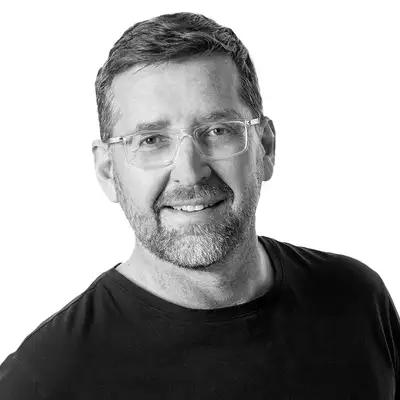

Hosted by Heath Fletcher, The Healthy Enterprise explores how innovation, technology, and leadership are reshaping the life sciences industry—from discovery and development to commercialization and care delivery. Each episode features candid, heart-centered conversations with founders, scientists, executives, and investors, sharing real-world experiences and insights for building resilient, future-ready organizations.
Created and Produced by Bullzeye Global Growth Partners — Let’s build it together!
Heath Fletcher (00:01)
Hi there, I'm Heath Fletcher, host of The Healthy Enterprise. This episode is part of a limited series called Money Ball. It's in conjunction with the BLPN club. BLPN's Money Ball program helps founders step up to the plate and knock fundraising out of the park. You'll hear about the people, their ventures, and their pitch-making experiences. I hope you enjoy it.
Okay, here we are, Chandi Thank you for joining me for this episode, ⁓ special edition for the Money Ball ⁓ series. So yeah, let's start with ⁓ you introducing yourself to listeners and and your role and and about the company.
Chandi Bandara (00:39)
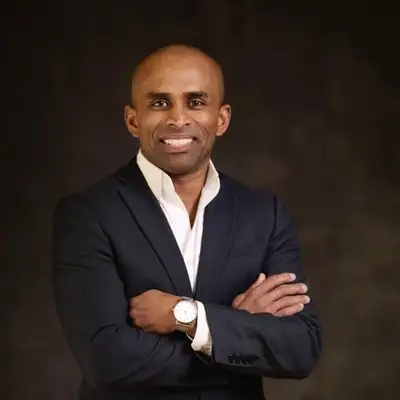
Great. Thank you, Heath Thank you for the opportunity. Chandi Bandara, CEO of Precision Quantomics The company Precision Quantomics, we founded the company back in 2020 by a brilliant scientist named Bhagwat Basant to help address the inefficiency in the pharmaceutical drug development process. Currently, the status quo is that nearly 90 % of the drugs that's currently in development doesn't make it to the market.
And two main reasons is that one, the models you use to test these drug candidates early stage in the development before going into the clinical trials in the humans are really animal models and really not replication of the human model, representative of the human models. Secondly, the tools that you use to collect the data when you expose these models for different drug candidates are really 30 years old.
So our approach here through Bhagwat's innovations and what he brings in is to use quantitative proteomics used leveraging on a technology called LCMS for getting additional layer of data once you go through early stage drug development. So that helps pharma companies to have a better efficiency, less drug candidates to fail, and for us to really accelerate the drug development process through that.
To do that, we have several different options. We have assay kits that pharma companies can buy off the shelf and incorporate into their drug development workflow so that they can get that additional layer of data. Some pharma companies do not have the capability to do the testing yet, so we're working with them. But also we provide them that testing analysis as a service. So that's the second arm of the, second leg of the business.
The third is a very interesting, ⁓ innovative approach, which is we call translational proteomics atlas. And this is proteomics data from different population. I can go into more explained too, but this proteomic database that pharma companies can use to model how these drugs would work on animal models or from human models, we call it the translation and also in
broad populations that is not currently done. So those are the three legs of the business. They are all core based on quantitative proteomics, which is the functional molecules of the biological systems and getting a better insight of those ⁓ molecules, especially related to the drug development process or drug metabolism.
Heath Fletcher (03:28)
Very interesting. ⁓ Thanks for explaining. did a great job explaining to me. It wasn't way over my head, but it was getting into the science world a bit too, which was really interesting ⁓ for listeners. think too ⁓ it was a great explanation. So now how long has the company been in, in the works? Where and what stage is the company at right now?
Chandi Bandara (03:49)
So company really founded back in 2020 as a spin-off company from Washington State University. But we started doing business nearly last 18 months. Right now we are raising the last part of our seed round. We have...
commercial products already out there in the marketplace. We work with major pharmaceutical companies to use some of these assay kits in their drug development workflow. So it's still a small company growing, but we are very fortunate that we had been able to get good early traction from big pharmaceutical companies because this is a problem that really need to be addressed and 90 % failure rate in the drug development workers' workflow is just...
It's just, you know, unacceptable. And this is not if... ⁓
Heath Fletcher (04:39)
It's outrageous.
it's.
Chandi Bandara (04:42)
I tell people, know, this kind of inefficiency I haven't seen anywhere. I have experience and the background in running operations for bigger companies like Amazon, even though I'm a biotechnology background. Yeah, yeah, it's just, oh my gosh, they operate in a different efficiency. So we took opportunity, big opportunity for us to to advance the field here really.
Heath Fletcher (04:54)
Is that right?
And what was it that attracted you to the company? What was it?
Chandi Bandara (05:12)
Very good question. So I was trained as a molecular biologist and biophysicist, and I did the research and development journey early in my career, and then moved into most into the business development side of the biotechnology. And then last seven years or so, my mission had been on bringing innovative technologies to marketplace through the startups and that kind of, you know.
entrepreneur by nature. So I got to know this scientist here, like I mentioned, his Dr. Bhagwat Prasad and had been talking to him for, I don't know, maybe about two years before I joined the company. Was really interested in the journey and the problem he's trying to address, the solution he had. And also he brings in wealth of knowledge and lots of reputation in the industry as somebody who can
through this solution able to address ⁓ part of this inefficiency, right? In the quantity of the mix in the drug development. So I thought this is a great mission. I know it's jumping all in and help take the company to the next level.
Heath Fletcher (06:26)
And being in that role, big part of your job is to go out there and pitch and find investors and talk to the community and level up interest. So tell me about that part for you when you first started coming out, going out and telling the story about the company. How was that for you?
Chandi Bandara (06:48)
Yeah, so a good question. You're right. We have a great opportunity here to bring this company forward and quickly because they said they're trying to write us a big problem, but we need to address quickly before competition get there. But also we see that there's a lot we can do here. So raising the funds to accelerate that journey is a major part of it. But I have mostly been a startup entrepreneur.
mostly raised the funding through non-dilutive means, NIH, ACT, great mechanisms, but we needed to reach beyond that. The Christian Companies itself has non-dilutive funding like that, which is great, but we needed to accelerate. So that required me reaching out to the investors. That was the first time. And that is hard. is just mostly, somebody told me this when I first started talking to the investors, is that, you go talk to the customers, which I...
have done quite a bit as a business development person, and you give them something to pay money for. Whereas an investor, you sell an idea most. It's different. So you need to learn their trust, but also share a story that they can understand and with the right audience as well. So it's quite a bit of learning for me, ⁓ very steep learning and still learning through that process. But we have fortunately had good success with
Heath Fletcher (07:56)
Yeah, right.
Chandi Bandara (08:15)
getting some investors understand what we are trying to do in our mission and investing in the company. So to answer your question in a short, you know, it is a steep learning curve and it's still learning. We have had good success so far, which is, is kind of tells me that, okay, I'm on the right path.
Heath Fletcher (08:36)
Exactly. Yeah. And you're, you know, one, you're obviously a good storyteller. Is, is it, was it difficult to figure out which parts or is it, how do you decide which parts of the story to tell? Cause obviously you can't tell the whole story all at once every time. How do you decide which, which components are most important in the, in the, to the audience or the people that you're speaking to?
Chandi Bandara (09:00)
Yeah, very good question. ⁓ I can have a lot to say about that, and especially from my experience. And I think this is interesting for the listeners as well. I was so ⁓ enthralled by the journey we are trying, our journey and our mission. I would want to share everything. was like, how come they're not interested?
Heath Fletcher (09:23)
I want to you everything. Yeah
Chandi Bandara (09:26)
I mean, you know, but they don't have time and they don't have that they have 100 other things that they haven't listened to. And which which required me, you know, processing my mind to like understand it from their point of view. But I think one of the best things happened to me is that I joined this organization called BLPN, Blupin for BLPN. And I got to know
Heath Fletcher (09:33)
Exactly right.
Chandi Bandara (09:49)
lots of other operators through that. And also one of the programs we had back in 2025 is called ⁓ Money Ball program. And this is seasoned entrepreneurs who have gone there, raised the funds and exceeded the companies.
trying to help other founders to how to tell the story and raise the funds. And that was a very difficult process in terms of the learnings I had to go through, like the steep learning curve, very painful, which is great, which I required to take a minute mention, not to try to share the whole story. This is the part we need to focus on. Why? So going into your question about what part of the story I decided to figure out how to sell.
So obviously, what is the story that is most relevant to the immediate success of the company and what is the story that
really focus on solving the problem. You know, obviously, what is the problem? What is the solution we are trying to bring in? And here's how we do it. And then going to say, like, here's the success we have had so far in terms of making that proof of concept. And therefore, this is what we are trying to raise. And this is the milestones we are trying to reach with that. And we have the team to do that. Right. So that is easy to say, like, oh, which is like easy to understand. But
When you have a bigger problem we are trying to solve and we want to share everything, it takes quite a bit of discipline to ⁓ narrow it down and do it in a way that you can quickly comprehend and understand your journey.
Heath Fletcher (11:28)
So how, how would, how did the money ball help with that? Their, their, their goal is to help pitch makers deliver their pitch and be able to sort of knock it out of the park and hit a home run with, with a potential investor. How did they help you perfect or adjust your pitch to help the process?
Chandi Bandara (11:50)
Yeah,
that's very good question. Especially in my case, we had three coaches who, like I said, have been there, raised the funds and also had exits. So we started off with making initial pitch deck and then kind going through them every week, ⁓ doing different presentations ⁓ and then ⁓ kind of working.
I think we had about six to eight week time leading up to the initial pictures. So it is kind of working through this. think, you he started, I don't, you know, I'm done initially, you know, made the pitch take, but then one of the coaches told me, you know, there's going to be 150 slides in your day of different iterations of your pitch take, know, six slides, which is true. And I ended up being a bigger presentation because it requires going through that, you know,
here's a story I'm trying to tell and here's a story and then getting their input. So it is a lot of going back and forth and working with different inputs to it and that's the other aspect of it. You know have different coaches and they would give you different inputs and you need to be able to process that to your story and put a story forward that that you think makes sense and work through that.
Heath Fletcher (13:08)
When you were when you entered the Money Ball program, probably went through ⁓ several ⁓ interview processes with a variety of people. Do you recall the moment when you were like, ⁓ got it. Now I know what I want to say. Did you get to that point where you were like, you've practiced a few things, then you finally found the moment where you got it right.
Chandi Bandara (13:30)
⁓ So I think the way that I arrived at place that I feel comfortable is through, like I mentioned, know, various iterations, but also the Money World program had this opportunity to present to investors in a small number of investors at different times, which is great. So it is we were really focusing on the bio conference and the big, big meeting. But before going into that.
weeks and weeks we had small investor groups through bullpen that we were able to bring it together to do input. as you are hearing ⁓ from them, you know, you can really feel it. I think, you know, okay, well, I'm not as getting that input on my problem statement. You know, maybe I'm doing a good job there and then kind of advancing it to like, okay, what solutions we have. So you're right. So it is true through many presentations, especially with the investors as well.
And these are very friendly audiences too. And they would give you input because that's how the setup was to say that these are money for prize participants and they would go through the training and then best thing you can do is not really miss but give them the input, right? So they there to really find errors in what you are trying to do to get you to the best version of ⁓ sharing your story. So ⁓ I think the more and more I did, the less and less.
input there were to, okay, maybe I'm getting some. Perfection, right, really, because every audience is different too. So sometimes you have to present to a more scientific audience in the master base. So you need to kind of shuffle your pitch deck more. And that requires more work on your presentation.
Heath Fletcher (15:00)
Was there.
Do you recall any significant errors or mistakes you made getting to that point? Any so that would, you know, maybe resonate with people who are kind of in, in your position or about to enter that position of having to make pitches and presentations.
Chandi Bandara (15:37)
Yeah, this is again, know, this is a really good question, Heath. You know, I think it is very important for entrepreneurs to hear, right, without sometimes going through the experience I went through. I thought, you know, a great story. First slide started talking about the problem and then how it's related to, you know, especially in my story, it's about therapeutics and how we bring the therapeutics forward quickly. And, know, it was just like nearly
maybe 90 seconds, I have only one on the first slide. And then somebody told me, you know, like, OK, here's a 60 seconds. I listen to you only for 60 seconds. I need to hear. What is the problem?
How are gonna solve ⁓ it? They wanted to hear most of the story in the first 60 seconds. So that was something I didn't think of. I was thinking more from like the five minutes or seven minutes that I have. But the attention span that they would give you to present.
or know, really ⁓ present something that they would really be interested is just 60 seconds. So and that is like an investor interest. And I hope I explain it. Well, it's not like you're pitching the whole thing in 60 seconds. But show that, hey, what's the problem? What am I doing to solve it? And to show some fraction of you are doing it so that the investors will be interested to listen to the rest of the story. And I didn't get that.
right for the longest time. thought that was very, this industry has really had a 60 second clock running to say like, I didn't hear this part until now. mean, no point.
Heath Fletcher (17:16)
Define the problem, explain what the solution is that you're talking, that you're pitching, and the viability of it in a commercial sense.
Chandi Bandara (17:29)
of our solution
in a commercial setting, right? At least then they will be like, okay, these guys have, hear, you know, they can say like 90 % failure rate. I hear it all the time. It is not news to them. But okay, what do you do in that? And what is the traction you have? So you need to get to that at least part of that so that they have interest to listen to your rest of the story in this one city.
Heath Fletcher (17:53)
Right. And you kind of have a unique, ⁓ you have a unique perspective because you've come into the company, not a founder, not a scientist as CEO to represent the company. So you kind of have a different, you get a unique approach, you get kind of an objective approach almost where you come into this and you have, you have to learn about it. But, then, and then
develop the story that you're going to tell when you when you go out, which is different than somebody who's a founder or one of the originating idea people where they're very rooted in science. And do you find that it's easier for you to to depart from the science and be able to dive more into the business side?
Chandi Bandara (18:36)
That's a good question. I think you're right, because not being the founder, there was a lot of learning. Every field in life sciences is different. And drug development is still learning. But I think the founder was amazing to kind of help me through to understand what he's trying to address. And I almost feel like at least the mission aspect, why he founded the company, what mission,
Obviously what I'm doing right now is we are very aligned, right? So we were able to get that alignment very quickly so I can represent the company as he would as to what mission we are trying to accomplish. So that's the first part. But then there's different layers of that, right? It's like the science aspect, that's where I really try to bring him.
and the other people in my scientific team to explain that because there's a certain audience that really requires his level of expertise. So, and also I have a biology background, which is really helpful for me to understand at this stage in these early conversations, which is good. But like I said, know, ⁓ it is, you know, mission alignment, obviously, you know, because I'm the one leading the company now, taking it to the next level.
and then understanding which roles each of us play to bring the best out of what we are trying to accomplish to share that story.
Heath Fletcher (20:03)
So the Money Ball program is designed to help prepare you. It starts months in advance. You work through some of these iterations. You do a lot of presentations, and you give it feedback. And it's preparing you to do pitches at real ⁓ bio events or large scale events, where you actually get to pitch and present in front of real investors, right? So tell me about, once you got there and afterwards, how did you feel the...
the impact was and was it successful for you and how did you come away from those events?
Chandi Bandara (20:36)
Yeah, and that's a very good question. really, that's where the rubber hits the road, right? And that's where we feel like, what really had to be. ⁓ So this is in adjacent to the main event with its bio JPM, the Wooten had a great setup to set up these separate events with the investors presence for us to present, which is great. these are mostly, you know, they knew what press companies are presenting, they knew what
areas of science, so which is very catered to what our areas of ⁓ presentation or the companies. ⁓ I had three sessions, which is really great, over three days.
⁓ And I'd say like mostly the way that I understood that the ⁓ success in terms of the questions, follow ups we had ⁓ and kind of input from that. And my coaches were there as well ⁓ in those sessions and they were really helped to get us like real time input to say like how we are doing so that we have the opportunity to, we had the opportunity to ⁓ improve from day to day, which is really great.
you know, everything, the magic happens in this follow up conversations, the questions, follow ups from that. So that's kind of what made I feel like, well, I have been prepared well and seeing some good traction with that.
Heath Fletcher (22:05)
Okay, well this might be a good time to talk to maybe share some of your insights or advice maybe for people who are considering entering something like Money Ball or preparing to do some presentations. Is there any advice or sort of insight that you'd like to share with them with regard to your journey and where you're at now?
Chandi Bandara (22:28)
Yeah, no, I think, you know, when I ⁓ became a CEO and started right, running these, you know, these early stage companies, one thing I realized is that there's not a lot of people that see a CEO or an operator can turn to for advice. So I really had to seek out my company's business, walking in Washington, it's a it's not like, you know, the Silicon Valley Company Boston Metro Company. So we really had to seek out for those
⁓ people or the the
ecosystems that would provide such input. So my experience had been mostly with Pullpen, which is great, which is right now, I think more than 500 members, most operators, CEOs, CSOs, CFOs, and then investors. So which was a great environment. And when they had this accelerator program, they called the Money Ball at the time, ⁓ I was really ready to jump in. I really wanted to take part in that. That's because I knew
I need the input, need to hear from others who had been there, done that, as to what I'm doing right or wrong. And so that's kind of where I...
found that opportunity being an accelerator. So I say, you know, for founders or anybody who's going, trying to go through that journey, you know, find a ⁓ ecosystem that you can get input, you can present, can get it because I continuously engage until you can see improvement, you know, right. And it doesn't because everyone is busy really in such ecosystems to you don't get that very often. So fortunately for me, Money Ball was that opportunity to get
such input. So that was, that was, I think, really great for me. again, you know, I think I have, and I have met entrepreneurs who had XC even they're going through the second, third iteration of their second, third journeys of their biotech, you know, entrepreneur journeys, and even they join accelerator programs. And that is to me is like, okay, every story is different. Every technology you are trying to bring
forward is different so they might require different input and different way to serve the more the input that you can get early on the better.
Heath Fletcher (24:55)
Yeah, that's good advice. it's, it's, and, ⁓ being part of a, an organized system like that, you get honest feedback too, right? Like it's not someone could pat you back. you did a great job. Well, I, you know, I wouldn't change anything. They really give, ⁓ really good feedback. They tell you what you did wrong as much as they told you what you did. Right.
Chandi Bandara (25:15)
This is so true, this is so true because they're always looking to because you are signed up and with that understanding, so I want to get more input and they're understanding this as well. Not try to get like, you know, the pat on your back and say like, you did a good job. They're always looking to see like, what did you not do right? Right? And that is huge. like I said, as CEO, you don't get that because everyone thinks that you're doing right or just they don't want to challenge you, ⁓ especially.
that's not helpful for us to grow because we have a, any one of us, think we have still a lot of growth that we can do.
Heath Fletcher (25:54)
Right. Amazing. Anything else you'd like to share about your experience, about where you're at, ⁓ what's next?
Chandi Bandara (26:04)
I'd say like, you know, I've been very fortunate, you know, after seeking out some of those inputs, I've been very fortunate to get such input through Will Penn or, you know, peers. So, you know, I just reach out and anytime I can help such entrepreneurs, you know, going through the journey, whether it's through introductions or kind of giving my own input, I'm happy to do that. I feel like...
As I'm going through this journey, I want to give back because I know how much it helped me in a short time when I had that opportunity to connect with other operators and investors and get some feedback.
Heath Fletcher (26:43)
Well, if they want more to know, learn more, they can find you where. And the website for Precision Quantomics is what again?
Chandi Bandara (26:50)
It's www.precisionquantomics.com and then you can always find me on LinkedIn as well. Much easier to get hold of. ⁓ It's Chandima Bandaranayaka.
Heath Fletcher (27:05)
Awesome. Chandi, thank you for joining me today. It was a pleasure to meet you in San Francisco in January. I'm glad we finally got the time to sit down and have this conversation. ⁓ But it's been a pleasure and I wish you the best of luck. I hope to hear more from you in the future. ⁓
Chandi Bandara (27:22)
Thank so much, Heath. Thank you for the opportunity to share. I really appreciate that.