Subscribe
Share
Share
Embed
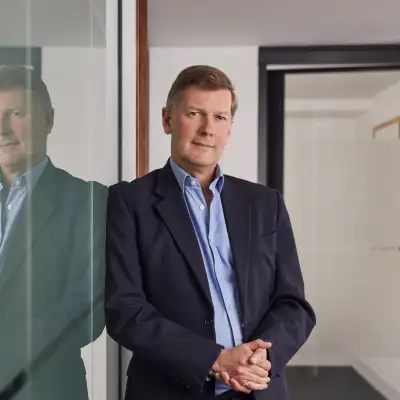
Welcome to The Boardroom Path, the essential podcast for aspiring and newly appointed Non-Executive Directors navigating the journey from executive leadership to the boardroom. Hosted by Ralph Grayson, partner at Sainty Hird & Partners, each episode offers insightful conversations with industry leaders, seasoned board directors, and governance experts. Our guests share practical strategies, valuable perspectives, and actionable advice on how to effectively transition into board roles, maximise your impact, and build a rewarding NED career.
[00:00:03] Ralph Grayson: Welcome to The Boardroom Path by Sainty Hird & Partners. I'm your host, Ralph Grayson, a partner in the board practice. In this series, we'll offer practical steps and useful perspectives for aspiring and newly appointed NEDs. Throughout its 30 year history, Sainty Hird has recruited senior board members across the City, Industry, the Public Sector and NGOs.
[00:00:28] We're now also evaluating those boards, as well as coaching and mentoring those seeking to transition from an executive career into the boardroom. So we'll be speaking to some leading figures in the board advisory and NED world. Specifically, we'll seek their counsel about how and where to spend time and energy to make an effective transition into the boardroom. The goal is to equip recent and aspiring NEDs with tips, tactics and strategies to be most effective and build a successful career as a board director. In the process, we aim to help you to think more about who you are, how you operate and how you can make this work in the boardroom.
[00:01:12] Welcome to the Boardroom Path. Today's conversation starts with a deeply uncomfortable idea that the world is becoming less predictable, less stable, and far less controllable than most boards are willing to admit. For decades governance has been built on a set of assumptions that risks can be identified, measured, and managed, that the future will broadly resemble the past, and that with enough experience and oversight, leaders remain in control.
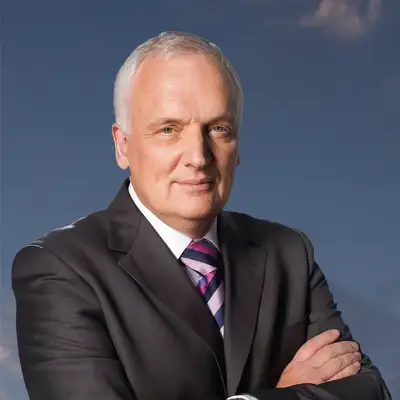
[00:01:44] My guest today, Nik Gowing, challenges all of that. Nik is co-author of "Thinking the Unthinkable" and director of Think Unthink. Nik was a main news presenter for the BBC's international 24 Hour news channel BBC World News between 1996 and 2014. He presented The Hub with Nik Gowing, BBC World Debates, Dateline London, plus location coverage of major global stories. He spent 18 years at ITN, where he was diplomatic editor of Channel Four News and since 2016, he has been a visiting professor at King's College London and also at Nanyang Technological University in Singapore, focusing on deepening and widening the thinking the unthinkable research. He has been a member of the World Economic Forum's Global Agenda Council on geoeconomics and is an advisor on leadership challenges to the President of the UN General Assembly.
[00:02:50] So after more than 30 years reporting from the front lines of global crises, from the fall of the Berlin Wall to 9/11, Nik has spent the last decade working directly with boards, governments and institutions, asking a simple but unsettling question. Are leaders psychologically prepared for the scale and speed of disruption that is now unfolding? His book reveals something most boardrooms won't say out loud, that many leaders are privately anxious, overwhelmed by complexity, and constrained by systems that reward conformity over truth. Because this is no longer a world of isolated shocks. It's a world of cascading, systemic disruption. Where supply chains fail, cyber attacks halt infrastructure, climate risk reshapes asset values, and geopolitical tensions redraw the rules in real time. And yet, many boards are still operating as if stability will return.
[00:03:54] So today we're going to explore what happens when that assumption breaks. What does it really mean to govern in a world where there is no control, only preparedness?
[00:04:05] Nik, welcome to The Boardroom Path.
[00:04:07] Nik Gowing: Thank you, Ralph.
[00:04:08] Ralph Grayson: So what a fascinating biography. Do you want to just add some colour to that and maybe just bring us up to date as to the role of the book, the purpose you wanted to achieve in writing the book, and how you've now framed that into some of your thought leadership?
[00:04:24] Nik Gowing: Well, thank you for inviting me and you've summarised it very accurately. I was in many of the revolutions in Eastern Europe, all but one of them, I was on the Berlin Wall the night it came down when the GDR Politburo members said "People can leave tonight" and I said, "What?" This is in 1989. I was in the shipyard strikes of 1980 in Poland. I've been in many places. I broke the news the Russians were leaving Afghanistan in 1988. No one else was there apart from Lyse Doucet, interestingly, from the BBC.
[00:04:52] But I've been lucky enough, fortunate enough, to be in many places where things were happening. Including in former Yugoslavia, I've experienced unpleasantness with the KGB. There are many stories I could tell, but that would take up so much of the discussion that actually it would distract you from what we're really here to talk about. I also made the announcement of Diana's death. I'd been hauled out of bed at 10 past one in the morning, and by half past two I was on air for six hours including 9/11 as well.
[00:05:21] So I've been at the cutting edge of many of the things which people did not believe would happen.
[00:05:28] Ralph Grayson: And so what I'm so fascinated as we think about this conversation we're in today the heat of Iran and Trump, and that's such a danger as we've already discussed that events are moving so quickly that by this time we publish this podcast, whatever we say, we'll be out of date. So I'm very keen we stay focused on some of the ideas of how we have a systemic and systematic approach to how we think about how boards think about good governance in a world that is so fast moving.
[00:05:59] But let's just step back for a second. So I've read your book, it's fantastic. I've almost read it twice. Your work suggests that leaders are operating under a dangerous illusion, that they still have control. So let's start with the basic questions, are boards today fundamentally misreading the world that they're governing in?
[00:06:22] Nik Gowing: Let me tell you that everything I'm going to say is designed to be positive. Not necessarily optimistic, but positive. Because good leadership is about being positive and seeing the reality of what is coming. "Thinking the Unthinkable" comes from the Cuban Missile Crisis in 1962 when President Kennedy had to be told and warned, do you realise the blockade of Cuba is going to lead to the Soviet's launching nuclear tipped torpedoes? Mr. President, you've got to work this out. You've got to think the unthinkable. But it's also another phrase, thinking the unpalatable, and much of what we say is very clear that much of what is happening and what is going to happen and boards need to be aware of, and leaders as well in the C-suite, is the evidence is there. It's unpalatable. But you may not want to look at it. You may not want to think about it. But you've got to actually absorb it. You've got to factor it into what you're doing.
[00:07:16] I don't want to generalise about boards. I've sat on several boards myself and some of them have been good experiences, others have been bad experiences. It's a bad form to generalise. But I would say, and this comes from a lot of discussions, a lot of discussions, not just going back to 2014 when I started this project. When I have to say I left the BBC by choice. No one pushed me out. I wanted to do something different after 40 years on the road is that many in leadership do not really want to embrace the enormity of uncertainty, which is now enveloping us. This is about how, what we call zombie orthodoxes are dictating the way boards, board members, board chairs, largely see the way the world is going. They believe that it will somehow still conform to the way they've come out of business school or grown up in a company.
[00:08:09] One of our main findings, one of our two main findings is the following, what qualifies you and you work for an executive search firm, one of the thing things that qualifies you for a job and you fit the tick box of what a client wants actually disqualifies you from understanding the scale of what is happening. The speed of what is happening. The nature of what is happening. And the way you are going to be challenged and probably overwhelmed by it.
[00:08:34] The way things have been is not the way things are going to be, and I'm not talking about 2050 or 2060 or 2035. 2035 is not nine years from now. It's actually a few hours from now this evening, half past eight in the evening. Look at the speed of what happened in Iran? What happened in the Gulf? Just over a month ago before recording this? It suddenly happened on a Saturday almost without warning, but all the signs were there. Unpalatable signs. No one really wanted to see it and we are talking at the time when President Trump is leaving suggestions that there may be ground troops in Iran. You have to say to yourself, as with Ukraine, four years ago, did really people believe that Ukraine would be invaded by Russia?
[00:09:24] You've got now to think the unthinkable and in fact, you're former military yourself. In the buildup to February 2022, just over four years ago, there were very clear signals that the ZAPAD, the exercises which were being created, the CIA and national technical means, and also a lot of intelligence units, were thinking that preparations are being made for an invasion. But no one could believe this. Stoltenberg, the former NATO Secretary General writes this in his book, "we could see the evidence, but no one could really believe what was happening" and that's what boards have got to do. They've got to be sensitised to this. Risk and resilience is uncomfortable, but you've got to be far more broad-minded, far more willing to think differently and think beyond the natural confines of what you've grown up with what's made your career, and that's very difficult for a lot of people, particularly those who've been to business school.
[00:10:20] Paul Polman, I've heard him say this publicly, so it's not abusing confidences. He's chair of the Saïd Business School in Oxford, former Chief Executive of Unilever, of course. But he said, "I want people in the business school to think differently from what the literature is telling them because the literature cannot keep up with the enormity, the speed, and the scale of what is happening." And that's why my answer to your question is not just about boards, it's about the senior executives in the C-suite who are employed and retained and approved by a board as well.
[00:10:51] We are overwhelmed by regulation. We are overwhelmed by compliance issues and some of this stuff is simply more than we've got time and energy and scope to cope with. That's why it's so challenging and it's happening very fast and it's going to happen even quicker, and Ralph, I have to say to you that we are now entering an a time when, and there are many other things I could address on this when we're going to face an implosion. I'm going to say that again. An implosion of our society and it's going to be accentuated by AI. I'm not telling you anything you don't know. But when Sadiq Khan, the Mayor of London, stands up in the Mansion House in London on the 15th of January this year, black tie and says, "we are facing tectonic change." We are facing mass unemployment in London. Mass unemployment.
[00:11:40] That's not about Ukraine. That's not about the Gulf. That's about our society and our ability to maintain the kind of way of life that we've got and that's going to be really tough for a lot of people in boards about both the existential threats to them as companies. But also the way those they employ are going to be hired and retained and the implications for them with their mortgages and their commitments to their family and so on and you may have to sac or remove a lot of them simply because they will be replaced by AI. I sat at a conference, I can't tell you where it was, with a very, very, very senior chair of a board, of several boards, and we were talking about the implications of AI in front of an audience of several hundred, and I could see the personal pain he was going through, and I've known him for several years, about addressing the fact that many people who work for him now will not have jobs. That's going to have enormous implications for society, when society is actually being denuded of the capacity to provide jobs because of AI.
[00:12:47] And we could go on, there are many other issues. But this is not me being haughty about it and me saying, you can do better. It's about encouraging. That's why I come back to the use of the word positive about how you handle this positively and how you reflect what is happening positively in ways which mean that your company will survive. But it'll survive in a very different way. You've got to make the adjustments at real speed. You've got to accept it can't be incremental, it's got to be dramatic, and a board chairman and board vice chair should be hiring people who are prepared to enter into that kind of commitment because otherwise they're going to be not just disappointed, but overwhelmed and there'll be a survivability existential problem.
[00:13:31] Ralph Grayson: So if we just take the baseline assumption from that, that stability is just gone, it's vanished, it's not relevant anymore. What is a board actually governing and does a board have to fundamentally rethink what governance means?
[00:13:46] Nik Gowing: I think it's self-explanatory. If you are in an environment where you've got lack of stability, lack of confidence and uncertainty most people in the centre of London, given what Sadiq Khan has said two months ago before recording this. He was saying, "the world you see around you will not be there. Not in 10 years, but maybe 10 months. It is that quick." So the board has got to really embrace that. Now, I don't sit on any boards at the moment of any consequence. But I can tell you that I was often shocked at how inadequately people read the papers, how inadequate sometimes the papers were, and also about the lack of awareness of just what kind of commitment needs to be made. This is more than once a quarter or once every two months, and boards, in my view, have to have greater responsibility and awareness of their responsibility. And for many people it's not something they want to do.
[00:14:43] I mean, look what's been happening in the banking world. Look what's been happening at BP. It's an uncomfortable relationship between the chairs and the chief executives. Things don't happen as predictably as people assume. It creates uncertainty and there are many reasons to be worried about HSBC, other banks as well. BP look at the speed at which the turnover has happened for different reasons, I have to say.
[00:15:09] Ralph Grayson: Immediately springing to mind. One of the things you talk about is the pinball effect, which I think is a brilliant visualisation of all of this.
[00:15:15] Nik Gowing: Let me explain that.
[00:15:16] Ralph Grayson: No predictability. No control. Escalating speed.
[00:15:20] Nik Gowing: Yes, this is what we call The Pinball Principle. The Pinball Crisis. It's like in a fairground. Imagine you are standing at the pinball machine like Elton John in the pinball wizard and you are playing around with the balls moving backwards and forwards and you're trying to control it. The ball is moving ever faster in directions you cannot control and this is the comparison that I'm making with what is now happening. We've got a one minute video on our website just trying to crystallise the fact the ball's going backwards and forwards. You cannot control it. You don't know which direction it's going, and one thing leads to another, which you weren't expecting. What is fascinating when I've raised this with people thinking, will they really get it? They've actually said, "That's the way I feel, but I don't really want to talk about it too loudly." A feeling of being powerless and not as in control as is expected of a board.
[00:16:13] Ralph Grayson: One of the things you've said, which really struck a chord with me is the core failure is that boards are structurally unprepared for what is coming. So what you're suggesting, if I understand it, is this isn't about capability, it's actually about mindset. So why is it that experienced boards are failing to confront what you think and everybody sees is coming?
[00:16:37] Nik Gowing: It is about mindset and it comes back to zombie orthodoxes. There are examples which are good examples, which are examples which we should cherish and which should be used as good examples for others to follow. But it is about boards and those running companies at every level who tend to default to what they've learned, to what they've experienced, what they've been told, how they've experienced things, and without thinking, how can I create a new framing for this? That's why we use a phrase called making new mind muscle. Making new mind muscle to generate mind muscle which means you are thinking more broadly. More adventurously. More willing to be very clear in the fact that you are prepared to break eggs rather than protect eggs. Because actually the world and the globe that we're talking about is about eggs, which we've taken for granted, becoming crushed, becoming cracked and disintegrating.
[00:17:39] And I'm going from conversations, some of which last four minutes, some of which last four hours, where there's an element of we've got to do better, but we're not quite sure how to do it. And I've sat in meetings with a lot of people who are aspiring board members who are trying to work out whether they want to become board members, simply because they know the responsibility and they know now the enormity of what being on a board means. Particularly unlimited liability, in some countries.
[00:18:09] So, you know, these are difficult times because being a board member is not like it was. It now carries enormous responsibility, legal responsibility, and I would say a board is by and large overwhelmed by those legal responsibilities as opposed to being able to step outside and think with new mind muscle, what is really going to be affecting the ability of the company to both function and dare I say, survive in this new environment.
[00:18:38] Ralph Grayson: So fascinated by all of this. So we talk in business schools a lot about the skills, experience, knowledge that's required on a board. To my mind, you are now raising a much more fundamental question, which is are boards designed almost by fault to avoid these uncomfortable truths?
[00:18:58] Nik Gowing: I think that's a good judgement. I haven't got to that stage in my own judgement. But I think you have a very important point, that boards are not designed to actually achieve what they're expected to achieve, both by the company, by the shareholders, by the families that own them, but also by legal responsibility. And that's where I can see a crunch coming, a potential crunch, and I hope that in doing an interview like this people, those board members and others who listen to it, will say to themselves, "I realise now there are new boundaries beyond which I have to travel, rather than the relatively safe boundaries in which I've been operating up to now."
[00:19:44] Ralph Grayson: You suggested that leaders are privately anxious, but for whatever reason are trying to appear publicly composed. So what do you think is driving that gap?
[00:19:55] Nik Gowing: Well, first of all, survival in the job. I don't have to tell you that. What's the average time a chief executive is a chief executive now? Three to four years max.
[00:20:03] Ralph Grayson: Well, it's almost a half life. I mean, it's frightening how quickly. It's like being football managers these days.
[00:20:09] Nik Gowing: It's even worse being a football manager, 44 days, I think at Tottenham Hotspur. It's about seeing the enormity of what is happening and giving it a new perspective and I think this puts enormous responsibility on the chair and I think it's very interesting watching the number of appointments, which have taken a long time, taken a long time. Those who don't really even want to be chair anymore. I don't have to give you the names of some of the companies
[00:20:42] Ralph Grayson: Well, HSBC is a living case study.
[00:20:45] Nik Gowing: Yeah, exactly that. When Sir Noel Quinn decided to leave and the reasons for it, and with Mark Tucker and the length of time it took to find someone who wanted to do it.
[00:20:57] Now I don't have an answer to my own question, which raises questions though about who wants to do this? Why do they want to do it? Is the challenge of being a chair of a board now becoming almost overwhelming? And no one wants to get their fingers dirty, and their reputation sullied, by being chair of a massive organisation. A massive corporate where things are not easy and things are not predictable. You fear you cannot manage it.
[00:21:24] Ralph Grayson: So let's just think about risk in a bit more detail in that respect then and why perhaps boards are missing what what really matters. So a lot we read and hear would suggest that boards feel they're managing risk well. But why do you think they're getting blindsided?
[00:21:45] Nik Gowing: Look at the number of chief sustainability officers who've lost their jobs recently because sustainability is no longer necessary. But sustainability is about risk and resilience. Maybe we should give it another name, and there's a lot of debate about whether sustainability is actually a negative for companies. And I'm not kidding here, I remember talking to a chief risk officer who said, "There are plenty of things happening out there, but I've been encouraged or essentially ordered by the chair and others not to put them on a risk and resilience register because we can only cope with a certain number of risks." In other words, there are risks which are beyond the boundary fence, which they don't want to enter into.
[00:22:27] I think that's wholly irresponsible. I think that is not what a risk and resilience officer should be about. Risk and resilience is about survivability. It's about charting everything. Even if you don't think an Iran war is going to affect you, you've got to work out geopolitically why that's going to affect you economically and the geoeconomics, which is what the World Economic Forum talks about, the new threat of geoeconomics. You've got to have that grip. One risk officer said, " I've been told I can only put 20 risks on the risk and resilience chart. Everything else they don't want to know about."
[00:23:03] Ralph Grayson: Well, it raises in my mind the question of how do you stress test assumptions and the assumptions we've had based over the last 30 years, 50 years, are no longer the assumptions we're going to have to have that mindset for for the next foreseeable future. So how do we shift from prediction and get to preparedness for multiple different future scenarios?
[00:23:28] Nik Gowing: One of the things which is very clear in all our work is that people are franker after they've left the job. There's a degree of self-protection, and don't put your head on the block because otherwise it's going to be bitten off or whacked off by an axe, a corporate axe. But I have in front of me Sir Nick MacPherson, now Lord MacPherson of Earl's Court, who is the permanent Secretary of the Treasury particularly during the collapse of the markets, and he said, and I'm quoting directly here that "He and those in the Treasury around him during that period simply were not broad-minded enough to understand the enormity of what was going on and the implications." And he called it I quote, an "Intellectual error." An intellectual error. In other words, the intellectual challenge is to realise that what you don't think is going to happen is going to happen. But he went public on this in an article in the Financial Times, and I've talked to him about it since. That you've got to have the intellectual courage, the intellectual self-confidence to raise things which you'd never believed you would have to raise.
[00:24:39] And that's why what's happening in Iran, with the Iran War at the moment is really significant. There is plenty of evidence of what was going to happen and the kind of things that Trump might do. But no one could really believe it, again, like Ukraine. And you've got to have that in that system. Not it's going to happen in 10 weeks or 10 months, or 10 years, That it could happen tomorrow within 10 hours. Because that's the speed at which the Iranian conflict happened on that Saturday. It happened amazingly quickly, almost without warning, a combination of Israel and the United States. Combination of Trump and Netanyahu and whatever deal they did.
[00:25:19] But this is not to gloat, this is to say, the evidence was there that something was going to happen, but on a Saturday morning how do you move? How quickly do you have to move to test your supply lines? To test your functionality? To test the security and safety of your personnel and your ships? What's going to happen in the insurance market? And you get an enormous water fountain of things which happen at a pace which you cannot predict and which you have to absorb. Do you have the systems in place at 10 o'clock on a Saturday to handle this when you need to? These are things which cannot wait till Monday morning. Do you have a system in place? It may be inconvenient, but you've got to have it.
[00:25:58] And I remember what happened to Maersk when they had a cyber attack The chair described how the cyber attack took apart Maersk. The only place where they had a computer which could re-energize the whole software system of Maersk, the giant in the shipping industry, was they found a laptop in Ghana, which had everything on it. They didn't know that, and it had to be hand carried from Ghana to Denmark to Copenhagen and the chair was at a conference in Stanford University and was woken up in the middle of the night to be told, your system has completely collapsed. And we've had that here in the UK several times in the last few months with JLR losing at least 3 billion uninsured, maybe lost 8 billion, 250,000 people lost their jobs. The Co-op and not being able to provide food up in the Scottish Islands because their system had been hacked and there's an interesting article by the chief executive of the Co-op saying " We scenario planned, we war gamed, but we still didn't war game enough for things which we hadn't imagined would happen" and that is where you get caught out.
[00:27:08] Ralph Grayson: There's two levels to this, it seems to me there's the mind muscle at the individual level that you've touched on. But then there's the board process of how you create that safe but honest space for challenge. If you are the chair encouraging almost maverick behaviour and heretical thinking.
[00:27:28] Nik Gowing: You are using our words there, and that's one of the very strong recommendations we make. Mark Carney the Canadian Prime Minister said in Davos, which is a great word, "We are now in a ruptured system" and so you've got to have people who are prepared to take a risk and be sanctioned to take a risk, not see it as a job destroyer, but see it as a job creator and a responsibility to creator. I can dismiss, I could meet you for the first time and say, don't wanna talk to Ralph. Don't just ignore him at the water cooler.
[00:28:02] Ralph Grayson: Many do.
[00:28:04] Nik Gowing: Because he's wacky. But I would say that word should be translated probably into wacky equals visionary. Where does a visionary sit in the system? How much licence do they have? How much will they be tolerated? It's interesting, and I say this with a degree of concern, that even Sir Keir Starmer the British Prime Minister has encouraged the civil servants to think differently. To act differently and to take risks. I don't think there's a culture of doing that. But you use the word, which a senior figure said, we need heretics to challenge us, and they need to be valued within a company. Not seen as a problem, not seen as a problem to be disposed of.
[00:28:47] Ralph Grayson: So it does raises a serious question though. Does that mean that chairs need to rip up board process, board meeting process orthodoxy, and make it a much more informal environment in which people are allowed to be creative in their thoughts and indeed are encouraged to express those thoughts?
[00:29:08] Nik Gowing: I would say most certainly, yes. I'm turning my papers because I'm getting up a quote from Andrew Liveris, who for 42 years worked in Dow Chemicals, and he ended up as president and chief executive and he's now running a business school in Brisbane in his name. But he says, "You've got to tear up everything in your rule book." You've got to tear up everything in your rule book because that rule book is rules for a past age which is no longer relevant in the corporate world. But for a board chair to be saying that to large companies of 10,000, 15,000, 20,000, a hundred thousand, that's being heretic. But what kind of risk? I would say it's a risk worth taking.
[00:29:50] We did some work with a large bank, no name, and we were encouraged by the chief executive to get minds changed. It was a global bank and we spent a long time talking to people about what they wanted to say, what they wanted to challenge, how risky they were prepared to be, how positive they were prepared to be. And I say this rather regretfully, that people who I thought were going to contribute significant contributions to the discussions, to create a sense of vision as opposed to being wacky, almost none of them said anything during the discussion. They told it to us as, think about this, put it on the agenda, but they didn't want to talk about it among their peers because they were worried about their own position within the organisation.
[00:30:43] Ralph Grayson: The other thing I'm struggling to get my head around, that I think is fascinating, is this theme you've touched on of time compression. And I remember when we met once earlier, you talked about, 2030 is a time in the day, it's not a year in the calendar. So if those time horizons are getting so much shorter how does that governing at speed manifest itself?
[00:31:07] Nik Gowing: I did a lot of work before I started on "Thinking the Unthinkable" when I was still working in the BBC called "The Tyranny of Real Time". People not really appreciating the fact that real time is much shorter than the time they may wish for the tyranny of real time, the tyranny of information flow and I don't have to tell you now what's happening with fake news, with information flow with social media. Is it true? Is it false? Does it have to be verified and so on. I still think very strongly, and people pushed back at me when I was giving presentations within corporates and also within defence structures and security structures. They said, "We will always have control of what's going on" and I said, "No, you won't." And similarly I'd warned about the role of drones in warfare. The way drones are going to challenge infantry, challenge tanks, simply because they're worth £2000, £3000, not two, 3 million. Which we've seen in Ukraine in a most remarkable way.
[00:32:10] It comes back to zombie orthodoxes. People, again at that kind of level of responsibility, did not want to stretch their mind to think about things in those terms. You've got to be heretical about the current traditions and the traditional thinking about what business leadership is about. Now, I would love it if in five years time, if you invite me back, you say to me on the date that we are recording this, you said this, and this, and look, almost none of it's happened. That would be fantastic. But I don't think that's a judgement you can make. I think you've got to judge on the basis that unthinkables and unpalatable are going to keep happening in ways which most people don't even want to entertain. I don't think people, including in boards, and their families have any idea of the adversity we're about to face, which is about the stability of society. Not just the security of society from Russia intervening with cables and pipes and Skripal-type poisonings and so on. This is about the ability of our society and the political class to handle it.
[00:33:16] It's going downhill fast, and I'm not making a point about a particular political party, but what the public expect. They expect politicians to be able to deliver. They expect companies to be able to deliver according to what they expect without realising that actually much of what they expect is no longer deliverable and this is what's going to happen because of Iran. Going back to the pinball principle, much of the system we take for granted is simply, after time, not going to function in ways which the public will expect and the public will then accuse politicians, political class, the political leaders, of not handling this in a way which is satisfactory.
[00:33:56] I'm putting my arm up here, Ralph, alongside the microphone, the expectation is that still people will have one or two holidays a year, have a nicer car, have a nicer house, and so on. I think within, to pick up the 2030 analogy, within a matter of weeks and months, we're going to see the watershed be hit and desperate conditions for many people getting food, being able to afford energy, being able to afford anything they expect, and even being able to afford a mortgage if they haven't got a job because they've been made redundant by AI. This is already happening. It's happening much faster than most people want to assume, but it's got to be embraced.
[00:34:38] When a job can be done by ChatGPT or Claude within 10 seconds, why employ someone for two weeks to create a speech when actually Claude can do a as good a job for nothing? Why employ those people? I'm seeing it already among people I know. People who are losing their jobs and thinking, "I can't get a job. Now what do I do?" They're panicking. So my point here is the word adversity. People have not yet understood the level of adversity we're going to be facing, which is going to impact on the culture within companies.
[00:35:11] Ralph Grayson: So I'm desperately trying to put myself in a board member's shoes listening to this and I'm going to mix my metaphors horribly here but on the one hand I've got Mike Tyson, I think it was saying, "Everybody's got to plan till they're punched in the face" and as an old soldier I'm now thinking about everything I was taught at Sandhurst, which is that we all have orders and procedures, but as soon as the bullets start flying, process goes out of the window.
[00:35:35] Nik Gowing: Not just process, but tactics as well.
[00:35:38] Ralph Grayson: So decision cycles at board level now just fundamentally mismatch the reality of speed. So how do we try and square that circle?
[00:35:48] Nik Gowing: My very strong recommendation is the fact that if you have a quarterly board meeting and it lasts two hours with paperwork delivered a few days earlier, given the speed and the pace at which the world is moving and changing and reconstructing itself in the way that Mark Carney talked about it you've got to actually be meeting far more regularly and virtually probably.
[00:36:13] I think it puts enormous responsibility on board members, and that will be reflected in how much they're paid, and what the expectations the chair has and what kind of stipulations the chair makes. I would feel uncomfortable if I was the chief executive knowing that board is only meeting once a quarter. I think a board, because of its responsibilities and its legal responsibilities and why a board is created needs to have a much more hands-on approach. Which raises enormous questions about who could become members of boards? Who can become members of boards, particularly with unlimited liability and very quickly, the potential for hiring people on boards narrows quite considerably.
[00:37:00] Ralph Grayson: Let's try and pull together some conclusions as time's running on. What question should every chair ask at their next meeting, having listened to this podcast?
[00:37:12] Nik Gowing: Do I realise the enormity of unthinkables which are confronting me, or am I too hidebound by what I think should be the case as opposed to what is the case? You know, no one believed that Putin would actually do what he did in Ukraine, in Crimea in 2014. But he signalled it several times in speeches and in long written documents. People thought, "No, he won't do it." And that's where we are. We are facing autocracies around the world who are going to be emboldened by the way Trump is performing and getting away with it without even consulting Congress before the operation in Iran.
[00:37:53] Many of the codes, international laws, international processes, which we take for granted as guaranteeing security and safety, including for a business plan, are gone or in danger of going, and they're going very quickly. So you've got to work out how you replace it and go back to my middle of the night on a Saturday evening. What can you do on a Sunday? How can you convene people? I'm coming back to the core of your question, Ralph, which is how prepared do you have to be? And it's about a culture. It's about saying this is a different kind of board now. You've got to realise the realities we're facing.
[00:38:33] Ralph Grayson: So if we're going to stop one board behaviour immediately to move boards into the 21st century and then to 2026, what's got to stop immediately? What's got to change?
[00:38:46] Nik Gowing: I was tempted to use the word complacency, but I think that's a bit unfair. What's got to change is there has to be a much greater commitment to understanding the importance of a board in overseeing the executive suite and highlighting and pinpointing things, which may be the C-suite has not even been considering.
[00:39:06] They should work as closely as possible with the C-suite, and they should be seen as eyes and ears because if you are not actually involved in the day-to-day running of a company with all the minutiae of CFO, CSO and so on, and CEO, I don't have to go through the list. You're at least one stage removed, but you are above it all and you should have a global perspective. Have a global perspective and consider how it is applicable to the company that you are a board member of. I have doubts. I have doubts as to whether this is done at the moment. There are some who do it. But there are others who are not that insistent, who think that the way a board operates is the way it's been operating for the last few years. As opposed to a new kind of board, which should be increasingly effective simply by being more aware. Getting back to what the World Economic Forum said in its global risk report at the beginning of this year. Everything has a role to play in influencing what decisions we are taking as opposed to just waiting for the information to come up from the C-suite.
[00:40:14] Ralph Grayson: So if a board has truly embraced thinking the unthinkable, what are we going to notice different from the prior board meeting to today's board meeting?
[00:40:26] Nik Gowing: Not being shocked by developments. In other words, not panicking. This is not about being optimistic or pessimistic. It's about, being positive. Good leadership is about being positive, however dire and dark the reality is. And having a positive approach, not being flustered, not being panicked by all of this, even if you are being heretic. But also knowing you have the space in which you can operate and serve the board and the C-suite extremely effectively by being a visionary. As opposed to someone who's stuck in the old ways of thinking.
[00:41:02] Ralph Grayson: So we're going to stop on that positive note. Nik, that's been one of the most thought provoking podcasts I think I've ever recorded. Thank you so much for your insights. If people want to keep following what you are thinking, writing about, talking about, how do they follow you?
[00:41:18] Nik Gowing: www.thinkunthink.org. We do podcasts every couple of weeks and we emphasise the positive. We don't want to be whingers. We want this to be seen as something which is helpful to people and so that's where we do it. I have two people working with me and we spend a lot of time crafting these messages to encourage those who are wavering and are not yet convinced that there is a positive way forward and a positive way forward, even despite what is happening with all the existential threats we now face.
[00:41:59] Ralph Grayson: Nik, so thought provoking. Thanks so much for your time. It's been a fantastic episode.
[00:42:04] Nik Gowing: Thank you for risking talking to me.
[00:42:07] Ralph Grayson: I hope that you've enjoyed listening to this podcast and have found it helpful when thinking about how to approach your own path to the boardroom. If you would like to push this a little bit further, Sainty Hird runs a bespoke one to one programme designed specifically to this end. For more information, please visit our website saintyhird.com, follow us on LinkedIn, and subscribe to the Boardroom Path to receive new episodes. Thank you for listening.