Subscribe
Share
Share
Embed
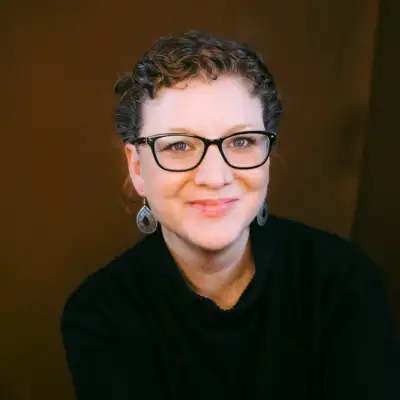
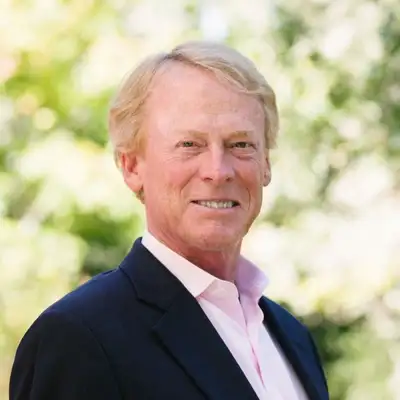
Navigating Net Zero is a podcast featuring conversations with practitioners and experts who are working through the complex realities of corporate decarbonization and sustainability.
We demystify and highlight the challenges, opportunities, and real-world experiences faced by the people leading their institutions' net-zero journeys.
Hosted by internationally-renowned climate change expert Alexia Kelly and brought to you by the Carbon Policy & Markets at the High Tide Foundation, Navigating Net Zero hopes to inspire action from this generation of climate leaders and the next.
Navigating Net Zero — Season 1 Episode 13
Guest: Richard Lawrence
Alexia Kelly: Good morning, good afternoon, and good evening, everyone. I’m Alexia Kelly, your host here at Navigating Net Zero, the podcast where we discuss what’s working, what’s not, and what’s next on the journey to net zero.
I’m absolutely delighted to be joined today by the great Richard Lawrence, who I have the privilege of calling my boss. Richard is the Founder and Executive Chairman of Overlook Investments Group, an independent fund manager he established in 1991 that now manages roughly $7 billion in Asian public equities and has delivered compound annual returns above 14% over three decades.
Alongside his investment career, Richard and his wife Dee Lawrence have co-founded several climate-focused organizations, including Proyecto Mirador Foundation, which has built more than 400,000 fuel-efficient cookstoves in rural Central America; Cool Effect, a platform supporting high-quality carbon projects; the High Tide Foundation, a climate-focused philanthropy where I have the privilege of working; and Carbon Mapper, a methane observation satellite and data initiative.
Richard is also the author of The Model: 37 Years Investing in Asian Equities and, most recently, Carbon Done Correctly: A Model for Climate Mitigation from the Global South to Wall Street, which I had the honor of contributing to.
Richard, thank you so much for joining me. It’s such a pleasure to have you on the pod.
Richard Lawrence: Alexia, thank you so much for having me. I’m honored.
And I should start by saying I’m a longtime fan of Venezuelan baseball, and Venezuela won the World Baseball Classic last night. It was a huge victory for a country that really needed a lift.
Alexia Kelly: I love that. Sports can remind us of our common humanity, especially right now.
Richard, tell me a little bit about the origin story. How did you and Dee get into climate action—and carbon markets specifically?
Richard Lawrence: About 25 years ago, Dee and I moved from Hong Kong back to San Francisco with two young children. I was concerned about raising our kids inside what felt like the “bubble” of America after spending so much time in Asia, where you see the realities of the Global South every day.
So my daughter and I joined a medical mission in Honduras after a hurricane devastated the country. Over several years, we kept returning, and eventually my daughter came back from one trip and said, “Dad, I figured out the lung problem.”
We’d seen women and children using nebulizers everywhere, and she realized the issue was the traditional cookstoves filling homes with smoke.
So we went looking for a better stove. We found one being developed in Honduras based on technology designed by engineers in the United States, and we started installing them. The first year, we built 27 stoves.
Twenty years later, we’ve built more than 400,000.
At its core, Proyecto Mirador was always a public health initiative. We wanted to get smoke out of homes. But very early on, I realized: “How are we going to pay for this?”
That’s when I stumbled onto Ricardo Bayón’s book on the voluntary carbon market. I read it one summer and came back to San Francisco convinced we needed to get Gold Standard certified and finance the work through carbon credits.
At the time, my assistant looked at me like I’d fallen off the moon.
Alexia Kelly: What I find so powerful about your story is that you didn’t start out trying to build a carbon project. You started out trying to solve a human problem.
And what carbon finance enabled was scale.
How did that experience reshape your understanding of what carbon finance can do for communities?
Richard Lawrence: The breakthrough for me came when we started measuring emissions reductions and doing the scientific work required for certification.
I realized very quickly that if carbon finance was going to work, we had to build really good stoves.
Our first stove wasn’t very good. It wasn’t durable enough. It wasn’t efficient enough. So we spent years continuously improving it.
That incentive structure was incredibly powerful. Instead of just focusing on how many stoves we could install, we became obsessed with quality and performance.
We modernized everything: the stove itself, our operations, our data systems, our training programs. We went from two stove builders with no high school education to a sophisticated organization with hundreds of employees, GPS tracking for every stove, electronic data collection, and even our own stove testing laboratory in Honduras.
That evolution happened because the carbon market rewarded performance and accountability.
Alexia Kelly: One of the things I admire most about the way you and Dee approach this work is your emphasis on people—finding the right people, empowering them, and trusting them.
Talk a little bit about Doña Amelia and the team that helped build Proyecto Mirador into what it is today.
Richard Lawrence: The most important hire we ever made was a woman named Doña Amelia.
Twenty-four years ago, she was simply the cook for the medical mission. But I noticed something: whenever anybody in the community had a problem, they didn’t go to the mayor or the doctor. They went to Amelia.
She was the person who got things done.
So after we built our first 27 stoves, I sat down with her and asked if she would help us expand the project.
Two weeks later, she bought a Land Cruiser and started driving around rural Honduras delivering materials, organizing communities, and helping us build stoves village by village.
From Amelia came an entire generation of leaders. Today, Proyecto Mirador is largely run by her son, Rafael Mendoza, who’s a wonderful executive.
What we’ve built is a deeply local organization focused on helping the poorest of the poor—but using modern systems, modern technology, and a culture of continuous improvement.
Alexia Kelly: I think that culture of continuous improvement is one of the most important lessons from the cookstove sector.
The market has gone through huge changes over the last decade – especially around integrity, methodologies, and scientific rigor – and nowhere has that evolution been more visible than in cookstoves.
How do you think about that journey?
Richard Lawrence: Continuous improvement has to become part of the culture.
At Proyecto Mirador, we literally display every stove improvement we’ve ever made around the walls of our offices so employees can see the progression and understand that innovation matters.
One of the best examples was a tiny $1 piece of metal invented by my partner Professor Elder. We had a problem controlling ash buildup beneath the griddle, which hurt efficiency. He invented a simple mechanism that worked like a windshield wiper to keep the ash at the proper level.
That one-dollar innovation fundamentally changed the performance of the stove.
You never know where the next breakthrough is going to come from.
Alexia Kelly: Let’s talk about the evolution from Proyecto Mirador to Cool Effect and eventually High Tide Foundation.
Richard Lawrence: As we traveled to conferences and met other project developers around the world, we realized everybody faced the same challenge we did: financing.
One night Dee and I were sitting at home having a glass of wine and asked ourselves: “If carbon finance helped Proyecto Mirador, why couldn’t we help other great projects access that same financing?”
That became Cool Effect.
We approached it very similarly to investing. In our investment business, we try to identify the very best companies in Asia. With Cool Effect, we tried to identify the very best project developers in the world: the ones who believed in transparency, scientific rigor, fairness, and long-term impact.
That philosophy eventually evolved into what I call the “top of the pyramid” approach.
Alexia Kelly: Talk about that concept.
Richard Lawrence: In every system – whether it’s stocks, companies, methodologies, or project developers – there’s a pyramid.
At the top are the truly great actors. At the bottom are value traps and bad actors.
Our goal has always been to stay at the top of the pyramid: support the best projects, the best methodologies, the best standards, and the best buyers.
If you do that consistently, you raise the quality of the entire market.
That philosophy ultimately shaped our support for efforts like the Taskforce on Scaling Voluntary Carbon Markets and later the Integrity Council for the Voluntary Carbon Market.
When Mark Carney approached us about helping launch the task force, we immediately recognized the need. The market needed modernization: better standards, better methodologies, better transparency, better buyers, and better governance.
And that’s exactly what’s been happening.
Alexia Kelly: I think what’s remarkable is that despite years of criticism and scrutiny, the market is still growing—and, in many ways, getting stronger.
Richard Lawrence: Absolutely.
We’ve flushed out many bad actors. We’ve improved methodologies. We’ve strengthened standards. And now we’re building real institutional expertise around this market.
There will always be critics. But the quality of the system is improving dramatically.
And importantly, carbon markets remain fundamentally aligned with capitalism. They are a market-based solution capable of channeling enormous amounts of capital into climate mitigation in the Global South.
That matters enormously.
Alexia Kelly: One of the through-lines I see across all your work is the idea that transparency leads to trust, and trust leads to scale.
You’ve emphasized that in Proyecto Mirador, in Cool Effect, through the Seller’s Pledge, and through investments in remote sensing and methane transparency technologies like Carbon Mapper.
Talk a little bit about why transparency is so foundational.
Richard Lawrence: Transparency has to exist at every level—from the developer to the broker to the buyer.
Years ago, what drove me crazy was seeing middlemen taking enormous spreads on carbon credits because nobody knew what developers were actually being paid.
That’s why we created the Seller’s Pledge at Cool Effect. We legally guarantee pricing transparency between buyers and sellers.
Transparency creates trust. Without trust, you cannot scale markets.
At the same time, though, we have to be careful not to create endless bureaucratic burdens. Verification requirements have become dramatically more complex over time, and we need to focus on the information that truly matters.
It’s a balancing act.
Alexia Kelly: If we get this right – if we continue building transparent, high-integrity carbon markets – what do you think the implications are for climate action?
Richard Lawrence: Carbon markets are not the solution. But they are an extremely important tool in the toolbox.
They direct private capital into climate solutions, particularly in places where government aid often fails to reach.
And for many communities in the Global South, these markets absolutely are transformative.
Nobody else was coming to those communities in Honduras. Carbon finance made that work possible.
Alexia Kelly: I completely agree. That’s why I’ve spent so much of my career working on these markets. When designed correctly, they can deliver exactly what communities need, on terms communities themselves help define.
Before we close, I want to ask: why have you and Dee dedicated so much of your lives to this work?
You could be sitting on a beach somewhere enjoying retirement.
Richard Lawrence: Let’s not get too dramatic about this.
We are all stewards. This isn’t “my” money. We all have responsibilities.
And honestly, I love this work. I love what we’ve built in Honduras. I love what we’ve done with Cool Effect. I love the methane work.
Having the opportunity to help solve meaningful problems is an extraordinary privilege.
That’s what I hope more philanthropists come to understand: solving big problems is deeply fulfilling.
Alexia Kelly: Well, Richard, thank you—not just for joining me today, but for everything you and Dee have contributed to this space.
It’s hard to overstate the impact you’ve had on climate philanthropy, carbon markets, and all of us fortunate enough to work alongside you.
Richard Lawrence: Thank you, Alexia. And thank you for all the work you’re doing. The voluntary carbon market owes you a tremendous debt of gratitude.
Alexia Kelly: That’s very kind. Thank you so much for joining me today.
Richard Lawrence: Thank you as well.