Subscribe
Share
Share
Embed
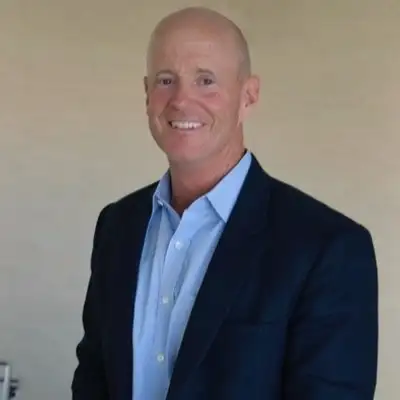
Hot Takes with Jim Baker is where real-world business experience meets honest conversation with Host, Bill LuMaye.
Hosted by entrepreneur, advisor, investor, and CEO Jim Baker, this podcast explores the challenges leaders face every day—from raising capital and managing growth to hiring, firing, sales, culture, leadership, acquisitions, and long-term value creation.
Through the Hot Takes series, Jim sits down with business owners, executives, investors, and industry leaders to discuss timely issues shaping today’s business landscape. These candid conversations offer practical insights, hard-earned lessons, and perspectives you won’t find in a textbook.
The podcast also features the Wisdom Series, in which Jim and Bill interview accomplished guests whose decades of experience offer timeless lessons on business, leadership, success, failure, and life.
Whether you’re a CEO, entrepreneur, business owner, executive, or aspiring leader, Hot Takes with Jim Baker delivers actionable insights to help you build stronger organizations, create greater value, and lead with confidence.
Presented by Sumus Development Group, LLC. Helping organizations enhance value, strengthen leadership, and prepare for what’s next.
20 Hot Takes
===
[00:00:00]
Jim Baker: Hello everyone and welcome to another edition of Hot Takes. Today's a special broadcast and uh, I will be interviewing uh, a spectacular individual. His name is Jim Stein. I think he has multiple nicknames, but his most popular nickname is Lou. Um, as always we're gonna share a little tea today. We're gonna talk a little bit about life.
Jim is 90 years old and he's a special person and I thought it would be good for you to hear his story today. So, on that note, [00:01:00] Lou, how are you today? I'm pretty good. Would you like to know where the name Lou came from? Why not? Absolutely. Okay. It's a good story. Um, when I was a senior in high school, I was the president of key Club and Key Club is related to Kiwanis.
And so one day the guidance counselor took me to the luncheon at the, at the hotel in my hometown. And where is the hometown? My hometown was Phillipsburg, Pennsylvania. Okay. In the coal region soft coal region. 'cause there's two regions of coal in Pennsylvania, a hard coal. Ron Scranton, where Biden used to say that he was from.
And and the rest is the, um, soft coal region where I lived. All right. But anyhow, he took [00:02:00] me to the, um, to the luncheon in the hotel. And, um, he introduced me as Lou Stein. And my, my real name is, is Jim. And I, I was curious why he did that, but he did. And, um, lo and behold, where, um, that name came from was a coal stripper.
A coal stripper is a, is a person. Who owns a lot of big equipment, and they take the, they strip the land off the top of the coal to get the coal out in the soft coal region. Okay. Instead of going into mines like they used to. And so this Louis Stein, a Jewish fellow, he was the richest guy in my [00:03:00] hometown.
And uh, he, he happened to be a Ian. And uh, so they introduced me as Louis Stein. So the, the, the meeting went on and was over and I'm leaving and all of a sudden somebody starts squeezing my arm. And my God, they, they, they were squeezing it so hard. It was hurting, like, and, and I said, what are you doing?
And I look and it says, it's Louis Stein. And he says, um, I want you to know. There's only room enough in this town for one Louise Stein. You either change your name or you get the hell out. But we became very good friends and he, he didn't, he, his son was very young and he would come to see me play football and basketball and we became good friends.
So it was a good story. And I take it you weren't as wealthy as Louis Stein was. I was pretty poor. Yeah. That's a great story. So what [00:04:00] year is this? So you're a senior in high school and this is Yeah, 1953. Okay. Okay. Yeah. And so what was high school like back then, besides getting a nickname that stuck with you for the rest of your life?
High school. High school was great. Um, um, I was very active in my class. I was, key Club president. I was president of my CL home homeroom. Um, I was on the school council, um, and school was good. I, I, I got along with everybody and, um, um, actually when I graduated I was, sorry, I graduated.
I was you enjoyed it? I liked the school very much. Yeah. And were you, do you have any siblings in your family? What did your parents do? My father was a supervisor for the Bell Telephone Company, construction company. And uh, he was a [00:05:00] guy that dug holes, put poles in, and that's how there were no phones.
My, my dad would roll over in his grave looking at the, what happens today with the telephones mm-hmm. And all that, because that's very strange to him. There would be. What the hell is this, you'd say, right? Yeah. It's a different world now, that's for sure. Yeah. I just, as you know, I just wanna let you know I poured you some mint tea.
Okay. It's good for the digestive system especially. It's kind of a cool, refreshing taste from 50 cups, of course, um, on this hot day, did you have any brothers and sisters? I had a sister who was a year and a half older than me.
Okay. And that was it. My mother and father. Got it. So you get outta high school. You played football too, right? I played football, I played basketball in high school. I didn't play baseball. And what position did you play in [00:06:00] football? I was a center and a linebacker. I. I was six foot two, weighed 127 pounds, and I was, I backed up the line.
That's hilarious. Did they try to beef you up back then? They did, but they couldn't. They couldn't. All right. No. So you get outta high school and then what are you doing next? Well, I, um, got outta high school and, um, I, I, my grades weren't on that grade and are good. And I, I didn't even try to go to college.
I got a job in I, I went, I moved to Buffalo, New York with a bunch of friends, and I worked for the, general Mills, which made Cheerios mm-hmm. And other cereal products. They also made Gaines dog food in the same plant. In the same [00:07:00] plant, which. Everything was swept up, took down to Gaines, and that's where the dog food was made.
So leftover human food basically. Yeah. And what would you do, what did you do there? I was a gunner. I had I had six guns on either side of the aisle, and I fired those guns. Well, I would load them with this real little, looked like small D donuts that were very hard. And once they got into this gun, they were heated up and pressurized to a certain temperature and pressure.
And then when they got to that, then I would pull down on the, the, the levers on the gun and fire the, the Cherrys into a, to a large [00:08:00] net. Bin. And then they would go down to a, on a a, um hmm. Conveyor belt. Conveyor belt. Thank you. And then if I fired my six guns without burning any, I got a nickel extra an hour.
Did you after you know how the Cheerios were made, did you still want to eat Cheerios? I did. Cheerios were very good. Yeah. Yeah. I had no problem with that. They give you free food? No. No, no, they didn't. And what were you making back then with getting that extra nickel? An hour. What was it, like a dollar an hour or something?
I, I can't remember exactly, but it was probably something like 50 cents an hour or something like that. Mm-hmm. Mm-hmm. Do they still make Cheerios up there or has that been moved to someplace else? As far as I know, they still make 'em there. They okay. Yeah. So they did that for a few years then? What, what was next?
No, I only did that for about six or eight months. Okay. [00:09:00] And uh, a bunch of my friends went to this small school in Pennsylvania. It was a teacher's college. so they talked me into going there and uh, I got accepted and uh, was gonna be a teacher. And, um, I met a girl and she used to come pick me up after lu after dinner every night.
And we would go to a place in town and, and, um, where the young people went. And, um lo and behold, um, I flunked out. Well, so let's back up. How'd you meet the girl? Was she in the same college or same school? She was in the same town. Okay. Same town. I met her at a at a dance that they had every Friday night for the, for the young people in town.
And I, she was [00:10:00] a very good dancer and I love the jitterbug and, and we became partners. And Are you still 129 pounds now or are you still get, got a little beef on you? No, I didn't have any beef on me, so she was pretty, I never did get beef on me. So you were pretty easy to spot then? Yeah. Yeah. Okay.
Yep. And ever had she liked tall guys? I guess so. You know, I assume we're talking about your wife? Yes. Okay, good. 'cause I didn't want to mess the podcast up. Um, all right. So then she, I, and you don't have a car either. She's driving you around? Well, she had a, she would get her dad's car until around eight o'clock at night.
And then she'd have to take it back for him to do his thing. He owned a bar in town. Okay. And, um. So that was, um, so so you flunk outta school Yeah. And flunked outta school. I assume now because you are maybe in love, you don't wanna leave the area, but I [00:11:00] did. Okay. I joined the Navy. All right. And I spent four years in the Navy.
Did you go to any cool places? Well, I did my bootcamp in Bainbridge, Maryland, which was near Baltimore. And then I spent six more months there studying Morris Code, and I became a radioman in the Navy. And as a consequence of my, my, um, study in, in as a radioman, I was given an opportunity to go to three different places.
And those three different places were our Genian, Newfoundland. Which if you know where Newfoundland is, Argen was a naval base there. They had airplanes and, and and then the ships would come in there, I'll tell you about that in a [00:12:00] second. And, um, the other two places was port Lae and Morocco Africa.
Joe Woolworth: Mm-hmm.
Jim Baker: And the other one was aircraft carrier out of California. So I chose Argen in Newfoundland because I was gonna get married and I planned to take my wife there with me.
Joe Woolworth: Okay.
Jim Baker: And that's what happened. And that's what we did. And she came to. To live with me. I, I went there in April. She came up in August.
And we had our family, I got married in where we got married in February of that year. And and then we had our first child, but our first child was born [00:13:00] premature. And it was so small that its lungs, it couldn't breathe. She died in an hour and a half. Sorry to hear that. It was very tough.
And what was it like living in New Finland? Were you, were you on a ship or you just land-based? No, we were in a, a, a land base. Okay. And, um, there were some small towns outside the base because I didn't have enough rank. To get housing on the base. So I had to have a house outside the base. And my wife and I lived there and we lived there for two years.
And then something happened to her when she got pregnant the second time her, she lost the calcium in her teeth and she had to go back to the states [00:14:00] to get that taken care of. And luckily she was able to do that. Yeah. So you, and so we had our second child in, in states. And you had And that was your daughter?
That was my daughter, Laurie. Yeah. Laurie. So backtrack it for a second. You had this tragic, um, you know, childbirth. Childbirth. And how did you and. And cope with that. At the time it was very difficult. We were okay together and we were both, we were both Catholic. I became a Catholic, um, in the Navy and she was a Catholic all her life.
And, um, um, she couldn't go to the funeral for the baby. They made a small casket for it in the in one of the carpenter shops on the [00:15:00] base. And and I carried the casket with the, with the priest and my couple of friends that I had, and we buried little, her name was Luanne after me and my wife.
And we buried the Luanne in a, a, a cemetery in fresh water. Newfoundland, um, which was where we lived.
Joe Woolworth: Mm-hmm. Mm-hmm.
Jim Baker: And, um, so that was the first child we had. And then after that we had four child children. So you have so a daughter was first. Yep. She was born in 1959. And then my son Mike, was born in 1960.
My second son was born in 1962. And, um, [00:16:00] my fourth son your son-in-law? Yeah, Chris his, he was born in, 66. Okay. And then Jim was a 62. 62. Yeah. Yeah. Okay. And I've gotten to know your family, obviously, and all four of your kids are, you know. They're healthy and yeah, they're doing great, and so on and so forth.
You have a pile of grandkids and, um, so I don't wanna get to that point yet. We'll get there. Okay. At some point in time. Um, so how did they fix the, the calcium, leaving the teeth? Like what, how did, how did Ann cope with that? Um, she went to a doctor in Pennsylvania that that she had heard about in Williamsport, Pennsylvania, which was only about 25 miles from where she lived.
And, um, [00:17:00] what he did, I don't know, but he helped her lung and she's been good ever since. So, yeah. But the, the baby took all the calcium out of her, out of her body. And do you remind her of that today? I. When you see Lori, do you remind her of that today? Once in a while with not that much. Um, so as a code breaker, um, who are you listening to in the Navy when you were in the Navy?
Oh well, so in, in Argentine, Newfoundland, that was a base for, um, pilots and planes. And ships and what they did out of there, out of Argent Newfoundland, they extended the do line across the Atlantic Ocean from Argen in Newfoundland to [00:18:00] Africa. And there were four ships. They were called escort, they were called, um, radar, um, destroyers.
And they were top heavy. They had all kind of radar gear up on, on the top of the ship, and they were small ships. They were only 300 feet long and there were four of them that went across the do line distance. Early warning was what the DO line stood for. And four of those ships were from Argentian Newman to the Azos constantly.
And this was during the Cold War with Russia. And we kept track of any planes that were coming from Europe and to toward the United States. And if any of 'em didn't squawk [00:19:00] right, their, whatever their codes were, if they didn't squawk what we were to notify norad, and they sent out Jets Jetson immediately.
So. We, we had a pretty serious job mm-hmm. To do out there. And can I tell you about one of them that was, please. Yeah. Christmas Eve of 1959 my daughter had just been born and I was out on the ship and we were in the fourth station and we were just about to turn around and come back to the United States 'cause we were being relieved.
And we hit a storm. And the storm was, it was a terrible storm. And we were thrown from our, our bed. We were, it was [00:20:00] during the night and we were thrown out of our cots and we were on the floor. We were sitting there and all of a sudden, instead of sitting, we were standing up because our ship had taken that big a role.
And if you ever saw the movie The Poseidon Adventure, we were almost that, we almost capsized. Wow. According to our executive officer, we almost capsized. But what we did is we lost all those radar, all the radar and everything off the top of the ship. So they had to take us back to the Naval Shipyard in Boston.
And we spent six months there while they refitted us. And then soon as they got us refitted, they sent us down around the Cape for Florida to Galveston, Texas to be put out of commission. [00:21:00] And so they, they, that was, I, I don't know if our ship is still down there. We were on the a, the river called the Sabine River in Texas.
Louisiana actually is where it was, and there were all kinds of ships there, and we were one of them. And, um, um, I, I, I suppose we're, it's probably still there, ready to go out, but I don't know. What would they do with it would be pretty old. Yeah. So you, they, so you had to stay with the ship to Texas then would they just fly you back to to the base?
No. We, we stayed there and we worked and put the ship outta commission. Okay. while I was there, um, when I started out, I was a, a third class. While I was there, I be, I took my tests and everything. I became a second class. And little funny story about that, when I was a [00:22:00] third class, oh, I had to wait in line for the chow line and all I sat, waited with all my buddies.
Well, I became a second class and I still stood in line. And one day, a third class or a first class came along and said, Hey buddy, you don't have to stand in this line anymore. You can go to the head of the line. And so the guy said, all my buddies said, well, what are you gonna do, Lou? And I says, I'm going to handle the wine.
So instead of having a tray, I had the di, I had a plate. They, they had the old metal trays. Um, I had a glass instead of a. A metal cup. Um, it was like I hit, I was You hit the jackpot. Yeah, I hit the jackpot. Yeah. It was funny. That's hilarious. Um, so you were in there for four years? Yes. And, um, just real [00:23:00] quick, I mean, you're just, I'm just thinking of you in the ship.
The ship, I'm sure the living quarters weren't exactly spacious. No. Again, you're this big, tall guy just had a bunk. Yeah. I mean, and I've seen some of those bunks in some of the, you know, some of the museums you go into every once in a while. And so I, I assume was kind of uncomfortable for you, but I guess the bigger question is, while the ship is going through this storm and you almost capsize, I mean, what are you thinking at that point in time?
Do you think you're gonna make it, do you think? No. No. We thought we were gone. Yeah. Yeah. We all thought we were gone, but it upright and we made it. It was thank God we did. Yeah. Um. So after the Navy, what, what happens next? Well, um, since I had about 40 some credits when I was going to college, they were still good credits, so I was gonna go back to the same school and try, I was gonna [00:24:00] try and get a job in Lockhaven, and lo and behold, I could not get a job in Lockhaven.
And my sister lived in Niagara Falls and in Niagara Falls they had a lot of factories, a lot of chemical plants. Um, so I went up there and I got a job in a chemical, in a, in a chemical plant called Stauffer Chemical. And, um, I worked I, I worked in that chemical plant and I got laid off. Um, while I was laid off, my brother-in-law had he worked for the Goodyear Tire and Rubber Company and they had a chemical plant where they made chemicals for their rubber industry and their tires.
Joe Woolworth: Mm-hmm.
Jim Baker: And so he got me a job there in the factory. [00:25:00] And that was a tough job. Um, the actual job that you worked your regular shift on wasn't so bad. What you were doing is you were, you were bagging plastic, they made plastic there, and, and you were bagging that into 50 pound bags and you put 40 of 'em on a skid, and you did that all, all night.
Eight hours. Well, then they would come along. Near the end of your shift, and they'd say, a lou, do you wanna work a double? And and I had kids and I'm paying rent and you're damn right, I wanted to work a double. So what the doubles were, where you would go over to where they were making the plastic.
They made the plastic in these big, big, um, big [00:26:00] kettle, huge 10,000 and 20,000 gallon reactors. And over time, the plastic build up in there. And what you would do if your eight hour shift, you got in there with a hammer and chisel and you cut that plastic out of there. And that was a tough job. I mean, you all night long and then you'd miss, you'd miss and you'd, you know, damnit you'd hit your hands and, and that was, and you, and you did that for eight hours and, um, and then you went home, got a quick night's sleep, went back to work, and sometimes they'd ask you to work a double again.
So you'd work, you get time and a half when you worked that double ball. So you're lifting 50 pound bags all day long and then you're chopping plastic out of a drum [00:27:00] out of afterwards, out of a reactor. Yeah. Yeah. You got in there on big ladders. And did you get any muscle at that point in time or are you still No, I had spin bean.
I had pretty good muscles, but I was still thin. Right, but you're leaning mean now, right? Yeah. Yeah, yeah. Um, and how long did that last. Well, because I had a year and a half of college Goodyear came to me and asked me if I wanted to work in the lab, and I knew what the lab was and I said, absolutely. So instead of working in the union, I went in the lab and I became a salaried employee and I got more money and I didn't have to work a double, I didn't have to cut that plastic anymore with a hammer and chisel.
And, um, and that was a good job. So, while I worked in the lab, [00:28:00] um, they asked me if I wa wanted to run the experimental reactor, which was. A similar reactor to what the big ones were that made the plastic. But , they try out batches to see if they could make the plastic better.
Okay. And that's what I did. and then because I was working a, a particular shift all the time I was able to start back to college and I went to Buffalo State to become a teacher and I was a senior at Buffalo State. All I had to do was, um, take my, my, um, practice teaching and I'd be a teacher.
I went to Goodyear and I asked Goodyear, I said, okay, I'm a, I'm almost outta college. I'm almost have a degree. Do you have anything for me here [00:29:00] instead of the lab? And they said, well, if you weren't in education, we would have a job in human resources for you. And I said, okay. I was getting the GI bill. I said, okay, so I'll just transfer to the unit, to the University of Buffalo and I'll take management science.
And they said, okay, if you do that, we'll give you a job in human resources. And that was a big move.
Joe Woolworth: Mm-hmm.
Jim Baker: And that was, I was a part of management. I, um, I, I wore a suit and tie to work and my buddies made fun of me, but I didn't care. I was doing it for my family. And, um, so I finally got my degree from the University of Buffalo, and when I did, I had a total [00:30:00] of 263 credit hours.
Instead, you only need 128 to get a bachelor's degree. I had 263, but I still had a bachelor's degree in science. And so what, when I, my wife and all went, my wife and I always had a goal, and our goal was to get back to Pennsylvania, to be close to our parents, to be able to help them through their older age.
And so I got my degree. I left Goodyear, I got a job in a bank in, in state College, Pennsylvania, where Penn State University mm-hmm. Is located. And I got a job as, as a human, human resource management and um, publicity. And I, and I [00:31:00] worked for a, a bank for quite a few years . What was the name of the bank? Central County's Bank. They're probably what part of Chase now? 'cause I think Chase bought Mellon at some point in time. Well, it was part of, um, um, Pittsburgh National Bank. Okay. Actually I left that bank because my president, when I took the job, I.
As human resources. I took over for a guy who left them and went to Miami to get a job. Well, lo and behold, he lost his job in Miami, and the president of the bank liked him. Not that he didn't like me, but he just liked the way that guy worked.
Joe Woolworth: Mm-hmm.
Jim Baker: So he asked, he fired me, [00:32:00] let's talk a little bit about you. So you're ra how you're raising all these kids, you got all these, you've had these jobs, you're back in state college. Um, how are you balancing work with being a father and being a husband?
I didn't have a, I didn't have a problem doing that at all. Um, my, my boys, they were growing up and they were starting into little League baseball [00:33:00] and, I became a manager in, in, in the evenings I would coaching, be a manager of their team. Mm-hmm. Um, my daughter, she she didn't like the fact that we moved to State College.
She sort of rebelled, but we, we tried to keep her in line and, and that was really tough. You gotta gimme a story. Like, what do you mean? That was a bad Yeah, that was a bad. Was she in high school then? Yeah. Okay. She was a sophomore in high school when we moved. Oh yeah. That'll, that'll do it. And that was really a tough time.
The boys had no problem. Mm-hmm. Because they were younger and they just moved into sports and friends, but she had a really tough time. but we got her through it. Did she go to Penn State? She did not. Okay. She did not want to go to college. She, like I said, she sort of rebelled uhhuh against anything that we would talk about.
And then she got a job after [00:34:00] she graduated from high school, she got a job in Washington, DC at a, in a law firm. And she worked there and she liked that and she did well, and, and, um, she learned on her own, she learned how to use a computer and, and she, I mean, I think she did really well yeah.
Doing that. And then she moved to Florida. And in Florida she met a, a guy who became her husband and is is her husband to this day. Yeah. Rob, you met Rob? Yeah, yeah, yeah. Um. And so that life, that, that was much better. Yeah. And they had two daughters too, right? That Well, she adopted. Okay. She adopted two daughters.
She, she had she had four or five miscarriages and that was really tough on her and her husband, but they finally adopted two [00:35:00] girls who became just great people. Yeah. And we love 'em. They're just, just like our daughters. And you got that ECU hat on. Didn't one of 'em go to ECU? One of 'em went to ECU.
She's a, she's teaching school now in, um, Holly Springs. Holly Springs. She teaches um, science Oh. To high school. I. And she went to Cardinal Gibbons, right? Yeah. She, her and her sister went to Cardinal Gibbons. Yeah. Where your children went.
Yeah. Yeah, exactly. Exactly. So I think, um, I think Kat might've been in between them, if I'm not mistaken. Um, so what about your other son? He goes to Penn State, or, or no? All three sons went to Penn State. Okay. And that was, that, that's a strange story too, because we always told our children that there's not 12 years of school, there's 16 years of school, and so you will go to college.
Well, we got to Penn State [00:36:00] State College where we were gonna live and the job with the bank. And we said, okay, we told the kids that there's 60, how are we gonna afford to send them all to college? And Ann said, well, I think if I get a job at the university. We can get a discount on, on our tuition, which we did 75%.
You got 75% off the tuition. So the three boys went to Penn State, one of them graduated, the other two got jobs that were as good a jobs as they would've gotten, or better if they would've graduated from college.
Joe Woolworth: Mm-hmm.
Jim Baker: My one son, Mike, he became the vice president of Human Resources [00:37:00] for Kmart, for the total Kmart, and that was his job.
And then they, you know, came what happened to Kmart. Right. They went bankrupt and he went, they became taken over by Sears. Yeah, just Sears. And so he became a vice president for them. Jim worked in Florida for a company called SMS Shared Medical Systems, which was a company out of, out of, um, where Villanova is and Jim worked his way up to become a vice president of that.
They, they were taken over by the Germans and they sent Jim. School and he didn't get his degree, but he got e equal to a degree, and he did very well. He, he's doing really well, right? Yeah. Even today. So, back [00:38:00] to Mike real quick. How many kids does he have? Mike has two. Okay. And a boy and a girl. All right.
And Jim had two, a boy and a girl. Okay. And then Chris, he had three. Yep. Two boys and a girl. And and then my daughter had the two right. Adopted girls. Right. So I had nine. Nine grandchildren. And then do you have any great-grandchildren? Right now? I've, I have four. And your daughter is Yeah. Could be.
God bless her. She we're gonna have five. Yeah. A few more weeks. And we don't know what that is. We don't, we don't. It's gonna be a surprise. Yeah. Now it's always fun to get around everybody, around your family and, um, so eventually. You retire? Yeah. After. And if you count up all the jobs that you had, how many jobs did you have in total? Oh my goodness. I have never [00:39:00] counted them, but there had a ton of them. And which one did you like the best?
I liked the, I liked my job at Goodyear. It was a very good job. The research part where you're doing the prototypes? No, I liked, I liked my job in . human resources and labor relations. Mm-hmm. And then I had a job with a company called the Overhead Garage Door Company.
And I, I was in management there also. And, um, I, I don't mean to brag, but I was able to keep them. From having a strike on different occasions, just by my ability to work with people. Mm-hmm. And, and, and the union liked me. They, they, even the union, the people in, in Pittsburgh from the union, it's a carpenter's union.[00:40:00]
And even those people, they liked me and we got along very well and everything was fine. But then I left, I retired from, from overhead door and, um, um, my wife and I, one morning we were sitting at the breakfast table in State College and all our children had left us, and, and they got jobs and they, and there was nobody there.
And we looked at each other and we said, what the hell are we doing here? We should be with one of our kids or wherever they live. And Lori, or. Ann said, well, Lori's gonna need help with two adopted daughters six months apart. She's gonna need help. So we came down here to see what it was like to live here and and um, we decided to stay [00:41:00] here and that was a, that was the best thing we ever did, I think.
Yeah. Yeah. Yeah. And and so it's kind of funny that your daughter who rebelled Yeah. Um, and left, you end up coming down and she welcomes you to help and Yep. You've been here ever since. Yep. And then, and it's just like, you know, we were, it's like we are the real grandparents of those two girls and mm-hmm.
I mean it, there, it's just a, a wonderful thing. Um. Then cj, obviously he graduates Penn State and he's looking for work, so he decides to come down to this area as well. Yeah. He, he did some study of, in the, in the medical field in Charlotte, and he had a lot of friends that were from there in Greenville and in, in that area.
And so that's how he got down here. [00:42:00] And yeah, rest is history. Yeah. So obviously you've had this remain healthy through most of your life to be able to do this today. Um, did you work out a lot? Did you eat really good food? Like what did you do? Like what, what are your secrets? Or did you just wake up every day and go get it?
Yeah. Yeah. I, um, I. My mother lived to be 98. My dad only lived to be 82. Um, because my dad drank a lot and he had a great job. He never missed work, but he, every night he would get inebriated and it was sort of bad on the family and it was bad for my mother, but she never left them. [00:43:00] And, and so she lived to be 98.
She might've lived a little longer, but I think she was ready to go. 'cause she, she, she never got Alzheimer's or anything like that. But but we, there was nobody around to keep her. And we, we, we, there was a home. We, we had to put her in a home mm-hmm. Only for her care. And so that was the story of my mother.
So you mentioned a lot about Anne, your wife. Tell us a little bit more about her. Like, what, what's she, what's, why is she so special to you? I think I must have fallen in love with her immediately. I mean, she was just a nice person and she was tall, she was a good looking and she, um, and she liked me. She could dance and she could dance and [00:44:00] and she, she was, she's been a great mother to the kids. We. Both of us worked hard at being parents and she wanted to have children.
We she was Catholic. We didn't practice birth control. It seemed like she was always pregnant. She never cared. I never cared. We just said, okay, this is what we have. This is what life's given us. This is what we'll take and we'll love it. And we did. And we have, and even to this day, When I worked for the Goodyear Time Rubber company, she and I was trying to go to this school at the same time.
I would go to night school. And I went to night school nine years, and I got my degree. And while I was going to night school, she got a [00:45:00] job as a credit manager for the, for the Goodyear Tire and Rubber Store, where they sold tires. Mm-hmm. And so on. And that's what she and I had a job. I had my job at Goodyear.
I worked as a, um, parts a parts department guy in a, in a parts store, auto parts store on Saturdays. Um, I worked at a grocery store, stock and shelves. On most of the nights when I would, I would have time to do that. Um, so I had three jobs. She had a job. It was, you worked. Mm-hmm. That's what you did.
And where'd you get your work ethic from? Is that how you were raised or you just had to go work and you just did it? Um, I was raised to work hard. My dad was a tough [00:46:00] task master. He always told me, he always told me I would never have any ability to do anything. In fact,, what would happen is. I, I tell people I was 13 before I knew my name was Jim. I thought it was goddamn boy.
And he would, he was really tough. He would, he would he would bring telephone poles home and we'd have a two man cross cut saw. We didn't have an electric saw, we didn't do any of that. We did it by hand, and we would cut the telephone poles into pieces so that we could have wood for the fire, for the, for the furnace.
Once in a while we'd get coal because he would give those coal strippers poles to build their tipples where the [00:47:00] trucks would dump coal into railroad cars, and they were called tipples. And they would give him coal for doing that, and then I'd have to shovel that into the coal bin and everything.
But I was the damn boy. I, yeah. Yeah. So I did all this at 6 2, 1 27 too. I know. Well, you're probably the strongest 6 2, 1 27 guy out there. I was, my, I was pretty wiry. Yeah. Tell me, take one kid that you have, you know, from Lori all the way down to, to Chris. Describe one unique thing about them that you love about them.
I'm, I'm assuming you didn't raise your kid to say Damn boy or damn girl. No. So, no, never, never they were always good kids. They got into trouble just like everybody else did. Stupid things they would do. For example, Michael was [00:48:00] six foot five. He was a pretty good sized boy, and one time he put a teacher up on a, some kind of a window in in the school and wouldn't let her down.
And they threw him outta school. I had to get him back in school. I had to go to the principal and beg to get him back in school. Um, that's one of the worst things he ever did. That's all that I could ask him about that someday. And then he would, he, he got a job working for Kmart. In, in the store just as a, a worker stocking shelves.
Mm-hmm. And doing that sort of stuff. And he worked his way up into management. That's how he got in. Yeah. To be a, a, a manager of in Kmart. But Jim was another boy who I never had to tell them to get a job. If they wanted money, they weren't gonna get it from me [00:49:00] because I was using mine to, to raise them.
Yep. If they wanted money, they had to get a job. And Jim and Mike went out and got jobs. Chris came along, he did the same thing. Lori did the same thing. She worked for her first job was in a place called ar Arthur Recher. The Fish and Ship place. Yeah, the restaurant. Okay. Fish and Chip. Yeah. She, I would make her take her clothes off in there, in the garage because she had, she smelled like fish, but but they, they were all good workers always. And and, and their families are the same way right now. we loved our children. We loved raising them. They were active. We were active. Ann and I were presidents of the Parent Teachers Association. We did all that stuff you have to do with kids and you do it because you love them.
[00:50:00] Yeah. That's great. So we're almost at the end. So any advice you'd want to give? Like you've lived this wonderful life, um, through the good times and the bad times, and you've had tragedies like everybody does, and you've had some great experiences too. Um. What are your secrets? You know, what, what are maybe three or four or five things you wanna, that you learned through life that you know, you, that have helped you drink a lot of beer?
Nothing else. I'll tell you what, I, I I would never drink whiskey. I would never drink wine because I thought if you did that, you'd become an alcoholic.
Joe Woolworth: Mm-hmm.
Jim Baker: And I didn't drink much, much beer either. I, you know, I would when I was a kid and I'm growing up, sometimes I would drink too much.
But um, I always [00:51:00] tried to watch what I did with that. Um, I tried to do that with a family, with my sons. Um, they've raised their family about the same way. Alcohol is still a part of their lives as it as it is still mine. Mm-hmm. Do you have a favorite beer? Yeah, I like Bud Light. Okay. Um, some places you can't even get that at Woody's.
Now, that's your favorite place to go, right? Yeah, that's my favorite place to go. Yeah. Yeah. All right. So drink beer. Um, in moderation of course. What else would you, that you've learned that you think is well love your children. Mm-hmm. You just stick with them. If they make mistakes which they're going to you, you, you work with him.
They get into trouble.
You don't, you don't throw 'em away, you hang with [00:52:00] them. What else? I'm sure you've done that. Yeah. I think there's, you know, we've always, we've seen other families where the, the parents wanna be their kids' friends, so it's one thing. Then they support them and, and then it's never their fault. They never, they never learn from their mistakes because the parent doesn't wanna.
Make the hard decision to discipline or to not be liked by their kid for a period of time. They just wanna be loved 24 7. So I think there's a difference. And it sounds like you follow that discipline where, Hey, I'm still your dad. Yeah. I'm still gonna yell at you. Yeah. I'm still gonna discipline you.
Yeah. I'm not gonna be your friend sometimes. Right? Yeah. And I think but most of the time, most of the time I was their friend and there was never a, a time when they were afraid or didn't want to introduce me to somebody. Sure. Um, [00:53:00] and even today, um, I'm their friend and I want them to talk to me as a friend and a father.
Sure. Yeah. I think that's Especially when they're older, right? Yeah. What else? Anything else? Um. Just, I, I think that's the most important thing was for both Anne and I that we, and, and I don't think Anne and I ever talked about that. We, that was just an automatic thing.
Joe Woolworth: Mm-hmm.
Jim Baker: That we were gonna be there, there were consequences.
If you do something stupid, there's gonna be consequences. If it doesn't happen in school, it's gonna happen when you get home. How about any marital advice for guys like me? No, I don't have any. I mean, you've been married for how long? How many years? We've been married 68 years. Wow. I mean, yeah.
How many years you been married? [00:54:00] 39. 39 39. This fall? Yeah. Okay. Yeah. Okay. Yeah, but, well, you've got a great wife. I thank you for that. Yeah, I definitely I don't know what she saw in me, but I'm very grateful. Yeah. I don't know what she saw in you either, but That's hilarious. Just kidding. Yeah. Um, so what's the secret?
I, I wouldn't know what the secret is. Just just wake every morning and do that. Believe in God believe there is a God practice your faith. Um, when, when Ann wanted me to be a Catholic, and I had no problem doing that because my, my parents were not that active in a church or anything, and so I, I didn't have a problem doing that.
I learned to be a Catholic through a thing called Father Smith instructs Jackson, and that was [00:55:00] a, a, a book that I had from the priest. In the Navy and that's where I, I learned. And, and then on, we were married February 22nd, on the 22nd of February. And that, that was president's George Washington's birthday.
And I got an extra day off from the Navy. And so during that time, I was taken into the church. I took my first communion. I was baptized and I got married. And I don't think there are too many more things. I couldn't No, you got the gamut. I did all that in two days. Yeah. Now it takes a little longer to do that, but, um, so real quick I know your favorite beer is Bud Light.
What's your favorite food? Hot dogs. God bless you. Hot dogs. And, [00:56:00] cj, who you call Chris him and your daughter took me to a place called The Cardinal.
Joe Woolworth: Mm-hmm.
Jim Baker: For hot dogs a couple weeks ago. About a week ago. Yeah. And, um, pretty good, isn't it? Yeah. They were pretty good hot dogs. Yeah. Favorite thing you like to do?
Um, I love golf. Um, I'm not very good at it, but I still play it. I'm a Rotarian and, um, I like, I like them because that's a way of giving back to the community. And, um, I've been the president of of Rotary three times. Um, I have a lot of friends and, um, I. I think that's because I treat my friends like I do my family like I really care for 'em.[00:57:00]
Fantastic. Well, guess what? This was painless, right? Wasnt too bad. It was painless. Yeah. All right. Thank you for your time. God bless you. God bless Anne and God bless your family. Thanks again. Thank you. It has been good. It is been fun doing this. Glad you enjoyed it. Yeah.