Subscribe
Share
Share
Embed
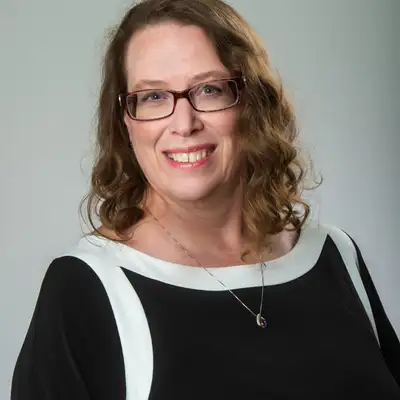
The Writing Glitch is brought to you by Dotterer Educational Consulting. Our Founder and Owner, Cheri Dotterer, is the host.
Build courage, compassion, and collaboration to help students thrive and grow leaders that transcend a lifetime, regardless of dyslexia, dysgraphia, and dyscalculia, using sensory-motor processing and neuroscience-based instructional interventions. No Pencil Required!
We interview teachers, therapists, and parents about how they have seen a transformation in children having these disabilities and co-morbid conditions such as Attention Deficit Hyperactivity Disorder (ADHD) or Autism Spectrum Disorder (ASD). They share how they help students grow and prosper.
We believe we can grow 110 million leaders together by building skills, applying knowledge, and transcending futures. Join us to hack dysgraphia. No Pencil Required.
Each episode contains one intervention to help you support students with writing challenges the next day you are in your classroom. These interventions are explicit, systematic, cumulative, and multisensory. They are designed to support ALL students through targeted, daily visual-perceptual, visual-motor, and memory interventions. These interventions benefit all students and harm none.
All students have access to writing regardless of their status in the classroom. The interventions were created to take up to 30 seconds to 2 minutes of your classroom time. Strategic lesson planning increases classroom engagement.
All interventions can be adapted for students with physical disabilities because they support the Social-Emotional Learning (SEL) and well-being of all students. In addition, these interventions impact all subject matter classrooms. Whether you are teaching English language arts, mathematics, social studies, science, music, or art, these interventions will benefit your classroom atmosphere across ALL grade levels.
You have put your blood, sweat, and tears into investing in your education and children. Don’t let a misunderstanding about this disability stop you from providing best practices.
In case you don’t know me. I’m Cheri Dotterer, 2022 Dysgraphia Expert of the Year. This honor was bestowed on me by Global Health and Pharma Magazine. In 2023, they awarded my company the Best Dysgraphia Professional Development Program.
It took challenges at home and on the job to wake me up to the impact dysgraphia has on all students. Struggling my entire life with communication issues, I was mistaken that only students with learning disabilities could have dysgraphia.
My thoughts shifted when my gifted daughter asked for help with spelling. My son struggles with handwriting. Then, a parent asked me why her child could read and have trouble writing. Finding answers became the drive that gets me out of bed in the morning.
It’s a big shock when you discover how pervasive writing difficulties are and how little people know about how to help–even OTs. I used to think I was the only OT who struggled with understanding dysgraphia. It turns out many have questions.
Occupational, physical, and speech therapists are not trained to teach. Teachers are.
Occupational, speech, and physical therapists are trained in neuroscience. Teachers are not.
Let this podcast be your first line of defense to help your students transcend their learning disabilities. Show your school district how much you genuinely care about all of your students by sharing it with your colleagues.
After each episode, I challenge you to share your key takeaway from the podcast in our FREE yet private community. Share your student wins. Get support on the challenges.
Join The Writing Glitch Community. https://thewritingglitch.com/
Connect with Cheri at www.cheridotterer.com or info@thewritingglitch.com
Good morning. Good afternoon and good evening, depending on where you listen to the podcast. This podcast is available on several platforms Apple, Google, Amazon, and Spotify plus many others as well. I'm Cheri Dotterer. I am the occupational therapist and dysgraphia expert here at the writing glitch, hacking dysgraphia. No pencil required. Today I am interviewing Heather Hodgkins Chen. She is an occupational therapist up above us in that wonderful country of Canada. And she is a founder of on the ball therapy. And I am so excited to hear what she is doing up there. Heather. Hello, welcome to the podcast. And how are you? Really?
I am excited because this morning I am watching the final bit of snow in my backyard mouths. And our little dogs are out there bathing in the sun. And I'm looking forward to getting outside today. It's finally warm here. We've had quite a winter. How are you doing down there?
Okay. Oh, would you like to know this little secret? Sure. We only had a snow covering that you could still see grass here in Pennsylvania. And this week, it is going up to 90 degrees. And wonderful. April. So being recorded in April, I'm not quite sure this is going to be released sometime like later in May. But yeah, it's been like, oh my gosh, how can this? This weather ever stopped being so crazy? Hardly any snow? We had more rain this year? Yeah. So I love it that your dogs are out there looking at the last little bits of snow. That's adorable. So how am I really today? I'm feeling like, the world is like coming at me with darts. Because I've got three or four things that I've got to complete today. Because I've got some really cool things happening over the next couple of weeks. And while I'm on that subject, I just wanted to address that. Our sponsor today is Dr. educational consulting. And one of the things that Denver educational consulting has coming up is is a oh gosh, do I am stuttering all over my words, because I'm going wait a minute. I am not going to be released into this till afterwards. But okay, so take a breath, Sherry. I found our educational consulting, we help parents hack dysgraphia from the inside out. And I know that this is going to be coming, going live in just a little bit. And Heather and I've got something coming up that we want to share with you. We want to share a workshop a masterclass that we're going to be doing in May. And that masterclass is going to be all about trauma. That's why I wanted to have Heather come on today. So that she could help us understand trauma just a little bit and then in may go into it just a little bit deeper. I am so excited to have you on here today. Let's get into some understanding of what trauma is. Are you ready?
I'm ready. This is something that I'm quite passionate about Sherry,
I know you are I know you are. So tell us what trauma is. What is it? How does it impact children, because trauma is such a big word, break it down a little bit.
So trauma is something that happens to an individual that impacts their body and their brain, if I were to put it simply, and it can mean different things for different people. Some of us are very resilient. And some of us really have a lot of difficulty processing trauma. And so it can look like a variety of different things. And so, when we talk about trauma, it can be anything from being born into the world under a lot of stress. Perhaps the baby was rushed out by emergency C section. The mom had a very difficult delivery. It could mean an early hospitalization for a child where they were in the NICU for a while. It could mean being in a car accident at a very young age. It could mean having sexual abuse early on, or it could mean living in difficult situations, and perhaps maybe even moving from foster care to foster care. So all of these experiences can impact a child's nervous stem. And so that's what I'm really passionate about. I'm passionate about educating the public and other occupational therapists about the impact that trauma can have on learning and development, and the the role that trauma can have in developing our relationships.
When you were talking there, one of the things that I kept thinking about is, a lot of family dynamics can create trauma, I had trauma as a child, when I was 10, I had an uncle that was killed in an explosion. And it's taken me a long time to to get over that. And I think that has had some bearing on where I have my path and my career have been taken. So it's very interesting that you talk about, like the sexual abuse and the birth issues, and all those things, there's so many things that people don't even think about when they think about
trauma. Absolutely. And so all of us have experienced some sort of trauma, and whether or not it's something small or large, it can really have an impact. And I'm relating to you as well. Through this, I really believe that my becoming an occupational therapist stemmed out of some of my own childhood trauma. So when I was 12 years old, my mother had ovarian cancer. And it really had a huge impact on my life, I became the motherly figure for my sister who was two and a half years younger. And we lived on a farm. And so my dad was very busy with the animals. And so I took on the role of doing all the house cleaning, and making sure that we got on the bus on time and cooking. And so it really shaped who I was, or who I am, I should say. And it also led me to learning more about occupational therapy and trauma can bring about good things. And it also can bring about bad things or more difficult things I should say. And so in terms of learning, and writing, and reading and paying attention, trauma can have a significant impact. And that impact can be a result of sensory processing challenges. And so children who have been through trauma and who have been impacted significantly, they startle easily. Often, they're living in survival mode, they are trying to focus their little brains on work, and it's very difficult for them. And so if they can't sit up, still sit still or pay attention writing. And these activities that they learn, or that they do in school become very difficult for them.
You've mentioned something and my brain went okay oh tea on on our soap. If I start to say something here that confuses you, please, back me up and email me and we can go into that a little bit more. But thinking back on the idea of the trauma, traumatic birth, and thinking about disabilities, with kids that are impacting their learning abilities, I know one of the things that is very connected there is the primitive reflexes, how much due to primitive reflex integration issues and trauma go together.
They really go together. If a person goes off to war, and they come back and they have PTSD, they're in a heightened state of arousal. Some of their primitive reflexes have been, have come back, and those reflexes are typically integrated into the nervous system, we only really access those reflexes when we need to. And so you will see in adults and children who've been through trauma, you might see a strong startle reflex, you may see hypersensitivity to noise or hypersensitivity to light. And it significantly impacts their ability to function in many different areas of their life, which is what we're always talking about in occupational therapy. And so for children, that can include play activities, it could include focusing to get ready for school, or even going to school and sitting and learning or interacting with other children. Often these issues are heightened in the school system because there are so many children in the classroom and so a child has to integrate so much more sensory information than perhaps they may have to add home. They may feel safer at home. They may have a lot of anxiety when they're surrounded by other people. There they may not know how close to Stan to someone On or how loud to speak, or they may not be able to even sit on their chair due to difficulties with proprioception or body awareness. And so many children have these reflexes activated again. Or perhaps they were never actually integrated from birth, like they should have been doing to this early. They call them early, sorry, or they call them. They are called adverse childhood experiences.
We've all had them, haven't we? We sure have it. So when I say that, we've all had them. So we've all gone through some form of trauma, we all have something that is going to have our body react. And so I noticed that you keep coming back to that startle reflex, that startle reflex really does impact those kids a lot, that are struggling with writing. If somebody walks in the room, like I'm going back to my own childhood, if somebody would be in the room, I would be going to wherever they are, I will not be able to focus on my work. And before I was married, my last name started with a y. So I was always put at the back of the room because our school like to put everybody in alphabetical order. And I had trouble seeing the board to begin with. So all I wanted to do is go look at the next classroom. Because I grew up in the days of the one one room, not one room schoolhouse, but one room classroom, like all of the fifth grade was all in one big room with dividers, even though we had different sections. So I always got put in the back of the room. And I'd be always, what does that teacher doing over there. And I think it had a lot to do with all that trauma that was going on at home with my uncle passing away. So you're making me think here, and it probably isn't where you were thinking that this, this podcast would go. But and I really want people to think about what is it that happened to you as a child, that might be impacting not only where your career went, but some of the responses socially that you might have. I go back to the startup because if somebody walks into the kitchen, and I didn't even hear them come down the steps. It's like I hit the ceiling with my head, as I'm, like startled with him. Because my kids just laugh at me because I can be jump scared very easily.
And Sherry, it's never too late to work on some of this.
No, it's not. No, it's not a
therapist, I actually really enjoy working with young adults as well. And adults, in that we're able to work on the body to help the brain relax. And then when the brain is relaxed, sometimes people are able to express themselves, and talk about their issues that perhaps maybe would have been stored or locked away in there for many years.
So share a little bit about what an in, that kind of an intervention might look like.
I'll give you an example of a child who I just saw the other day, this child had extensive medical trauma for the first three years of his life. And for most of the session that we had together the other day, and I've known this child for some time now. So just a little side. Just a little side note in that when you work with children who've been through trauma, it's very important to establish strong relationship with them before you get into this work. And so if there are any occupational therapists out there working with children, and they're listening, and the child has trauma, just to know that developing that relationship is key, the child needs to feel safe before you start doing a whole bunch of interventions. And so I use sensory integration or sensory integration in my therapy sessions. And so I use a lot of swings. And so this child really loves how his body feels when he's on the swing. And so most of the session I had the other day was having the child lie down on the swing on his stomach, and then on his back. And we really just went with what his body needed at the time. He needed to move and so he said, Heather, I need to move. So we went on the swing, and we were swinging. And he's probably spent a good 10 minutes on the swing. And after that we stopped the swing. And so I'm always helping children slow their body down once they get regulated. And we did a little exercise called progressive muscle relaxation. So I got him to focus on squeezing the muscles of his feet and gradually we worked his way worked our way all the way up the body and And we did that a couple of times. And then all of a sudden, he jumped off the swing. And he started drawing for me. And he started drawing this picture of all of the planets. And he said, My planet is stuck outside. My planet is not in the same system, it's stuck outside, I feel like I'm just watching everything from outside. And so the foster mother was very, very surprised that he was able to express himself so much. She later commented that this child had never really expressed himself so well. And so my education for families is that we work on the body, we're able to really work on regulation at the nervous system level, we're really able to tap into the brain and some of those stored feelings that come out. And so in Canada, I'm not sure what it's like down in the states there, Sherry, but in Canada, occupational therapists can practice psychotherapy in Canada. And so that has been a part of my journey. Over the past year, I have a mentor, who I meet with regularly, and we go over our my children. And so I'm able to use all of the body work that I've learned over the many years that I've been doing this in OT, I'm able to then use psychotherapy to help the child process the trauma. So it's really quite profound work, I find it very rewarding. It can at times be mentally exhausting, but I just, it feels so it just feels so wonderful to help these children process their trauma.
You have me thinking, you have me thinking. So you're also you talked about a mentor. But I also believe that you have told me in the past, before we hit record, that you are also a mentor to others. Can you share with that picture looks like?
Yes, this is something that I love doing. So I've been an OT for 24 years, and I've had some amazing mentors. Kim Barthel, who is an occupational therapist in British Columbia, I've studied with Dr. Teresa made Benson out of the out of Boston when she was working there. And I just I'm passionate about learning. And as I've learned and integrated this information, and also been one of the co founders of on the ball, pediatric physio and occupational therapy, I've taken on the role of mentoring the therapists on our team. And this is something I'm passionate about, we get together, we review cases together, and we really look at all of the different levels. or I shouldn't say levels, I should say, all of the different areas that can impact the child's ability to self regulate. So many of the children we see have anxiety, or ADHD or autism, including those with trauma. And so we really enjoy getting together to go through these cases. And we share all of the different work that we've learned about through our own courses over the years. And so I've mentored several OTs, over the past seven years, and I'm now moving into doing more mentoring for other occupational therapists in Canada and in the US, and I had someone asked about mentoring the other day from the UK. So this is something I'm pretty excited about. That
is amazing. So what does a mentor mentee relationship look like? I know that we have some guidelines here in the States, but what does that look like in Canada?
A mentor is really someone that you can sit down with and talk about where your goals for learning are. I've because I've done so many courses, and I've traveled so much to different courses. It's taken me on a path and it's it's helped me to as in my mind, maybe what courses should be taken in what order. And then also it's about sharing what we know, right? It's about learning from each other. And really, I do enjoy one on one mentoring. But I also am able to provide mentoring to small groups of two or three therapists. And that would be done primarily online if the person is not within the Ottawa Ontario region.
So you could take me on as a mentor mentee, and we could talk about trauma in various ways and how that has maybe impacted my career. So I'm just reiterating that. And I say my but I'm thinking about all the occupational therapists out there. I know that trauma informed care is very much a buzzword in a lot of the areas because we've not We don't just have the kids that have it, we have the adults that have had trauma issues. Even after a stroke, trauma impacts not just patient, but the caregivers as well. Death and Dying in there's trauma that go along with that with the families as well. So we're talking from birth to death, is when you can impact trauma. So if you are looking for somebody to mentor you, and you are a therapist, or a teacher, because I'm sure that Heather could adapt things for you, as a teacher as well, maybe even a parent come in, not sure what to how to deal with their child about something, those different areas are things that we can help us therapist, and Heather is a great person to develop that mentor, mentor, T relationship to help you. So thank you for doing what you're doing. Heather?
Oh, wow, thank you for what you're doing. This is wonderful. The if people want to connect with me, and they're looking for a therapist who's trained in air sensory integration, or well known in the community for trauma work, and they need therapy for their child, I can always help them find a therapist and fairly well connected with pediatric occupational therapists all over the world, due to the wonderful social media of Facebook, get to know a lot of people through Facebook. And so it's, I can always help that way as well, if you're looking for therapy, as opposed to education about occupational therapy.
So thank you, thank you. So well, how do they get ahold of you?
They can email me at Heather Hodgins chan.com,
and intervention that I like to do with my students. And many of the students that I see and probably UC as well, really to have a difficult time crossing midline. And one of the reflex integration exercises that we can do with the kids is having them lay on their back with their arms out of their side and their feet apart. And then they touch their toes. So their left hand is going to touch the toes on their right foot. And then vice versa, they call that the star exercise. So if so you're laying down the floor, arms apart, out at your sides, your feet are apart, and then you're raising them up. And one of the things that kids have trouble is keeping that leg straight, the arm straight. Getting them to touch their toe, and their fingertips up with their full extension of their arm and leg. I get a lot of kids with sensory issues want to be very close to their body. But if we do the star exercise, we can get them understanding a little bit more about get have been there two sides of the brain work together. So I don't know do you do the star?
Yes, I do the star, I call it the cross crawl in line because it in a supine position or lying on their back. I do a lot of exercises like the windmill where I get them to touch the opposite hand to foot in standing position. We do a lot of range and exercises which helped to hook up the brain prior to learning and many teachers that are listening might be familiar with brain gym. I also work on just fun little games where they have to be swinging and crossing midline, or perhaps working on attaching a close pin to part of the swing the rope of the swing. And so I really try and we all do all occupational therapists are, for the most part, very fun people. And so we're always trying to make it very fun for kids. And so most kids really enjoy the sessions. And so some of the activities look like it's just play, but we're actually working on bilateral integration. We're working on body and space awareness, or proprioception. And so a lot of these activities in therapy, parents or teachers may wondering what is the benefit of doing this, but we're actually helping to mature the nervous system so that the child can focus better in class.
So one of the things that I like to emphasize when I'm educating a teacher, is that we have targeted interventions like these that we're talking about, that we have the whole class to write before they sit down to do a writing activity. So it could be that we do it standing up and it looks more like a windmill, where we're doing that the star activity instead of laying down we have them stand next to their desk. The whole class does that for 30 seconds. And then we start the academic activity. And I'm finding, in my action research that I'm doing that kids are much more responsive to their writing skills, and they are refusing less, which is a big deal. Because we are working on those lower parts of their brain that have those automatic responses. So are helping them regulate the that sensory motor and memory mechanism that's going on in their lower brain areas.
That's wonderful. And I think that's a really great approach so that it doesn't signal our children that are having difficulty. And most children need to move most children, they really they benefit from movement, it keeps them alert, wakes them up and gets them ready for learning. Another great thing that I love using is the metronome, just a standard metronome that you would have used as a child when you took piano lessons
can also get Sorry, I interrupted you, but they have them on the phone now.
Yes, they do have them on the phone. And so I get children to play clapping games with me. And tapping games where they have to tap their body to the beat. And it helps prepare them for activities that we're going to do.
Beautiful. I could go on and on about different interventions. You keep making me think of different ones that I do as you're talking. But we really need to pause there at this point in time. And I'm sure that if you reached out to Heather, she can give you many more interventions that you could use with your students. Before we close, Heather again, tell us how they can get a hold of you.
You can reach me at Heather Hodgins chan@gmail.com.
All right, and I'm Cheri Dotterer. I am at cheri dotterer.com, and the writing glitch.com. And remember that we post our episodes on the second and fourth Tuesday of each month. And if you want to do me a favor and hit subscribe, that way, these podcast hosts like Spotify and Apple, know that you are enjoying this podcast and then send me an email at info at cheri dotterer.com. And let me know what is your key takeaway from the episode that you've just heard. And remember, you were put here for such a time as this and pass and the podcast. Post production is done by Sam see productions. Heather, thank you so much for being here today.
Thanks so much for having me. It was fun.
Wonderful. Everybody, see you or hear from you in about two weeks.