Subscribe
Share
Share
Embed
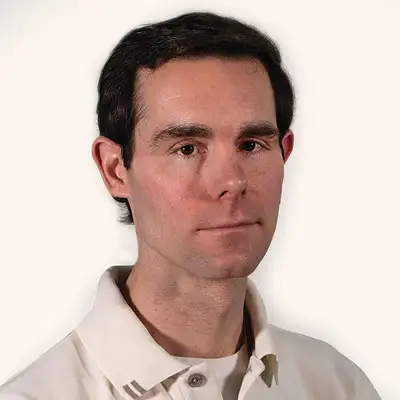
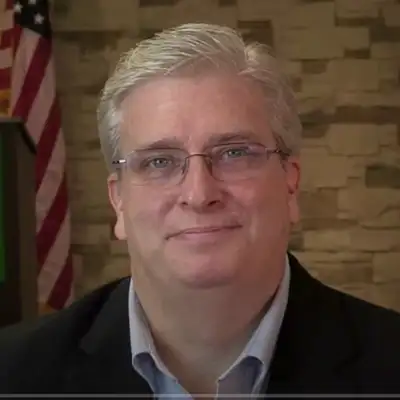
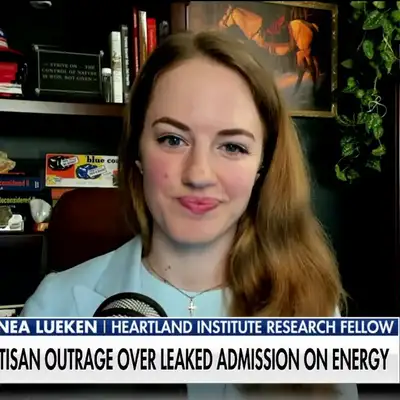
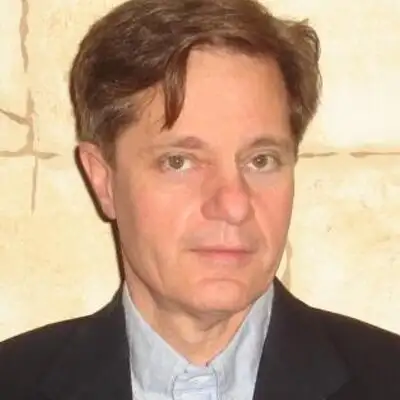
The weekly flagship podcast from The Heartland Institute features in-depth policy discussions connected to current news. Host Donald Kendal leads the discussion with the usual crew of Heartland Institute Vice President Jim Lakely, Socialism Research Center “Commissar” Justin Haskins, Editorial Director Chris Talgo, and others at this national free-market think tank. The entertaining and informative discussions often hit topics such as the environment, energy policy, Big Tech censorship, the troubling rise of socialism, globalism, health care, education, that state of freedom in America and around the world, and much more.
This podcast is also available as part of the Heartland Daily Podcast, the “firehose” of all the organization’s podcasts that take deep and entertaining dives into public policy.
We are now live. Welcome to the show, everyone. A California farmer weatherization program has been giving illegal aliens free appliances and solar panels, and unsurprisingly, lot of the money moved between the various NGOs involved has some dubious accounting. Corruption abounds, and that is just one story popping up as the justice department continues its war on fraud. And in New York City, mayor man Mamdani is looking to confiscate apartment buildings from landlords to give them to responsible stewards.
Linnea Lueken:I know we're all getting sick of news about mayor Mamdani, but it's important that we talk about why socialists like to take your property and why they're gaining popularity, unfortunately, across the country. And for Unhinged, a podcaster imagines a post Trump world and asks if Trump supporters should be basically punished for their vote. All of this on episode 538 of the In The Tank podcast. Welcome to the In The Tank podcast. I am Linnea Lueken, your host.
Linnea Lueken:And as always, we also have Jim Lakely, vice president and director of communications at the Heartland Institute, Sam Karnick, senior fellow at the Heartland Institute, and Chris Talgo, editorial director and socialism research fellow, also, as you can see by his cool hat, of the Heartland Institute. And as always, we also have producer Andy Singer in the background keeping us moving along. Really quick here, guys. Before we get started, if you want to support the show, you can go to heartland dot org slash in the tank and donate there. Please also click the thumbs up to like this video.
Linnea Lueken:I see you guys are watching live right now. You can do it right now. And remember that sharing it also helps to break through some of that suppression that YouTube has on our channel. Even just leaving a comment helps us with the algorithm as well. If you're an audio listener, you can help us out by leaving a nice review.
Linnea Lueken:Okay, guys. How's everybody doing? I hear, you know, that the Midwest is having some good weather. I am having bad weather. I or at least I think so.
Linnea Lueken:It's like 90 degrees and humid and raining.
Jim Lakely:It is perfect weather up here in Northern Illinois. I mean, it's going to be no hotter than maybe 80 or 81 degrees. It'll be in the seventies for the next, like, five days with no rain and all sunshine. I feel like I've just gonna experience San Diego for about a week, so it's fun.
S.T. Karnick:Same is true here.
Linnea Lueken:Awesome. Well, I'm looking forward to it. I'll be I'll be up there. Alrighty. Well, I'll move us into our unhinged segment here.
Linnea Lueken:I I've titled That white dress for Harris thing just cracks me up every time. It's Yeah. It was cringey. Anyway, so this video that we are going to show you guys is of a progressive podcast host named David Pakman. Relatively popular, I think.
Linnea Lueken:I've never heard of him before this, but it seems like he has a large following. And he is looking forward to a post Trump world. He's very hopeful of that. He offers us a very good reason for why progressives cannot ever be allowed to be in control of the country again. Let's see why.
Linnea Lueken:Oh, nope. That that was my funny
Speaker 4:do we do with the Trump supporters once Donald Trump is gone. We have to figure it out. Now at some point, whether it's sooner or later or kinda sooner, you know, whenever, the Trump era is going to end. Trumpism may continue. We don't know yet.
Speaker 4:The damage from Trump will last last beyond Donald Trump's presidency. But at some point, Trump will be gone. And when that happens, there is a question that it doesn't seem a lot of people are thrilled to be dealing with, but we're gonna have to deal with Which is what do we do with the tens of millions of people who voted for Donald Trump, sometimes not once, not twice, but three times? Now I am not talking about the elected officials. I'm talking about regular voters.
Speaker 4:Your neighbor, your cousin, the guy at the gym, the parent at your kid's school. Do we treat them like they simply made a political mistake? Or do we treat them like they participated in something so corrosive to democracy that we can no longer see them in a normal way anymore? I think
Jim Lakely:Yeah. That's it. You are made of stupid.
Linnea Lueken:Yeah. So, boy, that's nice. What a lovely thought. What are we what are we gonna do with Trump supporters? Jim, what are we gonna do with Trump supporters?
Jim Lakely:What we're probably gonna do is they're going to pick the president after this one, and he will be pretty angry about that selection as well. Let's remember, Donald Trump didn't only win a electoral college landslide. He didn't only pick up every single swing state, all seven of them. He also won the popular vote. The majority of this country supports Donald Trump and his agenda.
Jim Lakely:And he is sitting there saying, what are we gonna do with all of these people? It's just it's it's it's actually it sounds kinda Nazi to me, to be honest, because they really really were curious. What are we going to do with these people, these undesirables? You know what's corrosive to democracy? Treating people who disagree with your politics as subhuman enemies that need to be, quote, unquote, dealt with.
Jim Lakely:This it is isn't even any debate about this, although there kinda used to be, about where did the where did our divisive politics of today originate. And the left and the media likes to blame Donald Trump, and surely, he has some blame. But the the problem is that the left, that progressives have just they cannot take the l ever. You lost the majority of the American people do not agree with your corrosive, to use the term he used, agenda, and they reject it and reject it and reject it. It is not a nationally it's not a national election winning set of policy.
Jim Lakely:The people don't want it. We may have socialism. We may have commies elected in New York City, which is what we do, but that agenda is not for the rest of the country, for the most of the country. And the farther they go down this road, the worse it's going to be. It is not conservatives or Trump supporters or MAGA hat wearing people that disinvite family members from Thanksgiving who say, I'm not gonna speak to my father ever again because he voted for Trump.
Jim Lakely:The the absolute this segment is called unhinged for a reason. It is unhinged. The absolute lack of self awareness or self reflection, and this is a would gather to say that this is a majority opinion of many democrats, longtime democrat voters, and certainly almost all progressives, is that there is something mentally wrong and probably dangerous about people who disagree with their politics. There is no self reflection ever that maybe they're the ones who are out of touch. If if we're in the majority, the people who voted for Donald Trump are in the majority, and you don't hear anybody on the right saying, what are we gonna do with all of these wacky progressives who believe and wanna push an agenda that the American people have rejected over and over, there's never talk about what are we going to do with these people.
Jim Lakely:It's infuriating, and I think it's also a little bit chilling. Because in the history of the the rise of left and communism, The Bolsheviks, for instance, in Russia were not a majority, not even close. Yet they were able to seize power and then do what this guy is implying, punish their political enemies. So it's something to take seriously and keep an eye on, but my god, our divisive politics is not because your your uncle Jim or your or your aunt Jane has a Trump flag in front of their house. That's not where our divisive politics is from because most people on the right just wanna be left alone.
Jim Lakely:They wanna live and let live. Progressives will never get out of your face, and they think they have to deal with people in a societal way with people who just don't agree with their politics.
S.T. Karnick:So you're telling me there's a chance.
Linnea Lueken:Yeah. Chris Nizbet from our audience here made a point. He goes, hey. I thought Trump was some kind of dictator king who was never gonna stand down. What's going on with
S.T. Karnick:Oh, that's right.
Linnea Lueken:Them talking about elections in the future. Yeah. I thought elections were over. I thought Trump was the dictator king too. Oh, well.
Linnea Lueken:I guess we're we're gonna play both sides of it at all times.
S.T. Karnick:When when I saw it and heard this character speaking, I immediately thought, are you joking?
Speaker 5:I mean,
S.T. Karnick:come on. Bring it on. Are you kidding? I mean, there's a big difference between 2019 and today. We've been through a lot in this time, and we know that there is no compromise coming from the other side.
S.T. Karnick:There is no acceptance of reality. So if you're and and and they it's because they've been able to get away with it throughout their childhood, throughout their adulthood, such as it is. Nobody's ever held them accountable. Well, if you try something this is not a tough guy as far as I could tell. I mean, okay.
S.T. Karnick:Bring it on. Don't don't start something that you are not ready to finish and that you don't have a plan to finish. You're not going to intimidate us anymore.
Speaker 5:But I paid the fool.
S.T. Karnick:Exactly. I do too. You're not going to intimidate people anymore. That's over. I mean, we saw what your best are.
S.T. Karnick:Joe Biden, Kamala Harris, that's what you have to throw at us? Zoran Mamdani, who smirks while he talks about confiscating people's property? It's not gonna work, folks. This is, this is serious. When you're talking about what do we do about people, you're asking for it, and you're gonna get it.
S.T. Karnick:I'm I find it very interesting and, somewhat amusing.
Chris Talgo:So, frankly, I don't think this, moron had the, brainpower to come up with this idea on his own. So I think he stole this straight from Katie Couric because she said basically the exact same thing a few years ago. So, I mean, I could could not care less about this, you know, imbecile. But when people like Katie Couric who do have an actual following are saying stuff like that, I do think it trickles down, and that's probably what happened here.
Jim Lakely:Well, she was the one who said, after Trump's first election, that we basically have to reeducate all of his voters. Right? You know, round them out women camps, keep their eyes open like clockwork orange, and make them worship the state and the Democratic party. I mean, the the ins the thing that just bothers me about I know you guys are kinda blowing it off, but it's just the it's just the instinctual speech from progressives is that it's not it's immoral to disagree with my politics. That's their attitude.
Jim Lakely:And so there's something morally wrong with you, and we have to you know, they're they're okay with letting violent criminals wander the streets, but we're gonna have to do something about these peaceful MAGA aunts and uncles out there in the Midwest. And, you know, they have to be dealt with, but not the not the criminals on the street.
Chris Talgo:Yeah. But why why why do you think he thinks this way? Because I think he's a young guy who probably went to all public schools all his life, probably, you know, sits on social media, probably, you know, has been totally, you know, brainwashed by mainstream media and, you know, public schools. So I don't really think he is necessarily the problem. I think he's more the the messenger.
Chris Talgo:But I do take umbrage with someone like Katie Karnick who totally knows better, and she resorted to that years ago setting the stage for, you know, an insignificant, you know, idiot like this.
Linnea Lueken:Yeah. I think it is. I don't think it's unprecedented in American politics for people to be talking so, especially people in power to be talking so brutally about the voters. Usually, they save their ire for the candidates. Mhmm.
Linnea Lueken:But with Trump, it's a whole other thing. I mean, they and and it does we probably, you know, slightly I I don't wanna use the word unprecedented because I don't know. But I'm gonna guess that there weren't, like, thousands and thousands of boat parades and stuff for other for, like, any other president. I think Trump probably, for whatever reason, you want to go with, inspires a lot of very kinda, like, public displays of
Chris Talgo:Did you notice how how shallow his, quote, unquote, argument was? He didn't name one policy or one program to, you know, support his his, you know, argument because he has no evidence. Because all he can do is spew talking points with no evidence, no data to back it up. And when, you know, when you get into a, deep conversation with someone like that, they're pretty much instantly, exposed as nothing more than, you know, capable of, just preaching talking points. Can't they they can't they can't think deep.
Chris Talgo:They can't think for themselves. He cannot think for himself. All he can do is say things that he's been basically, you know, heard 5,000 times, you know, for the last five years. That's what he does.
Linnea Lueken:Yeah. I think the point I'm trying to make kinda clumsily here is that maybe the reason why they're so utterly especially ticked off at the voters for Trump is, one, because they hate Trump more than they've probably hated any other oppositional candidate ever. And two, the the support of Trump is a lot more overt from his voters, from a large portion of his voter base than previous administrations. Like, after Bush was elected, you didn't have people, like, driving with big you know, maybe you'd have a Bush Cheney sticker on your car or a Reagan Bush sticker on your car or something in the eighties. But, like, they didn't have cardboard cutouts of George Bush in the window of their house looking out on the street.
Linnea Lueken:They didn't have a flag with Bush's name on it. The way that people put, like, Trump flags in their,
Chris Talgo:you know, cardboard. Didn't also exist back then. So people didn't have this sort of echo chamber and this sick, poisonous platform that people just go to and doom scroll on. So guess what? I mean, I I was alive during those days, and people, you know, thought about it, but they had a lot other more important things on their plate.
Chris Talgo:And social media has definitely changed that, in my, opinion, for the far worse.
S.T. Karnick:This is an indicator of this in California recently where a man whose house was festooned with Trump paraphernalia was killed. Yeah. He was killed. He was just an old old old guy who was not harming anyone except the the fragile egos of people who didn't like the idea that there was somebody who thinks differently from them within visual within their visual field at times and as they were driving through their neighborhood. That's okay.
S.T. Karnick:You got one. You got one. You got an old guy who couldn't defend himself. You got Rand Paul punching him in the back with the back of the head with a sucker punch. We're not gonna be sucker punched, not not the rest of us dudes.
S.T. Karnick:I and I'm only saying this because it's true. I'm saying this because you we we need to know exactly what's at stake. We need to know exactly what's likely to happen. And what's likely to happen is the reaction from the people that support have supported president Trump and who are so hated. The reaction is going to be very simple.
S.T. Karnick:Go ahead. Make my day. It's that simple. And, boy, I don't wanna see it, but I think there's a good chance we will.
Jim Lakely:Well, the I mean, here here in Chicago, they they fly the w flag, but that's for when the Cubs win. But you're right, Linnea. Nobody was flying w flags for George w Bush the way people fly Trump flags for Donald Trump. And there's actually a couple of very logical reasons for this. It's because the media and the left and the Democratic party have done nothing but lie about Donald Trump and attack him in the most vicious ways.
Jim Lakely:Oh, also including trying to assassinate him three times. So it is an instinct. It's a human instinct to stick up for your guy. And so you wanna defend you you know, you wanna show that support because he is under constant attack. He's not a racist.
Jim Lakely:He's not a Nazi. He's not a tyrant. Democracy isn't over. All he didn't cheat. All of this stuff are lies.
Jim Lakely:Lies that are that are perpetuated by our legacy media that not quite half of this country believes as absolute gospel. So the reaction to that is to defend him against these unfair attacks. You know, that's where that's where a lot of this comes from.
Linnea Lueken:So in the in the progressive future, it will be the gulag for us and it will be free solar panels for illegal aliens, which brings us to our next topic, which is about free solar panels for illegal aliens and the extent of fraud in The US in general. So this story that I'm gonna move us along here to comes from Chris Rufo and Austin Hufford in a story that I think was broken in the city journal. So I'm gonna read from there. California is giving free solar panels to illegal aliens. The initiative called the farm worker housing components of the low income weatherization program, wow, is part of California's sprawling multibillion dollar cap and trade system, which taxes carbon producers and redistributes approximately $3,000,000,000 a year to energy programs and left wing social causes all under the banner of fighting climate change, of course.
Linnea Lueken:Since 2019, California's government has earmarked $49,000,000 for the farm worker program, which operates through an opaque web that includes government agencies, nonprofit providers, and private contractors. California's Department of Community Services and Development selected a la Cooperativa oh, please do not make me say Spanish. Oh, no. Campasina de California. Sorry.
Linnea Lueken:I apologize greatly to our native Spanish speakers for that terrible butchering. A nonprofit that serves farm workers to administer the program. The cooperative in turn has partnered with a for profit minority owned company, Maroma Energy Services, to help run the program, and contractors do the work of installing the solar panels and other appliances. So these organizations have heavily advertised the program to California's 900,000 agricultural workers, half of which to three quarters of whom are illegal immigrants. In the official documentation, California's Department of Community Services and Development acknowledges that noncitizens are eligible for the program and that they even accept identification from foreign governments.
Linnea Lueken:So just to pause here for a second, California will not let you require ID to vote, an American driver's license to vote, but they will take non USA identification to let you get free stuff from the government. Alright. Despite a $49,000,000 budget and nearly seven years of operation, the farm worker weatherization program has only provided services to about 2,000 families. That means that the state of California has allocated roughly $23 per household for its program to provide free solar panels, refrigerators, and other services. There's one problem.
Linnea Lueken:The same guy, Mauricio Blanco, seems to be connected to entities at multiple stages in the flow of funds. Blanco worked as a project manage manager for the cooperative, which has been awarded 10,700,000 by the state. He's listed as an executive of Marona Energy Services, which was granted 34,000,000 from the cooperative for weatherization services since 2017 and is also CEO of the John Harrison contracting firm that appears to have done the installation work. So this is another one of these schemes where it's just a government program that is I mean, the purpose of it clearly is to just, like, enrich these particular friends of the regime. And this is just one story of what seems to be, you know, real fraud and corruption here.
Linnea Lueken:On its own, probably wouldn't make for an entire segment. But this breaking at the same time that the Department of Justice is spearheading that massive task force on fraud, You know, that includes benefits programs, which the farmer weatherization program doesn't perfectly map onto, Sam, but it's part of this web of corruption that our bloated bureaucracy, you know, cultivates and I think maintains on purpose.
S.T. Karnick:Yes. The what's interesting to me is that there's always been corruption in all these programs. I mean, because the government spending is almost invariably about buying votes. There's very little that the government does that is legitimate. You have police on on the state level.
S.T. Karnick:You have roads. Used to have post offices. We don't need them anymore. That's very nice that we don't. But there's very you have to enforce contracts, valid ones and so forth, and stop people from shooting one another and having duels over disagreements on contracts.
S.T. Karnick:That's it. There isn't much that the government really has a legitimate reason to do. And so when it does all these things, as it expands, it's all corruption. It's, you know, it's corruption all the way down as the old English woman said about turtles. And and it is.
S.T. Karnick:It it truly is. The only way to get on top of this stuff is stop spending all this money at all. Don't spend it at all. Let people help one another if that's what they wanna do, and let them be immoral, whatever you would call it, as a socialist, if that's what they wanna do. If you wanna take people's resources and time and and money away from them, you're a thief.
S.T. Karnick:That's all there is to it. And so these are thieves giving money to other thieves, and we're supposed to be shocked by this. The whole point of it is to empower and aggrandize themselves and one another and to stay in power and get more power and get more grandeur. So that's how the government works. So we have to stop that.
S.T. Karnick:Well, how do you stop that? The only way is to take away the money. Don't give them the money. Don't let them put these taxes on your neighbors because those taxes are ultimately falling on you. How are they falling on you?
S.T. Karnick:Because as you take away money from your neighbors and give it to thieves and grifters, you take it away from people who would profit from doing good in the world. For example, if you were to build if you were to make farming more efficient and make food more abundant, you will be helping the world. People will give you money for that. But if you give it that money to the government, you see exactly what happens in this instance and all over the country. So the the fundamental problem is that we do good through government.
S.T. Karnick:We do not do good through government. What we do is mostly take away resources from people who intend to use them for good, and they want to use them for good so that it will benefit themselves. Go ahead. Read Adam Smith. It won't hurt you.
S.T. Karnick:And the whereas the government can only can only benefit themselves and their cronies. We don't have a free market. We don't have free enterprise. We have crony capitalism. We have cronyism.
S.T. Karnick:And we have got to tear this out, root and branch, and stop giving all this money to the government. That's the only way you're ever, ever going to stop corruption.
Chris Talgo:I've got two two thoughts on this, and I'll make it very brief. Number one, I think all that money should go to a fund to pay the victims of Cesar Chavez because it has now come out that he was a prolific, sexual assaulter. So that's one thing, and I'm serious about that because that that's a historical injustice that needs to be, righted. And then the second thing I wanted to say is that the reason why this is happening is simple. California wants more legals.
Chris Talgo:Why does California want more legals? They want more people. Why do they want more people? So they get more votes in congress. That's what this is about.
Chris Talgo:That is all this is about. Because people, citizens, are fleeing California for Idaho, Montana, Texas, Florida. And California needs more people because they want more, congressional seats. That's what this is about, and it's working for them, sadly. But at the same time, I do think that we could see a turning point in California soon.
Chris Talgo:I do think that Spencer Pratt has a legitimate chance at least of winning the LA, Merrill race. And, also, Steve Hilton, I think, has a very legitimate shot at becoming the next governor of California. So this could actually have a big turnaround here sooner rather than later.
Linnea Lueken:Yeah. Part of the reason why, you know, this story came across my feet, and I just thought it was kind of funny. But I normally, because it is, you know, kind of just one specific example of the corruption or fraud that's been going on. But I think it's telling for the bigger picture about what's happening in California. And that was kind of the theme for this episode today is from one coast to the other, we have this idea that we need to be giving people free stuff, seizing property, which is what happened to a lot of the people who lost their homes in the Palisades fire and which is why Spencer Pratt is is doing well.
Linnea Lueken:The reason and our our wonderful audience is joking about illegally voting for Pratt because it's not like California is gonna check your license or anything. Right? But, yeah, it's it's a bigger kind of vision of all this fraud that's going on, though. And the idea of just paying off your voters or courting people to move to your state with, you know, gimmies, basically. This is even
Chris Talgo:worse because it's going to illegals. That has to
Speaker 5:be Exactly.
Chris Talgo:That that has to be emphasized here.
Linnea Lueken:Yes. And I think that, you know, everybody when right now, Chris is covered over with Kamala Harris. It's kinda funny. Right now
Speaker 5:Being Kamala like that. Yeah.
Linnea Lueken:The Minnesota fraud stuff really kind of exploded in Minneapolis because of Nick Shirley's or not Nick Shirley. Who is it that Nick Schieber. Is that the
Jim Lakely:right person? Yep.
Linnea Lueken:Yeah. Nick Schieber's on the ground investigation of those day care centers. And so that's really expanded into a whole lot of other areas. That's real journalism. Right?
Linnea Lueken:But I think as soon as everybody heard about what was going on in Minnesota with their, you know, like, Somalian population, everybody kinda just, like, turned and looked at California because a guarantee as bad as it is in Minnesota with stuff, you know, with people taking advantage and cheating their social programs and all the fraud and everything, it is a 100 times worse in California. And that's actually already begun to be investigated. And right now, California government is pretending like they were on top of this all along. But, basically, once again, Shirley and also some other journalists were uncovering that there are a lot of fake hospice companies in California, especially Los Angeles County. And so CBS News has this article talking about the DOJ's new fraud and, you know, fast track fraud enforcement policy.
Linnea Lueken:And I wanna read to you guys a little bit from this article because it is kind of funny here. So CBS reports, the federal government plans to speed up the review of certain whistleblower complaints related to fraud against benefit programs like Medicare, federal officials told CBS News Wednesday. The officials said the move will help to fast track fraud enforcement. The US Department of Justice reviews whistleblower complaints made under the False Claims Act, which is the main federal stat ute used to fight cases of alleged fraud against government programs, including Medicare and grants. These programs are federally funded and administered by states.
Linnea Lueken:Now the DOJ civil division says it will prioritize those complaints to decide if it will continue with litigation, investigate further, or dismiss within a sixty to a hundred and twenty day window. The state of California has also established a fraud task force where multiple agencies focus specifically on hospice fraud schemes. CBS News has been investigating hospice fraud for months. I I highly doubt that they were investigating this before some of the right wing journalists got in there. But, anyway, one investigation examined the business and financial records of every hospice currently operating in Los Angeles County, applying the same indicators identified by state auditors as potential red flags for fraud.
Linnea Lueken:The analysis revealed that over 700 of the roughly 1,800 hospices in LA trigger multiple red flags for fraud as defined by the state. California attorney general Rob Bonta says his office has brought criminal fraud cases against more than a 100 defendants in the hospice industry and about two dozen civil cases. That's just Los Angeles County. And that's just hospice fraud.
S.T. Karnick:The Department of Justice, it's important to know, only instituted this civil fraud section in April. That's of just a couple of weeks ago. Listen. It's a month ago. And and and this has been going on for decades, this kind of fraud.
S.T. Karnick:And we've known it, and everyone has just felt like apparently felt like, well, since it's all borrowed money anyway, we don't care. It's this is this is absolutely obscene that no president up until a month ago put together a sub fraud a civil fraud division in the Department of Justice to stop the waste of billions and billions, surely trillions of dollars of taxpayer money that have been stolen by grifters who have been helped, assisted by lawmakers, presidents, presidential administrations, and and the courts. This is a conspiracy of absolutely monumental levels. It's hard to get your mind around how horrible and how awful this is. And the fact that there no one until this, just a month ago, did anything about it is really it tells you everything you need to know about how government works and what government is really for.
S.T. Karnick:Government is for the confiscation of wealth and goodies from people who have them to give to other people who will give you power and more and more power. And it just continues to grow and grow and grow because it can't do otherwise. That's the interesting thing. The only alternative is to blow it up. Stop allowing the government to take that money in the first place.
S.T. Karnick:Until you do that, this is just going to continue to grow.
Chris Talgo:I disagree. I think that we we got this really under control in the late nineteen nineties when, the Republicans under Newt Gingrich actually passed a balanced budget, Bill Clinton agreed that we need to get rid of fraud and welfare. We need work requirements. I think that was short lived, unfortunately, but it just does go to show that I think within the American people, there's a appetite for the government not to waste their money, and it's gonna take someone with a lot of, you know, backbone to go in there and do this because I think a lot of the states you know, a lot of the presidents in the past have allowed the states to get away with this because it's an it's it's an incestuous relationship because the states get money from the federal government that gives the federal government some some, power over them and, you know, some ability to kinda, you know, make them do things the way they they want them to do them, you know, because the money has strings attached, obviously. So I I I I I just think we are at a point where it's it's so unaffordable because we're now, running $2,000,000,000,000 deficits for the next, you know, ten years to come.
Chris Talgo:We can't keep doing this. The American people know that. I think Doge was a huge eye opener to people, how much fraud and corruption and waste and abuse there is. And I think that the time has come where the American people really wanna try to, you know, get this in check. And, we are at the beginning of that.
S.T. Karnick:The one thing you could do the one thing you could do that would at least slow things down and perhaps give you a little backward movement on it would be to block grant everything. Block grant everything. Just say, state, here's your money. Spend it as you will. Waste it as you will.
S.T. Karnick:Fine. We don't we we don't worry about it. That's your worry. But but giving them money that is contingent on having more people in the program gets you what? More people in the program.
Chris Talgo:We could also have article five. The states the states
S.T. Karnick:have everything.
Chris Talgo:Yeah. And the states do have levers at their control that they can pull. Article five's never been done. I would love to see an article five convention states say, you know what? We're gonna actually, reset the relationship between us and the federal government because, gee, last time I checked, it was the it was the 13 states that formed the federal government, not the other way around.
Chris Talgo:So the states form the federal government. The federal government does not control the states.
S.T. Karnick:I do agree with you, Chris, but I'm thinking that we'll get, the aliens coming down to give us Utopia before we get article five.
Chris Talgo:Oh, the aliens are already here. What are you talking about?
Linnea Lueken:Well, I I did wanna say too that
Chris Talgo:Oh, watch disclosure.
Linnea Lueken:Yeah. Right. I've you know what, Chris? You've done it again. You've you've brought up aliens, and it completely made me forget what I was going to say.
Linnea Lueken:I think what I was going to say oh, right. Okay. Steven Miller the other day on during a panel on this fraud stuff. Sam, I'm pitching this question at you because I really have no idea. I think he was exaggerating a bit, but Steven Miller seemed to indicate that or he outright said that if we were to get rid of all the fraud that's leaching off of our expenditure expenditures from the government that we'd be able to balance the budget.
Linnea Lueken:I think that that's a pretty intense exaggeration because I think that the fraud that they're estimating is on the count of, you know, probably tens or maybe even hundreds of billions of dollars in our debt or our off balance by is off balance by, like, a trillion dollars.
Speaker 5:J E.
Chris Talgo:Bates just come out saying it's at least a trillion. Yeah. Per year.
Linnea Lueken:Oh, for the fraud? Yeah.
Chris Talgo:Oh, yeah. Yeah.
Linnea Lueken:They're tossing a lot a lot of numbers around. What what's your take on that, Sam?
S.T. Karnick:I think just a quick sort of back of envelope calculation or, you know, working it out in your head. I think he's probably right. It is on that level or more. Here's something you have to remember. Everything's illegal.
S.T. Karnick:Right, Linnea? Isn't everything illegal in this country? So everything pretty much everything that anybody does is fraud of some sort as far as the government's concerned. So you you could have people who that the congress intended to get the money, but they're actually getting it illegally or getting these benefits illegally. But I think the key thing is that just the few places they've looked at with any care, Minnesota and now looking at California a little bit, the moment you pick up the rock, incredible amounts of squirmy things come dashing out.
S.T. Karnick:And that says something. It says that, no, there is a lot more under that rock than anyone ever imagined. And you remember that I wrote a an article in a Life, Liberty, Property piece that said that the the corruption is greater than you ever imagined, and it is. I think that it probably is that at least, I don't know, half of what is spent on these entitlement programs is corrupt and and shouldn't is not even legally going to where it's supposed to go. Even so even with all the bad decisions congresses and presidents have made, we should still be, doing fine if there weren't all the cheating.
S.T. Karnick:So I I suspect that it's true.
Chris Talgo:It's not just the cheating. It's the, the programs that have been in place, the subsidies for Big Sugar that have been in place for more than a century. I mean, I can go through this, it's just laughable. If you were just to take a chainsaw like, Elon wanted to and just cut through the budget like that Mhmm. You you could you could get away with probably 3 to $4,000,000,000,000 of spending cuts.
Chris Talgo:And I bet you I bet you most Americans wouldn't even feel a difference.
Jim Lakely:No. I remember it was, he's the president or was the president of Purdue University now. He was governor of Mitch Daniels.
S.T. Karnick:Mitch Daniels.
Jim Lakely:Yep. I remember seeing him at a CPAC, I don't know, a decade or so ago, and he was cutting the budget of Indiana quite a lot. And he wanted, you know and and he said, yeah. It it would people were crying and and the media was really mad. But after about six months, the people of Indiana realized that they didn't miss any of it.
Jim Lakely:And that's generally the way it goes. I mean, it would be great, and I was really hoping this would happen with Doge, that The United States would do to its federal budget what Javier Mele did to Argentina's budget. And, again, he came up against a lot of resistance to that from around the world predictions that he was going to throw Argentina's economy into a a unpulluppable's tailspin. The and, of course, the exact opposite has happened in in Argentina. He can he'll probably be reelected with even a a larger mandate than before, but I just had my mind went to that thing where he was, like, this program.
Jim Lakely:Apologies. Nobody noticed, I guess. That's fine. That's just fine. But it it makes me think, is there a single green program that is not a complete scam?
Jim Lakely:And the answer is no. They're they're all scams. There is actually no justification whatsoever for the federal government or any state governments or any government whatsoever to be involving itself in the market for so called green energy technologies, be it solar solar panels in this case, and there's certainly no justification for having taxpayers pay to give solar panels to illegal immigrants who have no right to be in this country, let alone a right to our tax dollars. That's absolutely outrageous. I don't know.
Jim Lakely:Thirty years ago, not even Democrats would have would have done this so brazenly, but now it's just part and parcel of what it means to be a Democrat today. But this whole scam as as, Linnea, you described it while reading the story, reminded me of the same it's the same, actually, same scam that Stacey Abrams, the twice not governor of Georgia Yep. Had going.
Linnea Lueken:Same thing.
Jim Lakely:Yeah. You know, EPA I saw just a tweet the other day, I think, yesterday or two days ago where because I was wondering about this. EPA administrator Lueken specifically said about that program that Stacey Abrams was scamming from that he claimed to have clawed back all $2,000,000,000 of the grant that Joe Biden's EPA gave her organization that just the previous year had only a $100 in the bank. They go from a $100 to $2,000,000,000, and the I remember visiting the website. The purpose of this nonprofit that gets our tax money, $2,000,000,000 of it, is to purchase and distribute energy efficient appliances to poor people, especially in the South.
Jim Lakely:You may think that's a good idea, but my tax dollars should not be paying for it. And it's it's actually none of those appliances very few of those appliances just like this right here as you described it while reading the story, Linnea. Very few of the poor that are supposed to benefit from these enormously expensive programs actually benefit benefited from it at all. It's all about paying the middlemen, a huge parade of middlemen that then kick money back to the Democrats who gave them that grant in the first place. So they fill their own pockets, they throw a couple cents over to the poor, and then they kick the rest of the money back to political action committees that support Democrats in the next election.
Jim Lakely:It reminds me of I don't know if we covered it on this podcast or not. Governor Gavin Newsom announced a $20,000,000 program to give free diapers to newborns. Every newborn is gonna get 400 free diapers to help get a good start fresh start in this world. The cost of that program was 50¢ per diaper. The cost of a diaper, when you buy them in bulk at Costco, is at most 15¢.
Jim Lakely:So where do you think the rest of that money goes if it's five times the cost? It goes in the pockets of all these NGOs, which we're gonna talk about. It's a very big part of the commie confiscation and seizing of property, are these NGOs, these lefty NGOs that are just swimming in billions and untold billions of dollars of our tax money to supposedly help marginalized communities or poor people when it's all a payola scam. It's all to funnel money politically to Democratic candidates and to enrich themselves and their friends when they retire from politics. It's all a scam and a setup.
Jim Lakely:All of these programs need to be they they wouldn't survive an audit from a recently graduated associate degree accountant, if if if we're being honest. It's all scams all the way down, and the worst scams, really, are all these green programs that that you see that we highlight on here and on the Climate Realism Show.
Linnea Lueken:Yep. Absolutely. Yeah. The again, to the audience, the, $49,000,000 budget and seven years of operation, they provided some kind of appliances. They don't go into details to, you know, who got what or whatever.
Linnea Lueken:Some kind of appliances including free solar panels to only 2,000 families, which is which ends up working out to $23 per household. Those are some pretty nice I hope they're at least getting those, like, Samsung smart refrigerators that you, like, knock on it and it turns the light on inside or whatever. I hope they're getting something cool for that. I hope they're getting the good Tesla wall batteries. I guarantee they're not.
Linnea Lueken:I I guarantee they're getting bottom shelf appliances, cheap as possible, and they're also just somehow managing to disappear all of that funding.
S.T. Karnick:Now, Linnea, giving giving people those very new refrigerators is actually a good scam because they're going to need a new one in two or three years. Unlike a old real refrigerator that lasts literally forever.
Linnea Lueken:Yep. All those people with their garage refrigerators that they've had since, like, '97 or something, and they're still going strong.
S.T. Karnick:I do have a garage refrigerator that has been here forever.
Linnea Lueken:Alright. So we are going to take a ride to the other coast now and talk about commie confiscation of apartment buildings going on over there in New York or that will soon start to go on. You know, rent control sounds like a good idea to the renter, But when those costs to operate a building and maintain it get higher and landlords can't afford to pay for them because they can't raise rent so that they can, accommodate those higher costs, the government then wants to come in and confiscate the property. So the government causes the problem with rent control, and now they get to take the property away. New York City mayor, Mamdani, is basically announcing this as a major part of his housing crisis plan.
Linnea Lueken:So in places without rent control, owning and managing real property like rentals and apartment buildings is a fairly good thing to invest in. But there's a lot of risk there too, which is why it's always a good idea to diversify. And one way to do that is by investing in physical precious metals. Right? A lot of people in the conservative libertarian and emergency prep spaces will hit you with ads for buying precious metals.
Linnea Lueken:They're not wrong, but they're a good investment, And it'll be hard for mom Donnie to come steal it from you unless he pulls something like what the federal government did back in, what was it, the nineteen twenties or thirties when they were confiscating people's gold. Anyway, if you want to be careful about who you buy, but you want to be careful about who you buy your metals from. At In The Tank, we trust advisor metals over all of those other guys. And that's because we know that the person running the place is the best of the best. A great friend of Liberty, Ira Burchette, he owns and is the managing member of advisor metals.
Linnea Lueken:He has decades of experience in precious metals and is the only person in the physical precious metals industry who has the Commodities Futures Trading Commission federal registration. What does all that mean for you? Well, it means everything that IRA or a member of his team says to you has to be factual. So there is no sketchy sales pitch or bait and switch. He is held to the highest ethical standards, and there's full transparency.
Linnea Lueken:If you want to diversify your investment portfolio and your savings, if you are planning for retirement and are concerned about economic uncertainty or mayor Mamdani coming and stealing your apartment building, if you want a tangible asset that is easy to buy and sell, you can secure your assets with a wide range of physical precious metals by getting in touch with our friend Ira at Advisor Metals. He will make it easy for you. Please visit climate realism dot com slash climaterealismshow.com/metals, and you can leave your information for Ira and get started with investing in precious metals and expand your portfolio. So go to climaterealismshow.com/metals. And when you talk to Ira, make sure you let him know that we are the ones who sent you.
Linnea Lueken:That helps us while you're helping your financial future by diversifying with precious metals from Advisor Metals. Boom. I did that. That was pretty good one, I think. That was neat.
Jim Lakely:That's top 10 right there for sure.
Speaker 5:Alright. 22.
Linnea Lueken:But my lead into that advertisement is the topic of this section here, and we actually have a video of Mamdani discussing his ideas as well if we can pull that up.
Jim Lakely:I think Andy might be missing. No.
Speaker 7:Through our new citywide campaign, fix the city, we will focus on the worst landlords in New York City. When necessary, we will take aggressive legal action to remove negligent owners and property managers. Managers. And for buildings that have suffered chronic neglect, we will work to transfer ownership to responsible stewards. Stewards that include community land trusts, nonprofits, nonprofits, or even the tenants themselves.
Chris Talgo:Key phrase in that will work too. He has zero authority to do that. Just wanna make that abundantly clear right off the face.
Linnea Lueken:Yeah. Absolutely. Alright. So I am going to pull this article or Andy is gonna pull this article for me from town hall that goes over a couple of details of this block by block agenda. It's titled Zoran Mamdani Mamdani just announced his plans to begin seizing and redistributing private property.
Linnea Lueken:New York City mayor Zoran Mamdani kicked off his plan to fix the city's affordability crisis with his official housing policy agenda titled block by block, under which one of the first priorities is to allow the government to seize property from owners deemed negligent and redistribute it to so called responsible stewards, a category that includes anyone from land trust, nonprofits, or the tenants themselves. Despite Mamdani's claims that this time his own version of socialism will be different, it appears to be heading down the same familiar path, one that students of history expected upon his victory. Government redistribution of private property, however, is not the only pillar of his block by block agenda. He also vowed to fast track the construction of low income and government subsidized housing while promising to impose price controls on those units that would limit rent to just a quarter of a tenant's income. Okay.
Linnea Lueken:So here we are on the path again with the government creating the conditions necessary to get to seize those properties. Chris, you recently wrote a great op ed about how the Democratic Socialists of America are making some super aggressive electoral pushes across the country. You wrote about Pennsylvania third district congressional candidate Chris Rabb, and I'm gonna quote your words at you here. Rabb's policy pitch is simple, guarantee as much free stuff as possible to some at the expense of others. According to his campaign website, Rab supports universal basic guarantees, Medicare for all, housing, food and water, free transit, high speed Internet, childcare, income, and jobs.
Linnea Lueken:And this would include a universal basic income and a living wage for all. He also wants to revitalize public ownership because he argues government has lifted families out of poverty and provided sustainable and quality jobs during times of desperate need. I imagine that the consequences of, Zoran Mamdani's policies are not going to probably materialize in time to convince people that these, democratic or otherwise socialist candidates are not good candidates. Chris?
Chris Talgo:Yeah. So the the the Chris Rad thing is pretty interesting because, he is gonna be in congress because the Republicans are not gonna run, a candidate in that district for the November, general election. So he is basically has his, you know, green light to congress from right now going forward. And what I wanted to point out in that article was that he wants this all at the national level. So what he's saying is we need to get this all done at the national level, a national UBI, a national Medicare for all, all that kind of stuff at the federal level.
Chris Talgo:The thing about Mandami is I think he's he's he's he's saying things that he knows he cannot do. Just like he said all the peer to peer text that's coming through. No. It's not. Because the New York City Council basically said we're not gonna do that.
Chris Talgo:He has to have approval from New York City Council to do any of these things. And from the looks of it and from what they've been saying, they're not going to approve all this stuff. So I think that Meherr Mandani, he has a tendency to to to say these things as if they've, like, are gonna happen or have already, you know, happened, but they're not going to happen. And that's a great thing. So I hope that people use this as a, learning experience and say, woah.
Chris Talgo:If he actually had the power, he would do all this crazy stuff. We gotta make sure that we never let anyone in office who would even remotely do anything like that. He's he says he couches all this stuff as such, you know, like, delicate, like, you know, KitKlove's words, transfer ownership. No. You're actually gonna take it from someone and give it to somebody else.
Chris Talgo:You're gonna literally take someone's property and give it to somebody else. That is straight up Soviet. So he oh, this is for the renters. Oh, this is for, you know, slumlords. Doesn't matter.
Chris Talgo:He's he's he's, you know, saying something that I think 99% of Americans gee. I actually let me let me let me rephrase that. Maybe 70% of Americans at this point would say, woah. That's pretty crazy. Probably 30% would say, yeah.
Chris Talgo:That sounds about good to me. So that's where we're at, and it's really it's it's really not good because when you look at the, the polling, when you look at young people you know, I'm I'm 43, so I don't count in this group anymore. But people who are basically 40 or under, guess what happens? They want this. Even conservatives who are 40 years and then younger, they want this.
Chris Talgo:They, like we talked about earlier, like I mentioned earlier, have been brainwashed. Public schools, public universities, social media, all the other stuff, Hollywood, to think that, actually, this is totally affordable. This can be done, and we just have to have the, the courage and the ambition to do it. Well, see, you know what? This has happened a 100 times in in history, and it always fails, and it always turns out, you know, it's awful.
Chris Talgo:So this this, lesson, they might have to learn themselves, and it's gonna be a really difficult lesson to learn if they've been gonna learn it that way. Hope this is happening.
Linnea Lueken:Point by viewer Wheelman. If you think your current landlord is unresponsive, wait until the government is your landlord. That's a very, very good point. Mhmm. And I think we talked about this a couple weeks ago.
Linnea Lueken:Do you remember when he was posting that video of going in, like, going to these apparent slum apart slum lord apartments or whatever and, you know, marking them down for all of their, like, hazards or whatever, the code violations and whatnot? And he's marking them down for, like, having flower pots on the fire escape and stuff. That's not the landlord didn't do that. The landlord didn't smoke 10,000 cigarettes a year in the apartment building. These are the tenants that are making also that are making some of their own apartments, you know, broken and dirty and gross.
Linnea Lueken:And so you can't just blame or I guess you can. Apparently, Linnea Linnea Linnea Linnea Linnea Linnea Linnea
Chris Talgo:Linnea Linnea But setting the rent freeze dis disincentivizes Linnea the landlord from modernizing and updating the property. So the genesis of the problem is this stupid rent freeze that's been in
Jim Lakely:place Yeah.
Chris Talgo:In New York City for decades, and it just keeps getting bigger and bigger. All that does is help those who already have, you know, the the the rent frozen, but it it it sucks for outsiders who can't get in on that. And that's the problem in New York City.
Linnea Lueken:Well yeah. And that's that's a major part of this point is that, you know, the government is making the problem, which Sam likes to say all the time. All of our problems are because of the government. And the the housing thing in particular is all government mismanagement. Yeah.
Linnea Lueken:New York City is really expensive to live in. You know why? Because, one, it's a highly desirable place to live even though it's falling to pieces right now. And, also, two, because the government has 10,000 different taxes and fees and levies on absolutely every single thing you do there.
S.T. Karnick:And regulation. Don't forget about that. It it zoning is just the tip of the iceberg. Building codes building codes are not for safety. They're not.
S.T. Karnick:Think about it. You know what's for safety? Courts. Courts are for safety. Somebody harms you, you go to court.
S.T. Karnick:And if you have a noncorrupt justice system, you win. They don't do that anymore because they don't wanna keep paying out for destructive activities that they could easily and much less at much lower cost, solve. So that's what you get. And what happens here is that the the the building codes are for builders and they're for investors. They're not for the the common person.
S.T. Karnick:Those people, you know, that 30% that you talked about, it probably is about right, but it's probably it might be much greater than that in New York City.
Chris Talgo:Oh, for sure.
S.T. Karnick:But you saw those people. They were standing behind Pamdani as he was speaking. And I looked at those people, I thought, did this did any of these people ever build anything? Did any of these people actually get their hands dirty doing things? I mean, you look at them
Linnea Lueken:and They built NGOs, Sam.
S.T. Karnick:Yes. Right. Exactly. And and and who actually built those NGOs were actually regular people who were getting paid to do So this is all the the the corruption is so intense and so vast, but it all it's all based on the premise that we get to decide who gets what. And that is the big difference.
S.T. Karnick:That is the fundamental difference between the left and the right. The left is all about what is the proper distribution of wealth. The right is all about what is the proper way for people to generate wealth. And you know what? If people don't want to generate wealth, that's their own darn business, But then they don't get any wealth that way.
S.T. Karnick:So you I think you have the incentives in a in a much better place when that's your when that's your your thinking. We've see we've seen that in the fall of nation after nation and empire after empire that was all about coercion. And we've seen that in the triumph of, in particular, The United States and, in part, Europe, and the decline of those various places as they became lazy and weak and concerned more about distribution than production. If you leave people alone, they'll figure it out. They'll know they'll they will actually create the best use of resources over time and over space.
S.T. Karnick:That's what they will do because you get more profit by using resources well. With government, you get more profit, more power by wasting resources. That's the big difference. And that is what we're looking at in 2026 in November, and that's what we're looking at in 2028, and that's what we're always looking at. Because those are the those are the only two ways to do government.
Linnea Lueken:Well, we've got we've got two videos here. We've got first, the one from mom Donnie talking about, you know, code violations and stuff, I believe. We can pull that one up or I can put it on the stage, whoever.
Speaker 7:Through our new citywide campaign, fix the city, we will focus on the
Linnea Lueken:This one. The the Instagram one. Right?
Speaker 7:Apartment in New York only defines
Linnea Lueken:Oh, yeah. Here it is.
Speaker 7:Rent, But application fees, amenity fees, credit score checks. In a city filled with old buildings that could use some tender loving care, some landlords are taking advantage of the housing market to gouge tenants with outrageous fees. All while leaving them trying to survive in homes with collapsing ceilings and sinking floors. It's time for that to change. We had a citywide crackdown on rental rip offs.
Speaker 7:We need to take on the indignities from those landlords who demand more than their fair share. That's why our administration is organizing a series of rental rip off hearings in every borough. This is a chance for you and your neighbors to speak directly with us about how you're getting ripped off. For the first time, our city is bringing this discussion directly to you. And it's only just the start.
Speaker 7:We're excited to share more information about these hearings soon. In the meantime, start taking notes so you can share with us how you're getting ripped off.
Chris Talgo:This is so ridiculous. I mean, the market determines prices, not an arbitrary idiot named Zoran Mondami. And last time I checked, no one forced those people to enter into those rental agreements. I personally think my rent is too high, but guess what? I signed the contract, so I am responsible for that.
Chris Talgo:I can't then say, oh, boo hoo. Woe is me. It's all your guys' fault. This is this is also I gotta go a little bit, like, you know, 30,000 foot here. This is about the the grievance culture.
Chris Talgo:This is about, you know, envy. This is about loss of morality. This is about a bunch of people saying, we don't have stuff that we want. They have stuff that we want. Give us our give us their stuff.
Chris Talgo:That's literally what this is about, and it's really war
Jim Lakely:it's class warfare. The kuloks have your are are living too well. We have to go get them. Go get them, guys.
Chris Talgo:You know? It's And it's also and it's also completely wrong because life is not a zero sum game. Life is not a zero sum game. You can you can, you know I mean, Jim, take it away. It's just it's so frustrating.
Linnea Lueken:Well, I we also we have another video here too, I think, before Jim's comments. Because I think some some of the you're the one who really wanted to play this one about Weaver here, Jim. So I wanna make sure that we get to it because it's not it's not just Mamdani by himself. It's not like he has a bunch of, like, rational people working under him and all. And no.
Linnea Lueken:It it gets worse. And there are crazy people in New York. There are crazy people in Seattle. There are crazy people all over the place. Jim, if you wanna introduce this in Chicago, if you wanna introduce this video, Jim.
Speaker 5:Yeah. Doesn't anyone notice this? I feel like I'm taking crazy pills.
Jim Lakely:Yeah. Yeah. We can play that all day. Yeah. This this video is Sia Lueber.
Jim Lakely:She's the I I have it labeled on the video. She's she heads basically the I think it's called the the tenants co op. There it is. New York City office to protect tenants. She has said in the past, we need to elect more communists.
Jim Lakely:This is not a progressive. This is not a social a democratic socialist. This is a communist who is in charge now, and she's gonna be a big part of this new initiative by Zora Mamdani of seizing property. She's actually said we need the government needs to have more of an ability to seize private property. She says homeownership is white supremacy.
Jim Lakely:She said that homeownership is rooted in a racist and classist society. And by the way, her mother lives in a house in Tennessee that's worth more than a million dollars. So if she's gonna start seizing property, maybe they should start there. But even though she has, vocal fry plus uptalk, which I apologize for inflicting this on everyone in our audience, but let's go ahead and play that video.
Speaker 8:I think the reality is is that for centuries, we've really treated, property as an individualized good and not a collective good. And we are gonna and transitioning to treating it as, a collective good and to towards a model of shared equity will require that we think about it differently. And it will mean that, families, especially white families, but some POC families who are homeowners as well, are gonna have a different relationship to property than than than the one that we currently have.
Jim Lakely:You know the only way to get me and Sam and Chris and Linnea and most of the fans of this podcast to think about our private property property differently? If we're looking at the barrel of a gun. That is the only way that I am going to be looking at my property, which I earned and which I enjoy and I have the right to enjoy and which the constitution in this country protects my ability to enjoy. The only way you're getting that property is from the pointy end of a gun. If you look at this whole program that Mamdani is doing, if you if you looked at the the words on the sign on his lectern, block by block, That's what those words were chosen for a reason.
Jim Lakely:That's what the military does to clear out a city of terrorists like in Iraq. That that messaging is not an accident. There's nothing in Zohr Mamdani's rhetoric that is an accident. It's a threat. So step one, as you said earlier, Linnea, impose rent control plus higher property taxes and then lots of regulations, and now the landlords can't afford to fix up their places.
Jim Lakely:Step two, give yourself the power to declare an apartment building not up to code. You're basically weaponizing the city's bill building department, and that way you can justify all the seizures you want on behalf of the people. And by the way, they want it all. Commies want all of it. They don't let some people have it.
Jim Lakely:The people who get to actually have it and enjoy it are the people in power, and that ain't you, and it ain't me. Step three, you give this enormously valuable property to your brown shirts in the NGOs who are now instantly enormously wealthy because they stole property from other people. Billions of dollars potentially here, is at stake of wealth, seized, and handed to party apparatchiks. That, as you said, Chris, is full Soviet. And, of course, the big part of this, and which is why the progressives are getting behind this kind of idea, huge kickbacks for the progressives running for office and also running these programs.
Jim Lakely:How the hell are NGOs qualified to be landlords? That woman, Sia Lueber, who we just talked about, she considers herself an expert on housing policy. She thinks she could be the landlord for every person in New York.
Chris Talgo:We just
Jim Lakely:just look at her. Listen to her. She is a complete moron, and she is an evil moron whose desire, whose envy, who is so wrong headed. She thinks the moral path here is stealing the property of other people who earned it and built it. They're not qualified to be to be landlords.
Jim Lakely:They don't know any they don't know anything about creating capital and wealth. But they're really on brand as commies. They're really very interested in confiscating the wealth of other people and then redistributing it. No communist in the history of the world has ever created a cent of actual wealth. Their entire purpose in life is to steal from others who have made a success of their lives and then redistribute it and then live basically, they do live on that big pile of money.
Jim Lakely:They get to enjoy a good life. The rest of us live in misery.
Linnea Lueken:You know, what I find most ironic about her video in particular is how ironically deeply corporate she sounds when she talks about her, you know, plans. Everything is shrouded in this weird HR speak that you only get at huge corporation HR departments. You you don't you don't have that in the small companies that, you know, communist claim that they are in support of or the mom and pop shops or whatever. You only hear this kind of talk, you know, in, like, Google HR department. You it's it's so funny.
Linnea Lueken:You know, she said she said, we have to what was it like? She used the word equity, which is another one of those, like, little buzzwords that they love. Hang on. I'm a play this for just a sec.
Speaker 8:I think the reality is is that for centuries, we've really treated property as an individualized good and not a collective good. And we are gonna and transitioning to treating it as, a collective good and to towards a model of shared equity will require that we think about it.
Speaker 5:Right.
Linnea Lueken:So we are going to be transitioning it. So we are going to be transitioning your relationship to property to a model of shared equity. What corporate HR nonsense is that? It's it's shrouding everything in this, like, very inoffensive language that if you have a couple of brain cells to rub together, you know, you'll notice right away what they're actually saying. But I find it I just find it really funny and really ironic that that's the way that these people talk now.
Linnea Lueken:And yeah. Chris?
Chris Talgo:Yeah. I just gotta say two things that came to my mind when I watched that video. First, the ownership of property is not fluid. It's more binary. You either own it or you don't.
Chris Talgo:There's no, like, process of it. It's like you know? So so there's there's that aspect. I also thought it was dripping with sar with racism because, basically, she was saying, if you really read between the lines that in New York City, if you are not a white person, you probably don't have, the wherewithal to own a home. Therefore, she's saying that those people are intellectually or, they don't have the same work ethic or they're intellectually inferior.
Chris Talgo:Like, I'm trying to understand where like, to connect those dots, but that's that's basically what she's, you know, save saying there if you wanna try to read between those lines. So it just goes to show how, I mean, I I I hate to bring this up, but the the the low expectations and and all that kind of stuff of these people because you know what? She thinks she's smarter than everybody else, but, obviously, she's not.
Linnea Lueken:Yep. And I wanted to point out another kind of irony, from ma'am Donnie's speech that he gave. We didn't have this part of the speech in our clip set, but it doesn't really matter. But later on, he talks about how, like, the city's skyscrapers are these great examples of the New York City's greatness or whatever and the people. But those weren't built by government, were they?
Linnea Lueken:The Empire State Building was built by, like, an incorporated company staffed by businessmen who were executives at, like, DuPont and General Motors and banks. It's a for profit office tower. I I the the idea that you would point to these great, you know, structures that cat literally built by capitalism, even early capitalism in the nineteen twenties, thirties when, you know, it was a little bit more Wild West with a lot of what they had going on there. And that is what built the great monuments of of the best skyscrapers in New York City, like the the Empire State Building. Not the government of New York, not not regulators.
Linnea Lueken:The the the Lincoln Tunnel was built before there were real regulators, all of that stuff. So, yeah, it's it's complete and utter nonsense. It's kind of it's like a skin walker. He want he wants to wear the the outer shell of what people recognize as New York City. But on the inside, it's just rotten, corrupt, completely different from what the actual city is.
S.T. Karnick:The premise behind what both Mamdani and his housing director are about is taking control of everything away from people who are motivated by profit and giving it to people who are motivated entirely by ideals. That sounds really smart. Sounds really cool. And the people standing behind them just applaud it, literally, every word at certain points because they they recognize the wonderful sentiment there. It's a sentiment.
S.T. Karnick:It's not a reality. It's not a truth. It's a sentiment. And what what happens when you take away the profit motive and move toward idealism, human beings must must become expendable. They must.
S.T. Karnick:You have to kill off the kulaks. You can't just have them hanging around because the Stalin himself said it. They'll take back that land if we if they have the chance. And so what happens is you you you turn people into this is the funny thing. You're you're talking about too much attention to commodities, too much attention to material things.
S.T. Karnick:You're turning human beings into commodities and human beings into material things and saying, they're in the way. They're in the way of the ideal. They and their selfish selfish motives are in the way of the ideal. Again, we go back to Adam Smith who said, it's not through ideals and through love that of others that people create all the good things that they sell to one another. It's through their own self interest.
S.T. Karnick:It's through the desire to better their own lives. And so because this whole mindset is completely out of line with reality, it ultimately always results in mass destruction. And that's where this is going. And I I have a a a positive note to end on, which is that this will probably save New York State and New York City by depopulating them. Well Well
Jim Lakely:Well, I mean, just just to maybe tie a bow on this, you know, we we could you could sit here and make the economic argument. If if you could just make the economic argument. This will not work. Rent control has not worked. The reason it hasn't worked in San Francisco, it has not worked in New York City, and it's because when don't allow market forces to set prices based on the cost of creating those commodities, you distort the market and you make the the market for that particular good worse for everybody.
Jim Lakely:It it has to be responsive to the free market. No central planner. There there's no reason whatsoever. Again, trying to make the calm economic argument for this, which they will not listen to. But no central planner has enough information to set what the proper rent should be in a certain neighborhood in Queens in New York City.
Jim Lakely:They just don't have that ability. Markets, the invisible hand, that is what sets the the price that people can afford. You make more housing less affordable by instituting communism into the marketplace. And then but in a moral sense, they think they have the moral high ground here because they are and it goes back to the rhetoric we talked about, all throughout on these videos that we played, this idea of the other, of the kulak as it was during the Bolshevik revolution, of the people that are that they they they see economics as a, as Chris said, a zero sum game. The reason you don't have a better apartment is because that guy has the nice apartment, and you should have that instead.
Jim Lakely:That is not a moral morally good argument. That's a morally evil argument. And they are now, as Chris said earlier, this is not legal. He can't just go in there, you know, as as a lot of people like to say on the right, come and take it. There's gonna be a lot of property owners who are gonna say, yeah.
Jim Lakely:Try. Come and take it. And they'll go to the courts. And this it's blatantly unconstitutional for the city of New York to just declare a piece of property to be dilapidated or in in need of seizure for the good of the people. That's not constitutionally permissible in this country, at least not yet.
Jim Lakely:So the the the key point here, even if it doesn't happen now, this is what they want to happen right now, but it's it's it could happen in the near future if these people gain more and more and more power.
Chris Talgo:One one last thing. I I agree with everything that Jim just said. And Sam wrote a paper about afford the affordability crisis, And one of the points that he makes in that is that we need more housing. So rent controls disincentivize more housing because why would you build a new apartment building if you know that the government's just gonna come in and put a ceiling on how much you can charge people? It doesn't it just doesn't even make sense.
Chris Talgo:So that is the that is, you know, the one and only solution is more housing, not more rent control, more housing.
S.T. Karnick:Thank you for that plug, Chris. And I have to say, this paper is free, and it's well worth the price. Excellent.
Linnea Lueken:Awesome. Alright. Well, that is all the time we have today, unfortunately, you guys. Thank you everyone for your attention to these matters. We are live every week on Thursdays at noon central on Rumble, Twitter, YouTube, Facebook.
Linnea Lueken:Jim, what do you have for our audience today?
Jim Lakely:I actually have to announce that there will be no climate realism show tomorrow for the first time in a while that isn't a holiday weekend. So, we just have schedules that are messed up. So, no, climate realism show tomorrow. We will be back the following Friday, so hope to be there.
Linnea Lueken:Come on. Alright. Sam? Sam?
S.T. Karnick:Heartland.org and life liberty property at s t karnick dot substack dot com.
Linnea Lueken:Chris?
Chris Talgo:Heartland.org. I've been posting some really good, opinion articles from authors and also stoppingsocialism.com. So we got some good stuff up there too, please.
Linnea Lueken:Yes. Please go to stoppingsocialism.com. And I also have something to announce this week. Alright. So we're about to enter June, the month leading up to July.
Linnea Lueken:This is the two hundred and fiftieth anniversary of our nation's founding. And so I didn't run this by the panel, actually, but so now you guys are gonna find out find out about it with the audience. I decided that for the next couple of weeks as we get into June leading up to the fourth, we are going to have a new segment on this show that's a temporary segment.
Speaker 5:I'm like No. God.
Linnea Lueken:That will be a a a 1776 focus. We'll either do, like, a little historical tidbit or something, but I thought it would be fun to do something that celebrates this country because we can get a little bit dragged down by all the negativity of the last couple of years of news. And so I thought that would be a fun way to celebrate 1776.
Chris Talgo:Linnea, I thought you were gonna I thought you were gonna announce an octagon tournament here for us.
Linnea Lueken:Oh, heck yeah. That too. I
Chris Talgo:mean, they just they're building it at the White House. I mean, we can go and use it, I'm sure, if they wouldn't mind.
Linnea Lueken:Yeah. For sure. I would love that. Also, you guys, I I don't usually, shell my Twitter account, but on x.com, my account at Linnea Lueken, I posted a reading list for countdown to two fifty or countdown to seventeen seventy six. And I think it's I did not compile it.
Linnea Lueken:It was compiled by people who offered suggestions to me in my on my Twitter account when I asked for them, and it is a super, super good reading list. So if you guys are interested in that, go look at that list and share it around, if you will. So that is
Chris Talgo:on that reading No. Socialism at on that reading
Speaker 5:I'm like No. God.
Linnea Lueken:What is that for? Socialism at a glance is a terrific read. But, yeah, this is more history focused. But, yes, that is also very good. Alright.
Linnea Lueken:So for audio listeners, you guys, please rate us well on whatever service you're using and leave a nice review. And thank you so much to all of our usual panel. We have a lot of fun. And also to our viewers, we will see you again next week.
Speaker 5:Nothing.