Subscribe
Share
Share
Embed
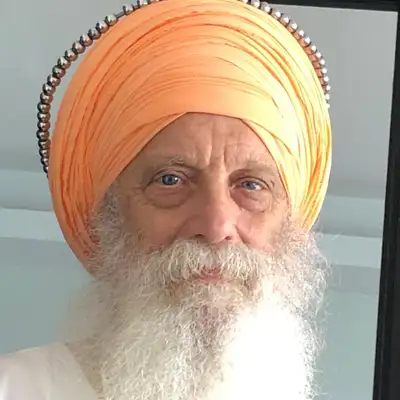
This podcast series is a presentation of challenging and irreverent conversations on wisdom, courage and common sense; for the most part taking place between renown spiritual teacher Hari Nam Singh Khalsa and respected leaders in the world of thought and action. These light-hearted, spontaneous and unpredictable conversations about all facets of life inevitably provide a platform to explore the depths of human nature and human destiny. In particular, it is the intention of this series to introduce our listeners to the value of the Khalsa Spiritual Path and its Code of Conduct, the Rehit Maryada, as created by Guru Gobind Singh, the legendary 10th Master of Sikh Dharma.
Hi everybody, we're back on ~ Warrior
Saint and ~ today
~ we're very, very ~ honored to have ~ a
different interesting guest
on today, ~ friend of mine from Chile,
Yeah.
by quite bilingual, so you don't have to
struggle through the her Spanish.
Thank
she speaks great English and her name's
Satna Shankar.
And ~
Yes.
We've known each other not for a long
time,
maybe about a year, maybe, and ~ and we
both walk on the same spiritual path
for a long time, but we just kind of got
to know each other.
And she does like really interesting
things,
and we'll get to that. And it kind of ties
into the theme
of the of the podcast Warrior Saint is you
know,
how how do we live our lives in a
a way that's saintly and and and yet we're
we're very strong,
fearless people taking on life's
challenges.
And ~ some people take on bigger
and lesser challenges, but ~ as they say,
you get as much as you can handle.
So this ~ woman here is taken on quite a
bit and that she shared with me.
Yeah.
So we'll talk about that. So
Why don't you share with our audience a
little bit,
Satan, a little bit about ~ I'm I'm
actually i interested
in what you do for your living.
I I know it the the audience doesn't yet,
Okay. Yeah, yeah.
but I think what you do for your living is
~ crazy interesting,
~ especially relating to the podcast.
Hmm.
And I'm sure that'll give us a lot of
material to
Yeah. Hello everybody. I'm Sat Nishan.
And here in Chile, in Santiago de Chile,
I live in Santiago de Chile. And here I
work in a private hospital that
take care of ~ people with cancer.
Every type of cancer, every stage of
cancer.
And I do Kundalini Yoga with them.
with the patients
~ like ending their treatment
we do classes like regular classes and
with
the patients that are in the hospital we
do ~ breathing exercise pranayama so they
can go through the period
in the hospital in a better way.
Yeah, like...
So and and how long have you done that?
3 and a half years so yeah till
Hm. And how did ya how did you how did you
get into that?
now yeah yeah yeah
Was that by accident or did was it like
your choice?
no it was it was by accident actually
because
one of my teachers told me that they need
a Kundalini Yoga teacher
in this place and I said okay when
wherever
I am to serve whatever it needs.
~ I didn't know at that time that
it was for the patients. I thought that it
was for the people that work
in that place. So I went and I had ~
interviews
and then I realized that
It was for work with patients.
And it was like a really...
big change in my life because at that time
I was thinking and I was praying for ~
improve
my relationship with death and my I don't
know
how to say this in English, templansa
Well, I don't know that either.
~ Okay, so people that are hearing may
look at that.
What's what well
how do you say it in other words?
What is a templasin ~
like
my ability to stay calm,
to stay in my center whenever it's
happened,
whatever is happening all around.
So I start to work in that place.
It's called FALP, Fundación Arturo López
Pérez.
~
I was there one month and my mom
was diagnosed with cancer.
So I had to learn
in my house and in my work how
to
go through this path,
this treatment.
and everything that came with that so it
was really intense beautiful challenging
and everything it was like amazing yeah
And did y did your mom survive all that?
no no she passed away three years ago so
~ so was that was that difficult difficult
for you?
it last yes six months yes
Was that difficult for you?
Yes, yes, because after she died,
I continued my work,
but hearing the pain in the patients,
seeing that the suffering,
it made me realize what my mom go through
because
she was a really ~ strong woman.
he as she she ~ resist a
lot of pain his pain i don't know how to
say this either umbral del dolor like pain
resistance i'm gonna say yeah was very
high
so when i saw the the the pain in other
people in the hospital, it was like a lot
for me and
I had to take a break from my work for a
month
so
I could internalize everything.
It was challenging but...
So you're
you're around a lot of suffering and you
probably witnessed a lot of people
leaving.
Mm-hmm.
Yes. Yes. Yes, like every week.
Yeah, that's what I say, not a lot
of people could do that.
No, no, actually it's it's really strong
is it's
a strong experience but it's a blessing
too.
So because I can be face to face with them
every day and that's a for me it's
a blessing really because I have the the
the opportunity to
work with myself, within myself and to
be with others and share this technology,
~ knowledge that
I have the blessing to have. So yeah,
it's...
Well, well I have to take a deep breath,
~ just ~ talk to you.
'Cause I I'm just as you're talking on I'm
imagining every day you go
to work you're you're seeing people
Very challenging situations and then
you're also maybe the last person
Yes.
to see somebody while they're still on the
planet.
Sometimes yes, yes, yes.
In my work we are ~ a team
of music therapist,
art therapist, Reiki and ~ mindfulness and
yoga.
So from different perspective
we all go to be with
the people that need us because the
doctors take care
of the physical body and that's it and
we are there to to take care of
the more subtle subtle
place you know
And then and then you s you were telling
me you lost somebody close
with me.
to you personally recently.
Yes, yes, like a few weeks ago my aunt,
the sister of my mom died
and she was the first that passed away
after
my mom so it
was really like difficult
in some aspects because
She also looked a lot like my mom.
So when I went to see her it was like,
whoa, but My family is really big
and we are really close together so the
the funeral was really Beautiful also
because
we
pray together, we sing, there was even
some dancing because
my aunt enjoy a
lot the cueca or traditional dance.
So their grandson
and
her daughters dance cueca.
and I sing the cueca. I am in the musician
group
nice.
in my family. So yeah,
Do you feel like do
we had...
you feel like because of who you are as a
person and the work
you do that you're maybe better prepared
than other people to face this,
that it's more
More familiar to you.
I think that yes.
because I need to understand more
the process I get to realize that
is actually part of life like every day
because we are always saying that that
is part of life but experience that is
different and like
I said before I have the blessing to
be with that ~ reality like almost every
day.
So I get to understand that it's not a
tragedy,
And
you know?
Like, really film.
And and ~
you know, we're both ~
We're both Ahmadari Sikhs, so we come from
a a similar ~ spiritual tradition.
Yes.
And so how how do you think that's
~ kind of formed your
~ informed your ~ work and
and and your role in life?
I think in every way because since I took
Ambreed after
I started working in there. ~ yeah,
Amrit, by the way, is an initi a lot of
people here wouldn't know that,
the initiation. You're right. You're
right.
so I always have to remind guests though.
Okay.
We we use words familiar to us,
they have no idea what we're talking
about,
right? So Amrit is like
when somebody gets initiated in in this
path at a very high level,
yes.
Yes, yes, thank you. So I get to see the
difference.
After I took Amrit,
my inner strength grew.
So
I get to feel
God and the Guru.
speaking through me in this particular ~
time when
I'm with people that are like passing away
I get to be just a channel,
you know? So it's really beautiful and in
my family,
my family is Catholic
So ~ there my aunt that we were talking
about
was really like a
Her devotion was amazing. She was praying
all day and everything. ~
me as a number daddy ~ served
to my family in that language.
know, like I sung Catholic
~ songs
and since I am a number daddy
I understood that I'm serving
God maybe in a different language.
but it's the same God and I'm serving like
the person needs to be served
not like I would like to serve them,
you know?
Yeah, I had I had recently this ~
experience myself.
So
I mean I think the same what what did your
~ aunt die like three weeks ago?
Two weeks ago? Yeah, I think your aunt
died like maybe even
Yes, yes, three weeks.
the same day as my mother.
yeah.
And
and so, you know, I I had a fly on short
notice
to go to my mother's funeral.
Mm-hmm. Yeah.
It was very interesting. She was like
ninety seven.
Okay.
And it was almost like that's what I was
asking you about,
you know, your role and you know,
was is it like it's kind of my similar
~ huh.
Even at my own. It's really not any you
know,
it's funny, it it's in a way it's not any
different at the funeral of people
I know than people I don't know.
It's because you know,
Mm-hmm.
it's a it it's hard to explain it because
it affects you maybe a different way,
but you have a job to do and the people
around you are really not
Prepared to do that job. And some of the
job is to be
Yeah.
the person who kind of helps the other
person on their journey.
And you know,
Yes.
being a minister at funerals and attending
funerals of people I know.
You know, get you've got like a couple of
different f they're interesting funerals
actually. You got a different you know,
it's like it's like doing weddings.
I'm a minister, so I do a lot of weddings.
I've done a lot of funerals. I always say
the difference between
the only difference between a wedding and
a funeral is that they're exactly
the same thing, a wedding and a funeral.
The only difference is that at the
wedding,
~ people dress up a little livelier.
The music is more upbeat, you usually
could dance to it.
Yeah, and the food is generally better.
But but otherwise it's pretty much there's
two things going on. First of all,
yeah,
yeah. First of all, the the the event is
less for the people involved.
Like like less than the couple marrying.
Unless in the person dying, the event's
really for everyone else.
And actually, even a wedding, the the they
already know they're getting married.
Yeah.
It's like a show. It's nothing,
it's no big deal really.
They they already they're already in it.
It's it's how it impacts everyone else in
the audience.
Because they they're fine, they're happy,
Yes.
they're just getting married, right?
So it's the same thing at a funeral.
Okay, they're dead, then the body's there
and that's gonna be it,
and they're really not involved with this
ceremony.
It's
It's how it impacts everyone else there,
Mmm.
you know. So and then the other thing I
think is that a wedding like
a funeral kind of suggests that the end of
something and the beginning
Mm-mm, the beginning of us.
of something else. So to me, they're
they're very and and it's a and it causes
a lot of ripples in everyone who's
attending.
Mm-hmm.
So to me, people think that they're very
different,
but to me, they're basically the same
event dressed in different clothing,
Ha
so to speak, you know.
Yeah.
And
and and in the same way as being a
minister,
my job is i is to kind of be a conduit for
all of this happening
and to kind of keep it together.
Mm.
So it was interesting that even in my
mother's funeral,
it just happened a couple of weeks ago,
I I thought my major role,
Yeah.
even if it was my own mother, was not to
get ~ it sounds kind of cold,
but
I didn't really feel like it was my
principal role to get personally involved.
That my job was to just kind of will her
forward,
Mm-hmm.
you know, and just make it just bring
light energy there
Aha, yes, yes.
and not bring all the drama. And and then
of course,
you know, you have people who in a
different a couple of different
categories.
Mm-hmm.
You have the people who are freaked out.
Now, in this case, you really didn't get
the big freak out because
Yeah.
she was like ninety-seven and lived a very
good life.
So she didn't even suffer. I she didn't
even suffer at the end.
Mm.
There's nothing, you know, so so there's
nothing but ~ you know,
celebrating a well lived life and blah
blah blah blah.
Okay. But a lot of these things they're
they're there's a lot of drama,
Mm-hmm.
there's a lot of grief, I I understand.
that a and and I'm very compassionate
about it.
But but there's the a lot of this grief
and I the thing is though is that
it can kinda to me kinda pull the person
backwards.
Like, you know, you want them to kinda and
of course this is very much
Yes.
~
in our lifestyle and our belief system.
So you know I'm I'm talking to I what do
they they say?
See you
I I I'm ~ I'm preaching to the flock here
as they say.
Hahaha
So but you know I think it's in our world
view that
you wanna like liberate from all this
stuff and everybody crying
and wishing you back is making that more
difficult that there's
More difficult, yeah.
a sense of attachment there. ~ then I
think there's people who are just numb
and they just don't want to go there.
Mm-hmm.
And I think this includes also often
a large group of people who are only going
there out of obligation.
They don't actually want to be there.
Yes.
I mean half the people
don't half the people definitely don't
want to be there.
You
They're only showing up because it would
look bad if they didn't show up.
So they're doing it for like ~ social
obligation.
Yeah.
But I I think that in in in the case of
those people and the ones who
huh.
are kind of numb to it is that ~ the thing
about weddings
and funerals is that
Mm-hmm.
You can't go to a wedding or a funeral
without thinking of yourself.
So if you're going to a wedding and you're
married and you're thinking,
~ I'm so happy for them,
you know, now they're gonna experience the
joys of marriage like I am.
Or you're gonna think, They look so happy,
what went wrong with my marriage?
And maybe I should get out of that.
Or maybe it's like, I'm not with anybody.
Mm-hmm.
How did how did my friend find somebody
and I'm still lonely?
Yeah.
Or or or
cynicism is that, ~ I I've gone through
this.
They'll still they'll find out that this
sucks.
You know, and and the but there's nothing
I can say,
Mmm.
you know. So and so, you know,
Mm-hmm.
it's the same thing in the funerals is
that ~ I think the people really don't
want
to be there because it makes them think
about their own mortality.
I mean that's the principle. It's not it's
very self-oriented,
Yes. Yeah.
and I I get that, but it's like
People don't want to be reminded that
they're going to be the next one in that
box.
And so they can't get out of there fast
enough.
Yes. Yeah.
And so it was so it was interesting.
Yeah.
So I I didn't relate to it that way.
I tried not to. But ~ there was all these
other people there,
Mm-hmm.
and you know, it was a it was a a Jewish
funeral,
you know. And so they had the rabbi there,
huh.
they had the coffin, they had the whole
thing there.
Mm-hmm. Mm-hmm. Mm-hmm.
Right.
And ~ y you know,
i it's like the person presiding.
I I probably was the person most capable
of presiding,
but I I didn't push it on anybody.
Mm.
But the rabbi's there, but basically he
doesn't even know her.
So he's saying the the prayers you have to
say,
Yeah.
that's taken care of. She wasn't even a
religious person.
But everything but it's okay, it's taken
care of.
Mmm.
Mm-hmm.
And he's there and now he's off to the
next funeral.
Okay, that's his job. Then you have people
who are involved with the family.
Yeah.
Okay, so they're uncomfortable
emotionally.
Mm-hmm.
And then you've got the people who are
there,
and because of her age, most people there
are just people who may know my sister.
So they just can't wait till so it's very
so I'm the only one really there.
huh.
And
I'm the only one that really trying to
connect to the soul because I can
I can kind of sense there that nobody else
sitting there actually
~ relates to the soul of this person
because they're just
yeah yeah
not in that mind space. So so I ~ that was
my experience of the funeral.
Frequency. Yeah.
It was like and then you know,
and then afterwards they have like a
reception and they serve food.
Mm-hmm. Mm-hmm.
And there's all
this small talk about ridiculous things.
And I think, my God,
Yeah.
what planet am I?
You know, I I was it's like
Yeah, I know.
why this is it? This is this is why
somebody's died and they don't have
anything
Mmm.
really of substance to say about anything.
So I was very cynical about that.
Yeah
But that just happened recently.
Yeah Yeah, know I was thinking that here
at least
in my family because Like I said,
we are a big family. So I was the other
day I was counting and in my life
I have been like in 16 maybe?
Funerals of my family. Just my family.
16. You know? So yeah.
Wow, that is a big family.
Yes. And we are super close.
So we are like super organized.
And here like my family that is Catholic
so
is a lot of pray like the Rosary.
Rosary, yeah, the rosaries, yeah.
like regularity in the...
I don't know here
we say velar like
you have the person in
the box so like for 24 to
48 hours more or less so in that time we
are praying
and and chanting and Be together being
together,
you know so my family has this group like
I said like some
group is in charge of the kitchen so
everyone have something to eat because
we stay all the night and everything but
Sometimes ~ there is like space for small
talk,
but mostly we are connected with
the person who's living and we are trying
to...
be connected with God, you know,
to like
~ accompany the soul of the person
who is living, you know. So I feel like
very...
Fortunate that
Yeah, you're very fortunate.
Very fort I had nothing like that.
You're very fortunate. And I I kind of
experienced that you know,
Yeah. Yeah.
~ my wife's Mexican, so she's Latino also,
huh. Yeah, yeah.
you know. And and I was around when her
parents died,
especially her mom. And there's this kind
of connection that ~ you know,
Mm-hmm.
from the United States, but
stereotypical general thing, but it's not
it's not the same.
Hmm, not the same. Yeah,
It's not the same. I mean I hate to say
it,
yeah I know, I know.
but it's not. I don't know why that is,
Mm.
but it's not the same. And and it was
actually
Mm.
Kind of painful for me afterwards.
The funeral itself was perfectly fine.
Mmm. Mmm.
Actually, the highlight of my whole trip
was the funeral.
That was the high point. The funeral
actually was peaceful
Okay.
and perfectly fine to me.
Mm-hmm.
And then the afterwards,
the disconnection from everything around
me and even the
No.
This connection and the hideous behavior
actually of everything
Mm.
I witnessed around me ~ just broke my
heart.
Yeah, it was you know,
because like you know, you're talking
about your family and we're talking about
ministers, you're you're you're hoping
that,
okay, there's the funeral, the person's
left,
so you wanna use this as a time to be
closer,
and you wanna like together collectively.
Mm-hmm.
kind of connect with that person,
assure them you'll stay connected.
But I'm surrounded by people who have no
connection to that.
Mm-hmm.
And it's not my place to really give them
a lecture either,
Bye.
or, you know, I'm saying a sermon,
No. Yeah. Mm-hmm. Yeah.
right? But it's like, ~ my God,
you know, it's kind of like
I think that's probably the most lonely I
ever felt.
I'm sorry to hear that.
Yeah, it was very strong. Very,
very
strong. And ~ the thing that was
interesting to me,
and you didn't have to go through this,
but I I I think that you understand it.
This gets back to our faith, you know.
Mm-hmm. Yeah.
~ and our faith, you know, there there was
~ expression by our ~ spiritual teacher
and and also,
you know, we've heard this what the this
said is that you know,
Mm-hmm.
you you
Come into this world alone and you leave
alone,
There you go. Uh-huh. Yes.
ultimately. No matter how connected you
are,
you come alone, you leave alone.
And ~ and the other piece of that is that
you know,
why what's the and we talk about this like
this comes up all the time because it's
so central, is like, you know,
ultimately the the existence of this
spiritual path or any religion
or any spiritual path is to like.
Mm-hmm.
Use this ~ lifetime as an opportunity to
liberate finally.
And and that's that's the most worthwhile
expense
Yes.
of your energy is to do what you need to
do in this life to kind
of lose your attachment for it.
We so we're both lucky. I mean,
Mm-hmm.
facing looking at death and facing death,
I mean the by you know, there this
physical life is ending,
but there there's something beyond that is
that.
you ~ you know without making it
philosophical you you you kind of wanna
just kind
Yeah
of be free of all this stuff and not not
not not get like tied down
Free, yeah.
to it and this is your opportunity ~ to do
that and ~
Mm-hmm.
I I was kind of really shook by what I had
experienced and and my wife
was very good because she reminded me that
Mm-hmm.
No matter how tough that is, that in a way
it's a gift because it really kinda gives
you the opportunity to finally kinda free
yourself from your connection
to what you're attached to, in this case
your your blood family.
And you you identify by your blood family,
Yes.
you identify by the tribe, you're
Mm-hmm
born into whatever you consider that tribe
to be,
whether it's it's a nationality,
whether it's ~ religion, whether it's
whatever is that that you you know,
now.
Mm-hmm.
you have a you have a affiliation with a
tribe,
you have affiliation with a a family.
Yeah.
But somehow you've kind of gotta free
yourself from all
of that because you're not gonna take that
identity with you,
you know. And ~ that's what I think is
very inherent in
~ huh.
our teachings of our faith, you know.
And so, you know, I whenever I'm around
death,
I I'm reminded of this, and then I've been
through this myself,
but this is almost like ~
You know, pe people say it it's it's tough
when you lose both parents
and I haven't totally digested that yet.
Mm. Mm-hmm.
But on the other hand, it's like your
opportunity to kind of free yourself from
okay, that was there, but that's and now
it's like,
okay, now I just have to liberate myself
from everything.
And it's an opportun it's an opportunity,
Everything. Yeah. Yes.
but ~ it often comes with pain.
Yes, yes, it comes with pain. I lost both
of
my parents and ~ it was really
interesting.
~ It was painful, you know,
but after my mom died,
she was the last one, ~ I felt like,
first I felt like an orphan and that was
like,
wow.
yeah that was really like shocking
shocking
you know but i also feel free
i start to feel like
an adult like
the the thinking was okay now you're
on your own so it was really
uplifting in a way also
and my faith
was stronger my identity like a Sikh
was also stronger and I felt
my mom and my dad with me in that also
you know so it was like
Again changing, absolutely. You know?
How how old are you now?
43 years old.
well.
Yeah. So at my 40 I feel like a really,
really an adult. Just there.
Yeah.
Yeah, I'm s I'm s
I'm seventy four. I still don't feel like
an ad
mean, I'm working in a lot
of things still but it was this feeling
like,
you know, that we have a saying here that
is like, hide yourself
behind your mother's skirt,
you know? Okay?
Mm, mm.
something like that and I felt okay
there's no no way you can
do that anymore so it was like
Now I can laugh about it, but in that time
it was a little bit difficult.
Do you feel
do you feel like
As I sometimes think about this too,
~ do you think that from your personal
experience and now what you're doing
Mm.
in you know, how you're serving humanity
in your ~ work,
do you do you feel like that's prepared
yourself
Mm-hmm.
for your own departure?
I'm still working on that because
sometimes I feel a little scared still
you know because more that
the death itself is the how I'm gonna
die because of what I saw in my in my job
like the
Mm.
the pain the suffering the the like
fading away you know like the
the physical body pain so I think
I'm still working on it. When I find
myself
~ thinking like that, I start my
~ scene brand and I
try to use the tools I have. But still,
Why why do you think
it's there.
why why do why do you think that
God puts people through that suffering?
'Cause it's very interesting. I said yeah,
Mm-hmm.
I'm going back to my own experience with
my own mother.
And it's a it's kind of a head scratcher
because
Mm-hmm.
And I'm not putting my mother down here
saying it.
I'm just, you know, I'm just being
straight about her as a human being,
You
as if she was not my mother. Which is hard
to do.
Mm-hmm.
But I think it's important to do is to be
able to understand your parent
as a person, not your parent.
That you're personalizing it so you're
kind of like you you're you're you're like
Yes
tweaking the facts. Okay. So
Uh-huh.
what you have is a fantasy. It's like
instead of like,
okay, just seeing the person for their
their strengths and their weaknesses
and understanding how you've kind of
inherited those,
you know. So in her case,
Mm-hmm.
she was a ~ very dynam I mean,
you could see it because you know me.
You you you know, you we've met and and
you could s see the good and bad in it,
Uh-huh. Yes.
because that I took that from my parents
either way,
right? Looks like all of us.
Aha.
Yes.
But she
was a a very ~ charismatic,
~ big personality. She's gonna fill the
room with her personality,
she's gonna be in the middle of
everything.
That's kind of my personality,
right? And she's also very curious person
huh. Yes.
and just very interested in everything and
everybody.
Mm-hmm.
That's kind of how I am. And that's kind
of what I got from her.
Mm, uh-huh.
But I got
More my character from my father.
So I didn't really get my mother's
character.
Okay.
I got my father's character. My father was
a very committed person,
very loyal person, very honest person,
like that. And I I really,
Uh-huh.
it's almost like my personality is more
like my mother's,
but my character is more like my father.
Mm-hmm.
And I tried my best to get rid of this
stuff.
Okay.
I mean, the thing is you you can't get rid
of that stuff.
Unless you give them credit for what they
do well.
No.
You know what I'm saying? So people are
always mad at their parents,
Aha. Yes.
but it's not if you're mad at your
parents,
it means you hate yourself because you're
them and and you're you're wanting
Mm-hmm.
to blame them and put all the bad things
on them,
but you're not giving them credit for what
you like about yourself.
But come on, I mean it's gotta be fair.
Yeah.
So I I give her credit for giving me my
passion.
And my person my passion and my
personality.
And that's very important part of myself
that I've helped other people with.
Okay.
Okay. But on the other side, I I I'm not
saying she was like a bad person,
Mm-hmm.
but she wasn't Mother Teresa by any means
either.
Okay.
And and I she you know,
she just like a lot of people,
she she I'd say she didn't have bad
character,
I'd say that she had average character.
No nothing.
Mm-hmm.
You know, we know people like that.
Yeah. Yes?
I mean, they've got a lot
of great things about them. And their
character is not even necessarily bad.
Mm-hmm.
It's just not memorable. It's just like it
it's kinda like most people.
Mm-hmm.
They'll do what's in their own
self-interests.
They're jealous of people who have what
they don't have.
Yeah.
Okay. Li I mean little per th that
ninety-nine percent of the people have,
huh. ~
you know. And so she her character was
nothing that I was that interested in.
Yes.
you know and ~
huh.
You know, I I'm ~ I'm trying to like
digest all of that.
You know, and and ~ and then coming to the
deaf part of it,
Mm-hmm.
I was I almost lost my train of thought
here.
Okay
Cause I I'm talking about it, then I
forgot why I started down this
you know how that is, especially when you
get older,
Yeah, yeah.
right? You start talking in the point.
What was the point? Okay, the point the
point is is that neither her
Nor her friends, nor her siblings,
Mm-hmm.
nor her parents really
had any relationship with God.
Zero. Zero. Okay?
okay.
And there was some affiliation with the
tribe,
but not necessarily the religious beliefs
of the tribe,
Mm-hmm.
which is a sad thing these days,
Uh-huh.
you know. People want
To identify out a pride of affiliation,
but they actually don't believe in the
basic tenets of this.
Yeah.
And ~ her husband,
my father, was a a religious person.
It's kind of like an odd thing to say.
A a very religious person in,
and I and I'd carry that on. I I I don't
disagree with that.
A very religious person in the sense of
duty.
okay
Okay, and following the traditions,
but no evidence that he actually believed
in a god.
Mm-hmm.
Yeah.
Which is very, very odd. Or as I got older
I'm thinking maybe in his own way he did.
Okay, I'll give him credit that I didn't
give before.
Mmm.
Maybe in his own way, and he just didn't
want to talk about it and
he didn't totally integrate it.
Hmm. Mm-hmm. Okay.
Okay, but okay. But the odd thing,
so I'm raised this is getting back to like
separating from your past.
It's something that you doesn't sound like
you've had to do because of
Mm-hmm.
the nature of the people in your family.
But in my case
Mm-hmm.
It's very odd that nobody around me
in my family and even wider net of people,
I'm often the only man of faith.
Wow.
In anybody around me. And being a man of
faith in
Mmm.
a family and social institution like that.
Sorry talking so much about my family
because I'm right in the middle
Mm-hmm. Uh-huh.
of the middle of some family issues here,
but the people around you don't you've
devoted your life
to basically connecting with God.
And
Mm-hmm.
And trying to connect other people to God.
And God is at the middle of your life,
actually. Okay? And the people around
Yes.
you who brought you up and have been
around
Hmm.
you actually don't value that at all.
So they don't actually value you as a
person because they don't understand that.
That's actually who you are. You're a
person of faith.
And they have no value for that at all.
Yeah.
Zero. And so
At a certain point
you we've gotta free ourselves from this.
Because it's just gonna and so that would
that's been kind of my
Yes.
my ~ challenge and and looking back even
fifty years ago,
I I think on some level I was far less
sophisticated in these ways,
but I think that that was a big contribu
I've thought about this recently
as a big contributing force in me going in
the direction of S the Sikh
Mm.
fa faith and and ultimately being a
Khalsa.
Mm-hmm.
which is a higher level of commitment to
that that path,
Mm-hmm.
is that I actually had to kind of move out
to
a different forum because if I was going
to stay in the forum
or the tribe that I was born into,
Mm-hmm.
~ I wouldn't have been able to even
practice that at its highest levels.
way to connect.
Because that even wouldn't have been
supported.
It would have been supported that I was a
mere affiliate of the tribe.
But if actually I was going to devote my
life to being a very committed person
to the religion, that actually would not
have even been supported
by the people either. So I basically
going,
Yeah.
this is just not going to work out for me.
But I was a lot younger. I was like 24
years old.
But I looking back, it's like,
Mm.
It was almost like self-survival that if I
was going to go that way,
that I was going to actually not live my
life's purpose.
That was not going to happen. Not under
those circumstances.
Mmm. Yeah.
So this revisited me the last few weeks
that I I had to
go through tremendous amount of ~ family
betrayal.
Even as my mother's dying. I'm not going
to get into all the specifics,
wow.
but
Mm-hmm.
But
but ~ and then you're realizing what that
family betrayal is all about.
And the family betrayal, even of my
mother.
Hmm.
Okay, even of my mother. The family
betrayal
Yeah.
is is basically to me this kind
of suppressed anger
huh.
and furiousness that I would have the gall
Mm-hmm.
To actually choose my own life.
And there's resentment. And now you're
gonna pay for that.
You're gonna pay for the pain you caused
me by not being the person that
Yeah. I would...
I wanted you to be.
Uh-huh. Yeah. Yeah,
that's tough.
And and
and to to to see that on full display in
the week of my mother's death,
holy cow.
Yeah, that's painful.
So you can see that
the it's ~ my God, it's really,
really pain but it's painful, but it had
to happen.
yes in order yeah
You know because w you know,
I don't know about you. I don't know,
you can tell me because this has happened
a lot to me.
Mm-hmm.
And you can imagine the last five years
because we know things that w we're
not even gonna talk about here.
But
I've had very close friends of mine turn
their back on me just because they felt
Mm-hmm.
that I don't agree with them about
something.
Yeah.
And it's shocking that you know somebody
forty years and they can turn their back
on you just because they're angry in the
way you think,
even though you haven't done anything.
And you you you get all this taken away
from you,
Yeah.
your family, your friends, everything.
friends.
And it's indescribably painful because
it's almost like anything that
you care about, anything that you love,
anything you're attached to, it's like God
is just gonna take it all away from you,
including your life, if you're attached to
that.
Yes.
But the thing is, is that ~ and I think
you're in this with me,
that we're kind of I I call it we're in
the liberation game.
Mm-hmm.
We're in it for the we're in it ultimately
for the liberation.
So I always say I'm
Yes.
in the liberation game because that's why
I'm in this game.
I don't have an in ultimately I don't have
an interest in anything else.
I wanna, I wanna get out of here with my
freedom,
you know. And and so to do that,
Yes, yeah.
it's almost like the things that all these
things that you think
you can't live or breathe without,
they're gonna be taken away from you.
And and then you've gotta be okay with
that too.
Yes.
Yeah.
So I'm
dealing with all ki you my own life right
now I'm dealing with actually this
on many, many fronts right now,
all at the same
And all these things that are so important
to me that I just took
for granted are just systematically being
taken away from
Okay.
And every time it hurts like hell and you
think you're gonna die,
it just hurts so much. But if I'm gonna be
free,
Mm-hmm. Yeah, I know.
I I've got I've gotta. my God.
You have to go through it to that.
~ yeah. Yeah.
~ my god. Yeah. So so it kind of brings me
back to my question to you.
So you've been around all this suffering.
Mm-hmm.
And and
you're you're a woman of faith.
Why do you think God would put us through
that?
Mm-hmm.
You say it yourself. It's necessary.
It has
a purpose. Sometimes with the patient in
the class,
we talk about the pain.
It's like a...
punishment? I don't know how to say that
in English.
Penalty.
Penalty? Or it's ~ opportunity.
Opportunity. You know? How do you live
with the pain?
How do you deal with the pain?
With the...
every challenge you can take that as an
opportunity
to to grow to live your life like more
honestly
you know so i'm thinking that it's that's
why god give us this ~
all kind of of
scenarios so we can grow you know and it's
up to us
if we take it or no you can
be the victim victim yeah or you can be
in charge of that and make the best
of it you know that
And do do you
think that being around it and seeing how
much people suffer that
~ at least in some cases it works?
That that you can see where, you know,
the the people have learned something,
or is it just suffering for suffering?
yeah.
No, no, no, no,
no. I think if I was just so suffering for
suffering,
I would be really like upset.
Pressed, I think, is yeah, that's
yeah, yeah, no. Actually,
the people that I have the blessing to
work with,
~ oftenly
they like to get that connection sometimes
it looks like it's a little late you know
I remember one person that told
me how can I be in peace with all of this
you know with everything because I say
that I'm okay with it
but inside I'm not so can you help
me to like figure figure
it out and I said yes so ~
he was in the hospital and I I look for a
meditation
and everything and when I I
when the day after our conversation he was
like
in a surgery and after the surgery he
didn't recover
and he died and
I felt like like my
god that was it was my first time living
something like that
so it was like
painful, get frustrated, I thought
why I couldn't do it but then I realized
that everything
is perfect that everything is in God's
hands
so I just do my best,
He do His best and that's it I think that
just with him asking
for that maybe something like change
you know for him so yeah it's it's
yeah
Well, I I think we're gonna ha I this
whole subject of death is I you know,
Yeah
people ask me what's the most interesting
thing to talk about.
I always say death. Death is is really if
if you're in it
Yeah.
for the liberation game, as I am,
the the event of death itself is like
Yeah.
really worth plunging into. And I
Yeah.
~ I so much respect and honor what you do
in your service
to humanity. ~ very few I know this for a
fact,
there's very few people who would want to
or could do what you do.
And they could go and they can spend their
lives doing whatever they
do and making millions of dollars,
it's all good, but they don't have your
strength.
And they don't have your heart.
thank you.
And I'm I'm just you know,
I really love you a lot and I'm very
honored to ~ have you in my life.
I wanna do it too
And ~ I'm just ~ re really,
really glad that you know we've got to
know each other a little bit
and spent some time with each other.
And ~ I just I
Yeah.
I I just super super inspired by your life
and
And I trust that we'll have opportunities
to have you back on the show
Yeah, whenever you want.
and talk about these things, you know.
And ~ and you you you have a like a view
that a lot of us don't have,
Mm-hmm.
you know. ~ you're like right in the
middle of it.
And ~ and I think that we'll wrap up here,
Yes.
but you know the thing that I was thinking
about,
I'm going, no, no, I'll save that for
another time with us,
is like
You know how hard the spiritual path that
we have chosen or was chosen for us,
depending how you look at it. But my God,
Yes.
this is like so hard. This is like really,
Yeah.
really hard living the warrior saints
life.
And you do it every day. Thank you so much
for that.
Yes.
Love you, love you, love you. And God
bless you.
Love you too.
And as ~
We always say to end these conversations,
~ Wahiguru Jika Khalsa or Wahiguru Jiki
Fate.
~ why did we put that there?
We'll see you we'll see you soon.
Yeah.
Thank you so much. God bless.
Thank you so much.