Subscribe
Share
Share
Embed
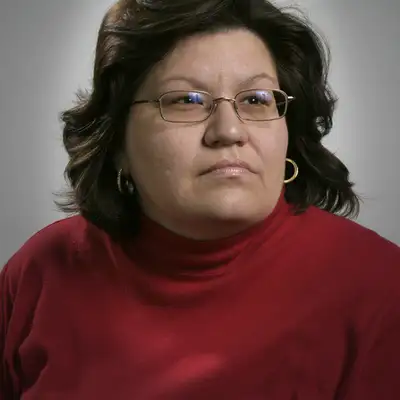
The Road To Your Name Podcast series grew out of a program started by Aboriginal Legal Services (ALS) in 2016 that helped people going through the justice system and their families to strengthen and deepen their cultural connections. Host, Lisa VanEvery, examines many aspects of Haudenosaunee culture and teachings with a wide range of guests.
rtyn-tom (2)
===
Lisa: [00:00:00] Greetings everyone. Welcome to our Yohá:te ne kahsén:na The Road to Your Name podcast focusing on Haudenosaunee cultural topics recorded on Haudenosaunee territory.
Lisa: Our podcasts are produced by Aboriginal Legal Services with the technical assistance of True Seed Media. My name is Lisa Vendevrie from the Mohawk Nation and the Wolf Clan. I'm the coordinator of the Ohite Ne Gasuna, The Road to Maine program, and the host of the podcast
Lisa: This is the Yohá:te ne kahsén:na : The Road to Your Name podcast series[00:01:00]
Lisa: So on today's podcast, we have a guest who I really struggle to introduce him because there's so many things you can say about him that he does. And I guess what comes to mind first for me is a very creative person. That's who our guest is today. And I'm talking about creativity in, in, in many different forms, and we'll talk about all those different forms during today's podcast.
Lisa: So I'd like you all to listen to and meet Tom Wilson. Sago, Tom.
Tom: Sago. How are you?
Lisa: Oh, pretty good. I'm s- I'm ... We're just so happy to have you on the [00:02:00] podcast finally.
Tom: Yeah.
Lisa: This is our seventh season. It's taken us seven seasons to get you on the podcast. But we're here, and we're gonna talk about a lot of different things.
Lisa: We'll just let our conversation flow where it needs to flow.
Tom: Okay.
Lisa: Okay. So first of all, what struck me is, I wanted to start out with, I read in, I think it was the art book I purchased when I went to see the play you wrote- Beautiful Scars. It was playing in Ancaster. It was playing in Ancaster, I think.
Lisa: Hamilton. Ham- it was playing in Hamilton. Yeah. Hamilton. That's right. At Theatre
Tom: Aquarius,
Lisa: yes. At Theatre Aquarius. And I got the art book there, and something that was written in the art book you said was, "When I paint, I feel Mohawk."
Lisa: And I just, that really struck me, and I wanted you to, expand on that.
Tom: we have to find our own way to our identity. [00:03:00] My identity was kept from me for 53 years, so the road back to that can be, there's a great scene in a Woody Allen movie, somebody that we, rightfully shouldn't... who's been canceled a while ago. But, he decides to, go from Judaism over to Catholicism.
Tom: And, he comes home and, he, has been to the store, and he decides he's gonna be a Catholic, so he goes out and buys like a crucifix, and he buys a Bible, and he buys a rosary, and then he pulls out this big loaf of Wonder Bread , And, that's how... it was a joke about how you, how you switch roles or beliefs or, acknowledge your blood, and that's actually, that's how, for me, how it's done in real life.
Tom: It's not like I was gonna go running out of the house, trying to embrace everything that [00:04:00] has to do with the blood that runs through me. So the way that I rightfully get there personally, on my personal journey, is, through the creative process, which is how I've gotten through most of my life, through, a lot of challenges in my life.
Tom: I've built opportunities for myself and my life through the creative process, through writing music or painting, writing books, writing the play, et cetera. That journey, besides it, sustaining me, is, me, acknowledging, the blood that runs through me. And for me, it's the, truest way to be able to do that.
Tom: It's the, the least, contrived way. It's the free fall. It's natural. It's, how I get to feel Mohawk. it [00:05:00] was... When we were making that movie, they made a documentary on that book. And, I was back and forth talking about this, not nothing that ended up on camera or even in the film, but it was a-- that making that film was a journey for me.
Tom: It was always, like I don't... I'd say to my director, Shane Belcourt, who's Métis, I'd say, I don't know how to feel Mohawk." And he said to me the most profound thing. He said, "Tom, you're not putting on an Indian costume. You're taking off the costume that colonialism put on you when too, when you were too young and unaware to know that you were wearing it."
Tom: And that's really the job, is that I more, even more than Feeling Mohawk is that I am stripping myself of the bonds of, colonialism. I'm stripping myself of the identity that was, put on me, when, I couldn't defend [00:06:00] myself. So now that I can defend myself, now that I can proclaim myself, I'm not going to stand on a chair in front of you and tell you who I am.
Tom: I'm gonna create something that has the energy in it that's going to hopefully live and, translate itself to you, and translate itself to hopefully hundreds or thousands or tens of people, depending on what the situation is. Painting gives me that. it's also my meditation. I'm a big guy.
Tom: As we are talking about, I got a hyper brain. I have a hard time calming down. So when I paint, more so than anything, it's like your nose to the canvas, and I'm putting all this detail in, and that takes a long time and you're alone with your, mind, which most people are afraid to be alone with their own mind.
Tom: It's part of the process.
Lisa: And you do a, a lot of things [00:07:00] that are creative, so you must like to spend time alone with your mind.
Tom: Yes.
Lisa: Yeah.
Tom: I, I do. I always have. I remember I was brought up an only child. I was brought up feeling that I was dropped by, dropped out of a spaceship in the wrong backyard, basically, my entire life.
Tom: I found some solace in, in, i- in spending time alone. I spent a lot of time alone as a kid. And, the creative, process is really not something that you, you do for an audience, right? It's, something I don't really want you to watch me create music. I was showing you some film music that I'm working on.
Tom: I don't want you to watch me doing that. It would be, number one, boring for you, and, it looks like I'm standing still. The creative process is like watching somebody stand still. You don't [00:08:00] see anything happening. And yet, at the end of the process, something beautiful is created, something that was not there yesterday, you know?
Tom: Which is, our job. Yeah. As people who wanting to be, become artists or live in the world of the arts is to, create something that wasn't there yesterday. And what we create is, as artists, we, want to contribute to the world. everything else wants to control us. Government, religion, corporations all want to control us, but artists have the pure light of just wanting to create something for the world- Yeah
Tom: that wasn't there yesterday.
Lisa: And you mentioned feeling like you were dropped out of a spaceship.
Tom: Yeah.
Lisa: Can you just, talk a little bit about that and share with our listeners that part of your life, that beginning? [00:09:00]
Tom: my mother, My mother was very young when she became pregnant with me. She was even younger, sixteen years old, when her life changed.
Tom: she once said to me very innocently, she said, everything changed, and went downhill, after I was raped when I was sixteen years old." so at eighteen, she became pregnant with me with an older man who was already married and already had a family. And, my mother was, an embarrassment, to the family, my grandmother shipped her out of Kahnawake, and she came to Hamilton to, see her term of pregnancy through with my great aunt and uncle. Eighteen-year-old Mohawk girl, 1959, in a Catholic hospital. [00:10:00] I don't think you could stack the odds up against her any more, She, gave birth to me. She knew that I was born around eight, ten in the morning because she looked up at the clock while she was still conscious.
Tom: And they delivered me, wrapped me in a blanket, gave her a shot and knocked her out, and took me from her. so she didn't know if I was a boy or if I was a girl. And, she was in... When she woke up in her hospital room, she wanted her baby. She wanted her baby, and they wouldn't give her baby, and she would sneak out of her hospital room and go down to the nursery at St.
Tom: Joseph's Hospital and look through the glass, at all the babies in, in the nursery, wondering which one was hers. that was my beginning So we started our lives apart [00:11:00] and, we remained pretty well apart until 12 years ago. I was put into foster care, foster home, Catholic Children's Aid, and then a foster home.
Tom: And, and then my grandfather, John Lazar, came down from Kahnawà:ke and he said, "I'm coming down to get that baby. That baby's coming home. That baby shouldn't be raised by strangers. That baby shouldn't be raised by a white family. It should be raised in its home, at its... in its home land." and, I don't know what he was thinking.
Tom: He drove down, though. I don't know if he was gonna throw me on the dashboard of the car and drive me back to Quebec or what he was thinking. But, he, instead of doing that, my aunt, my great aunt stepped in and said, "We'll raise the baby," Bunny Wilson and George Wilson, who are heroes, although, they're more like bent heroes, that you would, see the reflection [00:12:00] of in sideshow mirrors because their idea of saving me was to keep my identity a secret, that I was never allowed to know that I was, an Indian, that I was never allowed to know who my mother was, where my family was, any of that.
Tom: that was the agreement in them taking me. So they raised me, and they did the very best they could. They gave me a fighting chance, and I honor them every day of my life, and I love them more and more as I get older. But, they were kinda fucked, as far as how, the world was, the, w- I would love to say that the world was a different place.
Tom: it doesn't matter, In our hearts, we know what is right and what is wrong. And, they did what they thought was right- which turned out to be kinda wrong for me. So my, that, that isolation that we're talking about, that, that's about, a Mohawk kid [00:13:00] growing up on the East Mountain not knowing his identity.
Tom: But, when you... when I pull my hair back, I, got a head that it can only belong to a Mohawk guy. It is a big head.
Tom: I found my way through music, and, my love for art. I decided as a kid, four years old, that I wanted to be... I didn't know how to articulate it, but I wanted to be a communicator. I wanted to create things. The-- I, I did my best creating things and I had a career, that people know about, and I hung gold records on my walls, and they're down the bathroom downstairs, and I got Junos all over the house, And, none of that really mattered because I still didn't have identity, and I always knew that something was missing. And then 12 years ago, I was going on a [00:14:00] speaking tour, and a complete stranger, who was the handler for the speaking tour, met me out in front of this house in, a limousine. I got in the back seat to go to the airport, and she said, your family and my family used to be friends."
Tom: And I said, I hear that a lot," But in fact, Bunny and George Wilson were really old. George Wilson was blinded in the Second World War. He was a tail gunner in a Lancaster bomber, which was the suicide seat in the Second World War. So they had The house was dark. There was a lot of drinking.
Tom: they didn't have any friends in Hamilton. The only people that ever came into the house were relatives from Quebec, from Kahnawake, who came down to visit. and I explained that to her, and she says, "Oh, no, my, my, grandmother, Mary Brennan, was really good friends with Bunny." She knew Bunny's name, my, my great aunt who raised me.
Tom: And I remembered her grandmother's name. I remembered Mary Brennan. I said, "Oh, my [00:15:00] God, I remember your grandmother. I was just a kid. I was a little guy, but I remember her." And my heart burst open because I didn't think that Bunny Wilson had any friends in Hamilton, and here was his friend. And as I was celebrating that moment, she turned to me and said, "Yes, in fact, my grandmother was so close with Bunny that she was there the day you were adopted."
Tom: I said, "What?" And that was, started this journey. It was shocking To find out that I was adopted. It was shocking to find out that my entire existence was a lie, my conscious existence. But once again, I always knew that something was off. There was something wrong. more than something wrong, there was some- something that wasn't right, and it was [00:16:00] me.
Tom: And I always, I always pinned down that I was the problem, that I was the thing that was wrong. But in fact, it was, the world around me. once again, so right from that moment after the shock of this, the wheels got rolling because opportunity all of a sudden sprung up. Unexpected opportunity.
Tom: As somebody who's been writing music his whole life and making songs up and recording them, I've always been engaged in the creative process with, different goals. back in the '90s with, Columbia, Sony Records, you had to f- you had to write some hits. You had something the radio could play.
Tom: You had to have something that appealed to the audience that you had built. I, don't really think like that anymore, I got rid of that, [00:17:00] that kind of thought.
Tom: I was, about two weeks after that, that drive, that woman, told me that I... let me know that I'd been adopted. about two weeks after that, I was on a radio show called Definitely Not The Opera on CBC. I was asked. It's a storyteller show. And, I went in to Front Street in Toronto at the CBC, and Sukeean Lee was the host, and she says, "Welcome to Definitely Not The Opera.
Tom: Our guest tonight is Tom Wilson, and the theme today, Tom, is you meet a complete stranger, and they change your life."
Tom: So I told the story about finding out that I was adopted, in the back of that limousine-
Tom: on CBC Radio, and I had a complete anxiety attack because I had told a secret [00:18:00] that had been kept from me my entire life-
Tom: to, to a radio audience, and I went out in front of the CBC, and I had this anxiety attack and gathered myself and got on the bus and came back to Hamilton, and a week later, I got a call from Penguin Random House Books. And, they said, "Have you ever written a... thought about writing a book, Tom?"
Tom: And I said, "Fuck no. That sounds like way too much work." But that was the two-by-four that catapulted me into engaging With my identity, with who I was through the creative process. And there's nothing like writing a book that makes you have to put it into black and white, that makes you have to confront demons that you didn't wanna confront, has made you had to-- make you have to confront issues that you've been avoiding.[00:19:00]
Tom: writing that book was the beginning of, of getting the ball rolling. It turned into, music that was representative of the journey that I was beginning. And my artwork, which I've been doing since 1997, all of a sudden started to evolve and become more detailed, and I was more engaged in the creation of the art.
Tom: My artwork, by the way, is something that 20 years ago, my daughter said, "Dad, you have to stop painting like this. This is cultural appropriation. This is indigenous art that you're doing." And I said, it's just what's coming out of me." I didn't even know what cult- I'm a knucklehead from Hamilton.
Tom: I didn't even know what cultural appropriation meant. so she told me to stop. And then, of course, years later, I actually find out that I am Mohawk, and that what I have been creating has actually been [00:20:00] my blood memory, just forcing itself out of me, making... It, was almost like slapping me in the face saying, "Don't you, see?
Tom: Don't you recognize yourself? Don't you recognize who you are?" that is the path I'm on now. That path, in, as, as human beings and, as, creative forces, that we try to be, our paths change all the time. But this is a strong path for me to be on. This is on the path of identity, And, that's a strong place to be.
Lisa: What is that like to embrace your identity, your, found identity? What is that like? what are the feelings you get when, the things happen and I don't know. I just can't [00:21:00] explain it.
Tom: I don't know, 'cause it changes... It, really does change every day or every week, at least, it evolves and, it, It retracts itself. It's, i- it's like, it's like everything. It's ebb and flow. It's like breathing. It's like you feel like you're gaining some ground and, your own self-doubt, your own built-in imposter syndrome, everything starts ... a- as much as my discovering my identity works for me is as much that, it, counters me.
Tom: It holds me back. It makes me, really doubt myself, which, is a fairly healthy way to continue moving forward, is to, be able to confront that [00:22:00] self-doubt, I've already been confronted by, the Pretendian movement, I, have no fear. My, mother was Mohawk.
Tom: She was, Mohawk and French. My father was Mohawk. As my mother used to say ... She died in November. My other mother used to say, she goes, "You're more Indian than most of the people in Kahnawake today," so I, don't really pay attention to blood quantum, but I have no fear in that. And then there's the idea that, I grew up in a city, There's a lot of things that if you wanna buy into them, can really throw you off your path.
Tom: But you really have to feel confident. You have to gain that confidence every day and feel firm, about who you are. Th- And just discovering identity is I, walk, with a respect. I walk with [00:23:00] honor.
Tom: I don't try to tell anyone's story but my own. I don't try to tell your story. I don't try to tell Eric's story. I only tell my story, and I don't try to tell any other ... I, just don't get in anyone else's business. Yeah. I think that my path is that I tell my story, and there's enough people who have a shared story- There's enough people that can identify with my story.
Tom: There's enough people who, under the rule of colonialism, have had everything attempted to be taken from them. We all, as indigenous people, identify with that. I'm just sorting out the fact that it was taken from me, my identity, and that I'm getting it back. And you have to do that without anger. You have to do that, w- with positivity.
Lisa: So [00:24:00] imagery-wise, does it feel every day that place of yourself is a little bit more indigenous, a little bit more indigenous, a little bit more indigenous? Pretty soon you're gonna embrace it all. It's gonna be complete.
Tom: Yeah. I think so. I think that also, having an active role is important, There's, things that you, you know... Painting, when I, do exhibits and people see my art, as an artist, as a creator, it's wonderful for people to walk into a room and see my, a collection of my work together and, also feel the impact, o- of, that art. And then I also put, with my exhibits, there's, a residential school exhibit that I have with, nine desks, a [00:25:00] film component, two eight-foot nuns that stand on either side of the blackboard.
Tom: And people experience that, so they go through all the color and the vibrance and the celebration of, my Mohawk world, and then they are able to confront the, the Canadian truth. And that, that's a job in itself. That's an active role that my art plays- to make people aware. We're not going to win any battles sticking our finger in people's chests and accusing and yelling and, it's not gonna work that way. We have to offer people something that they understand and that they want to understand and they want to embrace. So I create art, I write books, I make music, I write plays, and hopefully that my story [00:26:00] gives people a reason to, e- embrace our, causes and our situations more.
Tom: I just lost my trend of thought there for a minute because, you forget questions.
Tom: And I forget what I'm talking about. Answers. I forget answers sometimes. But there was an initial... Something in your initial question that I wanted to get to that I lost.
Lisa: what does, does it feel what does that feel like?
Lisa: Oh,
Tom: the active role. Yeah. The active role of art. So that's the active role of art, but I, didn't feel that was enough, I worked, my, my f- my kids and I started, a bursary, scholarship, idea at McMaster for, the first indigenous, bursary at McMaster University for any indigenous student that wants to become a doctor or a lawyer or an engineer or work in those fields and have that professional role because [00:27:00] every indigenous child that takes on those roles is a win against colonialism as far as I'm concerned.
Tom: And also, that, that's, outside of just, putting color on canvases. That's, a role where I'm hopefully going to help, change someone's life in some way. Yeah. That's an important, that's an important part of, what we do. Yeah. And it's, a positive action, And I, because of my friend Phil Davis, said, "Hey, man, you gotta get out to...
Tom: Hey, man, you gotta get out to 1492 Land Back Lane." So I went out there and ended up getting arrested. And I'd never been arrested in my life, and I got arrested as a land defender, and besides that making me feel like, "Oh, okay," my sister called me up after because it became a little bit of a news item on, the national news, and she heard about it in Montreal.
Tom: She heard that [00:28:00] I had been arrested, and, she called me up. She goes, "Oh, so you really are one of us, huh?" That role was not to Benefit myself, of course. It was an arrest. But, for whatever minor notoriety, celebrity or whatever I have, people knowing that I got arrested at least gave, Skyler Williams and that cause some kind of bump, And here's what we're looking for. You and I, we're not gonna change this world in our lifetimes. Maybe in our grandchildren's lifetime, maybe our great-grandchildren's lifetime, the, the, the changes that we dream about will, will occur. But it's all the little bumps along, that we make along the road.
Tom: It's you coming here with your microphones and with Eric and giving people, a place to go- that is an [00:29:00] outlet for indigenous thinkers.
Tom: there's trouble
Tom and Thompson : coming at us. A broken promise from the tower. We don't stand for the flags and emblems. We're just claiming what's still ours. Yeah, there's trouble all around us.
Tom and Thompson : Police are on attack when we get on- The Grand River. Oh mama, we won't look back.
Tom and Thompson : they marched us to their churches, and they stoned us with their faith. [00:30:00] Took our belts and took our language, and left our dreams out to waste. Yeah, there's trouble all around us, police are on attack. But when we get on the Grand River, oh mama, we won't look back. Holy land, just give it all back. Now sit down, sinner, you've got no claim.
Tom and Thompson : We will always rise above your laws in our mother's loving name. And weary angels [00:31:00] bathed in sorrow. How our tears, they taste the same. And on the banks of a muddy river, for a moment free of pain. Yeah, there's trouble all around us, police are on attack. But when we get on the Grand River, oh mama, we won't look back.
Tom and Thompson : Yeah, there's trouble all around us, police are on attack. But when we get on the Grand River, [00:32:00] oh mama, we won't look back. When we get on the Grand River, oh mama, we won't look back
Lisa: Oh, that was beautiful
Tom and Thompson : Hey, thanks
Lisa: And it really touched me. the tears are coming down. Because of, because my grandfather went to residential school for his- entire childhood. And when you sang the line, "Stoned us with their faith"-
Lisa: just I started to be emotional. And that's what creativity does.
Lisa: It touches people. Music, and to write a song, from such a tr- horrendous time in our history, we need [00:33:00] to educate people what was done there.
Tom: Yeah. there is, you might look back in anger, but how are you going to move forward? Yeah. because anger and hate and power- and corruption are no way to move forward.
Tom: We have to move forward with love, and we have to move forward with patience, and that is the biggest challenge that we have. It's a giant job. How do we do that? I'm- Blessed that I have outlets for my art. I have to believe because of the content of the art that I try to create, the plays and the music and the books, et cetera, that, there, there's a natural hole of light for it to go through.
Tom: You got to see the play. The play meant one thing for me. I told, once again, [00:34:00] I told one story. That was mine.
Tro: Yeah.
Tom: And, when we started to workshop that play, we wanted, an all-Indigenous cast. We, almost got it. we wanted an all-Indigenous crew. We almost got it. But some people just wanted straight Indigenous- everything.
Tro: Yeah.
Tom: And I said, that's not the world that I come from." Yeah. I come from the East Mountain of Hamilton. I said, this is a story that... This is my story that we're telling. It's gonna be told by various voices here."
Tro: Yeah.
Tom: That's important. It's an important part of the story. And so told that story.
Tom: It's my story. my friend Joan Frame and the '60s, Scoop people all embraced this, came to see it several times- because they felt a connection with it. I'm not claiming... I'm considered '60s [00:35:00] Scoop technically. I don't feel that way. I'm a Mohawk, but I don't always feel that way. So how's this?
Tom: I'm 65, gonna be 66. If I'm given 20 more years on this planet, I hope that I'm still searching, I hope that I'm still questioning, and I hope definitely that I'm still creating.
Lisa: Yeah, for sure. When you named the play, your book and the play Beautiful Scars, did that title just come naturally?
Tom: Yeah.
Tom: Everything kinda came together, there was v- definitely different forces, coming at me. Thompson and I wrote the song Beautiful Scars.
Lisa: Oh, that's a beautiful song.
Tom: Oh.
Lisa: And Thompson was just in here singing with you, your son.
Tom: Yeah.
Lisa: We didn't even introduce him. He just, buzzed in and buzzed out.
Tom: Yeah, that's his style. that was written after, the 1492 Land Back Lane. That was because, you go out and you talk about land [00:36:00] back and, people get scared. there's a lot of fear in this world. But the fact, is that in that moment before I do that song, I get to talk about the Grand River tract.
Tom: I get to talk about what was given, what was taken away. Why, why people are standing on the land and saying, it's enough." You gotta make sen- y- you kinda have to do your very best as, again, to be patient and loving and to e- explain what it is that you're talking about, Yeah. In terms that are understood. we want allies. We don't want enemies.
Lisa: And it is our responsibility to educate. And you're-
Tom: who else is?
Lisa: Yeah, and you're doing it through creativity. What are you creating these days?
Tom: I've been working for, a while on a, a new film by, that Tanya Talaga is, put together.
Tom: [00:37:00] Shane Belcourt, directed it, and it's on the first Land Back movement in, Kenora, Ontario. And, a, a movement that, once again is forgotten in our history books, a lot of our history is not in the history books, of course. It's in, a hole on the back cover, that you have to, find that hole and you have to go down to be able to get the stories.
Tom: So this is one of them. This is the first time you saw indigenous people standing up for themselves in a modern way with rifles in their hand and taking over the land, and considered a real threat to the fabric of, government and, colonialism. And, it's, a story that r- really needed to be told.
Tom: Tanya Talaga believed that it needed to be told. So I'm doing the soundtrack to that, and my, the music that I make right now for this [00:38:00] film is all the music that you never hear, but you would miss if it wasn't there. And if you actually put the music on in a room, if I put the music on right now for the three of us, we'd probably all be asleep in about seven minutes.
Lisa: Yeah. If you watched movies without music, you would definitely miss it. You would know the difference, right? Yeah. We need music. We need music everywhere.
Tom: Yeah, we do. It really, infuses us with energy and inspiration, and it's what we need. It's what we need. Like I say, looking back in anger is one thing.
Tom: Moving forward with positivity and love is a lot harder, and, that's what we're doing here today.
Lisa: What about Beautiful Scars? Is that gonna be shown again? I would go see that again and again. It's like The Lion King. You gotta see it more than once.
Tom: yeah, it's gonna tour. It's gonna tour- Yeah ... in, '26, '27, the National [00:39:00] Arts Center in Ottawa and beyond.
Tom: I haven't got the schedule for it. they're working on that.
Tom: But it's gonna keep moving, and this is, it's a, it's not a Hamilton story. It's, it's my story, but it's a Canadian story. It's an indigenous story. It's a story that, once again, I, didn't, put on that play to beat people over the head.
Tom: I wrote that play to invite people in.
Lisa: Now, what about getting back to your roots, Kahnawá:ke, do you go back there often?
Tom: Yeah, I haven't been back. It's been, it's been a really tumultuous 10 months in my life-
Tom: with, sickness- and with death in my family. After we do this, I'm heading over to the hospital to see my aunt- Okay
Tom: who broke her hip.
Tro: Oh, yeah.
Tom: And, she's got dementia. you know what I've been? I've been a caregiver and a guy paying attention and, giving my, mother, who died in November, and my, wife who's been, sick, [00:40:00] and my aunt who is ... She'll probably die in hospital. That's, where I've been.
Tom: That's, my job. So while doing that, I've been able to paint on my kitchen table and, come up here and work creating music, and I'm writing this second book for Random House,
Lisa: What's your book about?
Tom: About identity and about my mother. Random House suggested that I continue the last book.
Tom: How do you continue that story? I don't know. That was a, that was a very, monumental story for... That was my story. Yeah. But it w- it was monumental for anyone to have to write their own story like that. So I'm writing a lot about my mother-
Lisa: Yeah ...
Tom: who, also her story deserves to be heard to inspire.
Lisa: I'm looking forward to that.
Tom: Yeah.
Lisa: And then you'll put it into a play.
Tom: we'll see about that.
Lisa: That's the, progression that it's supposed to go, right?
Tom: Yeah.
Lisa: Yeah. [00:41:00] anything else that you'd like to share with the listeners-
Tom: No ... of the podcast? I'm,
Lisa: Are you all shared out?
Tom: I'm happy and honored to, for you guys to include me in this.
Tom: And, way to go with doing great work.
Lisa: Yeah. This has been really great sitting in your environment and, seeing your son pop in and the dog Lucy and
Tom: yeah.
Lisa: Yeah. It,
Tom: feels- Lucy joined in on that song too. Yeah. And she had a few things to say. She had a little more of an aggressive take- Yeah
Tom: on that song about the Grand River, than we did, and Land Back. Yeah. But, you know what, that was great. Thank you for asking us to sing. That was, that was-
Lisa: Oh, yeah ... really cool. It just feels like such a creative space you have going on here.
Tom: Yeah, I'm working on it. I'm working on it.
Lisa: that's been our podcast, Joha'de'ni'gasana, for today, The Road to Your Name. And join us again when we'll [00:42:00] have another amazing guest. O:nen ki wahi'. Nia:wen. Thank
Tro: you for listening to this episode
Lisa: of
Tro: the Joha'de'ni'gasana,
Lisa: The Road to Your Name podcast, which has been produced by Aboriginal Legal Services and hosted by me, Lisa Vendevrie.
Lisa: There are 10 podcast episodes in each season. Let's meet again on the next episode If you would like to learn more about our organization, Aboriginal Legal Services, and the programs and services we provide, please visit us at our website, www.aboriginallegal ca.
Lisa: And if you feel inclined and would like to make a donation, you can click on the word Donate located at the top of the homepage of our website. You can also visit us on Facebook at Rotiername. This has been [00:43:00] the Ohadi Negasana/Rotiername Podcast