Subscribe
Share
Share
Embed
Shaping the Future Since 1818
As the oldest institution of its kind west of the Mississippi River, Saint Louis University has stood at the forefront for more than two centuries. From revolutionizing football with the forward pass to performing the Midwest's first heart transplant, SLU is where history is made.
Some traditions endure: our proud Jesuit, Catholic foundation, a deep commitment to academic excellence and a calling to pursue social justice. Other stories have been lost to history — until now.
In the debut season of 1818: A Saint Louis University Alumni Podcast, we dive into SLU's rich and often surprising legacy. Each episode features an unexpected conversation about SLU's background, a dynamic roundtable with alumni, thought leaders and changemakers shaping the University's next chapter, and a spotlight on distinctive alumni events and services.
Whether you're a Billiken from yesterday, today or tomorrow, join us as we showcase the people and moments that define us.
Once a Billiken, Always a Billiken.
INTRODUCTION
Tony Minor:
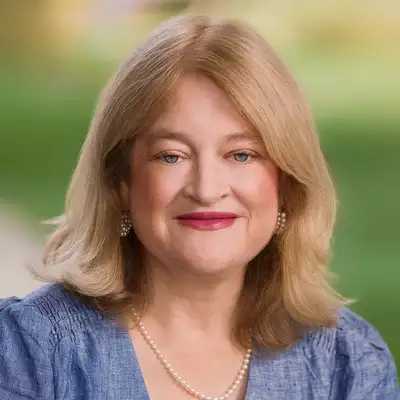
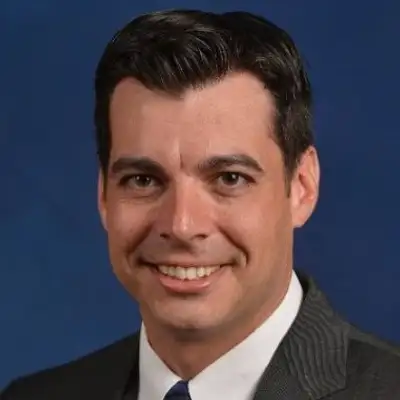
Welcome to 1818: A Saint Louis University Alumni Podcast. Along with my colleague and fellow graduate Meg Connolly, I'm your cohost Tony Minor. Each episode features an unexpected conversation about SLU’s background followed by a dynamic roundtable with alumni, thought leaders, and changemakers shaping the University’s next chapter. Each episode concludes with a spotlight on distinctive alumni events and services — so make sure to stay with us.
Whether you’re a Billiken from yesterday, today, or tomorrow, join us as we showcase the people and moments that define Saint Louis University. Let’s get started.
CONVERSATION WITH FATHER ROC O’CONNOR
Meg Connolly:
Welcome to 1818, a Saint Louis University alumni podcast. Today’s episode is dedicated to the Jesuits and all they’ve meant — and continue to mean — to SLU.
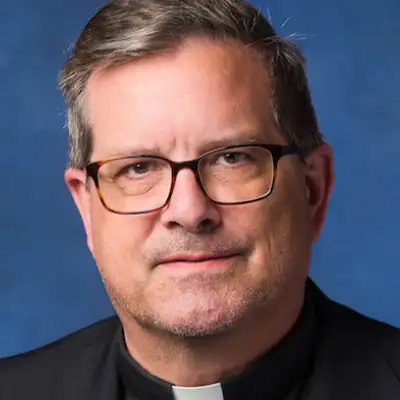
We are so lucky to be joined today by Father Roc O’Connor, a musician and member of the beloved St. Louis Jesuits, who are known worldwide for Catholic liturgical songs, including Be Not Afraid, Here I Am Lord, and City of God.
I’d like to start with the group’s earliest days and how it all came about at Saint Louis University.
Father Roc O’Connor:
Thank you, Meg. I’m delighted to be here.
We weren’t a group back then; there were five of us in various stages of studies at Saint Louis U. John Foley and Bob Dufford were finishing their theology degrees. Dan Schutte, myself, and Tim Manion were studying philosophy.
Dan, Bob, John, Tim, and I had written a bunch of music. John Kavanaugh — a great philosophy teacher and musician as well, who died about 2011 — was also part of that environment.
Schutte, Dufford, and I were being reassigned because we had finished our studies. Schutte went to Pine Ridge to teach at the Red Cloud Indian School. I went to St. Francis, South Dakota, to teach at the Rosebud Reservation. Dufford went to Creighton Prep in Omaha to teach math. Foley and Manion were still around for another year or two.
One of the things was we had all this music. Schutte asked the province for about a thousand dollars to record everything — 57 songs. Dan, Tim, and I, plus a whole bunch of other fine people — Jerry Stockhausen, Patty Sullivan, and others — recorded about 30–37 songs in 10 days.
Dufford recorded some additional songs, Foley recorded his music in the Fusz basement, and John Kavanaugh recorded his music with his family. That was going to be it — a terminal project. We were done.
But during that summer, a newly formed group called North American Liturgy Resources contacted Foley and Dufford and said they wanted to publish the music. They worked out the contracts, and Schutte spent the summer hand-notating all 57 songs and typing the lyrics. It was a massive effort.
Then one of the Jesuits suggested we might keep going. Suddenly, I was out in Berkeley, California, writing music. I hadn’t written anything yet — I was just playing 12-string guitar — but that summer in 1974 is when I started composing.
Meg Connolly:
And obviously this exploded once those songs were released. How did it feel to watch them become so essential to a whole generation of Catholics — not just in St. Louis, but worldwide?
Father Roc O’Connor:
One reason it spread worldwide was the Institute for Religious Formation housed at Fusz. Students and professors came from around the world.
Back then, we didn’t have photocopies — just mimeograph sheets. People took that music everywhere: Australia, India, and beyond.
It was surprising to learn people were singing these songs globally. But for me, it always felt local — whether on the reservation, in Berkeley, or later in parishes in Minnesota or Milwaukee. It was always about the local praying community.
People would come up at workshops and say how much a song meant to them, and I’d think, really? But I know the others had that same experience.
Meg Connolly:
I hope the more recent gatherings — like the bicentennial concert with the St. Louis Symphony and the final concert at Powell Hall — gave you a sense of just how meaningful your music has been.
Father Roc O’Connor:
Oh yeah. I get goosebumps thinking about Powell Hall.
When we walked out and started singing, the sound that came back — there were nearly 2,900 people — it was overwhelming. I turned to Schutte and shouted, “Holy crap, that’s loud!”
We started with Lift Up Your Hearts, and the sound just hit us. It was powerful — you could feel it physically.
Meg Connolly:
That was one of the most in-demand events I’ve ever seen. The number of alumni calling to get tickets after it sold out was incredible.
Father Roc O’Connor:
When we sang together, it became something greater than the sum of the parts.
John Foley, who was about 80 at the time, worked so hard to prepare. He sang one of his pieces — just voice and piano — and absolutely nailed it. It was deeply moving.
We gathered around him afterward — it was such a powerful moment of connection. Not something that happened every day, but when it did, it was one of the sweetest things.
Meg Connolly:
We’re so grateful you joined us today — for your memories, your music, and your spirit. Your connection to Saint Louis University has truly been a gift.
Thank you so much.
Father Roc O’Connor:
Meg, thank you. It’s always a delight to stay connected with Saint Louis U.
ROUNDTABLE
Tony Minor:
Hello and welcome back to 1818. Today we’re diving into SLU’s Jesuit history. I’m your co-host, Tony Minor, a 2003 alum.
Meg Connolly:
And I’m Meg Connolly, a 1990 and ’92 alum. Jesuits came to Missouri to educate the region — but their impact has gone far beyond that.
Tony Minor:
Absolutely. From launching the first radio station west of the Mississippi to pioneering geophysical research, Jesuits have shaped SLU in remarkable ways.
We’re joined today by two guests. I’ll let them introduce themselves.
Father David Suwalsky:
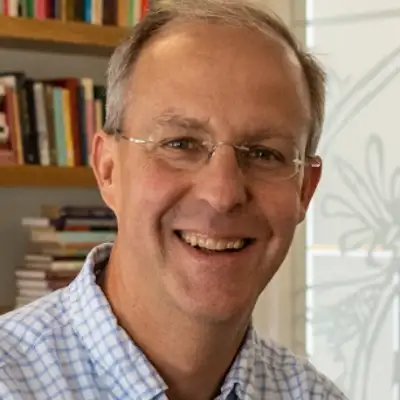
Hi, my name is Father David Suwalsky. I first came to Saint Louis University as a Jesuit scholastic in 1985 for philosophy studies. I later earned graduate degrees in history and American Studies.
Today, I serve as Vice President for Mission and Identity.
Dr. David Miros:
My name is David Miros. I’m the director of the Jesuit Archives and Research Center in St. Louis.
I first came to SLU as an undergraduate in 1990. I entered the Jesuit order in 1992, completed formation, and later returned to SLU for a doctorate in historical theology, which I completed in 2005.
Tony Minor:
Let’s start at the beginning — how did the Jesuits come to St. Louis, and how was SLU founded in 1818?
Dr. David Miros:
The university was founded in 1818 by Louis William DuBourg.
In the early 1820s, he invited Jesuits from the Maryland Mission to come to St. Louis. They arrived in 1823 and eventually took over administration of the university in 1829.
Father David Suwalsky:
DuBourg was fascinating — he had been president of Georgetown College before coming west.
He established the St. Louis Academy, which became St. Louis College, and eventually Saint Louis University. It started very modestly and grew into what we see today.
Meg Connolly:
How did Jesuits influence SLU from the beginning?
Father David Suwalsky:
They were among the most educated people in the region. Their expertise in languages, theology, and philosophy elevated education in St. Louis.
Dr. David Miros:
It’s also important to remember how primitive things were.
They faced harsh conditions, limited resources, and a diverse student population — including non-Catholics. That openness became a defining characteristic of Jesuit education.
Father David Suwalsky:
Their original mission was to serve Native American communities. But as populations shifted westward, they adapted — going out to serve people rather than expecting them to come.
Meg Connolly:
What are some pivotal moments in SLU’s Jesuit history?
Father David Suwalsky:
The cholera epidemic of 1848–49 is a powerful story.
The community prayed for protection, promising to honor the Blessed Virgin Mary if they were spared — and remarkably, no one died.
Dr. David Miros:
Another favorite moment is President Roosevelt visiting SLU in 1903 to witness a theological disputation. It shows the university’s national prominence.
Tony Minor:
In St. Louis, we always ask, “Where did you go to high school?” — it’s a way of making connections.
And when you meet a fellow Billiken, that connection is instant.
Through alumni networks, regional clubs, and events nationwide, SLU keeps those connections strong.
If you’re in St. Louis and graduated within the last 10 years, check out BOLD — Billikens of the Last Decade.
At SLU, the Billiken never fades away.
Learn more at slu.edu/alumni or visit our show notes for details.