Subscribe
Share
Share
Embed
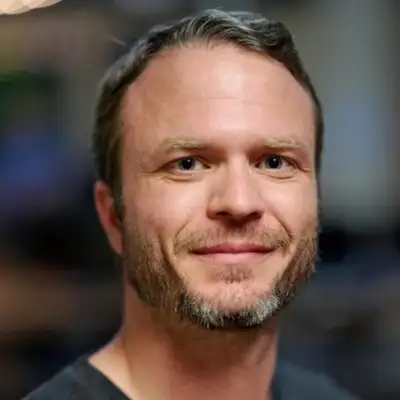
Techlore Talks brings you in-depth conversations with the experts at the forefront of privacy, security, and digital rights. Hosted by Henry Fisher, founder of Techlore and long-time digital rights educator, each episode features meaningful discussions with the people building, researching, and advocating for digital freedom.
From cybersecurity researchers and privacy tool developers to open-source advocates and digital rights activists—if they're shaping how we protect ourselves online, they're on this show.
Topics include: privacy tools and technologies, cybersecurity threats and defenses, open-source software, surveillance and digital rights, encryption, tech policy, and digital sovereignty.
New episodes released regularly. Subscribe and join the community at techlore.tech.
There are companies
that sell age verification services.
They're selling this as child protection.
But what they're really trying
to do is sell a product.
Today, I am absolutely honored
to have Carl from System76,
the Linux laptop manufacturer,
to discuss a lot of interesting things,
like, of course, the origins of System76,
what they do, how they do it,
what separates them from other options,
but also a lot of really interesting
developments, like California's
age attestation law in Colorado's,
and how System76 was actually a very big
part of the movement that was able
to get open source excluded.
So I asked Carl about what this looks
like behind the scenes, how you all
can get involved, and how we can overall
fight back against a lot of these
initiatives to keep free software free.
Without further ado,
let's get into the interview.
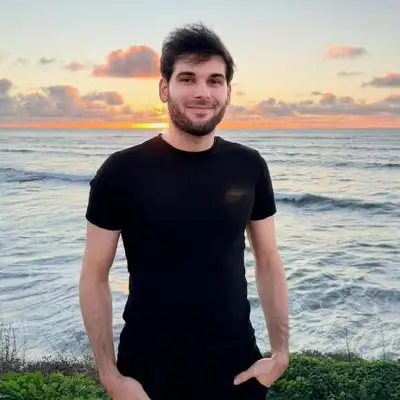
I'm Carl Richell, the CEO of System76.
And is a computer manufacturer
that specializes in Linux computers.
In the world of tech, we're kind of old.
We're at 20.
This year will be, November
will be 21 years.
So I was 25 when I started System76.
And I started in my basement with $1,500.
And the dream to make Linux
more accessible to people.
At the time, I think it
was, I don't remember what version
of Windows it was at that time.
I felt that Linux was a fantastic
desktop at that time.
I think we beat each other and ourselves
up quite a bit in the open source world,
but we make great software.
The bugs I run across in Windows
and iOS and Android and Mac,
and I think we have really high,
maybe we're a discerning group of people.
But the Linux desktop has been fantastic
for a really long time.
I didn't feel like it was really
well represented by hardware OEMs.
They were shipping servers.
They weren't shipping laptops.
They weren't shipping desktops.
I thought it deserved a dedicated company
that didn't ship Windows,
that shipped Linux because it was better.
And so that's why System76 was started.
Since then, we've just grown
organically over the years.
We're not really the typical Silicon
Valley, VC startup kind of company.
We build products and we support them
and we support our customers' sales needs,
helping them determine
which products they need.
We've grown just from doing that really,
really well across the company
and reinvesting in what we do up
to the point where today we have a factory
in Denver that we built from scratch.
And we bring in raw materials,
cut, shape, paint, add fasteners,
all of the work that goes into that raw
material becoming a computer
that ships out at the end of the week.
We build a Linux distribution, Pop!_OS.
We build an entire desktop
environment with Cosmic.
In a lot of ways, it's surreal
to look back on because we've become
this really unique company that designs
and manufactures hardware, that develops
an open source operating system,
that develops the entire experience that
the user has with the desktop environment.
And, you know, applied all
of that experience over 20 years
to building this experience
that we can now deliver.
And at this point,
I think it's along with what's happened
in the rest of the open source community,
we're delivering this elegant product
that is not just for, you know, us Linux
geeks and people that love computers,
but really a great product for everyone.
So that's me and System76.
Nice.
Yeah.
And I feel like to some people, especially
if they're newer to the Linux world,
they might have heard of System76
from a hardware perspective.
They might have even heard
from Pop!_OS or Cosmic.
But I don't know the percentage of people
who know they're all from the same team.
I know there's definitely a good number
of people who do know that, but I feel
like it's hard to dabble in those three
different places at the same time.
So do you want to expand a bit
on the order of operations?
Was it hardware first,
then Pop!_OS, then Cosmic?
What was the rationale
behind starting each one,
and what were kind of the timelines?
Right.
So it was starting with hardware
and we shipped Ubuntu.
We picked Ubuntu well before it kind
of started taking off.
We just believed in the ethos and the
project and the technical excellence.
And I think their focus on the desktop
at that time, in particular, over server.
That's what Mark really wanted to achieve.
Around, I think it was 2017,
Canonical was building
their Unity interface.
They started with building extensions
to GNOME to experiment
with their user experience, so the user
experience they wanted to deliver.
And then they decided to build
a desktop environment from scratch, and
that was going to be Unity 7, I believe.
What happened about 2017 is that Canonical
decided not to continue the Unity project.
I think they had really
good reasons for that.
And at that time, because Unity wasn't
coming, we decided this would be a good
time for us to respond to our customers'
needs that we know exist.
And that's the impetus between each one
of the decisions that we made over time.
So we had customers who were frustrated
with the number of notifications they
were getting from their desktop.
They were frustrated with the aesthetic.
They weren't able to do full disk
encryption out of the box from an OEM.
Because you couldn't really do
that without the OEM having the keys.
And if the OEM has the keys,
then that's not full disk encryption.
That's actually private.
So that means writing an installer
that can have that functionality.
So we built Pop!_OS
to address those things
that we knew mattered to our customers.
That resonated with our customers
and the broader community.
What's unique about System76
is that we have a huge hardware lab.
At that point, we had already been
shipping hardware for 12 years,
and we always have the newest NVIDIA GPUs.
We always have the newest
chipsets, CPUs, AMD GPUs.
So that means Pop!_OS had uniquely good
hardware support across the full stack.
So I think with the NVIDIA support
that listed a really tight feedback
loop between our tech support team
that's talking to our customers,
our sales team was talking to customers,
we were able to build a distro
that really resonated with people.
The next big step was Cosmic.
It was the exact same thing
as starting with Pop.
We knew what our customers wanted.
Bringing in pieces from different places
and trying to pull them together wasn't
really addressing our customers' needs.
And so we started designing desktops
from the ground up, understanding
where the things that we didn't
like about what we were capable
of doing before that.
Things like aluminum is very soft.
And so when a chassis manufacturer puts
threads into aluminum, you will only get
so many insertions and removals
from a screw because it's just soft
and that's what's going to happen.
So we use steel PEM inserts instead,
and those threads never wear up.
So the longevity of the product is better.
The serviceability
and upgradability is better, you know,
thanks to those kind of decisions.
We use a thicker aluminum because most
companies use one millimeter aluminum.
Your side panels feel flimsy
when you pull them off.
You can see the bend.
It doesn't feel good.
And so we use a thicker aluminum that
gives better durability and structure.
We like the aesthetic of anodization,
but it's kind of nasty
for the environment,
and so we didn't want to do that.
We use powder coating
that doesn't have any VOCs.
It's much, much cleaner
for the environment.
As we move towards laptops,
we need higher tolerances than anything,
so we're experimenting with other types
of finishes for laptops because powder
coating can be a little bit thick.
It's okay for a desktop,
but it wouldn't work for a laptop.
The case that we were purchasing,
the power button, if you pushed it
hard enough, it would pop through.
And this was a really high-end case.
And we're telling the manufacturer,
we think there's a problem here.
And they wanted like three months
of evidence and all of these things
just to make this manufacturing change.
And we're like, we can't do this anymore.
And so the power buttons
on all of our desktops,
they're these really high quality.
They're like the only thing
you touch on a desktop.
Almost.
You touch it the most often for sure.
It's got to be great.
It has this wonderful tactile feel
and click to it.
It's robust.
It's never going to pop through or break.
It's just a quality that...
Don't challenge people.
Yeah.
I would be impressed.
I would seriously be impressed.
But it's the kind
of quality we really wanted to deliver.
You know, you talk about customers and you
designing these different products.
And I want to ask you a little bit
about your lineup and then kind
of how it compares
to other Linux devices in a second here.
But who do you overall define
as your customers?
Like what has overall been
the characteristics of that?
Are they like more beginner friendly?
Do you see a wide range
of expertise levels?
Is it people's first dabble into Linux?
Yeah, I'm just curious,
like what you feel like your audience
is and what they resonate with.
I think for a lot in the open
source community, we kind of think
that Linux is a narrow group of people.
It's easy to overlay ourselves onto
who we think uses Linux, but it's actually
much broader than people think.
One of the stories I like to tell
about this is we survey
every customer for feedback.
We get the survey response back that says,
I love my new laptop.
It's fantastic.
I'm a developer, but this is too geeky.
It's never going to be mainstream.
And the very next survey that came
in was a gentleman who said,
I'm 75 years old
and I just got this desktop.
I'm retired.
I absolutely love it.
I think it'll be the last
desktop I'll ever need.
I understand the perception.
But when people actually,
it kind of goes back to what I started
with, why we started System76.
Desktop Linux is much, much better
than I think we give ourselves credit for.
That's true.
Especially now in 2026.
Yeah, and we tend to think
that it's kind of exclusive in a way.
But it really isn't.
And the customers that we have, they do,
certainly they lean more towards engineers
and developers and kind
of the first mover tech crowd.
But it really is a broad group of people
that go from all different places
and do all sorts of different things.
Very nice.
If you just had to break down your overall
product lineup in a few sentences,
what kind of overall desktop
options do you have versus laptop?
And do you have any other products
besides those two things?
So we do offer laptops,
desktops, and servers.
What we try to do is offer Linux
in a way that's very broad
for any kind of use case.
And they're incredibly powerful,
incredibly versatile.
So it's everything from the type
of product that just like a laptop
that needs really long battery life
and portability to kind of crazy things,
like a laptop that can have 192 gigs
of memory and 5090 GPU because they need
to load models into the 20,
I think it's 24 gigs on the RTX.
And they need to be able
to move that around.
We have one customer that does MRI,
builds MRI machines.
And when they're going to customers,
they need a powerful laptop
for processing that MRI in real time
in front of them as they're showing
them what their software can do.
Desktops, it's the same,
and kind of everything in between.
For some folks, you want a really
long battery life, and you want
to use a GPU sometimes for gaming.
So we have a lot of laptops
with hybrid graphics, and we put a lot
of care into the software work
to ensure hybrid graphics works well,
so the NVIDIA GPU is entirely turned off,
the longest battery life possible,
until you start a game,
and then it'll run on the NVIDIA GPU.
So those kind of things that optimize
the user's experience and the customer's
experience when they're looking
for something that's more balanced,
rather than ultra portable
or extreme performance.
Same for the desktop where we have
small desktops that look beautiful
and fit on the top of the desk.
And we have huge desktops that fit three
GPUs or 1600 watts and are designed
to go into a lab that's tuning or doing
inference or other kind of work in AI
or data modeling and those kind of fields.
Got it, yeah.
And the real middle thing I wanted
to discuss with you today
is definitely, it's weird.
I feel like maybe back
when you started System76,
you wouldn't have really guessed there
would be a huge political angle to Linux.
So, and it's not really political
in the sense of like left versus right,
like we normally see in different issues.
But this whole movement slash wave of age
attestation, age verification, et cetera,
that California proposed, I know
that things overall were toned down,
but I'd love to just overall hear
from you because on my end,
I was trying to follow the news.
I'm based out of California.
And so I really wanted
to make sure we were staying on top of it.
And I kept seeing you kind of being cited
as talking with different politicians.
And you were being attributed as a big
reason for why Linux was actually,
and open source was ultimately excluded
from these bills in some capacity.
I don't know if you feel like that's true
or not, but that's at least
how coverage was presenting some of it.
So I'd love to just hear
from you what happened behind the scenes.
How did you guys get involved?
Who did you talk to?
Of course, what you're able
to share just to kind of start the story.
I don't even know where to start
because that's literally
all I know going into this.
There's two things I don't
particularly enjoy, but that doesn't
mean they aren't important.
I don't like lobbying
and I don't like wearing a suit.
And I had to do both
of those for this one.
But it was really important.
And so I'm glad that we put the effort in.
So there's two things happening.
One is that there are a lot of, there
are companies that sell age verification
services and they are lobbying
and spending enormous amounts
to try to pass age verification,
meaning not just you say what your age
is, but your age is verified
through an ID or facial recognition.
It's all absurd, frankly, and we
can get into more detail, but they're
selling this as child protection.
But what they're really trying
to do is sell a product.
And when they think this huge installed
base of computers, legislatively, if those
operating systems are required to use
age verification, then they are required
to use these companies' products.
And they have a huge
market all of a sudden.
I've been in testimony
with those companies, or provided
testimony during hearings where those
companies are also providing testimony.
And it just could make you sick listening
to these arguments that are nonsense.
And you can see that I had the same thing
with right to repair
when we were advocating
and testifying for right to repair,
where wheelchair manufacturers and tractor
shops didn't want right to repair.
And their arguments are mostly
people are too dumb to do it.
And it's absurd.
But on age verification, when we heard
about it, we decided it was really
important for the open source community
to make the best effort we could
to avoid open source being,
or the law being applied to open source.
For lots of reasons.
One is we strongly believe the operating
system should not be a source
of demographic information.
And it's easy to combine bits
of demographic information
to determine who a person is, and then
you've identified a person,
and that has violated their privacy.
So when we first heard about it,
we wrote about it.
Senator Ball in Colorado had seen and read
what we wrote about age attestation
when I wrote the article
about our position.
And he wanted to talk about it because he
couldn't, he had trouble finding someone
in an open source community to talk to.
And, you know, an understanding challenge.
I think we in the community,
we kind of tend to think
of maybe politicians and legislative
process being very forward and far away.
But I really enjoyed working
with Senator Ball because he did listen
to what we're doing.
So he asked me to come in for a meeting.
And the moment I sat down, he said,
I have all these people coming
in and asking for carve outs.
I'm like, oh, boy, that's the start.
Because here I am to ask for a carve-out.
But then we get to talking.
The first question he asked me was, tell
me about your operating system
and what you charge for it.
And that was a wonderful opening
because I got to talk about what open
source is, how it empowers people
to use it to create their own things,
what an innovative driver it
is, how it's entirely free, how its
characteristics are the complete opposite
of something like Windows or macOS.
And by the end of the meeting,
he said, well, I think we should work
on exception for open source.
And that was fantastic.
They invited us
in for drafting the language.
We actually drafted a language
that made it into the bill.
So we had another stakeholder meeting with
more people in the open source community.
And the rest of the authors or co-authors
of the bill, we talked through it.
They were all in agreement with why open
source has different characteristics
and this type of law wouldn't apply.
And this was age attestation.
It's where you say what your age is.
You don't have to put in an ID.
It's not verified by anyone.
It is, I think, less concerning
than verification.
It's still concerning
because there are ways to take a bracket
and query that bracket and see
when that bracket changes
and then know someone's age, for instance.
So just try to avoid those as you can.
The strategy was to be successful
in Colorado, getting an exception in.
Use that as an example for California.
And much to our delight,
I was working with Red Hat and lobbyists
in California who had direct meetings
with the politicians there.
And we were able to get the exact
same language in the California bill
that exempted open source.
So it was a huge win,
but the fight isn't over.
There's a law in Illinois now
that has no exemptions whatsoever.
I've heard that there's a law being passed
around in Congress as well, but I have
not been able to see a copy of it.
And so I think if Colorado and California
could be the example nationally,
then maybe we can get something done here
that would circumvent the more abusive,
abuse was not the right word, but the, you
know, the, uh, Egregious, maybe?
Yeah, there's the laws
that would be more invasive to privacy.
That's the strategy and what happened.
Nice.
Yeah, no, I guess the coverage
is pretty fitting then.
I guess I have definitely you guys,
a big portion of you guys to thank
because I'm based out of California.
And so it's awesome to be able
to still boot up operating systems
and not have to put in an age bracket.
And actually, speaking of this age
bracketing scheme, there was the whole,
I don't know if I want to call it
a controversy with systemd and how systemd
had the pull request to add in some basic,
I don't know, would you call it metadata
or just device identifiers
that might have had to do with age?
And I saw very technical people
say it wasn't a big deal.
I saw some people say it is.
So I'm curious how that plays
into this, if at all,
or if that's something different.
And if you guys have had
to navigate that as System76.
The way I think of it,
it's a field for a birth date,
but nobody has to use it.
Pretty simple.
We have no intention
of using it in Pop!_OS.
If a distro wants to, it's fine,
but anybody can do what they'd like.
I think some of our engineers had
some technical issues with it,
but they didn't like.
But I don't recall the details.
I think they thought it might have been
able to be done in a more secure way.
But overall, again,
it's a field that they don't have to use.
Your phone and your laptop
don't stop connecting
just because you stop using them.
They can still share your location
and sync data in the background.
Those connections can help big tech
and governments track you
and give hackers a way in.
But that's why I like to use
Faraday bags like SLNT.
SLNT makes Faraday bags
that physically block wireless signals
to and from your device.
If you want a physical guarantee that
nothing can actually access your device,
just slide your phone in, close the bag,
and the connection stops.
There's no app, there's no settings,
no subscription.
It's literally a physical bag
that physically prevents
any signals from leaving.
It's one of the simplest ways to take
some control back over your privacy.
Check them out at slnt.com slash techlore.
That's slnt.com slash techlore.
And that code at checkout gets you 15% off
and free shipping
on any qualifying orders.
Now back to the video.
Something that I have issues with, and you
kind of alluded to this as you were
telling the story, is that a lot
of people, especially in the open source
world, privacy, security, et cetera,
feel quite disconnected from, I wouldn't
say just politics as a genre,
but they don't feel like they're ever
going to have their needs heard or met.
And I feel like your story is a really
good alternative to that story
that is overall told online.
So if someone's listening
to this interview and they want
to know how they can kind of get involved
or how they can make their voice heard,
they might not have
to write the actual language that ends up
in the bill like you guys did.
But what would you overall say
to people so that they
can feel a bit more empowered?
The prime mover for all
of this was the open source community
emailing the authors of the legislation.
That's the entire reason
that we were able to get involved.
It did make a difference.
It was, yeah, it just opened the door.
So writing, you know,
I can't speak for every legislator.
The three that I got to work
with, it was surprising to me even.
I've had different situations working
with legislators.
But they went in and fought
for an open source exemption for us,
along with my testimony.
And there's a lot
of strategy going on here.
It's politics.
There's weird stuff.
Part of the reason
that age attestation was brought up
was more so to avoid age verification.
It was like the lesser of two evils
because the age verification people
have this whole strategy of trying
to get it in later in Colorado.
So let's try to head it off.
It was awkward for me
because I'm testifying in favor
of a bill that the biggest part
of it isn't what I'm for.
But I understood the bigger picture I had
to keep in mind that this is better
than what it could be.
So, yes, emailing and the people
that got the most that were listened
to the most that emailed in were those
that had good technical arguments.
And the angry letters,
those they just they just kind
of get pushed to the side.
But if you really raise salient points
with the right representatives,
they got through in this case.
Nice.
So I guess to summarize
that, contacting them is good,
productively, not angry, and sticking
with as technical as they can be.
Yeah.
It was kind of summarizing that.
Did you hear from any of them?
Because I've heard some discussions online
that a lot of these people
might not, the emails don't matter
as much as a phone call, for example.
I've heard like different
takes on this online.
I don't know if you were able
to kind of get any of that info.
And in my case, it was email.
But I would guess that's per person,
per representative.
It's an issue I see a lot because anytime,
like when the California law was proposed,
I made a video about it, kind of overall
summarizing what it covers, what to do.
And I always say like, oh, hey, here's
how you find who your politicians are.
I'd say like 20% of the comments
are like, oh, you're an idiot.
You think that's going to do anything?
You might as well just watch paint dry.
And it's like, well, politics is kind
of watching paint dry sometimes.
And it's still how it works.
So it is frustrating for me.
But that's why I like your story a lot,
is it really shows that getting involved
can make a difference.
You're right.
We have one example to point to.
Maybe we can make more.
Do you have anything else to share
about that story before I kind
of dive more into some
technical aspects of you guys?
I would urge people in Illinois to look
at the age attestation law there.
A lot of the conversations we were having
about why open source
should be exempt were in person.
So I think it might be good
for us as a community
to articulate those reasons publicly
so that we can share them in Illinois
and with the representatives of Illinois
and see if it might be possible
to start a conversation about an amendment
like the one that happened in California.
Yeah.
And I guess before we move on, I should
ask, because I feel like we're speaking
about it as if it's a given, but I don't
think it's necessarily a given.
What are like, what is the very nuanced
difference between proprietary versus
open source software in this context?
What can someone cite as the reason
why open source should be exempted?
There are a lot of different angles.
Gosh, I kind of got to dig.
Yeah, I'd say just like even higher level,
just a couple higher level ones,
because if someone's going
to email a politician, they probably want
to be able to separate like, hey,
here's why it's different from iOS,
Android, etc. I guess regular Android
that most people are going to be using.
Well, I kind of recall
exactly how we discussed it.
I spent a lot of time on those arguments
to try to make them clear.
Now some of them are escaping me.
But by and large,
I think it's that the open source
community isn't one organization
that has a direct relationship
between a customer and a business.
Everyone that participates in open source
is the owner of the operating system.
The GPL does the opposite
of what proprietary license does.
Instead of restricting someone's use,
it guarantees their ability
to use it in particular ways.
And that's how the language was written.
Using that, you know, unlicensed,
that doesn't restrict the ability
to download, copy, and modify
and redistribute the source code.
Because of that characteristic,
there's no single entity like there
is with a proprietary operating system
to have the responsibility to require
age attestation or verification.
And it can just be removed
by the user anyway.
We also talked about the way
that open source enables innovation
and requiring age attestation limits
that in a lot of ways because open source
is used in ways that are simply automated,
creating user accounts
in an automated fashion where there's
an operating system without any user.
Even servers.
And servers as well.
In our factory, we have desktop
operating systems installed
throughout the imaging systems.
And not a single one
of them is a real person,
and they're all created systematically.
Those are the kind of things that you do
with open source, which you don't
really do in the proprietary world.
And those kind of functionalities would be
or could be hindered by age verification.
I guess you just call it an adult,
but it's not even a person.
And we don't even think of it as a person.
It doesn't have a username
that is equivalent to a person.
Those are a couple of the arguments.
I think it would be good
to put those together in a really easy way
for people to pull the ones
that are most resonant with them and send
to politicians or representatives to
make their arguments.
Very nice.
I had just kind of random tech questions
I grouped up here as you were talking.
I just took a quick note.
So the first one is, I feel like something
that people cite a lot with Apple,
for example, is their ability to do
like this top to bottom integration
because they control hardware,
software, everything.
And I don't think, you know,
you guys quote me if I'm wrong here,
but I don't think you're building
like your own silicon and it's not
like down to the chip necessarily,
but you still have a lot more control
over this entire user experience.
And I think that's overall
what you were speaking to earlier.
So can you kind of point to some examples
where you feel like that top
to bottom integration you have was a real
strength that maybe people can see
or if someone has one of your devices.
I'm just curious because I feel like
this is a commonly cited thing with Apple
and it's fun to see it elsewhere.
What makes Apple unique is that they
don't enable people to use their software
outside of their ecosystem.
And because they don't
enable that, they don't have
to even think about other hardware.
That's simple, but it's also limiting
in drastic ways.
And I mean, you have to buy their thing
to use their software
and their software can't go anywhere else.
It's a very closed idea of the world,
I think, and technology.
For open source, I mean, back when we
started, the lift to make hardware work
on Linux was much, much greater.
Not a single hotkey would work.
Display brightness didn't work.
Essentially, all of the functionality
and the embedded controller had
to be implemented just to get
Linux working in the way that you
would expect it to work on a laptop.
Today, it's a lot better.
Standards are better.
The activity of upstream manufacturers
like Realtek, even Qualcomm
and other companies that develop
the chips are making Linux drivers now.
That means like the Windows world,
more of the burden of bringing the product
all the way up is spread across
the chip manufacturers and the OEM.
But still today,
every product we release is a project.
And it's usually a month to two months
of engineering at the least
for a product just on the software side.
A lot of times we're doing things
like audio, uh, and sometimes it's small.
When you plug in your headphones,
does the audio mute?
Because you really don't want your audio
to continue on the airplane when you,
if you plug those in.
Does the sleep and suspend,
is, is still challenging, and so, uh,
we've got work with, uh, S0ix, um, uh,
and, you know, sometimes we ship with S3,
but we have high standards for being able
to do, you know, 150 simultaneous suspends
without any failures,
and that's what we consider passing.
So those are the kinds of things, um,
all that refinement that is the difference
between taking a product,
taking laptop, installing Linux on it,
and, like, it's okay, that thing,
you know, my touchpad lock doesn't work.
Oh well, that's, you know,
I can live with that.
But those are all
of the fine touches that we,
we put in so that it's the experience
that someone buying a Windows computer
or an Apple computer
or a Linux computer can say,
when I bought this, it had as good
or better experience than those others.
Yeah, it reminds me actually,
just crazy bad luck on your guys's end.
I remember when, and maybe you could speak
to what it was like on your guys's end
with Linus and his Linux challenge,
where I guess you might be able
to tell it better than I do.
But for people who didn't
watch this, Linus did
like a Linux challenge on his channel.
And I think Luke was the other person.
He went with Linux Mint,
Linus went with Pop!_OS.
And then Steam had like a broken package
that bricked Linus's system.
And it was just very bad luck.
But you can probably explain
a bit better what happened there.
It's funny.
I am working with a number
of folks right now because
we're releasing a new product next month.
And so a lot of review
systems are going out.
And I am not sending an email to Linus.
I decided.
I decided.
It's nothing personal.
And I don't even believe in luck.
I don't believe in that, but I think he
might be bad luck for me.
And so, no, I'm just not going to do
that because it was a 24-hour bug.
It was fixed in 24 hours.
It was bizarre because Steam didn't run
because of an issue in systemd.
They're completely unrelated,
or you would think so.
And that's what it was.
And then, you know, Linus has,
you know, quite a bit of an ego.
And I think if a computer says,
this is really dangerous,
do you really want me to do it?
He's just going to say yes.
So he did.
But, you know, we're past that one.
And there are going
to be things like that.
You know, you take your lumps
when you build stuff and you move
on and it's all right.
Yeah, I was curious what it
was like for you guys behind the scenes,
because I remember when that happened,
it was so unfortunate.
But there were a lot of, like, I think
a lot of Linux people came forward
and I think really did a good
job defending you guys.
I saw a lot of videos kind
of, like, defending Linux and kind
of explaining what happened and why it
was, like, a very unfortunate time to bug.
Because all those people it hasn't
even happened to.
And they've used it for years
and it never happened.
I had another Linus experience
that was the same.
This is the second one is when I said,
okay, this is just bad luck.
We released Cosmic,
and it's a very first release
of a platform that's going to be what we
build on for the next 10 years.
So it's early stuff, you know?
Well, he just happens to decide
to do another Linux challenge
and do it live at a gaming LAN party.
And we just released this thing.
It is as fresh as a newborn baby,
and it's like the very first release
of when macOS transitioned to their new
platform and there were some bumps along
the way to get to where it's at today.
That's where we were at.
And sure enough, we didn't decide
to do it live at a LAN party.
And man, okay.
I'm good with Linus.
Maybe if he wasn't obviously
so successful as a creator,
he'd be a great person to hire to test
to break your products internally
before they go out into the world.
One thing to kind of get back
to the tech stuff, you kind
of mentioned that Linux didn't used
to be as good about certain things.
Like standards have gotten better.
Overall, it's gotten, I don't want to say
easier, but some things are no longer
as big of problems as they used to be.
But I'm sure there still are new ones now,
where would you overall say something
in the ecosystem that still feels immature
to you, that is something you're looking
for in the next five years is going
to really upgrade people's experience
once it's kind of resolved?
I do think about this a lot
as we're building Cosmic.
In general, I think if we want
to be really successful,
for Linux desktop to be really successful,
we need to not be afraid of users.
And I mean that in the sense, in users'
ability, and build the things that we
know work really well and just make
them more accessible to people.
So when I talk to my team, this story I've
told plenty of times is about Internet
Explorer and Firefox and Opera.
Back when Internet Explorer had
a large piece of the market, Firefox
and Opera were quite a bit smaller.
Opera came out with tabs first,
and Firefox came out with tabs.
We couldn't imagine browsing
without tabs today.
Microsoft thought that would
be too confusing for their users.
And so they waited years until they
finally put tabs into Internet Explorer.
By the time they finally did it,
they had lost the entire market.
The point of the story is, don't be afraid
of being too complex for users.
They're much smarter, capable, interesting
people than, than you'd expect.
So it's okay to build advanced
interfaces, to not copy.
Instead of copying,
try completely new things.
And I think we're getting better
and better of that in Linux.
Wayland seems to have opened floodgates
to people experimenting
with different kind of compositors
with scrolling tiling and animations
and features that are unique.
And I don't know what's going to be the
thing that breaks through, but that kind
of experimentation is the opportunity.
It will never happen without it.
Good answer.
How do you feel about the mobile
space right now for Linux?
phones?
Is it something you guys are following,
keeping track of?
I feel like that's still
where Linux hasn't quite caught
up yet is in the mobile space.
That's a challenging area.
I have a lot of thoughts about this.
I wonder what an AI phone might look like.
There's going to be something
that disrupts phones.
There will be just like there's now
something disrupting Google and search.
I have a lot of thoughts
about that, about AI in general
with when it comes to privacy
and what's happening in that entire field.
I think we have a responsibility there,
open source, because these things
are undeniably very useful and powerful.
And a lot of our customers are doing
really incredible things with them
in robotics and healthcare
and material sciences.
But I think there's
probably an opportunity
to leapfrog the app ecosystem in a way.
Perhaps if there are really
well-defined APIs, the application
could be developed by an AI.
And then if you're somebody like Spotify,
your app looks exactly how it should,
whatever platform it's on.
If there's a well-defined, well-typed API
that a simple application interface
could be built upon, which is a lot
of things, except for games.
Games are unique, really unique.
It might be that because somebody like
Spotify doesn't want to make four apps
and maintain four apps across ecosystems.
And there are things like Flutter
and Electron that make
that a bit more approachable.
But perhaps if somebody like a supplier
provides an API and you can build
an app using an API for your platform,
then that platform can take
on the burden of the application itself,
but it fits in with any platform.
That's interesting.
I don't know how feasible
that is or how wild that is.
Well, you said experimentation and ideas.
I feel like it's a good example of that.
Because the thing that we have to get past
with phones is those app stores.
That's the thing
that I think really holds us up.
Otherwise, it's just too difficult.
It's just too convenient.
You get a smartwatch
while you have an app,
and that's how you interface with it.
It's the same for a bike computer.
You use an app to interface
with it and use everything.
Or a remote for your TV, or a Roku.
And so sometimes I lose the remote
and have to use the app.
But how do we replace that?
I think that's the key to competing
and creating an open source ecosystem.
How do we get past those app stores?
On the rest of the environment,
we're building Cosmic to be a responsive
app that works really well
from phones all the way up to TVs.
So I think from the open source community,
GNOME is doing it too, and KDE as well.
So I think from a desktop
environment standpoint,
we can build a great, great experience.
It's just those app stores.
Do you already have or are you planning
in the future to have any ARM devices?
Perhaps.
I have a strange relationship with ARM.
I don't feel ARM is very open.
If there are really good ACPI and EFI
implementations on a platform, then you
can install any operating system on it.
If not, you just can't.
And I think that's a terrible
characteristic of hardware.
And so we wouldn't release
hardware that's like that.
You should be able
to install any operating system.
Qualcomm didn't do that.
And we had Snapdragon hardware
that we were evaluating.
And for that reason, we decided
this was not a good route to continue.
Qualcomm is working on that now
to have sane ACPI and EFI implementations.
That could change the game
for ARM products.
But I think that that's necessary
for it to be an open enough platform
that we would be really interested.
Yeah, I just saw in my RSS feed a few days
ago, we're recording this early October,
but the new Microsoft devices,
I think they're using the new Snapdragon.
I'm not familiar.
Is it the X2?
I think they said it's going
to be Linux compatible.
Does that impact you guys at all?
Or is that a different issue?
It depends how well they do.
Okay.
I'll believe it when I see it.
Yeah, I think it's fair.
Yeah.
Microsoft is interesting
where they choose.
And maybe, yeah,
sometimes they choose to support Linux.
Sometimes they don't.
Arm makes it really easy
for hardware manufacturers to lock you in.
Yeah, that's fair.
That's not our thing.
We're going to have an opposite of that.
So I want to see Arm Silicon
that doesn't do that.
Are you looking at RISC-V
at all or anything else?
From time to time, but not in much depth.
Okay.
AI.
It sounds like you're not anti-AI,
but you might be anti how AI can be used
or the privacy implications, et cetera.
I don't want to put words in your mouth,
so please clear up anything to expand
on how you actually feel about it.
But are any of the devices that you
guys have geared towards AI usage?
Is that something you plan
to embrace more, push away from?
I know it's very polarizing in the Linux
world, so I'd just like to hear a little
bit about how you guys are juggling that.
Yeah, I'm happy to share
my thoughts broadly on it.
So we build a lot of products
that are used by companies
that are developing AI models or doing
tuning or inference or other areas
that they're working in, like the fields
that I mentioned earlier,
doing pretty cool things in robotics
or pharmaceuticals or space,
lots of neat applications.
My concern isn't the kinds of things
that they're doing, because they're doing,
we think of ChatGPT and Anthropic,
and we think that's AI.
That's not AI.
That's one corner of AI.
That's actually the corner
of AI I'm most concerned about.
But the stuff our customers are doing
is to enhance their products in ways
that they couldn't do before.
Robotics are being enabled.
The big thing that was missing from
robotics is machine learning in this kind
of type of capacity where it could.
It really started with computer vision
and all this AI stuff.
A robot that would remove packages
from a truck would go
in and grab the one at the bottom
and the rest of the boxes would fall.
It couldn't reason through how should
I actually do this, all of these pieces.
And now it's able to do
that, and it's kind of expanding the world
in really interesting ways
for manufacturing and automation,
things that just make us more efficient.
The things that concern me is that it's
so useful in a lot of ways that I think
people are going to give up things they
shouldn't give up for its usefulness.
They're going to do things
that I think are just completely crazy,
like share their tax return with an AI
to see if they miss something.
Or access to your bank account
or your retirement plan
or your user account on your computer.
You don't know if an AI,
if an LLM will reason that sharing
your private key is the right thing to do.
You can't know that.
And it's just too risky.
But because it's so useful,
I'm afraid that people are going to do it.
Look at the Muse app from Facebook and you
give your contacts, your transactions,
your emails, your messages.
It's your entire life.
And to have a personal assistant, yeah,
that's what a personal assistant kind
of has access to.
But that human has gone
through interviews and signed an NDA.
And there's all these other things
that go together to trusting that person.
And we're just handing it over.
You can hold a human liable, too.
You can't do it with a machine.
And you can't, precisely, yes.
And so it's very frightening to me.
Because I think it's so useful
that people are going to do it.
And as an open source community,
what we should be thinking
about is how can we help people get
this kind of capability responsibly?
Right.
You know, small private LLMs
and carefully sandbox and thinking through
security before jumping in the pool.
You know, all those kind of things,
because I would rather see a world
where people didn't need to give those up
to third parties to have that capability.
There is a time when I want us to think
about this because of those reasons
that people are going to, I think, give
up too much because of the usefulness.
And if other people in the open source
community are thinking about it
in this way, yeah, I think let's think
about how we can harness the good things
without all the bad characteristics.
You know, maybe we
can build something that helps
people avoid giving away so much.
Very nice.
Memory prices, is that something
that has impacted you guys
at all as a result of AI?
Is that been a problem?
Yeah, they are higher.
A lot.
I don't really talk about it much because
there's nothing I can do and there's
nothing that's going to change.
So it's one of the things,
it's just what it is.
Computers are more expensive
than they were before.
I don't like it.
I don't think anybody should like it,
but I don't know when that changes.
So it's kind of just what it is.
Got it.
I wanted to ask earlier,
you mentioned that you took profits,
put it back into the company.
This is early on your journey.
So are you guys only self-funded
with your own profits or do you have
any investors or anything like that?
We are.
Yeah, just an organically grown company.
Nice.
That's awesome.
Yeah, congrats.
I wish every company was done this way.
It would prevent a lot of issues
in the world, I think.
It's not easy.
It's a challenging way to do it.
So I don't know the right way, but I love
the freedom of us just answering
to ourselves and our customers.
Okay, congrats.
It's a big deal.
And then just kind of what's next.
I know you said you already know,
but I don't expect you
to share everything, but whatever you
feel comfortable sharing, if anyone's
listening, they're a big fan of you guys,
what can you kind of tease for them?
So we have a new desktop coming out next
month and I'm extremely excited about it.
I don't want to share too much because
there's going to be a reveal and all
of that, but it is absolutely gorgeous.
It's a product I'm really proud of.
We'll be shipping Pop!_OS 26.04 very soon.
We're on 24.04 right now.
There was this really long period where
we're building a desktop environment.
We shipped 24.04.
I wanted to ship 26.04 very soon
after that, but we decided
to get ambitious and do some more things.
And so 26.04 will
be coming out this month.
Pop is different than...
We use the numbering that Ubuntu does,
but we're quite a bit different because
the kernel, Mesa, a lot of the packages
are updated throughout its life.
So it's almost like a rolling release,
but with a more stable base.
And Cosmic continuously moves too.
So your desktop isn't stagnant.
It's always upgrading.
The other things I'm thinking
of are really, really cool.
And I can't tell you what it is because
I really want to do a reveal
when it's ready to show you.
But the things we're doing
are both getting smaller
and bigger at the same time.
And besides products coming next month,
next year, we're going to show people
what we're really, really capable
of now that we've built Cosmic.
Cosmic can do things
that are very, very unique.
We're going to start showing
people that next year.
Wow.
Congrats.
Yeah.
Congrats on everything so far.
Thank you for the teasers.
And I guess just a fun question to, you
know, let's say Pop!_OS was eradicated
from the world in some awful event
and you have to pick a different distro.
What are you picking for yourself?
Oh, I like that question.
I can't live without Cosmic today.
It's my favorite.
You can put Cosmic on any of them.
Yes, Cosmic's going on anything.
I'm thinking, okay, can I answer two?
Is that fair?
You can have a work and personal device
or however you want
to split it up or dual boot.
I would go for CachyOS and AerynOS.
I really think there are kind
of neat things happening on both of those.
And I've used Cachy
and I've used AerynOS, but not as much
as I think I would like to.
So I want to dig a bit more into AerynOS,
especially if they have some neat stuff.
Very cool.
Well, how can people follow you guys
if they're listening and they want
to learn more and keep up
with what you guys are doing?
X or Mastodon are probably the easiest.
Just at Carl Richell.
And System76 is just at System76.
And pretty easy to find us
in both those places.
Awesome.
Thank you, Carl.
Thank you.
And that, everyone,
was my interview with Carl from System76.
You can learn more about Carl
and System76 down in the description.
And of course, if you liked
this interview, please give it
a like or a rating or leave a comment
on whatever platform you're on to help
support the podcast and keep it growing.
And if you want to support what we do,
become a Techlorian down
in the description.
We have a private signal group and it
keeps interviews like this possible to do.
Thank you all for watching and I'll
see you next time on Techlore Talks.