Subscribe
Share
Share
Embed
How to Build a Nonprofit isn’t your typical “thought leader” podcast. It’s real talk with real people who’ve dared to start something meaningful—and managed to keep it going (most days).
Each episode dives into the messy, inspiring, behind-the-scenes stories of nonprofit founders and builders. We talk about the stuff people don’t usually put on grant reports—burnout, bad board decisions, flopped fundraisers, surprising wins, and the little pivots that made a big difference.
If you’re starting a nonprofit, scaling one, or just wondering if you’re the only one making it up as you go… you’re in the right place. This show is here to remind you: you’re not alone, you’re not crazy, and yes—this work is still worth doing.
Pastor Keith Davis (00:03)
And for 18 years, the organization had been running without a budget. So it was not a difficult thing to take it to that next level.
And for 12 years now, we've been operating at that next level. And now where we are now is quite honestly, we're raising up leadership. The kids that we sowed into 12 years ago, they're now adults. And for the first year, they're actually running the summer program.
Jordan Thierry (00:30)
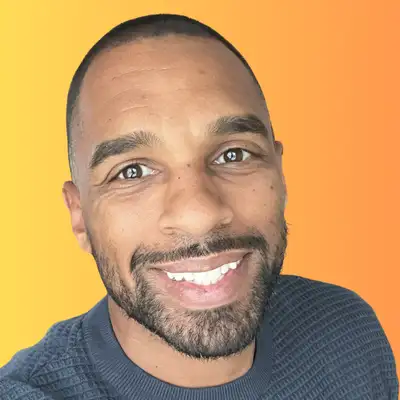
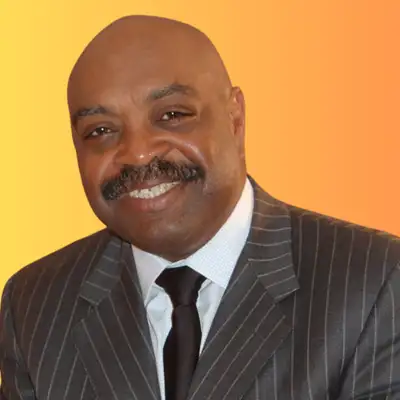
I'm your host Jordan Thierry, and this is How to Build a Nonprofit. In this episode, I speak with Pastor Keith Davis of the Camden Dream Center. Originally started as just a nonprofit community service arm of his church 30 years ago that his wife led. And 12 years ago, he came in.
to really focus on the organization and took it from, you know, an organization with no budget and no staff to now having a seven figure budget and 25 paid staff Pastor Davis grew up in a rural community, segregated community outside of Camden, New Jersey.
and really built his love for engineering, science, and technology, and entrepreneurship through watching his grandfather and his father
And he took this love of science and technology and his entrepreneurial spirit into his career and early on built his own business. years later, starting his own nonprofit, that experience he's been able to really utilize to help grow the Camden Dream Center to what it is today.
Jordan Thierry (01:37)
All right. I think we're good. We're recording.
Could you start by just, you know, telling me a little bit about like Camden and the community of Camden? Can you characterize it for myself? I haven't been there in probably 10, 12 years.
Pastor Keith Davis (01:51)
if we go back 10, 12 years, you will recall back then it was probably the most dangerous city in America, as I recall during that period. And prior to that, ⁓ 50 years prior, it was the first Silicon Valley.
Jordan Thierry (02:04)
Right.
Pastor Keith Davis (02:13)
of America. It was the high-tech center for innovation. You had RCA here and Campbell's Soup. It was the center of excellence when it came to innovation. So I grew up in an environment with scientists in the city and very affluent community of the city.
Jordan Thierry (02:18)
Really?
Pastor Keith Davis (02:37)
family did not participate in that affluence, but it was a very economically perspective. It was a solid city. And RCA was just, you know, the first radio and TV was invented right here in the city of Camden.
And it was because of white flight. mean, a lot of your affluent people moved out into the sprawling suburbs and as a result, it left not pockets of poverty, but it just, it was, it left poverty.
So that is the environment in which I pastored and continue to pastor today from a perspective of our my prophetic calling. But our church 30 years ago started the non-profit to address quality of life not so much religion and spirituality but really to look at the ills of the community and craft solutions
that would address the ills within the community. is the
backyard of Philadelphia proper, South Philly right over the river. so it's seeded within a large Metroplex area here in New
Jordan Thierry (03:39)
Mm-hmm.
So pastor, you born and raised in Camden.
Pastor Keith Davis (03:51)
I was born in Camden and they tell me for four months I lived in Camden, my parents were like those who realized that after they saw me, realized, know, when Moses' mother saw him, they said, he's a proper child. think my parents, when they saw me, they said, we're going to get him out of Camden. And I thank God they did because...
Jordan Thierry (04:09)
Hahaha
Yeah.
Pastor Keith Davis (04:18)
I was raised outside of the city in a farming community and for the last 30 years I just came back and gave my life to improving conditions here in the city. But my family is from Camden, yes.
Jordan Thierry (04:32)
Wow. And so you grew up in a farming ⁓ community. What was that like for you at that time? Was it a predominantly white community, ⁓ the farming community that you're speaking of, or was it African-American community? how do you feel like that shaped ⁓ who you became?
Pastor Keith Davis (04:52)
Wow, that's a great question because I didn't know white folk existed. know, it was a black community, but they called it a settlement
My grandfather was thrown out of the city because it came up from North Carolina, the Raleigh-Durham area, and the only thing he knew how to do was hustle pigs and hustle chickens and hustle ice. He was an entrepreneur, innovator, as I understand it, very creative, built houses.
Jordan Thierry (05:10)
Yeah.
Wow. Yeah.
Wow.
Pastor Keith Davis (05:23)
built his own home, he ⁓ delicatessen, he had his own gas station. mean, grandfather, they called him Big Red. He was an innovator. So they threw him out of Camden. So you can't bring in pigs and chickens and all this livestock. You have to leave. So he found some property.
Jordan Thierry (05:29)
Wow.
Wow. Yeah.
Pastor Keith Davis (05:42)
Outside of Camden and that's where he left and my father was the oldest of the children went with grandpop in order to establish a homestead outside of the city so and there again pig pens You know big saws. I remember dump trucks gas station, you know the meat cutter as he would Bring the meat in and and process it and people come in to buy
Jordan Thierry (06:02)
Mm-hmm.
Pastor Keith Davis (06:12)
⁓ They didn't have wah-wahs back then or these convenience stores. We had the store in that community. Our family did, so yeah.
Jordan Thierry (06:22)
So
lot unity in the community, interdependence back then, ⁓ and those small communities especially, right? Having to stick together and really rely on one another's, ⁓ all of our contributions, I guess, as community members in one way or another.
Pastor Keith Davis (06:43)
Wow, mean, no one's ever asked me that question, but it's triggering my memory in such a way that, is... All of us who were raised in that era, in that community, always wished our kids could have seen that, because it doesn't exist anymore. That community doesn't exist like that any longer, but you're absolutely correct. Spot on.
Jordan Thierry (07:00)
Yeah.
Yeah.
Wow. And so for you, you eventually got out of that community, came into the city, I'm assuming, ⁓ and started your career, where you landed in technology. Is that right?
Pastor Keith Davis (07:19)
Yeah, well what happened is my uncle ⁓ was the first black electronics tester at RCA. And as a result, my father gravitated towards technology. He was brilliant in mathematics and problem solving and ⁓
Jordan Thierry (07:28)
Okay.
Pastor Keith Davis (07:37)
father was a brilliant guy. Didn't have the formal education but informally and and home studies and and being very studious. Reason being he didn't have that ⁓ formalized education because his mother passed when he was
he had to help raise the rest of the kids. So, you know, the story goes back then. And so he became mom and dad of the house because I said his dad was an entrepreneur. He's out doing his thing. So it was my dad that cooked and cleaned and kept everybody safe and raised them. But no question, brilliant. And so he and my uncle.
Jordan Thierry (08:06)
Right.
Pastor Keith Davis (08:19)
⁓ They were, they built businesses and they had their local TV repair store in Camden. grand, my uncle was also an incredible entrepreneur, owned properties all over and ended up becoming a school teacher and teaching kids ⁓ entrepreneurship, how to fix cars and how to work on technology. And so it was just wonderful. But to answer the question more, more directly,
I became fascinated with technology at a very young age. mean, in my basement was everyone's TV set. And he's down soldering wires and working on it. At nine years old, I'm watching this 10 years old. By the time I was 13, I built my own hi-fi systems, watering and you know what I mean? Just playing with old electronic gadgets. I acquired a passion for technology.
Jordan Thierry (08:48)
Mm.
Wow. Yeah.
Yeah.
Pastor Keith Davis (09:12)
And so that's how I started into this day. I'm 72 years old next month. I still stay up all night tinkering with things. I mean, I see a robot in my background now. What makes this work? What is the programming that will control this device? If you can control this.
Jordan Thierry (09:27)
Mm-hmm.
Pastor Keith Davis (09:33)
Kids learn the basis for how to control rocket ships and how to land on the moon and all kind of amazing things if they can just grasp technology. But that's where it started for me. Today, when kids see something like this, my hope and my dream is that they would become as inquisitive as I was back then when I saw the light bulb light and ⁓ create a career for themselves in this space.
Jordan Thierry (09:59)
Wow, that's fascinating. For me, one, it just demonstrates how important where we grow up, influence and shapes us and what opportunities are there, what people are doing for work in those communities. with RCA being such a significant ⁓ employer in your community, ⁓ it gave someone like your uncle an opportunity to actually, well,
I don't want say gave, I'm sure he fought really hard for that opportunity, right? ⁓ But to be able to do that work and then the people around you also learning that craft and having a chance to engage in really the true kind of spirit of science and engineering and technology. ⁓ But then also, you know, hearing about the entrepreneurship and for black folks to have that freedom of
Pastor Keith Davis (10:30)
Mm-hmm.
Jordan Thierry (10:55)
entrepreneurship and hustle. And we talk about it today like it's, you know, like it's a new thing or a special thing, black owned businesses and the like. But it's just a reminder that, you know, ⁓ in decades past, you know, we we've always had that spirit. And also we used to have a lot more of our own ⁓ businesses and creative entrepreneurial pursuits ⁓ that affected not just our own economic interests, but just
Pastor Keith Davis (10:56)
Mm-hmm.
Jordan Thierry (11:23)
the people around us, right, our kids and our nephews and nieces and the kids in the neighborhood that got connected to those kinds of ⁓ those trades, those ways of thinking and potential pathways for their own ⁓ careers. And so ⁓ you ultimately ended up getting ⁓ starting having your own business in the technology sector. Can you tell me a little bit more about that?
Pastor Keith Davis (11:48)
Oh. I realized at an early age, in my early 20s, that I wanted more than what a job could provide. And I began to study the best and the greatest and the most.
Jordan Thierry (12:00)
Mm-hmm, yeah.
Pastor Keith Davis (12:05)
the greatest thinkers back then of how to start a business. And so because I was a technologist, it just made a lot of sense. And a group of us put together a company that at the divestiture of Bell, I would put together a company that would distribute cell phones. Back then there was these big monstrosity things and the brick and...
Jordan Thierry (12:27)
Yeah. ⁓
Pastor Keith Davis (12:29)
So we were generating, but then, you know, we were generating, when we were generating, you know, $40,000 a week back then, that was a lot of money. said, man, this is a lot of money. And eventually, yeah.
Jordan Thierry (12:40)
Yeah, it's a of money today. That's
true.
Pastor Keith Davis (12:43)
We said, eventually the partnership, because we didn't know what we were doing, we all riding around in brand new Mercedes, Benz's and all that, because we were young in our 20s. We didn't know what we were doing. All that we know, we were successful in selling stuff and making a lot of money and being foolish. And then, you know, that particular partnership ended and I started out on my own and said, okay, I'm going to have something here.
Jordan Thierry (12:53)
Yeah.
Right.
Mm-hmm. Mm-hmm.
Pastor Keith Davis (13:13)
And I became a federal contractor I ⁓ became an 8A certified company and all federal contracts. I was working in the Aegis environment, the Lockheed environment, designing major ⁓
technologies that were secure, military bases. It was very, very, it was, one year I became the small businessman of the year and was invited to Washington DC, to the White House. So it was really.
Jordan Thierry (13:40)
What?
Pastor Keith Davis (13:46)
highly successful career in business that I, to this day, I always say thank God for grandpap and what he passed down to our parents and what I picked up ⁓ in genetically and also in observation. And many of my cousins, you know, I've got nephews that are millionaires, own their own medical businesses. And so our family is about entrepreneurship, it's about education, you know, and ⁓ we love God too.
Jordan Thierry (14:07)
Wow.
Yeah.
Pastor Keith Davis (14:16)
consistent in our families that we believe that that spiritual moral component is absolutely essential because at the end of the day, if you don't know how to treat treat people well, it's going to be hard to build anything that is significant.
you can see this in all families that held to that principle of moral, spiritual values, people first, family first, you know, and as a result.
you know, we've been able to do some things and my business career has been extraordinary. But even now, my ministry career integrating the Dream Center, we don't really mix the two. They're two separate entities. But the impact that we're having because I'm a clergyman in the community is extraordinary.
Because at the end of the day, leadership is about trust. And why not trust the guy who's been feeding us in his food pantry, right? For 30 years. And as a result, we were able to work with Feeding America, build some hydroponic farms, working with high schools, teaching families how to grow their own foods in their homes, hydroponically. So that's, that's hyper local. You know, you don't need to go to the store to get your collard greens, not so much your collard greens, but your lettuce and the other leafy green vegetables. You can grow them.
Jordan Thierry (14:59)
I can imagine.
Right, right, right.
Yeah.
Mm-hmm.
Pastor Keith Davis (15:28)
right in your own kitchen and yet your kids can now understand and learn how technology is driving this whole entire ⁓ innovative landscape.
Jordan Thierry (15:37)
Wow, that's beautiful. excited to delve in more because 30 years, is this your 30th year at the Camp DREAM Center?
Pastor Keith Davis (15:48)
Yeah, 30 years, my profit, thank you, has been in existence. And I've been working for the last 12 years, just when I retired from my business life. There's not enough for me to just preach on Sundays. I have to be busy. I found something to do.
Jordan Thierry (15:51)
Congratulations.
Sure.
Yeah, yeah, yeah, yeah, absolutely.
Yeah, it's in your blood, man. It's in your blood, you know, like you talked about with Pop Pop, right? ⁓ So can you take me to just a few years before you started the Camden Dream Center? Were you a clergyman at that time? ⁓ And how did the idea for the nonprofit start? ⁓
Pastor Keith Davis (16:15)
Yeah, man.
Jordan Thierry (16:37)
out of your congregation.
Pastor Keith Davis (16:41)
always been bivocational, so I've always worked in something while being in ministry because I just, and I just, I swear I raised, I just can't go out there and say, y'all take care of me.
Jordan Thierry (16:55)
one thing.
Yeah.
Yeah.
Pastor Keith Davis (16:59)
I
just can't do that. You know, they're raising the offerings to take care of me. No, I worked. I worked throughout my entire 50-year journey of being in the ministry. And I don't think I've ever had, I've never had a salary. I think maybe one year they tried it said, y'all can't afford this. So it's always been me giving in ministry. So that necessitated.
Jordan Thierry (17:20)
Yeah.
Yeah.
Pastor Keith Davis (17:27)
like the apostle Paul, I need a tent-making business. But I've never ever ⁓ did business to the extent that it deprived me of the time that the ministry required. I've always built out management infrastructure, raised up young preachers and leaders within our church environments. I wanted to address that.
Jordan Thierry (17:40)
Mmm.
Pastor Keith Davis (17:51)
that I'm not good at raising money from poor people in the city. But I hold them responsible for what they need to do to support the church. But to try to shear the sheep to take care of me, that's never been the thing with me. Secondly, I'm very vertical. I connect with God and I hear from him regarding what I'm supposed to do, you know?
Jordan Thierry (17:57)
Mm-hmm.
Pastor Keith Davis (18:20)
And my wife, all, you know, thank God for wives. told me, she told me 30 years ago, you're doing a good job changing these people's lives spiritually, getting them to heaven, but you're doing nothing for them now. They need jobs. She said, can I start a nonprofit? Will you allow me to do that? I said, yeah, you got my approval, go ahead. And so that 30 years ago, that's what happened. My wife literally gave birth.
Jordan Thierry (18:31)
Ooh, kept it 100 with you, huh, pastor?
Pastor Keith Davis (18:47)
to the nonprofit. It wasn't until 12 years ago when I retired from a business life that I got involved. And what I did, it was already a system in place. There was already infrastructure in place. These programs were already there. They needed to be updated. And that's what I came in. I brought some MBAs from Harvard and Wharton in and spent an entire year recrafting what this nonprofit can do based on what it's been doing.
Jordan Thierry (19:14)
Hmm.
Pastor Keith Davis (19:15)
and be able to scale it because now we're bringing in value proposition. And so when we have that value proposition, I don't have to beg for money. People just want to sow and they want to give because now you're able to demonstrate the impact that you're having within these communities that you're serving.
Jordan Thierry (19:35)
So you got involved 12 years ago. So 18 years in before you got involved, what was the kind of size of the budget? Did you have any full-time staff or was it largely volunteer-based ⁓ food distribution, food pantry, tutoring, that sort
Pastor Keith Davis (19:56)
Yeah, it's very, all volunteerism, all volunteers.
Jordan Thierry (20:00)
Okay. Okay.
Pastor Keith Davis (20:02)
Basically no budget, we just did it. even now we're at seven figures. ⁓ But still we have far more volunteers, people who are compassionate about the vision, right? And they are working the vision. Without volunteers you can't really have.
Jordan Thierry (20:05)
Got it.
Mm-hmm. Mm-hmm.
Pastor Keith Davis (20:30)
a vibrant and effective nonprofit. can't pay. Even those who are paid is a fraction of their value. You know, ⁓ there are people on my team back then who were being built out as a consultant, working with major companies at $350 an hour. Today, pennies, including myself. So in comparison to that, so...
Jordan Thierry (20:39)
Amen. Amen to that.
Mm-hmm.
Yeah.
Pastor Keith Davis (20:59)
And that's adjustment that we have to have mentally to recalibrate our thinking regarding is it about income or impact? There's an extraordinary difference there. And I think when you look at the age of those who are my age now and those who are around who have all this body of skill set, they're coming in now to sow to help young people.
Jordan Thierry (21:22)
Mm-hmm.
Pastor Keith Davis (21:25)
in our, for instance, in our freedom school. We have three of our leaders who started 11 years ago as scholars, but now they are somehow graduated from college, going into law school. Others are in their final year of at the universities and going to graduate school, but they're coming back to sow in where their lives were placed on track. And so now that
Jordan Thierry (21:48)
Hmm.
Yeah.
Pastor Keith Davis (21:54)
That to me represents something you can't even buy. You can't even buy that kind of.
Jordan Thierry (21:59)
Absolutely.
Absolutely. That's the kind of pipeline, the kind of cycle that many nonprofit founders dream of, right? And to see the people that are impacted through your programs come back and be a part of contributing and leading and helping the next generation. That's so beautiful. And what would you say has been, ⁓ you know,
kind of the key aspects of ⁓ your ability to express the value and offer the purpose to volunteers and contributors from outside of your community.
Pastor Keith Davis (22:44)
Well, a couple of things I'll say. have, over the years, worked with brilliant leaders while they were working in their professions that have since retired. They came back. ⁓ And when you have people of high integrity who are
⁓ very visible in the community as leaders and now they're working with you, they bring, that builds trust. I think with nonprofits, the thing you build the most, that's most important is not so much the technical skills, but the soft skills, the professional skills of trust. ⁓ Nobody want to have their names in the paper.
Jordan Thierry (23:28)
Mmm.
Pastor Keith Davis (23:33)
or associated with something that is negative or is a failure. I think the important thing is to, the word integrity, you know, to make sure that that piece is in place because in order to build a high-impact nonprofit organization, you need the support of people ⁓ that can get you to places.
And I have found that's absolutely incredible. And again, as a clergyman, the job is a lot easier because we already have decades of trust in the community, which is why, to be honest with you, we're going to this year have a campaign to go out intentionally to all faith-based leaders across the nation.
to see their worth and their value in that community isn't necessarily all the little things they do, but who they are. That trust has already been established. And we can help by onboarding some of the technical stuff. If you had a, let's say, STEM-based learning, you hosting it, but we'll send experts in to deliver it.
Jordan Thierry (24:40)
Yeah.
Pastor Keith Davis (24:48)
Because no one is able to reach the community like those who are already in the community have already for decades built trust.
Jordan Thierry (24:56)
100%, 100%. I mean, you're talking about really the foundational principles of ⁓ a community-based organization ⁓ through and through, right? And that's what you've built. And I think those are the most powerful organizations, although it's often not reflected, as you said, in the budget, right? ⁓ Or in the number of staff or in...
Pastor Keith Davis (25:10)
Mm-hmm.
Jordan Thierry (25:25)
what you can find online, right? ⁓ So those are the things, but ⁓ the people who know know, and the people who've been impacted definitely know. And so, you know, I appreciate you sharing those insights, and that sounds like really exciting project. So I wanna go back a little bit to, you know, when you first came in and started to really develop the organization.
Pastor Keith Davis (25:28)
no.
Jordan Thierry (25:50)
into something, I guess, more substantial. what was the, you said it was volunteer based. What was the first position that you started to hire for? Or actually, if you could outline a little bit of like what the volunteer roles were, and then what.
positions and roles you decided to add to that.
Pastor Keith Davis (26:15)
exactly. And so what happened in our case, what made it
easier is that I already have executive skills, right? And I could, at the time, I could, I didn't require a salary. So I was able to prime the pump. And then to identify projects that were, ⁓ that were fundable through grants.
Jordan Thierry (26:33)
Right. Mm-hmm.
Pastor Keith Davis (26:44)
and then hire competent, capable people as consultants to run those grants, which is still our model today. We have a lot of projects going on, but they all are ran by folk who are highly skilled and capable. Then we hire people to, you know, W-2s to go out and work those jobs. So I believe the framework is starting with people who are highly qualified.
Jordan Thierry (26:50)
Okay. Okay.
Mm-hmm. Mm-hmm.
Pastor Keith Davis (27:12)
do whatever you're doing and then they hire the teams that literally go out and do the work whether it's in prisons right or in literacy programs, STEM programming, all of these projects that we have are under the direction of people who are highly skilled. So and then as a result of the income then the executive level folk can be compensated.
Jordan Thierry (27:20)
Yeah.
Mmm.
Pastor Keith Davis (27:40)
and
bought out by saying I want to do this and I need certain, well in that case they may need it. I didn't need it and so I was able to come in non-paid, so and build out an infrastructure and then eventually and I say when I say eventually I'm not talking about months I'm talking about years. Able to have a piece of salary praise the Lord, hallelujah.
Jordan Thierry (27:48)
Right.
Sure, sure.
Right, right, Yeah.
Pastor Keith Davis (28:08)
You
Jordan Thierry (28:08)
Yeah,
you certainly need, you need runway in that, you know, right, right.
Pastor Keith Davis (28:11)
Yeah, that was the runway. You can't take
off without top heavy. You cannot be top heavy. You have to really build your infrastructure out. And even the people who doing the grunt work, they need to feel appreciated. Even those who are sniping for appreciation for the small things they do so that everyone is brought in to the vision and the mission of the organization. But I want to go back and share something with you. I didn't elaborate on it enough.
And that is, we brought some very smart, experienced people in. ⁓
Jordan Thierry (28:44)
And you brought
them in as consultants, primarily? Okay. Volunteer.
Pastor Keith Davis (28:47)
Volunteered a whole year. We met on Saturdays and we built this framework
out from a nonprofit that had no budget to our largest gift has been a million dollars aggregate. So how do you go from that to this? You know, it was again, I always applaud the sacrifice of individuals ⁓ like Daria Torres and Lee Adelbert. These are highly skilled MBA.
out of Wharton and Harvard coming in to sit with me for an entire year to help the preacher to frame this thing out, the Dream Center, and then relaunched it and worked it. I worked it for like five years or so without any income, but I knew.
that the vision was silent, was sound, the need in the community was great. All we needed to do was continue to believe. And as a result, know, we're where we are today. Still not huge, but the impact is enormous.
Jordan Thierry (29:51)
Let's take a quick pause and then I want to come back to that.
Okay. So.
Pastor Davis, you're describing sort of this ⁓ really important aspect of your early kind of ⁓ growth when you came in to really focus on building out the organization. And you got Harvard and Wharton MBAs to really sit with you and spend some significant time with you. ⁓
help you flesh out this organization, what do you think you demonstrated to allow them to really believe in your vision and decide to dedicate their own time to supporting you? ⁓ Because I think that's something a lot of nonprofit founders struggle with.
is really getting some of the truly invested ⁓ time and thought leadership people who can really contribute. And that may be because of how they're showing up or how they're describing what their work is. So can you just kind of tell us a little bit about what you think you brought to the table to make them.
really want to be a part and see it as a valuable investment of their time.
Pastor Keith Davis (31:13)
Yeah, as I think back, it was fact that there were things already in place, but functioning at a level where impact can be measured and demonstrated. We had these services were already there. We already had some literacy going on. We had prison working with reentry.
Jordan Thierry (31:27)
Mm-hmm.
Pastor Keith Davis (31:38)
We had entrepreneurship breakfasts and we had major companies participating, but it wasn't structured. You see, it looked like a preacher did it. That's what it looked like. What are you doing, preacher? I don't know, I'm just doing it, you know?
Jordan Thierry (31:50)
Hahaha
familiar with what you mean. I'm familiar with what you mean, yeah.
Yeah.
Pastor Keith Davis (31:57)
And
these people were more analytical. They liked to measure things. And they started talking about language that I was not aware of. What do you mean, measure it? know, I haven't find that in the Bible, measure it. So that's what they did. They spent a year with me to train me, to teach me, and then we worked together in crafting this so that now it could be presented. You know, the table was already set.
Jordan Thierry (32:08)
Yeah.
Pastor Keith Davis (32:21)
but it had very, very cheap ⁓ silverware. When they came in, they changed it from the regular dishes and silverware to put it on china. It was very elaborate and understandable. It was highly structured. ⁓ be honest with you, like most non-profits, we work hard to maintain that structure. it can easily fall apart when you're just doing.
and not really, you're just busy and not really accomplishing much. But they saw it in place, so they didn't come with a blank sheet of paper. said, well, they're already doing a lot.
And they're trained in school to make systems work better. So to align with how they think. That's what MBAs do. go into companies as consultants and say, okay, you're doing it, but you're doing it wrong. Let me help you improve it. So they came in and did exactly that in our environment. And ⁓ so I always want to have the opportunity to celebrate the contribution that these individuals made early on. Because without their support,
We wouldn't be where we are today.
Jordan Thierry (33:31)
So systems design, I'm hearing, ⁓ was really integral. And would you describe this as a kind of a breakthrough moment for your organization, working with these folks? And so what came next in terms of what was your ⁓ first ⁓ grant or financial investment into the Camden Dream Center?
Pastor Keith Davis (33:53)
Well, what was big back then, they changed their local, they called it, we called it prison ministry.
we moved that from that old framework into a reentry model that had a lot of systems in place where we're working with documentation. Another lady who was working on her PhD at University of Penn came in and gave us a lot of ⁓ some questionnaires from which to extrapolate information and data driven stuff now. So it really took us out of still working with reentry, still working with someone formerly incarcerated.
Jordan Thierry (34:09)
Hmm.
you
Pastor Keith Davis (34:31)
But I can tell you that that cohort we work with, many of those people are extremely successful today. ⁓ Because it wasn't just hold your hand, let's go to McDonald's and get a burger or something. It was real mentoring. And there were some very specific.
things that we were looking to achieve in their lives so that now when we do reentry work, we have a lot of what is called wrap around services for workforce development and skills training and certifications relationships with employers who will now employ these people. So it's a system, closed loop system where
There are numerous entry points, but when one enters into our system, whatever their need is, most of which can be met in-house, but there are those that will be referred out inside the environment, but within our ecosystem to receive the care they need.
Jordan Thierry (35:33)
Okay.
So how did you fund that work? Did you get county or city dollars or
Pastor Keith Davis (35:42)
yeah, yeah, yeah. We received grants from Department of Corrections. We were in ⁓ both federal and state prisons. ⁓ And then the real, the change came when we began to work with youth. And we realized if we could become effective working with youth,
we can dry up the prison, the mass incarceration. can just really put a nail on that, really have some impact in that area. So we partnered with the Children's Defense Fund 11 years ago in DC, and we started running their freedom school model here. But what we did, because we're engineers and technologists,
We overlaid it with an afternoon of intensive STEM learning. We've been running that for 10 years now and the outcomes have been quite incredible. And that opened up many other doors for us to engage with parents today. We are meeting with parents as we launch our 11th year here in the city of Camden. ⁓
the freedom school model, but it's very, very innovative. So much so that it attracted the attention of our state who are now helping to fund the program. So we have found that when you work effectively with measurable outcomes with youth, that you really can bring about generational change ⁓ in the community. And from that, you wrap around the employment services, the workforce development.
and the like, and that has opened up doors for us to partner with local school districts, community colleges, local universities, right? Even Princeton University, their innovation center, it's opened up enormous doors for us to leverage that.
that brain power that's in these anchor institutions and bring that in for our young people to have exposure to as well.
Jordan Thierry (37:49)
So I want to come back to that, but I just want to call out something a little notable, unusual, if you will, which is really your first big dollars financial support came from government sources. And I know that that can be a little often intimidating, right, for nonprofits that don't have a history of ⁓ fundraising. But I imagine...
you had to leg up because of your experience as a federal contractor with your own business, as well as just the fact that the Camden Dream Center had been around already for so long ⁓ as a community organization that was just volunteer run and so didn't yet have a professionalized staff, but it still had a reputation.
Pastor Keith Davis (38:36)
Yeah, Jordan, you're spot on. I mean, you're very, very perceptible there in that. That is exactly what occurred. I did all of this proposal writing and managing GSA schedules and federal contracts. So that skill set was in place.
And for 18 years, the organization had been running without a budget. So it was not a difficult thing to take it to that next level.
And for 12 years now, we've been operating at that next level. And now where we are now is quite honestly, we're raising up leadership. The kids that we sowed into 12 years ago, they're now adults. And for the first year, they're actually running the summer program.
So I'm looking at becoming unemployed in the next three years. just
And these young people, you know, are really fired up and ready to go, many of whom are from the city. So they know the pain, they know the suffering, but now with the skill sets that they have and it was able to acquire as a result of being involved with our Freedom School and the Camden Dream Center, they're able now to give back in ways that is just unimaginable.
Jordan Thierry (39:56)
Wow. And so today, how would you describe what your team looks like? How many folks you have on kind of staff? How many programs are you running?
Pastor Keith Davis (40:07)
Yeah, we on an annual basis, there are about 25 of us who receive compensation currently from the center in one form or another at one level or another. The programs that we run are from a very robust gold standard pantry that's in partnership with our local food bank that ⁓
is supported by Feeding America, who's been very generous toward us. Through that generosity, we built hydroponic farms in high schools, and we're teaching STEM in high schools through these farms. We're generating food that's providing food for those schools. ⁓
cafeterias and also the schools in this particular school has a food pantry so that parents are able to come in right and also get green leafy fresh vegetables so that program alone
is doing enormous things in our city. But then we have our workforce development where we have academies that we've developed across the country. We're touching thousands of students teaching artificial intelligence and cybersecurity. We manage, we developed and manage our own registered apprenticeship programs with the United States Department of Labor.
And I saw a report yesterday that we placing individuals with a starting salary of $75,000 a year from day one. And when they were hired one year later, their bump went to $85,000 a year. I know because I did the report yesterday. So we're literally changing the landscape. Now where we are now is
Jordan Thierry (42:04)
Incredible.
Pastor Keith Davis (42:05)
We want entrepreneurs, high tech entrepreneurs to come forward. So currently I'm mentoring a few CEOs of tech firms that are emerging, trying to get them to the next level because statistics say that...
business owners tend to hire people who look like them, who are like them, similar backgrounds that they have. So to work with these black and brown business owners who have the potential of generating 50 or 100 million dollars a year top line revenue.
Jordan Thierry (42:26)
Mm. Mm-hmm.
Pastor Keith Davis (42:39)
Those are the guys that I would also focus on because they can really hire many of the youngsters who are in our school who are learning these skills but need an opportunity to gain the experience through the apprenticeship And then we have again our freedom school, literacy, reading and computing at grade level. So those are the three major programs that we have and then there are little pieces to that that are programmatic as well.
Jordan Thierry (43:07)
is powerful work and it's incredible how you all have grown over last 12 years and all of the different kind of dimensions of daily life that you're able to support people with, right? And around the workforce and the food and ⁓ the community and educational It's really incredible, Pastor. ⁓
Now you say you have around 25 folks who are staffed, you still have a huge base of volunteers, and you have partnerships that are not just local but national. I can only imagine how busy you are. What would you say has been maybe one of the most important aspects of your growth as a leader of a nonprofit organization since you took the helm?
Pastor Keith Davis (43:56)
The biggest thing is the shift. All my life is about selling services, selling products, and making reasonable profit margins and reinvesting. In my opinion, it's easier to run a company because ⁓ the cash, the money, the revenue that you generate is
is really what creates that sustainability because you price it out, you sell it, and your company grows if you're pricing it correctly, delivering a great service of a great product. ⁓ But money drives it. In the nonprofit world, see I was big in business and now I'm coming into the nonprofit, there's no money. How do you do this? Wow! You know?
Jordan Thierry (44:48)
Yeah.
Pastor Keith Davis (44:50)
And that is a, it took me about five years to go through this paradigm shift that it is not about the income, it's about the impact and building out a value proposition that everyone could see and embrace and buy into. It took, it's taken a long time to do that.
Jordan Thierry (44:56)
you
Mmm.
Yeah.
Pastor Keith Davis (45:09)
But
it's easier now because I can point you to lives that have been changed. But in the beginning, you don't have that. You just believe it. And you keep working it and working it. And over time, you begin to see the results. You're able to share those results with others. So the biggest shift in my thinking is moving from a for-profit to a nonprofit.
It's even different than church. I've been running church for years. It's different than that. You know, there are just inspiration and people inspired to give to support a church. It's easy. But when you talk about a non-profit...
Jordan Thierry (45:38)
Yeah.
Mm-hmm.
grants and contracts and yeah.
Pastor Keith Davis (45:47)
Oh, Lord. It takes
a special person, I'm gonna tell you right now, to make it work. And I'm not in any way saying that I'm that person. I'm still learning, to be honest with you. So I applaud anyone who's engaged in a work that involves 501-C3s and nonprofits, and it really takes a lot to pull all that together.
Jordan Thierry (45:53)
Yeah.
Powerful words, great insights. Thank you so much, Pastor, for coming on the pod. Is there anything else you want to share before we wrap up?
Pastor Keith Davis (46:23)
Thank you for your leadership. I'm here to serve in any way that I can to help you inspire others. And that's what we need. We need for your voice to be heard. And if I can do anything to amplify that, then certainly I'm in line. I'm with you.