Subscribe
Share
Share
Embed
Welcome to The Boardroom Path, the essential podcast for aspiring and newly appointed Non-Executive Directors navigating the journey from executive leadership to the boardroom. Hosted by Ralph Grayson, partner at Sainty Hird & Partners, each episode offers insightful conversations with industry leaders, seasoned board directors, and governance experts. Our guests share practical strategies, valuable perspectives, and actionable advice on how to effectively transition into board roles, maximise your impact, and build a rewarding NED career.
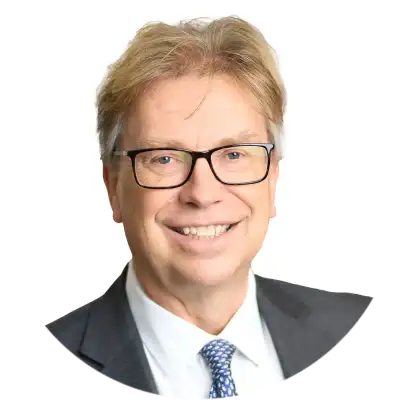
[00:00:03] Ralph Grayson: Welcome to The Boardroom Path by Sainty Hird & Partners. I'm your host, Ralph Grayson, a partner in the board practice. In this series, we'll offer practical steps and useful perspectives for aspiring and newly appointed NEDs. Throughout its 30 year history, Sainty Hird has recruited senior board members across the City, Industry, the Public Sector and NGOs.
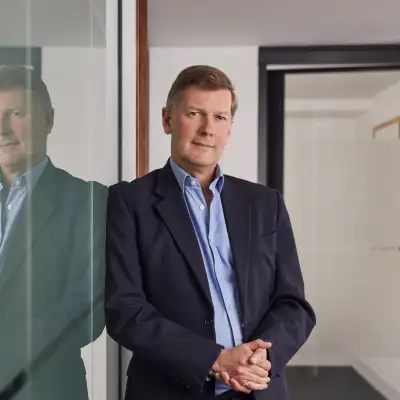
We're now also evaluating those boards, as well as coaching and mentoring those seeking to transition from an executive career into the boardroom. So we'll be speaking to some leading figures in the board advisory and NED world. Specifically, we'll seek their counsel about how and where to spend time and energy to make an effective transition into the boardroom. The goal is to equip recent and aspiring NEDs with tips, tactics and strategies to be most effective and build a successful career as a board director. In the process, we aim to help you to think more about who you are, how you operate and how you can make this work in the boardroom. I am here this morning at the offices of Aquis Exchange above the Mansion House with Alasdair Haynes, founder of Aquis Exchange. Good morning, Alasdair.
[00:01:21] Alasdair Haynes: Good morning, Ralph.
[00:01:22] Ralph Grayson: Alasdair is a trailblazer in global financial markets and the visionary founder of Aquis Exchange, one of Europe's leading equities platforms.
Since launching Aquis in 2012, he has redefined how markets operate, introducing bold ideas that challenge convention and put fairness, transparency, and innovation at the heart of equity capital markets. With a career spanning some 40 years, Alasdair is no stranger to shaking up the status quo. He held early leadership roles at HSBC James Capel and ITG, which gave him the global perspective and entrepreneurial edge that continue to fuel his mission today.
As the former CEO of Chi-X Europe, he transformed the company into the largest equities exchange, proving that competition and creativity could reshape the trading landscape. Known for his outspoken advocacy of open markets and his relentless drive to modernise finance, Alasdair stands at the forefront of change. Building platforms that not only serve institutions, but also strengthen the integrity and future of financial markets, so relevant to boards today. Alasdair, SIX has recently acquired Aquis and you are now the President. Perhaps we can start with your career from City trading floors to become a successful exited founder and bring us up to date on your current role.
[00:02:50] Alasdair Haynes: Absolutely.
Yeah, and I've been in this game for 48 years. Truly loved every moment of it and I was very fortunate to start at a pretty early stage on the trading floors. I did that actually within the foreign exchange market and at the time I remember going over to the head of dealing and saying, I'd really like to come and work in this part of the firm, and this was at Morgan Grenfell. And he said, well, I think you went to a private school. And I said, yes, I did. He said, well, to be honest, we don't really take people from private school here. They work in other parts of this merchant bank. And you could hear and feel the tension. Anyway, I took my wallet out and showed him the sort of eight or nine betting cards that I had, and I'd always been interested in statistics and gambling, and he said, okay, well I'll give you an interview. So they interviewed me in the Jamaica Inn and my interview consisted of drinking a bottle of white port, to which I loathe today and will probably never drink, and they said, if you don't misbehave and you can get back to the office, we'll take you on.
And we did. And I grew to love these guys. I learned so much because I think in the trading world, particularly when you are operating exchange to understand the mechanism of how trading works. And in those days, you've got to remember it really wasn't electronic and the great thing of moving in my career, moving to sort of from to, to James Capel, but also with UBS, et cetera. You learn how much and how important technology is in this game. The interview today, if you hired a trader, would be somebody who's got sort of PhD in mathematics or engineering or something. It certainly isn't about drinking bottles of white port, so the industry has just dramatically changed and really for the better.
[00:04:17] Ralph Grayson: Interesting analogies there perhaps with how board members were recruited in those days as well, particularly at Morgan Grenfell, I can speak for. So Aquis has three principal business areas. Perhaps you could just briefly talk us through that before we focus on the stock exchange in particular.
[00:04:33] Alasdair Haynes: Yes. I meanwe have the core business, which is what we started about 12 years ago, and that was the equities trading platform. I'd come from a company Chi-X, we'd just sold that business, and I hadn't really finished what I wanted to do there. So we recreated with a new business model, a subscription model, which I'm a complete subscription junkie, and created something which differentiated from other markets and launched.To be honest that that was a high risk strategy. Most of these exchanges start, do not succeed. I thought our differentiation was strong enough. So we built that business. Today, we're actually the sixth largest exchange group in Europe in terms of value traded every day. That's a pretty significant step over those years. Then our second business is the technology business and of course when you start a business, and I talked about technology a few seconds ago, how important to get the cutting edge technology, and I was very, very lucky to take, when we sold Chi-X, the various people who had been involved in the creation of the technology and upgrade and change the way that we were able to conduct the business. Today we sell that technology around the world to some of the leading exchange groups as well. So we know we have a cutting edge technology.
But the third business is probably the one you want to talk more about today, which is actually the stock exchange. That is the listing or the admissions of companies that want to raise capital. And as you know Ralph, I have very, very strong views of how that doesn't work, I think, efficiently today and how we need to change it and the purpose of being in that business is really to revolutionise the way that small growth companies can raise capital and change the economy.
[00:06:12] Ralph Grayson: We'll come to that in more detail later on.
First question that springs to mind, having heard that is as such a disruptor and an innovator,how did you seek board advice and how did you choose board members on that journey? Boards traditionally are thought of as all about oversight, particularly in a regulated industry like this. How do you encourage people to join the board on that journey with you?
[00:06:40] Alasdair Haynes: Well, I think firstly, founders always have an interesting relationship with their boards and I don't mean that in a negative way, quite the reverse. I think in a very positive way. The board that you need as a startup is very different from the board that when you decide to IPO and when you start to make profits and when you start to grow the business and when you want to scale up. The people you need on those boards often need to be different and you need the change because they've got that experience and ultimately when you go to sell the company, and we've obviously been sold to the SIX Group, your board there has got to have a lot of experience on the acquisition process. So it is about the evolution of the board and the people. To start with at the really early startup stage, you do need a board that gets the same vision. So it is about a sales job to somebody to say, this is what I'm intending to do, this is how we're going to do it, and I need the help and support, because we're a regulated entity. Quite often you are so much into the weeds as an executive that you don't necessarily see the other things that are around that are essential. So working together and of course, a board, the relationship that is most important is between you as the founder or CEO and the Chair. Because the Chair obviously leads the rest of the board, and you've got to have that relationship. You've got to have that strength. You've got to have that support. So the first thing is to make absolutely certain that the members believe in what you are trying to do, but have the ability to be able to check, to have these strong discussions, and question what you're trying to do with support, and that's the key here.
The board should be adding value. You are paying money to board directors, to non-executive directors, you want to get value out of them, and they've got to enjoy the experience of working with the company. Not only they're getting paid, but they're taking their reputation with it and if you know, you fail, you are actually damaging their reputation.
[00:08:38] Ralph Grayson: The role of the board member as a mentor I think is particularly apt there.
[00:08:43] Alasdair Haynes: Absolutely, I couldn't agree more and that's why our first group as a board were quite a few people from the industry. We wanted specialist knowledge and people who could help us not just with sort of relationships. I think we had plenty of relationships that we knew within the executive team. But actually help us and support us with stuff that we'd never really done before.
[00:09:03] Ralph Grayson: One of your early mentors, I think at ITG. You tell a great story about him giving you a picture of a gazelle. Just talk us through that.
[00:09:11] Alasdair Haynes: He did, it was a man called Ray Killian and I absolutely love the man and I've tried to model myself very much like him. And he walked into my office one day and I was CEO of ITG in Europe, and he walked in with sort of large picture under his arm and said, Alasdair, this is for you. You're going to put it up on the wall. And it was a picture of a very attractive gazelle in some Savannah in Africa. And I went like, Ray, great, love it. Have you just been safari or something? He said, no, no, no. This is really important, this message here. He said when that gazelle wakes up in the morning, it starts running. Beacuse if it doesn't run, it's going to get eaten. So therefore it has a necessity to get up there and get moving. He said, you can't see the lion in this picture, but there's a lion somewhere very closely, and it gets up in the morning and the first thing it has to do is start running because if it doesn't find food, it's going to die.
Therefore, if you are a hunter or you are the hunted, the first thing you do in the morning is get up and start running. And he said, that is what we have to do in our industry. Whether you are the hunter or the hunted. You wake up and you start running and this man had incredible energy. The story is still in my memory. I still have that picture today and every time I look at it, I think of one of him, but two, the energy. He was a wonderful man because he made decisions well. They weren't always right. He accepted when he waswrong. He was very popular with the people and he had this energy, which just you felt I want to go and work with him.
[00:10:45] Ralph Grayson: It is a great example of the fit between a chair and a CEO.
[00:10:50] Alasdair Haynes: It is. It is that sort of respect that has to happen and a lot of people, I think, don't get what the difference is and how important that relationship is and if that relationship breaks down, then you don't have just a problem with your board or the CEO or the founder, whatever. You have a major issue as a company and you will not succeed. You have to work closely with your board and Chair.
[00:11:12] Ralph Grayson: One of the things I just want to touch on here is the whole issue of founder CEO succession. It's something I spend an inordinate amount of time with, with boards, helping them think through the right time for that, how to pass the batton over, and the psychology that goes intoencouraging the founder to recognise maybe they were a great founder but not a great CEO.
You've just been through that process. How do you advise boards to think about that from your firsthand experience?
[00:11:45] Alasdair Haynes: Well, the first thing I would always say to a board is that it is never a tick box exercise. The biggest mistake I think boards can make is say, you know, we are obligated to do the following things. Therefore, we are just going to go and say, we're going to do succession planning, we're going to do this, we're going to do that, we have to do this. Every one of them has got to be thought through as to the benefit of the company, the benefit of the investors, and the benefit of the business as a whole and the model.
Succession is an interesting one because, as a founder, you believe you're going to sort of live forever and build your business and make it successful. If you start a business and you think you may not succeed, you will fail. So you've got to be very optimistic and you really have to believe in yourself and that makes people quite often different or difficult. It could be arrogance or whatever, but you have to have that. I think the problem, the hard thing with succession is the founder themselvesnever believe that you have to have succession. But the fact is you do and there are basically two reasons why you need it, because the first one you've mentioned is that most founders do not become great CEOs when it comes to scale up, and you have to accept the fact of what you're good at and what you're bad at.
I think I'm very good at founding businesses and selling the story, but we got to the stage once we were taken over, where the scale up and the opportunities of Aquis are huge. But actually I'm not the right person to go and do that. So there is succession for that reason is that when you've got to the point whereby you are not doing your best at something, then I think you need that. But the second one is something that also happened to me a couple of years ago, which is for some reason you could get ill, and in my case, I had cancer. Fortunately, obviously fully recovered, but it's such a shock to the system and then suddenly the board, if you haven't got a succession plan, what do you do? So there's the emergency succession. So when founders turn around and say, oh, you don't really need a succession plan because actually I'm going to be here for the next five years, you always need a succession plan because you never know what could happen. You could get knocked down by a bus. That's the sort of proverbial expression, but also, you can get ill. Fortunately, you know, our board had gone right the way through that and so it's not an offensive thing to talk about succession. It is a common sense thing for the good of the company because had I had to stay off for a period of years, and some people do because of illness, if you haven't got a plan, you are actually damaging your investors' money. So you have to have some plan in place. It's got to be well thought through, and these are the sort of difficult and awkward discussions that founders, executives have with their board. But it is for the common good.
[00:14:23] Ralph Grayson: I think that's a really interesting perspective. One of the crucial things in my experience is that self-awareness by the founder and indeed by the board to recognise some of those issues and the crucial role it's why we now have a very active coaching business within our search and assessment business because it does take that self-awareness, that EQ on both sides of the board table, to have the right plans in place.
[00:14:48] Alasdair Haynes: Again, you mentioned something which is I think very, very important. When I started this many years ago for the various businesses I've had the great fortune of running, I never really believed in it, which is, the analysis of the executive team and the analysis, sort of psychometric analysis, of the board and making certain that you have the right balance there.
So it's not just about diversity, which is obviously critical, in any company. But it's also about how you react. You talk about EQ whether somebody's got high eq. But a lot of people have high IQ but very low EQ and that can be a real problem.
We did one particular one, which is all about colors. And we, even today, still talk about you know, I happen to be the red and yellow, and that's where I'm dominant. But other people in the company, our Finance team, tended to be more blue and green. The explanations of going through that and then understanding why didn't we get on so well with this particular person who may have been on the board to suddenly find out, well, we're communicating in the wrong way. When you say something, they're reading something completely different. So it is really important. If you'd asked me this question 10 years ago, I would've gone, I'm not a believer in that. It's a waste of money. Now, I'm a great advocate of it because I think if you start to understand how other people communicate, you can communicate better to them because they understand written better than speech, or they need to be told in one particular way to get the same message across that you would say in a different way to somebody else. If you can really start to understand that you build a much, much stronger relationship. Board to executive and executive back to board.
[00:16:22] Ralph Grayson: Yeah, I think that's great advice and we spend a lot of time when we're working on executive and board assessments looking at that personality fit. Looking how the collective is greater than the sum of the parts.
[00:16:35] Alasdair Haynes: Well, I think in early stages and founders and I will admit making the same mistakes myself. When you first build a business, you get the people you like and want who are more like you, and you get on with, rather than people actually who can really help you. Who you may not get on with, but it doesn't matter. Their skillset is the skillset that you need.
So a group of friends getting together and you see this, we see this all the time. Companies who come to us early stage and you know, we ask, where's the board? And then we ask them to change their board because simply, look, you all went to the same university, you've all known each other for 25 years. That's not going to be a good board.
[00:17:13] Ralph Grayson: You are a passionate advocate, I know, of the equity markets and the role of the IPO.
Not as an exit and an end game, but as an integral part of company growth. Why are you so passionate and why do board members need to pay attention to this?
[00:17:27] Alasdair Haynes: I'm passionate, one, I believe in change. I believe in challenging and disruption in a positive way and the problem that I see here is for the last 40 years, we've seen a decline in the number of IPOs globally. We've seen massive growth in private equity, and we've seen markets hitting almost all time highs right now. So it's not as though companies don't perform. It's all about getting capital and that is the purpose of a stock exchange, is you have to get companies capital. And getting capital to early stage growth, we are brilliant, absolutely brilliant as a nation here with great companies, great businesses, unbelievable entrepreneurs and we get startup capital and startup capital through EIS and different sort of tax advantages is available to most companies with a good business plan.
But when you get to the scale up phase, the very, very point when companies truly can help the economy. They're getting towards profitability. They've proven the prototype and the business model works. They want to scale it up. We're just rubbish, really are rubbish at it. And the Americans have this down to a T and they're really good at it and that's why they've created the best capital markets in the world, and if we want to do something about it, we have to look at some quite radical change.
And a lot of work has been done over the last couple of years and I commend that work. But we're still at the beginning of that change and by the time I finish my career, I really want to see the mechanics of the IPO changing enormously so that companies can find its simple, easy, quick, efficient, and cheaper than it is today to go public and raise capital through the public markets rather than actually just through the private markets.
[00:19:13] Ralph Grayson: So let's just touch on why you think the Aquis Stock Exchange is a solution to some of those problems. Can you give some examples perhaps of great success stories here at at AQSE and the ability of younger companies to go public and take advantage of earlier stage capital through the public markets.
[00:19:32] Alasdair Haynes: Well, I have a theory of how companies grow and I'll come back to examples and why I think it is different. Companies just, we talked earlier on about the boards, they start small, they grow and ultimately mature and that is exactly the same as a child and many, many people who listen to this podcast will have children and will understand this really well.
But when you send your child to their first school, the way we teach people at primary school is very, very different to teaching at other schools. You are there to learn how to learn and once you've had your education at primary school, you automatically move up. When you've got to a particular level, you know how to behave, you know how to learn, you move to a secondary school. And at the secondary school, we actually really educate. We put pressure on people. We protect them because they still are children, they need protection. But we educate them with that pressure. So you don't learn Thucydides when at primary school, but you start learning sort of mathematics and Greek and Thucydides and goodness knows what else, when you get to your secondary school. Then we move you on, if you want to progress to a university. And at university, you are under the guidance of a professor, but you're not taught in those same way as going to classrooms every single day. So it's a new way of teaching. It's a new method, and I believe that those methods should be the way that we teach companies and actually allow companies to progress.
There needs to be a primary school for companies that want to be public, so they need to learn how to be public and they need to get through that stage before they mature to the secondary school. Secondary school is the scale up phase. That's when you are raising a lot of capital. You're really pushing and you're growing faster. It's the time in your life you learn probably the most. From that you can progress from that market up into the university.
So what we created at Aquis was the three different stages, an Access segment, which in effect is like a primary school and it's there for early stage young companies, probably past Series A, B, but into sort of Series C, et cetera, et cetera, and take going public early. Much earlier than people think, and I think there's an enormous opportunity there to get capital to early stage businesses. From there, we progress them up into the Apex market and from the Apex section that is a section which is really for growth companies at the later stage.
So those companies there will be sort of 50 to a hundred, 150 million pounds in fact a couple of them we have today, and you talked about success stories, one, which was Smarter Web Company, SWCI think it's certainly was in July, probably the most traded stock in the whole of Europe. It started off about 10 million. It actually reached 1 billion and it's come back since then. But, huge trading, huge liquidity. And we've had others around there, Coinsilium, Sulnox, et cetera, et cetera. So these are early stage businesses, started off in Access, move up to Apex, and then of course, you have the Main Market, the university.
Now, at this stage, we're not focusing so much on that because we believe the real issue in the country, and how you can get the economy to change, is to focus on these early stages. It's not about unicorn companies. It is much more focused. Unicorn companies don't change the economy for you because they've already grown. Companies that are at the early stage is how you change economies.
[00:22:50] Ralph Grayson: So proportionality of governance, I think we're talking about there. What I'd love to ask as the question following from that is how you help a founder or a pre-IPO CEO think about the difference of governance and the membership of those boards, whether they're public or private. How can you hold their hand through that process?
[00:23:14] Alasdair Haynes: I've got an absolute classic example about proportionality of governance because in the early stages of this company, I remember one of my heated discussions at a board was when I talked, and we were just going public at the time, and I said we need proportionality of governance. Exact words I used and I was absolutely chastised. I think I could look up the board minutes and and say, there's no such thing as proportionality of governance. There is governance and governance has to be strong. And in hindsight, I would actually say we're both right because governance is really, really important in a company and you can't get trust and faith in a business unless it has good corporate governance. But the way I felt I was right, and I think it's been proven afterwards because now people talk about proportionality of governance, is that when we floated, we decided to take the FRC corporate governance code rather than the QCA.
We felt as an exchange we wanted to get to a slightly higher level. So we had the same corporate governance as, as say, BP. Now we were about 30 staff. I don't know how many staff BP has, but I tell you it's an awful lot more than 30. And it is wrong, and this is where I think we get it wrong and companies get it wrong, that we should have the same governance structure and boards force that governance structure as a BP.
Because what ended up is that the management spent more time focusing on governance issues rather than actually focusing on the business and what I want out of Aquis is to allow people a governance structure that gets the entrepreneurs to focus majority of their time on what they know and what they should be doing, rather than actually writing reports about how we can prove the governance that we have.
Now, that is a very, very fine balance to get that right because governance is important. I'm absolutely saying, you know, we reject companies on governance reasons if we don't think that their board comes up to the standards that we actually need and you will not get through the IPO process at Aquis unless you can prove to us strong corporate governance. But it has to be proportionate.
We look at the number of committees that you might need or the number of board members, the Code stipulates the number of board members, the Code stipulates the various committees that you particularly need to be on or to have and everything. So, it's common sense. At the end of the day, it has to come down to common sense with good, strong guidelines. But as a company changes and it grows, then obviously that proportionality changes. You can afford more people, you can afford to build a larger board, you can actually then strengthen that board by having your audit committees and remuneration committees, et cetera, et cetera, that you know are right for companies as they grow. But they're not necessarily right to have separate committees when you are down and you have 15, 20, 25 staff.
[00:26:08] Ralph Grayson: That raises such an instant question in my mind, it segues beautifully into conversations I have a lot with aspiring NEDs is where they would fit best on a particular stage of growth. Should they be on a scale up board, a pre IPO board, a public board, should that be AIM, AQSE, as opposed to the Main Market?
You and I have also listened together to Louis Taylor talking at the British Business Bank about how boards need to perhaps change their balance of risk and return, use of growth capital, culture of entrepreneurialism in this country. So, two questions, do you think there is an issue with boards, public or private, in terms of the use of growth capital? And how would you advise listeners to think about the stage of growth of the company board they might sit on?
[00:27:01] Alasdair Haynes: Well, the first one here, is there an issue with boards about growth capital? I think there's just an issue, not just with boards, with executives about growth capital, because if you ask almost anybody in a company that even is looking to grow, the first thing that they spend most of their time on is looking for capital.
And I will say I've gone through that. I've gone through that having founded this business not knowing anything about how to raise capital, because beforehand I'd always run businesses for other people rather than my own. I found that 90% of my time was spent going on road shows, looking for money to keep the business alive, and 10% of my time was on the subject I did know about, which is running and operating a stock exchange or an exchange business.
As a country, we have to change that. Because it shouldn't be that way round. We should have executives and entrepreneurs spending 90% of their time actually on the things that they know about and building things and making profits for their investors and 10% of that should be actually making things,for the governments and with boards about the capital and the capital raise.
So we need to make capital raising, growth capital, much, much more accessible in this country than we do today. Do boards understand it? Well, I think boards yes, they understand it, but they understand the traditional ways, and that's not their fault. But there is a big job that I think people like myself have to do by showing that change is a good thing. And you've got to remember, change is not a natural human behavior. People genuinely don't like change. They like the status quo. They like to do things, it's been done this way, this is how it's done. Unfortunately, I think as from a child and at school and right the way through business, I enjoy change.
And I think it's one of the things that boards must be capable of, is realising that there are going to be other ways in the future of which you can raise capital and you must be open to it rather than closed. And that openness is I think what we would look for in board directors who are open to new ideas and are willing to challenge them, but also listen to them because a company will not succeed if it can't raise capital.
[00:29:07] Ralph Grayson: Does it matter whether it's public or private? And does it matter whether it's public listed in the UK or the US?
[00:29:15] Alasdair Haynes: It's a biased question for me cause I'm obviously going to say yes it does matterand the trend and the way things have worked over the last 10, 15 years is the trend has been towards private equity and venture capital. Why? Because they have the money in a fund already. Secondly, they can go round and the process tends to be quite quick. Thirdly, it's easy access, there's one group of people you are talking to.
Where I think the IPO market today goes wrong and we want to change that is that you know, you can spend six months talking to advisors, lawyers, accountants, and only at that point in time do you then are allowed to go out and have a road show where you may or may not find your capital. So you can see the attractiveness of private equity. But there's a downside in private equity that nobody ever wants to talk about, and of course, if you are a founder, you want as much control of your business as you can possibly have. And I know all my friends in private equity and say they maintain control and they're given good advice. Absolutely true. But when the fund wants to mature, and it might be maturing in five years, seven years, or whatever it is, and the LPs actually want their money back. You have lost control because at that point in time, these people are no longer around. They need out, and that might be a trade sale, it could be an IPO, but you as the founder, are no longer in control.
As a public company, you can maintain control, and that to me is one of the most single important things that companies need to know. If we were able to solve the time to market, the access to capital, the ease of the process, and the cost, then I think you will find a lot more people coming to the IPO market.
Now that is challenging the status quo, which it has been for many, many years. But there are enough people out there. I mean, I've heard on the podcast here, people talking about the IPO market does need to change and work has been done. But it needs a lot more change to be able to do that.
Now we've got some ideas. My sort of new role here as President or internally when they say El Presidente and all this. But my role here is to look at the pan-European markets and see what can we do as part of the SIX Group to change the way. Now that is in its infancy. It's a lot more thought has to go into this, but these discussions are starting right now because we must, it's not just the UK, it's across Europe as well, we must be able to find this capital because there's plenty of money out there. I hear all the time people saying, oh, well it's the culture in the UK. People don't take risk in the UK. There are 5 million people who have digital currency wallets in this country. They're taking risk.
We call ourselves public markets, but actually we don't get the public into them. In fact, we nanny state the public because we tend to say they shouldn't be able to take any risk here. These might be dangerous instruments. Well, actually, yes, they are higher risk than buying a FTSE stock, but historically, a portfolio of value and growth funds in micro cap and small cap has outperformed any asset class over the last a hundred, 150 years. And if you look at superannuation schemes in pensions, in Australia, the outperformance of the pensions is because they trade in both private equity funds, non quoted funds, quoted stocks as well as just listed stocks, and that's really important.
So there is a pool of capital here. It's just not being focused in what I believe is the right area and we need to change that.
[00:32:47] Ralph Grayson: Haven't got time to get into it too much here, but if anybody's interested, have a look at some of Alasdair's interviews in the public domain where he talks about the need to make equities sexy again and get the public back into public markets. What I would like just to touch on though is, is this US-UK-Europe debate on listing. Conversations I have with a lot of NEDs are that they find disproportionate risk and return to go on a public board, particularly a regulated public board, and they would much rather join a VC backed or a PE backed board. How do you judge the risk and return of public versus private?
Is it worth joining a public board anymore given the personal risk, fiduciary duty, et cetera, et cetera? And if you look at the completely different culture that we see in the US I guess best exemplified by the fact a board member can have and be paid in equity of a company in the US yet, yet here you can't.
[00:33:50] Alasdair Haynes: It actually isn't part of the FRC code, but it's not promoted, and actually as a regulated entity here, you just can't. Any board member's not allowed to hold stock. I find that mad. I mean, that's one of the things we do need to change is that, as a board member, you should be totally and utterly aligned with your investors and there's no better way than doing that, than actually rewarding people in that way.
There's a massive difference between people who sit on private company boards, or private equity boards, and public boards, and we don't have enough people today wanting to sit in public companies. But it is a really, really key job, and we have to make it in some way more attractive. The responsibility is there. You are in a regulated entity, that does mean that you know, there are a set of rules to comply by. Your board directors should be able to understand those rules. We put all our board directors through a sort of training program at the early stage because they need to understand, some of them who come from private companies, what the massive difference and it is and it's horses for courses.
Some people are just not suited to be on a public board and other people very much are extremely good at it and it tends to be people who have either run public companies who really get what being on a public board and the benefit from it. But that doesn't mean you should be totally exclusive.
If people, you know, they can go on your courses, they can learn the things that are necessary to do it. But they are very different and I would treat them almost as completely different jobs.
[00:35:18] Ralph Grayson: The role of equity and culture I think is very important. I seem to remember, every single employee in Aquis before the SIX transaction had some sort of equity participation. I know you are an evangelist on, on, on, on culture and that alignment.
[00:35:31] Alasdair Haynes: I am absolutely evangelical about how I want every member of staff to be aligned to our shareholders and that means it is your money that's in the company, and you have to act in the best interest of getting the best return possible at the best margins you can for your investors.
I've always believed in it. We had that discussion many, many times at the board, and I said, while I am CEO, every single person in this company will have the ability to own stock and promote it in such a way that they should have stock and everybody did at the time of the IPO, and of course that's payday for a lot of people and I'm absolutely delighted that there are sort of young people here who've been invested in option plans and things like that who have literally been able to put deposits down on houses and they had no other way in the past of actually being able to go and buy a property.
I've watched people pay off mortgages and things like that and it really sort of it brings tears to my eyes. I'm really happy that that is what this is about is that if you succeed and you are an equity holder and there is if in many, many companies, but if you succeed, there is a payback. There's nothing wrong with that. That absolutely is capitalism.
[00:36:41] Ralph Grayson: And I know you've been an advisor to Prime Ministers, governments, You were a member of the Unicorn Council, I think for a while. How can board members get involved in influencing policy? What should they be doing? Do we need board members to be more activist in this respect?
[00:36:58] Alasdair Haynes: Some board members, yes. I think it's very much up to the executive team to actually have a sort of public affairs policy. Particularly if you are a challenger. I mean, fine if you're not challenging and you're just doing another business but maybe better than somebody else, then, then it's not necessary.
For things like us, I've spent a lot of time, as you said, talking to Treasury, policy makers, I've sat on panels for the FCA, and it's all about trying to move things forward. It's again, about change. Change never happens quickly. In fact, there's a thing called a glyco change model, which basically says it's very common sense, which is people are not going to change unless the outcome is better than the status quo.
The principle is there is you need to explain well and communicate well why the markets are going to improve. So that is an education to board members that what they should be doing is if they get the story, and they get the entrepreneur, then they should be able to broadcast that story to as many people as they know as to why the outcome here is going to be better.
And we've tried to do that at Aquis, which is, we've thought that in the three areas we're in, we have products that we help and our board help be able to be evangelical once they truly understand it and it does get down to the intricacies and not all people are suited to do that. But the ones that are, are extremely useful and extremely helpful on your board.
[00:38:26] Ralph Grayson: So any final thoughts as we try and wrap this up then for our listeners on scale up capital, public markets, just try and pull that together for me.
[00:38:36] Alasdair Haynes: Well, I think, this country is not good today. We've heard it from Louis, you've heard it from me, you've heard it from goodness knows how many other people, and I think everybody recognises that. Even government today now recognises that.
What we need to do though is we know what the problem is, we don't know how to solve it today. Now we're trying to, at Aquis, we're trying to make the IPO process simpler, easier, faster, quicker, cheaper, et cetera. But I think it needs more than just one group here going out there. It does need regulators to understand probably better, and don't want to criticise the FCA. I think they do an amazing job, but they've got to understand the risk profiles here. You can't let 5 million people trading cryptocurrency, but actually not allow them to effectively invest in buying growth stocks.
So we need to make some pretty big changes here. Tax incentives, you know, this current government, I think, we've spoken to this government and the last government about the incentivisation through capital gains tax for entrepreneurs and investors, and we need to see changes in that. The irony of it is, is we can evidence and prove with things like taxation, that the tax take can increase significantly by actually giving away tax breaks in things like growth stocks. Capital gains tax, you only pay if the company succeeds because it's on profits. If it succeeds, you know that that company will have grown in staff, so PAYE, so the tax take for the government is higher and you'll be paying corporation tax. So the outcome is much, much better for the government.
But the problem is capital gains tax is still seen as a tax for the rich and not for the people, and therefore they don't want to give taxes back for the so-called rich. It isn't true and the media and people have to push and show that these things are beneficial for the economy as a whole.
So are we in a good place? No, I don't think the country today is in a particularly good place. Can we change it? Yes. People like me never give up. Fortunately I think, you know, there's a lot of people out there who just don't give up and we will make these changes and we'll make it happen because it has to happen. Without it, we have a major problem.
[00:40:48] Ralph Grayson: Well, we can hear the exchange floor here at Aquis coming alive behind us, so we will maybe take that as a cue to know that the equity markets are alive and well at Aquis. But Alasdair, firstly, thank you so much for your insights. But if people want to follow up with you, engage with Aquis as part of their growth capital solution or, follow you further in the media, how do they connect?
[00:41:12] Alasdair Haynes: Please do. I mean, you can get my email address. I'm on LinkedIn. For those who want my email address, it's just simply ahaynes@aquis.eu. I love this subject. You can probably tell by my voice. I truly love the subject. I'm happy to talk to anybody about it at any time.
[00:41:30] Ralph Grayson: Thank you so much for all your insights.
[00:41:33] Alasdair Haynes: Thank you, Ralph. Thanks.
[00:41:34] Ralph Grayson: I hope that you've enjoyed listening to this podcast and have found it helpful when thinking about how to approach your own path to the boardroom. If you would like to push this a little bit further, Sainty Hird runs a bespoke one to one Programmeme designed specifically to this end. For more information, please visit our website, saintyhird.com, follow us on LinkedIn, and subscribe to the Boardroom Path to receive new episodes. Thank you for listening.