Subscribe
Share
Share
Embed
Punchy, actionable insights and tips to make the life of the team leader a breeze.
[00:00:00] Pia: They say that feedback is a gift, but let's be honest, it's often not that much fun to either give or receive. However, there are ways to make the exchange as productive and painless as possible. I'm Pia.
[00:00:15] Dan: And I'm Dan, and this is Squadify Connects. We're deepening our abilities this week that we discussed in the last Connect, taking the same approach to difficult conversations, applying specifically to when you need to give feedback.
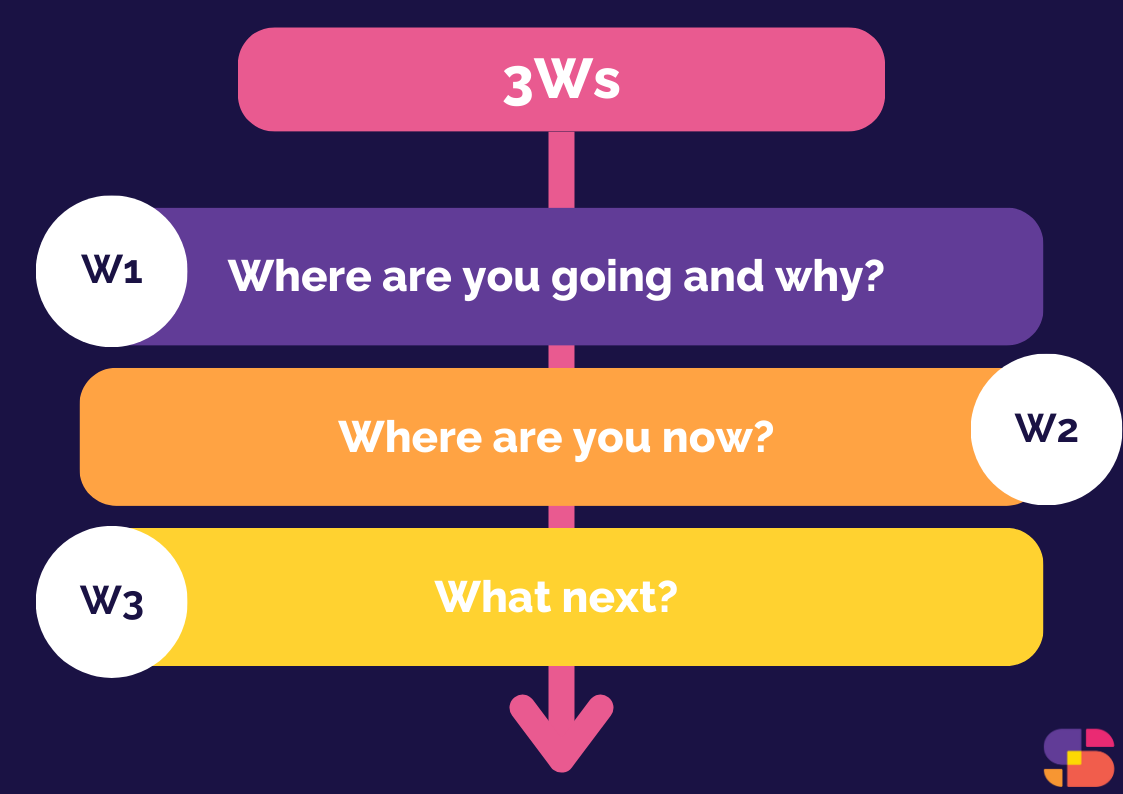
[00:00:29] Pia: We're gonna use the three Ws again, so let's walk through how they can be applied to giving feedback. By the way, isn't it great I'm not having to remember a load of different tools?
[00:00:42] Pia: So W1, in this case, setting out your intent is particularly important. Why are you having this conversation? It should ideally be useful at self team levels, so it should have some payback for the receiver of the feedback. If it's just about getting something off your chest, mm, have a think about whether you should be having the conversation at all.
[00:01:06] Dan: Next is W2. Where are you now? And in feedback, W2 takes on a special form. First comes example. What did you specifically observe in what the person did or how they did it? This should not be a You always do this or you often do X, but a certain moment when something was done. This helps you to really get on the same page and helps the other person to really know what you're talking about.
[00:01:31] Dan: Next is impact. What outcome did that have, or what could the behavior lead to? This is important as we often don't have an awareness, the impact of what we do. You may want to ask them what the impact is, as that can be very meaningful, uh, more meaningful than just being told.
[00:01:48] Dan: So once the example and the impact are clear, it's time to make sure that the other person has a chance to express their feelings about them. And the discussion should aim for an agreement and also see if you're gonna uncover, the root cause of the behaviors that have been observed.
[00:02:02] Pia: And then W3. Again, this is a joint exploration of options, and that's really key here. If the person receiving the feedback can come up with possible new ways of doing things, it's much more likely to happen. Just one point to note though, while you observed a certain behavior, which is competence, the root cause, and the solutions could come or lie in either clarity or climate. For example, perhaps they didn't know the goal or they didn't have the resources they needed to do something in a timely way. So it's a great opportunity to improve team conditions for everyone.
[00:02:38] Dan: It's another week we'll be trying out some new conversational approaches. Give that feedback that you've been sitting on, perhaps. It's a little like last week, but you can deepen that W two part to include example and impact.
[00:02:51] Pia: Next week we'll be continuing to talk about building your capability in improving the quality and outcomes of conversations when we explore coaching. This is a great topic, so see you then.