Subscribe
Share
Share
Embed
The history you think you know, with women in it this time
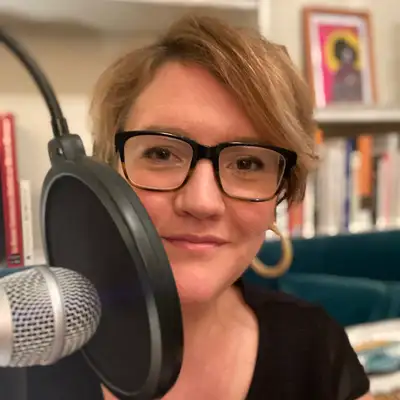
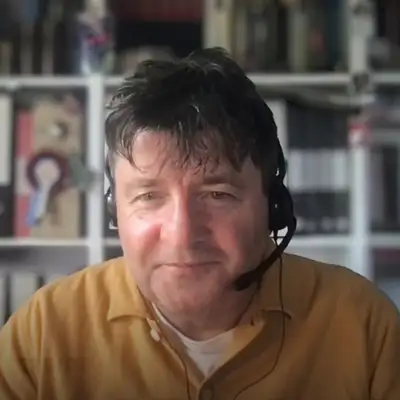
[00:00:00] Isabelle Roughol: Hey, I'm Isabelle Roughol, creator and host of Broad History. For my upcoming series on the early modern witch hunts, I interviewed the great historian Malcolm Gaskill, and I thought you'd be interested in hearing some of our conversation.
If you wanna hear the whole thing, you can go to broadhistory.com/membership and sign up to support the making of this show with a small monthly or annual contribution.
You'll get an email instantly with access to the members' feed of the show, which has a lot more great content, so the entire interview with Malcolm Gaskill, but also coming up an interview with Eleanor Janega, an interview with Marion Gibson. And you'll get all the episodes of the Witch Hunt series as soon as it's ready, earlier than on the public feed, and you'll be helping me make the show.
But without further ado, here's a taste of my conversation with Malcolm Gaskill.
[00:00:47] Excerpt
[00:00:47] Malcolm Gaskill: The witch is this archetype of really, I suppose I tend to see the witch as a bundle of toxic emotions. So, wrath, rage, anger, spite, envy, all these things that we'd be [00:01:00] familiar with today, if you think about them all bundled together and projected onto an individual or encapsulated within the body of a certain kind of suspect, that's really what the witch is.
But this isn't just some theological abstract. People really do, everybody understands what the witch means,in the presence of a community, of a neighbourhood, without necessarily always, being able to point the finger at somebody or blaming everything on witches. So that if we think about somebody in 1600, it's perfectly possible to believe absolutely implicitly in the idea of a witch, a person who could use all these toxic emotions and draw down the devil's power in order to harm you without actually having any firsthand experience of it.
So there's this strange kind of, you know, suspension of that reality between a, between theory and practise that don't necessarily have to join up because it, it's sometimes the case that [00:02:00] we look back on our ancestors and we patronise them, or we simplify them, and we say that, oh, you know, they didn't understand about science, so they blamed everything on witches and that, you know, they're incredibly angry and worried about everything, so they're always victimising someone.
They're just not. So that the idea of the witch is universal, but it's certainly not the case that everything was blamed on an individual person as a witch, because that was actually, through the law, quite a difficult thing to do. And I do think that surprises people in the present day about that kind of reality, that practical reality of what witchcraft meant.
[00:02:36] It was vital to prove witchcraft and be skeptical of accusations
[00:02:36] Malcolm Gaskill:
[00:02:36] Isabelle Roughol: That is something that is quite surprising, when you start reading up seriously about the witch hunts, is the burden of proof. The, the difficulty of putting, through an accusation of witchcraft, of then actually getting a conviction and how serious people were about that proof.
They did not want to get it [00:03:00] wrong. They did not accuse people lightly or convict them lightly.
[00:03:04] Malcolm Gaskill: Yeah. So again, the, these, the beliefs that existed in the past, and we can blame a lot of this on the, the philosophes of the enlightenment, these rationalists who were so desperate to make themselves seem different from their benighted ancestors, that they kind of lumped these people all together as being sort of thick peasants who couldn't make any kind of discerned, judgement , discerning judgement about the things they saw around them.
So that scepticism is a very prevalent thing. That doesn't mean scepticism of the idea of witches necessarily. It means scepticism that an individual might be guilty of it, so that yeah, you are right. People don't want to make a mistake because if you think about it, you might be a juror who sends somebody to the gallows that you're not sure about, and then actually maybe God will punish you for killing an innocent person.
So people are actually really, rather cautious. So there is [00:04:00] actually a range of attitudes and opinions that exist. They're not monolithic beliefs. Not everybody believes the same thing. Not everybody has the same attitudes. So you might have a courtroom where some people are really angry about witches and think that someone's definitely guilty, and there'd be someone on the other side of the courtroom who says, well, you know, it feels like hearsay.
It feels like he said, she said, and you know, "Have they confessed? What's the material evidence?" There often isn't any, and that's one of the reasons why the acquittal rate in early modern witch trials is higher than many people would imagine.
[00:04:34] Rates of acquittal
[00:04:34] Malcolm Gaskill: How high?
Well across the whole of the early modern period. So let's take it between 1400 and 1800, it's the broadest definition of the early modern period. We're talking about 110,000 trials across the European and North American world. About half of them result in acquittal. Now, of course, you do get periods or places where there are very intense hunts, and that [00:05:00] rate can go right up, go right up to 95%.
But if you flatten it out across the board, about half the time witch trials resulted in acquittal. If you look in England, it's more like 75%. So three quarter, even if you managed to get your witch trial, you are so keen on the idea of having a witch trial that you manage to get your case to court, which was not a simple, straightforward thing to do by any stretch of the imagination, three quarters of the time, your case is gonna fail.
[00:05:32] How the emotions of accusers play into it
[00:05:32] Malcolm Gaskill: So one way of looking at this is you might think, well, why does anybody bother? These are not great odds. But this is again where I think emotion comes into it. We talk just then about the emotion, which is embodied in the witch. What about the emotions of the accuser? Well, often they're terrified and they're furious.
And I think that those emotional, that emotional state can act as an override to what, to, to rational thinking about this, the rational thought would [00:06:00] be don't go to court. But you see that the witnesses, and we get this from witness testimonies that survive in the archives, they're often really extremely exercised to put it mildly about this person who they after all thinks is trying to harm them, and very often who's trying to harm their children.
And this is a pattern we see again and again, accusers and again, immediately when you find that, we can identify with it and it stops being, oh, how could they believe in spooks and specters and think, if somebody was trying to harm my children, how would I feel? And then you get right to the heart of what makes these witchcraft accusations happen.
[00:06:42] Isabelle Roughol: Because it certainly wouldn't be fun to be living next to a neighbour that you just accused of witchcraft and failed to get a conviction for and then comes back into the community.
[00:06:56] Malcolm Gaskill: exactly.
[00:06:57] Isabelle Roughol: But again, the motivation for the accusation in the first [00:07:00] place is to protect yourself, protect your family, and protect your community, right? So the witch is the element of danger within the community that we're trying to cast out.
[00:07:10] Malcolm Gaskill: Yeah. So the, yeah, the witch is a personification of often a rather an anunidentifiable sense of anxiety and unease, a sense of danger. When you look at some of the North American trials, like particularly in New England, Salem trials, there's this sense that people describe, or which you can sometimes read between the lines, that they feel they're under demonic attack.
And of course, some of this shades into the fear of Native
[00:07:35] Outro
[00:07:35] Isabelle Roughol: That was Malcolm Gaskill. If you're interested in this conversation and you want to hear more, you can go again to broadhistory.com/membership, sign up to support the show, and you'll get immediate access to the podcast members' feed, which includes this entire hourlong conversation as well as further interviews with, uh, people like Eleanor Janega, the great podcaster and historian, and another great historian, Marion Gibson.
And the [00:08:00] second that the entire Witch Hunt series is ready, you'll be able to binge it in full before it's available to the public, and you'll help me make the show. Again, that's at broad history.com/membership. I'll talk to you very soon.