Subscribe
Share
Share
Embed

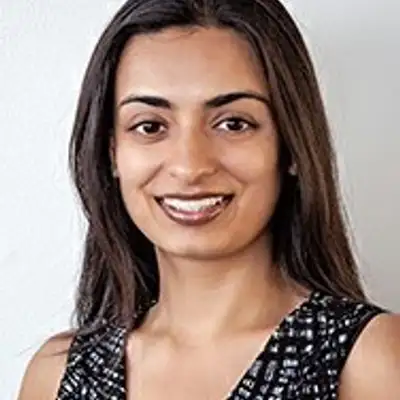
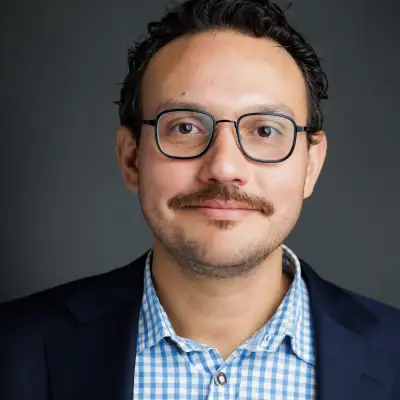
A bite-size podcast brought to you by the International Society of Glomerular Disease. Nephrologists and glomerular disease experts Dr. Kenar Jhaveri (Northwell Health/Hofstra University) and Dr. Koyal Jain (UNC Chapel Hill) take a lighthearted look at the latest research, discuss clinical practice, and interview leaders in glomerular medicine — all in a short enough time to listen on your coffee break.
Board Review Bonus 6: Hereditary Nephritis
===
Barbara Gillespie: [00:00:00] Hi, everyone. This is Dr. Barbara Gillespie. I'm the chief medical and strategy officer at ISGD. We're thrilled to invite you to attend our inaugural clinical trial summit meeting that takes place on November 13th to the 15th in Galveston, Texas.[00:00:15]
If you've ever thought about glomerular disease trials at all, this is the meeting you've been waiting for. It's the first meeting completely dedicated to our passions, both glomerular health and the critical tools to ensure the success of glomerular disease clinical trials. [00:00:30] Still wondering what the best endpoints and trial designs should be for glomerular disease trials?
Are you tired of settling for enrolling only one GD patient per site? These are just some of the questions that we're gonna answer when we're all under one roof together. Please register at [00:00:45] is-gd.org. Your voice matters
Laurel Damashek: Welcome to GN in Ten, a bite sized podcast brought to you by the International Society of Glomerular Disease. [00:01:00] Our hosts are nephrologists and glomerular disease experts Dr. Kenar Jhaveri of Northwell Health and Hofstra University on Long Island, New York, and Dr. Koyal Jain from the University of North Carolina [00:01:15] Chapel Hill.
Koyal Jain: Hello, everybody. Welcome back to our board review bonus episode from GN in Ten. We will be talking about hereditary nephritis with Dr. Kenar Jhaveri and me, Koyal Jain, as your host. Welcome, and we're so excited to be [00:01:30] here!
So today we are talking about hereditary nephritis, also known as Alport syndrome.
Why don't I start with a case, and then we can walk through some of the genetics and manifestations. So let me tell you about this patient that I saw once. Was about [00:01:45] 18 years of age. And she was actually referred to me for hematuria . So I saw her, she had some hematuria, and the kidney function looked okay.
Then, she told me that there was some family history of blood in the [00:02:00] urine, which had been noticed for many, many years. Nobody had done really any workup, and she didn't really know what the diagnosis was for the other people. But, she was doing okay, had no other presentation except for this blood in the urine.
So as we think about differential [00:02:15] diagnosis, what would you be thinking in this patient with a family history, and what would you do, and what are the genetics behind it?
Kenar Jhaveri: So this is typical patient that we might see then usually it's a male that we're worried about with Alport, but, you're already [00:02:30] throwing a wrench into the whole diagnosis here with the female with hematuria. But the differential is your classic three, right?
With hematuria in a young patient , you have to be thinking hereditary nephritis, which in our case is Alport syndrome versus thin basement [00:02:45] membrane disease, which is the more benign hereditary form of kidney disease, but you don't have too worry about kidney function loss in that case. And then you always have to think about IgA nephropathy in the same presentation.
And those are your big three. Of course, if the creatine was going up and [00:03:00] she had low complements, you might be thinking about post-infectious lupus and things like that in a young female. But that's your big differential. Since we are talking about hereditary nephritis, let's get into genetics.
So with Alport syndrome, [00:03:15] like you said your patient is a female, so it's probably not X-linked, but majority of Alport actually is X-linked, right? And then you do have the autosomal recessive component, which is maybe ten percent, another twenty, thirty percent maybe autosomal dominant.
[00:03:30] So you can have females then with this disease like X-linked, which is the majority . And you know the classic genes encoding the alpha three, alpha four, and alpha five chains of collagen four, that's where the disease manifests . There's a mutation in one of these chains , [00:03:45] and they're normally located actually in the basement membrane of the kidney , in part of the ear called the cochlea, and in the eye.
And that's why you get the classic trio of ocular, ear and kidney manifestations in these patients. Not all the time, but you [00:04:00] do. So the X-linked is by far one of the most common and it's the collagen four A five gene X chromosome mutation. The autosomal recessive is A three or A four, and then the autosomal dominant is A three or A four.
[00:04:15] Now, you might have some other mutations that can happen , but for board purposes, I think that's what we will probably be tested on . At the same time, that's what we see most often in clinical practice. Actually I think it's common in the United States and the northern hemisphere more [00:04:30] than the rest of the world.
What do you think about that , Koyal? Have you seen is this more common internationally, or it's more of a European-American disease?
Koyal Jain: I've seen it more here. I will also say that I used to think it is rare but [00:04:45] now I'm on the fence about one other thing, which is whether thin basement membrane disease is truly actually Alport's, like an early Alport's, right? And so if I include that within Alport's, which I'm more and more leaning towards nowadays I've seen a lot more because we [00:05:00] see a lot more thin basement membrane disease.
Even with other diagnoses, we might pick up a different diagnosis, completely different GN, and then they have this background of thin basement membrane disease. I also think with FSGS cases, we've started to recognize a lot more Alport's because that's been associated with [00:05:15] FSGS. So I think we are picking up a lot more Alport's than before.
The other thing that I want our fellows and our trainees to know from this conversation, especially regarding the genetics, is, there was a time I used to believe thin basement membrane disease was [00:05:30] benign, and Alport's is the one with all these manifestations. And more and more, we've realized that thin basement membrane disease may be on the spectrum with Alport's. Most of it might be fine, but some of it is not necessarily benign and can lead to [00:05:45] chronic kidney disease and some damage in the kidney. Often times, that is associated with the alpha three and four chains. So what used to be considered heterozygous mutations of alpha three and four, and considered a part of thin basement membrane disease, a lot of people [00:06:00] are now saying that that is actually autosomal dominant Alport syndrome, which is just not as aggressive.
So I think nobody really knows. There's this whole timeline between thin basement membrane and Alport's
Kenar Jhaveri: One other thing is the pediatric transfers we get, a lot of them do have [00:06:15] Alport or some sort of hereditary nephritis that we need to worry about. In terms of the kidney, most of the time what we see initially is microscopic hematuria. Sometimes you might see some non-nephrotic range proteinuria or maybe some GFR dysfunction, but that's very, [00:06:30] very late in the stage if they present that far out.
And I would say ninety-nine percent of the time the complements are normal. The C3 is at least normal in these cases. And they do have a family history of at least a male on dialysis, deafness, [00:06:45] something we always ask our patients. The hearing loss is something to definitely ask about and it's specifically sensorineural, neural hearing loss.
So it's like these high-pitched sounds that they actually have problems with, and that will have been [00:07:00] going on since they were a child. So you have to ask about that, if they need hearing aids. And the ocular manifestations, I never used to ask too much about it, but lately I have been asking about any changes in the lens or retina or cornea that they were diagnosed with.
But most of the time [00:07:15] they will tell you some of this information coming in. I think those are the three big ones that you should know.
Koyal Jain: Agreed - and The other thing that I wanna say is as you're diagnosing these patients and you're thinking about clinical manifestations ...this patient that I was talking about had a family history, and [00:07:30] what does a family history look like? If you have an X-linked disease, men have one X chromosome , and so typically sons or fathers should not have the disease if it's X-linked because that X is going to a daughter .
But the daughters, as long as it's heterozygous, [00:07:45] right, as long as they're getting one abnormal X and one normal X, may or may not have a variety of presentations depending on which X is being shown or recognized or prevalent in whichever cell, right? So their [00:08:00] genotype really depends on which X is being manifested , I should say, by different cells.
So X-linked is that way, and you really need to look into family history. If there's a son who says he has blood in the urine, and then the father had blood in the urine, that doesn't really add up for X-linked, which is the [00:08:15] majority. You can still have the autosomal varieties but just something to keep in mind as we're thinking about it.
And then the other thing about clinical manifestations , these are the three main things in terms of boards, right? Your hearing loss, your ocular abnormalities, especially the anterior lenticonus, [00:08:30] which is like the conical protrusion of the lens, the anterior portion of the lens, and then the kidney involvement as you were talking about.
But remember that some of these patients can have aneurysms, right? Aortic aneurysms, other aneurysms. So keeping that in mind is really important.
Kenar Jhaveri: So [00:08:45] after adding some more data on that, what do you think, Koyal, then? If you saw this patient, your eighteen-year-old female from before, would you do genetic testing? Would you biopsy? Do you send them to a genetic counselor? You know, we need to figure [00:09:00] out what this patient has.
Or does it matter because we don't have much treatment out there that we diagnose these patients or not?
Koyal Jain: I think it matters because again, we're realizing that women can have progressive kidney disease eventually. And it's not necessarily as benign, and they can [00:09:15] have FSGS. And what if she wanted to be a donor, or she wanted to get a transplant, or wanted to have a child? I still think it's important to help diagnose these patients .
Now, if somebody has zero proteinuria, and they have no kidney dysfunction [00:09:30] whatsoever, and they had only hematuria without any other organ involvement, and you really think that this is a benign form , or the thin basement membrane side of it, you could potentially argue for watching and not doing anything, right?
But the moment they [00:09:45] start having any proteinuria, or they have any other organ involvement, or they have any sort of GFR that's declining, I definitely think that I would end up doing a kidney biopsy. I would probably also do genetic testing , but I really think a kidney biopsy helps also [00:10:00] determine the severity of the disease
Kenar Jhaveri: And now with the genetic testing so widely available, I think getting these done quickly, even if it's a low risk patient , it might be a good idea just for the family to know. Because what if there are other family members who have a much [00:10:15] different penetrance of the disease, and they might need to find out.
The other thing I would say is with hematuria these days and us not biopsying in the past, I biopsy more because I don't wanna miss an IgA because there's now treatment out there.
but then you find out that they [00:10:30] have Alport or something else. So I think it's totally fine. There are algorithms out there in terms of, diagnosing and evaluating Alport. But I think it all comes down to, either biopsy with genetic testing or biopsy alone.
There's no right or wrong answer. I think it's individualized [00:10:45] based on their family history, their presentation, like Koyal said, is their GFR declining, normal versus abnormal complement levels, and other findings of ocular and hearing loss. So I think those are things that matter. But if you have a genetic [00:11:00] testing that came along when the patient was sent to you or you have a family history that confirms Alport, there's probably no real big need to do a kidney biopsy, unless you're worried about chronic fibrosis or their GFR is declining.
Koyal Jain: So that's the other thing, right? That's a very [00:11:15] important board question as to what does kidney biopsy look like. So if you do a kidney biopsy on these patients and you do a light microscopy, often times these patients start off with just thin basement membrane, which is sometimes not recognized in light microscopy, and you really need electron [00:11:30] microscopy to look at the thinning of the basement membrane before you can get this laminated or this longitudinal splitting of the basement membrane.
You can have a laminated appearance. So think about thin basement membrane, and then eventually you can have this [00:11:45] laminated basket weave splitting of the basement membrane, which can eventually develop in these patients. You can also stain for these alpha 3, 4, 5 chains and recognize Alport's that way.
Kenar Jhaveri: Interestingly, when I was preparing for this I was looking at some of the [00:12:00] pediatric literature, and they actually do skin biopsies, which is a non-invasive way to diagnose a child because you can actually stain for alpha five four chain on the skin, and if it's not present, then you know they have X-linked alport.
So a skin biopsy might be a potential option [00:12:15] also. But Koyal, how would you treat your patient here ?
Koyal Jain: So this is somewhat disheartening because with these genetic mutations, we really don't have great treatment available . The best treatment has been the RAAS inhibitors for example, especially if you have any degree of proteinuria. And [00:12:30] if you have Alport without proteinuria, I would just go ahead and start somebody on RAAS inhibition unless there's a contraindication for it.
And so that's the best data that we have in terms of treatment. I would say, even though we really don't have great data in [00:12:45] Alport's with trials showing SGLT2 , I would do what I would do for my CKD patients anyways, right? I would put them on an SGLT2 inhibitor if they still had proteinuria.
I'm probably gonna put these patients on SGLT2 inhibitors along with the RAAS inhibition. So do what you would do for CKD patients [00:13:00] regularly, also do that for Alport, I would say.
Kenar Jhaveri: There is actually an ongoing trial, and there's some pediatric literature coming out soon on the safety of use of SGLT2 inhibitors in Alport's patients. But there was also a failed trial. There was a bardoxolone trial for [00:13:15] Alport that actually showed no long-term benefit. I think it never made it to the FDA. And the other reason to do a biopsy is so you don't give these patients immunosuppression . This is one class of patients who they will not benefit from tacro, cyclosporine, MMF. So these patients you should not be [00:13:30] treating with immunosuppression. You should not be treating. I think we need to stress that these patients should be careful.
Koyal Jain: Kenar, what you brought up is so important because a lot of times these patients can have FSGS eventually. So if you don't recognize a collagen IV disease [00:13:45] causing the FSGS, then you would go ahead and treat them with immunosuppression as primary FSGS. So it's really important to diagnose that this is coming from a collagen IV disease, and you should not give immunosuppression.
Kenar Jhaveri: And you think that FSGS pathology finding related to Alport or [00:14:00] Alport-like disease is more of a progression of disease, or just another variant of Alport that presents with a pathology that looks like FSGS?
Koyal Jain: I don't know if we know. I think it's both. I think there's sometimes progression of disease and maybe this is a variant and we just haven't known yet.
Kenar Jhaveri: Yeah. And then, [00:14:15] one thing that they always ask on the boards, and I've never seen it, but I've heard of it, is, if your patient gets a kidney transplant, what is the biggest fear? Maybe not in your case because this usually happens in X-linked patients, but your patient's probably not X-linked [00:14:30] Alport.
So is this anti-GBM disease, right? Post transplant?
Koyal Jain: Yeah. You can have antibodies. If you've had abnormal alpha chains or, not certain alpha chains and now you get a normal kidney from a transplant, you essentially can then develop antibodies against the alpha [00:14:45] chains of this normal kidney, and that can cause anti-GBM disease.
Kenar Jhaveri: And it's not a very high percentage, like three percent or four percent of patients with mostly males with X-linked disease, so the point is that these patients don't have recurrent disease. Alport's is not coming [00:15:00] back. So this is a genetic disease, but you can get Goodpasture's or anti-GBM disease in a small percentage of population post kidney transplant. And that's basically the majority of the Alport's highlights, right? So it's genetics really that you need to know. You [00:15:15] need to know that there's really not much treatment out there besides ACE and ARB, SGLT2 inhibitors. And then the treatment of transplant could lead to a post-transplant anti-GBM disease.
Anything else that you wanna highlight before we close?
Koyal Jain: No, I think this is perfect. The only [00:15:30] thing I wanna make sure people recognize is collagen IV and FSGS, and also the thin basement membrane disease may not always be completely benign. Just clinically really important.
Kenar Jhaveri: So with that, Koyal and I will sign off on GN in Ten. See you [00:15:45] next time
Koyal Jain: Have a wonderful day. Bye-bye
Laurel Damashek: This has been GN in 10 from the International Society of Glomerular Disease. You can listen and subscribe wherever podcasts are found and tweet at us at ISGDtweets. [00:16:00] Thank you for joining us.
Kenar Jhaveri: You forgot to say it's board review bonus or
Koyal Jain: I did say board review bonus. I never forgot this time. I wrote it down.
Kenar Jhaveri: BRB. We're back