Subscribe
Share
Share
Embed
Hosted by longtime BNI leader and CliftonStrengths Coach Tammy Zurak, this podcast is your weekly boost of insight, inspiration, and action. Whether you're brand new to BNI or a seasoned member, these conversations will help you take your chapter engagement — and your business — to the next level.
Hello and welcome back to the perfect 100.
Today's guest has built homes for decades, helped countless families navigate one of the
biggest financial decisions of their lives.
And he's also raised 12 kids.
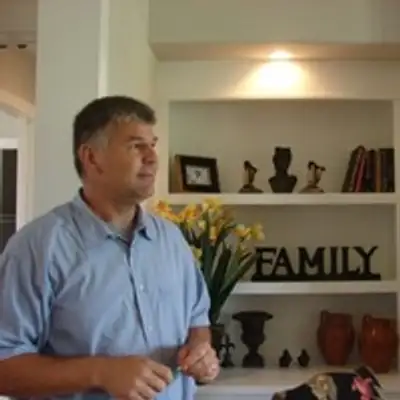
Bruce Upchurch is a custom home builder who has been in business since 1989, specializing
in homes in the country and helping clients understand the numbers behind their decisions
through his budget buffet approach.
In BNI, he's what we would call
upstream, he creates opportunities that feed an entire room and he currently has the
highest thank you for closed business in the Tennessee Memphis region.
Bruce, there's a lot to unpack here.
I'm really glad to have you and welcome to the Perfect 100.
Of course, well let's do what we always do here and start with your 45 seconds.
Go ahead when you're ready.
Okay, good morning.
My name is Bruce Upchurch and I'm the custom home builder in my BNI chapter.
And today a good referral for me is somebody that wants to build that dream home out in
the country.
We love building houses out in country.
Most of our clients, this is their forever home, the last home they will ever build.
And the biggest question is, how do I get started?
And we want to catch them before they actually purchase the plans.
We'd rather talk to them and help them bid a house from something we download off the
internet, and then we can bid it pretty accurately, and then make sure that that's in the
price where they want to be.
Because the blueprint itself is the single most important cost factor that will determine
how much will your house
cost per square foot.
So if you know somebody like that, I'd love to talk to them.
Again, my name is Bruce Upchurch, where relationships make the best foundations.
All right, perfect.
All right, and before we get into everything you just shared and talk more about it, I
have to go here.
You've raised 12 kids.
Everybody heard that and went, wait, what?
And I don't even know where to start, so let's start at the beginning.
um Did you grow up in a big family yourself?
No, lots of drama.
And let me say this, when people say, you've got 12 kids, I like to add same mama, same
daddy, because that's a big deal.
know, lots of people have blended families today.
you know, from the original mom and dad, I'm the baby.
I have two older sisters.
Then, you know, my dad married and divorced and married, divorced, and then I have a half
brother.
And then now I have a stepbrother.
So there's five of us right now.
Okay, awesome.
Yeah, I guess that does make a difference because I have a blended family.
Well, I guess it's not blended because I don't have my own, but I have a stepson.
So um he's got a bonus parent.
So yeah, today's world, um it's a little bit more, you're not really sure.
you know something I like to tell people is it's very important who you hang out with.
Because at the time, at that time when we were having kids, ah we hung out with people who
had large families.
My pastor had 12, a deacon brother had 10, another good friend of our family had 10.
We hung out with people who had large families.
And to us, children are a blessing.
And my wife keeps asking me, which one would you want to give back?
None of them.
Did she ask that in front of the kids?
yeah, yeah.
And we joke about it.
I tell people we're almost normal now because we're down to four.
And honestly, we have an 18 year old, 16 year old, a 14 year old and 11 year old.
And the 18 year old, he is gone most of the time.
we go to church yesterday and it's like, there's just three of us, three kids and mom and
dad.
And so we're almost normal.
Right.
Well, I always wondered and I may have asked you this in the past, we've known each other
for quite a while, was one of the reasons you build so you could, I don't know if you
started out to have a family this big, because that was normal, like you said, you were in
that community of people who had lots of kids, was that something, or did you have to
decide, I need to build houses because I need to make one big enough for my family?
Actually, my dad was a home builder and from the time I was 11 years old, I knew what I
was going to be.
I knew what I needed to do, the people I needed to meet, and how I was going to get into
the building business.
My dad, I worked all the time.
You know, as a kid,
If I wasn't in school, I was working.
Every day off with the other kids, had a holiday or even on the weekends.
So I thought school was fun.
I'm like, hey, I don't have to go to work.
That's, uh I guess that's one way to do it.
My husband grew up like that too.
His dad owned a business and it was very up and down in the course of his life.
as a younger adult, he was working in his dad's business quite often, weekends.
He would do trips.
They sold uh campers and things like that.
So they would go drive them here and there and everywhere.
And he had to clean them and you know, because they did
pre-owned and knew all the things.
So working was a common thing.
And it's also interesting, I was trying to think if I know anyone besides you that has
that many kids, I couldn't come up with a single one, but my grandmother is on my mom's
side was one of 11.
And she was on the older side and I think that maybe.
back then that was, well, they're Italian, Catholic.
em So I think that was maybe more common, but they grew up in a world where they couldn't
really afford to have that many kids, right?
So it was a uh different time.
And I think that seems to have lessened over time that, you know, people don't have as
many kids because that's, it's just hard to support, you know, all the things that kids
need in today's world for that.
So.
I love that you have been able to do that for your family.
And one of the benefits of doing what I do, I'm a home builder, so my boys go to work with
me all the time.
And you know, we homeschool and all my boys, I've got six of them, and they know how to
use a skill saw, a nail gun, we raise cattle, so they grow up haying the cows, working
cows, driving tractors, bush hogging, I mean.
And the girls too, just not as much.
They don't like that physical labor.
They'd rather hang out with mom.
Mom's pretty cool too.
Yeah.
Yeah.
I know she is someone who you think is very cool.
So, which is also great after I can't imagine the amount of arguments that must come up
with uh 12 kids and two adults over time, uh you know, just trying to navigate all the
things that kids bring into your life that can create conflict.
We love it.
uh My wife tells people her best friends are all ones she birthed.
I mean, that's a fact.
And we have get togethers.
Now we also have 18 grandchildren so far.
And so we have family get togethers, we have get togethers, we almost once a month, know,
40, 50, sometimes as many as 70 people will show up.
We just, we like having people over.
We like having our kids over and the grandkids and just lots of, and there is a little bit
of drama that I will admit.
There is a little bit, but that's all right.
Yeah.
What's the daily life like when they were younger growing up?
When you had all of them, maybe you didn't ever have them all because I know even my
husband's uh one of six.
So the older ones were gone by the time he was the youngest.
So the younger ones, he doesn't even really know his older one all that well because he
moved away and they didn't really.
They're talked now, but they didn't, because they weren't in the same house together.
Yeah.
the most we ever had was 10 kids at one time.
The last two that we had that were born, we had a couple of our kids already had grown up,
got married, moved out and got kids of their own.
So the last two were born, Uncle Jesse and Aunt Elizabeth, because they've got nieces and
nephews older than they are.
That's hilarious.
us, a typical day, I mean, my wife's been homeschooling for 30 plus years.
Even right now, my kids are doing homeschool.
And then usually, like for the boys, after lunch.
depends how fast they get done, then they'll usually go to work with me.
ah And we'll go out there and work on the job sites.
And the girls, they have all kinds of activities.
Some of them have horses.
We raise cattle.
So ah there's always farm stuff going on.
My youngest one right now is growing a garden.
So she's always out there working in the garden.
Nice, nice, I love that.
And so you don't get away with 12 kids without having leadership.
So what does that talk to you, having all those people in the home and then all the
additional, you know, once they're older, all 40, 50 people at a time, what does that talk
to you about leadership?
Well, know, I tell my wife, I seem to be just a natural leader.
ah If there's somebody else already leading, I'm okay with following.
But if there's a leadership void, I just naturally step into it and hey guys, let's get
this going.
Whether it's be, hey, it's time to eat, or the kids are getting a little bit rowdy, ah
I'll be honest with you, I don't like foolishness.
And so if the kids get a little bit rowdy, they're going outside.
And so, but they already know that and they, they, know, large families, we all learned to
work with each other and get used to each other.
So.
Gotcha.
What was harder than people would expect, but easier than people assume?
You know, everybody says that kids cost a lot, and they do, but it's not as much as it has
to be.
My wife is very frugal.
Obviously we homeschool so the kids are not as subject to lot of the peer pressure as far
as buying those expensive tennis shoes.
uh They still can and they still do, but if they buy those expensive tennis shoes, they're
going to pay for it themselves.
uh We don't give any of our kids, never have, given them allowances.
They work.
The only time they have access to money is they go out there and work.
uh Honestly, we live out in the country.
We don't watch a lot of TV.
We hardly ever watch TV.
We watch football.
ball and sports and things like that but other than that we don't watch very much TV.
Yeah, okay.
And what did you want your kids to experience growing up that maybe you didn't have?
You know, one of my goals in life is to be married till death do we part.
When I grew up, my dad married and divorced.
He was married six times.
And so...
uh
I would love for my kids to, you know, they only had one mom and one daddy and they would
get to enjoy the same blessing.
Then sometimes it just doesn't work out that way.
It's not, that's not their fault or, you know, necessarily, but it just happens.
that's something that, you know, we've really tried hard is to have unity in our family
and to have one mom and one daddy.
Love that.
I have an uncle who has followed a similar path with six wives, which is, you know, it's
just sort of astronomical in my head to figure out how could you, you know, how is that
possible?
But I guess it, I guess it happens, right?
People figure it out and do it.
uh So I think it's also was one of my goals not to, my parents have been married for, I
don't even know now, 60, I can't remember what they're on, 63 maybe years.
Yeah.
Yeah, so one of my goals was to, I didn't get married till I was older because I wanted
to, you know, wait for the right one, so to speak.
I'm doing the air quotes for anybody just listening.
um And, you know, I wanted to stay married.
So, so far so good.
It's been, you've been together 20 years, married for 17, 18.
So, going on 18.
So that's, I feel pretty good about that.
My wife and I just celebrated 40, 40 years in January.
awesome, I love that, congratulations.
All right, and when you look at your family today, what are you most proud of that has
nothing to do with business?
Um, you know, I'm proud of my kids.
Um, I love my kids.
I tell people, this is, I like to shock people.
I love my kids way more than I love my grandkids.
I love my grandkids, but I love, I tell my kids all the time, the best thing you can do is
come spend time with us.
We love our, and our spouses.
That's a really cool thing about as your kids grow up and they marry and we like their
spouses.
Um, you know, I think my spouse made me a better person.
And I think that happens a lot of times and it's just really cool to watch them as they
grow up and they raise kids and they choose their life partner.
That's just super cool.
We love it.
awesome, love that too.
So you grew up with your dad building houses, what made you decide this was gonna be what
you wanted to do too?
Um, you know, he just kind of gave me that vision of this is if you'll listen to me and do
what I say
you can make a lot of money and you can be successful.
And you know, honestly, I give my dad credit for my good marriage uh because he's like,
you don't have to make the mistakes I've made.
And sometimes he would give me marriage advice and it was good marriage advice.
And so I credit my dad with having such a good marriage.
uh On the business end, he's a much better businessman than I am.
I will say, I think I'm...
He's passed, he passed away about six years ago, but I will say I think I'm a better home
builder than he is, than he was, but he was a great businessman.
Everything he did just seemed to turn to gold.
He was a fantastic businessman.
Okay, awesome.
And most builders sell homes.
You do something a little different with what you call the budget buffet.
Where'd that idea come from?
You know, I made that up.
um Okay.
You've heard of people upselling when you go to a sales process and people upsell.
Well, the budget phase simply downselling.
It's the opposite.
So let's say, and this happens almost every time I'm doing a bid presentation tomorrow and
When I get to the end, what we do is we'll meet and we'll build the house on paper and
I'll ask them questions and I'll fill in the blanks and I'll take their answers and add it
up and say, all right, your investment to build this house the way we've talked about will
be X amount of dollars.
And almost every time that's quite a bit more than what they want to spend.
I acknowledge houses cost too much, but so do groceries and so do vehicles and everything
else.
And so what I do is I show them, said, Hey, I've got a method.
call it the budget buffet.
Where I can take that sale price that we just agreed to and I can show you how to lower
the price of your house 20 30 40 50 sometimes a hundred thousand dollars And then what
we're doing is we're just cutting out the fat.
We're cutting out all the nice things ah for example Some of the things that run the cost
of a house up is your unheated square footage You know lots of times we'll build a house.
I bid one two weeks ago.
It was like a 1200 square foot house, but
it had 2500 unheated square footage.
Well, that cost you a lot of extra money that you don't get credit for.
So we just have to start eliminating it.
What if we were to take the front porch and cut off a foot?
And then we cut off another foot.
pretty soon I can cut $5,000 $6,000 off that front porch and just make it little bit
smaller.
But yet, we're going to save you some money.
And that's up to you.
That's why we call it Buffet.
I come up with some bad ideas that's like, that's a terrible idea.
We don't want that one.
That's fine.
Scratch that one out.
Let's go to the next one.
Right, yeah.
Well, you know, I think it's interesting because giving full visibility to cost lets them,
you know, it's the trade off, right?
It's do you want this or do you want that?
Why are you willing to be transparent when most builders aren't?
Well, okay, let me just say this.
Some builders, and I've seen this before, I actually built a house one time and the
homeowner's like, you never did give me the budget and we were building the house off
another builder's budget.
And I said, here's mine.
But I don't give my customers a budget of the price of the house breakdown until we sign
contract.
The budget buffet is not that, okay?
The budget buffet is, it's just a math, let's say I built a house, I proposed to build a
house for, it was like $494,000.
And they said, Bruce, we really need to be at 450,000.
And I showed them step by step how to lower the price down below 450.
And that's what the budget buffet is.
And that really doesn't have anything to do with how much I pay my framer or my plumber.
That has to do with,
How many lineal feet of cabinets do you have in your master bathroom?
know, cabinets are a big uh expense.
And when you say, how much does the house cost?
Well, how many lineal feet of cabinets do you have?
Okay.
So when you realize they can't afford everything they want, how are you guiding them to
feel like they're getting what they want without settling for less?
that budget buffet process.
Well, so when they see some of the things like I was just talking to a customer this
morning, they said cabinets are important to us.
So I that's fine.
When I suggest cutting that price, ah you can just say, well, that's important.
We're going to keep that one.
But consider the other things that I'm suggesting like windows.
A typical house may have 17 to 20 windows.
Sometimes I've been in houses that have 45 to 50 windows.
And by the way, windows are the enemy to energy efficiency.
Right, yeah, I believe that.
So it's, you know, it seems counterintuitive.
you, you know, most people in business are like, what can I add?
I mean, you use the upselling word earlier, right?
is how much more can I add on to make more, to, you know, sell more and earn more and all
the things, but you're really kind of, you're building a custom home, but you're also
building a custom budget.
So they get what they want at a number they can afford.
So I think, feel like that's significantly different than most business models.
tell me about the success of that.
Are you walking away from some people or adding more people in because of that strategy?
Okay so where I got to that strategy is begin with back in the early 90s and early 2000s
we used to build spec houses.
And I don't know if you remember 9-11.
I had a bunch of spec houses out there and I owned a lot of lots.
And we went through that 9-11 recession and we almost went broke.
And so I had met another builder, I think it was from Oregon or Washington or somewhere
out west.
And this is at the IBS show, International Home Builder Trade Show.
And he was telling me they didn't borrow money.
I'm like, how can you be in the building business and you don't borrow money?
And so he said, we built custom homes until we saved up enough cash to build one spec at a
time.
And then we started building two specs at a time.
And he's like, we just don't borrow money.
And for a home builder, that
is, uh I mean, that's a total change of ideals because we leverage ourselves so often and
that's how we end up going broke.
uh So we started building custom homes and then when you're building a custom home and the
people, just pick a blueprint off the internet, they don't know how much it costs, they
don't understand what things cost and so I have to help them and that's what I try to tell
people, talk to us.
before you buy your plans.
We have a slogan and a banner we made up says, pick your builder before you pick your
plans.
And so many times people will pay three, four, $5,000 on a set of plans and they never
build it because they can't afford it.
But yet I can show them how to build a similar house for 60,000 less, maybe 100,000 less.
Yeah, it's such an interesting business model because I think everybody thinks I need to
figure out what I want and that means I have to go to an architect and have somebody lay
that all out for me and then I find the builder.
So many times the builders will tell the individuals bring me a set of plants and I'll bid
your house.
Right.
they'll tell them, just figure $200 a square foot.
I was talking to lady this morning.
She said, she's talking to another builder.
And he said, it's usually about $225 a square foot.
Just bring me a set of plans.
Well, I don't want them to go buy a set of plans.
So let's sit down and talk.
And oh, by the way, sometimes we're at $185 a square foot.
It's the blueprint.
The design of the blueprint is the single most important cost factor.
Yeah, you know, it's, I'm having a revelation and it's something individually.
So I've done 40 podcasts, you're number 41 and in talking and interviewing everybody, the
thing I'm finding the most interesting is that we all have expertise that were you to ask
us about those things before you did the thing you thought we want, that we offer, you
know, you came to us and said, hey,
what if I was gonna do this in the future?
What would that, what should I look for?
What should I be thinking about?
We look at our kids and say, we want our kids to be successful.
And my husband and I had this conversation the other day about banking, money.
If you wanna qualify for, I was talking to the banker in my chapter.
If you want to, he did a podcast, Jeff Kimbrough, if you wanna go find that one.
So we were talking about when you need money,
is usually the time where you can't get money because you're so over-leveraged that now
you can't qualify to get money.
The best time to ask for money is when you have lots of it um and you look good on paper,
right?
So it's counterintuitive to say, I need money or I don't need money, let me go ask for
some.
And it's also counterintuitive, it feels like to say, I wanna build a house, so let me go
talk to the builder before I do anything.
um
in our heads that we have to be ready for you, right?
Is we need to be probably because the industry has taught that is bring me, send me your
plans, I'll bid it is what you just said, right?
So we've taught people ways that are less efficient than if you came and talked to us
first and no matter what your profession is, if you get advice from somebody who's a
master in their field.
before you decide to go and do the thing that you might wanna do in the future, then
you're gonna be farther ahead of the game.
And for me, from someone who has high strategy, it's so amazing to think about it that way
is what if I only had a conversation, I even just thinking about like life insurance is,
kids when they're 20, don't think they need life insurance because I'm gonna live forever.
Well, when you're married at let's say 25, 30,
and you don't have life insurance, and then you wait until you're 40 or 50, well, that may
be too late, right?
Something may have already happened and you've left people behind that can't afford to
take care of things, or it's so expensive when you go to get it, you know?
So it's amazing.
I love that this is your reverse psychology-ing the business of building a home so people
get what they need.
So you know, you're talking about kids and I love kids.
I'll say this.
I know when my wife and I were married three and a half years before kids and the
neighborhood kids used to come and knock on the door and ask Miss Becky, can Mr.
Bruce come out and play?
And I mean, I'm talking about six year old, eight year old, nine year old, 12 year old
boys that we go out and play basketball and ride bikes and everything.
But my kids grow up with the expectation that
They want to get married and they want dad to build them a house.
And that's one of my life legacy goals, is I want to build each one of my kids a house.
And you know, with the young people today, it's so hard for them to go out and qualify for
a loan.
And then what they get for that loan is terrible.
But because I'm in the home building business, and by the way, I have six boys that know
how to build a house.
Right.
and we all get out there and work together and we can do a lot of labor for free.
um I recently bought a house, about two acres, for one of my kids and it has a trailer
house on it.
And so we're just remodeling the trailer house that they'll live in for five or 10 years
and then we'll build them a new house behind it once they get financially ready.
so, yeah.
I love that too is that you're not giving them something that, you know, they're gonna
live in, you know, reasonably until you're not just, cause dad can build you a big house,
you're not gonna have that off the bat.
We're gonna make sure you've lived a little and then we can get to that point where you
can build it.
And then all the other brothers and sisters are willing to help.
Not so much as they're helping the brother or the sister, they're helping because dad
helped them.
And they're like, dad, I owe you so much.
And anytime I can help, I'm happy to help.
And I love our family dynamics.
I just love my kids.
I love my kids.
I love my wife too.
I know you do.
I've known Ruth for a very long time.
I think we're more than a decade at this point, but that's the one static thing is um I've
heard a lot about, you your wife is a very popular person for you and I love that.
Oh, I love, I think I out-married myself, no doubt.
She is amazing and she treats me like royalties.
I'm the most spoiled husband you've ever met.
And we'll have to do a separate episode on that, think, maybe, is how do you get to, how
do you have that many kids and have a wife that you adore and all the things after 40
years?
You probably should start your own podcast if you don't already have one.
I've always said, I want these days I'm going to write a book because, oh I can tell
stories about raising kids and they're funny.
And it seemed like everybody's, you know, we go to like, we went to like Silver Dollar
City and my kids are like, dad, we'll go ride the rides and you can meet new people that
never heard your stories because that's what I do.
I start telling people and telling stories and I like people.
And for those people that are listening, because we have people all around the world
listening.
I just spoke with a listener from India the other day who was talking to me about coaching
because she listens.
So Silver Dollar City is an amusement park because I don't actually don't know either.
OK.
OK.
And I don't like roller coasters, and my kids do.
And we've gone to Six Flags last year, we went to uh Silver Dollar City, and I just like
people.
So I'll sit down, I'm waiting on them to get off the ride, and I start talking to the
people next to me.
And of course I start telling my stories, and they're just having a good time.
Yes, and so when we get to your Clifton strengths, that'll be very apparent what your
number one is.
If for regular listeners probably can already figure out what that is, but we'll get to it
in a minute.
So you build your catchphrase as always, I'll build you a house in the country.
You don't build subdivisions, not in your, not what you want.
Obviously you can build a house anywhere.
And I've been in your houses, they're beautiful.
but you would rather build out in the country.
What do you see happening in the market now that maybe people are missing?
What I'm seeing is that people are building smaller homes.
We used to build 3,000 4,000 square foot houses.
Now we're building 2,000 and 3,000 square foot houses because everything costs double just
about.
right.
they're still putting like the screened in porches, the safe room, the storm room, if you
will, uh permanent stairs to the attic.
Most of my clients want everything on one floor, you know, everything.
so, but they still want the stairs to the attic because they don't want to have to do that
pull down stair or the crawl hole.
So.
But the one thing I'm passionate about is energy efficiency.
Every house we build is super energy efficient.
And while my customers are not as sold on it, they appreciate me more as their builder
five years, 10 years after they move in because I build an energy efficient home.
Yeah.
The green thing, is building.
I don't know if you're green, but...
do a lot of the green stuff that they say you want to do.
But the bottom line is, I have customers coming out of the Memphis area where they're used
to having, in summertime they might have home utility bills of $600.
They move out of the country.
They're living on a well, so there's no water bill.
They have septic tank, there's no sewer.
And a lot of times there's not even natural gas.
A lot of times there are, but sometimes they're not.
So their utility bills might be $100 or $150 a month as compared to $600 a month in the
city.
Yeah, it's crazy.
Well, in here in the summer for those not in our area, it gets to be in the hundreds all
summer long.
You know, the heat index is really hot.
so you're running that air conditioning like nobody's business.
And, you know, the energy from the local city entity is astronomical.
So being able to have the house you want built for you and have it be efficient is it
sounds like a good thing.
It is especially for long-term, you know, when you're living in the house for years and
years and years, you get to enjoy those low utility bills.
For sure.
All right, so I, in your chapter, we're gonna switch gears a little bit.
In your chapter, you don't just participate, you feed the room with business.
How intentional are you about that?
Well, I love passing referrals.
In fact, when I first was introduced to BNI, know, they, Gianna Cardona was starting it
and she said that we're going to create a group of like 30 members and we're going to
where everybody refers business to everybody.
And like, I've always shared, I'm, I'm a natural connector.
I've been sharing referrals to everybody else for years, but nobody was giving me
referrals.
So the first time I visited, I filled out the application and I wrote the check back those
days where we wrote checks.
And I was in the first time I visited.
when I'm in, I'm all in.
I do, you you can, did the BNI fundamentals for those people who in BNI.
They understand what I'm talking about.
I do all of the BNI fundamentals.
Now I'm not as good as you are, ah but for the long run, if you look at the long run, it's
pretty impressive what BNI has done for me.
Man, it's a no brainer.
I can't believe there's not more home builders in the BNI.
This episode is sponsored by Mendy Lovern with Huntington Bank.
Builders and their clients are choosing her single-close construction loan because it
simplifies the process.
One closing, fewer headaches.
If you're planning to build, connect with Mendy at mendylovern.com.
That's M-E-N-D-Y-L-O-V-E-R-N.com.
And so let's show how impressive it is.
I want to show a slide.
And for the audience that's listening, if you're not on YouTube, you're not going to see
this, and I'll talk it through.
But definitely go to YouTube and subscribe while you're there.
But you'll get to see some interesting things here.
So I pulled up, how long have you been in BNI?
for 16 years and 5 months.
Okay, so I don't have your 16 years, because I didn't know exactly when you started, but I
did pull since October.
um So because we started a new fiscal year for anybody who's listening knows that October
1st for BNI is when we start a new term.
And I was, I don't remember what I was looking for.
I was looking for something else, but this popped up on, you know, I started to just
switch things around and I like data.
So I was looking at this and for, which would be, this is uh April.
20th when we're recording, so a little more than six months in six and a half months and
you have the highest thank you for close business given in the region.
So Bruce's total, let me go from left to right.
So this is his palms report.
So present 21, absent zero, late zero, medical zero, substitutes zero.
Referrals given inside two, referrals given outside 37, referrals received inside zero,
referrals received outside two, visitors 12, one to one 37.
Thank you for a closed business given $1,152,963 and 25 CEUs.
So.
I was curious and I looked at the total region, thank you for closed business given is
19,337,08.
And there are in just the Tennessee Memphis market, because they divide them up into
little chunks.
Our market has this chunk has 344 members.
So your 1,152,963 is 5.96%.
Let's call it 6 % of the entire region's thank you for closed business.
So
I mean, this is pretty impressive.
I want to let that sink in for everybody.
6 % of the entire region, thank you for closed businesses, who I'm talking to on the
screen right now.
um So at your level of experience, you said 15 years and some months, Tell me, that's not
accidental, clearly.
What are you doing that allows you to operate at that level consistently?
Well, okay, so for me, like I said, when I'm all in, I'm all in.
When I joined the chapter, I didn't get my first good referral for 18 months.
I mean, somebody brought me a potential client that wanted me to build a house.
But I've been in BNI since November of 2009.
That's 16 years and five months.
16 years, sorry.
years and five months, I've averaged what I've received is almost $40,000 per month for 16
years and five months.
That's incredible what I've gotten from BNI.
But what I've given back is just a little bit more than that.
But what I've got is I've got, when we started our chapter, and you know, because you've
been in our chapter, our chapter is really heavy with construction.
Yes.
20 out of 30 members are construction related from we got the glass guy, the flooring guy,
the AC guy, electrician, the plumber.
I mean, we've got a lot of construction people in there.
And that's because I started the group.
I was the fourth person to join.
And when I started recruiting, I recruited people who would be working with me.
And so like my electrician is in my group.
And every time my electrician wires a house for me, it's somewhere between 15 and $25,000.
Same thing for my flooring contractor.
In fact, my flooring contractors in your group.
ah Every time I write Andy, well, I don't have to write him, but my homeowner's writing a
check.
Yeah.
Yeah.
Yeah, Yeah.
Michael's in my group and I mean, it's a 20 to $30,000 purchase price for them.
And so I've got two or three partners that are not in my group that are in other chapters
that I intentionally sought out saying, Hey, I want to do business with you.
You're in BNI.
And so I'm looking for opportunities to do business with people who are in BNI.
And I've got like, I think there's like nine or 10 of them used to be 11, but every time
I'm building a house, I
introduce one of my strategic referral partners.
And if I recommend them, they're almost automatically going to get the business.
so that's, but then, but then also I will tell you that I get a lot of referrals that the
people don't know me.
Um, I mean, I say I pass a lot of referrals.
I, I'm building a house out in the country and I'll have my sign out there at the street
so that people will name recognition, you know, advertising, but also with my
subcontractors know here, here's the house you're looking for pulling.
this driveway and come work on my house, the neighbors will call me and say, Bruce, I see
you're building a house next door.
I'm out here on this street.
I need an electrician.
I need a flooring contractor.
I got a shower that needs to be replaced.
Who would you recommend?
And so I passed referrals to people I don't even know.
I just know that somebody called me and they need somebody.
And so I passed that referral to one of my people in my BNI group.
Yeah, I mean, it's kind of amazing.
you know, and I referred in the opening to Upstream, you're, you know, you're the big
fish, you know, you're the one that, and you know, and I think you said this also, that
it's harder, you know, you're the one passing all the referrals downstream, right?
So everybody wants the builder Upstream, that's a trade, because they're gonna hopefully
be part of that downstream.
or in whatever your profession.
So from a BNI perspective is I always tell people to think about it this way is who's
upstream from you?
know, who is for me, let's say it's a uh CPA because somebody's gone to their CPA and
said, I'm gonna start a business and I need to know what I can do with my money, right?
So, and then they know, well, okay, tell me more about your business.
And that feeds me and several other people down the line.
So.
If you haven't thought about the upstream, then oftentimes on the trade side, you're that
person.
And you mentioned you have, I counted, it's 19 that are officially, now you have some ones
that are right around that feed off you that are not actually trades, but they want the
trade business.
have very, em like your CPA is gonna be fine with all the trades business, so is your
website designer and all that.
Mm-hmm.
but you have actual tradespeople who were, know, all the things that they, their
mechanics, whatever in the system, they're doing work on the home.
So, you know, how does one, I think most chapters don't have more than, you know, let's
say 10, um at most, exactly, you know, and uh it's a struggle to get to that 10, if it,
five even.
So how does one get 20?
Is it simply because you're the builder so they know they're gonna be?
And also, how do you decide, because I know this question came up in my mind when you were
talking is, I could just give them business without them being in BNI.
So are you giving them that hook of, I'm gonna give you more if I see you every week?
And what does that look like?
Well, for example, some of the people I get to visit are people who call me and say, hey,
Bruce, I'd love to meet you.
Is there any way we can do business?
And I'm like, yeah.
How about we meet 7 o'clock Wednesday morning at my BNI chapter?
so that's one of ways I get people to visit.
And somebody calls me.
I say, yeah, I'm happy to meet with you.
Let's do Wednesday morning at 7 o'clock.
But then also, you know, I'm looking for opportunities to do business with other BNI
members.
Now, that's not necessarily like we at one time had a cabinet person join our BNI group.
They never did get my business.
uh My cabinet guy just is hard to beat him and he's special and we've been together for
15 years, you know, sometimes it's hard to break that, friendship and that, and, the main
thing is they couldn't compete with this price or his quality.
So, you know, it's hard.
Sometimes I want to do business with people.
Um, at the same time, I want to keep doing business with the people that I'm already doing
with, but I'm always looking for that opportunity.
I had another person from the Millington chapter called me and said, Hey, I got a plumber
that just joined our group.
He's looking to meet you.
Would you be willing to meet with them?
Absolutely.
I always want to help.
other people.
Yes.
Well, so some of it's you're giving heart.
other, you know, the the transitioning people on when I'm interviewing everyone, the
visitors primarily.
So you had 12 in 21 weeks.
And I have a lot of visitors also.
And everybody struggles to get visitors.
And you said, God.
if you look at anybody's, the reports, mostly in a year, they might have one or two.
You're very impressive with how many you bring.
You beat me.
And I'm always one of the best of the best and you're better than I am.
So congratulations.
Yeah, thank you.
I'm at like 25 uh in the last 12 months or whatever it is.
I haven't looked in a minute, but ah it's what you just said is a way, right?
We all have people reaching out to do business with us, every single one of us.
In fact, I was sitting next to a visitor at last week's meeting and I said, he was a sub
of the VP and they weren't really in industries.
And I said,
I said, and she wasn't there yet.
And I said, so how did you, do you guys know each other?
And he said, no, actually I called her to do business.
And she said, she's just like, well, why don't you actually, I don't need your services,
but I can introduce you to some people who might.
And so that's how she got him in the room, right?
And cause he wanted to come see all these people who might need his business.
And he was, he's something we don't have.
And so it made complete sense.
They do document shredding.
So.
uh And the first person he met after me was somebody who does cyber security.
So, you know, it's like hand and fist, you know, or hand and glove.
uh They were a good match, right?
I'm like, you guys have a great power team.
That'd be be a great, you know, partnership and start, you know, getting the wheels
turning.
And so it's as simple as being...
aware of it, right?
Is recognizing anybody, like we have a, I'm sitting in a business, my husband owns, and
I've said this before, but my husband owns a painting.
He teaches people how to oil paint.
And so we'll get random people walk in the front door who are, it's in a strip mall.
So they'll just go knocking on doors, looking for business.
And so when they come in, I'm like, tell me more about what you do.
Right?
If they don't, if we don't have them, I'm going to find a spot.
If we already have one, there are plenty of other chapters that can use them.
Go ahead.
thing is, and what I'm hearing from you is life is all about being intentional.
I had a guy one time that every time he, was a locksmith and every time I do business with
him, I'd invite him to be an eye.
And he finally showed up and at the end of the meeting, you know, we have our, you know, I
have sessions and he stood up and he said,
You know, every time I go and do business with Bruce, he invites me to this meeting.
And I said, I just got tired of him inviting me.
So I finally said, I want to come and just get this over with.
And he said, I'm going to tell you, I'm very impressed.
And he said, if you will have me, I hope that I get to join this group because y'all are
amazing.
BNI, the concept is fabulous.
It can work for anybody.
Yes.
Yeah, it's fun when you, know, the stick-to-itiveness works.
You also said something about not being able to use someone because you have a
pre-existing relationship, and that comes up for all of us, right?
We live our life, we do business, we work with people that we know and trust outside of
potentially BNI, right?
So that doesn't mean, you know, I think people get locked into...
Well, I can't invite somebody because I already have one in my life, right?
It doesn't mean that person is a good fit for everyone else, right?
So if somebody comes in and I have a side person that I use that's not in my chapter, so
to speak, uh doesn't mean I can't recommend two people, right?
Because I always say it's not up to me.
who you choose, you know, I'm going to give you options because your personality is
different than mine, who you like and who you, you know, what you vibe with is going to be
potentially different than what I want.
So if I give and I never want to be in a position where I've only given you one person and
that person is not somebody you like, you know, I would rather you I be the resource for,
you know, and I do that because I know so many BNI people.
I'll say here's two or three I know like and trust.
Yeah, I recommend them.
So you decide who's the best fit for you.
I've given them a bat at the plate and whoever gets the home run, one of them, was a 30%,
it was a better chance than if you got no opportunity to step up to the plate, right?
So just for listeners, I want them to think it doesn't have to be mutually exclusive that.
you know, I've got somebody so I can't bring them in.
Everybody else in the room can use them, you know, it doesn't have to be just you.
So, depending, it doesn't have to be just one particular profession, so to speak.
And to say something about that, sometimes people will join a BNI chapter with the idea
that, they hope to do business with Bruce.
My HVAC guy in our chapter does not do my new houses.
But I still pass him more referrals than almost anybody else, because I refer him to all
the service.
And I get a lot of phone calls from people I didn't build the house.
And I say, yeah, my guy, this is who I use.
And I do use them on my rental properties and stuff like that.
Yeah, yeah, and that's perfect, right?
You can divvy up the give, I guess.
Sometimes you get one, sometimes you get one, and that's the way it goes.
As long as you get a shot at it, that's all I ever want is give me a shot.
And I have to earn it, so it's not up to you to sell me.
I will sell me, and if they like it, they'll do it.
So that's the way it goes.
And I do want to highlight that uh next week's guest is going to be the second highest
thank you for closed business person in the region.
And that person's only a year in.
So I want to contrast between, so Bruce has been in 16 years and this person's been in one
and that person is the second highest right behind Bruce.
So no matter what your status and BNI, she's brand new, know, a year uh is brand new um
versus us.
We've been in forever, more than a decade going on too for you.
So, know, there's a lot to be learned in that length of time that she doesn't have yet.
And I think that listeners will want to hear that.
So come back next week.
All right.
So I do want to stay with you though and talk to me about um is what you're getting from
the room because I did say you only have referrals received inside zero, referrals
received outside two in that timeframe.
is and I recognize that your homes are more expensive than some people sell cosmetics that
you know they're 50 bucks and you sell homes that might be I think you go do you go up to
half a million is that your kind of
we do.
do.
Yeah, about a half a million, about five to six hundred thousands where our average sales
price is five forty five.
So.
so is two enough to keep you happy?
It sounds like you've already kind of said you're getting the benefits rather, you're
getting that money regardless, even if it's only two referrals in that six months.
So we have three houses under construction right now from BNI.
And number four, we've signed the contract.
We just haven't started it.
We're waiting on the bank processing, stuff like that.
And so that's four at one time.
That's pretty high.
ah And one year, I remember we had five sold homes from BNI.
On average, usually it's going to be about 30 % of my income comes from BNI.
Okay.
a couple of years ago, was none of my business was from BNI.
So it ebb and flows and you know, BNI has been good to me.
uh I love it.
And I intentionally go visit other chapters because there's no other home builders in BNI
as far as I know.
So I still get to visit other chapters and build relationships and you know, get business
from other chapters.
Yes, well we had one in mind who I guess em has chosen didn't they left and so they didn't
have they weren't in long enough to see the vision, right?
So em and that was a it was a unique situation and I think that we have those situations.
Yeah, we're my chapter is the biggest chapter in the region right now.
And so it attracts people because it sounds like a good idea.
But what they put into it
is what they get out of it.
So if they don't put in enough, then they are definitely not going to get enough back out.
And I think that's the difference is that when you come in and your first year, which is
why I wanted to, the next one coming up is only a year in, you can't put all your eggs in
that basket, but not.
do any of the work to get the eggs to the basket.
Right?
You know, got to have the chickens and you got to feed them and make sure they're safe and
all the things before you get the fruit of that labor.
And that's a little bit of what we do here, right?
you know, one of the things I like to tell people, because I used to do what you do.
I was, I worked for BNI.
Well, 12 years, 15 years.
I don't know.
It seemed like at least, at least 13 years, but, you know, I'm a, I'm, I'm a pretty good
home builder, but nobody ever taught me how to network.
Nobody taught me how to do the BNI fundamentals until I met BNI.
They taught me how to network and I am.
You know, like I tell people, they call me about my website, my social media.
I attended a thing recently about social media.
I don't do anything on social media.
I don't.
I don't have to, but I'm really good at networking and I'm really good at BNI and I do the
BNI fundamentals.
If you just do the BNI fundamentals, you're going to be successful.
Yes, and I use my husband as an example of that as well, is he does very little on social
media.
I'm on him constantly too.
You've got to put some stuff out there, but people just keep showing up because there's
nothing like what he does and he does it well.
So it's kind of like you, A custom home is unique to you.
It's like being, when I was a photographer, my look is my look.
What I create is what I create.
Same for you, you know, I've walked through one of your newly built homes and it was
amazed by it and that is you, you know, that's what you, there's no, you know, you can
walk through, you hear horror stories about houses being built all the time and you know,
that is, so going to somebody who's gonna build their craft, you know, that they take
pride in and get asked for um without having to do any marketing um is, tells a lot about
you, right?
You know something I think is important too.
One of my goals is when I finish building the house, I want to be friends with my clients.
And you know, that's just not normal.
You know, I'm not an alpha male where I'm really...
is my way or the highway, I'm always just trying to help my client.
If we have a challenge or an opportunity that is just disrupting the business, I'm like,
hey, I don't care whose fault it is.
Let's try to figure out how can we all just get past it and that nobody loses.
So I always look for that win-win-win solution.
Yeah, well, and it's so rare in your industry.
Anything in construction is very well saturated with people who don't do any of that.
They take your money and disappear or do a bad job and disappear.
And there's so many horror stories.
So to have somebody want to be your friend that you're accountable, I'm going to be your
friend after this is all over.
So there's a little something about that whole process.
people all the time, I have customers who I built a house 25 years ago.
I just finished working on a guy's house last week, or two weeks ago.
I built this house in 1998 and he called me up, he hey Bruce, I got a problem.
And I told him what to do and he went and got some bids and he's like, ah.
Can you just come help me?
And I ended up working on his house and you know, and he paid me for it, he paid me good,
but he just wanted me to do it, not somebody else.
And I get people call me all the time.
The house is 10 years old, 15 years old.
They still call me because I'm their builder.
Right, yes, and it's like I get people, don't actively seek photography clients, but it's
a very personal relationship.
So, you know, I've photographed people for 12 years, I still get the, know you're not
really doing this anymore, but can you please?
Because they, you know, they want the result that they feel comfortable with.
And so, and it's the same for you.
All right, we have talked so much about all this that there's some, we need to move on to
a couple things, one of which is your power of one, which doesn't need a lot of screen
time because
you have a perfect score of 100.
So I don't even need to read.
You have 20 points in all of the categories.
So talk to me.
You have always been towards the top, but lately I've noticed that you've been in that
perfect 100 world.
So what has inspired you to move up?
It's you, it's your perfect 100 podcast.
I watch it every week and I'm like, I'm a little bit competitive.
I'm like, it's hard to be perfect 100.
And honestly, I'm not the perfect 100 every month, but I am over the six months.
And so while I haven't reached your status, I'm coming after you.
Perfect.
Well, I appreciate that I've given you a little inspiration to move yourself up.
was wondering if that's what it was.
I hadn't asked you that question before, but I noticed in the last five, six months, you
keep popping up on that because we get a report in email saying, has a perfect 100?
And I'm like, there's that Bruce guy again.
What's going on here?
watch this podcast called The Perfect 100.
So obviously I watch it every week and I watch it multiple times.
You've had some really good interviews.
Thank you, thank you, I appreciate that.
I'm glad it's inspiring in more than one way.
All right, what habits have protected that consistency?
What have you done so you can make sure you're hitting them?
Well...
I heard this from somebody else, ah from BNI.
You can't wait till the end of the month to make sure that you're going to be at the
perfect 100.
You got to get your visitors lined up and you got to ah make sure you get everything done.
I try to get all my referrals in, my CUs in, everything, my one-to-ones in as early in the
month as possible.
ah And the visitors are the big thing.
ah You can line your visitor up and then they don't show up.
And then you line them up again for the next week or maybe it's a different person and
they still don't show up.
Sometimes that's just out of your control, but you have to be intentional.
And that's really what life's all about, is being intentional.
If you're going to, if you, set a goal, I want to be in the green every single month, not
only for each month, but for the whole year.
And so I'm just, I'm being intentional.
Okay, yep.
that was in the beginning of the month.
I also do, I try to also do that unless I'm slammed at the beginning of the month.
the easier, the sooner you can knock it out, then you don't have to worry about it.
So, I've done that always in sales when I was just a salesperson working for someone else
is when there was a goal to hit, I would just try to knock all those things out.
So then it was just gravy.
Everything after that's just gravy.
And that's why I have the visitors that I have is just like, I just pile them up as many
as I can.
so that then I don't have to worry about it, right?
And you know, I don't aim for one referral a week.
I aim for two.
I don't aim for two.
I'm one one-to-one per week.
You know, that's our minimum one to one per week.
I aim for two.
right.
you know, I've never really reached it, but one of my goals is to hit 100 in all of my
areas.
Like, you know, if you average two referrals each week, you're going to be at 104, right?
Same thing with your continuing education and your one-to-ones.
And a lot of times I'm in the 90s, you know, I have like 92, 94.
out at 20 points.
So even if you have extra, you're still only gonna get 20 points, but it does carry over,
because it's six months, right?
So if I max out and go over this month, then technically it's a six month in the past.
So you're stockpiling, but it rolls forward, it's rolling average, so it moves forward.
So as long as you, if you have extra in...
Sometimes I'm like, too busy to whatever, but I've got extra last month.
it's just looking through the scroll on the app and saying, did I hit, twice now I've
overlooked it and not gone to double check before the end of the month and I've hit 95.
And I was like, no.
uh
And what if I was for a CEU?
It's so stupid, because it's actually something I can do easily, right?
Referrals are a little harder to find, but a CEU is like, can do that driving to wherever.
was so mad.
something that's gonna, gonna tell you, tell my age.
I mean, you can just see the white hair on me.
Know that I'm not a young, young as I used to be, but I'm obsessed with walking.
And you know, I went to bed the other night and I was like, oh, I still don't have my
steps in.
And it's like, it was after midnight.
And I'm like, oh, I missed it.
I try to get my 10,000 steps in every day.
And if I don't have them, I go out in the backyard and walk.
you know, because our driveway is a thousand foot long, you know, and so I'm gonna get my
steps in.
I'm obsessed with walk.
I try to walk like five miles a day.
Yes, I'm showing on the screen for those not watching.
We're doing the same every day after dinner because it's good for your health right after
you eat to go do that.
So we hit 10.
We've been upping.
It was like eight and then we went to nine and now we're over 10.
And we did, you know, my average is now at least 10,000 steps.
But I did the same thing as you as the other day.
was like, oh, man, I'm only like 500 or whatever it was away.
So I just walked around circles in the backyard playing with the dog.
I you what, as a home builder, because a lot of times what I do is I'm in meetings, I
drive around and check on jobs, and I'll come home and I've only got 2,000 steps in.
And that's devastating, you know?
It's like, what I try to do is like this morning I got up at 5.30 and I started walking.
So I already got in like four or 5,000 steps in, I just took a two mile walk.
I do it first thing in the morning just to get that over with, and then at the end of the
day if I need more I'll do more.
Yeah, so I'm going to roll over now to your CliftonStrengths because we've said several
things now that highlight your strengths.
So I'm going to read the top five for those that are not watching.
So your number one is woo.
You love meeting new people and winning them over.
You enjoy socializing and making connections, especially at theme parks.
Number two is positivity.
You have contagious enthusiasm.
You're naturally upbeat and can energize others.
Your number three is communication.
You generally find it easy to put your thoughts into words.
You're a good conversationalist and presenter.
Your number four is harmony.
You look for consensus.
You have no use for unnecessary friction and guide others toward practical solutions.
And your number five is maximizer.
You consistently ask, how can we make this better?
You don't settle for good enough, but push for excellence.
And so you've also done your full 34 and I'm gonna show that and then your number six.
So for everyone, I say this all the time, but I'm gonna say it again because it fits, is
if you only do your top five, that's great information.
It is what you naturally do every day.
But if you look at six, if you don't have six through 10, then you're missing some or the
full 34, you can only get, you either get the top five or the full 34, but you're missing
out on some really great information.
Your number six is Achiever.
And so what you just said speaking to, I gotta, we both have it, my achievers number 10,
is you gotta, once you set that goal, you gotta hit it and exceed it, right?
So we're both perfect 100, we're both 10,000 steps a day.
That is because I've given myself that I've gotta do it, right?
Once I've said I'm gonna do it.
I'm gonna find out, I'm gonna make it happen, right?
So, and I'm not gonna feel good about myself if I don't make it happen.
So that's part of your number six, right below your number, you know, your top five is
that.
Your number seven is consistency.
Your number eight is focus, number nine is developer, and number 10 is belief.
So, and it's funny, because some of your bottom ones are some of my uh top ones, and some
of my top ones are your bottom ones.
but we both share Maximizer at the top.
But you've taken this several times over the years, because I know you and I took it
originally the first time, I think, well, maybe it wasn't your first time, but in 2009, I
know the previous franchise owner gave it to us both because we were both director
consultants on that team at that time.
So you've taken it again, though.
So this one was last year.
talk to me about...
Why, you know, has there been benefit to you in taking it more than once?
Honestly, I couldn't find that from we took it the first time, but I like taking these
type of things and certainly didn't mind paying for it.
But it just, you just learn more about yourself.
I like that word woo.
I just.
Yeah.
And 12 kids.
Yeah.
Yes.
but I mean, that's, but it's what's important to know what you're good at, but it's also
important to understand what you're not so good at so that you can work on that.
And honestly, sometimes my enthusiasm and my talking too much is a negative thing.
And so I need to understand, I need to tone that.
down.
So it's good to understand uh your natural traits.
Yeah, so there's a, so you said two things there.
The working on what you're not good at.
So if you've taken this and you look at the bottom, you're never going to make any kind
of, you can make a marginal improvement on the things that are at the bottom, but they're
just not really in your makeup.
There's a DNA strand on there.
It's just part of your personality is you're not likely to be great at the things that are
at the bottom.
And there are,
blind spots to what we're good at, right?
And that, I know you know, you say repeatedly, I talk too much, and it isn't necessarily,
I think it's more you're blending all those things together, winning others over, the
positivity, the communication, the harmony.
When you're passionate, then you're gonna speak to it, right?
So because you want everybody to feel as passionate about it as you do.
And the blind spot is,
is when is it too much, right?
And recognizing it is a great thing.
When you have coaching, that's where those things come out is to say, am I overdoing this
one thing?
And when you say, okay, now I just need to look at the room and say, I, know, read the
room, they say, you know, is let me see if I've done too much.
Yeah, so recently, don't know if I told you this, but I don't really teach Sunday school.
I facilitate Sunday school, right?
And we were doing the Sunday school thing and one of the members said, hey Bruce, just for
a second, let me ask you.
Now your wife is out of town, right?
And I said, yes, she's been gone for three days.
said,
we can tell you're pent up.
You have so much to say and obviously you have not had a chance to say it and you're pent
up.
And I'm like, we all just laughed for a minute.
like, okay.
Yeah, that's probably true.
I've been going pretty strong.
Well, and having all those people in your home is probably a good thing for you because
you have lots of people to bounce things with.
But you know, we have mostly teenagers now, and you know teenagers.
Even though we're in the same room, yeah, they're living their own thing.
Yes, yes.
So harmony is interesting for construction.
How does that show up when you're doing competing priorities like, I've got this much
money, and these expectations, and reality isn't maybe the same thing.
Okay, so I think that's really important.
ah My subcontractors, my vendors, the people I work with, they trust me and I trust them.
And sometimes we have a problem, like Andy, you know?
We had a problem recently and I said, Andy?
We just got to fix it.
And if that means I need to participate and I need to pay some of this invoice, you just
let me know how much I need to write the check for because we need to just get past this
and move on to the next house.
And I let them know upfront.
I don't mind being a part of the solution because I have a long-term view.
I want them to make money and I want to make money and I want my homeowner to be happy
with the end product.
So I don't want my homeowner have to pay for everything, a little thing that's wrong,
especially if it's not their fault.
So I think that's a big part of my personality is that Harmony is like,
I'm willing to participate of the pain, you know, if I need to, to make sure that it's not
a lose-lose or a lose-win.
Yeah, for those that don't know who Andy is, that's one of your subcontractors just for
context.
Yes.
Yeah.
Right.
It wasn't his fault at all.
What we had to go back and redo some tile is because the homeowner made a decision to
install the glass doors where the blueprint, there wasn't any glass shower doors on it.
And they were going to be, it would break the tile.
It would crack the tiles.
We had to go totally redo that area.
great.
All right, and so Maximizer takes, I also actually have, did I say that?
Yeah, I said I have Maximizer.
So Maximizer takes good things and makes them great.
Are you trying to make the house better or the experience better?
I really passionate about my end result.
think the house speaks for itself, but also I think the experience is important.
You know, sometimes I'll have my homeowners will, we try to meet with my homeowners, you
know, like once, once every couple of weeks on the job site, just to remind them I'm their
builder.
And it's like, I'll tell them, I don't have any agenda.
I'm just here to remind you, I'm your builder.
And is there anything that you want to question?
You want to ask?
And we always come up with something to talk about.
When I say that, my son, he works with me and he schedules and builds my houses and I sell
them and I'm very much a part of the building process but mostly he does all the
scheduling.
Okay, well and you have high influencing themes so I'm curious if you are you feeling like
you're guiding people or selling people?
I definitely, I just want to guide them.
I'm going to help them.
If they have a different opinion, I'll tell them my opinion once and then I drop it.
If they're doing something I would not do that I don't agree with, I'll tell them that and
then I'm going to drop it.
But mostly I just want to do whatever they want to do.
It's their home, you know, and honestly, ultimately it ends up to be a money issue.
You know, how much extra money do they have and what do they want to put the priority for
their money at?
Yeah, and oftentimes those people are making probably the biggest financial decision of
their lives.
So What fear do you hear the most that they don't say out loud?
What are you feeling?
um The thing that they probably don't say it, but everybody thinks it is, it takes too
long to build a house.
It does.
And it costs too much.
But I mean, I can't control either.
So what I can control is the end product as far as what's the quality of what I give them.
And then the experience.
Again, at the end of the day, most of my clients still like me after they move into the
house.
It is stressful building a house.
It's very stressful.
Sometimes they're living in circumstances where they're not even renting.
They're living with mom and dad, or maybe they're living with their son in uh
daughter-in-law.
It's still stressful.
right, yeah, gotcha.
Okay.
Do you think that your kids see your business as what you built or how you lived?
Most of my kids are not self-employed.
They work for somebody else so that they have a regular check, but they all have some kind
of side thing they do to earn extra money.
I'm self-employed and I love it, but I work a lot of hours.
So I don't know if they look at me as dad works too much or, you know, they're, they,
they, they,
In the building business, the highs are high and the lows are low.
So I think that's the biggest thing they're concerned about is they don't want to have to
go through those lows.
All right, so we've gone a little over, but we're gonna roll through the quick fire quick
and then we'll call it a day.
all right, first question, uh most overpaid feature in a house?
cabinets.
It's, it's, which you spend a lot of money on cabinets.
Okay, one thing every homeowner regrets not doing.
Screened in porch.
Okay.
Best referral you've ever received.
I don't know.
mean, that's a hard one.
I get a referral to build a house and then sometimes I'll build another family member's
house and sometimes it might end up being two or three.
So, I mean, just building a house.
mean, I don't know.
Are you?
Yes.
All right, one BNI habit that drives revenue.
um Be consistent, be all in, do it like you're supposed to do, do what you say.
Yes.
uh Hardest client conversation you've ever had to have.
you know, the foundation was not good, the earth underneath where we're gonna build the
house, and we were gonna spend like 50, $60,000 to drill to support the house, and nobody
likes that.
I had that happen twice in 36 years of building homes, and one of them walked away, said
we're not gonna build the house, and the other one spent the $50,000 to support it.
That's probably a good thing in both cases, actually.
I was just reading online about a local builder who built an entire subdivision on land
that was all sinking and that caused all kinds of bad things.
Probably a good thing when your builder tells you the truth upfront.
um How many kids before you stop counting?
What do mean stop?
I mean, I can't get a name right even if like when I holler at one of them, I have to go
through three or four names before I finally get it right.
So I can't get any of right, hardly.
right, who runs the house better, you or your wife?
no doubt, my wife.
She makes everything better.
Awesome.
Finish the sentence, a great builder.
is concerned about the cost.
He's concerned about what your cost is.
A good builder is concerned with energy efficiency.
There's so many things I can say.
uh A good builder is concerned with the relationship at the end of the build.
Okay, awesome.
Love all those.
And last, quick fire, finish the sentence, success in BNI requires.
Yes, that's easy.
You get out of it, what you put into it.
All right, Brice, you have built homes for decades, raised a large family and built a
wonderful reputation.
oh If somebody is early in their life or their business, what would you tell them that
matters more than anything else?
think be genuine, be concerned about what's their best interest.
Okay, well thank you so much for being here.
This was an amazingly fun conversation.
Loved having you.
It's definitely different.
Anytime you talk to me, it's gonna be different.
The stories.
Yes, well different is good.
And I love hearing all the stories and we've heard some good ones today.
And for everybody listening, em if this gave you something you can apply this week, make
sure you subscribe, share it with somebody in your chapter and send it to somebody who is
serious about growing their business or their B &I.
Because businesses don't grow by accident, chapters don't grow by accident and it happens
when people consistently execute what works.
We will see you next time on The Perfect 100.