Subscribe
Share
Share
Embed
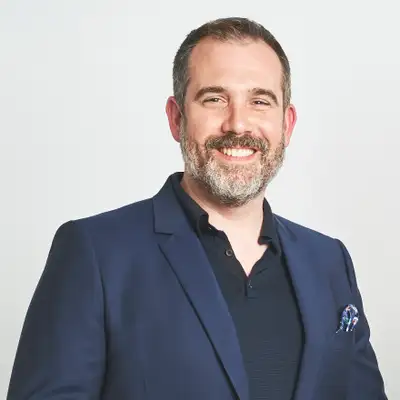
Presented by Doctor, writer and TV Presenter Xand van Tulleken and community health psychologist and self-proclaimed hippie, UCL's Professor Rochelle Burgess.
This podcast is about public health, but more importantly, it’s about the systems that need disrupting to make public health better. In each episode, we’ll be challenging the status quo of this field, asking what needs to change, why and how to get there. We’ll be joined by activists, scholars, artists, comedians and industry professionals to offer perspectives from the UCL community and beyond.
We’re calling this podcast Public Health Disrupted because that’s exactly what we want to do. We are going to be breaking down disciplinary, sectoral and geographic boundaries to really understand the diverse and complex issues impacting our health.
Welcome to season six of Public Health Disrupted with me, Xand van Tulleken
Rochelle (00:11)
And me, Rochelle Burgess. Xand is a doctor, writer, and TV presenter, and I'm a community health psychologist and professor of global mental health and social justice at the UCL Institute for Global Health.
Xand (00:22)
This podcast is about public health. More importantly, it's about the systems that need disrupting to make public health better. As UCL marks two hundred years of challenging convention, we continue to ask the difficult questions what needs to change, why, and how do we get there?
Rochelle (00:38)
Today's episode will explore love. It's a very long-awaited episode for Xand and myself. And we're interested in not just a feeling, but as my mother always reminded me, a verb, something that actively shapes our health, our well being, and our everyday life. So from intimate relationships and friendships to family ties, community connections, and the systems we draw on in everyday life, love is a hugely important, powerful player in that game.
Xand (01:07)
That's exactly right, Rochelle And this conversation is going to ask how relationships shaped by social, cultural, and structural conditions. What happens when people are unsupported or isolated or navigating precarity? And we'll explore what it would mean to take love seriously as a public health concept, embedding connection, dignity, and care into the systems that shape our lives. Our first guest today is Laura Mucha Laura is an ex lawyer turned award winning.
Poet and author in residence in the Department of Public Health and Primary Care at the University of Cambridge. Her books have been described as stunningly original by Book Trust, fantastic by the Daily Mail, and a marvelous feat by Richard Curtis. She's won Children's Book of the Year in 2024 in the Week Junior Awards, and recently broke the Guinness World Record for the largest multi-view poetry lesson with over 43,000 young people around the world. Her books, please find attached.
And maybe most importantly for us today, we need to talk about love, explore love and attachment theory, combining academic research and interviews with people in every continent of the world.
Rochelle (02:18)
And from UCL, we're delighted to welcome Dr. Rachel Benchekroun. Rachel is a senior research fellow at UCL, a sociologist and ethnographer whose research focuses on support networks, friendship, social infrastructures, and well-being. At UCL's Social Research Institute, Rachel has been researching motherhood and support networks in the context of precarious migration and recently published a book about this called Precarious Motherhood.
She has also been working on the NIHR funded Fair Food Futures UK project, examining how community food organizations shape families' experiences of food insecurity. Now, at the Institute of Health Informatics, Rachel is part of the Raphael project, which aims to improve palliative care for heart failure patients.
Xand (03:02)
Laura and Rachel, thank you so much for joining us. Laura, can we start with you? What do we mean when we talk about love in the context of health and well being?
Laura Mucha (03:13)
I think that it's really great that you've asked me that question because I feel like everyone just uses one word for love and it's really unhelpful. In fact, I have a child in primary school and he's recently been talking to me about how many of the children in primary school love each other. ⁓ I haven't quite delved into the different definitions with him just yet, but I'm on the verge. also I should say that the ancient Greeks were a bit clever, weren't they? Because they had seven different words for it and we don't
So there's lust, and I think that's the biggest confusion that it's really easy when you're in lust to think that you're in love. But no, lust is literally there to get us to reproduce and exist as a species. it can overlap with romantic love, but not always. So lust can fade and you can be left with nothing, or it can fade and you can still be in romantic love. Great. But then really the foundation of long term relationships.
Of best friendships is companionate love. And it's basically a healthy, safe, safe best friendship when all of the crazy drugs that are there to get to reproduce chill out and you're left with kind of a solid foundation, not very glamorous, and not really what's represented in you know the adverts that sell you perfume or watches or diamonds,
⁓ and then also under all of this is attachment theory. So attachment theory is like one of the most researched areas of psychology. It's also unfortunately one of the ⁓ most widely misunderstood. But the the way I can sort of give it to you in the shortest, sharpest nugget is that ⁓ when we are little and all the way through our life, we benefit from
knowing or believing that there is someone important there for us when we need them. And this belief or knowledge comes from experience over time. So if I need Rochelle to make me feel better when I'm stressed out and she does, and then I'm stressed out again and she's there, or I hurt myself and she's there, or whatever it is, I'm scared and she's there, over time I learn okay, well Rochelle's gonna be there when I'm hurt, upset, scared or worried.
And all of a sudden the world is an easier place for me to be in. I trust other people. I feel like I'm worthy of love. But if I have someone in my life that doesn't provide that, then the world is a scarier place and I don't know that I'm safe. And instead of having bandwidth that's free to think about all of the brilliant things you can think of in life, you are thinking
Is there someone there if I need them? Is it safe for me to ask for their help? ⁓ if if not, then what's my best approach? Do I pretend I'm fine or do I really, really try and get their help?
Xand (05:52)
And presumably the different kinds of love you're talking about play a big role in things that we would explicitly think of to do with health and well-being. You you talk about the love of your friend caring for you, but is it reasonable to include love as a framework for perhaps considering a patient, perhaps considering
an act of care. That's something that you know, I I n in my training that was never mentioned. But if you're a if you're a social worker, i is love any kind of framework to think about those explicit moments of of health and well being?
Laura Mucha (06:29)
For sure. I like so diving briefly into divorce and bereavement research, social support is a really big determinant of how well you cope with that. And there are some sort of gender findings that women generally have better emotional support. So they cope better and men don't. And often they'll be offered, you know, some alcoholic beverages with a friend or a non-emotional conversation. ⁓ and that
replays itself. So male health is worse after divorce. ⁓ on the whole. there's so many ways that we can approach the evidence that social support is beneficial. But I think social support is a nebulous phrase and it can mean like a group of friends generally feeling like people care. But then also there's this attachment piece about like the small number of people that really, really will be there for you if you need them,
And in the research group that I'm in at Cambridge, I hear this from the child perspective. sometimes they don't get that in their families. And they need someone who's a neighbor or a teacher or a librarian or a relative. to think that you can just cope with everything on your own is flawed,
Of course we need other people around us and if we have that, then we will do better in so many ways.
Rochelle (07:48)
It's a really interesting chance, I think, to bridge to the idea of like where love fits in social structures and societal structures. 'Cause I guess in a way w what I sort of think of how people potentially might be trained to work in systems and whether love is allowed to be in those systems. And and I as a sociologist, Rachel, I wonder if you wanted to jump in and sort of have little bit of a reflection about sort of, you know.
these sort of big structural factors in sort of the way we might organize a health system or the way we organize like social systems as a whole and whether or not love is in there or can it be in there or
Rachel Benchekroun (08:29)
Yep, that's a really interesting question. I think the word love might be quite unusual in sociological research, but we do use concepts like intimacy and care and support. And there's also plenty of research on different kinds of personal relationships. So whether that's parent-child or relationships with partners or family members or friends. And yeah, I'm really interested in how structural factors shape how we do personal relationships.
This might include like social, cultural, spatial factors. How do they influence our interactions with other people? And how do they facilitate certain ways of interacting in relationships? Or how might they constrain us? social factors would include aspects of your identity, like your gender, your family role, your socioeconomic background.
maybe your ethnicity or even immigration or citizenship status. And these different things can intersect in particular ways.
Cultural factors would include our beliefs and assumptions about the world, which are influenced by how and where we were brought up. And we know that there are different cultural norms and expectations about different kinds of relationships and that these change over time. And that's probably most widely recognized in regard to couple relationships. But it's also the case for friendships.
Harry Blatterer argued that we use the word friend in a much broader way now in our social media age. It can be used to mean a close friend, but on the other hand, it could also be used to mean someone we barely know. And then I also think it's really important to think about the role of space and place. So how do the places that we spend time in affect who we meet, who we form connections with?
who we develop potentially intimate relationships with and how we do these relationships. And I think all of this really matters because our everyday relationships affect how we access and share different kinds of support. And also that affects how connected we feel and then that ultimately influences our sense of wellbeing. But then equally, I think we need to think about how our health and wellbeing might affect how we form and sustain relationships.
So for example, like how might illness or physical or mental health problems present barriers to interacting with other people and that can potentially contribute to social isolation and low wellbeing.
Rochelle (11:03)
I read Belle Hooks' work, you know, all about love. And she did this really good job, I think, of sort of trying to highlight, I guess, the political nature of
But I guess in in the spaces in where both of you work, like love as this umbrella for care and relationships and
That are sort of interpersonal across all spaces of our lives. Is there a value in us thinking of it as sort of I guess a political project or a project for justice? Laura and I are old friends. Let's just take the cat out of the bag now. ⁓ but like I feel like Laura, you and I have had conversations about this maybe a bit in the in the past. And so I just wondered what your thoughts are, and we can start with you and then go to Rachel, or maybe also Xand, who also loved that book.
Xand (11:54)
I was just gonna say, just for listeners who don't know who Belle Hooks is, the thing that really struck me when I was reading her book, I was reading her book to understand, I think, romantic love and her definition of love is the will to extend oneself for the purpose of nurturing your own or another person's spiritual growth. And I that really struck me that that sort of bridges some of
what you're saying, this sort of delicacy around ⁓ the difference between lust and love and romantic love and the different kinds of love that at its heart it feels like a very foundational, active thing to do.
Laura Mucha (12:32)
Can I just say that as ⁓ an ex lawyer, I'm really enjoying the fact that you just jumped in a bit of definition and clarified so that everyone can be on the same page.
So for the book We Need to Talk About Love, I because I got to the conclusion that actually friendship, love is the basis of long term relationships once the last chills out, I then started reading about what philosophers said about friendship and some of the ideas that resonated with me and that are trying to act in someone else's best interests. So
And like understanding what they value and trying to keep them on the value path of what they value, even if that means you're saying something to them that they might not want to hear. ⁓ so I think defining love is is complicated and might take longer than we have. But but ⁓ I did I do like aspects of her definition.
I work in this Department of Public ⁓ Health and Primary C and I'm in the research group with lots of social workers and doctors and psychologists and therapists and academics. But then I also spend quite a lot of time going into schools around the world. And when I go into schools around the world,
So school is the has the potential to be the great equalizer, right? And the issue I have when I go into schools is that some children won't be getting, depending on how we define it, love at home. They won't feel safe at home. And then they go to school.
And love isn't something that is like teachers don't get any mental health training. I've done talks about attachment theory to teacher conferences where teachers have come up to me afterwards and gone, You have reminded me that this is the most important work I do, but I'm not trained in it. I'm not measured on it. And actually the stuff I'm measured on takes up so much time and depletes me so much.
That this, which is arguably the most important thing I do, is left to be the thing that I have to choose to do out of like the dregs of my energy and time that are left over
children being in a place where there is a teacher that has a bit of understanding of what might be going on in their homes and has a bit of training and a bit of capacity to provide some sort of love in whatever way we define it is going to be more beneficial for their for their lives than jumping through a phonics test.
Rochelle (15:03)
I was just thinking that that is sort of like the embodiment of what Bell Hooks is talking about with like a love ethic, right? Like so like you actually So that's the thing that moves it from individual to systems that she says like you need the individu but we're applying it, sort of expanding its reach over and over again, which is the thing that becomes really powerful but that we're not actually that focused on ensuring happens.
Xand (15:30)
systems you're talking about, it it feels like it's difficult that we're squeamish to even use the word. It almost feels ⁓ y you know, whether you're a sociologist or a lawyer, it's not a very technical term. You know, we're joking about defining it and pinning it down. But if you are, you know, whether you're talking about precarious families and food security or whether you're talking about kids in care or teachers, mental health is a thing you can get trained in. Mental health is a thing that we sort of have some
evidence-based and diagnostic criteria and all these things. my instinct is to say love is terribly important. That you know, if you're and I my understanding is there is some research that just having experienced the love of your parents and grandparents ⁓ is a source of happiness long after those people are dead and can't help you.
and you know, Rochelle alluded to the kind of politics of love. I don't know if Rachel, is that I mean,
I suppose I'm speaking as someone who's very involved in care and in teaching. And in both cases, ⁓ love seemed like a terribly important motivating factor. But to say that you either loved your students or or loved your patients, ⁓ without being part of a religious order, I think almost bordered on being creepy. Like is what how do you see ⁓ my instinct there, Rachel? Does that do you feel like don't go there, Xand, that isn't gonna work?
Rachel Benchekroun (16:50)
So first of all, thinking about lovers' political, I think that's very interesting. When I did the research that forms the basis of my book, it was very much in the context of the hostile environment, which a lot of listeners might know was introduced as a sort of policy approach by
an earlier government ⁓ and it was designed to make life as difficult as possible for people from certain kinds of migration backgrounds in an attempt to reduce certain kinds of migration. And so these policies ⁓ really made life very difficult for lots of families. so what I sort of found was that for lot of mothers forming strong personal relationships,
was almost like a form of resistance because there are certain things more powerful forces the kind of stop you from doing or prevent you accessing, but nobody can stop you from having a loving personal relationship, whatever kind of relationship that might be.
So I did find that that was ⁓ a very interesting way of thinking about the importance of intimate relationships.
Laura Mucha (18:05)
Can I just say something about your feeling creepy? So I I I see what you mean, but I do think that it comes back to this ⁓ idea of a love ethic, maybe, but I think there are ways around the creepiness. So, like attachment theory and the way that secure attachment is defined isn't creepy. I think that that's great. And I think that like
there's quite a solid research base that there are measurable physical and mental health benefits to having that. There's a meas there's a really great research base that having a secure r relationship with someone as a child has a significant impact on your language development. And that increases with each secure attachment that you have. And there's also a very solid research base that your ability to provide secure attachment goes down the more you're overwhelmed by life. So
If you are not sure where you're going to be living, where your food is going to come from, if you're going to be kicked out of the country, then that is going to impact your ability to provide secret attachment, which is going to impact your children. And in this wonderful study called the Minnesota Longitudinal Study, which ran for more than 40 years and looked at kids before they were born, ⁓ and it was mostly single mums in America, when a mother's social support increased, the mental health of their child improved. So
Yeah, I totally hear. You there's solid research behind it that there are real benefits of taking love seriously, and we can break that down into lots of different ways. I don't think we should be, you know, a advocating that everyone should be lusting everyone all over the place. That's not what I mean. I'm being very specific.
Xand (19:51)
Wasn't what I meant either.
Rochelle (19:55)
I I purposely try to use the word love more. I think I sort of get away with it for many different reasons. ⁓ I'm I'm not quite sure all of them. Maybe sort of framing myself as a hippie is a part of it. and this idea of how we might
love and care for each other in individual spaces, but also in bid building like loving infrastructure and loving communities. And I think Rachel, like you said you want to talk a little bit about sort of spaces that like caring spaces and connec caring spaces, ⁓ which I will call loving spaces, just for the purpose of like, you know, forcing us to use the word, if only in this safe space and never again. But
what does that look like in sort of like communal or shared spaces?
Rachel Benchekroun (20:45)
I've spent quite a lot of time in different kinds of community spaces for the purposes of the different research I've been doing. And it's really striking the sort of differences that you can see how it feels to be in those different And you can sort of see how that affects how people interact with each other when they're in the space.
I think there's an increasing amount of very interesting research on social infrastructure. And I would define this as like publicly accessible spaces that feel safe and welcoming and provide opportunities to meet other people.
And I think importantly, this might mean people who are similar to you in some ways, but different to you in other ways. So I suppose the kinds of spaces I'm thinking of are like community centers, libraries, youth centers, lunch clubs, children's centers, even food banks.
And I think the reason they're important is because they can help prevent social isolation and loneliness and provide a space for accessing and sharing help and resources. So I think it's really important to reflect on the role of these kinds of places and spaces and the way that
people who work there, whether that's paid staff or volunteers. The way that they think about the setup of those spaces, the layout and whether they're setting up that space that kind of encourages or enables people coming in to sit down and relax and chat or whether it's set up in a way where you're kind of expected to come and get what you're there for and then leave.
because that can really impact on how people feel when they're in the space. And that can really shape the potential or not for making connections and forming longer lasting relationships. so think it's important for organizations to really reflect on how they operate and also for policymakers think about.
the access people have or not to these kinds of spaces and whether they need to actively the spaces that there are, ideally put funding into creating more spaces.
Laura Mucha (23:03)
Can I just briefly jump in there and say I'm so glad you lifted libraries? Because I regularly have chats with librarians And they honestly tell me that their job is part librarian, part kind of untrained therapist, essentially, and that the librarian ⁓ operates as a safe space where, for example, in a school context, if a child is struggling with something in the playground.
They know that there's a sanctuary that they can turn to, which is why I think it's horrific, that ⁓ having a library in a school is not a legal requirement that it is for prisons. And that I think it's one in seven or one in eight, I can't remember what it is now, schools do not have a library. ⁓ and if they do have a library, they often don't have a librarian. and I think that obviously there are
massive literacy benefits, but I I think that this community safety sanctuary point is often overlooked. it genuinely ⁓ like horrifies me that as a society we aren't prioritizing that in our budget allocation. It's not expensive. And I like I've gone to senior library conferences where people are saying, well, we're having to close libraries.
And I think that often it the focus is on the literacy without understanding the wider health, community, safety, love aspects of it.
Rochelle (24:23)
Sort of feels like a missed opportunity for a lot of sort of like governments thinking about like building healthy societies and how important those community spaces are to do the things that evidence tells us is needed for good well-being. if we wanted to really take love and care and connection
seriously as a public health investment. Like to say actually, we want to build a better world. Governments now say they want to build a better, healthier world and they mean it. And they say, we're taking love and relationships and care and the care ethics seriously as part of that. What would we need to change?
What would we need to do to make that possible in public health spaces?
Laura Mucha (25:08)
think Scandinavia does this really well. I think they take parental leave really
I think structurally there is a belief in the importance of early relationships and of family relationships that I don't think we have here in the same way. this is quite a nebulous thing to say because I don't know if I have the evidence for it, but I don't feel like parenting is valued in the same way. ⁓ and I don't think relationships
are valued in the same way. But we've got the evidence to show that there are mental and physical health benefits, but there's also cost benefits. So even if we're talking to the hard nosed people that do not care about anything apart from the cash cash, you've got the cash cash arguments to win them over. So in one study, ⁓ young people who behaved in antisocial ways from an early age, ⁓ the research has found that the extra costs to health, education and social care of having an insecure instead of secure attachment with their mum
⁓ was about £5,000 like adjusted for inflation in 2024. And if that was also an insecure relationship with their dad, that was £21,000 per child per year. And obviously there's all of the adverse childhood experiences research that has got like an enormous ⁓ cost base associated with it. And I think that we could, and I'd love it if we did,
understand that to understand a child, you need to understand their family, to understand their family, you need to understand the context they live in and all the different layers of that context. And so ⁓ trying to invest in all of it, there's no like quick fix.
So I think it's like a really multi-leveled approach. And when I have interviewed people for a UNICEF series about the role of the science of love in childhood, quite a lot the people that I interviewed were like, we need to restructure society.
But unfortunately that's what I think we need to do. Can we start by putting libraries in all schools and and facilitating teachers in providing a loving school environment? Because that really annoys me.
Rochelle (27:12)
I I feel like that is a no brainer. Library and schools, like I just don't understand why that wouldn't happen. It seems like completely counter intuitive. And I wonder how much AI is going to now advance the erasure of those kinds of sort of collective structures like a library, because they'd be like, you nobody has books anymore, it's all online and you can have your devices in your classroom.
So it would I think there is a need, Rachel, you were doing some emphatic nodding there. So do you want to jump in?
Rachel Benchekroun (27:46)
think during the pandemic and lockdowns, think it really kind of brought to the fore how important these community or publicly accessible kind of spaces are and how much they were missed during that time where we weren't really allowed to meet up in public and I think policymakers did kind of recognise that. I think the GLA published a document looking at the role of social infrastructure around about that time.
I think what's important is for local authorities to have a really good look at what is in their local area, what exists, how are those different spaces used, what the different kinds of support and resources people can access within them. Like Laura was saying, a particular kind of space might appear to be one thing or to serve one particular kind of purpose, like a lobby, but actually there may be so much more going on within that space. So I think it's really important for
policymakers and commissioners to understand that, to understand the role that those places play. And also to be really aware of spatial inequalities within geographical areas. think quite often rural areas and coastal areas are maybe less well served and it can be more difficult for people to get to community type spaces where they can connect with other people. And that can potentially create social isolation.
Laura Mucha (29:18)
I loved everything you said, Rachel. ⁓ I I what two thoughts I had as you were speaking were ⁓ there is a consensus statement that just came out by Jessica Opie and those colleagues that it father child attachment matters just as much as mother child attachment. And I feel like that is something that we completely miss and I'm not sure we support fathers or really culturally accept that maybe a father might need a bit of flexibility within work, for example, to you know
be more present. ⁓ but also I I wonder whether there's a way of treating healthy, safe relationships on par with air quality or smoking or eating healthily. Why are we not treating it like that? When there is lots of different research from lots of different angles. every time I go to the doctor, the first thing they say is, Do you smoke? Like, do you drink alcohol? But they don't say, Do you have
You know, someone that's gonna be there for you if you need them. With you know, do you have friends?
Rochelle (30:22)
That would be amazing.
Xand (30:23)
The last two answers were just so ⁓ fascinating to me, both revealing that in in lots of structures, love is an idea of love is embedded, although perhaps it's it's not it's not named, but clearly we consider this terribly important, and there's very good evidence for its importance. And that idea that your doctor, your healthcare provider, might say.
⁓ you know, maybe they wouldn't use the word love. I wouldn't think that would be too bad, but saying is there someone in your life who loves you and cares about you feels like that that idea that we never asked that question, that that's not part of, for instance, a medical history gives me a lump in my throat. Like I feel like I and there's a there's an intensive care doctor called Matthew Morgan, who now writes his notes in in the medical notes to the patient.
So the patient's, you know, often unconscious, maybe comatose, and he says, Today you are in this condition and and he writes a letter to the patient as medical notes, rather than just writing it a note to the to the other staff. And I thought, what an amazing kind of act of care and love.
Rochelle (31:33)
think it's such an amazing thing it seems like the solution to so many problems. Like you don't get epistemic violence, which is that big fancy word that my students are afraid If you are engaged with people and patients and, you know, research participants in a way that was interested in
their care and well being right now, not just in the long term then you don't have epistemic violence and you don't have those exclusions. I suppose that's why activists talk about their work as an act of love, oftentimes, right? Where that's a whole other episode around activism, maybe, but like
you know, love is very much embedded in this questioning of why does the world have to be this way and can we sort of care for each other in all of our encounters? And I think both of your work sort of really points us towards towards the importance of that at at different levels and from different angles. So really grateful to have had the chance to to talk to you both today.
Xand (32:34)
Can I just echo that and just say it's it's so I would say it's probably the hardest topic we've handed you to go from something that we're all familiar with, you know, that everyone talks about all the time that people make movies about and bandy that word around, to go, no, but what does it mean and what what does it mean in the context of public health and wellness in a real, measurable, important way? I feel like you both navigated this in a way that has disrupted my thoughts, which is the most
that we could possibly ask you to do. So Rachel and Laura, thank you so much.
We love you. And we should say, Rochelle, can I say and I I think tell me if I speak for you as well. When I think about our listeners, the love and thought from the team that goes into this podcast, like it is there is love in doing this kind of broadcasting and thinking about trying to get these difficult academic topics and shake things up and and disrupt the world.
Rochelle (33:25)
No.
Xand (33:26)
Yeah, I don't know what you're gonna say actually. I'd I feel like if you were like
Rochelle (33:30)
No, no, I totally agree with you. And it's very much like a like a loving gift that is unseen, right? Because you sort of get the sort of product. But there's so much like love and care and and interest and sort of really embedded into each conversation that we have. I think you to go into discomfort and to be in a disruptive space.
you have to feel safe. And so I think that, you know, the whole team tries to create a feeling of safety to do that. And that is a to me also an act of how do you make people feel safe and like they can maybe explore things that they've sort of been thinking about but not really
have had the chance to delve into or a piece of their work that they're, you know, maybe more nervous of I so I think that this is a it's all about love, I think.
one of the things that we ask all of our guests to do is to think about a piece of art or music or poetry that they love, which then as a result of that love has disrupted their thinking or shifted the way they think in in a particular way. ⁓ and so it would be really nice if we could hear from each of you about what what your disruptive piece of of love is Rachel, do you wanna start and then we'll go to to Laura.
Rachel Benchekroun (34:51)
Yeah, sure. I would have to say for me, it's the musician Tricky. I don't know if you know him, but he was part of the Bristol. Yeah.
Rochelle (35:02)
Yeah.
Rachel Benchekroun (35:04)
He was part of the Bristol scene. I'm glad you're a fan too. He was part of the Bristol scene in the 1990s when I was a teenager. He's been recording and performing ever since. When he released his first album, Maxinquay, I was really mesmerized by it. What I found fascinating was how he brought all these different elements together. So like different riffs.
very eclectic samples, instruments, voices, different rhythms, and you put them together in such unexpected ways and really created this unique sound. And it made me realize that you don't have to follow conventional pathways. Maybe you can do more when you take different turns in life. And when you bring together different experiences and people and things and ideas in ways that can be really exciting and
create new ways of understanding, that can be really powerful. So what I love about Tricky is also that he's always been seeking out like new sources of inspiration and he's always collaborating with new people and he's kept on creating new sounds. so I think he's released like 15 albums now, but Max and Quay, that first album is still really special for me.
Rochelle (36:21)
my gosh, that's amazing. I mean, I didn't realize it's been like but this is when this happens, I'm like, God, how old am I? Like I've been listening to Tricky for a long time, but I d I stopped listening to newer stuff.
Rachel Benchekroun (36:32)
You're still performing as well. Yeah. Yeah. Still amazing.
Rochelle (36:36)
Still amazing. gosh. That's great, Rachel. Thank you. I know what I'm gonna be playing ⁓ at dinner time again today. Laura.
Laura Mucha (36:44)
Well, I'm gonna name two but I'll do it quickly. One is a poem called Dropping the Ball by
Rochelle (36:46)
I try to ⁓
I knew
you were gonna do that.
Laura Mucha (36:55)
so there's a poem called Dropping the Ball written by Rochelle Burgess, who as well as being a leading professor sorting out the world in terms of structural inequality, ⁓ she's a poet in her spare time and she wrote a poem called Dropping the Ball about a racist incident when she was a child that
has made its way across schools across the country and is studied ⁓ in a mental health poetry collection and has also changed the way that I think about and parent when it comes to racism. ⁓ and I'm gonna now group her with Kwame Alexander, who is a phenomenal author in America who has written
a lot of amazing stuff, but the stuff I'm gonna cite in particular are two picture books called The Undefeated and Unspoken. and both Kwame and Rochelle trust children and inspire them with creativity, but also talk about really difficult topics.
in a way that slowly chip away at structural inequality at scale and I think that is public health in creative poetry or picture book form.
Rochelle (38:20)
Cool.
There is always you know, a risk when you sort of say, Yeah, I have I know somebody who's done a cool thing, they should come on the podcast and then they come on the podcast and they out you as a poet. My secret life life is ⁓ writing poetry. But I and and also I write lots of poems on motherhood. I was quite excited to see your book, ⁓ Rachel, because I've from poetry is that's now moved to me trying to
write and theorize about motherhood and like mothering in the academy and activist mothering and so like your work on sort of like love or mothering, which now I feel like that's gonna have some love stuff in there very clearly about like, you know, resistance. will be a big part of that. But yes, okay, yeah, I write poems. It's not that surprising. I I call myself a hippie. It shouldn't be that surprising that I have I write poetry, so it's probably okay.
Rachel Benchekroun (39:20)
Sorry.
Laura Mucha (39:20)
Can I just say we do a design? Yeah, okay, I write poems.
Rachel Benchekroun (39:27)
definitely intrigued. I'll be looking up your poems. It sounds amazing.
Rochelle (39:33)
⁓ yeah. Hopefully that's the only one you can find.
But anyway, this was really, really so beautiful and so lovely. And I feel really honored that you guys took the time to do this. As Xand said, like
It's probably the hardest one because everybody you're like there's an idea of what love is and sort of I guess weave across different languages and frameworks and how we talk about it without talking about it. So hugely grateful and thankful for you both coming on today. It's been fantastic. Thank you so, so much. It's been wonderful.
Laura Mucha (40:09)
Thank you for asking me.
Rachel Benchekroun (40:11)
Thanks for inviting us.
Rochelle (40:17)
If you've been listening to Public Health Disrupted, this episode was presented by me, Rochelle Burgess, and Xand van Tulleken. It was produced by UCL Health of the Public and edited by Annabelle Buckland at Decibel Creative. Our huge thanks again to today's brilliant guests, Laura Mucha and Rachel Benchekroun.