Subscribe
Share
Share
Embed
This is a show for burnt-out fashion designers (and TDs, PDs, patternmakers, textile designer and beyond) who want more flexibility in their career while still doing work they love.
You'll learn how to build a freelance fashion business, so you can do the work you love on your own terms. Freelancing in fashion is the only way to get freedom in your day (instead of being tied to a desk).
Whether you want to earn extra money on the side, fund your fashion brand, or replace your salary, the FDGP podcast will help you get there. Listen in for actionable tips and strategies to kickstart or grow your career as a freelance fashion designer, build your confidence, and create the life you want.
Hosted by $100k+ fashion freelancer Sew Heidi, the show features interviews and strategy sessions with successful freelance fashion designers from around the world who've ditched toxic fashion jobs and taken control of their own destinies. This is the only place to get REAL insights from REAL freelancers who have built REAL careers on their own terms. (Formerly the Successful Fashion Freelancer podcast.)
Heidi [00:00:01]:
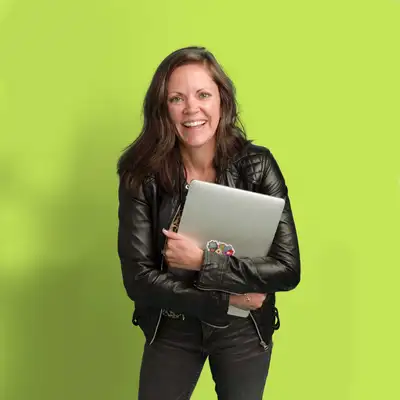
Like a lot of people, Krystal Lewis's life changed when the pandemic hit. She lost her new job that she had just started 3 weeks before and was trying to figure out what to do with her life. She had 2 small kids at home, and she had been previously doing some freelancing on the side while she was working full time, so she decided to lean fully into that. Krystal wanted to build a merchandising agency and that's exactly what she did. Now called Black Unicorn Merchandising, Krystal helps small start up brands get their designs manufactured from initial idea through bulk production, but she does it differently than anyone I've ever had on the podcast before. Her clients pay her the full development and manufacturing fee, and she is the intermediary with the factory, not only managing production, but paying for it too. Her fees are all built into the production costs, and after a couple years of operating this way, Krystal has finally figured out a formula for success to ensure that she's making enough money on the back end. Krystal's journey has not been easy like any freelance journey, and she's learned a lot of hard lessons, but she has built a profitable business and is she is continuing to grow.
Heidi [00:01:02]:
You're gonna love this episode. Let's get to it. Okay. So let's talk freelancing and your business that is, like, amazing. Tell me all the things. I mean okay. I guess nobody knows the backstory context. So Sure.
Heidi [00:01:19]:
Give us a little backstory. You were in the street industry for 13 or something years, and then what happened?
Krystal Lewis [00:01:26]:
Well, I so, like, the very beginning, graduated in 2007, and I worked 5 years at a Western Wear company, which is where I really learned how to make, a sample line, you know, do textile design, tech packs, that sort of thing, all the way through, like, having a sample line for, like, you know, global salespeople to sell. Mhmm. And then I moved to BioWorld, it that's a big, licensed apparel company here in Dallas. So I got really hands on, in understanding how to pick a sketch and turn that into something tangible. It was so different there. So that was really where I got the the meat of, like, taking just an idea and turning it into something sellable. So that was the first tenure of my career. 5 years at, 5 years at 5 years at BioWorld, and then I worked at, the place that really kind of gave me the foundation for how I wanted to run my business is pinpoint merchandising.
Krystal Lewis [00:02:24]:
And, my boss there had just figured out that there is a way to do small bat manufacturing overseas, and that's literally just pay a surcharge. If I understand that if we order less than so many meters of fabric or trim or whatever, it's going to be more expensive. I'll pay for it. And so that was the blueprint for a black unicorn. And I. Which is your business now? Yes. Yeah. Yeah.
Krystal Lewis [00:02:48]:
This is my business now, black unicorn merchandising. I would actually my nickname comes from, Scott, my boss at Pinpoint. He introduced me to the team, and he was like, she can design fabrics. She can do tech bags. She can do this. She can do that unicorn. And at the time, I had a big blue afro. A blue one? Oh, yeah.
Krystal Lewis [00:03:09]:
Oh, yeah. Maybe you should
Heidi [00:03:10]:
have blue unicorn. No?
Krystal Lewis [00:03:12]:
Well, I mean, I'm African American. So I know you are. You had a mural painted. Yeah. Yeah. I I guess, like, this is Ben. He didn't wanna go to work. But, we had a mural painted for, like, their 10 year anniversary, and he painted a giant black unicorn on the wall.
Krystal Lewis [00:03:25]:
Oh, I love this. Not just of me. Everyone got their own thing, like, their own little icon. Yeah. So, that was, you know, where Black Unicorn was. The seed was planted. And then I worked at another licensed apparel company here in Dallas called Net Engine briefly. And then I moved to Hager.
Krystal Lewis [00:03:44]:
So and they do mostly menswear. Okay. So that was the first 13 years of my career. And so I went from design assistant to managing an entire design team to actually, finally, the role that I was wanting the whole time was associate designer or head designer at some point, and that's where I got to do at Hager, just, you know, right before the pandemic hit, and I was forced to figure something else out.
Heidi [00:04:10]:
Did that job end
Krystal Lewis [00:04:12]:
with the pandemic? Well, it did. And that was only, like, 3 weeks then. I had just left that engine. I started my job, did my first presentation, and then everything shut down. But it was the biggest blessing in disguise. I would do it all over again. I had already started Black Unicorn as, like, a pet project. Okay.
Krystal Lewis [00:04:30]:
And, I had a couple of clients and it Okay. Was just disastrous. I was like, yeah, $1,000. Oh, 200 valet. Yeah. I'll just do a whole collection for you. It's a hot mess. That was when Black Unicorn started.
Heidi [00:04:46]:
Throwing prices out, like, not really bidding accurately anything. Okay. Just taking whatever.
Krystal Lewis [00:04:52]:
Yes.
Heidi [00:04:52]:
Where did those first few clients even come from?
Krystal Lewis [00:04:55]:
My, so my wedding photographer is, like, a good friend of the family, and so she's done all of our family portraits and, like, our wedding and engagement photos, all that. So I just one day at my maternity photoshoot, I asked her. I was like, how did you go about starting a business? And, she kind of just told well, I just started telling everybody I wanna be a photographer. I wanna start a business. I was, like, I'm really looking for something that will allow me to stay home with my daughter. Like I said, I was pregnant at the time. Okay. And I was, like, I don't wanna go back to corporate.
Heidi [00:05:27]:
You're That's
Krystal Lewis [00:05:28]:
my second.
Heidi [00:05:28]:
Would have been your second. Yeah.
Krystal Lewis [00:05:30]:
I was
Heidi [00:05:30]:
like, okay. That would be your second. And so your first was 3 at that point?
Krystal Lewis [00:05:33]:
That yes. He was 3. Okay. So, I get really good at, like, the timeline and doing the math. I would have been so lost. But mhmm. But yes. So my my littlest was 3 or my my child that was born was 3, and I was pregnant with my second.
Krystal Lewis [00:05:49]:
Okay. My earring. And yeah. So I just asked her, how did you go about starting a business? Because it was so mystifying for me. I didn't even know where to begin. Did I just start telling everybody and then make a business plan? So I did that. I made a 1 page business plan. I just started telling everybody.
Krystal Lewis [00:06:06]:
He actually referred me to my first client, and they already had a line of wholesale blanks that they would like print on and sell, and it was a bodybuilding company, and I had a little bit of, active wear experience. So I designed a collection for them. I got those samples made, and it stalled out, because they needed a little more guidance on, like, what does manufacturing look like for someone our size? And I couldn't give it to them because I had never done it before. I'd never done yeah. I had always done the design side of things, but I had never really, like, placed a purchase order, gotten costing, that sort of thing for, like, the entire order. So, like, yeah, it was a whole other thing that I have never touched on in my corporate life. Okay. So, yeah, that's all that.
Krystal Lewis [00:06:59]:
And then my second client, she I have no idea she found me. She's like, I googled you. And I'm like, how? I have no presence on Google. I don't know. Did you
Heidi [00:07:08]:
happen to Google black unicorn? Because
Krystal Lewis [00:07:11]:
Yes. You would have had to look for black By chance. Yeah. Because I I mean, my social media was nil. It was, like, basically images of me sewing just to, kind of, have something on the Internet. Yeah. I don't know how she found me, but she wanted to do a line of scrubs. And, it was kind of the same thing.
Krystal Lewis [00:07:28]:
She was, like, well, how much are samples gonna cost? That's cool. Okay. Well, how much is an order gonna cost? So we got some samples made, and then that's all that too. And, honestly, it was a lot of that for the 1st year.
Heidi [00:07:44]:
And so that was somewhat crossing over with your last job before COVID hit, but then also maybe into COVID?
Krystal Lewis [00:07:50]:
Yes. Those first two that I just described, they were, like that was weekend project for me. You know, we would meet after work sometimes, do Zooms after work, but I was still working a full time job at the time. Okay.
Heidi [00:08:02]:
Gotcha. So then the pandemic hits, you're pregnant. When was your daughter born?
Krystal Lewis [00:08:10]:
She came right before everything shut down. So, she was
Heidi [00:08:14]:
So did Errol.
Krystal Lewis [00:08:16]:
Oh, yeah. So I had her. Her birthday is, July 25th, 2019.
Heidi [00:08:24]:
Oh, a full okay.
Krystal Lewis [00:08:27]:
Yeah. So she was about 6 months.
Heidi [00:08:29]:
Okay. Daryl was born February 2020. Like, literally right before. Okay. Gotcha.
Krystal Lewis [00:08:33]:
Yeah. Okay. So she was She was she was but she was here.
Heidi [00:08:36]:
She was 6 months when the pandemic hit. Yeah. You lost your gig at Yes. I forget
Krystal Lewis [00:08:41]:
the name.
Heidi [00:08:42]:
AGRA. AGRA, where you had just started.
Krystal Lewis [00:08:44]:
Yeah.
Heidi [00:08:44]:
And so what were you thinking?
Krystal Lewis [00:08:46]:
Honestly, the first few weeks, I was just, like, it'll get better. This is all gonna be. It's gonna be fine. The world's gonna open back up. Yeah. We I think we all did. We didn't know what to expect. Totally.
Krystal Lewis [00:08:57]:
But after the first, like, 3 months and, there was this kind of no real end in sight, I just started designing my own stuff just to kind of keep my skills sharp. So, like, eventually, I I may not go back to work for Hager, but I would really like to just keep my skills sharp. So I was, like, making math and, just making things for the kids, doing sketches. I I had designed a whole collection of just, loungewear, because at fine. That's all anybody was wearing. Mhmm. Was, you know, loungewear. So, you know, I just did some odd some odd projects, and, kind of lost track of the question.
Heidi [00:09:38]:
You so you lost your gig at Hager. It's the pandemic. You've got a 3, 4 year old, a 6 month old.
Krystal Lewis [00:09:44]:
Yeah.
Heidi [00:09:45]:
And you're thinking the world's gonna just open back up. In the meantime, you're just doing projects on your own to keep your skills sharp.
Krystal Lewis [00:09:52]:
Yes.
Heidi [00:09:53]:
Did you have any freelance clients at that point?
Krystal Lewis [00:09:56]:
So at that point, I was taking a lot of consultations, but I wasn't getting any bites. And, honestly, it was the encouragement from my husband to be, like, this is a great opportunity for you to start a legitimate business. Like, I know you've dipped your toe in freelance. He's, like, but this is
Heidi [00:10:16]:
a chance.
Krystal Lewis [00:10:16]:
Like, you're home all day. Like, if they are occupied, you know, in their little play area or taking naps, he's, like, pick an opportunity to, like, figure out what you wanna do. So, like, thank God for him. Because I was really just, like, I need to get a job and bring some money in this house. You know, I felt so underutilized. Like, I just I needed to help. And he was just like, you know what? We don't have the acre bills right now. It's not like we're spending a lot of money on gas.
Krystal Lewis [00:10:45]:
Like, we will be fine financially. But, like, he really encouraged me to figure out how to start my business. And, eventually, again, I got I was taking a lot of consultation. Some of those things would turn into a sketch or a tech pack, but, I just wasn't getting the right clients for me because I feel like, I had already listened to so many of your podcasts, and I've read so many of your blogs and and emails and things like that where I have decided I know what my skills are. I know financially what I'm worth or monetarily, I should say. So, like, I'm not going to dial down what I'm charging. I need to find someone who's gonna pay me what I'm worth. Mhmm.
Krystal Lewis [00:11:28]:
And so it was a lot of, you know, people, like, oh, man. You charge a lot for a sketch. And I'm like, it's not just a sketch. You know? And, of course, you know that, but it's it's hard to explain that to people who don't really fully appreciate the skill. Mhmm. So it was that 1st year was really, well, I guess the 1st year of my business was really just a lot of, you know, a tech pack year, an art file there, but nothing nothing really crazy.
Heidi [00:11:52]:
Okay. Like, just kind of finding your sea legs and figuring stuff out a little bit.
Krystal Lewis [00:11:58]:
Yes. Yes.
Heidi [00:11:59]:
A little bit Just
Krystal Lewis [00:11:59]:
kind of giving myself rounder. Yeah. Do a lot of trial and error. I mean, and I did have a couple of, like, the dreaded PETA clients who were, like, I will give you $200 for all of your services. And like a dope, I took it because I just wanted the experience.
Heidi [00:12:17]:
Okay.
Krystal Lewis [00:12:17]:
And I figured, even if they're not paying me a lot, I will take this experience and learn from it. And I did. I learned quite a bit.
Heidi [00:12:26]:
What it, like, what were some of the things you learned?
Krystal Lewis [00:12:29]:
So, I mean, obviously, you learn who is not your client, which is just as important as knowing who is your client. But I also learned, like, one of the biggest takeaway takeaways from me was don't send anything that you're not proud to put your name on, because I have the vision to look at a sample and say I can fix that. But most clients cannot. They just can't. So they look at something, and if it's not perfect, they think you failed. Whereas, I look at something, and I'm, like, well, that's just the first iteration. 2 or 3 more samples were golden, but I just found that I would the people that would come to me weren't wanting run of the mill stuff. They were wanting really high end boutique y, like, children's wear with bows and rock strings and, like, like, they were wanting really unique things that I couldn't just go buy a market sample of and send it to the factory.
Krystal Lewis [00:13:22]:
Mhmm. Excuse me. I would have to, you know, do a lot of technical sketches and really map it out in the tech pack, how this is gonna be made. And, you know, they wanted specific bamboo, Lycra fabrics. Like, we'd have to go buy that.
Heidi [00:13:37]:
Yeah. You
Krystal Lewis [00:13:38]:
know? Yeah. So none of these things were just readily available at any store. And to make something, you know, to innovate anything, it's going to take more than one shot, usually. And I just found that I was not getting people with that mindset. Yeah. At first.
Heidi [00:13:55]:
And they didn't, like, understand, like, we're gonna have to go through multiple photos, and it's gonna take time.
Krystal Lewis [00:14:01]:
And Right.
Heidi [00:14:02]:
Well, that takes money too, and the development And
Krystal Lewis [00:14:05]:
I wasn't equipped to explain that to them either. So we would get that first sample. And in corporate, you know, you get a trash sample, and you send comments, get another sample. It's no big deal.
Heidi [00:14:15]:
Yeah. And you
Krystal Lewis [00:14:16]:
But I would do that client.
Heidi [00:14:18]:
Off of that first sample?
Krystal Lewis [00:14:20]:
Yeah.
Heidi [00:14:21]:
Yeah. It's so interesting.
Krystal Lewis [00:14:24]:
Okay. It was a completely different animal.
Heidi [00:14:27]:
So in hindsight, you learned that, like, maybe it wasn't your ideal client to begin with, but also, there was perhaps, like you said, a learning curve on your side to understand how to educate them through this process.
Krystal Lewis [00:14:41]:
Yes.
Heidi [00:14:44]:
And explain that upfront to set realistic expectations about how this is gonna go.
Krystal Lewis [00:14:49]:
Exactly. And I still feel, like, unfortunately, dealing with a new client, there's like, they just have to go through it. No amount of warnings I give them upfront seem to really, prepare them because they're just so new to this. They're just so new to it. But, everyone that has stuck with me, they fully understand. Okay. If this isn't perfect, Krystal can fix it. So, you know, we're we're finally there.
Heidi [00:15:15]:
Okay. So in terms of the original comment, which was, like, knowing not to send something that you wouldn't be proud to put your name on. Yeah. It's I think some extent, it's not like you're doing shoddy work. It's more like this photo is a little bit off. I maybe should dial it in before sharing it with my client. Exactly. Unless they understand the process a little bit better.
Krystal Lewis [00:15:36]:
Exactly. And now I can definitely gauge that better. Like, oh, this person is very green. If I send this sample, I'm gonna lose them. So I'd much rather have a Zoom with them and, you know, explain, like, here is the issue with this sample. Here's what I'm gonna do to fix it. Please give me 2 to 3 more weeks to get a resample, versus some of my other clients who have been in the industry longer, and maybe have come to me because they need to pass off some of the the development work. They get it.
Krystal Lewis [00:16:04]:
So I can send them that sample, and then we can have an intelligent conversation about it.
Heidi [00:16:09]:
I love that. An intelligent conversation.
Krystal Lewis [00:16:12]:
Yeah. I mean, yes. It was like a very Breathe between little pigs there. Yeah.
Heidi [00:16:17]:
Okay. So your 1st year was rocky. Lots of hard learning curves which is sometimes the reality with any new venture in life. And then I know you joined fast in, like, October 21. So, like, where were you at at that moment where you were, like, maybe I should get some help with my freelance career or something. Because you had some type of base, you had clients, you were making some money, you were making some mistakes, but you were learning. Like, where were you at?
Krystal Lewis [00:16:44]:
I was just at the point where I was growing faster than I was prepared for. So, I took a bunch of consultations, as I mentioned, and then, like, a year later, a lot of those people circled back and were, like, I'm ready.
Heidi [00:16:59]:
I love hearing that.
Krystal Lewis [00:17:01]:
All so different. Every project was different. Every need was different. So I just felt like I was stretched so thin and I wasn't doing great work for anyone. And when I was, I wasn't sleeping. I wasn't, really spending time with my family. Like, I am spending factory emails while my kids are playing at the park, you know? And I just felt like I'm not doing this right. Mhmm.
Krystal Lewis [00:17:28]:
But I don't know how to do it right. So, you know, I mentioned in one of our emails that your podcast, like, legitimately was a sanctuary for me. I just needed some connection to the outside world. It was just me and my kiddos for 2 years. We stayed in the house a lot longer than everyone else because I wanted them vaccinated before I sent them back out there. So I was listening to something where you mentioned that there was going to be a q and a, about fast. And I remember reading about it and thinking, gosh. I just I can't afford that right now.
Krystal Lewis [00:18:00]:
I'm not working right now. And then the q and a, I just loved, you know, the I don't know. I just feel like it gave me confidence that FAFSA for me because all the questions I was asking myself, like, what should my contracts look like? What services should I offer and what services should I outsource or to cut out entirely? I saw people asking those questions and, I felt confident that if I were to take fast, I would be able to answer those questions myself. So at the time, I think I had 8 clients. K. I honestly, like I said, I don't know that I wanted to hang on to all 8 of them, or if I did, what that would even look like. So I took bath and very quickly realized that, like, I was doing a lot of things the hard way. Like, my contracts were way too wordy and, they didn't make a lot of sense specific to the project I was working on.
Krystal Lewis [00:19:07]:
You know, they're just too generic. They're too vague. So they weren't really giving a scope of work. They weren't really, saying, you know, here's what I promised to do. It was just basically, like, I'm gonna do some work for you and you're gonna pay me. And then, when the work is done, then you'll pay me the rest of the balance. So that was one big thing that I got from fast, and I put that to work immediately. And I noticed that the people that weren't willing to sign those contracts and, you know, be real transparent with me, they ended up falling off.
Krystal Lewis [00:19:38]:
And that was a big sigh of relief because I'm no longer sitting here holding the what's the best way to say this? But I just feel like I kept getting in situations where it's like, well, this sample isn't perfect, But I don't I don't have anything in place to say what happened if we don't have a perfect sample. The work is done. Or like the tech pack, for instance, like, if you go in and you make a 1000000 changes, like, I don't really have anything in place to say, like, well, changes are extra, you know. I would just have, like, a very vague date on there, like, or a very vague agreement, like, I'm gonna make you your tech pack. So when the tech packs are done, then you'll pay me the balance. Balance. But tech packs are never technically done if you keep making changes. Yeah.
Krystal Lewis [00:20:22]:
You know? Yeah. So it was a lot of that. And, so I put that to work immediately, and I just felt calm to be washed over me when I would send that off. They would sign it and return it. And then if we hit one of those instances, where it's like, well, I've already promised you one round of revisions. We've already did that on this date. It's, like, no big
Heidi [00:20:46]:
deal. Contract?
Krystal Lewis [00:20:47]:
Yes. It's in the contract. Yeah. So that was one thing that that that changed from my business. And the other one was just forcing me to really get serious about my portfolio. Mhmm. I had one from, you know, years back, and I just don't feel like it reflected the plan I wanted. So I took that opportunity to really redo the portfolio to get the client I wanted.
Krystal Lewis [00:21:14]:
So those are the 2 biggest takeaways.
Heidi [00:21:16]:
Okay. That's amazing. And I know you've had really, really great results, in the couple years since you've been in Fast. Would you share some about your story on that level?
Krystal Lewis [00:21:25]:
Sure. Let's see. Like, back in my memory. Because, like, some of the earliest successes, I feel, like, are definitely the most gratifying. But, you know, as we describe the plight of the, ambitious woman, you're just, like, oh, go, go. You don't stop and really celebrate. Yeah. The wins.
Heidi [00:21:46]:
Yeah.
Krystal Lewis [00:21:47]:
Let's see. So you know what? The first time I placed an order, and I was able to get paid what I needed to manage the order. And I know, like, fast doesn't, really go into detail on, like, you know, mass production and, you know, that sort of thing. But it was the fact that I was able to set my prices and, you know, which fast really helped me with. I was able to calculate, like, look, doing one order or one style is probably a full workday, you know, spread out across, you know, several months. And, actually, I think I heard you say that in a podcast. So, yes, a long, long time ago, you were, like, one style is probably equal to, like, one workday from over the course of an order. So I was able to set my prices.
Krystal Lewis [00:22:37]:
I call it. I have to have minimum, you know, 50 to $100 an hour, whatever it was I was charging at the time. And you're ordering 4 styles, you know, I need I gotta multiply each of those times a a work day, and then multiply that time what I need to be paid. Mhmm. So, the first time I ran an order and I actually had money left over, like, that was a big win for me.
Heidi [00:23:00]:
Okay. Explain this. Because when you say you're in the order, like, are you you're paying for the production, and then your client is paying you on, like Yeah.
Krystal Lewis [00:23:10]:
Sure. How does this work? They don't they don't touch the factory at all. So part of what I Oh. Yeah.
Heidi [00:23:16]:
I didn't even realize about your business model.
Krystal Lewis [00:23:19]:
Yes, I I help from start to finish from conception to delivery
Heidi [00:23:24]:
And you're the one that's working with the factory and paying all the money. Your client doesn't even touch that.
Krystal Lewis [00:23:30]:
Right. Yes. I'm the liaison.
Heidi [00:23:32]:
Okay. You are really doing the manufacturing?
Krystal Lewis [00:23:35]:
Mhmm. I mean, I'm not at the obviously, I'm not on-site. It's all overseas.
Heidi [00:23:39]:
Right. But, like, you're the customer to the factory? Exactly. Oh, okay. Talk about this, and why did you decide to do it that way? That's really interesting to me.
Krystal Lewis [00:23:50]:
Honestly, it's my favorite part of the process. I used to manage orders for Walmart when I worked in corporate, and I just love, you know, being able to walk into a store and see all the things that we made. Like, a sample is one thing, you know, making samples are super fun, but I love being able to, like, go to a website, go into a store, and, like, see stuff on the floor, or go to a website and, like, see stuff on the Internet that I made. And not to mention, I also feel like one of the frustrating things that or one of the frustrations that people that were coming to me is that they couldn't find someone to help them with this one part of it. Nobody else wanted to touch it. And I'm like, well, I enjoy doing it. So, you know, I'll help you figure that out. And then it just eventually became part of my business model.
Krystal Lewis [00:24:39]:
Like, I'll help you get your first sample, and then I'll help you with your bulk manufacturing as well. So, I send them an invoice. They pay the deposit. I pay the factory, and then, a portion of that deposit is my order management fee. Right. So that I get upfront. Then I am doing all the factory emails. I have status calls with my clients once a week where we talk about, you know, what was approved that week or what to expect, you know, coming up.
Krystal Lewis [00:25:10]:
And then, usually, you know, everything is approved and in production, and I work with a QC team, that will actually go on-site and send me inspection reports. Mhmm. And once everything looks good, they ship it to the client, and then we pay the balance.
Heidi [00:25:27]:
Okay. Wow. It's just it's interesting to me that you wanna take on that liability.
Krystal Lewis [00:25:36]:
Well, I mean, you're just still part of my contract too. So
Heidi [00:25:39]:
Yeah. I guess I'm trying to understand, like, you could still do that whole part of the process, but the client is liable for
Krystal Lewis [00:25:49]:
Yes.
Heidi [00:25:49]:
The sampling cost, the bulk production cost, etcetera. And you don't you wanna get the project, you know, that management fee, but the client would just pay you directly. Mhmm. So I guess I'm trying to understand it's just a different business model. So it sounds like for a hot minute, you were doing that and you were like, there wasn't any money left over. All the money was going
Krystal Lewis [00:26:14]:
to the factory. I kept making mistakes. I just kept making mistake after mistake. Like, I would forget things, like, when you send a wire overseas, they charge my bank charges me $45 to send the wire. I would forget to charge that in the invoice. So I'm, like, well, there's about $45, for the deposit, another $45 for the for the balance. Okay. Packages.
Krystal Lewis [00:26:33]:
Like, I would forget that, like, when I get a sample, I put it in the mail. You know? Even if it's just $15 that
Heidi [00:26:39]:
It adds up though.
Krystal Lewis [00:26:41]:
Yeah. That adds up. So I would look at the end of a project, and I would have, like, maybe a 100 or $200 left over after all this work I did. And I really, so many times, have said, I'm not doing it anymore. I'm not doing it anymore. I'm giving it up. But the clients that were so loyal to me were, like, we'll pay you more. Tell me what it is you need to do this properly, and we'll make sure that you're you're whole, that you're compensated.
Krystal Lewis [00:27:08]:
Good. So it was a lot of trial and error, a lot of trial and error, especially during, like, the tipping crisis when, you know, things were coming in super late and, you know, doors were charging fees and the the docks were charging fees. Like, it was a mess, But we just got through it together.
Heidi [00:27:29]:
Okay. So I imagine that before you can even give your client a real price, you have to get a price from the factory.
Krystal Lewis [00:27:38]:
Yes.
Heidi [00:27:39]:
So how does all that work?
Krystal Lewis [00:27:42]:
Sure. That's all done after the sampling is over. So when we get that first sample and the client tries it on and they approve the fit, the quality, the the trims, all of that, and the factory gives you a price. So I'll send an email, and I'll just say, client has approved, you know, photo sample 1 or 2 or whatever. Please give me a bulk price k. Including duties and deliveries, which I can't always get. Sometimes they'll just give me the bulk price for manufacturing.
Heidi [00:28:12]:
So like LDP versus,
Krystal Lewis [00:28:14]:
Yeah.
Heidi [00:28:15]:
Like, I really like GDP versus
Krystal Lewis [00:28:17]:
GDP. FOB. Yeah. Exactly. So a lot of times, they'll just give you the FOB price, which is just how much it costs to manufacture it, and I'm just saying that for your students. But what if I can get a delivery duties paid price, DDP, then, I'll just pay it, like, he wants to order a 100 pieces or 200 pieces. And, like, here's the size range. He wants to order 5 small, 10 mediums, you know, like, I'll give them the actual size range and how many pieces per size.
Krystal Lewis [00:28:44]:
And, so they're they're able to give me a cost based on this is, you know, the the prototype. This is basically our our standard. K. And, if you order this many pizzas, this is the price per piece. Right. So then I take that, and I have a little calculator that I have created that, adds the manufacturing price, my, order management price, how much it's gonna cost to have a QC team. And then I've gotten so much better at, like, putting in this is how much it's gonna cost to ship a few, you know, samples to you, that p p sample, that sample. This is how much it's gonna cost for the wire transfer fee.
Krystal Lewis [00:29:26]:
And so that just kinda spits out at the at the bottom. You know, it's all auto calculated. I know you're an Excel nerd like me. Totally. Yeah. You have
Heidi [00:29:32]:
a great little spreadsheet. I'm sure. Yep.
Krystal Lewis [00:29:35]:
Oh, yeah. I love a spreadsheet moment. So I give that to the client, and so they know how much the deposit's going to be and, how much the the balance is gonna be after everything has been approved. So that's just basically the process for, like, how I get them the price because you can't really just take that factory cost and, like, fit it out. You have to include all the other fees that they can take that end number with everything, included, multi or divide that by, like, the 100 pieces or 200 pieces and see, like, am I actually gonna make money on this? Yeah. You know, in retail.
Heidi [00:30:10]:
So in a way, I actually think this is really cool because it gives the client instead of, like, okay, here's your FOB or your DDP price from the factory per based off of a 100 quantity or a 500 quantity or whatever. And then they're paying you 5 or $10,000 or whatever, and then they have to figure out, like, well, how does this actually trickle down into each cost per garment? Am I actually making money? Now they have this one bundled price of, like, okay, I know this t shirt cost me $20 or whatever
Krystal Lewis [00:30:39]:
Exactly.
Heidi [00:30:40]:
And that includes the design and the development cost from, Black Unicorn merchandising from Krystal and allows them to think about their margins very differently.
Krystal Lewis [00:30:52]:
Yes. Which, again, which I learned through trial and error. At first, I was just giving them the f o b price, and then I was coming back and asking for my order manage actually, no. I was taking that FOB price, and I was just packing on, like, a dollar or so from my order management. And then I would come back and say, okay, it's ready to ship. Here's how much it's gonna cost to ship it. Okay. It's at the dock.
Krystal Lewis [00:31:12]:
Here's how much it's gonna cost to truck it from the dock to your home. Mhmm. Like, it was just, like, surprise after
Heidi [00:31:25]:
sampling process financially? Like, how do you how do you charge for that?
Krystal Lewis [00:31:31]:
That's completely separate. I will not place an order unless we have an approved sample in hand. K. So, I charge a development fee upfront, and that gives you your tech packs, your graded spec, which I work with someone from my corporate, past who does great specs in construction notes. Okay. And, then I will get you your first sample, and that's all charged upfront before we even paste it.
Heidi [00:31:56]:
So that's a whole separate, like, flat rate to, like, get that all developed. And then the bulk production which is then where you're managing, and you're managing all, like, the p p and the TOP samples and stuff.
Krystal Lewis [00:32:07]:
Yeah. And if I could combine them, I would. But as I mentioned, all of my clients are they're still pretty green. Even the ones who've been in the game for a while are new to cut and so Oh, yeah.
Heidi [00:32:17]:
Done, like, screen print or
Krystal Lewis [00:32:19]:
something. Exactly. So, like, they have a whole line of beautifully screen printed blanks or embroidered blanks, but my process is just so alien to them that there's no way they're gonna place an order until they have an approved sample. They're, like, okay. Well, samples are more expensive. Like, if you if you just place an order, I'll make you a tech pack for free because I'm gonna make my money, you know, in managing the order. Yeah. But if you wanna do this full process of getting a sample first, it's gonna cost you money specifically for the the tech packs and the the art files and all that stuff to get the sample made.
Heidi [00:32:55]:
Okay.
Krystal Lewis [00:32:55]:
The sample itself is usually 3 times higher than the bulk manufacturing price. So if it would be like, you know, $15 pair of slack, that sample is gonna be somewhere in the neighborhood of, you know, 45, 50, $50. Yeah. Plus you have to pay for the package to get it over here. So, I mean but no one is comfortable placing an order until they see an approved PP sample, even the ones that we've been working together for years years.
Heidi [00:33:23]:
Yeah. And so then, it it if when a client, like, needs another round of bulk production, like, you just handle the whole thing and get your your management fee tucked on that, and they don't have to touch it. It's easy for them, and you're their, like, you're their black unicorn.
Krystal Lewis [00:33:38]:
Yes. I'm their white glove service, baby. Yeah. And especially if you're placing a reorder, it's not near as hard, because you're not starting from Pratt.
Heidi [00:33:46]:
Yeah. I had no idea this was how you had structured your business.
Krystal Lewis [00:33:51]:
Yeah. And I know it sounds crazy, but, like, I really just love it. I love it so much. Even on the days when I'm just pulling my hair out, and there have been some factories that have put me through the meat binder. And at the end of it, I was just like, what have I learned from that? How can I do it better next time? Mhmm. And just never work with that factory again.
Heidi [00:34:13]:
Okay. And where are these clients coming from?
Krystal Lewis [00:34:19]:
The first few clients I got were, either word-of-mouth from other clients or family friends. Yeah. But like I said, none of those materialized into anything. Okay. The ones that have stuck around were all referred to me from factories.
Heidi [00:34:37]:
I Oh, I love a factory funnel if I ever do.
Krystal Lewis [00:34:42]:
I always in any of those podcast episodes, I'm just, like, eating them up. I love those. But I reached out to a factory in Austin, because at the time, I was having a hard time finding and this is at the early stages of my business. I was having a hard time finding an overseas manufacturer that would do small batch for crystal as black unicorn. They would do small batch for, you know, Krystal when I was at Pinpoint, because it was a bigger company. But these same company or these same factories, like, were a little afraid to, I guess, dive in with me as a new company. They they, you know, nobody wants to place a bet on something that's not a sure thing.
Heidi [00:35:24]:
Totally.
Krystal Lewis [00:35:24]:
So I couldn't get any of my old corporate contacts to make me a sample. Okay. So I reached out to this company in Austin and, they were like, we don't do overseas manufacturing, but we get a lot of people who have they have requests that we just can't make happen domestically because the the the cost that they need to get are just too low. So if you could make that happen, we will feed them to you. And that forced me to get, like, you know, put on my sales hat and get back in the game. We'll get back in the ring with those factories that had turned me away. I was like, look, if I have paying clients, can you do me a solid, you know, make me a sample? We'll pay you for the sample. We'll we'll pay it an upcharge for small batch manufacturing.
Krystal Lewis [00:36:13]:
But, like, would you, you know, do this with me? So that, you know, finally getting the answer from them, yes, we'll help you out. I was able to start getting referrals from this factory in Austin. And I would say, of the 6 core clients I have now, 4 of them came from that factory.
Heidi [00:36:32]:
That's amazing. And these are, like, you said core clients, like Yes. Ongoing, like, you're continuing to work
Krystal Lewis [00:36:38]:
with them. Okay. We finish a project, we go straight into the next project.
Heidi [00:36:42]:
Great. I love that.
Krystal Lewis [00:36:43]:
I know. Me too. I'm like, oh, it's finally happening. But the and the other 2 came from, another factory. Actually, my QC team, because, you know, they're in there in the factory. These great brands. And, if they have a good relationship with that brand and they see that maybe they're growing to a point where they really need to pass off the development or if they see they're struggling, like, every order is a nightmare because they didn't have a proper step back. They didn't have a proper step, then they send them back to me.
Krystal Lewis [00:37:17]:
So I've gotten several referrals from them that had been great development packages, like, you know, a $1500 hit, a $4,000 hit, like, really good clients that are willing to pay for that. Yeah. They're willing to pay a premium for a good tech pack. But some of them stick around. Some of them, like me, just love the process and they want to run their own orders. So I make them their tech pack put them on their way.
Heidi [00:37:41]:
Okay.
Krystal Lewis [00:37:41]:
They may come back if they need another tech pack. But, yeah, the the other two core clients came from, my QC team.
Heidi [00:37:48]:
Amazing.
Krystal Lewis [00:37:49]:
Yeah.
Heidi [00:37:50]:
Lots of solid relationships I feel like you've built, which at the end of the day, it freelancing and running your own manufacturing agency is a relationship game.
Krystal Lewis [00:38:00]:
Yes. Knowing how to connect with people, figure out their needs, and then do the thing that they need you to do. Mhmm. Keep your promises.
Heidi [00:38:09]:
That's amazing. Would you, be interested in sharing some of your revenue results? Because I think you're at a really nice number right now.
Krystal Lewis [00:38:17]:
You know what? I thought about you not too long ago, because 2 years ago, we did, I wanna say, a q and a, that was on the panel. And at the time, I had the biggest, revenue year. It I made a $117,000, and that was 2 years ago. K. And I started doing the numbers and, like, mapping out, like, if I could take each of those clients and maybe get them to place just one extra order, I think I could triple that for 2023. Yeah. But I did not take 2 things into account. Number 1, we took a big vacation.
Krystal Lewis [00:38:53]:
That's when we went to South Africa. So we took a big vacation, and, I was out of commission for my biggest, year or for my biggest month because June, July, for some odd reason, like, that's when I get the most request, and I was out of town for a lot of that. Yeah. I I I still I wish I could figure out why. And then, also, at the end of that year, I did a business coaching program. So for 3 months, again, I was out of commission, but what's interesting is when I looked at the numbers of my accountant, my profits were the same. Ah. So, like Wow.
Krystal Lewis [00:39:33]:
Yes. So, yeah, 2022 is when I was just, like, orders were flying in, and I was managing orders. And, like, some were profitable, others were not. I profited, like, 23 k out of that $117,000 that passed through my account. And I just don't feel like that's an amazing number at the end of the year when you've moved so much money. And last year, I made 68 k. And I still profited 23 k at the end of the year because I made so many better decisions, and I managed my money better. I, was doing projects so quickly that I was able to get more projects.
Krystal Lewis [00:40:13]:
You know? Like, I found some great software that was able to help me be more efficient and move projects and quicker. So yeah. And this year How
Heidi [00:40:24]:
are things going yeah. How are things going for you this year?
Krystal Lewis [00:40:27]:
This year, I just looked at my numbers a few weeks ago. So February of last year, I had only made, like, $25100 because it's true. It's usually pretty slow for me at the beginning of the year. And this year, because I've already placed, 2 orders and I've gotten significantly more requests, I'm already at 25 k by the end of February. I haven't even looked at March yet.
Heidi [00:40:50]:
Amazing. Yeah. That's huge. Oh, yeah.
Krystal Lewis [00:40:54]:
Pretty exciting.
Heidi [00:40:56]:
Yeah. That is really, really exciting.
Krystal Lewis [00:40:58]:
Yes, ma'am. And I've got a team now. So, like, they're helping me with a lot of this stuff too. So I have to definitely give them their flowers. Like, I couldn't have reaped that number so quickly if I didn't have, you know, all these little soldiers in the background Yeah. Keeping the wheel spinning.
Heidi [00:41:17]:
Yeah. Totally. And or do you have any, like, big trips? Are you taking any big time off this year? Are you gonna be around the whole year?
Krystal Lewis [00:41:25]:
No. This is one of those years we have to say, we gotta get a new car. We We have to get a new car because, you know, both of our cars are very old. Okay. So, I don't think that we've got any big trips planned. If I could get a trip to, LA on the calendar, I'm really interested in trying to I'm still interested in trying to figure out domestic manufacturing. Okay. There's something to it.
Krystal Lewis [00:41:46]:
Totally. Being able to just talk to someone real time, just a few states away or even, you know, in the same city if possible. Yeah. And I had a great, I went to one of the fast events that one of your students, hosted on that cool platform that you have.
Heidi [00:42:02]:
Oh, on circle. Yeah. Yeah. Yeah.
Krystal Lewis [00:42:04]:
Yes. On circle. And we just kinda got the chatting about domestic manufacturing. I was like, maybe we should go out there. And then I could meet some of you guys, and we could just tour factories together. Yeah. But if I do anything, that'll be it.
Heidi [00:42:16]:
Do that. Yeah. Or you're coming to New York this fall for my live event.
Krystal Lewis [00:42:21]:
Can you please tell me that's really happening? It's been happening.
Heidi [00:42:25]:
I'm, I'm gonna try to make it yeah. I think really.
Krystal Lewis [00:42:29]:
I have to figure my life out.
Heidi [00:42:31]:
I have to figure my life out right now.
Krystal Lewis [00:42:33]:
I know.
Heidi [00:42:34]:
This is gonna air later, so people I will already have moved, but literally in 2 weeks, we're moving across the country and Mhmm. Selling our house, and, things are really up in the air right now. But I really I do wanna really try to do something in the fall. Yeah. So dear listener, stay tuned. I don't know. But by time this air How
Krystal Lewis [00:42:53]:
do you make that happen?
Heidi [00:42:54]:
If nothing else, because we'll be living, like, I think New York City is 6 hours driving from Virginia Beach where we're gonna be living. And I was like, I can do 6 hours and there's trains and stuff. And Yeah.
Krystal Lewis [00:43:04]:
So I
Heidi [00:43:04]:
was like, if nothing else, I wanna go up there and at least like, I love New York City. So it'd be an excuse to go visit and then just do like a happy hour. Like, something really casual. Yeah. I'd love to do something, like, bigger, but I don't know the realities of coordinating that with only a few months of time.
Krystal Lewis [00:43:21]:
Yeah. I'm telling you, anything you do will show up. We are, like, we are we're just, like, a tight knit community now. Like, do
Heidi [00:43:29]:
you realize realize? Do I?
Krystal Lewis [00:43:32]:
You do? I I think I do. I hope so. Because we really do all lean on each other and support each other, and you build that.
Heidi [00:43:40]:
Thank you. I mean, thank you. I give a lot of credit to the people that are in the community though, because it's amazing amazing people, amazing people.
Krystal Lewis [00:43:52]:
Yeah. Agreed.
Heidi [00:43:53]:
Like, one of the bragging rights I always talk about inside the fast community. We've got few hundred people in there. Is we moderate it, air quote, moderate it. But in 6 years, we've literally never had to actually take any type of Oh, wow.
Krystal Lewis [00:44:08]:
Oh, wow.
Heidi [00:44:09]:
Like, it's just a really stand up community.
Krystal Lewis [00:44:12]:
Yes.
Heidi [00:44:12]:
We've never even had to say to someone, like, hey, that wasn't very cool. Maybe you could be a little nicer. Like, we've just never had to do anything. Like, it's just a really it's a great group of people. And even beyond fast, like, you know, like, I don't have trolls on social media and stuff. Like, I don't know. It's good news out there.
Krystal Lewis [00:44:29]:
Yeah. Good quality people. I definitely echo that.
Heidi [00:44:33]:
Yeah. This is amazing, Krystal. Really cool to hear about your business model, because I've not I've never dove into a business model quite like this with someone before. So it was really Is
Krystal Lewis [00:44:46]:
that right?
Heidi [00:44:47]:
Yeah. I don't think I've ever had anyone on the podcast who has it set up quite like this.
Krystal Lewis [00:44:53]:
You know what's funny? Because I look at Connie, you know, Connie Bourgeois?
Heidi [00:44:58]:
Yeah. Yeah. Does she
Krystal Lewis [00:44:59]:
have it
Heidi [00:44:59]:
set up like this?
Krystal Lewis [00:45:00]:
Yeah. And Oh, I know that. I guess that she's very aspirational for me in that, like, you know, she's got an office now, and she's got, like, a dedicated team. Mhmm. And I am just I'm I'm a believer. I'm behind her. I'm several years behind her. So I'm, like, I got to hire slow and really grow at a sustainable rate.
Krystal Lewis [00:45:21]:
Mhmm. But, when I look at what she's doing, I'm, like, I essentially have the same model. I'm just a much smaller operation. So Mhmm. Yeah. A lot of what she does, I I tell her all the time she's my hero. I'm just kinda, like, watching and making notes. Before.
Heidi [00:45:40]:
That's the end. Hero. I love this. Does it not? It's appropriate. So appropriate. Okay. Connie has been on the podcast before, so we'll link to that episode in the show notes. It's always been a hot minute since she's been on.
Heidi [00:45:54]:
We should have her on again because she has some real new stories to share. Like, she's in a whole different ballpark now. I know in 2022, she did over a1000000 in revenue.
Krystal Lewis [00:46:05]:
Yeah. Get it, girl. She's so cool.
Heidi [00:46:07]:
Wow. Get it. Okay. The question I ask everybody at the end, Krystal, what is one thing people never ask you about being a freelancer in the fashion industry that you wish they would?
Krystal Lewis [00:46:19]:
You know what? I actually thought about that last night, while brushing my teeth. And the question I wish people would ask me is, how is freelance different from corporate?
Heidi [00:46:30]:
Oh. Yes. I wish people
Krystal Lewis [00:46:34]:
Yeah. I wish people would ask me that, because I feel like my corporate friends, and this is not enough at them at all, but I feel like a lot of them still look at me as kind of, I would say, unemployed, but, basically, like, a struggling freelancer. They don't really see me as a business owner. Like, I consider myself a small business owner.
Heidi [00:46:55]:
Totally. So
Krystal Lewis [00:46:56]:
I wish people would kinda ask me, like, what is your day like? What is your what is your fashion life look like now? And I would tell them that, like, you know, I am more of a CEO now, because I am running this business and I've got an aerial view now. I can, literally, see how everything is working from start to finish. And I am in a position where if something is not working the way it's supposed to, then I can, you know, turn it around. So, I wish people would ask me, you know, what is your life after corporate like now that you're doing freelance?
Heidi [00:47:37]:
Yeah. I love that. Thank you for sharing that.
Krystal Lewis [00:47:39]:
For sure.
Heidi [00:47:40]:
Where can people find you online? I think we know.
Krystal Lewis [00:47:43]:
My website is yeah. Of course. My website is black unicornmerch.com, and my handle on most social media platforms is blackuniformmerchandising. It's super long, but I figure there's no mistaking who it is. So I'm on LinkedIn. I'm on Instagram. I do have a YouTube channel. So that's the easiest way to go about finding.
Heidi [00:48:05]:
Awesome. And we'll link to all that in the show notes. Thank you so much for your time. It was lovely to chat with you.
Krystal Lewis [00:48:09]:
Always a pleasure. Thank you, Heidi.