Subscribe
Share
Share
Embed
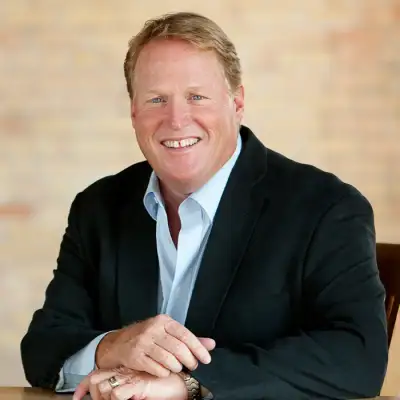
Former U.S. Senator Heidi Heitkamp and her brother, KFGO radio talk show host Joel Heitkamp, engage in animated discussions with newsmakers, elected leaders, and policymakers who are creating new opportunities for rural Americans and finding practical solutions to their challenges. Punctuated with entertaining conversations and a healthy dose of sibling rivalry, The Hot Dish, from the One Country Project, is informative, enlightening, and downright fun.
Joel (00:05)
Welcome back to the hot dish comfort
for Rural America. I'm Joel Heikamp, and for today's show, I'm flying solo. So be happy about that. ⁓ today I'm welcoming back a friend of the show. That's right. I'll be speaking with returning guest, Nick Lewandowski, director of Kansas Farmers Union. Nick, welcome to the hot dish.
Nick Levendofsky (00:26)
good to be back, Joel. Thank you.
Joel (00:28)
Yeah. Want to talk to you a little bit about where we're at with ag today. ⁓ there's no other place to start than with the farm bill. we still don't have a farm bill. Where do you see us at when it comes to that?
Nick Levendofsky (00:43)
Well, the the House obviously passed their version here ⁓ recently. ⁓ it's not a good bill. It's not the bill we want, it's not the bill that we need, but it's it's what they could get passed. ⁓ and they claimed bipartisan. I don't know if ⁓ I think it was twenty-two Democrats in the House voting for it could really be truly considered bipartisan. but we are ⁓ I would say impatiently awaiting the Senate Ag Committee to drop their version, and I'm hearing any day now.
I mean, could be today, could be this week. ⁓ but my hope is that that will be a better bill. ⁓ I was just out in DC ⁓ a little over about two weeks ago, actually. I flew out two weeks ago ⁓ for a conference, and we had meetings with our senators from Kansas, both Marshall and Moran, serve on the Senate Ag Committee. ⁓ and they both and their staff ⁓ all seemed very confident that ⁓ a bill would be introduced soon in the committee.
and that they could get it passed. so I'm hopeful. I didn't think that I'd be that hopeful, ⁓ given the fact that it's an election year ⁓ and that everybody seems focused on, you know, campaigning, you know, running back home to the district or the state. but it sounds like there's some hope. and and I just happened to see in the news a little bit ago that ⁓ one of our senators, Marshall, just dropped his support for the Save Our Bacon Act. that was a
portion of the Senate farm bill ⁓ and and it was included in the House version. So I think there's some political jockeying happening behind the scenes that could maybe get things moving, maybe grease those skids. So so we'll see, but time is not on their side. you know, there's not a lot of time between now and when they go on recess, you know, for the holiday, fourth of July, and then their August recess. ⁓ and then, you know, the the farm bill expires again September thirtieth. So
they gotta get moving. and then you've got the conference committee and and all of that that has to follow it so that they can bring the two together. So ⁓ we'll see. But I I don't know. it it could be interesting.
Joel (02:51)
You You say that the house version isn't a good bill. G give people some examples of why.
Nick Levendofsky (02:54)
Yeah.
Well, I don't think it truly addresses some of the issues that that farmers are dealing with right now. I think a lot of the the economic or pocketbook issues that farmers are struggling with, high input costs, you know, low commodity prices, ⁓ all of the challenges that they're facing right now. I don't feel like that bill did enough to address that. And, you know, the the crop insurance ⁓ side of the farm bill is really the only safety net that farmers have right now.
so I think that there's areas where they they could have done better there, certainly. ⁓ I think there needs to be more protections on antitrust in the farm bill, and that's something that farmers union has championed for years. that we need to build in. And frankly, it'd be wonderful to see a thirteenth title, you know, a a competition concentration title to address that as well. but I d we didn't have that. We didn't see that in the house version.
and I always think that there's important ⁓ provisions that can help with beginning farmers, especially. You know, we're seeing a lot of older farmers getting out of the business, retirements. unfortunately, there's there's also, you know, foreclosures, bankruptcies, and those kinds of things. And that's happening across the spectrum, whether they're big farmers, you know, older farmers, young farmers just getting started, ⁓ but I think, you know, if we could get more provisions there.
for them, whether that's access to credit or access to, you know, land purchasing programs, those kinds of things, I think that would be helpful too.
Joel (04:30)
You know, farmers union for years though has been pointing this out that this was gonna happen, that we were gonna get to a place where a lot of farmers were looking to retire, you know, and was there gonna be enough ⁓ young individuals, you know, men and women that wanted to continue to farm. you know, and so it just ends up being more and more acreage for the next farmer. And I don't know if you're seeing that in Kansas the way we're seeing it region wide here.
Nick Levendofsky (04:47)
Yeah.
Absolutely. That's that's exactly what's happening. ⁓ all of these farm auctions that are coming up, both the the equipment and the land, ⁓ you you tend to see those bigger farmers being the ones that kind of gobble them up. It's not not a young person that's trying to get started because the banks aren't loaning the money on it. it's it's people that are well established, obviously, or have outside investors, you know, people that are, you know, ponying up and and putting the money
towards these purchases, that's where that's happening. That's what we're seeing all the time.
Joel (05:31)
⁓ so Nick, you said that the House bill wasn't any good. ⁓ you know, w when you look at that compared to what you want to come out of the Senate with. You know, g give me give me a difference here because it it seemed to me that the House, you know, for lack of a better way of putting it, you know, rushed into it. You know, we've got a congresswoman here in North Dakota that I'm not very s sure that she knew it. It she just wanted it passed because
Nick Levendofsky (05:34)
Mm-hmm.
Yeah.
Mm-hmm.
Joel (05:58)
You know, in in some of these conservative states, they were taking such a punch in the nose, you know, when it comes to their popularity, they just needed something to pass. And, you know, it it didn't take long for farmers to kind of see it, for them to smell it. And so I'm I'm curious where you see it going in the other chambers.
Nick Levendofsky (06:08)
Yeah.
Yeah.
Well, I think given the fact that on the Senate side the margins are so much tighter, ⁓ there's there's gotta be room for compromise. And that's why I mentioned, you know, Marshall pulling his support for that Save Our Bacon Act. ⁓ I think that's that's kind of what's happening now is they're they're finding the areas that are not popular ⁓ within the House version that could be carried over into the Senate version. ⁓ and they realize that compromise is key on that Senate side. And
So I'm hopeful ⁓ that that'll be the case, that you know, they could be the quote unquote adults in the room and and work out their differences a little better than the House can. I I agree with you completely that the House version was rushed. the same thing happened last year when they rushed it out of committee and then it just died. ⁓ it didn't get to the House floor. ⁓ but I think the pressure is there, you know, given the economic challenges that we're seeing in farm country and rural America.
I think people are feeling the pressure, the the members of Congress, and they they were probably more willing to hold their nose this time and vote, knowing that it might give a bump in the polls, it might give a bump in their, you know, their race and those kinds of things. But at the end of the day, you gotta have a good bill. if it if it doesn't address the issues at hand, then really doesn't matter much if you voted for it or not. It's it's gotta be a good bill. So again, my hope is that the the Senate can be the adults in the room.
and work out some of those differences before it goes to a conference committee and maybe it'll be a little bit easier. But again, that we don't know what the makeup of that would be either ⁓ until we get there.
Joel (07:55)
We used to always look at farm bills ⁓ as though they were north and south, you know, whether or not cotton and peanuts were, you know, and now of course your state, Kansas, has a big presence when it comes to cotton. I I get that. But ⁓ you know, we in the north country would look at it as it does it do what it needs to do for sugar, ⁓ soybeans, corn, you know, dry beans, that type of thing. And so is there a winner and a loser if this is gonna go forward? Is there
Nick Levendofsky (08:08)
Yeah, yeah.
Joel (08:24)
A region that kinda is kicking butt.
Nick Levendofsky (08:26)
Well, I'll tell you, it's kind of unique the way it's set up with the the chairman and the the ranking members, obviously. ⁓ on the Senate side, Bozeman is from Arkansas, so the South is, you know, getting their ⁓ representation. But then you've got, you know, Senator Klobuchar from Minnesota, so it is kind of a north and south there. ⁓ then you look over on the on the House side and Chairman Thompson from Pennsylvania and ranking member Angie Craig from Minnesota.
⁓ it feels like it's kind of a little more balanced, I think, when it comes to some of these things. but I also have to remind myself that ⁓ that both the ranking members, ⁓ one's running for governor, the other's running for the Senate. So, you know, you've got those challenges as well that are getting played in into all of this. and their focus obviously is on those races and and that. ⁓ but I I think at the end of the day, ⁓ they've worked really well together.
I've I've been impressed with what I've heard. You know, we've heard from Bozeman when we go out to DC for our NFU fly-in. We've heard we hear from ⁓ Senator Klobuchar a lot. ⁓ I've interacted a bit with Chairman Thompson on on the Farm Bill on different things. I know he came to Kansas a couple of years ago ⁓ with our with my congressman, Tracy Mann, for a listening session on the Farm Bill.
And then, you know, ranking member Craig as well, ⁓ when it comes to the farmers union, she's been very active and and open with us about the negotiations. So I'm I'm a little more hopeful when it comes to that, that not one side or the other, north or south, is is taking up ⁓ too much. But again, that Senate version ⁓ we'll see when the when that drops.
Joel (10:10)
Yeah. years we looked at this, you know, farm bill as something that could just run under the radar. right now we're trying to settle a a fight that was started by us in Iran. And so, you know, having the nation's attention on that, having the Sunday morning talk shows all looking at that. And the Colin Peterson day, you know, we used to just slide this thing through. Nobody knew that we had a five-year deal. And in and so
We've been sitting here for an extension, extension, extension, extension. ⁓ does the extension matter anymore? The same way. Does the farm bill matter ⁓ as when you started being a farm leader?
Nick Levendofsky (10:40)
Mm-hmm.
Right. Well, my first farm bill was the twenty twelve farm bill. Should have been the twenty twelve farm bill. It ended up being the fourteen farm bill. So, you know, here we are. I'm working on my third one now. it feels like it's been my my thirtieth, honestly, with everything that's going on. ⁓ but I don't know that it's so much the extension part as it is the damage that was done ⁓ in reconciliation l a year ago. I think that ⁓ has done more damage than even the extension because
With the extension, you know, you've you've got some certainty on funding for, you know, mandatory programs. Obviously the discretionary programs are gonna need funding approvals and all that. But I tell you those cuts that were done in in reconciliation last year did I I hope it's not ⁓ irrever irreversible damage, but the nutrition part of the farm bill, those programs, that eighty to eighty-five percent of the the bill itself.
is what really took the brunt. And you know, urban members of Congress have no incentive to vote for a farm bill if they don't have something in it for them and their constituents. So we don't get the conservation or crop insurance or rural development or money for extension services, those kinds of things without their support. And and that's the way it's been for the better part of the last fifty some years. ⁓ and I think that reality is is starting to hit hard.
And it has damaged some of those coalitions, those relationships that have, you know, been a big part of it for a long time. And I've worked really hard to maintain those relationships. I've built relationships both here in Kansas and then the other states that I worked in, ⁓ but also on the federal level because we know how important that nutrition program is. And it isn't just for folks in urban areas. There's a lot of people out here in in rural Kansas and and I'm sure in in rural North Dakota.
Who rely on that, those programs. You know, we're talking the elderly, we're talking handicapped people, ⁓ people with children, working families. ⁓ and especially at a time right now where times are tough and and costs are up, more and more folks are having to rely on those programs ⁓ all across the board. So we've got to keep that in mind, and and I think that's gotta be very top of mind ⁓ when we go into these discussions, is we've got to return some of that funding to those programs.
Because they are essential. We saw that during COVID. We saw how important they were to everybody across the country. ⁓ and it's even more important now, especially when costs are so high.
Joel (13:31)
You you know, but that always was a good marriage. I mean, it was. It was the people that raised food and the people that ate food. And and so, you know, it was a really good marriage because as you just pointed out, then you had a reason for urban ⁓ legislators to vote for it. ⁓ you know, now their separation, I mean, the the one thing that my boys always said was crop insurance. You
Nick Levendofsky (13:37)
Yeah.
Mm-hmm.
Joel (13:54)
The margin was killing them. That it was the crop insurance. And the reason that they were ⁓ big on the crop insurance and wanted to focus was because the value set per bushel had become basically a joke. And so, you know, they're they're sitting there not with the level of crop insurance they want, and they're just completely reliant on ⁓ an emergency piece of legislation, which they've been able to get. I realize that.
Nick Levendofsky (14:19)
Yeah.
Joel (14:20)
But it's like,
Nick Levendofsky (14:20)
Yeah.
Joel (14:21)
okay, well they, okay, well they ⁓ you know, I hope they do to the point where now they look like beggars. And that's what's got these guys so mad that I that I was raised with, that I still have a beer with at the VFW hall, is they don't wanna look like beggars. And I wanna see what you think about that.
Nick Levendofsky (14:37)
That's
that's exactly it, Joel. You know, these relief packages that they're sending out, you know, ten billion here and twelve billion there, and I'm hearing there could be another, you know, package coming out. ⁓ I know there was some disaster money ⁓ that's going out from twenty three and twenty four, all of that. It's it's almost got farmers kind of conditioned in a way, to just take it. Well, you know, of course you're gonna take it 'cause you got bills to pay.
Joel (15:04)
Mm-hmm.
Nick Levendofsky (15:04)
⁓ and
you've got fertilizer, chemical, seed, fuel, you name it, all the things, your the money's not gonna stay in the farmer's park pocket very long. ⁓ it never does because they gotta spend it. It's gotta it's gotta go out into the community and and pay all their debts. but we've got to rethink this whole thing. I mean, the the system is frankly broken when we're reliant on these big, you know, multi-billion dollar payouts.
Joel (15:26)
Yeah.
Nick Levendofsky (15:31)
And they don't even solve the problem, you know, and with ⁓ Liberation Day or you know, whatever Trump called that ⁓ last year and the trade war, we've lost well over forty four billion dollars. I think North Dakota State University economists said that a while back, and I'll bet it's more than that now. ⁓ so you know, again, farmers don't want aid. They don't want checks, they want trade, they want markets.
And they want to know that it's gonna pay their bills and then have something that they can live on. And and it hasn't been that way for a long time. so I think there's gotta be real structural policy change and reform when it comes to this. And obviously we've got to build back our our trade relationships. but I I don't know if that's gonna happen under this administration because I've I've been in the Eisenhower executive office building with you know
high level folks in the administration and they say time and time again, We're we're all in on the trade war. We're all in on tariffs. And until that changes, ⁓ this isn't gonna change. And now we've got
Joel (16:36)
Well,
I I mean, I want to go down trade in just a second because you just nailed it. I mean, you really did. But I I wanna close out what what we were talking about when it came to, you know, what you said, which was look, they've got to take it. They got bills to pay. You know, they're gonna and and what's lost in all of that with ⁓ many of our urban ⁓ viewers right now that are watching the hot dish is the fact that they always consider farmers farmers.
Nick Levendofsky (17:04)
Mm-hmm.
Joel (17:04)
And they
don't realize that each farm is its independent business. And so it you know, if you want to take this real pure stance, and you know, I'm not gonna take money from the government and all of those type of things, that land, your cash reading is gonna be you're not gonna be able to afford it compared to your neighbor. I mean, do you do you think the nation gets the fact that farmers are in fact ⁓ sole independent businesses?
Nick Levendofsky (17:08)
That's right.
You know, there's times I wonder and and I do my very best to educate the public, you know, in in interviews like this and others that I've done. ⁓ but you can only tell so much in in little one to five minute snippets, you know. ⁓ but that's why it's important for organizations like ours, like the Farmers Union and and so many others, to continue to tell that story and explain to folks, you know, just the challenges that farmers are dealing with.
I remember on one of our previous podcast conversations, you were talking about a friend who bought that air seeder up in Canada and the the steel tariff, aluminum tariff that was on top of it, and how much that costs. I don't think people realize just how expensive farming is. And I think if we can break it down and show folks, okay, here's what a new combine costs, here's what a new tractor costs, here's what seed and chemical and fertilizer and all that inputs and those things.
And then explain to them why they cost so much. And it is because there is concentration in the marketplace. It's because there are fewer and fewer players in the chemical business, in the seed business, in the even the equipment side of things. and make it known that this is not a cheap and easy thing to do. do. when I started school at K State over twenty years ago, my ag policy professor, Barry Flinchboss, said it cost a million bucks to get started farming.
million bucks wouldn't even begin to touch it now for a young person getting And, you know, it's just it's kind of like a treadmill that you're on and it just goes faster and faster and faster and the incline keeps going up and up and up. And we got to slow this thing down. And we got to bring it back to level. So it's it's part of this. It's it's having these conversations with you. It's speaking at events like I do all the time with the general public that I think kind of helps with that.
Joel (18:55)
Yeah.
Nick Levendofsky (19:23)
But I think even better it's having conversations with farmers and sitting down with them, like you said, a a beer at the VFW or a coffee at the local coffee shop and and getting a better understanding of of why things are the way they are. I think that's how we're gonna figure this all out. I hope anyway.
Joel (19:41)
So
so if I sat there and and asked you who was on the the soybean board or who was on the corn board, you could name just about every one of them. So could I. Exactly. And and so, you know, I'm sitting down with a couple of these guys ⁓ recently from my home area that are on these boards. And I looked at them and I said, Look, I love the fact that you, as ag producers, invest in yourself, invest in trade.
Nick Levendofsky (19:50)
I can name a lot of them. Yeah. Yeah. Yeah.
Mm-hmm.
Joel (20:07)
All through the checkoff dollar and get you guys on a plane to go make some deals here and there, whether it be in DC for good legislation, whether it be to China for selling soybeans. I mean, they know about the product and they know how to deliver. I'm wondering, Nick, if that means anything anymore. Because, you know, if you put checkoff dollars in and you go build relationships, and let's use China as the example, and then the government goes ahead and puts huge tariffs on.
They're they're not gonna trust you. They're not gonna take you at your word. I mean, at least that's my opinion and I want yours.
Nick Levendofsky (20:43)
Yeah, I think you're exactly right. I mean, it's two forces working against each other. When you've got people wanting trade and wanting, you know, to build those relationships, and yet you've got an administration that's basically put up a wall and said, "Nope, we're not gonna do deal with you." I read the quote the other day on the US MCA negotiations that are coming up that, you know, Trump said, "Well, we don't need what Canada has. We don't need what Mexico has." it's just like what are we doing here? You know, this this isolationism and all that.
We can't eat all the wheat that is grown in Kansas. We can't eat all the beef that is raised in Kansas. It's gotta go somewhere. And we've gotta have markets for it. And and yes, those checkoff programs play a role in that, but it's also, you know, our federal government, ⁓ you know, the US Trade Relations Office. It's our state read an article this morning our Kansas Secretary of Agriculture, Mike Bean, put out how important trade is to Kansas.
And that it's important that we negotiate and we work together and we find ways to compromise and that. So, you know, these are the kinds of things that have to be done. But getting it through to the the federal administration right now is is I mean, it's like pulling teeth. they they are just so dead set on tariffs and trade wars and that and it's not working. ⁓ They they should have known that in twenty eighteen and twenty nineteen when they did this.
And then now we're going through it again, only it's, you know, tenfold.
Joel (22:11)
Yeah. I I look at this whole thing again, going back to my point about independent businesses. You know, we're sitting here in the northern plains and and we're shipping a lot of product off to the to the northwest and get you know, it's getting on a ship there. If you can't move that, if you don't have anybody to make a deal with and the next thing you know, you still gotta move that product and it's heading down the Mississippi Mississippi River.
You know, all of a sudden we're selling things and you're trying to sell things and we're competing against each other. And so I I know some boys in Iowa that weren't too happy to see our crops going south.
Nick Levendofsky (22:48)
Yeah. you bet. That's the thing. I mean, that that competition amongst ourselves is is is tough as well. ⁓ and you know, I think about other programs where we had markets such as the Food for Peace program, through USAID. that was a major program for not just Kansas farmers, but farmers all across the country, through the Midwest and Great Plains. ⁓ but you know, since that all got cut through Doge.
Joel (22:55)
Mm-hmm.
Nick Levendofsky (23:17)
and now they're trying to prop it back up again over at USDA and and all that. ⁓ it's still not back up on its feet again. And you know, it's gonna take time. It's gonna take it'll take years to get that rebuilt. so yeah, it's it's tough, no matter which way you look at it.
Joel (23:32)
Well, I I wanna ask you about this because, you know, I ⁓ my question would be how long something like this takes to get fixed. ⁓ you know, because y everybody's looking at this nation in many cases as well in two years. Well in two years, well in two years. You know, China doesn't govern based on two years. And so d you know, look at Canada. They're our hugest trading partner. And well these countries trust us again.
Nick Levendofsky (23:41)
Yeah.
Mm-hmm. Yeah.
Joel (24:02)
To the point where we can do business with
Nick Levendofsky (24:05)
It's gonna be a while before that trust comes back, I'm afraid. And and I was on a call here with some farmers in Brazil ⁓ about a week ago and they were inviting me to come down and and members of Farmers Union to come down and visit and see their country and all that. And I had to laugh and think to myself after the call, it's like, yeah, we'll go down there and see where all of our markets went, you know, ⁓ and see w you know, what what they took from us. But they didn't really take it from us. China put all their investments there.
They're the ones that have gone in and mowed down the Amazon to plant more soybeans. And they're the ones that are putting in that rail line to avoid shipping all the way down, you know, the end of South America. and it's those kinds of things, it's those strategic investments that tell me this is going to be a long time before we get those markets back because that's where they're putting their money. as much as we struggle with China and our our trade relations, foreign relations, and those kinds of things.
We have to depend on them when it comes to our markets, whether it's soybeans or beef or pork or you name it. and we rely on them just as much for, you know, a hell of a lot of products that we consume. So yeah, I I do think it's gonna be a while. Now, ⁓ my hope is that there will be a change in November, ⁓ and that we'll see, you know, either the House or the Senate both flip and there could be some checks and balances then.
but right now, given that the the Republicans have control of everything right now, there are no checks and balances on on this, especially the executive branch. ⁓ we've got to return that. You know, this is this is what government's all about. This is what democracy's all about. And until we can get to a point where we can build those checks and balances back in, I don't think it is gonna change.
Joel (25:54)
Well, I mean, you're sitting there looking at people build ports and build railroads that they own. And so it goes directly to what you just said. And I've had got guys here telling me, well, their soybeans aren't the quality that our soybeans are. Okay. I acknowledge it. I agree. ⁓ you know, but before you they count me as too negative, the truth is a lot of those soybeans are being fed to hawks. You know, and and so
Nick Levendofsky (26:08)
Yeah. Sure. Yep.
Yeah, yeah.
Joel (26:18)
You know, I I'm sitting here saying, well, quality matters. you do a better job of raising, ⁓ no dispute about that, but what are they using them for? And and so I realize the science of, you know, hogs doing better off better quality soybeans, but you know, when you've got that many mouths to feed, I'm not sure quality is the sole issue that China's gonna look at.
Nick Levendofsky (26:28)
Exactly.
Yeah, I think more than anything it's quantity. They they need it. They need those beans. They need whatever, you know, protein you name it. And you know, their pocketbooks are getting thicker and thicker all the time. And when you are better off financially, you're gonna want, you know, protein. You're gonna want those things. So therefore, they're gonna go further to get those. And and we have quality beef in Kansas and North Dakota and and all across the country. We've got quality proteins and and all of that.
Joel (26:43)
Mm-hmm.
Nick Levendofsky (27:11)
so why shouldn't we be part of their consideration? Why wouldn't we wanna be part of that? ⁓ and and that was my hope certainly when, you know, Trump and and company went over there and had their conversation here a number of weeks ago. But I I just I didn't feel like that's what came out of it. it
Joel (27:28)
Well, what
what about the American farmer when it comes to being promised? I'm not talking about an ag bill now. I'm talking about purchases because the Trump administration has made at least two that I can think of big announcements of China buying X, Y, Z, you know, ⁓ man, they're gonna buy this much. They never did. ⁓ they never did. And it it seems to me that national media never followed up on it. And maybe because they don't understand it, but ⁓ Nick.
Nick Levendofsky (27:33)
Right.
Yeah.
Mm-hmm.
No.
Yeah.
Joel (27:58)
Yeah, I mean, do you have the same pulse that I don't trust the word he says when it comes to China's gonna buy X amount of tons?
Nick Levendofsky (28:04)
Yeah.
Yeah. No, I i any more whatever he says, I I have to take it with ⁓ not just a grain of salt but multiple grains of salt because it's just like, well, you know, we we hear this all the time, you know, that he loves farmers, that he cares about and all that. Well, if that's the if that's the case, then do better. You know, go back out there and you know, ⁓ really, you know, put put your money where your mouth is.
And and ensure us that you're getting those markets back and that you're doing, a wholehearted effort to make that happen. But, you know, in the last Trump administration, he had people telling him, This isn't a good idea. You know, the trade wars, tariffs, those kinds of things. He did it anyway, but they were telling him, you know, if you do this, it's gonna affect farmers in Kansas. If you do that, it's gonna affect farmers in North Dakota. We don't have that in this administration anymore.
We don't have anybody pushing back on him. And until there's somebody that's in place, whether it's in the House or the Senate or both, that are gonna push back and say, you know, it is our role, you know, as as a co equal branch of government to address this in a way that is, you know, you know, bipartisan in fashion, yes, but also those checks and balances that are so important, I don't think anything's gonna change.
Joel (29:27)
Yeah. Nick, who's making the money off the cattle? ⁓ you know, a lot of the ranchers I'm talking to, you know, yeah, good prices. They're they're not going broke raising cattle right now, but they're not exactly buying new pickups or new hay rakes, nothing like that, because they've been there done that. More cattlemen, as you know, are pretty conservative when it comes to spending a buck. But when you make an argument to them about what you're paying in the supermarket, they don't want to hear it.
Nick Levendofsky (29:36)
Yeah, yeah.
Joel (29:53)
⁓ because they're not seeing that big of an increase in their life. And so here's my question of you who's making the money?
Nick Levendofsky (29:53)
No.
Well, it's pretty easy to find out. It's the Packers. They're the ones. They and they always have, you know, and and now there's f fewer and fewer of used to be there were, you know, many meat packers all across the country, and now there's just that handful, four or five, and and even the big box stores are getting involved in this now. You know, Walmart is is part of this, because they've got their own beef box ⁓ company i in in Overland Park, Kansas, of all places.
Joel (30:03)
Mm-hmm.
Nick Levendofsky (30:27)
You know, so they're getting involved and and they know, I mean, heck, they've got their own dairies now. ⁓ and that that supplies their milk that they can sell for ninety-nine cents a gallon just to get you in the door. but at the end of the day, I I come back to that topic that I mentioned earlier. It's that concentration and competition in the marketplace. And if we had antitrust laws on the books, well, we've got they're just toothless. if we truly enforce them.
like we are supposed to. If we had an antitrust division at the Department of Justice ⁓ that actually had people and and funding and and capacity, we could address these things. If we had, you know, GYPSA back at USDA and fully funded and staffed and up to capacity, the Grain Inspection Packers and Stockyards Act, those are all again checks and balances on the system that worked. But for the last forty-five years, they've just
you know, been taking an axe to ⁓ and and now, frankly, a to these these programs and it's it's not doing us as farmers and ranchers any good, but it's certainly helping the Packers.
Joel (31:35)
I'm
I'm I'm curious, you know, headwise, how long it takes to catch up because you know ⁓ prices stunk. And so what a lot of ranchers did was they sold off ⁓ part of the herd, and then the consumer enjoyed it. You know, we had cheap beef, that type of thing. You know, now cow calf operations didn't have as many head as what a person would have liked to have seen them have. ⁓
This is your wheelhouse way more than mine. How long does it take for the cattle industry to catch up?
Nick Levendofsky (32:07)
It's gonna take a while. You know, we're at about a seventy to seventy-five year low when it comes to ⁓ population, herd population. ⁓ and you know, it it takes about two years to get a a calf raised up from the time it's, you know, conceived until it's time to go to market, depending on how you're raising it and and whatever you're doing. I just don't know with drought and everything else, and now we've got this new world screw worm to worry about.
which I could go on and on about that. ⁓ you know, the blame game that we're hearing from the administration on it. ⁓ it just seems like there's so many ⁓ pressures coming from all these different directions and and the cattleman's the one that's gonna suffer. And the consumer too, frankly.
Joel (32:49)
Okay.
yeah. Let last one, ⁓ Nick, and this is the one you're not gonna want me to ask, but I'm gonna ask it anyway. ⁓ actually I have two more questions. The last one you'll like. ⁓ but but in in this particular case, ⁓ the people that you work for and call neighbor and friend, and the people that I work for and call neighbor and friend my radio station, they're all in.
Nick Levendofsky (32:57)
Okay, okay.
Joel (33:13)
⁓ they're not moving ⁓ when it comes to support of this president. And you just laid out exactly why they should be. So my question is, why aren't they?
Nick Levendofsky (33:24)
Well, I think they're the er eternal optimist. You know, farmers put a seed in the ground and they pray for rain and they and they hope for the best and and all that. that's the only thing I can think right now. ⁓ but but I thought it was funny The other day when Trump went to Wisconsin. He was up in Chippewa Falls where ⁓ I used to work for Wisconsin Farmers Union. I was in the Madison office, but our home office was in Chippwa Falls and he made the comment, he's like, Well, I don't even know why I'm here, you know, I've already got your votes.
And it's like, gosh, you know, he's saying the quiet part out loud. Yeah, he got what he wanted. He got their votes time and time again. And it's because he made all these promises. Well, you know, how many has he kept? That's the thing that that gets me is how many of these promises did he make to rural America, to farmers and ranchers, and and all the folks who looked at him and said, "Hey, I like that populist message that he's putting out there, that he cares about me, he cares about my issue."
Joel (33:59)
Mm-hmm.
Nick Levendofsky (34:22)
Well, a good populist not only says what they say, but they do what they said. And he didn't do that. And and I think that's gotta be the reminder to folks, as especially as we get into this election cycle and into what, you know, comes in twenty twenty eight, ⁓ that, you know, you've got to have somebody that not only believes what they say, but does what they say. That's that's what I'm where I'm at.
Joel (34:29)
Yeah.
Well, and I might add, ⁓ you know, somebody who isn't so chicken shit they don't finish the interview. That's the other part. All right. So I need to know. ⁓ last question. ⁓ Packers or Chiefs?
Nick Levendofsky (34:55)
Yeah. yeah, exactly, you know.
⁓ Chiefs, but I'll tell you, I I I I kind of split that a little bit, especially when Jordy Nelson was up there. ⁓ you know, Jordy Nelson is my age. ⁓ we we both grew up within about two hours of each other. In fact, our our high school teams played each other. I was not playing against Jordy, but I was in the stands watching him. So I've literally followed his career from from the beginning and of course when he was at K State, go cats, and all that, but
Joel (35:23)
Yeah.
Nick Levendofsky (35:33)
But now, yeah, certainly the Chiefs. I will say though, I'm not real crazy about all this move from Kansas City, Missouri to Kansas. I'm not sure that that was really ⁓ a good deal all in all. But but you know, ⁓ I've been a I've been a Chiefs fan for my whole life. but I I'm proud to wear the the green and gold too ⁓ and cheer for them when when they're not playing the Chiefs.
Joel (35:55)
So when K State got Chris Kleiman, where did he come from?
Nick Levendofsky (36:00)
⁓ yeah, I know, I know. North Dakota. Yeah, right. Yeah, yeah. And and he was a great coach and and we certainly enjoyed him. ⁓ but we're really looking forward to Colin Klein. It'll be it'll be good to see ⁓ K Stater back in the in the head coach job.
Joel (36:03)
That's right. North Dakota North Dakota State. And I went to North Dakota, so it's a whole different thing. I just wanted to stick up for my home state. Yeah.
Yeah. Yeah.
Well, the one that you really got, ⁓ that was a punch in the guts was Gene Taylor, ⁓ the athletic director at K State. So we could talk football all day, I can tell. Nick, th thanks for coming on the hot dish, man. Appreciate it.
Nick Levendofsky (36:27)
yeah. ⁓ right, yeah.
It
it's always good to visit with you, Joel. Thank you.
Joel (36:40)
know, thanks for joining us today on The Hot Tish, brought to you by OneCountry. You can learn more about us at onecountryproject.org. And be sure to follow us on Substack, YouTube, Facebook, and Blue
We'll be back next week with more hot dish, comfort food for rural America.