Subscribe
Share
Share
Embed
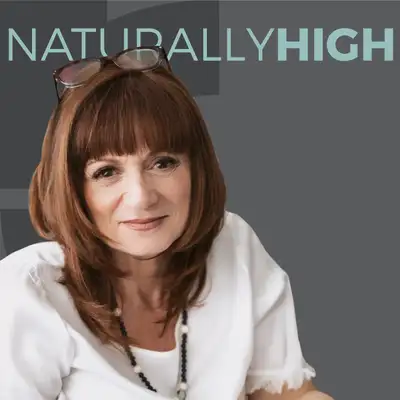
On Naturally High you’ll receive transformational tools and hear inspirational stories that will guide you into holistically healing trauma in every corner of your life. You deserve to invoke your inner healer. I'm so glad you're here!
Jeanne: [00:00:06] Welcome to Naturally High, the podcast for those ready to transform their lives through holistic healing and empowered self-discovery. I'm your host, Jeanne Foot, a lifelong learner trained in addiction, mental health, and trauma recovery, and your guide on this journey. On this show, you'll find transformational tools, inspirational stories designed to help you break through addiction, trauma, and adversity of any kind. In a world overflowing with information, we focus on real change, understanding the why behind your patterns, and forging new pathways to wellness. Join me at therecoveryoncierge.com and subscribe so you never miss an episode. Together, let's change not just the conversation around mental health and addiction, but how we treat it and how you treat yourself. In this next episode, I interview a colleague, friend, mentor, and guide of mine, Lisa Messina, the founder of the Messina Movement and creator of the small group program The Process. With over a decade of training and experience in somatic therapies and over two decades of training in a variety of holistic movement modalities, Lisa believes that restoring balance means recognizing and addressing every aspect of who we are, all while remaining aware that each aspect is always informing one another as they are actually one. She supports individuals, couples, and groups in private sessions and retreats, and offers a sustainable approach to restoring physical, mental, emotional, spiritual, and relational well-being. And in this episode, we unpack why I went on this retreat. What does a retreat look like, whether it's personal or in a group? What is some of the somatic therapies? Why it may be beneficial to get still and quiet and what confronts you when you do. So with that, I want you to welcome Lisa Messina.
Hello and welcome back to another episode of Naturally High. As usual, I'm still super excited, but I'm really excited because I have a dear friend, mentor, guide of mine, Lisa Messina, who's joining us today. Welcome, Lisa. How are you?
Lisa: [00:01:45] Thank you for having me on your podcast, Jeanne. I am feeling good and excited to be here as well.
Jeanne: [00:02:20] Amazing. So today I wanted him to view Lisa simply because I just love her work. I'm also someone who practices her work and have been on the receiving end of her work, and that's what I just did this past week. So before we dive in today, I'm just going to give you a little brief intro as to why we're doing this interview now, why the timing is so interesting, and then Lisa's going to take it from there. And we're going to explore, what exactly are we talking about and what we're unpacking. So Lisa and I literally met in somatic training when she was working for an organization in Toronto called Helix Healthcare Group, and I was on the addiction side, she was on the movement and therapeutic and somatic side, and we used to train together. We had the privilege of being mentored by some elders. And when I say elders, like actually, anybody who's really, really touched me in an interesting way has been elders. They were elders like they were in their 70s plus back then, and they aged out into their 80s. And some of them unfortunately have passed on, but they have been primitive in literally forming and shaping our work because they were the pioneers of this work. They were the pioneers before any of this was trendy. Nobody knew what somatics was. Nobody knew anything about health, nobody knew anything. But they understood that there was a better way and we signed up. I always say my first process was like getting undressed in front of 20 people and yourself because it's that vulnerable and raw, right? When you sit and have a process in front of 20 other colleagues, and that's what we did. And we did that for days in a row. Every quarter for years.
Lisa: [00:04:13] Many processes to witness over one weekend. So it was pretty intense and very deep.
Jeanne: [00:04:19] Absolutely. So the timing today is so interesting because the last time I did a process with Lisa, which was over three years ago. We used to train together, I've been to retreats of hers where we've done group work. Over three years ago, I went to a group retreat with her and I just felt like, yeah, I needed a little tune up, so I'm going to go. And it was an amazing experience. She introduced us to some amazing body workers, like people who do incredible massage that you can tell they're from another realm altogether. Like the minute you come, it's like they're very spiritual and divine, divinely chosen for you. We had beautiful food. She lives in Prince Edward County. We had this amazing retreat and I came home and my husband says to me, how are you? And I said, I'm just amazing. And with that, he delivers some very tragic news to me, and it sent my nervous system into a... jarring would be polite, into spasm for a period of time, which took me three years to come out of. And then I knew I needed something more. So here I go, and I go, okay, I'm going to forget this group retreat. I just need to go on a retreat. So I signed myself up for my personalized retreat. My husband's in Vancouver. I could have gone with him. No offense, not joining him. He was just doing some business wining and dining, and that was boring to me. I really wanted something more. I wanted something more nurturing. I wanted something that was healing, that was a soft place for me to land. And so I said to Lisa, hey, I think I'm going to do this. This is what I want to do. And she thought I was talking group at the beginning. I go, no, no, no. I want to create my own retreat. And with that, we put together the most amazing experience, which we're going to unpack in this interview. However, this was last Friday, I left. I went from Tuesday to last Friday. It is now only the following Wednesday. Unfortunately, my girlfriend's father passed away. So I go from Belleville to Toronto, back to Ottawa for the funeral, back to Toronto, get in Sunday night, and then Monday happens and we have a family emergency, which has taken me to this moment to surface. The reason I'm sharing this with you, because this is life. This is life. And if I didn't have tools in my toolbox, I don't know how easy it would be for me to sort of just skip back in here and do what I have to do, because there's a lot of overthinking. My heart with this family emergency was pounding for hours. It took me a long time to regulate. I could just feel it pounding out of my chest and I knew what I needed to do, but I just couldn't get there because I'm still in shock. And so this is why this work is so important. Because life is going to do life. And we have to have something in our reserve to be able to get us back on track when the wheels come off the track. That's basically what happens, right, in life? So I just wanted to really preface that before we dive in with anything. And here we are. So I'm feeling very grateful to have some sort of normalcy in my life today and be able to do this interview. It is my utmost hope that you guys walk away with some jewels for yourself today.
Lisa: [00:07:45] Well, I'm just really glad that you're here, and I think this is a wonderful way for you to tap back into all the work that we did together. And I know you've had, you know, such a tragic and horrific experience with a family emergency, and then also to have to support a friend, losing a parent in such a short period of time. You've had two major life challenges present themselves. And I think this is a really beautiful way for you to come back to sharpening those tools. As you said, you've got the tools to work through life's challenges, and then you're here and we can really feel into the work that we did together here in this moment, which I'm hoping will feel like support for you as well. As well as being able to share with your listeners the work that we did together and these kinds of opportunities that are here for people to tap into this kind of healing journey and somatic processes that can be just so necessary and useful and effective in riding life's wild waves.
Jeanne: [00:08:52] Thank you so much. This is medicine for the soul, and that's exactly what I felt I needed when I embarked on this journey last week. I felt like I had taken a sacred pause with the podcast, with my work, with a lot of different things, and I was slowing down. And the more I think we come into something, the more we recognize we need it even more and then we fine-tune it. It's almost like a look at a picture that's out of focus, and then we bring it into focus. And so I think that's what we were doing. So what are we talking about even? So like introduce, like what is your work? What can people expect to benefit from your work?
Lisa: [00:09:31] Yeah. So I combine a whole bunch of different modalities into one comprehensive and cohesive offering. Where I think the offering is unique is that I have an extensive background in holistic movement modalities, including yoga, Pilates, functional mobility, dance, somatics as a physical practice, and then on top of that, as the yoga practice lends to nervous system regulation, mindfulness practices, meditation, restorative yoga in all of its forms, not just the westernized way that we might encounter yoga. I studied in India at an ashram in a university in Bangalore, so I really immersed myself in yogic practices and studies, Pilates, dance since I was a child. So really movement, expression, character studies, that's all my background. And that all comes with and into the somatic relational psychotherapy studies that we did together with our first teachers, Michael and Jeff of Threefold Way. Went on to study with Marty and Ken of Ryzio. Doctor Marty Glenn, also the late Doctor Marty Glenn, the late Michael Sieck, the late Jeff. Like you said, we had this incredible opportunity to study with mentors and pioneers of the somatic work. And so I really combine emotional, psychological, spiritual, physical, nervous system, relational aspects and modalities that really address all of these aspects of ourselves together. And depending on who I'm working with, some may need more focus in one department or a few departments, and they're really connected to another avenue of themselves. But I'm really looking at the whole person and learning and hoping to help fill in the gaps where I can. I'd like to say I am offering whole-being health. And of course, I'm not an expert in every field, but I can address most of these aspects of ourselves because of my experience and training.
Jeanne: [00:11:52]Absolutely, and I recognize that. And when we're talking about your evolution from musical theater and dance, these are tools for releasing trauma, especially the vocal cords, in particular, the movement of the body. And then we went from there to yoga in India, somatic psychotherapy training. Right? So it's really broad. And that's what makes you such a gifted healer. But the question many of you may be thinking is, why do I go to Lisa if she's a peer of mine? And the reason I do is because I'm always a student of the work. I don't believe… you've heard me say this over and over again. We're never, ever, ever, ever there yet. We're always in process. And I think Lisa, and I say this sincerely, and I think you know that, you are one of the few people who can hold really safe space. Yeah, and safe space, like, if you can't feel safe, there's no way you can even begin. You can't walk through the door if you can't be vulnerable with someone, if you can't be honest with someone in terms of your own authenticity and really bare your soul. Then someone can't hold you.
Lisa: [00:13:06] Yeah, and we had just excellent models in teachers that held such safe, sacred space for us to do deep, profound work together. And that's where I probably learned it best. On top of recognizing places and spaces where there wasn't safety, where I was meant to be, or I guess my intention was to heal. And the container just wasn't safe and I didn't really have the language or understanding. I think we don't really know what safety feels like if we've never had it. And that's something that when we are exposed to, when we have the privilege of feeling what a safe person and safe space can be, then we can know it. It's almost like, you know, we don't, we don't know what we don't know. And I have to say that our teachers just were the perfect examples and models of creating safety. And how to create safety is a skill. And I know you teach that skill too, to people who come and learn and heal with you. But I think it's… it's something that needs to be felt. And for sure learn the skills, but then also to feel it and then to know what that's like in our bodies as practitioners. Because if we're not, if we're unable to return to a felt sense of safety inside, then we cannot be a safe space for others. Which points back to your initial point of constantly doing the work and checking in with ourselves to ensure that our nervous systems are flexibly moving in and out of, you know, safety, survival, but that when we're supporting people that we are able to stay anchored in our felt sense of safety so that we can be that home base or that anchor for them. It truly is the beginning of… and it's not even just the beginning. It's the whole foundation of any healing work that we might decide to embark on.
Jeanne: [00:15:19]And I want to address two points about that. I think the first point is that they say they mean, and there is research and data around this, that the number one indicator of successful therapeutic outcomes is rapport. So if you don't have safety and that a person doesn't feel safe enough to really talk honestly and bear themselves, then that really impacts outcomes in terms… So you could have someone with a very professional skill set. And we get this all the time. A lot of people think they need to go to a psychologist instead of an addiction specialist. Why? Because they have more credentials than me. They have a PhD. I don't have a PhD, maybe in lived experience, but beyond that, I have training, clinical training and various trainings. But the truth is, if I can make someone feel comfortable enough that they don't feel like they want to run for that door, or they can be honest with me, then we're going to get further than anybody who has more degrees and credentials. And I think the other thing I wanted to address about that point, about safety in particular, is that people think we're supposed to get this from our family. Unfortunately, that ship maybe has sailed for a lot of us, and that doesn't mean that we can't get it from the right places. We can get it from different places, and we have to make sure that we do get it in ways that are fortifying ourselves, so that we can have all the riches of feeling safe.
Lisa: [00:16:56] Yeah, the realization coming into the truth of and the reality of safety is available to you now, or can be available to you now that our options, we have options that we're not as limited as we were in our developmental years and that it's never too late. Marty used to always say that, right? That was the hope piece, is that it's really never too late to start again with that fundamental foundational piece, which is where and how can I embody and feel safe. Who are the people? And you know this, these are exercises that come out of Stephen Porges work when we look at the polyvagal theory and safety as a state of your nervous system. What can I do? Who is it that helps me feel a felt sense of safety? Who supports me? Where do I feel supported and safe? When do I feel supported and safe? And so, to your point, we can have these skills and we can offer these exercises and techniques, which I do. It's part of… as we'll get into, it's part of what I would do in any setting, whether you're working with me one on one online or in person, or you're coming for a more immersive experience like you did with a personalized retreat, or you're in my group program online or in-person or on a group retreat with me.
Lisa: [00:18:24] So many different ways that you can engage in this work with me in all of those settings. It's yes, there are skills and there are exercises and practices and processes to help us grow our ability to feel safe. But then that relational piece that you were speaking of, which is why, you know, the program we did and the learnings that we were so privileged to receive were titled relational somatic psychotherapy. So somatic work is one thing, but relational work is the most important part. And that's, that begins with the relationship between the practitioner and the person who is embarking on the healing journey. That's really important. And that's not something you can learn from a book. That's something that was modeled and felt, and continuously modeled and felt, and consistently modeled and felt and and that's just something that you know how to do because you're either in it or you're not as a practitioner. And then you can teach that and hope that clients are able to get there too.
Jeanne: [00:19:43] So I think we're going to start right here, in the sense that the reason I wanted to do this work with Lisa at this time was, I felt a calling, some sort of intuitive nudge. I don't know what it was. There wasn't something concrete about, should I or shouldn't I? But I felt like it was time for me to really be more self-indulgent. And obviously that comes with a lot of stigma too. Like, how selfish of you to do this. We think about self-care as maybe getting your hair done, or maybe a facial, or maybe a massage, and we don't seem to have a problem with that. But to be self-indulgent and really, like, spend some time with yourself. And taking myself away by myself was one of the first things I had to confront. Like, what are you doing? Why are you doing this? Can you do this? Right? Like all of the things, like all the gremlins start kicking up. Because I'm going to do something that I'm not overly comfortable about, but something was calling me to do it. So anyway, I did it and I wanted to do it, and I really, my daughter said to me, she goes, did you get what you wanted? I said, I got exactly what I came here for, like, and it was so interesting because she was being sweet. But she goes, did you get what you want? And I felt like I really did. And so what I was looking for, I was looking for a space outside of my normal routine to really understand myself better, to get to know myself better, to look at some of my biases, my blind spots, and to look at what needed to be revealed to me as well. Because I felt that there was something calling me. And, you know, there's many different ways I could have achieved the same thing. I could have gone and done a psychedelic trip, for that matter. But I think that terrifies me, to be honest with you. And I felt like this was a really good place to, to be, to start to really almost date myself by taking myself without a girlfriend on a trip to a drive to someone that's a little bit far away, a couple hours away from Toronto, and really be with myself. And it was a beautiful gift I gave myself. I had no idea really what I was embarking on, but I felt a strong, intuitive pull. So let's talk about what exactly we did and what that looks like, and how we prepared for it, and what the space was like, and some various components that you would offer any client for that matter.
Lisa: [00:22:01] Mhmm. Yeah. So, you know, you came to me with the idea I need something, just as you just shared. You sort of shared that with me. And for me, that will either come through an email or, you know, we have other ways of contacting each other as we've known each other for so long through being colleagues, friends, and then you attending retreats and all the rest of it. But some way of contacting me and I really like to have a conversation, usually over Zoom, with anybody interested so I can really understand what they're looking for. You were just really ready and really clear and you knew exactly what you needed. You knew you wanted to take yourself out of your everyday life and the rhythm of your day-to-day, and have more of an immersive experience as opposed to something that you're doing while you're in your day-to-day schedule. You also have been to Prince Edward County before. That's where I live, and that's where I work in-person. So you've been in the studio space here in Bloomfield. You have at least seen the guest house. That's not where you stayed last time on group retreat. But you've known we have a beautiful property on site that is really conducive to this sort of retreat-like experience. It's very private. It's serene.
Jeanne: [00:23:19] Beautiful as well, and it's like… It's very the design, the architecture, the finishings, the comfort. Everything about it is very beautiful, Lisa.
Lisa: [00:23:30] Thank you. And, you know, it really feels like even though you're in Bloomfield, which is a very small town on the main street, it's set so far back on our property that you're looking out to farm fields and you feel like you're really remote. And then also walking distance to coffee shops and cafes and all of that. And our little, little, sweet little town. But also the county, as most people know it, or if they don't, it's just so much grand nature, is what I like to call it. It's just big nature around that you can access. So again, that's all holding the experience in coming here and taking yourself out of city life for sure, and into something that feels more spacious, that feels quieter. That was also something you mentioned when you came, said, it's so quiet here. So you knew that intuitively that you needed a different setting for the work that you wanted to do, and because you'd been here before? I think some part of your system, your organism knew, that's where, that's where I got to go. So there's that piece.
Lisa: [00:24:34] And then my recommendation is to stay for three nights. I find that and that's exactly what you did. That arrival, that settling in. If you're only staying two nights, it kind of feels like you've just arrived and you've got to go. Stay a minimum of three nights gives us the opportunity to work together, but to also leave enough space between our sessions. So we did 5 to 6 hours of work together and build a schedule where there's space so that you can integrate, so that when we do a piece of work or an exploration, whether it's physical movement or somatic processing, emotional processing, that you're able to go away, journal, have a walk, so that you're still living, but you're living without so much of the distractions and demands of your everyday life. So you can really stay in the work for a period of time, which I hope allows that work to have some sort of momentum and progression and really have a journey of its own in a short period of time that you can then integrate into your everyday life.
Jeanne: [00:25:37] And we did exactly that. And I have to say, one of the surprising benefits of everything that we did was, I said to Lisa, I go, I kind of checked out of work, like cleared my schedule. I go, but I'm getting so much done. So something I've been trying to do in Toronto forever I banged out like I think in less than an hour, like it was just so easy. And that was surprising byproduct of really, you know, slowing down to go fast, right?
Lisa: [00:26:06] Yeah. Yeah. We… and we talked a little bit about that while you were here, this access to our creativity, the ability to be quite efficient. It really happens when we're in that state that we were talking about, that felt sense of safety. Regulation, some people will call it, you know, when the system is balanced, when the organism is balanced, things are just flowing a lot more easily. We don't feel so guarded and armoured. And all of those stress response or survival response states can really create way more difficulty. It presents so much more difficulty or obstacles in the way of just trying to get from point A to point B. So I think that's probably what you were experiencing is just really being in your body, being present, feeling quite balanced on an organismic level, to then accomplish a task that might sound simple, but feel really difficult to do when we've got so much other noise going on around us and inside of us.
Jeanne: [00:27:11] And there is so much noise, and I think that's only escalating. It's not going away. It's not going to… So unless we create the intentional space to try to remove ourselves. And lately I've been feeling my nervous system is very jarred in the sense that I can't take loud noises, obviously conflict, and anything that normally I was able to tolerate up until now fairly well. I don't know if it's an age-stage thing. I don't know if it's just a fried nervous system. It could be anything and everything for some people. I think we all have our unique timing, but it was a combination of many different things, and I just felt I needed to be able to resource myself in a better way. So apart from the modalities that we use, which I want you to share and talk a little bit about, I also want you to sort of leap into why this work is so important for you. I've touched on it a little bit from my own personal perspective, but I want you to hear from Lisa as well. And then we can carry on. How does that sound?
Lisa: [00:28:07] Mhm. Yeah. This work is so important to me and for me. I would say both of those things because, as most of us do, and as you shared, most of us come to the practitioner’s seat from having our own personal journey, our own personal healing journey. So for me, I went from musical theater into studies of yoga, practicing yoga, and then immersing myself in training to become a yoga instructor because I was looking for something to help me navigate life and stress in a way that wouldn't wreak so much havoc on, well, my physical body, for one. I was experiencing severe digestion issues, and then physical injury from the wear and tear of dance and dance-related recurring injury. So injury and illness were my doorway to yoga, Pilates. It was my quest. My own healing quest. And then, of course, picking up those tools. And I'm a sharer. I'm somebody that if I find something that works or is really excellent, I can't keep it to myself. I just want other people to experience it, too. And that's… I'm like that across the board, whether it's a food product or a hairdresser or, you know, people. Right? A modality, you know, I love supporting people. That I've done my whole life. I, you know, as a friend, I can remember myself in high school or as a, you know, being a sort of like, leader and supporter and wanting to listen and help people solve problems. So anyway, I was, began the journey trying to solve my own problems that I just found myself cycling in the same relational suffering cycles. Physical suffering cycles, emotional suffering cycles. And again, is it one modality or is it all the modalities together? I don't know, I can't say, but the way my journey went, until I found the somatic relational healing, I didn't have the… what was a missing piece for me. Definitely relational work, and definitely processing unprocessed trauma and finding a way to really create an inner resolve for these stress loops that were way deeper than anything that I could access from all these other practices. Although, all of these other practices help me build the container to go into the depths of my emotional, psychological self.
Jeanne: [00:30:54] I think that's what makes our work unique. You have your proprietary methodology, as do I. We're figuring out what tools will give us the most maximum result from whatever it is we're trying to achieve for that individual, right, in whatever way we do. And so every tool becomes one of many different-I always say different tools for different people at different times. Like sometimes the same person will need different tools than they did previously because they're a different person in that stage of evolution. Right?
Lisa: [00:31:25] It was so important for me to discover this work because I feel like, not a different person, I'm still me with the same innate qualities, but I feel so much more relaxed and available and present and stable and secure and all these wonderful words. Supported… than I ever felt before. And as I continue doing this work, that only tends to expand for me. Like my ability to be here rooted in myself is only increasing, growing.
Jeanne: [00:32:10] And that's evident. Which is why, I think not only people like myself, but other people, your other clients come to you for that reason, because I saw that room on Wednesday in your movement classes. These are consistent regulars that really want something. And to slow down at the beginning of the day, it seems counterintuitive. I do believe you have to slow down to go faster. You’re rebooting your system, right? You're rebooting your system like you would reboot your computer. You're giving it an upgrade before you start and go out into the world and become everybody else's agenda. You're prioritizing what's important on your own life.
Lisa: [00:32:49] And what better time than to begin the day from a very intentional and connected place, because then all of the choices that you make that day, I'm hoping, leads you closer and closer toward feeling good. You know, being able to be in your life in a way that helps you feel a capacity too, and to be with others. You know, you were talking about self-indulgence and, you know, is this work selfish? And the other reason this work is so important to me is because it doesn't only help me. It has helped me immensely, but because when I am in this place, like I was mentioning before, I can be a safe place for other people. I can hear others and be with others and understand others and love others more. And the more I love myself and understand myself and feel rooted in myself, the more I can encourage others to do so. And I really believe that this work has the ability to spread across not only families, but communities, and then from communities, you know, I'm hoping societies and countries and then, you know, the world. So I always say this, this work is not just for you, it's for everybody around you. And hopefully humanity in general and all living things and beings are touched by your energetic field being clean, you know?
Jeanne: [00:34:24] And I think, in fact, it's and I don't think, I know, that's what I've witnessed in you, and is this different, present, grounded energy. Not that it was so extreme on the other side. It wasn't. It's just a different now as we evolve and I feel very much the same for myself. I can definitely be flighty and skittish and all of the things, but I also feel like there's a quieter side of me that's emerging through this work. And that quieter side is far more confident. She's far more grounded. She's far more certain, as are you. And that's what your following is attracted to. Like really, that's what I'm attracted to is because if I'm going to choose a guide, and I believe we do all need guides. There's no question we need to fellow journey with people who are safe for us, who have maybe an experience that we don't have or need in certain situations, just depending on what it is our quest is, and if I'm going to fellow journey with someone, I want to make sure I'm picking the best specialist for this. Like, do you want a GP? You want a general practitioner or do you want a specialist? Right? Like I want a specialist. Someone who's skilled at what they're doing.
Lisa: [00:35:43] And someone with experience. Right? That you know, then this is not their first you know, and not experience just learning, but experience through their own healing path. You know, they're… they have done the work themselves and continue. Like you said, continue to do the work, which is really important.
Jeanne: [00:36:03] I'm going to just digress for a second because maybe people go… I know this is abstract, so I just want you to hang in here, guys, for people who are really saying, like, what are you talking about exactly? I think it's the very thing that you know you need to do, I often see is the very thing people don't want to do. When I went to Helix and then I was offered this chance to go into this program when we went with the elders. And I'm thinking, why did I do that? I knew I needed it. It's not like I wanted to do it, because I knew it would push me to my edges. I knew I would have to confront a lot of fear, a lot of things that maybe I've been trying to outrun in unhealthier ways, like keeping busy. Originally it was substances, but, you know, just different maladaptive ways of trying to outrun or outperform yourself. And so I came to this work knowing it was the very thing I needed, because I was good with talk. I was good with my head. I could, you know, kind of get where I needed to be, but I couldn't outperform myself unless I was prepared to actually go through the process. Right? And that's exactly what we called it. We called it… Lisa calls it that, but we called it let's process. We each had a process in this group, and a process would be we would bring something that was troubling us or concerning us, or an experience or whatever, and then we would start to unpack that emotionally. There's no one right way. So whatever Lisa's answer is today could be very different for someone else. But to give you some kind of, I think, framework so people can understand a little clearer.
Lisa: [00:37:45] I think a somatic process definitely takes you out of your thinking, talking part of the brain and into the more feeling, experiencing aspects of yourself, which oftentimes that can help us access information that we may not be able to access from the more forefront parts of the brain. So whenever we're doing somatic work, we, of course there's talking, of course we have to share whatever is coming up. We have to use words a lot of the time to start off. However, sometimes just the body needs the time and the space to catch up and also to express. Well, first of all, to to be able to experience whatever it is that we're experiencing, to create space, to experience what we're experiencing inside, whatever we're noticing needs space, needs our attention, wants to be attuned to, wants to be heard, whatever wants to be heard, whatever wants to be felt, whatever wants to happen. So there are some of the questions a guide might ask, is what wants to happen next? What do you feel the impulse to do or say? What does your body want to do with that? Or do you notice what your body… what's happening in your body? What are you noticing in your body as you're sharing this information? And oftentimes that can lead to an expression that can feel like a discharge of whatever was bound up or held inside that really needed and wanted to be completed. So expressed and completed, whatever, got… thwarted is a good word, or resisted against whatever got suppressed can be expressed, right? And when that happens, the body finds a natural ability to come back into balance and resolve. The body wants to come back into that resolve. And in somatic processes we're typically using techniques, skills, and just ways to remove the obstacles in the way of your natural expression. I want to say your natural expression getting expressed. So we're removing the obstacles that have been in the way of you, your ability to express whatever it is that's there. So that can look very physical, that can be a physical expression, it can be an emotional expression, like sometimes that's crying and sometimes that's roaring and sometimes that's pushing, and sometimes that's, you know, like tapping, or whatever it is that wants to come through. And as practitioners, we have to have enough experiences to know that every process can look very different person-to-person, but also session-to-session for a particular person. And we have to trust in that person's process and follow the person's energy. So be really attuned and really present with the person. So we might notice something that might want to happen. And all of our curiosities and questioning in that session helps for this process to unfold. And then there's the resolve. There's that… them coming back into balance. And you can see it. You can see when a nervous system is back in that ventral vagal state, the colour of the skin, the look on the eyes, the physical body changes, it shifts. And then we work on integration and making sure that there are ways for people to understand that more somatic process that can be a little abstract to them. So then how do I actually take the nuggets or the or harvest what was important about this process? And how does that apply to my everyday life? How will that help me shift and change what wants to be shifted or what's ready to be shifted in my life?
Jeanne: [00:41:53] Amazing, amazing. Before we move on, I just wanted you to talk about some of the core tenets of some of the work, because I know this may sound like a lot of information, but there is somewhat of a framework, so that it's not like a free-for… There's some abstract to it. Yes, but there's also some management to it, because we want to titrate someone, especially in their process, because that can be dangerous. Like you don't want to take someone's lid off. It's like a boiling pot that's just rapidly boiling. You want to, you want it to boil, but you want to manage it as well.
Lisa: [00:42:28] So like simmer, simmer.
Jeanne: [00:42:30] Simmer's. Exactly. So tell us the core tenet, some of the general themes of, you know, how we, what we work through so people can just get an understanding and become excited.
Lisa: [00:42:43] For sure. For sure. And again I'll use, I have, you know, my framework, my roadmap, my the tenets that I… are my anchors. But I'm sure every practitioner has their different ways but a lot of crossing over. So for me, definitely building awareness, teaching, tracking, and noticing skills. So what are you noticing in your body? Helping people even expand their language or vocabulary around physical sensations and emotions because they can be very limited because we don't really have the space. Most of us have not really had the space and time to elaborate on what we're feeling. Usually our feelings are trying to get skirted every time we're, our feelings… Most of us have the experience of our feelings being inconvenient for others. So when having the space where your feelings are meant to be welcomed and actually invited and allowed feels really uncomfortable and we don't know what to do with it. So tracking, noticing, naming, building our emotional and physical sensation vocabularies. That's part of what I do, is help people first feel comfortable and confident in that. Because without that, then how can we follow what's happening in the body if we don't really know or we don't have any skills to pay attention to our bodies? So attention and awareness for me are big fundamental pieces and practices. Resourcing, as we talked a lot about safety. So that's where resourcing comes in. Right? Does this system have the capacity to then process something bigger? You were just talking about not, you know, blowing the lid off a pressure cooker so that it explodes? Well, resourcing is how we do that, how we ensure or we are building those resources for this person and making sure they have enough felt sense resources to then process what might be underneath of all of that. So there's this whole aspect of resourcing as a tenant. That's that… There's practices and processes that I use, that we would use together, in order to ensure that you're feeling well resourced. Then, as you mentioned, titrating and pendulating, two somatic principles that come from Peter Levine's work. And this is about touching into the murky waters or the difficult sensations or the challenging experiences a little bit at a time, right? Enough so that the system can process it without it feeling like we're losing our resource… resource-self so that we can actually have both our resource-self and the difficult parts. And this is where parts work can come in too, of our cells present at the same time. And then, I like to call that contacting parts of ourselves. So then we're able to be in touch and turn toward difficult parts, difficult emotions, even difficult belief systems and meanings that we may have made of our experiences growing up or in our lives. And then there's the understanding part, right? So after processing and really exploring the more organic type abstract piece, there's the understanding piece, linking, sometimes linking back to past experiences. Where did I learn this? Whose voice is this? What are the experiences and events that I have moved through in my life that led me to believing this feeling this, thinking this, feeling, right? Feeling this. And then once we can move through the understanding piece, then the most important part, which I think is the healing of the journey, is the nurturing and the nourishing of needs that weren't met. And I like to ensure that we spend a long time in that, on that piece. Because if we're not… if nothing's changing… if nothing changes, nothing changes, right? So we have to learn about okay, so what am I doing to… It's like taking a supplement to nurture and nourish this new way of being that's different than what I'm used to, because I'm used to the suffering cycle.
Lisa: [00:47:01] And now that I found a way out and an understanding of how to get out, I have to have some real experiences of receiving what's good about this new way, because it's going to be unfamiliar, and there'll be a lot of uncertainties about making that change, and we'll just revert back unless we have positive experiences with something new, unless we can really feel feeling. What is it like, like having that felt sense experience, not just being told, oh, you need this. And so you should do this, but let's do this together and feel this. And then what do you notice then? So we almost go all the way back to the beginning into tracking and noticing. But now we're tracking and noticing more positive experiences. That's how we build trust in going back into this difficult processing, because we know that on the other side, there's something worth experiencing and feeling, and that feels better, and more true to who we are, and more sustainable and beneficial and healthy for us. So we have to have that experience, that new experience, and then to embody it. Right? So that's what I mean by really steeping in what's new and different and how it feels. And so those are the tenets for me.
Jeanne: [00:48:20] Beautiful. I think that really helps people. And, you know, even for me, when I think about where I was when I came. So in the early days we were resourcing, right? So I came with a storyline. And it could be… It could be a memory. It could be a dream that you have that's recurrent. It could be an event, it could be many things, or it could just be a belief that's true or not true. My storyline is I felt like someone was chasing me because I used to have this dream, recurring dream. And so by the time I was a resource, I went from, I believe that someone's chasing me to I feel completely supported. That was just so many resourcing. Then we did more work around that. So when I was resourced, I actually felt like it was true. I felt like I could embody that, like that feeling that I'm feeling really supported. I feel safe and supported right now as if it was true. And then when you have that experience of coming through the other side, it's like all the noise falls away, then you have somewhat of a lived experience of that nurturing. And for many of us who haven't felt safe, it's like the same thing to be witnessed, to be felt, to have an emotional release, to all of these things, to be seen, to be heard even. Because most of us were told to be quiet. It just changes the trajectory of everything. And these are the pieces that me and others still work on to this very day, where we're integrating those fragmented pieces of ourselves to create wholeness, and we create wholeness in different ways. Lisa teaches wholeness in her work is holistic, as is my work is holistic and dependent on the prime discipline, that can look different. But really they're achieving the same goal: the wholeness of oneself, to be fully able to express itself in the most authentic way. Obviously, the safest way; that goes without saying. I wanted people to understand what that really translated into for me during that time that I spent with you. I think I'm going to do it every quarter, and I'd like to do it with family members. I think families should do retreats. Oh my god.
Lisa: [00:50:30] Yeah. Yeah, that's another way that I have done this. Have been able to offer. Personalized retreats can be your own curated group. It can be for couples. It can be for families. It can be just for you. There's many options. And so, I like to keep it open. And I like to design these more personalized retreats really according to who's coming and what's needed. And really, I think that meeting together, unpacking, you know, your goals, your history and current limitations and whatever it is that you're noticing that keeps coming up for you. Like you said, whether it's a dream, or it's a belief, or it's a physical sensation, or it's just something that you keep stumbling up against, you know, relationally or in your work environment. Like you said, an event that you notice is kind of recurring or you find yourself in this pattern. All of that is enough. Any one of those things is enough to start embarking on… into this kind of work.
Jeanne: [00:51:33] My favourite saying is if you're human, you qualify.
Lisa: [00:51:36] Yeah, yeah, totally, totally.
Jeanne: [00:51:38] You qualify. We’re messy people, right? Like that's just part of the work. So, Lisa, I know we're running short on time. I just want to ask you, how can people keep this work after they work with you, whether it's myself or others? I have some ideas, but I think hearing from you would be great. How do they keep the integration alive when they return back into their normal world?
Lisa: [00:52:00] Well, I think preparing people that are really close to you, that you're sharing space with, that you're interacting with. We talked a little bit about this when we covered your integration process, which would be a tenet I didn't actually add. There's a whole aspect of integration, right? So if something's changed in you, definitely that will translate into your relationships and your environment, your home environment. And so, I think talking about that when and where you can, preparing other people, letting people know that you're going to do some work and that you're expecting to, you know, have some shifts when you come back. And preparing the environment or the people around you for that, but then finding the time to actually share some of your findings, some of your insights. What really matters to you? What are your true core needs? What's really important for you to feel and feel some support around? And that it might be messy. You know, it's something new. So here's what I know I need, and here's what I am committed to practicing and embodying. And I would really love your support in that. And here's maybe how you could do that. Or, you know, I'm happy for you to remind me when I'm shifting into an old pattern, this is something that I'm really committed to. So really just having some communication, some preparation, and then definitely using the skills that, you know, we've done we did some writing exercises, journal exercises, but really coming back, like for you, the big takeaway was to bring yourself back into that felt sense of safety, using the safety anchors, and then to also allow for all those other parts, like the part that you mentioned is feeling chased most of the time, or, you know, the parts of you that are in survival mode to be able to experience that you are now safe, that you are now able to bring yourself into a felt sense of safety.
Jeanne: [00:53:53] And so that when you're in that place, the choices you make and what you do and how you do it might look different. And so it's just about really staying, staying connected to that lighthouse that you… whatever that you harvested from the experience, staying connected to it. And, you know, I've given you different practices to help you remember and then to weigh up other things that you're doing or not doing against, is this bringing the needle closer to what matters to me, what I know I need, and what's really important? Or is this shifting me away from? And that can help us make different choices, whether it's who we're with or what we're doing or what we're not doing. All kind of happens outside of what state you're operating in. So I think the most important thing is really being able to come back into yourself, into connection with yourself and knowing that from there everything will at least be in alignment with who you are and what you believe, where and when you have choice.
Jeanne: [00:55:00] Absolutely. That's so beautiful. So I want you to know, guys, that Lisa is offering a 15% discount on her personalized retreats. And we will have all her links and her handles, Instagram handles, how you can contact her, and everything available. But if you mention that you heard about Lisa Messina on Naturally High, she will offer that 15% discount. I am so excited for you. I can't wait to see what you experience and I do want to hear from you personally if you take a retreat with Lisa, because you're going to be so transformed and changed, and I think it will be instrumental to how you feel. It will be part of your building blocks of your foundation to what you're going to do next. So I ask every guest this one question, Lisa, until next time, how do you stay Naturally High?
Lisa: [00:55:53] I stay Naturally High by… And exactly how I ended that last piece of my share is by staying in connection with myself, by noticing what is it that I'm feeling in my body? Am I here? You know, am I present? Do I feel safe, secure, and supported? And if not, what can I do to help shift myself back there whenever and wherever I can? So that that becomes my North Star, and my high is just being able to feel at ease, present, here. Because that's where I feel like I'm in this feeling of reciprocity. Right? And if I'm giving, I'm receiving. And if I'm receiving, I'm also giving. I'm here. I'm here with you. I'm here with me. And I'm here with whatever else needs and wants our attention. So yeah, that's what feels like my high in this phase of my life.
Jeanne: [00:56:57] Absolutely beautiful. So please check out Lisa's work. I think you will be absolutely astonished by how inviting it is and how necessary it is, especially in these turbulent times of this world. And until next time, stay Naturally High. Thank you guys. Thank you for joining me for this episode of Naturally High. If this conversation resonated with you, I'd love to hear your thoughts. Please leave a rating and review on Apple Podcasts or Spotify, or reach out to me through the links in the show notes. Together, we're changing the way the world approaches mental health, addiction, and trauma. Remember to like, subscribe and leave a rating for Naturally High on Spotify, Apple Podcasts, or wherever you listen so you never miss an episode. For more inspiration and resources, follow me on Instagram @therecovery_concierge or visit therecoveryconcierge.com. Stay empowered, keep rising, and I'll see you in the next episode.