Subscribe
Share
Share
Embed
This is my very first podcast interview from January 2021. My friend and ex-boss Luboš Kastner invited me to his Czech Gastronomic Podcast to discuss my approach to the Drinks Ecosystem. We wanted to share this episode as it aged well, being so actual now after two years.What are the challenges of drinks companies in the ecosystem? How can they improve how they interact with the On-trade? We hope you enjoy it. About the Host: Luboš Kastner About the Interviewee: Chris MaffeoAll rights reserved: Český GASTRONOMICKÝ podcast
This is my very first podcast interview from January 2021. My friend and ex-boss Luboš Kastner invited me to his Czech Gastronomic Podcast to discuss my approach to the Drinks Ecosystem. We wanted to share this episode as it aged well, being so actual now after two years.
What are the challenges of drinks companies in the ecosystem? How can they improve how they interact with the On-trade? We hope you enjoy it.
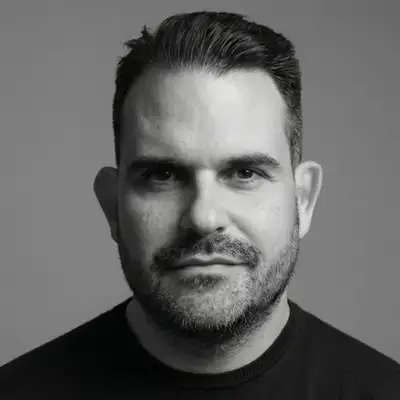
About the Host: Luboš Kastner
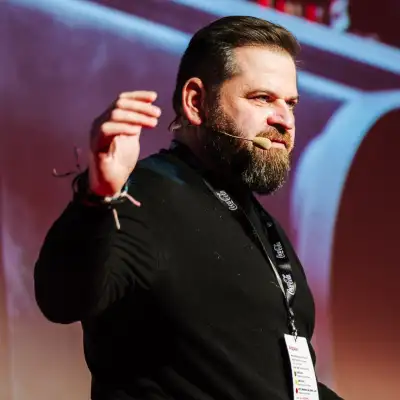
About the Interviewee: Chris Maffeo
All rights reserved: Český GASTRONOMICKÝ podcast
The MAFFEO DRINKS Podcast is a leading drinks business podcast delivering actionable insights for drinks leadership.
For founders, directors, distributor MDs, and hospitality leaders navigating the tension between bottom-up reality and top-down expectations.
20+ years building brands across 30+ markets. Each episode features drinks builders: founders, distributors, commercial directors, sharing how the drinks industry actually works. Not the conference version. Honest conversations.
Insights come from sitting at the bar.
Beyond episodes: advisory for leadership teams, subscription with episode deep dives and principles to navigate your own reality.
Beer, wine, spirits, Low and non-alcoholic.
Bottom-up Insights & Episode Deep Dives at https://maffeodrinks.com
It's such a nice pleasure to welcome Christian Maffeo in my podcast. Hi, Christian.
Chris Maffeo:Ciao, Luis.
Luboš Kastner:Christian, you are the guy who built Peroni Nastro Azuro brand in most of Europe. You are the one who was a senior director of urban development in Carasburg. You are an on trade and Horeca European professional. So the focus of our podcast, which I prepared, will be the topics how brands are being built in Horeca. But before I skip into questions, tell me how you, as a person of your caliber, how you appeared in Czech?
Luboš Kastner:Because it's such a you are like a hidden gem, no, in in in Czech. How did you appear here?
Chris Maffeo:Thank you for your kind words. There was a funny story actually. I'll keep it short, but basically I was working in Sweden. I had been living in Finland and Sweden before. And and on a flight back to from Rome to Stockholm with an exchange in Munich, I saw a guy with a Peroni jacket on the plane, boarding the plane.
Chris Maffeo:Obviously, it looked like he was Italian. But I didn't say anything. I mean, didn't want to stop him and ask him, Hey, do you work for Peroni? And back then, was consulting before I was consulting in Finland on the Peroni brand for Italy. So I had some ex clients and contacts there.
Chris Maffeo:And then when I landed in Stockholm, I wrote an email to one of the directors in Europe and asked, Hey, look, I'm looking for a change in my career. I would like to start working for S. C. B. Miller.
Chris Maffeo:I saw this guy getting off the plane in Stockholm with a Peroni bag with all the SCB Miller logo, with all your global brands. So is this something I don't know. Do you have an office in Stockholm now? He said, No, actually we don't, but send me your CV and I'll see if there's any roles. I said, To be honest, I'm open to relocate anywhere in Europe, so feel free to share my CV.
Chris Maffeo:Then I got a call after three hours, And they said that there is a role and it's on international marketing manager for Peroni and Strazuro for Europe, and and the location is Pilsen. Are you interested? And I was like, yeah. Mean, apart from the fact that I don't know where where Pilsen is, but I I can Google it and and let's and let's see. And so fast forward, then I I had the interview, and when I explained to my future boss how I got to sit there in that interview, basically he told me that job I was recruited for was actually that guy on the plane that was leaving the company.
Chris Maffeo:So I actually replaced that guy from the plane. So that's in a nutshell, how I ended up here.
Luboš Kastner:Lucky for you and and lucky for us. And what do you do now?
Chris Maffeo:Well, in the meantime, like, let let let's also mention that then after that boss, then you actually became my boss in in SEV Mille. So I I had the pleasure to have Lu Bosch as my boss for what was it? Five, six years?
Luboš Kastner:It was it was mostly my pleasure. Not your pleasure.
Chris Maffeo:No. It was it was it was an experience. You Czech eyes me and I Italian eyes you. So that was that was a and yeah, so now I'm a let's say the easiest way to say this, I'm a consultant in industry. What I like to say is that it because it's difficult to explain what I do is that I'm working with the beverage and non trade ecosystem.
Chris Maffeo:So what I believe in is that there should be a balance and an equilibrium in the ecosystem. You know, we always talk about value chain in the beverage industry and in, you know, you do talk about food cost, you talk of, you know, in the in the Orica. What I believe is that there are many parties involved. So from the producer that has sourced the ingredients from, of course, from the agricultural sector, from farmers and so on. They sell it to a distributors.
Chris Maffeo:The distributor sells it to a wholesaler. The wholesaler sells it to bars, restaurants and hospitality. And hospitality sells to consumer. And you have to imagine this as a chain. So this it's a supply chain.
Chris Maffeo:But like, I would like to see it as a visually as a chain. And there's many links. And if the value is shared unevenly, you know, one link gets too fat and it breaks the chain. So and it doesn't matter if it's between the first and the second, the fourth and the fifth, the sixth and the seventh, it breaks. And the illusion from all the parties involved is that, you know, you got fat and you're like, Oh, I'm happy.
Chris Maffeo:I'm getting fatter and fatter and I'm getting more rich. But if you break the chain, you may feel, Oh, the other one broke because I'm the fat one. So I didn't break. I broke the other one. But actually, you broke the ecosystem because the chain is broken.
Chris Maffeo:And who are you going to sell to afterwards? Because there's no link anymore. So this is like what I try to do. I try to help all the parties involved, whether it's an on trade operator, a bartender, a waiter, a brand manager, a CEO of a big corporation, or an entrepreneur running his own craft spirits consultancy or production to actually be in that system and behave fairly and take advantage of the system in a fair way.
Luboš Kastner:Tell tell me, I I really like I think you are one of the biggest professional in in beverage industry, sales and marketing in in Europe. I really believe in that. And tell me, you were working also in Carlsberg and you were responsible for 10 global cities with urban development. Yes. What key lessons you took out of that job?
Chris Maffeo:I mean, the key lesson was that I mean, first of all, let's say, I expanded versus the SAP Miller experience and SI experience. Like, there was more European, so I was focusing on European countries and Middle East. There, it became a global role. So it was a it was a, you know, big challenge to, you know
Luboš Kastner:You went traveling around.
Chris Maffeo:Yeah. When you when you do a business trip, it's actually like you have a lot of time to think. Because you're flying across the Atlantic and I was going to many different, you know, South American city, North American city, you know, New York, Boston, Philadelphia, Santiago, Mexico City, you know, you name it. But the interesting thing was that it kept confirming my thoughts that all cities are very different, but in the end, the dynamics are exactly the same. And in in all these markets, there's always twothree players that are the big guys and there's a handful of well, more of a handful.
Chris Maffeo:Now, are like hundreds and thousands of small players, small craft brands that are growing and trying to get a market share. And the dynamics are always the same. There's always a challenger. Like, one of the big guys is the challenger, and they rotate. It can be one day is Campari, one day is Pernod Ricard, one day is Diageo, one day is Asahi, one day is Kasberg, one day is ABI, one day is Bim Santori, you name it.
Chris Maffeo:But you know, there's the dynamics are always the same. And and if the two bigger players in that market, you know, try to get advantage of the other one to fight for market share, they create an issue in the ecosystem. Because, you mean, I've seen, for example, two companies, without mentioning names, of course, but fighting on a price war in supermarkets. You like, dump prices. This is cheaper.
Chris Maffeo:And I do promotions 50% of the time in off trade, and I do it 60% of the time. I go deeper, and you go deeper. Who's benefit from that? Nobody, because you are squeezing the margins or the modern trade operator is squeezing the big guy. And again, it's a no one is going to win out of that game because you're just like messing up the market.
Luboš Kastner:Tell me, like, I remember you really, like, being super passionate and super skilled in when you were creating these on trade operating guidelines, which were basically a standard for most of Europe in SAB Miller. And tell me, if you come back, and now with your reflection of your experience, what would be the principles you would advise to sales and marketing people in those companies who are either challengers or first ones? And how to basically market the brand? Because we agree that hunt each other on discounts is a senseless thing. So, what would be the key principles you would advise to actually many of our listeners of our podcast who are working in those companies, you know?
Luboš Kastner:So, what would be the key of you of those?
Chris Maffeo:This is an interesting one. So I actually made a free PDF that is downloadable on my website christmaffel.com, where I have the 15 tips on how to brand a premium craft, whether it's a spirit or a beer. Everybody can log in on my website and download it for free. To have it more as a personal advice to the actual people there, I mean, the interesting thing is that whether you are you know, what happens is that there's the big guys and then there's the the main challenges are these craft beer producers. And there's a bit of a cat and dog or cat and mouse, depending on which one are you, in the market, and you are trying to chase what the craft guys are doing, and the craft guys are trying to become the big guys in the long term.
Chris Maffeo:What I like to do, in fact, is always thinking, to the big guys, you have to think big. To the small guys, you have to think big, and the big guys, you have to think small. On a personal level, for example, if you're a sales guy bringing a director on a on a trade visit, you know, don't do the presid what I call the presidential routing, you know?
Luboš Kastner:Yeah. It's like green grass.
Chris Maffeo:The green grass is like you you you have pre called five guys, five on trade owners. You enter, they high five you. You know, the best stable is there. They genuflect to the CEO of the company or the VP or the the the director. And and everything looks shiny.
Chris Maffeo:But if you do that, what you're doing, you're going against yourself because you're just setting the bar higher. You make it more tough for you for the next time. You have to show the reality because this is what people are looking for. I remember once I was in Santiago in Chile, and there was a trade visit to modern trade and traditional trade, so all these mom and pop stores. And the trade visit was a disaster.
Chris Maffeo:The guy from the distributor, the sales manager, was I mean, he felt he literally felt sick after the trade visits. And he was apologizing because it was a disaster. Like, there were no bottles in the fridge, you know, no POS, nothing, you know. And he was actually prepared. And I I mean, I thank him.
Chris Maffeo:I want to see this is exactly why I flew seventeen hours to come here, because I want to see the reality. I don't want to see, you know, golden nuggets hiding in a fridge, you know? Like, I want to see the real deal, you know? And this brings me the bridge to the directors and the senior teams in these companies. It's like, don't look for a perfect picture.
Chris Maffeo:Look for reality and don't leave the meeting room. Leave the office. Now, of course, it's a bit of a challenge to go to the entree, of course, these days. But go out there, don't rely on a focus group, don't rely on a PowerPoint presentation from a research company if you are not actually sensing what it means, you know? What I always say, you know, and what I said when I was preparing some marketing strategies and, for example, activations to bars and restaurants for craft brands, I was saying, if you are not you know, if you're feeling ashamed when you are explaining the mechanics of this activation to the agency, and then the agency or you, you know, to the bar staff, And the bar the bartender is looking at you like, Are you crazy?
Chris Maffeo:You know, they have to open the mobile, click on the QR code, then go back and fill up a form and then they get a free beer kind of thing. Know, if you're feeling ashamed, don't do it. You should be proud of that activation. That should be super cool. Talk to bartenders.
Chris Maffeo:Talk to them like, what do consumers want? The insight that I bring is that you ask five bartenders, that's already an insight. You know, what they have in common. You don't need a 500 bartenders, you know, research that cost €100,000. You know?
Chris Maffeo:You can you can just talk to
Luboš Kastner:Now a few you are hitting the the the territory which we also both were hitting. And tell me, from your experience, relation between sales and marketing, you know, what is probably not not what is the current status quo, but what based on your experience, your feel, what might be the vision for this relation? You know? What would you be advising those teams in in the companies?
Chris Maffeo:That's a very interesting one. Think we struggled a few years on on this one. So there's a there's a lot of
Luboš Kastner:And we were not the only ones. There's a lot
Chris Maffeo:of learnings on on that one. But I mean, the main the main challenge is that they they don't think ecosystem, they think themselves, you know? And they think career moves and they think vertical, they don't think horizontal, you know? A a brand manager wants to become a marketing manager, wants to become a marketing director, and a sales rep wants to become a sales manager and wants to become an area manager, and you name it. So the challenge with that is the first challenge is that not everybody are fit for everything, you know?
Chris Maffeo:At some point I realized corporate life is not for me, you know? And I had this dream of becoming a senior director as I became, but then I said, like, I want to be a VP? Not really. And so a sales rep may be sales rep all his life. You know, there's nothing wrong with that, you know, because it's about managing expectations.
Chris Maffeo:And brand manager, the same. But the thing is that if they don't interact with their peers, you know, they keep on preparing stuff that is just, you know, the marketing people prepare stuff that is only good on PowerPoint, and the sales team prepares stuff that is not good for Excel.
Luboš Kastner:Have you have you seen any good, I would say, moments or a company where it worked well across your or or you know probably companies where they manage this interaction? Because you have to help those two bodies, you know, because marketing
Chris Maffeo:I think, yeah. I mean, I think the best practice probably, like, in my experience was the Miller Brands UK, you know, the ex Assai UK back in the days. You know, I remember when, you know, when I was building Peroni with you and the team in Europe, they were ahead of us a few years. So London was the Mecca to go and learn. I remember organizing this trade visit for the French team, for the Spanish team, for the Swedish team, And what shocked me was, I mean in a positive way, that whoever you spoke in that organization and was doing a presentation for us, whether it was an off trade director, an off trade manager, on trade channel manager, brand manager, CEO of FD, whoever, was talking the same language.
Chris Maffeo:And I was like, wow. Like how do they I mean like did prepare before this? No. Mean, you were just grabbing them and having an hour half an hour talk with them, but they were talking exactly the same language. And this is the thing that, you know, like, if you are doing, you know for example, many times I get requests for consultancy and it's a brand consultancy.
Chris Maffeo:You know, on a, you know, how should I fix my brand? My brand doesn't work in a craft brand, say. And then I say, I mean, we should do like a commercial audit first, you know? Like a litmus test, what I call I call it the commercial litmus test. You know, because it's not a like you assume that it's a packaging problem.
Chris Maffeo:Oh, this brand is winning because they have an amazing packaging. This brand is winning because they did an amazing campaign. They have a great website. Heineken is having James Bond. We don't have money for that.
Chris Maffeo:It's about like check what's happening. Are you doing a deep price promo in the off trade that is jeopardizing the value chain of your channel mix. You assume that you are going to sell more in the on trade, but you're doing deep promo, deep price promo in the off trade and that's killing your bottom line, your net margin first and then the bottom line. Maybe that's the problem, and you shouldn't change the packaging. But if you go first to somebody that will advise you to change the packaging that will fix the world, you know, you are missing out.
Chris Maffeo:And this is the interaction that is needed between marketing and sales.
Luboš Kastner:So do you think these kind of one vision, one goal, one language, one culture is is a secret recipe or not very secret, but a recipe for building successful brands?
Chris Maffeo:I think it is. And I think it's is is the strength of the of the small guys. You know, like when you take small companies like small craft brands, whether it's a craft beer or a craft gin, a craft vermouth, and their strength is that they are small and they have to speak the same language. Because it's like if me and you, if we create a brand, we spoke the same language because we set it up together. And then we hire somebody who speaks our language, and then we hire another guy or a girl that speaks our language.
Chris Maffeo:But the problem goes at scale. When you start recruiting, the guy who recruited or you recruited, recruits somebody, it's a little bit like the phone game that you play when you are kids. You know? You say something and he says this and she says this to somebody else. And and then you, you know, you lose track of the and if you cannot go back to an easy strategy because that is the that is the is the secret, you know.
Chris Maffeo:Take for example, on trade segmentation, you know. Any company I've worked with and I've or I've I've seen staff from, you know, they have a 100 pages segmentation guidelines. 100 pages. The more, the better. And boutique hotels and big hotels and three stars hotels and bars, pubs, restaurants, club, small club, big club, events, you know, you name it, you know?
Chris Maffeo:At the end of the day, it's like you have to make it easy to for the average person, we are bombarded with information, you know? So imagine like a sales guy of a wholesaler that is buying from a distributor in a market where you have no presence. And you show up with a 100 pages presentation, but those poor people, you know, they have visitors every week from another brand with another presentation that looks, by the way, a little bit different but almost the same from the other one that you've seen. And that is the problem. It's like, because everybody is like, Ah, this is good, but I would change I would change slide five because it's not clear for me.
Chris Maffeo:Know, like, just like focus on the basics, not on the on a you know, it's it's three types of outlets that you should focus on. Boom. You know, that's how we did it.
Luboš Kastner:Fantastic. I think you mentioned really, really, like, couple of things, which and if I if I take, I don't know, two or three of them, I think, like, what you said, like, culture and one language. You said you hit it a bit, which is like a little bit of how you visit the trade or how you speak to the operators. That's that's that's the way. And then it's about, like, siloed sales and marketing, mostly sales and marketing.
Luboš Kastner:I think like I think these three things we can find in many companies. What would be good like how to help those companies? How to help those people? What would you change based on your experience? I am a am a Horeca operator, and I see it.
Luboš Kastner:Like, I'm not visited by companies. And if it's a formal visit, which is which can end in ten minutes, easy easy talks, and mostly it is about how the boss wants to see the numbers, you know, and it's mostly numbers, and and that's it. I am not introduced by any novelty or any meaningful novelty. It's a dilution of of ideas and not that many actionable insights or innovations. I am introduced by traditional stuff, you know.
Luboš Kastner:So how to help those companies to be better or those managers to be better? It's not a critic. It's just really like a description of the status quo. So what do you think these companies should do better?
Chris Maffeo:I mean, this is still, you know, something I'm trying to develop, so to say, because there's no easy I mean, it's a great question, but it's not an easy answer, of course, because otherwise I would be a millionaire probably, which I'm not. And I think that first thing is to standardize rules for the industry. Know, if you look at the off trade, I mean, in off trade, you've got Nielsen, you've got few players, you you've got Lidl, you've got whatever, you know, you name it, in different countries and so on. And they are don't get me wrong, they're not easy to manage, but they are easier in the complexity because they are so complex machines, you know, those interactions between a buyer and a seller, you know, key accounts. There's a key account in a beer company.
Chris Maffeo:There's a buyer for the beer category in a big supermarket chain. I mean is that it's easier to manage than a random crazy guy with a lot of tattoos, you know, that was a DJ and then became a bar owner and now has a startup on
Luboš Kastner:So off trade is simple.
Chris Maffeo:No. It's like don't get me wrong. And then, I mean, people working off trade would kill me if they if they if I if I said that. And it's not. It's just that it's easier because it's more standardized.
Chris Maffeo:So you can learn. You can have a course in off trade key account management. There's thousands. You know, you have to learn how to read Nielsen. You know, Nielsen is the standard.
Chris Maffeo:You know, it's like liters and meters, and then there's Nielsen, you know? In OnTrade, tell me what's the standard in OnTrade? Nothing. You know, like there's no standard in OnTrade. If you go on to the so what the on trade focuses on is the intrinsics, is the liquid.
Chris Maffeo:So you have WSET, the Wine and Spirits Education Trust. You've got ICE in Italy, Societe Generale. They have sommelier courses, Cicerone for beer in The US. You've got experts, you know, you've a master of wine, you've got like, you have experts, you have sommeliers in the industry, but they they don't teach you how to buy and how to spot and smell bullshit, if you allow me swear words in this podcast. You know, it's know, they like a buyer, they don't know you know, I'll you an example.
Chris Maffeo:Like a friend of mine has a bar in restaurants in Rome. I won't tell any names, but I asked him, I said, What's know, tell me like an Italian gin that I can try because I want to see like an Italian gin. And he gave me the name of one gin and he said, Oh, this is from this region. It's amazing. They're doing amazing stuff and so on.
Chris Maffeo:And then I said, I bought it. I've been he's a bar owner. He buys it. You know, like, of course I trust him. He's a sommelier by the way.
Chris Maffeo:And then I go and then I try it and it's okay, it's nice. It's the same. It's usually like it's the €35 to €40 a bottle on a premium gin, which is the standard. You know, that's standard. And then I check and then it's made in The UK, like distilled in The UK, bottled in another place in Italy.
Chris Maffeo:But on the bottle it says that, you know, it all talks about another region from Italy. And then I'm like I'm not saying that this is a bet because it's actually a great gin. But then I'm thinking like, but why does this guy that understands it, you know, told me that it was from that region? Has he read back label? No, he hasn't.
Chris Maffeo:You know, and he's an expert. So imagine a consumer on a shelf of a supermarket buying a gin, you know. So there's no, you know, a buyer in the on trade, a waiter, a bartender, and if we could make a standard for learnings, learning and development, you know, something that unifies a brand manager, a sales rep, a distributor, and a bar and restaurant owner or buyer, you know, that they speak the same language. And we say, okay, this is how it is. This is the appellacion dorigine controle.
Chris Maffeo:This is the DOCG in Italy. You know, there are standards, but in entree, there's no standard.
Luboš Kastner:I think like I think there are also wrong standards Because what I was now seeing from the other bench of the river, almost all suppliers, they call us on trade. And what I try to tell them is just like, we are gastronomy, you know. And in gastronomy, you have so many disciplines and you have so many it's like a little production company. So do you agree that companies maybe maybe it's for those managers working in Entreit, it's even much harder to get insights or or learn within the within the gastronomical world? Because if you are selling in a beverage, you have to understand me, my how how I do meals.
Luboš Kastner:Because you you Exactly. Because we need we need a full fully fledged advisers, you know. No. No. We don't we don't need sales guys.
Luboš Kastner:So so what so do you think do you think also bigger companies should think differently about how they manage the channel within their company?
Chris Maffeo:Absolutely. Absolutely. I think, like, when you were talking, I was I was thinking, like, one of the let's call it an issue. I mean, it's opportunity as we are I've learned to
Luboš Kastner:to say.
Chris Maffeo:Is that, you know, the entree I mean, bars and restaurants like it's, you know, like gastronomy and, you know, it used to be a passion field. You know, it used to be you know, my my my my grandfather and my great grandfather, they they my great grandfather opened an wholesaler in 1884 in Atrivalla Del Vilnio near near Naples in in the South Of Italy. He was selling to restaurants and he was selling to and he was a very basic job, you know, like not easy, but basic. You know, like he was selling ham and selling ham. He was buying sorry, buying oil and selling oil.
Chris Maffeo:The oil was in a tank underground. You know, there were no bottles, for example. There was no packaging in beginning. And it was about passionate people who had no education, probably, and they went they wanted to open a bar, a restaurant. They they knew how to cook.
Chris Maffeo:They had a place under the the the the flats, and they were starting and opening a restaurant, you know. That's how it started. If you look at it now, it has become FMCG. You know? So the industry has changed the channel in a way because with the diaspora of a lot of real FMCG people, you know, people working in cosmetics, pharmaceuticals, food, you know, biscuits, dairy products and so on, they are entering beverage companies, You know?
Chris Maffeo:And these people are bringing the off trade knowledge with them. Like you don't go to a restaurant to buy a mozzarella or you don't go to a restaurant to buy a pack of spaghetti, you know? You go to a supermarket, you know? So they have in that sense, there is no clear on trade because you you know, I go to an Italian restaurant, I have no idea which pasta did he use to make the spaghetti carbonara. I have no idea.
Chris Maffeo:You know, when I come to Cervinielle and I know that that beer is Pilsnerco. You know, I know it. I see it. You know, there's communication around it. So what happens is that all these people that want to enter these big companies, there's no room for them because then they say, If I want to have a career, what am I going to do?
Chris Maffeo:Am I going to go and work in a bar and restaurant after? Or do I want to go and work in another company which has nothing to do with beverage, but I've learned the off trade and I can sell myself anywhere? So that attracts different type of people. Don't get me wrong, it's not the wrong people. It's just different type of people that may like to go for a gin and tonic a Saturday night every three weeks, but they're not, you know, actual passionate bar people.
Chris Maffeo:They're not stamgas. You know, they're not people that live in the bar and restaurant. I was joking my cousin who was my age, Crescenzo, and he lives in Switzerland. He said, you know, we were having a few beers like one night many years ago, and he said he told me like, cousin, if if the aliens come to planet Earth and they kidnap us and they bring us to Mars and they want to replicate the environment to study us like a zoo, they have to open a bar. And I said, that's so true.
Chris Maffeo:I'm struggling. I cannot live without a bar and a restaurant because I love it. It's my passion. I struggle more with the PowerPoint than with being in a bar talking to a bartender because that's where I get my insights. Insights and innovation should be bottom up.
Chris Maffeo:It shouldn't be top down. It shouldn't be let's add this ingredient. It should be that's what consumer wants because you should have that gin because the food is like that.
Luboš Kastner:And tell me, if you now because you have a really interesting piece on on also how COVID affected beverage industry. Yeah. I I read that. And what is really interesting is that you are a little bit envision the the future with gastronomy will live with out of home and in home consumption. And and basically, new features are coming into that into in in into the consumption of things.
Luboš Kastner:So so tell me about how you see the emerging trends and and things now going, not after COVID times, but emerging from COVID
Chris Maffeo:That's that's the that's the key. It's it's again, like, go back to ecosystem, you know? It's the ecosystem. It's the every company that approaches me or expert approaches me or article that I read, they are all talking about the future trend. You know, Oh, e commerce.
Chris Maffeo:Do you have an e commerce strategy? That's why you're not selling, You're lacking that. You're not selling it on trade. That's why you're losing. There's no compartments like that.
Chris Maffeo:If you look at what is happening with COVID, since COVID started, and how it's going to be developing, there's no new normal. It's just like an evolution of normality. So what happens is that when I did some studies back in May, I did one for the Italian Czech Chamber of Commerce. I a webinar there. Then I did some other studies on my own.
Chris Maffeo:Back then, people were thinking about what should we do now to save our profits and what's going to happen in six months or in twelve months. What is clear now is that people you have to go back to people. Let's take myself as a consumer as an example. I'm an on trade lover, I told you. So if I want to have, let's say, a burger, I can have bars and restaurants that are open to close, you know, full lockdown, semi lockdown, only take away, eat in and so on.
Chris Maffeo:But then there's a dynamic that is how much I want to the convenience or and the comfort of home and how much I want to meet people and have an emotion. And you you cannot have an emotion, you know, on my sofa, there's no emotion like there's an emotion on at the bar, and my wife will kill me for what I said. But that's the reality. You don't have those kind of interactions. You're watching TV or you're having a drink at home with one or two people.
Chris Maffeo:But what changes, and this is what companies are not focusing on, is that the drivers are how safe I feel, how comfortable I am with spending money, how much I want to meet people, and how much I want to have an emotion. And this changes throughout the week and throughout the days. Like one day I want to be alone. I want to sit and watch Netflix at home and don't talk to my wife and to my child. You know?
Chris Maffeo:Another day I want to have a dinner with five people. Another day I'm struggling one month with clients and I realized that I want to save money. Another one, I just got paid a big invoice and I want to go and celebrate and have a bowl of champagne and a big dinner at Chervil and Yellen, for example. And that changes. It's all about the feelings of the consumer.
Chris Maffeo:One day I may want to have a burger at Tesco. I go and buy a burger at Tesco. One day I go to a nice meat butcher. I can go to Polde, you know, and buy a best meat, you know, aged there. You know, another day I can go out if the bars are restaurants are open and order a nice, you know, perfectly grilled burger.
Chris Maffeo:Or I may order from Cherbournierle like a ready made burger that I just need to check, that I just need to cook. You know, it's all seasoned, it's all ready, you know, I buy a beautiful pack that is ready. Or I order it on, you know, on the phone and I come and collect it and I eat it in the car, you know, because I wanna have it warm, you know. And it's it's still a burger.
Luboš Kastner:That that that really sounds like like a there there there is a job to be done by the insights team of the companies in cooperation with the channel guys.
Chris Maffeo:You know? Absolutely.
Luboš Kastner:Because they will have to understand the new normal. Because if they continue running the the old data or all the insights sets, they will probably not be as effective.
Chris Maffeo:And that and that and and and sorry, La, to add to add one thing, Lele Lubos. That's that's that's exactly what I think. And and And what's wrong now is that you start seeing articles about e premise, e commerce, and it would be easy, like in brackets, from beverage companies to source volumes as many are doing, unfortunately. You know, like on trade is closed, shit happens. Now I have a website and I sell myself.
Chris Maffeo:But what's going to happen when on trade reopens for real? The on trade operators like you guys, you are gonna think who was close to me in the moment of need, you know? Who supported me? Because, you know, I I had a few chats with
Luboš Kastner:Definitely not the takeaway, Valt and Amelo. No? Those
Chris Maffeo:Absolutely. That's that's
Luboš Kastner:what I
Chris Maffeo:saw on
Luboš Kastner:your on On your posts.
Chris Maffeo:But but that but that's the reality, you know, you like know, because there's there's been a lot of communication about brands are helping, you know, billion offer to on trade, billion dollar here, billion dollar there. But how much money did OnTrade actually get? From what I asked people working in hospitality, my clients, my network, my friends, at least 60% didn't get anything. You know? And there, I'm talking about the top guys working with big brands.
Chris Maffeo:I'm not talking about the mom and pop, Potravini on the corner.
Luboš Kastner:Yeah. I think, like, the game is not over. We we have to see, and I'm telling it, we have to see a more bold moves from the companies, even in helping us, supporting us, and and really going out of their comfort zone, which is a cliche, But they will have to. And and and if not, we will we will make them to go after. Tell me, at the end of the interview, you've been here for ten years?
Luboš Kastner:How many?
Chris Maffeo:Ten years. Yeah. Yeah. Except one year that I was flying to Copenhagen and around the world for from here because I was commuting every Monday morning. But let's say, it's it's a double year.
Chris Maffeo:I lived in Copenhagen and Prague for one year.
Luboš Kastner:So if you you and and you go to trade so much, and you are like a living Horeca guy. If you if you summarize the development in Prague within those ten years, and if you then name few trends in Prague really emerging, you know, what you see in the last days, and how you see the the Prague people, you know, where do they go? COVID less, doesn't matter. You know? But what you saw in ten years and and what what were the most emerging trends?
Luboš Kastner:Was was it of like a growing authenticity or or like an innovation? How would you describe?
Chris Maffeo:I mean, like, the first I mean, like, the the the quick answer is like, wow. I mean, like, progress, you know, it has changed hugely. I mean, like, I was struggling in the beginning, like, to go out, you know, like, there was only a Hospoda or a fancy, you know, I don't know, Treters or Cafe Cafe or, you know, like those type of places. In you had to go to the center, basically. You know, there could be one or two places in Vino Raddi, in Zmigro, in Davidse, but, you know, you had to go to the center.
Chris Maffeo:Now, like, I mean, I live in Vino Raddi and mostly I don't go to the center. You know, I I'm in walking distance from home. I mean, there's a Igios Pote d'Ibrad, what those guys have done, it's unbelievable, you know. It started with the farmer markets, you know, the the those two buildings, you know, set the scene there. You know, Nammestimiro, you know, like all these small shops and small bars, small pubs popping up and so on.
Chris Maffeo:The trends have changed massively. Of course, I realized that I've been ten years, I'm ten years older, so that has changed from 30 to 40. You know, it changes a little bit. And now I I see that, you know, a lot of the the youngsters are much younger than me, of course. And and they're opening like beautiful cafes.
Chris Maffeo:You know, the entrepreneurship has changed. You know, before it used to be like a big guy with big money opens a restaurant.
Luboš Kastner:A restaurant.
Chris Maffeo:You know? Now, you know, you see some guys and, I mean, you roughly know how rich or poor they are, and they open a bar, a restaurant, and they were like, where did they get the money? You know? But it's it's cheap, you know, to it's cheap to open it. It's not cheap to stay open.
Chris Maffeo:It's cheap to open it in a shabby chic type of way, you know, you know, scrapped walls and low lights and wires hanging, you know, you don't need much renovation for that. But the trends have changed massively. I mean, what you guys have been doing, you know, in Pilsen back in the days I mean, Pilsen. Wow. You know, like when we used to go for for a coffee, there were no places.
Chris Maffeo:Then two places starting opening up, you know? Know, Le Carna on the square like that you guys have. Know, Cervinielle and like I mean, like they got huge PR coverage and it's a multi faceted kind of space. You have outside, you have meeting rooms, you have three floors, you have, you know, a piece of architecture and a great ambiance. Manifesto guys, we were talking earlier to Martin, you know, like what those guys have done, like it's unreal.
Chris Maffeo:I mean, if you get blindfolded and put into Manifesto market, you're not in Prague. No. Know, you are somewhere else, you know? You know, what the Ambiente guys have been doing, what the, you know, Ricardo Luque for Aromi has done, you know, and all these small players, you know, Holizhovitz have been growing like crazy. I mean, before you went to Holieshovitz at the Gudu Sazasu, you know, then there was a it was like the cathedral in the desert.
Chris Maffeo:Know, there was nothing there. Now there's a Mitro block around here. So it's it has changed massively. Even the people, when you look at the people, you know, like you feel like you could I mean, when I landed in Copenhagen and landed back in Prague, it was basically the same. You know, people were dressed the same, the fashion was the same, The trend, like you go to a coffee place and the trends are very similar.
Chris Maffeo:Europe is getting in contamination from U. S, from South America. All these trends are blending and they take it in Italian twist, the Czech twist, the German twist and so on. But, you know, the development in Prague has been massive.
Luboš Kastner:Right. I always like when when the podcast is ended up with a in a positive way. So thank you for that because I feel the positivity. Thank you very much for coming, Christian. Always a pleasure to talk with you.
Luboš Kastner:And I only wish that that people take the key what we were talking about in the podcast. So I wish you all the success in your in your future because you are a great person. And thank you for coming.
Chris Maffeo:Thank you, Lubosz, and thanks for having me. And and to the guys here, like, in this amazing place. And and and again, like, to close on a positive note, like, let's like, to the industry, you know, my reach out is to really let's think of ourselves as an ecosystem, not as compartment, not as operators, wholesaler, distributor, producer, farmers, you know, like we all in this together. You know, it's a it's a supply chain and and there's value in the chain, and let's let's share it fairly among all the players.
Luboš Kastner:I only can endorse it. So thank you again. And at the end, I always, thank to Petr Albrecht from Macro, who is, the biggest supporter of our podcast and, helps us to to make it happen. So thank you, Petr, as well. And, Chris, have a nice day.
Chris Maffeo:You too. Thank you, guys.