Subscribe
Share
Share
Embed


Navigating Net Zero is a podcast featuring conversations with practitioners and experts who are working through the complex realities of corporate decarbonization and sustainability.
We demystify and highlight the challenges, opportunities, and real-world experiences faced by the people leading their institutions' net-zero journeys.
Hosted by internationally-renowned climate change expert Alexia Kelly and brought to you by the Carbon Policy & Markets at the High Tide Foundation, Navigating Net Zero hopes to inspire action from this generation of climate leaders and the next.
Alexia Kelly: Good morning, good afternoon, and good evening. Welcome back to another episode of Navigating Net Zero. I’m your host, Alexia Kelly, and this is the podcast where we talk about what’s working, what’s not, and what’s next on our global journey to net zero.
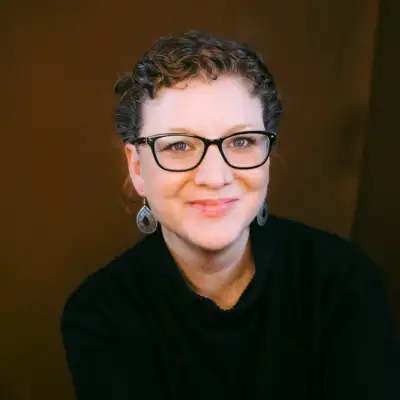
I’m delighted to be talking today about a topic that is incredibly important and too often neglected in our wonky, technocratic climate conversations. I’m thrilled to be joined by the amazing Kalee Kreider. Kalee is one of the best strategic climate communicators in the world, in my opinion—though she didn’t put that in her bio.
For decades, she has advised clients ranging from global philanthropies and thought leaders to Fortune 500 companies. She led communications at the National Geographic Society as Chief Media and Public Affairs Officer, advised Vice President Al Gore on environmental and climate communications, including An Inconvenient Truth, and has worked with many of the world’s most influential climate leaders and organizations. She began her career in Washington, D.C., as a Truman Scholar working for the federal government.
Kalee, thanks so much for joining me today.
Kalee Kreider: Alexia, thank you so much. I’m really honored to be here.
Alexia Kelly: I’m looking forward to the conversation. You’ve spent your career advising leaders on how to tell the climate story. What have you learned about speaking successfully about climate change and the need for urgent action?
Kalee Kreider: First of all, if you find that your friend who doesn’t work on climate change, or your parents, or others can’t really resonate with what you’re saying, you might want to rethink whether it’s going to work for a general audience. That speaks to one of the basics, which is: know your audience.
When you’re speaking with other executives—and you know this from having been a chief sustainability officer—if you’re speaking CSO to CSO, you speak one way. But that’s not always the case. One thing we find difficult in climate, because there’s such a high barrier to entry on some of the concepts, is really asking: who am I speaking to? Why am I speaking to them? What do I want them to take away?
The second thing is thinking about who people are going to trust on this issue. Who do they want to hear from? For some people, they really do want to hear from a scientist or a corporate leader. But sometimes they want to hear from a local meteorologist. They might want to hear from their family doctor on health. They might want to hear from someone you and I might not think of as a “climate person.”
And then lastly, there are phrases we use—like net zero—that make perfect sense when we’re talking about setting corporate targets. But net zero itself is a complex idea. The “net” in net zero isn’t even understood by some very, very smart people that we know. So we have complex language being used to describe complex concepts, and sometimes we have to take a step back and unpack it. As my friend Doug Balfour likes to say, you have to “hum a few more bars” and lay it out more clearly, even for highly educated people who are non-experts in this topic.
Those are my basic starting points.
Alexia Kelly: I think that’s excellent advice, and it’s something we forget all the time. One of my most shocking forays into communications around these issues was when I started at the State Department, because I came in from the NGO space and had only been out of graduate school a few years.
I think the way you’re trained to speak—particularly as a woman—is that you want to sound smart. You want to use big words. You want to demonstrate your proficiency and mastery of the deep technical nuance that our space both needs and is hindered by.
When I walked into the State Department and started writing memos, they would rewrite them, and I would have to rewrite something ten times before it was ready to go to a principal, because they’d say: you have to write this so that a first grader can understand it.
That felt so contrary to me. But the more I learned about good communications, the more I realized that’s actually the sign of a great communicator—someone who can take a very complicated subject and make it understandable for non-experts. Smart people, yes, but not people who are going to understand the nuance when you talk about different types of greenhouse gas accounting or even what the different greenhouse gases are.
So say a little more about how you’ve seen that play out in your career, and what we can do to help professionals who are not professional communicators but are tasked with communicating this incredibly jargon-filled technical world to a wide variety of audiences.
Kalee Kreider: I’ll give an example: methane.
One of the big breakthroughs we’ve had has really been on methane. For a long time, a lot of policymaking focused on carbon dioxide. It’s the most prevalent greenhouse gas. It’s super important because it’s long-lived—half of it remains in the atmosphere for more than a hundred years. So when you cut it, it really matters because it affects many generations.
But there are shorter-lived climate pollutants, and methane is one of them. It only lives, let’s say, about 15 years on average. It can be seven or eight years, but let’s say 15. One of the things we really tried to look at was not only that global warming and climate change are problems, but that the rate of change matters too.
There was a real effort a few years ago to ask: what are the things we could do that can make a difference now—not just for our grandchildren, though that is of course important—but what are the things we can do now that will make a difference now?
A group of people came together and said: we could make a difference on methane. It could help slow the rate of change and feel more immediate. And there was a lot of research showing that there are steps oil and gas companies can really take to cut leaks. It’s very tangible.
The methane story is, of course, one of technical achievement—we were making real differences there—but it’s also a story of how we were able to communicate both problem and solution in a new way in climate. We didn’t just talk about the entire climate problem as one giant thing. We focused on one of the six major greenhouse gases and made it a discrete problem. I’ve seen real progress happen when we can take a piece of the problem and build communications around that.
Alexia Kelly: What were some of the specific things people did to raise the profile of methane and the importance of acting on it? Because I totally agree with you—we’ve made a ton of progress, especially just in the last couple of years, and methane is having a moment in a way that it never really had before.
As you know, the High Tide Foundation invests heavily in methane remote sensing technology. We’ve put a huge amount of work into building momentum and putting the infrastructure in place to accelerate both the technical and policy work around methane regulation and voluntary methane mitigation.
I love methane mitigation because I started my career in carbon markets, and methane makes great offsets because it’s totally measurable, it’s completely destroyed once you address it, and when you combust it, it converts into CO2 and you’ve addressed the near-term warming problem. It’s measurable and often incredibly cost-effective to go out and do large-scale abatement.
It’s the poster child for an area that was begging for action—but it wasn’t sexy, right? It’s gas leaks and manure and landfills. The sources of methane are not the sexy new green technologies people get excited about.
So how do you see communications feeding into methane having the moment it’s having?
Kalee Kreider: One big thing was making the invisible visible. We knew that once we could visualize the emissions, that would create an aha moment for people. So remote sensing—taking satellite imagery and laying it over a map to show where the emissions are—was huge.
We also took ground measurements in the Permian. You can use drones, airplanes, and ground-based sensors in addition to satellites. Showing where the emissions are, mapping them, sharing that information with local groups—all of that, whether it’s citizen science, corporate science, or nonprofits, helps people engage through their senses. It makes the issue more real than theoretical.
The second thing was that we actually marketed the methane moment. We had pavilions at events—at COP, at ADIPEC, which is the largest oil and gas conference in the Middle East, at CERAWeek in Houston. Sometimes when you say you’re having a moment, you create the moment. We went out and said: we’re having a methane moment. Here’s what that means. Here are images from the satellite. Here’s the information.
The third thing was saying not only that we have a problem, but that we have a solution. We made it clear that there are leaks, there are super-emitters, there are dispersed emissions, and we’re going to go out and do notifications. There’s a system called MARS that’s designed to notify companies quickly when there are emissions. Then we could say: here’s what you can do to fix them, and here are the programs to do it.
So it wasn’t just name and shame. It was also: let’s raise the bar so everyone is trying to get better. That was especially motivating from a storytelling perspective, because it created room to say, yes, you’re seeing these leaks, but actually they’re fixable, and here are the ways to fix them.
And the other thing I thought was interesting is that we had a range of storytellers. It wasn’t just environmentalists and it wasn’t just government. It was oil and gas companies, it was farmers saying, “I’ve got a methane digester on my farm,” it was landfills saying, “Here’s what we’re doing.” All of a sudden you had a range of players involved in tackling the problem, which made it feel possible.
Alexia Kelly: That feeling of possibility is so crucial because the problem is overwhelming and paralyzing, especially when you’re first learning about the scale of it. And frankly, even for those of us who do this professionally and eat, sleep, and breathe climate, it requires a lot of disciplined mental structuring.
I try to stay in touch with the science, but I do not read the science every day because it scares me too much. You have to figure out how to space that out so that you can continue to function.
And I think focusing on, yes, things are really bad—being truthful about where we are—but also giving people that sense that it’s not a foregone conclusion, and that every little bit really does make a difference, because the margins of warming, the tenths of a degree, really do matter.
But accountability is also critically important. One of the reasons we’re having so much success and traction on methane right now is because polluters can’t hide anymore. They can’t lie anymore. We can see it.
So talk a little bit about that carrot-and-stick balance in climate communications and advocacy more broadly. How do you hold accountability and transparency and the ability to name and shame alongside the need to reward and recognize and create safe space for what will inevitably be imperfect movement forward?
Kalee Kreider: I first learned about this through something called the Toxic Release Inventory. Way back in the day, we didn’t know what the releases were from chemical plants and facilities, and the federal government created this registry where companies had to start reporting their toxic releases.
It was fascinating because as soon as they published the registry, no company wanted to be the largest polluter on the Toxic Release Inventory. It’s called the TRI. One of the groups had just two full-time people monitoring the TRI. They created a map, put it out, showed the data—and once those data were public, companies didn’t want to be on that list.
That was very powerful for me as someone in my twenties to see. This was pre-internet, so you had to use traditional media and old-fashioned maps. But that same instinct still works today: companies still care. They don’t want to be the worst. They’d like to be the best—or at least close to it.
So it absolutely helps for those working in the public interest to publicize the data and create data stories that make it come alive in ways that are compelling to the public.
What’s interesting now is that it’s actually much easier to test how people understand and ingest data than it was then. You can now use AI agents to do real-time focus groups and sentiment analysis. You can test whether one image works better than another, whether purple is better than yellow, whether people understand a data graphic better in one format than another. All of that matters.
So as we get information from satellites or airplanes or drones and can see where emissions are coming from, telling accurate stories about what’s being seen becomes really important for how people understand what it means.
But you do have to give the data the chance to have impact through a solution, or else people go from awareness to despair. And that would be a shame, because people have too much going on in their lives. You can’t just give them information that there’s a problem without also giving them a sense that there is a way to solve it—either something they can do, or at least that someone is trying to solve it.
Alexia Kelly: Obviously, An Inconvenient Truth fundamentally changed the climate conversation in the United States. What do you think made that particular project so successful, and how would you do it differently now with all the new tools we have available?
Kalee Kreider: I joke that An Inconvenient Truth is a little bit like Woodstock—more people say they saw it than actually saw it in theaters, because if they all actually saw it in theaters, we would have sold even more tickets.
But at the time, it was one of the most watched documentaries in history. It received two Oscars. It was the heyday of documentary filmmaking. We were, I think, the first film that ever had a Facebook page. I remember people asking, “Why would you make a Facebook page for a movie?” Which is funny now, because of course you would. Twitter wasn’t really a thing yet. That gives you some sense of how long ago 2005–2006 was in media terms.
One thing we did right is that people went to see An Inconvenient Truth in part because they wanted to know what motivated Al Gore. He had lost the election. He wasn’t very visible in public life. People had some sense of regret about what had happened. It was not a political moment on climate. There was no legislation pending. But there were many people—Republicans and Democrats—who wanted to know what happened to Al Gore and what made him tick.
In focus groups, people often saw it as a phoenix-rising story. Climate people saw it as a baby boomer with a PowerPoint talking about climate. But many viewers experienced it as a human redemption story.
So you have to think about storytelling that way. In older frameworks, we used to say there’s man versus man, man versus nature, man versus himself. In this case, people were asking: who is Al Gore? He lost the 2000 election. And when they came to understand his true passion, the film brought the climate issue to life through the lens of his story.
The images that stuck with them most were the glacial retreat images, the before-and-after visuals, and the scene where he goes up on the lift and shows how much higher temperatures were than the historical average. People had a few takeaways, but they weren’t the same takeaways that climate-literate audiences had.
Alexia Kelly: That is such an interesting point, because I feel like we are really suffering from a deficit of truly effective spokespeople on many of these issues. You can count on one hand the people commonly pointed to as extraordinary climate communicators.
And that’s a conundrum, because really we all need to be extraordinary communicators on climate if we’re going to solve this problem and make progress at the speed and scale required.
Kalee Kreider: I think some people took the wrong lesson from Al’s film. They thought: if I use a bunch of facts like him, people will understand climate.
But I believe the real message of the film was that people came to understand him—his story, the loss of his sister, how he rebuilt around his passion. It wasn’t the PowerPoint that was the heart of the film.
So if you ask what we would do now, I probably wouldn’t do a documentary. Most people don’t watch 90-minute films on a topic anymore.
Alexia Kelly: Especially not on paralyzingly depressing topics.
Kalee Kreider: Right. Since then, probably the only real breakthrough climate-related film was one that used humor—Don’t Look Up. Now it might be a TikTok series. It might be some other completely different format.
But some of the other things we did well were around organizing. We worked really closely with MoveOn and the Sierra Club and a number of NGOs. We had tables at theaters about local group issues. We sent out emails to get people to openings. There were little gatherings and parties around the screenings.
Al did meetings with people. He met with Walmart, Pepsi, corporate leadership and staff, the leadership of the Mormon Church—really anyone who wanted to talk about climate. These conversations were often off the record, no press, just a chance to ask questions.
It’s extraordinary how many people I still meet who say, “I met Al Gore at my company at an Inconvenient Truth screening, and it convinced me to spend my life working on clean energy,” or, “I went to work for an NGO,” or, “I founded a battery company.”
He met and inspired so many people, and the film was really just one piece of a broader effort for him to connect with those people. Many had liked him or identified with him from the 2000 campaign, but then they got to connect with him as a human being because they saw where his true passion lay.
Alexia Kelly: I want to stay on that for a minute because this is such an important and challenging space for us as climate communicators.
I am 100 percent a dyed-in-the-wool technocrat. Like: if we just explain it better, surely they’ll understand how right we are and get on board. And I think it’s pretty evident that that approach is not working. Facts alone are not catalyzing the scale of change we need.
There are very good reasons for that, and I don’t know that any amount of communication will fully overcome them. But anyone who has worked in carbon markets or the net-zero space in the last five years can see how powerful getting a message right or wrong can be in shaping public opinion, influencer opinion, and frankly, moving markets.
Just look at what has happened with GGP and the market response in the last couple of weeks. We’re seeing almost instantaneous reactions based on widespread messaging and public pressure campaigns.
So talk a little bit about how you recommend people balance the need to speak factually and in a technically correct way with the need to bring a more emotional dimension to communications—a thing many of us have frankly been trained not to do.
Kalee Kreider: There’s a lot of research showing that the information deficit model is not accurate. Giving people more information is, for most audiences, not what moves them.
There are some people who need information. But think about it this way: the majority of people in this country didn’t go to college. And even among those who did, the numbers drop as you move up into graduate and postdoc education. So there are a lot of people for whom information is not the main thing moving them to make decisions.
Even highly intelligent people smoke, despite knowing smoking is bad for them. It’s not that they lack the information. They just don’t make decisions based solely on that information.
The question of how people make decisions is fascinating. One of the challenges in climate is that experts are often not trained communicators. You can see this in how different presidents chose cabinet members. Obama tended to choose experts and Nobel-level thinkers. Trump tended to choose communicators—people who looked good on TV, sounded good, and could deliver sound bites.
That’s not to comment on how well they managed their departments, but it says something important: communications is its own profession. It’s a job.
When I was a working spokesperson, I trained for it weekly or biweekly. I sat down, went through my message points, delivered them on camera. I used more Botox, more filler, I was thinner—because on television, the first thing people say is, “You looked great.” Why? Because it’s a visual medium. Then they say, “You sounded amazing,” because they’re hearing your tone. Only then might they remember something you actually said.
What does our side train for? We train to say a lot of stuff, very fast. When I did my first media training, they told me: you talk way too fast, and you need to deliver half that much content. That terrified me. I said, I can’t deliver half that much content. And they said, no one’s going to remember it anyway, so don’t.
That was devastating, but true. They basically told me I was going to be judged like an Olympic athlete of communication. If you become a spokesperson, you’re going to be judged on certain criteria. And for experts in climate, it’s very hard to register what that means in broadcast and print media. They would have to think very differently about how they interact with the world.
Alexia Kelly: That is such a perfect segue to social media, because social media has fundamentally transformed how we communicate.
One of my favorite things about it is how it democratizes access—to broad audiences, specialized audiences, and people you would never otherwise meet. Some of my favorite people in climate I’ve met on LinkedIn, then met in person, and now work with. I love that.
I can be having a deep debate on greenhouse gas accounting with somebody in Bangalore on social media. It’s just such a different platform than traditional print or visual media.
So how should climate communicators think about leveraging social media and the incredible speed with which all of these technologies are changing?
Kalee Kreider: It helps to think of social media as a number of different things, because the platforms are speaking to different audiences.
LinkedIn is mostly for a business and educated audience. It’s an incredible tool and probably the single best platform right now for reaching business audiences and high-level NGO audiences. Every CEO and C-suite person should be using LinkedIn to communicate.
But other platforms are very different. Communicating on Instagram is very different from communicating on LinkedIn. The same is true of TikTok. There are some best practices that cut across, but your Instagram post is going to be more visual and have much less text than your LinkedIn post.
Some people say they use Facebook for personal, LinkedIn for professional, Instagram for broad public engagement, and TikTok for recipes. But for communications, you really have to sit back and ask: what am I using each of these channels for, and why?
The algorithms are different. And what’s interesting now is that all of this ladders up into ChatGPT, Gemini, and the others. We’re moving from search engine optimization to a different kind of optimization entirely. Those platforms are now using all of that content to train their systems.
The downside of what we might call disintermediated media—the democratization you’re talking about—is that traditional media has largely collapsed. And that makes disinformation a much harder problem. There’s no longer an easy way for second- and third-tier issues to capture attention or drive a narrative the way they once could.
If you look at Google Search’s year-end charts, climate isn’t really there across those disaggregated platforms.
Alexia Kelly: And I think that disintermediation has created a world in which we really do live in different worlds. It has arguably broken democracy in America too. We no longer have anything like a broadly shared middle view. The algorithms reward what you like, what you respond to, and they’re incredibly good at it.
My LinkedIn feed looks totally different from my husband’s, because he’s in a different sector. They overlap occasionally, but when they do, it’s very disorienting.
So how do you think about being a responsible consumer of media and a responsible influencer of media when you know we’re all being siphoned into these bubbles?
Kalee Kreider: A friend of mine, Eli Pariser, wrote a book called The Filter Bubble about exactly this—how algorithms create these informational bubbles around us and the challenges that come with that.
And, believe it or not, Vice President Gore’s college thesis was about how changes in media technology—whether the printing press or radio—change politics. He focused in particular on how the rise of radio contributed to the rise of fascism.
Media technology affects politics because of how it gets used and misused. And I think we’re seeing that in spades right now.
One thing this means is that the old strategy of building a climate beat in traditional media isn’t enough anymore. For years, the push was: let’s get a climate beat at the New York Times, CNBC, CNN. And that made sense when those institutions were central.
Now the challenge is different: how do we embed climate knowledge and climate coverage into the conversations people are already having—about food, fashion, health, business?
Because in this democratized environment, there aren’t going to be beat reporters on TikTok or LinkedIn. We are the reporters. So the question becomes: how do we create ubiquity?
That’s going to mean more influencer strategy. It’s going to mean mainstreaming, which also means we have less control over how the issue is talked about. It means the mainstream coverage we do get in the remaining mega outlets—like the New York Times—has to be amplified more strategically, because there are fewer big outlets than there used to be.
And I think we have to get much more creative in our storytelling overall. That includes podcasts like this, but also 90-second mini documentaries, photography, visual arts, AI-generated content—areas I’m not sure we’ve fully explored yet.
I sit down in the morning and read the Times, the Post, the FT, Politico, Bloomberg—but that is not how young people consume content. I might as well be my grandfather sitting in an easy chair reading the Evening Post.
Alexia Kelly: It’s much more passive now. Most people aren’t proactively searching for information. It’s more: if it pops up in my feed, I’ll click on it.
I also want to ask you about short form versus long form, because in the technocrat world I live in, I’m seeing a shift toward longer form—people moving to Substack, writing longer pieces—combined with the pressure to be really short and pithy on platforms like LinkedIn.
There’s tension between those two trends. What are you seeing, and are people really engaging more with longform media like Substack and podcasts, or are they mostly continuing to scroll?
Kalee Kreider: It depends on who your audience is.
For people like us, I think we’re consuming more Substack content than books, and more Substack content than documentaries. But for younger people, the two- or three-swipe rule is real. It’s very hard to get them to engage in longer-form content.
I also think we need to think much more seriously about educational materials at a younger age. One thing that’s been really hard—and I remember this from the An Inconvenient Truth era, but it’s still true—is that it’s very difficult to get the climate community and philanthropies to fund basic educational materials. We ended up having to fund a lot of it ourselves.
That included everything from work on the AP Environmental Science course to materials for elementary school, across homeschool, private school, and public school settings.
The reason this matters is that the time when we have the most attention from people is when they’re young. By the time kids are 18, you’ve already spent the vast majority of the time you’re ever going to spend with them.
So we need to think much more seriously about what attention and time we have to educate people on these issues before age 18, then through college for the smaller share that go, and then through the rest of life. That has been a missing link in climate work.
Part of the problem is the KPI question. It’s very hard to show the KPIs for that kind of education. But when you actually think about it, it becomes obvious: if people learn about this stuff when they’re young, it is much easier than trying to persuade them at 30.
Alexia Kelly: You know, it’s funny—I often ask people how they got into climate, and I’d say 90 percent of them say they spent a lot of time outdoors as a kid. That connection to nature becomes a core part of who they are and shapes the desire to work on these issues professionally. That was definitely true for me.
Kalee Kreider: Me too. And as more kids are homeschooled and as educational pathways diversify, I think we need to get much more creative about how we build education and affinity. National Geographic worked hard on this. There are others.
We’re going to have to think more across parks and recreation, across educational programming, across community infrastructure—how do we move people through their lifetimes? Because we’re simply not going to have the same opportunities to get that one big New York Times story that bursts through and creates action.
Alexia Kelly: I want to pivot to markets. You and I have talked about this a lot. Market-based climate solutions have had a rough few years while also demonstrating significant traction and successful outcomes, as in the case of the EU ETS, which is under attack at the moment but has done a phenomenal job of reducing emissions across Europe.
What do you think we’ve gotten wrong in communicating about leveraging markets for accelerated climate action? And what could we do better?
Kalee Kreider: It’s been a historically interesting time because there’s been some skepticism about markets since the 2007–2008 crash. For a certain segment of people, confidence in markets took a hit, and there’s been a long tail from that.
We saw that with the Waxman-Markey bill. It came along right at the time of the crash, and the mix of those things made it very hard to advance a market-based climate solution in the U.S.
I also think, as backdrop, it’s been harder for the EU to build its market while we didn’t build ours. It would have been much easier if more markets had come online that could connect and create a broader architecture.
One other thing that’s interesting is that Republicans haven’t really strongly articulated the case for markets on climate, which is a little surprising given the history of the Clean Air Act and bipartisan support for market mechanisms in other areas.
It’s also been hurt by the fact that we haven’t had enough strange bedfellows. One of the most powerful things you can have is a coalition of people who don’t usually agree saying something works.
So if I could wave a wand right now, the thing I’d most want to see would be Republicans, Democrats, business leaders, and environmentalists coming together to say that unleashing private markets to solve a problem is one of the best things we can do on climate—and to provide three concrete examples.
That would make a huge difference. And it’s an approach that can still unleash enormous forces to help solve this problem.
Alexia Kelly: I totally agree. And if you think back to the early days before Waxman-Markey, you had the U.S. Climate Action Partnership. You had nonprofits sitting down in a professionally facilitated space with big emitters who had accepted that regulation was coming and wanted to help shape it.
They showed up and said: yep, we’re here, let’s negotiate. I was at WRI at the time, and through the blueprint process we walked through all the elements of a national cap-and-trade system we’d want to see.
I spent a lot of time pushing back on companies saying: sure, offsets can be part of the program, but there need to be limits, they need to be high quality, and here’s what that has to look like.
It was a really powerful and effective way to figure out where that center ground was on policy. We then built an advocacy coalition around it—and we were so close. So close.
Kalee Kreider: USCAP was amazing. You had a couple of oil and gas companies, major Fortune 500 companies, NGOs, former government officials—all of those strange bedfellows. And you had bipartisan people that ultimately came onto the bill.
And I know right now it doesn’t feel likely that something like that could happen. But I will say: having lived through the 2000 election, it didn’t feel likely then either. And I still think it’s possible.
I think it’s possible for a lot of reasons.
Alexia Kelly: Because of CBAM, I think. Europe finally got tired of waiting for everybody else to put in their own climate legislation and said, politically, we cannot continue to leave our industries as the only ones carrying a real price on carbon in the global economy.
And they’re right. It is a real competitive disadvantage in many trade-exposed, energy-intensive, globally commodified industries. So I do think there might be a window here to start thinking about what a more globally integrated network of high-integrity cap-and-trade systems could look like.
Kalee Kreider: And Trump has done tariffs. He has done tariffs. The man loves them, let’s be honest.
But the other thing is that he’s effectively increased the costs of a number of carbon-intensive things. So there are elements of a roadmap here. It’s difficult for people to see through the fog, but I wouldn’t be surprised if, in a couple of years, people look back and say: actually, we put these pieces together.
We’ll have to think about the politics of it—what we call it, what it looks like, where the revenues go. The biggest issue for the U.S. is probably the size of the deficits, and then the broader geopolitical landscape, including Iran and Ukraine. But I think we could be surprised at where we find ourselves in two, four, or six years.
And I do think markets are the way. I think inherently markets are going to be the way, because they are the path that can be bipartisan, that industry can support, that NGOs can support. The devil is in the details, of course.
Alexia Kelly: Always. So, Kalee, what’s your best advice for people working in climate? What are three things we should be doing to contribute to effective communication?
Kalee Kreider: I’ll go from simple to more difficult.
First: see communication as something that is in and of itself as valuable as science or legal work. It is a practice in and of itself. It’s not an add-on.
Second: be rigorous about who you’re trying to talk to, what you want them to take away, and who they’re going to trust to say it. And be humble enough to recognize it might not be you. It might be someone younger in your office. It might be someone else entirely. Corporates are really grappling with that right now—who is the trusted messenger, in addition to what are the messages and who are the audiences?
Third: give each other some space and grace in this moment. It’s a classic threat-opportunity moment. On the one hand, it’s hard to make progress right now. On the other hand, that means we can be very creative. Use this time to try some new things, see what works, see what doesn’t, test it, review it, learn from it, and try again—rather than getting stuck in old ways of thinking.
Alexia Kelly: I always like to close with what’s getting you out of bed in the morning and what you’re feeling most optimistic about.
Kalee Kreider: Well, I live on a farm, so literally what gets me out of bed in the morning are my chickens and my garden. Let me just say, it is very humbling to live on a farm. I’m the wife with a job in town. My husband is an actual fifth-generation farmer. I am not.
I come up with these crazy injuries because farming is hard. My background—especially, as you now know, given my college thesis—did not prepare me for farm life. So that literally gets me up.
But what gets me out of bed on climate is this: because addressing this problem is not linear, I try not to experience the downs as much. There are things I’m just not in control of. I try not to be on a roller coaster about it.
So I find some real joy in the creativity of the moment. There is a lot going on—whether it’s in philanthropies, companies, NGOs. Maybe a little less in U.S. government right now, but certainly in governments in other countries. They’re working on energy access. There’s actually a lot happening.
And I find that exciting. It’s not a Paris moment, but there are other moments that are exciting. The remote sensing work, for instance—there’s a project at WRI now where they can look at saplings growing into trees. The resolution they have is amazing. There is some incredible work happening right now that I think is going to bear fruit in the near term.
Alexia Kelly: I love that, and I totally agree. Well, Kalee, thank you so much for joining me today. It was, as always, a true pleasure to speak with you. Keep up the good work.
Kalee Kreider: Thank you so much. And if I’m lucky, do I get invited back? Can I be on rotation?
Alexia Kelly: Absolutely.
Kalee Kreider: Thank you. Just make sure to put me in the loop.
Alexia Kelly: Yes.
Kalee Kreider: Alexia, thanks so much for having me on. I really enjoyed it.