Subscribe
Share
Share
Embed
Most GTM content covers the same ground. GTM Uncensored finds the operators actually in the seat and digs into what's true in today's GTM, not what sounds good.
Every guest is currently building a company, leading a revenue team, or running a GTM function inside a real business. During the show, Adam and Dale push the envelope until the real story comes out.
The show goes where most content won't: The motions that determine whether a company stays in business, or goes under.
GTM Uncensored is built for B2B revenue leaders at $5M–$100M ARR who are accountable to a number and need a real-world playbook, not philosophy.
Every episode ends with a Monday Morning Move. One specific action you can take this week, and a series of Uncensored Questions where listeners get unfiltered answers from people who've actually been there.
What we cover: Pipeline & GTM motion, post-sale architecture, CS & retention, NRR/GRR mechanics, RevOps, AI in the revenue org, executive branding, and more.
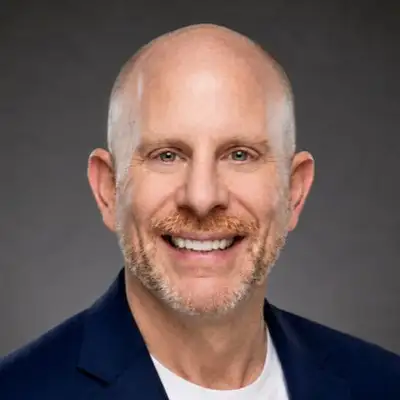
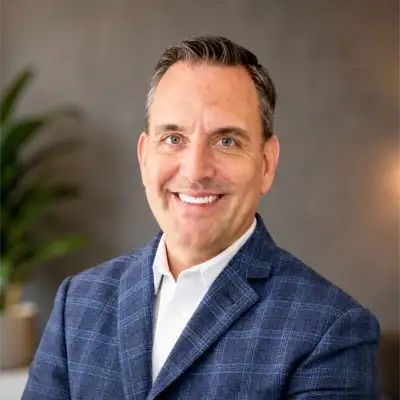
Your hosts: Adam Jay and Dale Zwizinski are co-founders of Revenue Reimagined. They didn't build a consulting firm. They flipped the fractional CRO model because strategy without execution doesn't move the needle. The questions they ask on air are the same ones they're solving inside real companies right now.
GTM Uncensored is the GTM conversations nobody else is having.
JACK SINEY (00:00):
The magic is in your company data. The magic going forward, the answers are in your company data. That's where the magic of AI is going to shine the light and help you be better. If you have a year's worth of data on your team, the magic's in there. Now it's the effort of going through it and connecting it and what does it mean and analyzing and normalizing it. That's where the magic's going to be found for most companies.
ADAM JAY (00:25):
All right, Jack, you are a multi-time founder, multi-time exits. I'm going to give you a question here that I want you to jump into. So we're going to call it Jumper SaaS, $30 million ARR SaaS company. Their VP of sales just told the board that performance variance between reps is totally unexplainable. Their top rep is doing 3X the quota of their medium rep. And you know the scenario, right? And no one can figure out why. They've looked at activity data, they've run coaching sessions, they hire the same profile, but nothing's helping other reps. You're in the room with the board. What's actually going on and where are you going to start to figure out what the hell needs to be fixed, man?
JACK SINEY (01:03):
Hey man, I love this. This is not negative. Sometimes you can interview our MBA school to ask you the question like, "Why is the thing round?" And now you get on and you're like, "I don't know. " This one I literally love.
ADAM JAY (01:15):
But this one you know. You know the answer here.
JACK SINEY (01:17):
This is my stock. I try to bring this up on any conversation you have. So it's almost like I said this. So I love this question. I think this is the most real world thing. So a little context, quick background. We've had tech now on the commercial side, CRM for about 40 years. So about the mid - 1980s, we started to put CRM and pipeline management and sales enablement and RevOps, these apps and Gong and sales, all this stuff. And if you research it, we are no better today forecasting and developing our team than we were 45 years ago. It is shocking.
ADAM JAY (01:53):
Probably worse.
JACK SINEY (01:54):
We are. I was going to say that. If you Google it, Google and ChatGPT at all tell you we're actually worse. We're five to 10% worse today public companies than they were when this started. So think about the millions and billions of dollars time and apps that are involved in this question. So there's two questions. One, I know you didn't ask, which is how do we hit forecast and why do we keep missing? And the second part of that is I have a team. This is a scenario you did. We have 10 reps or pro rata. Two or three of them are killing it. The others are average or below average. How do we get everybody to move up or at least make it more uniform?
ADAM JAY (02:29):
I'm the below average one, so fix me. Dale always tells me he sells more than I do.
JACK SINEY (02:33):
So I believe there's a core problem that we've been, and at FrontRace, one of the reasons we started, we've been measuring the wrong thing. So we know for a fact the dashboards we have in Salesforce, HubSpot at all don't matter. If it was the dashboard, everyone would get the goal. We do calls and pipeline and emails and outreach and all these KPIs clearly are not in. And so then what happens if you lead a sales team, we all know this, if you lead a sales team, the board or the CEO comes in just like your question says, "Why is Susan crushing the rest of the team?" Even though we have all this stuff, we make something up. We're like, "Well, Susan's just better at closing. She's more personable. She has a better demo. She's a better quote." We
ADAM JAY (03:14):
Totally - Better demo. No one knows what that means, but she does a better demo.
JACK SINEY (03:18):
Gosh. And so I would say this, that was a long-winded intro to your question. We believe, I believe, in our soapbox for running large and small teams. The difference between these two people are 20 small things. It's not the big things. Everyone knows the big things. Everyone knows the pitch and the pricing and the demo and their faith. Everyone knows that. It's 20 small things. And so the magic, I believe we're about to enter this dawn. Everyone talks about AI taking jobs and some of the scary parts of it. But we believe what AI is going to be able to provide is some insight to what are those 20 things? What are these 20 little things that make the difference? We've been unable to measure those most of those in years past because those are things like it's the order of things. It's the timing of things.
(04:04):
It's the gap between things. It's tonality. It's professionalism. There's a myriad of things we can dive into, but the short answer is it's 20 things that historically we've never measured or kind of said, "Oh, I don't know what that is. Susan's just better at that or Bob's just better at that. " And so we can deep dive anywhere you want, but that's the long-winded intro and assessment. I would say it's 20 little things. It's not the big things at all.
DALE ZWIZINSKI (04:27):
And I love that. I think there's a lot on the coaching side of the world. We are working with clients all the time, and I think one of the biggest skill gaps that is in the world is the leadership and the coaching styles that are happening between the sales team and the leaders. I don't have enough time for coaching. I hear that all the time. Yeah.
ADAM JAY (04:48):
But conversational intelligence fixes that, Dale. I mean, come on. Exactly. Dong, just dig gold, fix it. I mean, I won't say the G word, but there are so many leaders and we talk to them all the time. We were doing a discovery call, Jack, with a new prospect the other day and one of us, we always ask about coaching. How much time do you spend coaching your reps?
(05:08):
The answer is inevitably always the same. Well, I don't have to. I just listen to conversational intelligence. I just tell them to go listen to their own calls. That is not fucking coaching people.
DALE ZWIZINSKI (05:19):
And they have no PIP structure. I've talked to so many people that do not have a PIP structure. I don't get it. So how do you educate them through a process? Well,
JACK SINEY (05:29):
I think too, what happens too for companies, so many things I believe foundationally about how sales management, sales leadership is broken. And we're just being able to say it now that -
ADAM JAY (05:39):
Whole different show, but let's keep going. I like it. No, I'm here for it.
JACK SINEY (05:44):
Because the coaching piece is, here's what we do is in management or the board says, "Hey, we want to have constant metrics and constant measurables, but for people that are all different and for deals that are all different. So everything's different, but we want a standardized metric. We want standardized KPIs." And it's like, "No, no. Bob, you can't tell Bob to do what Mary's doing because they're unique and we want to lean into their strengths and not tell them to do the same thing." It doesn't work that way. The real world doesn't work that way.
ADAM JAY (06:13):
This is the difference and I use this term a lot. I post about this a lot. Are you a manager or are you a leader? Managers manage to dashboards and manage to numbers. Leaders lead people.
(06:27):
Whether you are hiring someone, whether you are terminating someone, whether you are pipping someone, whether you are talking to the board about numbers, you can't forget your job as a leader is not to lead numbers. If you lead people, the numbers will follow. If you try to lead numbers, people are going to leave.
JACK SINEY (06:43):
Totally agree. But in the intro part, it is shocking. We've all had this, whether the board or again, the CEO asked us the question, and it is shocking with all the tech, all the KPIs, all the system. To how you started the show, make up answers to this question and it's shocking that we get away with it. I've had big teams, they're like, "Why are they killing?" You're like, "I don't know. " We literally almost on the fly start to make up these very, very, very -
DALE ZWIZINSKI (07:08):
It's soft
JACK SINEY (07:08):
Skills. Subjective things. Yeah. Soft skills. It is. It's unbelievable that all these rev ops and all these sales systems are still in place and we still have very little concrete data to the question that you ask, why are those two people crushing it? Why can't we mimic it?
DALE ZWIZINSKI (07:26):
Jack, so I want to double click into exactly what you said about the 20 little things because we were just talking through that. What are three little things that you've seen over and over again? What are those actual behaviors? Let's just pick three of them.
JACK SINEY (07:41):
Yeah. So I think the context is everyone knows this. If you run a team, you go to your manual, whether you're in client service or sales, and you have a process chart. You hire a new person, they're good. Let's assume they're good. Forget you hire a couple dudes. We all do that. Got a good person. And you give them the process chart and you go, "Hey, these are our 30 steps, how we close the deal. Here's how we do this and then this, and then we send them an email, and then we schedule the demo, then we do the demo. We have 30 steps." And the reality is the sales process is normally double or triple that. The real sales process with reps, and we just don't have those boxes. And so the first thing we always talk about is what are all the steps?
(08:18):
And the problem is when you go ask your best people, they don't even know. They do a thousand little things. They send a little text after the basketball game, "Hey, Bob, saw your team won. Congratulations." There's a million things they do to build rapport, build connection, send an answer to a email or a text question in the middle of the night. There's so many things that are missed. And so one of the variables we do for companies is to not ask people when you start to connect, we can dive into this. When you start to connect the data in the systems, you actually let the automation, the AI automation will tell you what the process is. What's the real process? Not what somebody tells you it is. What are all the steps? And again, if you have a manual, it's typically, I'll just tell you it's shocking, double or triple what you have the boxes in your manual.
(09:00):
100%. You have to diamond. It's a question, yes or no. And then we go here and you're like, so even your best people, and this is why AI agents I believe are failing, when they execute against your process flow diagram, it's missing half the steps. You're tot wrong. And you're wondering why didn't shit out,
DALE ZWIZINSKI (09:14):
Y'all.
JACK SINEY (09:14):
That's
DALE ZWIZINSKI (09:15):
It. Jack, when I get into this conversation with CEOs, I always say to them, because they're like, "Oh, we have it all documented." I'm like, "Okay, so when you get up in the morning and before you go out the door, write down everything that you've done before you go out the door. They miss 20 little things. They miss, oh, I stepped out of bed. Oh, I brushed my teeth." They don't think about all of those little things that you're talking about. And it's the same thing in the sales process.That's
JACK SINEY (09:41):
A great analogy. Great analogy. So to me, it's what are all the steps? That's one, people greatly underestimate that and that's the human part. And that's why again, AI agents are really struggling. Two, your best people are typically doing that process completely in a different order. They move it around and they're doing Z is before F. And if it was A to Z, it's like, oh no, I'm doing T the second step. And you're like, you're doing T, we don't need to give them pricing. What are you doing?
DALE ZWIZINSKI (10:06):
What's T?
JACK SINEY (10:08):
Right. Your best people are typically doing it in a different order. So that's sometimes very shocking for management. A third one I'll give you, it's not just then what's happening in the order. It's the timing between events. So we've all had this, I'll give you analogy. LinkedIn, we've all had this. Somebody asked for a connection and then eight seconds after you say yes, you get
ADAM JAY (10:28):
The audition.
JACK SINEY (10:30):
You want to buy something? And we're like, oh my gosh. And so what's interesting if you study human behavior, it's not that they pitch right away, it's that you get the message right away. And so if you just let it breathe, so it's the process. How many steps? What order? What's the timing between the steps? Because it just feels different. You could say, send them three emails. Well, if you ask 10 people, one person will send them all the same day. One will send one each month. One will send one every other week.
ADAM JAY (10:58):
So let me pause you because you said it's not that they pitch right away, it's that you get the message right away. So I think we've all been there. We get that LinkedIn blank connection request, I accept it. And then immediately it's, "Hey, Adam, blah, blah, blah,
DALE ZWIZINSKI (11:12):
Blah, blah."
ADAM JAY (11:13):
Does it matter? Would it matter if that message came a day later? Would people still have the visceral reaction of you pitched me right away? I actually have, and I'll send it to you privately. I cannot share it on the show, but I have a meme that I send to people who pitch me right away. And it's like two men standing at a urinal and whatever. Would it matter if it was a minute later? Because I think we all expect to be pitched. Generally speaking, if some stranger connects with me on LinkedIn, maybe you're not going to pitch me, but I would say seven times out of 10, I expect you want to pitch me something. Do I care if it's not 30 seconds later? Do you?
JACK SINEY (11:52):
I would say for us, yes. I would say most people, the more time it feels better, but every business is different. And so Frontrace helps companies measure that because it's diferent. The 20 things that we talk about are different for every company and impact. Are you selling a $10,000 thing, a $500 thing? Are you selling an enterprise solution? Are you selling a one-off solution? Are you selling to the reps? Are you selling to the whole company? So all those things matter in the context of it. And then it depends on what the ask is. But we all don't like right away. And so then it's like, "Hey, can you stick something between? Can you give it a little time? Can you send me something personal between?" So those are all variables and every company's different, their own little organism. And so trying to identify those 20 things, the impact of them, what matters, what doesn't matter.
(12:39):
It's different for every company, every vertical, every product, every offering, every price point. And so we start to shine a light on those to give every company what are the 20 things for you that matter because it's going to be different between your company and the next company and for all those reasons I mentioned above.
ADAM JAY (12:54):
So I agree with everything you're saying. My question though, I want to play a little bit of devil's advocate. Managers are coaching the same reps day in and day out. Every single day Dale is managing the same nine people. He knows everything about them. Why the hell doesn't Dale or Billy or Bob know what these behaviors are? How do managers not know this?
JACK SINEY (13:18):
Well, I think it's a fair question. I would just say if you have kids trying to do it, we think we know our kids. And so if you've raised kids from eight through 18, you know somewhere in between you lost touch. Even if you're a goodwilled... I was a football coach for my son and my wife worked in their high school and still my kids got away with some things. You look back and you're like, "How did that happen? Where in my time? I was in the school. They did what? " They get in trouble. You're like, "No, not our kids."
ADAM JAY (13:47):
No, our kids are perfect.
JACK SINEY (13:49):
I just share that as analogy, but I think especially in the business world post - COVID, so much stuff that happened in the office that happened organically, maybe folks saw if you sat in a bullpen or the teams all sat at least near each other and some work function that was close to yours, you got to hear and see and share ideas and water cooler talk and blah, blah, blah. Well, most of companies today are maybe in the office part-time or never and teams are scattered. So when we used to hire a great rep and say, "Go shadow Dale. He's great. Follow him for two or threedays." Well, that' impossible. No one ever. Dale's in his home now. You can't send him to Dale's living room in Bradenton or whatever. So it's obvious to say we should know, but what our people are doing, particularly post - COVID, particularly at their house, particularly in a world that's more complex, more digital, it's really hard.
(14:37):
It really is hard. All the systems out there are good. It's no shot at Gong, HubSpot, Salesforce, but to connect them all and get down to a micro level and actually see the data points when and what's happening is very challenging. It's been very challenging for many, many years, but that's where the magic is. It's not the big things. Those Salesforce and Gong, they're great at capturing the big things. Did you mention a competitor? When did you bring up pricing? Well, great.
(15:04):
But if those were the things, everyone would hit gold. Your team would hit forecast. It's not those things. It's all the tiny little details. And so how do we start to both measure them? And I'll just say this, no one today has perfect data. No one has it. And so you start to lay out version one is here's your data and where the holes are. And do you care about the holes? And if you do, let's find a way to measure them. But sometimes you don't care. Sometimes you're like, "Hey, my people have face-to-face lunches. I'm not going to measure that. " Well, cool. You can decide that as a company. Where do you want to measure? What all you want to measure and start to make decisions based upon
ADAM JAY (15:38):
That. If you measure everything, you measure nothing. I do agree with that. But it's funny, as you're talking about the little things, I'm thinking of the little things that I do that to me are common sense to you as a great CEO or Dale or probably common sense. We have a CEO that we work with. He came from SpaceX. He is a huge SpaceX fan. He's also a huge car fan. So I saw the SpaceX launch. I texted him the other day. I was driving down the road and I saw a Ferrari that I know he really likes. I took a picture and snapped it to him on the weekend. And part of it certainly is to build that relationship, but part of it is it's a similar interest. But to me, that's second nature. I'm going to do that. What we don't realize, it's second nature to me might not be a second nature to Billy Bob down the road.
JACK SINEY (16:23):
This word will get you in trouble in management as a leader. That's common sense. Everyone does it. And you're like, my wife had a retail store and we went to a training for the free franchise and they used this example. You can hire a goodwill young lady to work at her store and tell her to clean the windows. But if you just go tell her to clean the windows and don't show her how to clean the windows, you might get anything. They might be streaks. They might be the only queen. You have to show them what it is because what's second nature and common sense for you? We all come from different backgrounds. Look at our political environment, look at the topics. You sing things online, you're like, the other person feels what? I don't want to comment to us, but whatever the other side says.
(17:01):
The other side you go - We are rated explicit.
ADAM JAY (17:03):
We could talk about
JACK SINEY (17:04):
Anything
ADAM JAY (17:04):
You want.
JACK SINEY (17:04):
You're like, "What's their position?" You know what I mean? And you hear it and you're like, "Are they even in the same universe that I grew up in? " And so imagine that in a business world where there's so many nuances of what... Look at all the sales, Sandler versus Miller Hyman versus Challenger Sale versus all these theories about what's great. And so it just gets lost in the wash. All the little details of the magic, I'll just share this because it can be very complex and overwhelming. The magic, Larry Ellison said it. All these AI LLMs are using open data. So whoever you love, Claude or you love OpenAI, it doesn't matter. The magic is in your company data. The magic going forward, the answers are in your company data. That's where the magic of AI is going to shine the light and help you be better.
(17:49):
If you have a year's worth of data on your team, the magic's in there. Now it's the effort of going through it and connecting it and what does it mean and analyzing and normalizing it. That's where the magic's going to be found for most companies.
DALE ZWIZINSKI (18:02):
100%. And let's shift a little bit and talk a little bit about activity intelligence versus outcome data. And so I would love for you to give us a real life example of a company that changed something based on activity intelligence that you saw and got a measurable result out of it. I guess the first thing is describe it for us. And then the second is how do we measure that?
JACK SINEY (18:28):
Sure, sure. The easiest process for people to relate to are things to stop doing. Because no one purposely screws up their deal. No one goes, "Today, I'm going to lower the probability that we close this deal." No one does that. We're working hard in goodwill. And so I'll tell you one example that I've mentioned a couple times, which is we had a client that as we analyzed all the micro data, blah, blah, blah, when they sent a seventh text, so their CRM was able to monitor. When they sent a seventh text, they never won a deal. That was it. So the reps in today's remote world -
ADAM JAY (19:05):
Interesting.
JACK SINEY (19:05):
I don't want to bother you. Pick up the phone. No one's in the office. I don't want to call your cell. It's a real challenge. You go to market, everyone knows this. People do a lot of texting. And so for one company we have, when they sent a seventh text, they never won a deal. That's
ADAM JAY (19:19):
The point of annoyance.
JACK SINEY (19:20):
That was it.
ADAM JAY (19:22):
Interesting.
JACK SINEY (19:22):
Over. And you're like, so then you obviously want to talk about one to seven, so you better use those very discreetly, but it's a great example. And so those things are really much easier for us to measure.Because winning looks like a certain thing. Winning has a certain set of characteristics and we always focus on that. But I'll just tell you this, losing is easier to fix because you say, "Just stop doing this. " We have companies, every time you log into this system or try to use this functionality you pay good money for, you lose the deal or your win rate. We've added this thing about how to do outreach or texting or the automated email. You like, you know every time your people use that system, your win rate goes down 6%. You're like, "What? Yeah, yeah. You add that to your thing three years ago and every single time you're going down." And people are like, "What?" And so losing also has a set of traits that are typically uniform.
(20:15):
And so how do you stop doing... Hey, every time you send that PDF that talks about a competitor or a certain functionality, those deals have a lower probability of closing. You're like, "Get rid of that. Get rid of that document." And so again, going through those things that again, no one purposely screws up their deal, but the ability quickly to go, "Let's stop doing these three or four things," can have a dramatic impact on what companies do.
ADAM JAY (20:42):
Here's something I keep seeing with sales teams I work with. Generic sequences don't work anymore. We've all gotten so good at turning out the noise that even your own buyers are ignoring you. The problem isn't your reps. It's that your sequences are static and your signals are somewhere else entirely. That's why our clients use Nooks. And the thing that stuck with me is that their sequences actually stay fresh because the signals update them automatically. Right buyer, right moment with no manual babysitting. If your outbound feels like it's shouting into a void, go check them out at nooks.ai/bridgethegap. Dell and I talk a lot about shit in and shit out, right? Whether it's AI - Garbage, garbage out. Whether it's data. So two questions. How do you make sure that Frontrace isn't just servicing garbage faster? And then tying to that, what are you actually seeing and doing that other tools are missing?
(21:40):
Why FrontRace?
JACK SINEY (21:41):
Yeah, no, it's great. I think the magic of Frontrace humbly is I like to describe it as almost like a layer on top. Almost like if you're pouring paint over top of a flat surface, there's a lot of holes and stuff like you tar over a road. We're like a layer that goes on top of what you have. So for companies, we don't want to replace anything. We tried to build this company, the solution I always wanted, which was don't pay us upfront. Let us give you some results before you ask for a dime. And so keep what you have. If you have AI pilots, whatever you're doing, keep doing it. Don't stop it as you're doing it. We're going to come in and it's like a little layer on top. We're going to connect your data, which we have a history on it, normalize the data.
(22:21):
So an Apple in your CRM is an Apple in your bidding system, which is an Apple in your video conference system, whatever you call it. So normalizing the data. Then we're going to put the process flow together. Most companies ask, they go around and they ask the employees 10 times, ask the best people. Who's your best person? Bob? Let me go ask Bob what he's doing. Let me sit with Bob for three days. Let me look at all this stuff. I don't bother any of the people. When we connect the dots, we have a piece of AI that automates what the process flow is and documents it. So we're not going to ask anybody. And then we give the details back to the company. So is anything perfect? I would never say FrontRace is perfect, but what's great about it, it's the raw data.
(23:02):
Here's what your people are actually doing. Now you may not like it and it may not be pretty and it may not be what you think it is, but here are the facts, good, bad and ugly of what your team's doing. And so I think those are unique variables. So going to your question of why FrontRace over other things, there's some things we have developed, we believe, proprietary that AI is amazing, but we all know this. AI hallucinates, AI drifts, it'll make stuff up and it doesn't like it. And so when
ADAM JAY (23:29):
Doing - AI says Dale's great. I don't know what the hell.
JACK SINEY (23:33):
I agree with you. I agree with AI. Yeah, perfect. That model's good. It's the Dale model.
(23:40):
I just want to take one step back. On the tech side, what AI is doing is amazing. It can code and create things. I'm not on the tech side, so I want to set that aside. But on the commercial side, there's a lot of variability. And so what I mean by Mark Cuban said a couple days ago, if you ask the same question with the same data in different LLMs, you'll get at least two different answers every single time. And if you push back on your first answer, it'll completely change its answer, which is bad. That's really bad. And so if you're going to say, I'm going to base my job and my team's hiring and the forecast we're going to do based upon it, that gets scary if the answer's always going to change. And so FrontRace, we developed a couple of modules.
(24:18):
We believe keep the AI lets you do complex queries because you can do a basic query like, who was my top rep last month? That'll come out fine. What were the number of demos we did? It's fine. It'll run those. But if you say, who was my top rep last month? Who had the most demos and the most call minutes? When you start to get three or four variables, it gets very challenging to keep the AI on point every time. And so the way we have this thing called the metric engine, which we measure items, put flags in the sand so those data points are the same all the time. So the AI stays aligned for each query. It doesn't just allow it to go every time, go net new, and let me just see what I come up with today because Monday's diferent than Tuesday and I feel different.
(24:58):
So we have a metric engine and this time machine where we monitor those variables over time to keep the analytics in order. And so those are some unique things that we do with the data and for companies that are really unique and have helped them leverage AI and actually put solutions in that work today. But also the key is the things we use today in the AI world are going to be obsolete a year from now. If we keep up the same rate of improvement, you don't want to commit today's AI is going to look like AOL. It's going to look so outdated very soon. And so you want to have an analytical foundation that allows you to plug in one solution today. This is working for us. We like it or it's not. And then when the next thing comes out six months or nine months from now, you're able to take that thing out, plug a new thing in and still analyze.
(25:46):
Is this good for us or is this not good for us? And so that's what we want to do for companies. Tell them what's happening, normalize their data, tell them their process flow, and then give them a foundation to analyze what's happening in their company, good or bad as they change different solutions as the technology continues to evolve. And so those are some of the unique things we try to help companies with.
DALE ZWIZINSKI (26:07):
I think some of the biggest challenges people are having is just the amount of data. And it sounds like a lot of what you're doing is making it digestible and as you're saying, normalizing it. Because I think when I've talked to a lot of the revenue officers and CEOs and just people in general, they don't know where to start. They have so much data, they get super freaked out. They're like, "Where do I start?" And so I like the normalization of the data because I think that's interesting. We have a client that uses HubSpot and Airtable and it's a complete... It's crazy because they're using HubSpot for one thing and Airtable as their source of truth and it gets super messy because data's getting dropped in the middle and it gets really difficult. As we're going through AI and creating AI as a multiplier for these behavioral patterns, what are two or three items of data?
(27:01):
So we talked a little bit about, hey, the seventh text you drop off very quickly. Or what are a couple of data points that people would not realize that are creating challenges in their GTM or revenue process that we couldn't see even two years ago?
JACK SINEY (27:20):
Yeah, it's a great question. My immediate answer, I would default into what we talked about earlier, which is the order and timing of things we believe has
(27:27):
Biggest impact. But one of the unique parts about AI, the following's going to sound, I realize big star one's going to sound pithy, but has really been much more accurate with AI and will continue to get better which is measuring the soft skills involved in sales, which is tonality, professionalism.
DALE ZWIZINSKI (27:47):
Can AI really grab tonality yet? I haven't seen it do very well on it.
JACK SINEY (27:52):
Yeah. So what's really interesting is that we have a series, probably about 20 of these subjective quality type metrics. And so from our perspective, our viewpoint on this
JACK SINEY (28:05):
We try to tie it to, did they win? A lot of people were like, Bob was very professional and Mary wasn't. Well, I don't believe that's the right context. The context
DALE ZWIZINSKI (28:17):
Is the wrong question.
JACK SINEY (28:19):
Right. Did they win the deal? Because professionalism in New York is very different than professionalism in Montana, which is very different than professionalism in Georgia.
ADAM JAY (28:29):
Adam curses on most of his sales calls. Jennifer doesn't, but who is Adam talking? We could be talking to a totally different persona.
JACK SINEY (28:36):
Right. And so we try to measure those things in, does it result in wins? Not any training program, not, "Hey, we were trained in Miller Hyman and this is how they do it. " No offense to Miller Hyman. I don't care. Did we win? When Adam curses, we win and when he doesn't curses, we lose. Well, hey, let's set. And then what territory is that?
ADAM JAY (29:00):
But Jack, let me ask a question though. When Adam curses, he wins, and when he doesn't, we lose. Doesn't mean that when Dale curses, he wins. And when Dale curses, he loses. It could be the exact opposite based on personality.
JACK SINEY (29:10):
Amen.
ADAM JAY (29:11):
To your point that you said earlier, just because it works for Adam doesn't mean it works for everyone else.
JACK SINEY (29:18):
We have been unable, going back to earlier, you said, "Hey, why couldn't we measure these things earlier? Why do these things get missed?" Well, the reality is when you think about the company wants certain metrics and KPIs and measurables. We've got all these systems, we want to measure stuff. The reps are all different based upon their personality, where they were, their experience, their training, their age. And then every deal is different. How much money they have, how many people they're going to deploy to, what region of the country are they in, what vertical they're in. So those are three major variables, three major sets of variables, and they're all moving all the time. And so then we want to just place a straight line and go, "Here's how we do every deal." And you're like, "No, no. Adam curses like a sailor and that works for him." And Katie is sweet Mary Poppins and never curses and talks about how to bake bread, sourdough bread, and that works for her.
(30:07):
Well, great. Well, then we have to go back to your point earlier. We have to coach them that way. We have to emphasize certain things. We have to realize that we can't tell Adam to stop cursing and talk about sourdough bread and tell Katie to stop talking about sourdough bread and start cursing. It doesn't work. But it sounds ridiculous and we all laugh about it, but that's what we've been doing for the last 20 years, haven't we? We're like, "This is how we do it here. This is how we do it in X corporation. This is what we do. And so you follow this training and it's like, no, no, that's actually not great."
ADAM JAY (30:36):
And you have to be able to find it. And that is the Monday morning move. So we have this thing on GTM Center called the Monday Morning Move. What takeaway can you take from this show and actually put it into play Monday morning? So what's the unexplained gap? Find the rep on your team who's hitting quota. No one could explain why. Don't look at their numbers, but look at their actual week. What are they doing Tuesday at 9:00 AM that the median rep isn't? What are they saying that's different? What's the one specific behavior that you could then try to triangulate and that's your playbook right there? But you got to remember you have to tie it back to that specific rep. But if you can't find it and can't answer that for every single rep, that's the gap. Agree or disagree? Prove me wrong.
JACK SINEY (31:19):
I agree, but don't ask them though. They're not going to be able to tell you. You have to send somebody in or use automation. No,
ADAM JAY (31:25}:
No, don't ask them. You have to go look at their week. You have to go figure
JACK SINEY (31:29):
It out. Right. The person in 3X comes in. We all do this. Oh, Mary, you're killing it. Can you come train the team? Mary comes in and does an hour long training. No one knows what she said. They think it's
ADAM JAY (31:37):
Ridiculous. Nothing changes.
JACK SINEY (31:39):
Right. She can't even articulate why she's doing it. So you have to really invest and do it. And I'll bring one of my other soapboxes, which is, listen, people are so rushing in to do AI right away. They're like, oh, I'm going to fall behind. I'm going to fall behind. My biggest encouragement to people Monday morning feedback would be stop rushing into AR, get your house in order, get your data in order, understand your process is what you said. Get your house in order. Then once you said garbage in, garbage out. Once you have a great handle on your data, your process flow, then you can start to plug AI. But if you just stick an AI agent on a process, you'll understand with bad data. It's not going to work. You'll be in a worse position. You're going to sell less and you're going to be frustrated and be like, AI sucks.
(32:20):
It's not any good. It's like, no, no, no.
ADAM JAY (32:24):
Not the AI that sucks. It's your stuff that sucks.
JACK SINEY (32:26):
Right.
DALE ZWIZINSKI (32:27):
Totally.
JACK SINEY (32:27):
100%.
DALE ZWIZINSKI (32:28):
But you don't have a process. You haven't built foundation. This is an age old problem from the get. Forget about AI. Your GTM strategy sucks because you never built the foundational elements to make it successful. Let's just call it what it is. Let's jump into - It's
JACK SINEY (32:44):
Okay. In the old days, the human beings would fill the gaps. And now if we try to automate, there is no... The human intuition, the human, you know what I mean? With makeups, hey, the company trained me for this, but this is what we really do. That thing of this is what we really do gets lost if we don't fully understand it.
DALE ZWIZINSKI (33:00):
Yeah, I love it. I love it. Let's jump into our uncensored questions a little bit. Let's get a little bit down and dirty with some GTM stuff. One question every CEO should ask if their GTM is broken.
ADAM JAY (33:13):
So I think Dale, what you're trying to say is one question asked to know if their GTM is broken?
DALE ZWIZINSKI (33:18):
No, one question that the CEO should know to ask if their GTM is broken. What's that question that's in their mind?
JACK SINEY (33:26):
It seems like a very multi-threaded question. So CEO walks into head of sales or somebody on the business side and says, "Hey, our go - to-market is broken.
ADAM JAY (33:36):
Why?" And just stops there.
JACK SINEY (33:40):
Why Josh?
(33:41):
But the go - to-market could be very broad, and so it's hard to pin that down because it could be, are we lacking at the top of the pipeline? We don't have enough leads. Is it like when I look at it, that looks fine, but midway through we drop off or just the end our sales stink? You know what I mean? And so I think following that question through, it's going to be at least those three buckets, maybe probably more, but it's very different if it's the top of pipeline, we don't have enough leads. Or, hey, while we're in it, not enough, make it through. Or, hey, that all looks good. We got a bunch of leads, a pipeline's good, but we're just not selling this quarter or this year. Those would all result.
DALE ZWIZINSKI (34:15):
And it could also be on the retention side. You may be selling a bunch. Your NRR may be great, but the GRR is not good. So you're not renewing customers. So there are multiple things in that thread. And I think it depends on what your goals are as well because I think the other thing we don't do well as organizations is set a goal for the GTM organization and make sure everyone's going towards a north star. And I think that becomes a lot challenging. That becomes very challenging for organizations as well.
JACK SINEY (34:47):
Well, too, by the way, if it's retention, go talk to the product team, get out of my office. That's not my problem. People don't like that. You're going to get down on a tangent. Let's go.
DALE ZWIZINSKI (34:58):
It could be your sales team selling into the wrong ISOP.
JACK SINEY (35:02):
No, you got it. Yep, totally good.
(35:06):
In grad school, they give you this book, something about operations. I forget the name of it. Almost every MBA program. And they move the bottleneck. The whole point of the book is they move the bottleneck. And I think the same thing happens a lot of times in go - to-market. It's like we'll fix one part and then the next part gets busted or can't handle the volume. And so it's very important, I believe, for companies, what is the exact question? Is this a lead gen, top of the funnel? ICP, we're selling to the wrong people. We don't have enough volume. Is it our process we don't demo right or we manage, we don't price it right? Or is it at the end we have the right contract? Those are really different problems and issues. And if you think one's the problem and then solve for the other one, it could get really complex.
(35:46):
So identifying where is the bottleneck? And typically when you fix one part of it, it will then illuminate another issue in the entire go -
DALE ZWIZINSKI (35:54):
To-market process that we should work on. It's like the toothpaste problem, right? You squeeze toothpaste on one side, it goes out the other side. If you close that side, it has to go somewhere.
JACK SINEY (36:02):
All the time. All the time.
ADAM JAY (36:04):
Let's go to uncensored question number two. And this one's a little, not much, litle controversial. Curious your answer. Currently, what's the most overrated metric in sales performance right now? Where are sales leaders and CEOs saying, "This is where to focus." That is like, dude, that is so low on the radar of shit you should be looking at.
JACK SINEY (36:25):
I love this question. I love it. Ready? I would say it's going to shop people. Your pipeline, size of your pipeline. Think about
(36:33):
Me more. Think about this. For years, we tell the AEs whose job it is to have a big pipeline and to make sure it looks a certain way. They manage their own pipeline. How many AEs, how many salespeople have fortitude enough to close a big opportunity that they worked really hard on and had great momentum? That almost never happens. They just keep kicking the can down the road. I just changed the people. And so
(36:57):
One of the views of data we give, it's very illuminating, is taking a deal and you see all the activity on it over time. When you start to see the activity, you can actually see this deal is dead. You can see there's a lot of activity and then it died and now we're just sending emails and attempts checking in. Right. And then you look at the pipeline, "Oh, we changed. The value went up, the value went down, the value went up, the value straight." And then, "Hey, the close date has changed here, here, here. We keep moving it out. The probability was closed. It was 90. Now it's 70, it's down to 50. Up, back to 60." Most companies tell the sales rep to manage their pipeline. Are you insane? That's one of the big things that AI can also start to automate for you and give you insight.
(37:40):
They use manage their pipeline. And imagine if you had a digital assistant that's also managing the pipeline will give you an accurate number based upon that rep, legacy company deals and how a deal's really closed. To put a real probability and a real close date on your numbers can be really illuminating. But the whole just let the sales rep do their pipeline is ridiculous.
DALE ZWIZINSKI (38:03):
I love that answer because I think it is so true. We have this balance of 4X and all this bullshit and you're creating numbers just to make numbers up. Okay, next question.You've had seven exits. What's one thing you got wrong on your first exit that you actually got right on your last one?
JACK SINEY (38:25):
Gosh, my star to my answer is exits are challenging because everyone's looking at the side of the elephant and they're all looking at the elephant, but depending on were you a founder? Are you an investor? Have you been at it 10 years? Are you at the end of the road? Are you just taking over? And so you do learn. It's a great perspective. Each deal you try to improve and take what you... I'm not going to do that again. And so our second exit, we thought we were working on, "Hey, let's have some overlap. Let's not have it be so sudden there. First one we're there and then we left and then let's have some overlap." But I'll just say the overlap wasn't great either. So the old, the new. And so the exit process is amazing. Most people build a company, eventually they get tired or you're moving on or you have a new idea, you want to do something.
(39:20):
It's amazing. But that process, that's why most mergers and acquisitions are really challenging. Trying to merge cultures and companies and people is really, really, really tough. And it's not right or wrong, but again, everyone looking at a different side of the elephant has different viewpoints of what they want and what they value. And I'll just say that dynamic is really challenging. My best advice is probably a clean cut. You're like, "Hey, you all God bless what you did and here's where we're going to go forward." The overlap part, especially at the higher you go is really tough to align.
DALE ZWIZINSKI (39:58):
Brad, because there's no egos up there, right? You have no ego up at the top.
JACK SINEY (40:02):
Amen. Amen. Big thing.
DALE ZWIZINSKI (40:04):
Zero.
ADAM JAY (40:05):
Zero ego.
JACK SINEY (40:06):
So follow it.
ADAM JAY (40:08):
What tool?
JACK SINEY (40:09):
No comment.
ADAM JAY (40:11):
No comment. No comment. What tool processor system other than Frontrace has done the most across your career to actually bridge that revenue gap and why? What's accelerated revenue in the orgs you've been in? What's the one thing if you were talking to someone who is striving to achieve seven exits, what's the one tool processor system that's going to help them accelerate?
JACK SINEY (40:35):
Yeah. So my two-part of the answer is pre - COVID, it was definitely some of the automated outbound call systems that could have an amazing impact on your ability to reach people and talk to people. Some of these connect and sell type of... It'll automatic dial. They're so amazing where they would clean up the number, dial the number, and you could literally go through an enormous number of connections really, really quickly. And that was an amazing tool to help us. You couldn't do it all day, eight hours a day. But when you're trying to hyper-focus to build pipeline or reach people, amazing tools, those still exist today. They would say they're still super productive. They are. But we all know now most people are not sitting at their desk. You're now again that those numbers are typically someone's cell phone. No one likes being pinged on their cell phone impromptu with a solicitation.
(41:26):
It can be super choppy for most people. So to me, the value in those have changed. So to me, we're in this transition period of what is going to, you guys probably live to see it a lot. What is the new go - to-market top of funnel outreach mechanism that works for you? And maybe that's text, maybe that's LinkedIn, maybe some of it's still email, maybe it is calls. But I think one of the reasons the economy and companies have not kind of almost restarted the engine post - COVID, it's really a blank slate I have not seen. Maybe you guys, pre - COVID, it was calling. You knew if worse came to worse, you could call.People were in the office, you could reach people, whether they were annoyed or you were annoyed, you could at least knew you always had that as a foundational go back to.
(42:12):
Right now it seems really vague. And depending on what company you are and what market you're in, whether again, text, email, LinkedIn, calls, it's really challenging. AI automation, all these tools that'll fill your ICP and make you feel you have more complete day. It's tough.
DALE ZWIZINSKI (42:30):
I think if we go back to the original where people lived was always introductions and getting lead introductions from other people and figuring out a better way to get hot leads through introductions of other people. Because people are ignoring so much of what you were just talking about, the email outreach, the phone calls, the texts. I get cold texts on my phone all the time. How do you even get my number? And so I think where we're seeing the most value and push today in go - to-market is the warm introduction somewhere. And a lot of our companies that we've been working with put programs in place just for that advisor's advocacy. They call it all sorts of things, but that warm leads strand is probably the fastest way to drive revenue.
JACK SINEY (43:24):
Yeah, I know. Yeah, I totally agree with that. Yeah, I think one of the unique parts about AI would be AI in the commercial side is going to... Not yet. We're not ready yet, but I believe over the next 10 years, think about most outreach teams with this. Reach out to a hundred people, 30 you actually get ahold of. 15 you can actually talk to or have some back and forth. Of that, maybe you book five. There's some number. It's like 100, you get 20%. We've been doing that for decades in sales. Reach 100, reach out to 100, get 20 or 30. Of those, talk to 15. Hopefully five agree to look at your stuff. Some number like that, whatever your numbers are for your company. I believe AI will deliver one day, not yet.
(44:03):
You not get to reach 100. Imagine if you only reached out to the 30, 30 that were actually, you had the best, you knew that they had the right signals, they were in your market. That be the magic I believe AI can deliver for companies where I don't have to contact 100. These 70 are wasted anyway. They're not interested. They don't care. But with AI and as people have more signals and we leave more trails along what we do on the internet, well now, hey, just reach the 30. Those are 30. Those are in your sweet spot. Get the 30 and focus. That will change what we do and go to market. It'll change how we outreach. It'll get rid of this volume thing and let us be more targeted one day. We're not there, but I believe that's the future promise of AI marketing.
DALE ZWIZINSKI (44:42):
We made this last unsensed question very easy for you. Dream vacation destination. And don't say Houston.
JACK SINEY (44:50):
No, don't come to Houston. Anywhere with a warm beach, tropical, South the Caribbean, that is my sweet spot anytime.
ADAM JAY (45:01):
I love it.
DALE ZWIZINSKI (45:02):
Beach
JACK SINEY (45:02):
Lady.
ADAM JAY (45:02):
Jack, thank you so much for joining the show. Where can we direct people to learn more about FrontRace?
JACK SINEY (45:07):
Sure. Easy. Frontrace.com, F-R-R-O-N-T-R-A-C-E.com. In the upper ready to join the race, we'll actually do a free pilot for you. Or you can actually find me on LinkedIn. I'm there almost every week. My last name, S-I-N-E-Y, Jack Sime, ping me on LinkedIn and we'll connect there as well.
ADAM JAY (45:24):
Awesome, man. Thanks for joining the show.
JACK SINEY (45:26):
Thanks so much.
DALE ZWIZINSKI (45:27):
Thanks for joining the show.