Subscribe
Share
Share
Embed
The podcast for high achievers who want to stay sharp, focused and full of energy despite their diagnoses. Those who know there has got to be something better than simply accepting decline.
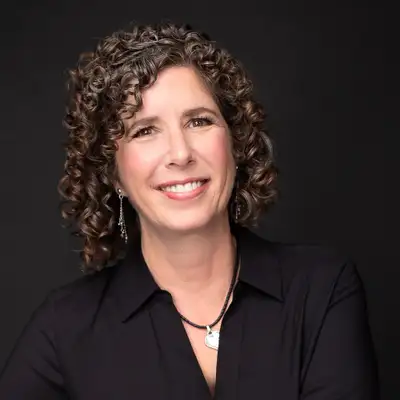
Hosted by Julie Howton, a National Board Certified Functional Medicine Health Coach who used to suffer from crippling Rheumatoid Arthritis until she learned the tools and strategies to take her power back from autoimmunity.
In this podcast, Julie brings you interviews with thought leaders in the Functional Health and Wellness space. You will get actionable recommendations to Take Your Power Back and catapult your health. No fluff, just concrete, useful steps to improve your health!
You get the feeling of a glass
ceiling, you have reached the level of
understanding on the conscious level and
you cannot kind of move further than that.
You understand everything but you feel
like you cannot really do anything
about it, where you understand that
your subconscious mind needs attention.
You are fine on the conscious
level, but subconsciously,
you hardly can fix anything.
Where the state of mild trance during
the RTT session, there are only
two ways to reach subconsciousness.
It's through psychedelic and hypnosis
is the mild, safe, legal side of work.
Welcome back to the inspired
living with auto immunity podcast.
I'm your host, Julie Michelson.
Today I'm joined by Esther Katz, a
former CMO for deep tech companies, who's
raised over a million, a hundred million
dollars throughout her stellar career.
However, her deep understanding of the
mental health and necessity for quick,
impactful results led her to transition
into Rapid Transformational Therapy, RTT.
Esther combines her business acumen,
coaching techniques, and Therapeutic
expertise to help individuals
overcome emotional and psychological
barriers, delivering fast and
transformative results through RTT.
She takes a particular interest in the
mind body connection with ongoing research
into the link between developmental trauma
and the onset of autoimmune expression.
In today's conversation, we are diving
into RTT and the connection between
the subconscious and autoimmunity.
Esther shares how RTT works
and incorporating it into your
healing journey can create
significant improvements in health.
Esther, welcome to the podcast.
Thank you so much for having me, Julie.
I'm so excited.
I am as well.
I, I'm so excited to share with
listeners what you're doing.
Um, and I would love for listeners
to get to know you by hearing
more about your stories that
literally everybody I interview.
you know, didn't think when they were
younger that they'd end up in the wellness
and healing space, um, or they thought
they would be a, you know, traditionally
trained doctor and then they shifted
to the functional medicine world.
So please share your story because I
know that, you know, your, your past
life, so to speak, this go round though,
was, um, more in the, in the business
space than in the healing space.
Yeah, well, you know, what's interesting
is that, um, I actually, um, did want
to end up in, in the medical field.
Uh, I remember when I was about
six to seven years old, I got my
hands on the book about plague
and other infectious diseases.
And that was my favorite
book for like two years.
And my parents were absolutely thrilled.
Horrified.
And here I am, you know, working
with a life changing diagnosis.
Um, uh, almost, uh, yeah, for 40 years
later, um, I didn't want to be a doctor.
It didn't happen.
And I made a career in marketing
technology, marketing, blockchain.
And I worked in this space for 20 years.
At the same time, my passion for.
healing cure medicine in
all its shape and form.
Um, you know, never left me.
So I did a lot of self
education and self study.
And then about 10 years ago, several
events in my life led me to have
a, um, you know, a mental disorder
and, uh, I experienced very heavy
anxiety and, uh, panic And, um, that
led me on the journey of discovery
of the healing for these conditions.
Nothing really helped me.
Medication was not really helpful
and I didn't want to stay on
meds for a long time anyway.
So I tried every existing modality
until I very accidentally clicked
on the link on Google search
and I have my first RTT session.
RTT is rapid transformational therapy and
I am a rapid transformational therapist.
And as a lot of us, how we come to this
modality is by experiencing it as clients.
My therapist at that
time, she's retired now.
Um, she managed to find a way into
my subconscious and help me and
guide me to completely eliminate
my panic attacks that were already
very debilitating at that time.
And I was almost house ridden.
I couldn't leave the house
without the and I am eight years
panic attack free, no anxiety
and
happy and striving and Yeah, you
know, you could call it a miracle of
healing, but this is what happened.
And then I, you know, I researched
RTT and I went to study, took
me two years to graduate.
I graduated, um, on a personal one on
one course with Marie, Marissa Peer,
who is a British therapist, the creator
of, uh, Rapid Transformational Therapy.
And, um, I retired from my
tech job in Congratulations.
And, uh, my therapy and neuroplasticity
coaching practice is what I do full time.
I love it.
I'm so happy for you and so excited
to share this modality with listeners.
Can you give us a little bit of
like, what is RTT and how is it
different from traditional talk
therapy, you know, psychoanalysis?
Um, cognitive behavior, you know,
throw out any of the kind of classics.
Um, how, how is it different
and how is it maybe similar?
Um, very similar and very different.
So what Marisa did is she, um,
she was a therapist for 30 years.
She worked in LA.
She worked in London and she learned
every modality and what she did.
And she, she, she's very vocal about it is
that she, she created the hybrid method.
Hybrid method that is based on the
notion that the subconscious mind
drives 85 percent of our mental and
emotional life, but it's also the
most unapproachable part of our, you
know, mental and emotional activity.
It's that, you know, the conscious
mind is the tip of the iceberg, is
15 percent to 25 percent different
sources give different numbers.
And then 85 percent is below the water.
And this is what we don't see, we
don't feel, we don't think about
it, yet it's the limbic system.
It's the ancient part of
our brain, and it's the most
powerful force in a human being.
And Marisa always believed that.
Power within is the ability to heal
and to cure, and that a human being
is able to connect, to activate, and
to heal whatever condition they have,
physical or mental or emotional.
And with years of practice, She learned
from her clients what works what didn't
and she created a modality which is
an independent modality acknowledged
by you know every organization in
the world and This is what I learned.
This is what I practice And I use rtt
in my coaching sessions what I call
neuroplasticity coach which is using the
ability of brain to create new neural
connections You new habits, new beliefs,
and change the life through this way.
Yes.
That's amazing.
I love it.
I, I, you know, we have had
episodes on neuroplasticity.
We, uh, many of us highlight often the
importance of the mind body connection in
creating illness and in creating wellness.
Um, and, and so I love, because
also RTT is pretty fast, right?
Like it's not something that takes
10 years of like heavy work, is it?
That's a very good point.
And this is probably the difference,
the key difference between RTT
and other types of therapy.
Is that we don't believe that
it is necessary to be in therapy
for years to fix an issue.
And see, that was also a
problem for me as a client.
I remember working with my therapist
who was amazing, absolutely incredible
and helped me a lot, but at some
point, this is what happened to me.
And this is what happened to every
client that I have seen so far is that.
You start you get the feeling of a
glass ceiling you have reached the
level of understanding on the conscious
level and you cannot kind of move
further than that and You understand
everything but you feel like you cannot
really do anything about it and this
gap This is where you understand that
your subconscious mind needs attention
You are fine on the conscious level,
but subconsciously, through talk
therapy, you hardly can fix anything.
And this is where hypnosis or the
state of mild trance that we put our
clients in during the RTT session,
this is where it comes very, very
handy because, you know, there are only
two ways to reach subconsciousness.
It's through psychedelic and hypnosis.
Hypnosis is the mild, safe, legal
side of work No matter where you
live.
Yeah.
Yeah.
And, and, um, thank you for bringing
that point up because I think that is
part of the You know, a key, right?
Like you said, it's back to that
iceberg of, I, you know, I, I get this
visual of somebody can, you know, go
to their therapist weekly for years
and years and years, but you know,
it's, we can't think our way out or
plan our way out of things that are
being driven by this subconscious mind.
Um, and, and so I'm glad that
you highlighted that using
hypnosis is is the tool you use.
To with your training and techniques
to allow people to create real change.
Yeah.
Uh, you know, just yesterday I
had this, this new clients and we
were talking about how she came to
the decision to try RTT with me.
And, you know, he's been in therapy.
He knows the issues with his mother and
his grandmother and his dad left early,
you know, adverse childhood experiences.
And, um, he knows all that, but it doesn't
help him to move one millimeter from
the state of anxiety and social anxiety
and inability to speak up for himself.
It just doesn't.
Alga, you mentioned adverse childhood.
experiences, which I believe everybody
has, but, but how do they, and maybe we
can play with the difference between,
you know, somebody that, that ends up
fueling autoimmunity or chronic illness
or mental health challenges versus, you
know, Those who don't seem to have a
negative impact on their life from it.
But, but what is this connection
between adverse childhood experiences
and autoimmunity, for example?
So, you know, what is the
adverse childhood experience?
There are levels to this.
You know, having a distant mother
is an adverse childhood experience.
Having been sexually abused is also
an adverse childhood experience.
Of course, If a person has a combination,
and most people do have a combination,
not just one, and the more ACEs a person
has, so people with 4 plus ACEs are 2.
5 times more likely to
develop autoimmune diseases.
This is the CDP research, as you know,
it was launched, I think, in the end
of 90s, around 2000s, and they have
researched thousands of people, and
this is the conclusion they came to.
And it's very interesting how
this research was launched.
It was initiated by a physician
who was running a, um, um,
um, weight loss claim, right?
And he noticed that there were certain
clients that would lose weight while they
were in the program, but then they would
gain weight back very, very rapidly and
he could not understand what was going on.
So he started doing in depth interviews.
And during those in depth interviews,
he noticed that every person who
had the rapid weight gain, uh,
they had been sexually abused.
So he thought it must
have been an incident.
So he started talking to
other weight loss clinics.
They started doing the research and they
discovered the same correlation, and
then they brought it up to, you know,
on the, um, state level, on the federal
level, and this is how this research
was launched, and it proved the fact
that there is a very strong correlation.
You know, uh, let's say military, active
duty military, um, one unit, three
officers or soldiers can be in the same
dramatic event, yet, um, Two will survive
it with no particularly serious PTSD, and
one person will be very, very traumatized.
And when you go back into the childhood
experiences, it's guaranteed that
this person had a number of ACEs.
And I want to point out for people
that aren't familiar with ACE,
um, at which it's easy to find.
I mean, you know, we can, you can just
Google it and you'll see the list.
Not everything has to be
that capital T trauma, right?
You know, not everything is
something that you're even again,
back to aware and not aware.
Take care.
You may not even be aware that, that,
you know, some of your childhood
experiences are under the surface
driving what's happening in your life.
Um, and, and so that's kind of
that difference of, you can have a
number, a number of them that didn't
necessarily feel like conscious trauma
when you were a kid, you know, so it
is, it is a really, um, useful tool.
And what I love about what
you're doing is cause the, the
understanding, like you said,
something only, you know, that's great.
That's an important first step, right?
I always say when we want to create
change, we need awareness first.
Um, but then you're providing people
a tool to actually do something about
it today, which is just, it's amazing.
No, you cannot fix what you
don't understand, but it's
not enough to understand.
It's very important to make those
connections, and in the state of mild
trans, what happens is that people
become honest with themselves, sometimes
for the first time in their lives.
Because as children, we love our
parents and we will find all sorts
of excuses to justify their behavior.
A lot of my clients will start
the session with saying, Oh,
I had wonderful childhood.
Just amazing.
Um, well, how, okay.
You have some issues now.
How about your siblings?
Oh yeah.
My brother, you know,
tried to commit suicide.
Oh, you know, my sister
is severely overweight.
Okay.
So let's talk more about your childhood.
No, my parents loved us.
They were absolutely amazing.
And then as you, you, you put a person
in a state of hypnosis, then they start
recollecting how parents treated them.
And they cannot justify violence
anymore because it becomes very
obvious to them the correlation
between how they were treated, how they
felt about themselves at that time,
the blame they took on themselves,
because this is what the child does.
The child will not put
the blame on the parent.
The child will accumulate the blame
and self hate and self punishment.
And this is where we see the flare ups.
Because when similar emotions are
triggered by events in adulthood.
This is when we see a lot of flare ups in
rheumatoid arthritis and diverticulitis
and similar autoimmune diseases.
I can give you an example.
My, uh, my client Z, she, she
lives in South Africa and she
had a difficult childhood.
The mother left Three
children, very early age.
She was around five or six at that time.
And the dad was taking
care about the family.
He was the caregiver and the breadmaker
and, um, a lot of stress, a lot of
strain, started drinking and she, she
was, um, curious and lively child.
And she, she got a lot for it.
Her dad was constantly angry with her.
And.
She remembers anticipating the
punishment coming from him for something
that she would do at school or in
the backyard or going to somebody's
house, just being naughty and, you
know, curious about behaving herself.
And she believed until the day
of the session that She was to
blame for her dad beating her up.
Yeah.
But what we have discovered is the
feeling that she had a ball of hot pain
in her stomach was exactly how she would
describe her symptoms of diverticulitis.
Sure.
And she accumulated through
her whole lifetime because she
started having first symptoms of
diverticulitis in her late 20s.
Something triggered, but the
feeling was already there.
And then something happened at
her workplace and it became a
constant symptom and she had to
be in the ER a few times a month.
When she was
able to make that connection, she
understood that that ball of pain.
doesn't have a place in her life anymore.
She doesn't, there is no
danger coming from that.
There is no self punishment.
All of this was, but is
absolutely irrelevant right now.
And it's not me.
It's my job is to guide the client
to make those connections and to
eliminate what we call the role,
function, and purpose of the symptom.
When you take away the
power from the disease, it
goes.
That's amazing.
I one of the questions that
keeps popping up in my head.
So I'm guessing listeners
are curious as well.
Um, Often in certain types of talk
therapy, and, you know, the, the approach
to, you know, working through the trauma.
I know a lot of people that have
been re kind of re traumatized
have had to re experience.
trauma and, and to me that, you know,
can often be the downside of therapy.
It has a time and a place.
And, and, um, I was a psychology major.
I, I have lots of grad school hours
and, and, um, Therapy and, you know, but
there is a downside, I believe, for some
people, um, when that approach is taken.
So is there, is that a concern in RTT
at all, or does being in that state
of a mild trans, you know, does that,
is that created like a safety net?
Yeah, so
a few points here, it's a
very, very good question.
And actually what I was dealing with
recently, helping a colleague of mine
who had some working with somebody
who was traumatized through a hypnotic
session, not an RTT session, just.
hypnosis and the protocol was not in my
opinion done correctly and that person
went into a state of psychosis because
they were retraumatized and then they were
sent to an RTT specialist to kind of work
on the retraumatization symptoms because
RTT is much more mild than your regular
hypnosis the kind of let's say hit on the
head techniques to stop smoking, right?
Gotcha.
It doesn't work with trauma.
You cannot use the same
protocols with trauma.
We treat our clients who were traumatized.
With a lot of care and very, very, um,
gently, let's say, okay, so there is a lot
of safety created around them with they
are told that they're, they're reviving
but not relieving this experience.
Yeah, they're here present, you know,
a lot of grounding techniques are used.
And.
There are contraindications.
So, um, if a person experiences epilepsy,
uh, has schizophrenia or other mental
illness, hypnosis is contraindicated.
So it's very, very important to have
the whole medical history prior to
making a decision to work with a client.
really, really good
information for people.
Um, but also I want to highlight so
many of us, and I can include myself,
you know, will become aware of trauma
and then shove it back down, you know,
because we don't want to relive it.
We don't want to experience it.
We don't want to wallow in it.
Um, yet we haven't dealt with
it and released it either.
So, um, I, I love, that was one of
the reasons I was really excited to
interview you because, um, I haven't
experienced, you know, RTT myself, but
the research that I did got me really
excited that, that, you know, there is
this therapeutic approach that seems.
to hit a lot of kind of the resistances
people have to getting help.
It doesn't take 20 years of
sitting on somebody's couch.
Um, it's, it can be safe, you
know, safer, faster, gentler.
I like that word that you use, gentle.
Um, And so, you know, I, I just,
I was very excited that, that you
wanted to come on and join us.
You know, the first time I had
to experience RTT and I was
told by my therapist that, you
know, she will hypnotize me.
I was absolutely terrified.
Sure.
Um, as somebody with anxiety and
panic attacks, I was sure that I'm
gonna go in a full blown panic attack
as soon as I will close my eyes
and I will lose complete control.
And as you know, loss of control.
That's the first
word that came up when you said that.
I was like, Oh.
Right.
Yeah.
But, but it's the beauty of
hypnosis when done properly is that.
You don't lose control at all.
You absolutely control everything,
but you're, you're able to be
relaxed and focused at the same time.
I don't know any other state except the
meditative state, of course, the goal
of which is to be relaxed and focused.
That gives you the same feeling.
So in hypnosis, even when you are going
back to the event, And you are feeling
the same emotion that you felt when you
were a child at the same time as an adult,
you are present and you are watching
over and you are able to interfere.
When it becomes too much, it has never
happened to any of my clients that they
would want to stop a session because it
was too much because there is always a
balance and we use that natural balance
that is created in the state of hypnosis
to, um, to do the inner child work
because, you know, in, in traditional
therapy, you do inner child work, but you
do it in the state of consciousness and
the therapist tells you, imagine you as a
child sitting on a riverbank or whatever.
In the state of hypnosis, we say, go
back to the age and your subconscious
mind that knows what's good for you
will choose the age and go there
and be there and be that child.
So it's the imagination works.
And we don't know if it's imagination
or subconscious or what is this.
It doesn't matter.
Yeah.
That's just words.
That is because it has
a therapeutic effect.
Yeah.
And because it's in hypnosis, a
person can be two people at the
same time, the child and the adult,
and it comes very, very naturally.
Amazing.
I love that.
Uh, that's, yeah.
So when somebody comes to work with
you, do they, you know, need to already
be aware of like, Oh, you know, I have
this trauma or they're coming to you.
Cause they're like, you know,
I can't live this way anymore.
Help.
No, they, they absolutely, they
don't need to be aware of the trauma.
Most people will be, and this
will come up in the first
session, but it's not a condition.
What, what is the condition though is, um,
is an intent and intention to feel better.
I
love that.
I love that.
I know I had, I had this whole idea of
like all these, you know, digging into
the, the, well, I will ask you this and,
and hopefully I won't, I won't go too far
down the rabbit hole, but, um, You know,
we talked about the childhood experiences.
Um, why is what we what I call and maybe
that's too big of an umbrella term.
The the mind body connection,
you know, so important.
Um.
I do feel like at least, especially
with autoimmunity, but, but probably,
you know, pick any chronic anything,
you know, we do tend to disconnect.
Like we, we've just lost, I think as
a protective mechanism, um, lost touch
with, we, we don't, we aren't taught
to nurture our mind body connection
and be aware of that two way street.
Um, so, but, Just from your perspective,
you know, why is that so important
to healing and, and is it really, you
made a comment, you said something
earlier about, you know, pretty
much everything comes back to that.
So, so tell us more about the
impact, you know, the, the
subconscious can have on the body.
I think the example you gave us of your
client is, you know, Spot on, it made me
think of the, of the book, The Body Holds
the Score, um, you know, which, if, if
listeners haven't read it, grab that one,
or Body Keeps the Score, excuse me, um,
but how does it work, or do
we need to know how it works?
The tissue has the issue, you know, um,
so there is a scientific explanation,
which is basically early trauma disrupts
the hypothalamic pituitary adrenal axis,
and it triggers chronic inflammation.
But at the end of the day, we're
talking about the same result,
just on a different level.
Scientifically, it's
what I just explained.
Then there are spiritual
levels, psychological levels.
Each one can be chosen depending
on where your beliefs are.
If you believe in spirituality,
then I would say, you know, a human
being is a perfect divine creature.
It's an eternal soul in
a physical embodiment.
The Creator wants you to be happy, to
be perfect, and to be like the Creator.
That's the mission and the
purpose of the human life.
Having that connection.
With yourself is what the Creator
has tasked you for your soul to
develop during this lifetime.
That's why this journey never ends.
Can you ever say, Oh, I am
completely enlightened or
I'm now 100 percent mindful.
That will never happen.
No.
That's the beauty and the
paradox of the journey.
Because we will never be like the Creator,
but we strive to be like the Creator.
That's why we always want more and better.
Uh, and, um, on, on the side of, uh,
psychology, you know, it's, uh, it's
been wool, you know, for years, but
right now all the different modalities,
including CBT and psychoanalysis that,
um, uh, um, our neurological system
drives every other function in the body.
and it all comes from the brain.
So it's electrical signals, then
throws in neurons to the nerves to
every organ and tissue in the body.
So if your signal is negative,
if your signal is, I hate myself.
I want to punish myself.
I don't deserve better.
Such a bad girl.
Such a bad boy.
I'm a terrible person.
I want to die.
I'm not worthy.
Yeah.
All the things.
What do you think is going to happen?
Yeah.
I have, I have, um, I
have a cancer client.
Um, and this lady knew exactly why she got
cancer and, you know, the, the universe,
the creator are very compassionate.
They, they were.
but they will not give you immediately
exactly what you asked for.
So she, she was a hardworking woman
and she, she was the head of the
family and she got very tired.
And at about eight age around
50, she said, I'm so tired.
I want to rest.
I don't want to live anymore.
If I want to be a woman,
I have to be weak.
And what happened?
She got, she, she's, she had
symptoms of osteoporosis.
The same year she made that statement
loud and clear, I want to be weak.
If I want others to treat me
like a woman, I have to be weak.
So her bones started breaking
and that was not enough.
And then she got cancer and now I'm
working with her, changing the mindset
and treating yourself with compassion,
understanding you can love yourself
without being sick and others will
love you if you are healthy and it will
be much easier for them to love you
if you're healthy than you are sick.
So that's.
That issue of benefiting from illness
is a very complicated issue and I'm
always very careful, but it's there.
People do benefit from their illnesses,
the secondary benefit, no matter how
counterintuitive or tragic that may sound.
Changing the
mindset breaks that connection.
And I always like to underscore.
And I think the cancer
example is a really good one.
None of this conversation is to say
that symptoms aren't real, or this
is all in your head, or It's just
that we are whole, complex beings,
and our symptoms are just that.
They're symptoms.
And even, you know, in our
diagnosis is really just a name
for our collective symptoms.
Um, and we're talking about the driver,
really, when it, when it comes down to it.
So that's, um.
You've, you've given us
so much to think about.
Um, and I, I really, uh, encourage
listeners to find out more, not
only about you, about RTT, but,
and I know you have a gift.
I want to make sure that, that
we tell listeners about such
a generous gift for listeners.
Um, tell us a little bit about
what you're, what you're offering.
I have launched my, uh, program for
autoimmune and other life changing
diagnosis clients recently, and I
invite you to, uh, join me for a
one hour session, um, free of charge
for listeners of Joey's podcast.
And, um, I promise you that during this
session, we will not only talk about
your issue, but I will equip you with
tools, instruments, and strategies
that you will feel an immediate
effect of, and will make you feel
better emotionally and physically.
Amazing.
And, and I, and how can
listeners reach out to you?
Um, please reach out to me
through my website, rapid therapy.
com.
Or find me on Instagram,
EstherKatzRabbitTherapy.
Amazing.
Esther, we're at that point of the
podcast where people are leaning in
because they want to hear your one
step that they can take starting
today to improve their health.
And this is what I always tell my clients.
I want you to leave my session
with a firm belief that you are
the master of your own life.
Thank you.
You have all the power that come to
you through the Creator to change
whatever thoughts and emotions
you are feeling and thinking.
And from that change,
everything else will come.
But the main thing is to always
remember you are the master of your
body, of your mind, of your emotions.
I love it.
Amazing.
And that's exactly why
we have the podcast.
It's all about empowerment.
And so I love that is a beautiful
step tip that nobody has given, um,
and, and listeners write it down.
I would, you know, remind yourselves.
So amazing.
Write it down
on your mirror in the bathroom
so that it's the first thing
you see in the morning.
I am the master of my destiny.
I'm the master of my life.
It's up to me.
What I decide
happens.
Such a gift.
Esther, thank you so much
for joining us today.
Thank you so much, Julie.
It was a great pleasure.
For everyone listening, remember
you can get the transcripts and show
notes by visiting inspiredliving.
show.
I hope you had a great time and
enjoyed this episode as much as I did.
I'll see you next week.