Subscribe
Share
Share
Embed
Welcome to The Boardroom Path, the essential podcast for aspiring and newly appointed Non-Executive Directors navigating the journey from executive leadership to the boardroom. Hosted by Ralph Grayson, partner at Sainty Hird & Partners, each episode offers insightful conversations with industry leaders, seasoned board directors, and governance experts. Our guests share practical strategies, valuable perspectives, and actionable advice on how to effectively transition into board roles, maximise your impact, and build a rewarding NED career.
[00:00:03] Ralph Grayson: Welcome to The Boardroom Path by Sainty Hird & Partners. I'm your host, Ralph Grayson, a partner in the board practice. In this series, we'll offer practical steps and useful perspectives for aspiring and newly appointed NEDs. Throughout its 30 year history, Sainty Hird has recruited senior board members across the City, Industry, the Public Sector and NGOs.
We're now also evaluating those boards, as well as coaching and mentoring those seeking to transition from an executive career into the boardroom. So we'll be speaking to some leading figures in the board advisory and NED world. Specifically, we'll seek their counsel about how and where to spend time and energy to make an effective transition into the boardroom. The goal is to equip recent and aspiring NEDs with tips, tactics and strategies to be most effective and build a successful career as a board director. In the process, we aim to help you to think more about who you are, how you operate and how you can make this work in the boardroom.
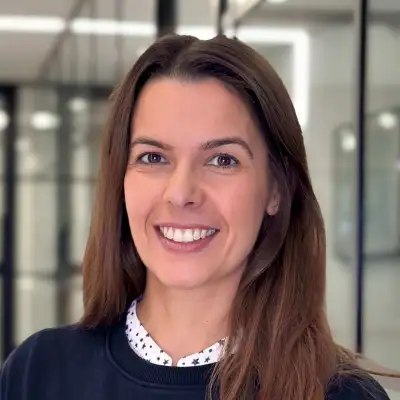
My guest today is Megan Pantelides, who is a Senior Director at Board Intelligence, where she's responsible for research, content, communications, and brand development. She writes about board effectiveness, corporate governance, AI, leadership, and organisational culture and her work has been featured in a wide variety of international publications and podcasts, including the Sunday Times, Management Today, Governance and Compliance, and the Financial Times. She's also a regular panelist, speaker, and commentator on these topics and supported the Institute of Directors 2025 Commission, which was set up to examine the role of non-executive directors 20 years on from the Higgs review.
Megan joined Board Intelligence in 2018 and has held roles within the business development, customer and marketing teams. As Marketing Director, she led teams serving Board Intelligence's clients in the private equity and trust and corporate services sectors. Prior to joining Board Intelligence, Megan spent nine years at Skill Capital, an executive search and transaction advisory firm focused on the private equity market. As a Director in the technology, media and telecoms practice, she led assignments in Europe and North America, building boards and management teams for private equity backed businesses, and supporting private equity firms with deal origination and due diligence.
Before joining Skill Capital, Megan worked in strategy consulting with LEK, working on projects for corporate and private equity clients across a range of industries. Megan, welcome.
[00:02:58] Megan Pantelides: Thank you for having me.
[00:03:00] Ralph Grayson: Do you want to go through that in a bit more detail? Talk us through the journey from search into Board Intelligence.
[00:03:06] Megan Pantelides: As you say, I spent nine years at Skill Capital. When I joined the business, I don't think I quite appreciated it at the time, but I was given so much exposure so quickly to the inner workings of boards and leadership teams. It was really liberating to get out from behind the spreadsheet, behind the PowerPoint deck, and to see how leaders were operating in real life. I suppose moving from Skill Capital to Board Intelligence just felt like a natural kind of progression for me. I've worked so much with boards, I was always really interested in how boards worked, and it gave me an opportunity to really see it from a different perspective.
I think one of the things I found not long after joining Board Intelligence was a lot of the searches that I've been doing might have been avoided, might have been unnecessary even, if more had been done to support the work of the board and the management team, kind of earlier in the process and so it's really interesting to see that kind of play out in the work we were doing at Board Intelligence and the solutions and the products that we've been developing to try and tackle some of those issues.
[00:04:02] Ralph Grayson: So let's just talk about Board Intelligence a little while the product suite, the solutions that you've talked about there, and I think they've just become private equity owned and Competent Boards in Canada, I think, has become part of the portfolio. So maybe just a bit colour around that.
[00:04:18] Megan Pantelides: The nearly eight years I've been at Board Intelligence have been a really interesting journey for us as a business. When I started there were about 40 of us working in the essentially attic of a building in St. James' and we had a board portal and we provided services to companies to help them redesign their board packs and to write better board papers. We did a lot of training with management teams and what we were trying to do was to try and, I suppose, bottle up everything that we'd learned over the years about what makes a good board pack and to help organisations put that into practice. The journey since then has, as I say, been an interesting one. We have taken on funding to help support our growth and we've significantly expanded our horizons both geographically but also in terms of the products and services that we provide. So, in addition to the board portal, which has evolved hugely in that time, obviously with AI and other sort of technological advances and changes in the way that boards work, we've been able to add a lot more into that offering. But also through acquiring businesses like Competent Boards, adding in board development and training. All the way through that though we have always maintained as our sort of mastermind subject is the board pack and the quality of board information and recognising that plays such an integral role in board effectiveness.
So today we are a board effectiveness business. We do a very broad range of things that relate to, I suppose, supporting directors to deliver impact and to work effectively together and as a group, but also maintaining that real focus on the quality of the information and the role that that plays in supporting decision making.
[00:05:45] Ralph Grayson: And if you are a board member listening to this podcast, then what does BI solve for? Is this something that's there for chairs, company secretaries, individual board members, all of the above?
So at its very simplest what we do is about helping boards and leadership teams to deliver more than the sum of their parts. Sometimes we do that by working very closely with governance teams and company secretaries, sometimes we do that by working closely with the CEO and the executive team, and sometimes we do that by working directly with the board often instigated by the Chair. And so from a structural perspective, how does that differ whether you are a private board or a public board, whether you are an NGO, not-for-profit or a FTSE? How is the pharmaceutical sector different to financial services?
[00:06:30] Megan Pantelides: Well, I think one of the things we recognised quite early on as a business was that when you're working with a pharmaceutical company or a financial services firm there are going to be lots of things about their boards conversation, the information that they use, the way they work, that is unique to that sector. But actually there is a lot more in common than people realise. When you've reviewed one board pack they can look very different. But actually when you've reviewed a hundred or a thousand you can seesome common threads through them. When you've sat in that many board meetings you can start to spot some trends.
What we recognise is that probably about 80% of what we do is consistent across industries, across different types of organisation. The extra 20% is where our advisory team really come into their own and help to make sure that the solutions that we deliver are relevant to the organisation and really cut straight to the things that matter most to that organisation at that point in time and into the future.
But for example, when you look at what good looks like when it comes to collating and distributing a board pack, I mean, those steps in the process are pretty consistent across all types of organisation. You may have more people involved in the process in a larger organisation. You may have more governance forums that things need to flow through. It may be a more complicated process, but ultimately the building blocks of it are consistent.
And likewise, when you look at what makes a great board paper, there are some key things that you need to see whether you are writing a report as the CEO of a private equity backed business in its first days of ownership by a private equity firm or a global bank. If you take, for example, the CEO's report, what the board really want to understand is what is on the CEO's mind. They want to help set the scene for the board meeting, for the conversation that's going to happen, but what they really want to do is understand what it is that's keeping the CEO awake at night. The CEO's report, therefore, in an ideal world, follows a similar structure whether you are in a big bank or in a small, high growth business. What's going well? What's not going well? What am I worried about? What am I excited about? What do I need from you as a board? What we did was really just try and isolate what those commonalities were and to build a bit of a playbook essentially for ensuring that those things were present in the board papers. We call it the QDI principle, Question Driven Insight. It boils down to three things. Critical thinking, it's about engaging with the questions that are on your audience's mind, ensuring those questions are structured, logical, that they cover all the bases, that they don't leave any gaps, that they tackle the difficult conversations upfront and that they lead to insight. So it's about eradicating the desire to share information for information's sake. The information is shared with a view to delivering insight and actionable plans.
The second thing is about high quality communication. So if your paper is too long, if it's too dense, if it's too full of jargon, if it's written in the passive voice, these are all things that limit the ability of the board to engage with it meaningfully. So a lot of what we do then was about saying, okay, what does good communication look like? When you write stuff down, how do you make it jump off the page? How do you ensure that your audience engages with it? So it's about putting, I suppose, ownership and identity into your writing so that the board can actually get through it and understand what you're intending.
And the final thing is around focus. So the point of failure of a lot of board papers, that don't hit the mark, is that they don't give the board or the reader the audience, the non-exec, a clear understanding of how this all fits into the bigger picture. So when you're building a high impact board paper, you've got to be given some quite clear pointers as to how you make that happen. How do you align with what you are writing about, with what matters to the organisation? So the framework that we built, for example, around board reporting, was really about spotting all those commonalities, From big company to small company, in the UK, internationally, in all the different environments that we worked in and say, okay, well can we create a framework that works 80% of the time?
And that's what we did. So a lot of what we do is really about saying, okay, build a methodology, test it, iterate it, make sure it delivers impact for as many people as possible, and then that gets baked into our technology products.
[00:10:30] Ralph Grayson: So the board process is integral and there's some rules to the road. So when we're doing board searches here and somebody who's maybe in particular a first time NED says, what due diligence should I be doing to think whether I go on that board? I always say to them, get the last three years of board papers, and that way you'll understand what the issues are. And using that adage of a well run board process reflects a well run business,what are the flags that potential board members should be looking for in those board packs?
[00:11:01] Megan Pantelides: Yeah, I mean that's exactly the advice I would give as well because I think it can be illuminating, but probably for all the reasons that people don't expect. You might think you're going to get a really good understanding of the performance drivers of the business and the big strategic topics, the debates that the board are having, you know the big choices they're having to make. But actually what you're likely to get is a really good understanding of how closely aligned the board conversation is with those priorities. How much that strategy is living and breathing in the work of the board.
I think you'll also find some really interesting signals in the clarity and the consistency of the information as it's presented. So for example, if you find a lot of the communication isa bit of a kitchen sink, and I think that raises questions about the ability of management to really isolate what matters. It raises questions about how focused they are. It may raise questions about whether they have the ability to discern what matters and what doesn't. I think you'll also see the level of candour, the amount of forward looking information that's provided. It will give you a sense as to whether the organisation and the board is kind of locked in a backward looking, performance monitoring, cycle or whether the board is actually engaged in a forward looking value creation discussion and I think it will also signal quite a lot about the kind of level of transparency, candour, the kind of accountability culture in the organisation.
I wouldn't read everything into it, but it can be a helpful source of guidance, I suppose, in terms of at least flagging the questions that you need to ask and the points you need to investigate further in your due diligence.
[00:12:36] Ralph Grayson: Let's just step back for a second. So your involvement with the IOD Commission, Higgs 20 years on, where are we and where we come from?
[00:12:45] Megan Pantelides: So the work of the IOD Commission this year has been really interesting and timely actually, because I think coming off the back of the Post Office scandal and well, I think pick a scandal I suppose. There's always one for the times isn't there? Does raise genuine questions about whether boards are fulfilling the role that was set out in things like the Higgs review. And I think it also comes at a time when a lot of directors are also asking the question about what their role really is and how they can best add value. I think it's clear that the role, when you take on a board role these days, you take on a lot of responsibility. Potentially infinite workload. The number and range of topics that you're expected to be across just keeps growing and it's not without personal and professional risk. So I think directors are asking the question, what are we really here for? Because, I think in some respects, you know certainly what we are hearing and then we're seeing in our research is that directors aren't completely confident that they're delivering on the mandate that they think they've been set by society, by stakeholders more broadly, shareholders and so on.
So it's been a really interesting exercise and I think a lot of what we've looked at focuses on things like the composition of the board, board size, the extent to which directors are supported and enabled to work, and the obstacles that are put in their way. Naturally we touch on things like quality of the information that they receive and the way that they engage with that information.
This is a huge topic. It's a huge topic, I think undeniably a lot of the Higgs review still stands true and I think there is real commitment to enabling directors to be effective and boards to be effective and recognising the valuable role that they play, the vital role that they play. But I think there is also a recognition that the world has changed quite a lot in 20 years. The role of a director has changed a lot and there is a lot more that we could be doing. And when I say we, I think that's directors, I think that's C-Suite, I think that's regulators and the people who advise and sell and serve. The people who advise boards, there's a lot more that we could all be doing to better enable them.
[00:14:45] Ralph Grayson: So I just want to pick up on one aspect of that. So you and I were both at the NED Association Debate recently where the debate was centered around, if I paraphrase, corporate governance "fit for purpose". It was a fascinating debate because the room shifted from one third, two thirds to then two thirds, one third after the debate. I won't get into which way and why and how. But the head of the FRC, who was one of the key debaters, really focused in on "comply or explain" and I think what the room found very surprising was when he said, as the head of the FRC, "I wish more people would explain why they're not complying. That, to me, is good governance." That was his central premise. What was your take on the room, the debate, the conclusions?
[00:15:32] Megan Pantelides: I think it reflects the fact that, for many people, the code is sufficient. We have a good code. We have good rules and regulations. Many people in the room I think came in with a perspective that perhaps we have too much of that sort of stuff and that actually to be more effective, boards needed to be less encumbered by compliance.
But I think it was definitely clear to me that there is some frustration with how the rules are applied. How the rules are interpreted by those outside of the boardroom and obviously the role of proxy advisors, that was something that came up quite a lot in my conversations afterwards and this concept, rather than comply or explain it's comply or else. When you are working in a world that's dominated by proxies and where retail investors aren't particularly engaged in the democratic process of share ownership, then I think things do become quite black and white and it becomes quite hard to engage with the nuance of those explanations that might be provided.
I think there is huge flexibility in the code. I agree with a lot of what was said, there's huge flexibility. I'm just not quite sure how we change that system because it does seem quite entrenched and the last thing we need is more regulation to apply the regulations. So I think it'd be interesting to see. Certainly thought it was a very engaging conversation and all the people I spoke to after the event were quite exercised by the topic of the discussion.
I think corporate governance can sound a bit dull to people who don't live it day in, day out. But I try and think about it as discipline of a well run company, obviously it rolls up at kind of systemic levels, the discipline of a well run economy, right? I think some of the frustration comes from the fact that we're just not quite seeing the growth in the UK economy that we would like. And because there are, as I said earlier, there are always renter scandal, insert sort of headline here, corporate scandals that just keep this sort of thing in, in focus.
I definitely think there is widespread appetite within the governance community to engage with that question and to work out what it is that boards need to deliver what's expected of them. Without that constructive conversation, then I think the work of the board is going to get even harder and there are going to be fewer and fewer people who want to do it, and that is ultimately bad for corporate governance.
[00:17:37] Ralph Grayson: And the other thing that caused a bit of emotion in the room was the whole area of compensation around board directors, right? So that balance of risk-return and the difference between an Anglo-Saxon model and a US model where US NEDs, board members, are very much encouraged to have significant skin in the game in terms of compensation. Whereas here, the view, again, paraphrase, "you can't be objective and be an independent if you've got skin in the game."
Is that something at BI you touch on? Do you hear that conversation in the room? Where do you think we stand, particularly for regulated industries? Is it worth it being on a board?
[00:18:13] Megan Pantelides: That's a very good question. I get asked the question quite a lot, " why don't you go a board?" because I recognise that I spent quite a lot of my time sharing insights about how to be more effective on a board and I'm keenly aware that I don't currently sit on a board. There are lots of reasons for that, but one of them is that I think the role carries real responsibility and I, mother of two young children, have a busy job, busy life. I just don't know if I could do it justice, actually. And I don't want to be doing a board role just for what it does for my CV and you know, the ego boost it might give me. And I recognise some of that in lots of other people as well, actually. People that would be really great board members, you just think it feels like quite a lot of work, but also I'm not sure it's really worth it? Because that scrutiny is there, it's mounting. I think, anyone in a position of responsibility deals with heightened level of scrutiny that comes from social media and 24 hour news cycle and all that sort of stuff.
I am slightly nervous of saying that the only solution lies in compensation because I think, firstly, that's quite a hard message to get sympathy for from lots of the population. It feels a bit like, of course they'd say that, right? Everyone wants to be paid more. I'm slightly conscious of the sort of cynical interpretation of thatmessage, although I do, really empathise with the thinking behind it. And actually a couple of years ago we did some work also with the Institute of Directors that looked at the role of corporate governance and innovation and whether corporate governance was a blocker or an enabler of innovation and actually this is something we talk about quite a lot of Board Intelligence now. It's an integral part of our board effectiveness methodology, the board's role in encouraging innovation, and the answer did often come back to questions of incentives and whether or not boards were sufficiently incentivised to focus on growth and value creation versus that safe operation, compliance, monitoring and oversight sort of role.
I can really empathise with that, with the argument. I just think, for there to be system-wide changes in how that's applied, how directors are incentivised, I think it's going to need some really careful marketing.
[00:20:13] Ralph Grayson: I'd love to ask the question from a slightly different angle, which is all around certification, which is a theme that comes up constantly in these conversations. You've looked outside in at multiple boards. One of the early podcasts we did with Graham Durgan at the NED Association, and the reason he set up the NED Association was, as he saw it, the complete nonsense it was that anybody can be a NED. It's such a crucial role. It plays such a pivotal role in value creation, productivity, yet there is absolutely no need for any qualification. So you can be a backseat driver and grab the steering wheel and all those analogies he talked about much more eloquently than I do.
Do you see any correlation, when you look at boards, between the level of professional competence as derived from certification or enthusiastic amateurs?
[00:21:03] Megan Pantelides: I certainly think there's a role for anything that encourages deep commitment to the role and demonstrates deep commitment to the role and a really solid understanding of what it entails, what it takes to be successful in it. I think some of the problems that I have seen in boardrooms stem from people not fully understanding the role that they're doing and failing to navigate the tightrope between board and executive and conflicts of interest and I think a lot of problems do stem from a lack of understandingand a poor application of that understanding about what the board's role is.
Most of the board members that I engaged with when I was in search had no professional qualifications at all. I mean, it was not a thing 10 years ago. Having said that, I think what is really important is that board represents a broad set of skills. So I see that sort of stuff as a bit of a hygiene factor. Do you really understand the role that you're doing here and do you have the right skills and competencies to deliver it? But then beyond that, it's really about building a board that represents deep expertise and an appetite for learning, ongoing learning, and curiosity that can be applied to all of the things that are important to that business into the future and that is a really broad set of things.
It's not a shortcut to getting on a board if you don't have that depth of experience or you can't bring something really meaningful to the table, ideally in multiple areas, I mean nobody wants to be the token representative of a skillset or a sector on a board. Because that also puts you under quite a lot of pressure. You really need to balance that deep sector or industry or kind of functional expertise that's relevant to the board. But also that appetite and that curiosity to learn about the things that are coming onto the board's agenda that you may not be an expert in and have the humility. I think humility is a big part of it. So I do see a correlation between, humility and curiosity and the people that are engaging in those certification programmes and doing the work that they need to do to go through those programmes and those courses and the kind of mindset that means that you're going to be a valuable director into the future.
It's a brilliant thing that people are approaching the role with that level of professionalism and that level of commitment. But I think it has to be coupled with a marked contribution that's relevant to the board in terms of functional or sector or thematic
[00:23:17] Ralph Grayson: Come back to that keyword you used there mindset. Critical thinking, so the two founders of BI wrote the definitive book on it. I think you may have had a little bit of involvement. Talked to us about critical thinking and its role the board.
[00:23:31] Megan Pantelides: Critical thinking is essential for an effective board in a couple of different ways. One is within the boardroom and the questions that directors are asking, the way they're engaging with the conversation, the way they're engaging with the decisions that they need to make. But also the quality of the work that management are doing to enable those conversations.
So when it comes to the work of the board directors in the room, obviously vital that they use questions as a tool. Questions are not about tripping people up. They're not about holding management's feet to the fire and finding out what they're trying not to tell you. That is quite an important thing to do, if you do it in the right way. It can be very valuable as a director. But it is also about understanding, seeking insight, coming up with ideas. Questions are a really, really valuable tool for directors. So we've always been quite focused and passionate about trying to create tools, devices, frameworks that can help directors kind of engage that critical thinking muscle.
Whether that is providing them with technology tools that help to flag questions that they might want to ask, spot gaps in information that can help directors zero in on a line of inquiry that might be helpful. We don't want to do the thinking for them. That's absolutely not part of the mandate for directors or those whoadvise them at the moment. The director is still in the driving seat, but it's about finding ways to just fire up that critical thinking muscle and to get them to ask the stupid questions. There is no such thing as a stupid question. I think we all agree with that. But the boardroom can be a place where you are sort of expected to know everything. So that humility and curiosity is key.
So yeah, critical thinking is an absolutely integral part of the work of the board. When directors come together, when they ask questions about performance, when they interrogate assumptions, when they help management to shape plans and their thinking and their recommendations, it is all absolutely essential for getting to a better answer, a more robust and rigorous answer.
But I don't think the responsibility for thinking critically lies solely onthe shoulders of the board, right? I think a board is so much more effective when every layer of the organisation is thinking critically as well. When they are putting their brains to work in a really constructive way. Part of the thinking behind the book is how do we give everybody in an organisation the opportunity to flex that critical thinking muscle every day? Because organisations that do that are the ones that tend to succeed in the long run.
They have more effective boards because the thinking that those boards are doing is built on really solid foundations. It's built on solid thinking done elsewhere. I think what we also have seen is that organisations that do this really well are really great at moving fast. Because when you go through the steps in the process, you go through the steps in the chain, get decisions signed off, people have so much more confidence that the thinking has been done. And so a lot of what we talk about is the role of daily rituals in kind of creating that thinking space. Because I think the one challenge that people have is, we're just all so busy, so busy so much to do, so much information to digest. When do you ever get time to think? And I love asking management teams this question in particular, where do you do your best thinking? And they never say, it's in my office in the hours of nine and five, right? They say, it's when I'm walking the dog or in the shower or driving the car or listening to a podcast or something. So how do you find opportunities to do more of that day to day? What we have seen really clearly over the years as working with management teams and boards on improving the quality of their board information is actually the meetings that we have, the reports that we write are really good places to do that thinking.
The problem is, quite a lot of the time, we sort of roll into meetings without really having thought about the agenda. We roll into meetings without really having thought about the questions that we need to grapple with and what would be a good outcome for the meeting. The monthly report, the quarterly report, comes around and you just try and get it done. But actually when you approach them differently, these things can all be really transformational devices for embedding that critical thinking into your day, creating time and space to think. So the simplest way that, we suggest, or the simplest way you can do that actually, is just to think about the questions that you answer when you write your report. So map out a series of questions that will make sure that you ask yourself all the key questions that are going to make your thinking on that topic stronger, more robust. As I said earlier, coming back to that CEO's report, I'm writing a report on where we're at. I'm not writing a good news story. I'm not helping anyone if all I do is present the brilliant things we've done this month. Look how busy we are. We've done such brilliant work this month. Obviously I'm oversimplifying massively.
I've experienced this myself, actually, so one of the steepest learning curves I had when I came to Board Intelligence was writing my regular management report on what was going on in my area of the business, how we were doing, what the prospects were, and I'd come from a culture in which you always needed to put your best foot forward. And I suspect that actually, I know that is common in lots of other organisations, right? When you write your report for your boss, I want to make myself look as good as possible. I don't want any questions to be raised about the decisions I'm making and how well I'm doing, I just kind of want them off my back.
[00:28:40] Ralph Grayson: Nobody writes average on their LinkedIn profile.
[00:28:42] Megan Pantelides: No, exactly. We're all exceptional. But it was, quite clearly, such a massive part of the culture of Board Intelligence that we didn't start with what's going well, and, how do we do more of it? It was like, what's going well? But also what is not going well? What are you excited about? What are you worried about? What's on your mind? What's keeping you awake at night? Taking it all into account, where do you think this leaves us and what do you need from us to help youand kind of think differently about these things next month?
And that was such a learning curve for me. It was a new way of thinking about reporting. And I see that light bulb kind of switching on in a lot of our clients when they start engaging with that process in a different way and then I found that point in time where I had to sit and write that report became such a valuable exercise. It became such a valuable part of my month because it was a couple of hours where I wasn't in meetings, I wasn't fielding messages, I wasn't making phone calls. I was sat down and I was really grappling with, okay, so where are we at really? What am I worried about? What is the thing I think I need help from the rest of the management team on? Where can I get input from our board to help me? And it became a hugely valuable exercise in critical thinking. One of the best examples actually, is whenever we want to get some funding for something, we'd have to follow a set of questions and the most difficult one to answer was always, what else have you considered? Well, I don't really want to tell you that because then you might tell me to have a look at those options. Actually, I really want to do this. But actually engaging with those questions always led to a better decision and I think yeah, seeing firsthand the role that these seemingly, not insignificant, but chore like activities could create a little bit of thinking time in your day. Thinking time that actually helps you refocus, reprioritize, that helped you get input from your colleagues that was actually going to be useful to you because you've sort of directed them to where it would be most impactful. That really just changed how I thought about those things and so very long answer to your question, but the book talks about how you can go about creating those little moments of clarity and critical thinking in your daily working life. So that, as an organisation, you get much better at it, and that ultimately, enables the work of the board.
We also talk about some of those other things I talked about earlier, how to communicate effectively because obviously there's no point doing great thinking if it only ever stays in your head, or if you fail to communicate it to others and it doesn't get acted on.
[00:30:59] Ralph Grayson: And that's something I just want to pick up on. So help me with the bridge between critical thinking and critical behavior. It's something Murray Steele who runs the FT NED Programme talks about "the Zone of Uncomfortable Debate" is where you've been critical of each other and you have a good outcome because everybody's debated it, but nobody's gone away offended.
And I think that it's such a paradox in terms of boardroom behavior that people just want to either preach, I know best because I've been a CEO and I can run this business better than you can. So critical thinking's great but if critical behavior hinders that it's a worse outcome. So how should people think about that as a board member?
[00:31:39] Megan Pantelides: Yeah, it's a good question. I was chatting to a non-exec yesterday who was talking about this exact problem. They were trying to raise concerns about something, but the train had left the station and they didn't feel like they were being listened to. I think it can't be addressed with isolated acts of isolated interventions. I think it is quite systemic that. I think the Chair is hugely important in terms of creating an environment, and an expectation that is the sort of behavior that is considered positive and how people are going to engage in those conversations and I think it also comes down to the type of people that you recruit.
For example, ifyou have invested in going on a director training course, if you have been actively topping up your knowledge in areasdemonstrably, then you are already demonstrating that you have alevel of humility that's going to enable you to engage in those sorts of challenging conversations more productively. When you are the CEO, historically anyway, maybe it's changing now, but you are the boss. You're used to being the boss. You're used to being the most knowledgeable person in the room. You're used to being the one that everyone turns tofor answers. So I think maybe having fewer CEOs in the room might be a good place to start. I don't know, but that seems a bit controversial because I think that's not what we see in the data about who gets appointed board roles. Former CEOs make up a very significant proportion of board members, particularly in the FTSE 350.
[00:33:01] Ralph Grayson: Well, it brings us centrally to diversity, right? And what's the composition and how should chairs and CEOs think about using a skill matrix, an externally evaluated skills matrix to look at what does my competition look like, why is my competition good, bad, or indifferent, and how does my talent mix, bring all that together?
[00:33:19] Megan Pantelides: Yeah, I mean, I think anything that gives a board a better sense of where it's at and where it needs to be and the gap that needs to be filled between those two things is helpful. It's certainly something that we are spending quite a lot of time and energy thinking about at the moment because the work that we're doing around board evaluation.
[00:33:36] Ralph Grayson: So boards that have a continuous improvement mindset that don't assume they're the finished article, that engage in development, they engage meaningfully with evaluation findings, that engage in activities like mapping out their skills and thinking about the skills they need in the future and working out what they need to do to improve their resilience to the sort of change that they're experiencing. I think are all boards that will perform better in the long run. It's part of the overall, tool set that I think a high performing board has to have. So let's try and pull that together. So the Board Value Index is something you just published. Talk to us about that. How is that a solution and what does the most recent survey you've done suggest?
[00:34:12] Megan Pantelides: Yeah, so the Board Value Index is really an attempt to hear directly from directors. So, conscious that directors hear an awful lot from lots of people who don't sit in boardrooms about what they can and should be doing better. So wanted to give the microphone to the directors themselves, so to speak.
We surveyed 200 directors in the US and the UK and we asked them this very simple set of questions, but one of them was, how would you characterise your board's contribution to your organisation? And 46% of our respondents said that their board was not adding enough value. It was 31% said that their board was adding no value, and of that group half said that their board was actively holding the organisation back. And I was really surprised by that actually. Maybe it's the comfort of an anonymous survey. I don't know. We're going to do another version of it and publish it later this year and it'd be interesting to see actually how that answer to that one question evolves over time. Because I don't necessarily see it as being a kind of linear thing. You know, like it could be better or worse at times. I think it depends a little bit on what people are feeling about sort of pressures on them at any one time. And I think that can evolve. It depends how stressed directors are feeling, probably more than anything else.
But I think what we also did was ask a number of other questions that looked at some aspects of board operations and board decision making just to see if we could find any other signsas to what else might be going on and what might be driving some of that feedback. And I think one of the interesting things was that we asked boards to tell us where they felt confident taking decisions without relying on external advice. We gave them a number of different categories and asked them to select all the categories in which they felt confident. Actually, it was a really low proportion of directors across the board. It was a very small proportion of directors across the board that said they felt confident in any of the areas. I don't think any single area scored more than about 33%. So only 33% of directors were confident they could take decisions about corporate finance or legal and compliance matters and so on and at the other end of the scale they were least confident in things like HR and brand and reputation management and things where I suppose typically they do rely on crisis management firms and PR agencies and things to advise them. But I thought that was really interesting actually. The one job that you expect directors boards to be able to do well is to make decisions on behalf of the business and the lack of confidence that directors feel in doing that without relying on external advice, I think was quite an interesting kind of potential driver of that headline finding.
I think the other thing that we looked at was sort of what was getting in the way in terms of decision making, what were the barriers? And I think the really interesting thing for me was that the barriers that were selected most frequently were all things that could be fixed. It was decision making processes being too rigid or inconsistent. It was quality of the information. It was time management in meetings. These are all things that with good chairing, a good relationship between the cosec and the board, alignment with the management team, the processes, and actually technology as well, could easily be fixed. So that was encouraging actually, I think one of the things we are really keen to do is to just to shine a bit of a spotlight on what is going on in boardrooms, because I think it can feel quite impenetrable from the outside. It's a sort of dark art really inmany respects. And one of the things that we talk about a lot is bringing science into the boardroom and data and methodology and things that we know work because they've been developed and tried and tested and iterated and refined over the years and so this is all part of that.
[00:37:35] Ralph Grayson: So let's put that into the perfect chemistry experiment then. So I spend an inordinate amount of time talking to aspiring board members about their board value proposition and that's different to their executive career. Looking at the Board Value Index and I encourage anybody to go onto your website and read it. There's a wealth of data in there.
How, as a reformed headhunter, dare I say, how do you put all that together? What advice do you give anybody who's on a board thinking, how do I get better and more relevant? Or an aspiring board member, what do I solve for? Where are your perspectives on that?
[00:38:12] Megan Pantelides: I think it's important to evidence that you are curious, that you are proactive in filling the gaps in your knowledge. It is delicate balance, of course, because you need to show people that you have some knowledge and some value that you can bring. But I think, demonstrating how you have engaged in ongoing development, how you are turning your gaze out into the world, is really important.
We said we weren't going to talk too much about AI in this conversation. We nearly got away with it. But, something that's been sort of knocking around in my mind quite a bit over the last week. An event I was at last week, I spoke to at least one person, sitting on multiple boards, who just said, oh, AI I just ban everyone from talking about that in our board meetings. I'm so sick of it. I was quite shocked actually by that, which is why it sort of reverberated in my mind and this person was on multiple boards, not insignificant boards.
And I just thought,this is all wrong. This is wrong in so many ways. You might want to take a very large pinch of salts and sprinkle it over most of the chatter about AI, and yes, we are all slightly fatigued by marketing messages proclaiming that AI can solve all of our problems or articles proclaiming that AI is going to be the end of the world. We're all slightly overdone when it comes to ai. I think just to shut the door I just was really shocked by that and I don't think that is reflective of how most board members are engaging with AI.
But I think that's such a good example of a topic that you can very easily demonstrate your curiosity and your willingness to engage with and none of us know the answers with AI. This is the great equaliser, right? None of us know the answers. But if you can demonstrate when you are putting your CV together for your board application, that you are engaging with these topics and you are open-minded, not close-minded. Then I think that will go a long way because it's clear that some of your competition really are not doing that.
I think the other thing that's still also really clear to me is that although recruitment can be as data-driven as every other decision that gets made these days. There is still an awful lot of it that comes down to relationships and how you connect with people and the rooms that you get yourself into. It is just a fact and I don't think that's necessarily the way it would ideally be. Butyou know, I do speak to execs, non-execs or executives who are aspiring to be non-execs, and every opportunity that comes their way, originates from a connection made with a person in a room.
[00:40:41] Ralph Grayson: So I think, you know, it is hard to deny that the way we find opportunities at work is a bit like how we find partners in our personal lives. It's a bit like dating. You've got to be in the right room.That could be a digital room these days, but it is largely about how you connect with people.The crucial thing is not how you think the room perceives you, it's how that network, one degree removed. So when that person has met you, when they're then sitting on the board and somebody says, we need to fill this slot, it's why do you think about Megan?
And you can't do that by just being on perpetual zoom chat rooms. So many of these things, but if you don't bother to pound the road, doesn't mean it has to be a medium warm chardonnay every other night, but being out there and showing that you are relevant is critical.
[00:41:38] Megan Pantelides: Absolutely. And that comes from having meaningful conversations with people that are unstructured and go wherever they go. But I always know that if I chat to someone who is well read, has interesting perspectives on things, expresses their perspectives in a kind of thoughtful and not overly sort of belligerent way, that engages in an interesting discussion and a debate is open to thinking about things differently in conversation. That always makes so much more of a lasting impression on me than someone that's just, this is what I think, and I'm immutable in my perspectives on things. I know who I'm going to recommend for a board role, if someone asks me.
[00:42:15] Ralph Grayson: I'd love to get your perspective on this last bit, and so when I'm debriefing clients at the end of a board search and I say, why did you, pick A rather than B? And they say, I just wouldn't want to sit next to B at the dinner before the board meeting. That matters.
[00:42:31] Megan Pantelides: It really does. That's why I say it's like dating, isn't it? You're going to spend an awful lot of your life with these people, whether you like it or not, and even if things go swimmingly for the organisation that you're on a board of it's unlikely, right? There will be times of crisis. There'll be difficult conversations and yeah, you want the right people around you in those moments. You're going to need to want to spend time with them because you will be spending more time with them than you think you will.
I think that's the other aspect of board roles. The time commitment is often a little bit more extensive than you go in thinking. So you have to want to spend time with these people much like you have to want to spend time with your spouse.
[00:43:05] Ralph Grayson: So for dating advice or NED advice, we all know where to go now. This seems like probably a good point to finish. But just staying with connecting, how do people follow up with Board intelligence? There is a ton of data on your website and thought leadership. How do they follow you on LinkedIn, your thought pieces?
[00:43:24] Megan Pantelides: Yeah, follow me on LinkedIn. Follow the business on LinkedIn. We share most of our insights there. But also through our newsletter, what Matters on Monday. So that lands in your inbox every Monday morning and it tries to just distill the big news stories happening in the governance world and share some of the latest insights from the Board Intelligence team and if you think there are interesting things that we should be looking into and researching then I'm all ears. Contact me directly because I think one of the things I'm really mindful of is that you know, if we're going to add value to the work of boards and directors, then we need to be talking about new things. We can't keep talking about the same things over and over and I want everything we do to be constructive. So if someone thinks that there's something out there that they would really like to see some data and some research on then do get in touch with me. I'm all ears.
[00:44:05] Ralph Grayson: Megan, I've loved it. Thanks so much for the time.
[00:44:07] Megan Pantelides: Thank you.
[00:44:08] Ralph Grayson: I hope that you've enjoyed listening to this podcast and have found it helpful when thinking about how to approach your own path to the boardroom. If you would like to push this a little bit further, Sainty Hird runs a bespoke one to one programme designed specifically to this end. For more information, please visit our website saintyhird.com, follow us on LinkedIn, and subscribe to the Boardroom Path to receive new episodes. Thank you for listening.