Subscribe
Share
Share
Embed
Making artificial intelligence practical, productive & accessible to everyone. Practical AI is a show in which technology professionals, business people, students, enthusiasts, and expert guests engage in lively discussions about Artificial Intelligence and related topics (Machine Learning, Deep Learning, Neural Networks, GANs, MLOps, AIOps, LLMs & more).
The focus is on productive implementations and real-world scenarios that are accessible to everyone. If you want to keep up with the latest advances in AI, while keeping one foot in the real world, then this is the show for you!
Welcome to the Practical AI Podcast, where we break down the real world applications of artificial intelligence and how it's shaping the way we live, work, and create. Our goal is to help make AI technology practical, productive, and accessible to everyone. Whether you're a developer, business leader, or just curious about the tech behind the buzz, you're in the right place. Be sure to connect with us on LinkedIn, X, or Blue Sky to stay up to date with episode drops, behind the scenes content, and AI insights. You can learn more at practicalai.fm.
Narrator:Now onto the show.
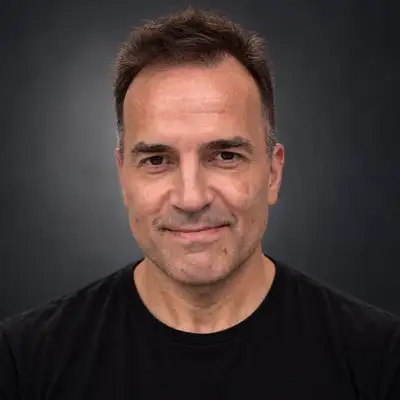
Daniel:Welcome to another episode of the Practical AI Podcast. This is Daniel Whitenack. I am CEO at Prediction Guard, and I'm joined as always by my cohost, Benson, who is a principal AI and autonomy research engineer. How you how you doing, Chris?
Chris:Hey. Doing great today. How's it going, Daniel?
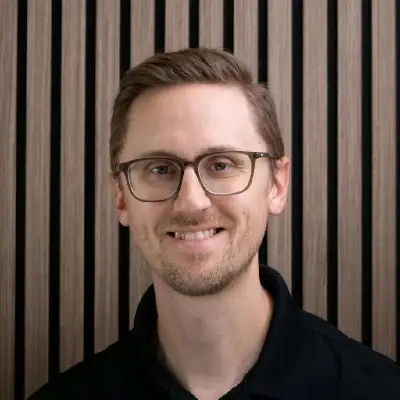
Daniel:It's it's going really good. I've I've been excited for this one, I guess, ever since, conversation that we had back in 2024 on the show with one of the cofounders of Research. Today, we've got another one of those cofounders with us, Jeffrey Quesnelle, who is cofounder and CTO at Noose Research. Welcome.
Jeffrey:Hi there. Thanks for having me on.
Daniel:Yeah. It's it's great to great to catch up. Of of course, big admirers of of a lot of the things you all are doing and and really enjoyed the last conversation. That was though in 2024, so it's been a couple years, and that's like eternity in the Twenty
Jeffrey:years in AI time. Yeah.
Daniel:Yeah. Yeah. Twenty years in AI time. So I I believe if I remember right, kind of at that time, News Research, which for for listeners, I would encourage you to go back and listen to that episode, which was at at a certain point primarily a kind of distributed community of folks on Discord and and elsewhere, but I believe that was kind of morphing into more of a actual company or or organization at at that time. Could you kind of help us understand how that's evolved over the last couple years, maybe some highlights for from the news history books over the over the past couple of years?
Jeffrey:Yeah. Like you said, it was two years ago, so twenty years in AI time. And we did sort of start out, like you said, as sort of this loose collaboration of the homies on the Discord, as I always like to say. And that sort of grew organically just through Twitter and other places like that. People who are fundamentally interested in open source AI and making sure that this tech that we think is the transformational technology of our generation wasn't gonna just get locked behind a few closed companies.
Jeffrey:And at the time we were sort of looking up at, you know, GBD 3.5 had just come out. The ChatGPT thing had happened fully. And us who cared about open source were like, how is this ever going to How are we going to keep this alive? Because it seemed like the sort of curve of capitalization was already starting. If you didn't have a ton of money, you were never gonna be able to catch up.
Jeffrey:But what we were able to find was that because the research space in this is actually quite like, at the time, especially two years ago, was really quite nascent. And there were a lot of like low hanging fruit sort of things that could be discovered by just like one or two people doing independent research. And we brought together some of the people who had made some of these discoveries. And, you know, it kind of gave us credence to the idea that like maybe, you know, David really can meet Goliath or at least, you know, get on the same field. And so we brought everyone together and decided to say, you know, it was really just sort of a way for us to say that we have these people who are doing this for free basically, you know, on their spare time.
Jeffrey:Is there a way we can form this into a company so that we could take people who care about this and let them devote their whole, you know, their whole time to it? So we brought the company together maybe about two years ago and and sort of went through a path of of different experimentation. The North Star was always like, we have to keep this tech, you know, open and make sure that as many people can use it. And that was always the North Star. But the question was, what was the modality in which that was really gonna, you know, express itself?
Jeffrey:We spent some time looking at different aspects of sort of like the AI pipeline as it is and figured out where are the ways we can, democratize this. And and we started first through what we'd originally done, which is through academic research. So we spent lots of time, we published several papers that said like, take something that's currently extremely expensive in the AI space or is locked behind huge capital costs. And can we do 1000x improvements on that that can bring that back down to like the scope of us who, although we have like some small amount of money, it's like, you know, the rounding error, it's the catering budget at some, you know, at some of these larger places. But it turns out that a lot of things in the ace space because everyone's scaling so fast, you can for sometimes just kind of throw dumb money at it a little bit and it does get better.
Jeffrey:But if you're a little bit smarter about it, there were big efficiency gains. So we spent around several years just doing research in that, putting out fine tunes that were aligned to the sort of models that respect you and aren't gonna be like moralizing and stuff. That was our original Hermes series of models that that were very popular. This is, of course, pre thinking, pre reasoning, pre sort of deep sea kind of style models. We did that and had a lot of success and people enjoyed that.
Jeffrey:The academic research, we spent a while looking at, in fact, distributed training and whether that was a viable path and put out some interesting research there about, like, how you could train models over the Internet. You know, this was also in response to some political things that were going on and kinda still are going on, to be honest with you, about, like, what would happen if people tried to outlaw, you know, even using open source AI and stuff. So we did research on that space too, and all of it kind of was coalesced around this idea of, you know, needing these thousand x hacks. So one of the one one of the interesting thousand x hacks that we tried to take on, which eventually turned into this thing that is now Hermes Agent, was the idea of recursive self improvement. And recursive self improvement is where, like, the model is able to somehow train itself or do experiments on itself, you know, and automate that path of the of the pipeline.
Jeffrey:Because you can think of, you know, high end AI research engineers, you know, the people who really know are like NFL quarterbacks now, basically. You know what I mean? Like, you gotta pay them like NFL quarterbacks, and, you know, they are gonna decide whether your team gets to the playoff. You know, like, they're they're that important to, like, your composition of of the structure and places the the large corporations because they're more capitalized, like, have better access to this, you know, this talent limited talent pipeline as well. But GPUs are a piece of it, but human brains are a piece of it too.
Jeffrey:So we said, well, how can we also try to, you know, you know, hack around that? So we started building this tool internally for our own model research team to automate what some of the research that they were doing and figure out whether there was some, you know, and do that. And that was kind of just like, let's see if we can do this. And that tool was internally just called Hermes Agent. And we started this about six months ago.
Jeffrey:And it was about six months ago that this was our tooling. And we used it internally for several months. And that's why if you sort of go back to the genesis of Hermes Agent, if you look at those first commits that were open source, it was basically all around model training. Like all of the stuff that we had built into it was all like all the stuff we used internally for AI research. But we had this idea, you know, and once we had built it, we kind of were like, why are we keeping this secret?
Jeffrey:You know, that's, you know, we were sort of default open source unless we can say there's a reason not to. So we released this, the repository Hermes Agent, and, you know, it was just a floodgate of product market fit for lack of a better word, you know. But things were, you know, a lot has been said about what has happened over the last several months with agents and your harnesses and stuff. And I'm happy to we can talk all about that, but it was kinda like right time, right place. And over the last several months, it's kind of just like get over every aspect of the company, which is awesome because like I said, when we were talking a little bit earlier, is that, you know, the North Star has always been open source AI, bringing this to as many people as possible.
Jeffrey:Now the vehicle sort of the delivery mechanism that we were gonna use to do that kind of, you know, we were sussing out, but it's really, in the last several months, crystallized for us. So that's sort of the history of NUS in the last two years in maybe five or ten minutes.
Chris:So, yeah, that was awesome. Love that. And you introduced a whole bunch of things we can dive into. So I'm gonna pull you back for a moment and and actually wanna go back for a moment because I think there's something that's kinda tangential to what you were you were bringing us up to date on, and that's that the the story of Noose can be very inspirational, I think, for a lot of people out there who are interested in getting into the space, and they you know, they're perceiving the the the big giants, and, you know, and the the the massive amount of money that they're throwing at it and stuff like that. And and also, you know, at the same time recently kind of looking at, you know, the the perception of open source taking a hit like with Lama, you know, kind of coming toward the end of its life, and, you know, Meta now not champion opening source within the the the big players and stuff like that.
Chris:So could you could you kinda lay out for a moment, like, a a little bit of a combo. Like, how do you see open source working in the modern AI world, and how has and as you guys have formalized into this organization, you know, from that informal network, and you're you're having to make choices, and you have this North Star, which is keep everything open, but also, I mean, you have you have bills to pay. You you have paychecks to make and and all those kind of things. Can you talk a little bit about how, you know, not only you guys see it, but in general philosophically, what's how do people navigate that space to to if you're looking at NUSE as as kind of the the paragon to pursue and say, hey. I can go do that to to some degree.
Chris:How do you see that? What's the role of open, and what's the role of being a company now?
Jeffrey:Yeah. Well, I consider this kind of the the inside baseball, you know, version of open source is like what's actually happening in the industry, And it has shifted several times over the last few years. So, we start out with the golden age, your llama comes out, right? And you have this, you have one of the fabulous five companies or whatever, saying that they're gonna, you know, do open source AI. It was driven largely by Zuckerberg's personal, you know, I wouldn't say emotional motivations, but like he just decided he wanted to do it.
Jeffrey:And like, you know, he's in charge of the company, so that's what was gonna happen. Right? And the fact of the matter was though, is this created an ecosystem of people who were able to research AI and ton of the researchers now at places started out by downloading llama and stuff like that. So it really was quite quite important at bootstrapping the AI researcher space that we have right now. But as we saw as they released LAMA one, LAMA two, LAMA three, you know, the the price tag of that kept going up.
Jeffrey:And with Llama four, they made some, you know, decisions that were, you know, architectural decisions within the model, seemingly minor thing at the time, you know, could have gone one way or the other, but they made a few mistakes and the model really didn't come out that well. And, you know, they had to look down at themselves and say, we just spent 200,000,000, 300,000,000, $400,000,000 on like essentially a paperweight. Right? And so that's kind of what I think, you know, the question really became everything's fun and good when everything's working, right? And I think that first failure case sort of, you know, made people question what are the motivations for having open source models, right?
Jeffrey:So at one thing you have a great American, you have one of the largest American companies sort of have a come to Jesus moment about why are we spending our money on this for? How is it aligned with our business objectives? And then you have the deep sea sort of situation, which happens, right, where you have this Chinese company drop a model that's, you know, was trained and is was at the time nearly soda equivalent come out of nowhere. And now you have this now now it goes from being a dollars game within the Western AI space to having a geopolitical underpinning to it as well. And it always was gonna get here, but like it was forced through there.
Jeffrey:And you now have open source squarely within, you know, the vectors of this geopolitical thing. It wasn't just that there was a closed model provider out of China that was SOTA. It was that we had an open source one that was near SOTA coming out of China. And then now this playbook started to get replicated throughout China as sort of a growth hack mechanism. Right?
Jeffrey:So within China, they realized that if you could put out an open source model, you could get your company to the top and get it in the press. So in so far as in America, it was sort of realized that this was played out and wasn't going to be profitable. As that, you know, fizzled out over in China, the it still was quite profitable in the sense to throw your money into open source models with the hopes that it sort of elevated you to this, you know, top tier of, you know, players in the game and we'll figure out the money stuff later. And, you know, for different various reasons that may or may not work differently over in China than it comes over here. But the functional difference was that all of the open source was now coming exclusively, you know, the miles are coming exclusively out of China.
Jeffrey:And so that's sort of the inside baseball. And then and that's more or less where we stand right now, except for what I would call a very significant recent development, which is NVIDIA and and Jensen. So NVIDIA and Jensen at his last GTC keynote came out and said, you know, we are gonna be the we're gonna try to carry the financial flag of Western open source models. And he committed something like $20,000,000,000 over the next several years, you know, towards trading open source model, Western provenance open source models. And I think this is an interesting development because if you sort of pull the threads of the sweater about who does it really make sense for someone to be training an open source model, you know, I think NVIDIA is a company where you could actually credibly make that argument that it does make sense for them.
Jeffrey:You know? It's because, you know, at the end of the day, they're all running on NVIDIA. You know, whether it happens, it all ends up running on NVIDIA chips and more things that need to run on NVIDIA chips. You know? So for them, it it is like aligned with their business interest.
Jeffrey:And anything where you can't sort of eventually really see how it's aligned in the business interest, those things will always kinda follow the money. Right? Like, that'll tell you show me incentive. I'll show your outcome. So I think NVIDIA doing that kind of it is a potential game changer, at least on the Western side because it's the full they're really the only people that has it because it's kinda, you know, you inside NVIDIA, you win a bit, you win a bit, but guess what?
Jeffrey:The house always wins. And Nvidia gets to be like the house here. So on the inside baseball thing, think there's some interesting developments right now. And I'm I'm very I'm currently very, you know, enthusiastic or optimistic about where it actually will go. We lose in the short term, right?
Jeffrey:We can't predict anything out several years out. So that's kind of like the inside baseball story. The sort of larger question about how does someone fit into the new story? Is it replicable? Who are you as a person in this space?
Jeffrey:I mean, I would say now that there's never been a time more where a single person's leverage multiplied can or maximized. AI is a human capability multiplier. And and I'll give you like, this is a crystal example, and it's really like the and it it is really Hermes Agent itself. So Hermes Agent was developed by was first developed internally at NEWS by a guy named Technium. He's you guys might know who he is.
Jeffrey:He's on Twitter all the time. Technium is not a developer in the sense that he didn't doesn't like really know code that much. That couldn't wouldn't have previous to this sat down and been able to write huge like a program that would run from scratch, you know? And and and so, you know, previously he would have been unable to make an application. Right?
Jeffrey:But, you know, with the current AI tools, he was able to architect and write and build an application that is now the number one open source repository on GitHub. You know what I mean? And like, so that goes to show you that, like, if you have the vision and the drive and the care, this technology can make you a thousand x, you know, on on what on what you are. So there's never been a time more where a few people can have outsized impact on the industry and the world than it is right now. And so don't think that the opportunity in any way has has passed you by.
Jeffrey:I think it's really we're only at the very every industry is ripe. Every industry, every vertical is is ripe for someone who has laser focused vision uses these tools to, you know, completely take over and win. So I think the the the area is still the grass is still green.
Daniel:Wow. It seems like we need to make an update to our website all the time. Our marketing team needs a new landing page or we've got something really cool in our product that we need to create a new section of our website. All of this needs to happen fast, and I can't wait days or weeks for these things to go live. That's why I'm so impressed with what our partner Framer is doing.
Daniel:They're an enterprise grade, no code website builder used by teams at companies like Perplexity and Miro to move faster. Framer has a built in robust CMS with everything that you need for great SEO or even AB testing, and changes to your website go live in seconds, not days or weeks. And so if you're launching a new website or you need a new landing page or you need to migrate your full.com, Framer might be for you. Learn how you can get more out of your.com from a Framer specialist or get started building for free today at framer.com/practicalai for 30% off a Framer Pro annual plan. That's framer.com/practicalai for 30% off.
Daniel:Framer.com/practicalai. Rules and restrictions may apply. I'm wondering now we've kind of shifted into this discussion about about Agents and and Hermes Agent. I'm I'm wondering about your perspective, Jeff, on kind of it it seems like we've seen this shift around in initial initially with AI, everyone was like, what model are you accessing? Right?
Daniel:What model are you using? I'm gonna put in an input and get an out and output from a model, so I need to choose a model. And now everybody's talking about agents or agentic systems. Some of that is obviously kind of jargon and marketing in the market, but also there is a fundamental architectural thing that's happening, which you mentioned agent harnesses and kind of this way that that these applications can operate over a distributed system of things or be have all these connections that matter to tools and take action and maintain state. And and we saw with, for example, when we looked into, you know, things that people were using all the time, like Claude Code and and that sort of thing, like, the importance of that agent harness, which is also, of course, like, a a big part of that Hermes Agent project.
Daniel:I'm wondering if you could kind of help help me and our listeners understand, like, what is the importance of the model now in these types of agentic systems and how and how does that shift in in this world where, you know, is is the is the important part in a lot of the, you know, potential value IP, however you see that in this kind of harness and the model is just sort of something you can swap in and out, or what what is the importance of the model within that world? Yeah.
Jeffrey:So here's a here's an analogy that's not perfect, but I'm as I'm finding it to be instructive. So model is the brain, the harness is your body. Think about like that inside yourself. So, you know, the brain was something we previously couldn't build before. You know, like that is like the true quote unquote magic of AI is still like within the model.
Jeffrey:It's all within there. That's the zero to one thing that allows any of this to happen. We could build robot bodies before they couldn't do anything kind of deal, you know. So, but that's really it. Right?
Jeffrey:So the model is your brain and the harness is the body. So let's throw on this analogy a little bit more. Right? So suppose you are, you know, you have an IQ of one fifty, you know, but you're an invalid. You're stuck in a wheelchair.
Jeffrey:Right? That will succinctly limit the amount of things of things you can affect in the world. Right? You can try and go talk to someone and tell them to do it, but like you will there's some amount of limit that you have. And let's imagine, in fact, that, like, most of the work you want to do needs to somehow touch the the the world itself.
Jeffrey:You'd be limited in that aspect in some capacities. Meanwhile, if you had someone who had an IQ of 95 but has an athlete's body, you know, there's certain more things that they're able to do just by virtue of being able to manipulate the world more. Right? So both sides are like important, and I think they exist within a sliding scale. A better harness with a worse model can beat a better model with a worse harness.
Jeffrey:And both of them are symbiotic in working with each other. And it's just that the harness itself though is the thing that touches ultimately what it is that we humans care about, which is the the the world in which we live in, this this thing that we call reality around us. Right? The model itself has very little ability to touch the world. All it can do is output tokens.
Jeffrey:Right? And we need to somehow allow those tokens, and we don't have speech and everything, but we need to allow that output to become instantiated into the world around us. And we ourselves are instantiated in a world where we have persistence, where we have causality, where time moves forward in a direction. And and so all of these pieces, the harness sort of allows the the the model to exist within the reality that we all care about. Now, as far as like ownership of, you know, where's the value recruiting or all that, those sorts of questions, I don't wanna get ahead of my horse here and like make some sort of like, you know, Silicon Valley pronouncement about, oh, I owe, you know, this is where all the money goes or something like that.
Jeffrey:I would phrase it rather in a different way. I would say we are being to the point where people will want to pay for outcomes. Right? Just as in when I hire an employee, I am paying him to do a job. Right?
Jeffrey:For and and ultimately, I want that job to be done. Otherwise, I wouldn't have hired that employee. Right? Like, the prime motivating factor for me is in getting some sort of material economically valuable outcome to be done, or something I view as economically valuable. And so I think that is also the similar model that will eventually pull out of this whole AI system, which is that these systems will be paid to do certain things and there'll be valued in so far as they get the job done.
Jeffrey:Now who owns the harness? Who owns the model? All of that will kind of get worked out in the end. But again, if you pull back and say, where's what's the prime motivating factor? It's I want to pay for something to get done in this world.
Jeffrey:And it would be cheaper, it's cheaper, faster, more cost effective for me to do it this way than to do it any other way. And that's water going downhill, follow that path, that'll take you to the promised land.
Daniel:Well, Jeff, I I love that analogy, about the brain and the body and the the harness and the model. I think that will be really helpful for people. I'm wondering now in terms of Hermes Agent specifically, could could you kind of, I guess, walk us through some of the agentic or automation stuff that you were seeing kind of out there as as you all were starting to starting to develop Hermes Agent and some of the, like, key opinionated choices that you made about what you want Hermes Agent to be uniquely, in in the midst of kind of all these other other things out there.
Jeffrey:Yep. And and really the the key piece of it was the idea that for me, the agent ought to get better the more you use it. That was kind of like the motivating factor here. And that's maybe different than how people used to design software. So we've always been trying to like break out of like, the paradigm is different.
Jeffrey:We have to act like the paradigm's different, right? And so how did people use to design software? They would say, I think I know a problem. I think I can design the best solution for that problem, right? And they're gonna like, you know, whiteboard it all out and have all these systems.
Jeffrey:And we said, well, we don't have to be like that anymore. The ARs are smart enough to just see what we do and then figure out what they should be doing. And so what we said is just get out of the way of the model. Like give the model the ability to do what we want it to do, and then you lean on it as much as possible. So a couple of the opinionated decisions was we created a very limited number of sort of bundled in hard coded features.
Jeffrey:We gave it the minimum sort of ability to touch the world, to run code jobs, to browse the web and stuff like that. And then everything after that is an emergent property that is encouraged to develop through the prompts. And that is the two main ones are sort of the the the memory system and the skill system. The skill system is extremely interesting to me because it is the thing that the first time it were it happens to you, it it feels like magic, which is that you use the agent, you're trying to solve some problem. It does something for you in the way you like it.
Jeffrey:And it notices without you telling it that this is like I've done, I've learned there's something important here. There's something important here. And it will create a skill that says how to do a specific thing. And then the next time you do something that's sort of like that, it will just use what it figured out before on how to do it. So I have this, I have an example of this.
Jeffrey:So like we were, our team was like going to an off-site And we were like flying in. And I was like, I want I want to see if I can get Hurry's agent to like, make a restaurant reservation for me on the flight. Right. So I'm on my flight, I'm doing it. And there's actually a bunch of stuff on these websites to keep automated systems from doing this for you.
Jeffrey:There's all these like bot captives and stuff like like like to try to do that. And it's like going around. It's like, okay, it's not working. So I'm getting blacked out. And eventually, it actually does find like the API back end for like how they're at the book.
Jeffrey:And it's like, I see all the things here. And it was like, okay, I found the data I bought, which one do you want book it. And this took about actually like thirty or forty five minutes of real agent runtime to do this. Right? And then at the end of it, it goes, oh, wow.
Jeffrey:Yeah. I learned all these things. And you just see skill created like Las Vegas restaurant booking. Right? And then the next day I can And it knows how to do it now.
Jeffrey:The next day I come back, I go, Hey, dinner was great last night. Can you book this other one? Boom, instantly it knows exactly how to do it. It just takes those learnings and applies it, right? And sort of that rather than being like, we need to design all these different skills or stuff like you just let the model you know, it's encouraged through self reflection.
Jeffrey:So internally in the prompts, we're like, we we we have at Noose, we have a couple of like who I would consider to be like the world's best, like LLM semant engine, like, they're like LLM whisperers. Like, they truly just talk to them all day and they just know the right words and phrasing. Karen being number one in the world, I would say, in my in my opinion. And And so they, you know, we put in the prompts to like nudge and to have that right self reflect and be like, when you see things being used all the time, or if it feels to you that some, you know, important achievement has been met that would be useful to you in the future, make note of it and put it in your skill system. And that's all we really do.
Jeffrey:And then though, like I said about getting out of the way of the model, we let it use its judgment about what it thinks is important, you know, and we just encourage it to do that. So we sort of give it the guidelines of what, not how to solve the problem, but how to think about how to think kind of deal. And then just, you know, let the model go. So that was in the skill system And that was sort of like our first opinionated one was just like, let the model drive it. And then the second one was the memory system as well, which is sort of this we have this hierarchical memory system where it it will create notes about you, about how it seems feels like you want to be treated.
Jeffrey:And then it has, like, a a layer of the previous sessions that it's talked to you about that it can go through. And there's, this many layer memory system that we have as well. But all of it is mainly operated through the LLM's own discretion about when to activate any of those pieces. And what it means though, is that like when GPT 24, when the next GPT or the next Opus comes out or the next, think Hermes Agent's just better. Like it's just, it has better judgment on using those things too, but it just kind of drops in and gets better.
Jeffrey:Yeah.
Chris:So it sounds really cool. As you are talking about this and people are listening right now to the podcast, can you position it a little bit? So one of the things that have hit people is there are you know, a lot of harnesses have come out over the last few months. Some are proprietary, some are open source, and and they they have some different capabilities. There's a lot of overlap.
Chris:How would you position Hermes for, like, both the users and, like, the context architecturally or you know, like cloud versus you know, like there's a whole bunch of different like this or that or this or that. How like when you guys are are working on this and trying to get it out there for the world, what are some of those use cases and specific audiences that you're seeing it being really well suited for compared to the competition that they that other people may be looking at and stuff? Could you talk a little bit about that, like its market fit?
Jeffrey:Yep. It's primary market fit first is through your sort of power user person who wants to use AI, you know, to its full capability. That was sort of the first segment that we aimed at. And like I said, why use it? It's the agent that gets better as you use it more.
Jeffrey:That's the best tagline we can come up with and try it. So if you want something that just works and gets better as it just works more, Hermes Agent is the agent for you. And it is open source native in the sense that we keep everything open. You can run it locally using local models if you want. That's a first class citizen for us.
Jeffrey:And or you can have us host it for you as well. And wherever you sort of fit on your, you know, kind of like, you know, line there is where is is is where we are. We feel pretty good about where the story is right now on that and and the and the broad product market fit on that. And we're currently working now on really expanding out what does it mean to have an agent, something like Hermes Agent in a workplace setting or like a collaborative setting. I think like the sort of one agent, one person model is currently like pretty we're pretty happy with where it is now.
Jeffrey:And now we're sort of exploring the multi tenant. How does it fit to have lots of these things work together on that? And we have a couple of really high level partners that we're working with right now that we don't have anything to announce quite yet, but that is sort of where our brain is going to right now. And we are ourselves sort of are dogfooding this 100%. So A, Hermes Agent's written 99.99% by Hermes Agent, but we also have several Hermes Agents deployed within our organization doing real quote unquote like work to sort of work you know, just to be the first people to figure out this sort of enterprise y or at least like organizational story.
Jeffrey:And it's it's really powerful. I'll give you I'll give you an example. So we have a, we have one of our the agents whose job it is. It's connected via MCP to all of our backend infrastructure for all of our servers, and it can get access to the databases. And it's like read only, but it can like see everything that's happening.
Jeffrey:And we've used it as a it started out as like a debugging tool where if someone comes to us and they say, Oh, this isn't working on the website, so on and so forth. And these systems on the backend, they're kind of spaghetti. You have your databases versus Vercel, versus all these different, know, provide, you know, to get it all going. So it's kind of like, it's a little bit of a mess with all these different services. And, you know, we started saying, Hey, can you figure out what these problems are?
Jeffrey:We're seeing five zero five hundred errors on this sort of thing. And our engineers who actually know this are talking to the agent and it's, oh, I can't find this. I'll go look here. And what's actually happened is over the course of like a month, it has built up a huge repertoire of skills about how to actually do everything that we need in the company. So now someone who's like our support person, who's in like our Discord or like I say, email can just come to that agent, ask now about like a specific customer account, and it can do all of the things that we need to do and give you all the reports and do root causing.
Jeffrey:And that wasn't something that was that we had to code ourselves. It just emergently got created as the engineers used it. But the difference is now that that one engineer had to use it once, had to show it kind of once, work through it once, and sort of passively the agent just got better and better and better. And now, like, our whole organization can leverage that the learnings from that that one engineer. So we're trying to work out that story too, and we think it's quite quite powerful and interesting.
Jeffrey:And so that's kind of where we're taking it from from here.
Daniel:If you've been listening to the show over the past few months, you realize just how transformative Agentsia AI is, whether that's Claude Code or Hermes Agent or custom built software that you're deploying for operational efficiencies or as new products to your customers. Regardless of your maturity now, this is the world that we're headed towards, this agentic AI world. And there's a lot of security and governance teams that aren't letting these agents go into production because of risks related to agency and autonomy and how do you take care of things like prompt injections or insecure tool usage. There's a lot to take care of, and that's why I'm personally spending my time outside of the show working with an amazing team of AI engineers to build Prediction Guard. Prediction Guard is an AI control plane that you run-in your own infrastructure behind your firewall.
Daniel:Developers can build on top of this control plane using everything that they wanna use, OpenAI and Anthropic compatible APIs, MCP servers, frameworks like LangChain, but all of this is plugged into a built in governance harness that enforces your organization's AI policies. And all of that telemetry goes back to your monitoring and alerting systems. I'd encourage you to check out what we're doing at predictionguard.com/practicalai. You can schedule a demo with me and the team, and I'd love to get your feedback on what we're doing. So visit us at predictionguard.com/practicalai.
Daniel:That's predictionguard.com/practicalai. I have an interesting well, may I hope it's an I guess anything I ask in a podcast, I hope is interesting. But in my mind, this is a particularly interesting thing to think about, which is Chris and I have talked about this on the on the show a lot, which is the the way that you should maybe automate things or mechanize things is often different from the human, the corresponding human process, or it should be. You shouldn't assume kind of a one to one Agree.
Jeffrey:Yep.
Daniel:Mapping. And and I'm wondering, like, on on both sides of this, it because you're finding, like, the agent is developing those skills, if you've actually learned from how those skills are developed, maybe how to do things better, like, as humans within the company, and maybe on the on the on the flip side of that, you know, what what is what is the, I guess, the create some of the creative ways that you've seen agents solve things that might be totally different from the way that a human would go about the problem, but it works because you've kind of fully bought into this agentic process, which I think are people are gradually learning through, like, agentic coding tools. There there there's some of these, like, sacred cows that they just have to get rid of. Right? Like, it doesn't matter if this function is duplicated a couple places.
Daniel:Like, the agentic system, like, it's fine for the agentic system. I don't need to think about that. So are cases of that that have come up for you?
Jeffrey:Well, I would say like, as far as like a guiding principle about what, where to think about what to automate and when, think of the agents as humans with infinite patience. And I think this is really kind of like infinite patience, but very little creativity. And so the question is, where would I need that? And if there's a place in your workflow that doesn't require creativity, but requires infinite patience, then that's a great place to put it. And so for something like I said, with our log system, any human theoretically could just read all the logs, right?
Jeffrey:And like step through all of them and like, but no one has the patience to do that, right? And no one has the long context memory to like see it all at once, right? So those sorts of areas, and if you have to do it all the time. So, you know, like that's really the areas to think about. What you don't wanna be doing is sort of like you said, this one to one mapping of like, oh, we need a CEO agent.
Jeffrey:We need a CFO agent. Like that is, you know, the wrong thinking. And you need to blow those kinds of ideas out. Rather, you need to think of from like an operationalistic perspective of what is the thing actually doing? And would a human ever really not Could a human do this, but not really want to do it?
Jeffrey:And those sorts of workloads are the best to be put through. So that's where we start out here, is anything that theoretically could be done by a person who isn't a genius and super creative, but just doesn't make sense to. As far as solving things and what things we're learning in a different way, I mean, through the coding thing, let me put it this way. I started coding when I was like seven or eight years old, right? It was the thing that made me different when I was growing up.
Jeffrey:Could do this cool thing. It opened every pathway in my life and all my success in my life has been rooted at the basic and the idea that I could was a really good coder at some at this very specific point in time. Know, I was born in the late 80s. You know, I got to be there right as the Internet started coming on, you know, you know, at the time when software was starting to eat the world for real, and I was young at that time, you know, like all these things that lined up. And I did create a whole bunch of, you know, in my mind up until only like six months ago, I didn't use AI really at all.
Jeffrey:I wrote all my code myself and I thought I'm still better than all the AIs. Like, they can't do what I do. And then really, like in the last three to six months through using Hermes Agent, I had to admit that that time has come and gone. But rather than being disappointed about that, I would say it only means that I get to run the clock back and be early again like I was when I was young, when there was like the eight, you know, software was eating the world. Like, so it actually is is freeing in some way if you're willing to allow it to be an opportunity.
Jeffrey:So, and and to get back, you know, specifically to your question about learning things, things to do differently. Yeah. I would just say that like anything that is aesthetic it is based in the aesthetics. The the AIs haven't they have no they have no discernment for that. They don't care if it's pretty.
Jeffrey:They don't and like and it's not even that they don't care. It actually is what I'm finding is that, you know, they really don't know. Like they really don't have human taste, and they're incredibly smart in the vector of like what we can, what you and I would consider to be a genius person who would, you know, we try to self select through to get someone into Stanford and like what is that that makes a person a genius? They can do that easy. Asus made like solve math problems, write code like, you know, we needed to win the genetic lottery to do that.
Jeffrey:They can do it right out of the box. But what they can't do, and what's something that like almost every human can do is really discern, have an innate sense of aesthetic that because and I think the reason for that is just simply because our human sense of aesthetic is grounded in the lived experience that all of us share as common men and women on this planet. And AIs, if you think about how they were trained, they're just so divorced from the experience that you and I went through, being born, living in time, and even our biology from the evolutionary pressures that created us in the first place. And so our aesthetic is actually something that is quite unique and is quite very like, there could be a million different ideas. Animals have different ideas of what's aesthetically important in their pack structure.
Jeffrey:You know, different there's a million one of those. There's only one math really. And there's only one like science, you know, like so like it's interesting that like the things that are like the universal computational stuff the AIs can take, the things that are very unique to us, that's things that but to us don't feel unique because it's the fish and water argument, right? Like we don't feel them to be a unique thread because it's we're so immersed in it. And it's only when we're sort of faced with this thing that's that was finally we have another example.
Jeffrey:There was only us to begin with. There's now another example that we look at it and go, oh, why is this so different? You can think about it about slop or whatever you want to call it. But getting back to what you said, they will solve things in it in aesthetically unpleasing way, and you just kind of have to learn to deal with that. And you should not rely on them at least right now
Chris:and then I wanna actually draw out a thread that you've gone down a little bit. The comment is your is I think something I say a lot is the models regress to the mean. So they're they they do things that may appear creative, but they don't do truly novel things. They have to have something, you know, that they've been trained on that's relative to that that they can associate. And so if I'm going and doing something that's truly novel, there's nothing written that it can be trained on before that, they're usually not very useful in that way.
Chris:Having said that, that still leaves 99.9999% of the usage out there. And one of the things I've noticed, not only in our conversation today, but in previous conversations that we've had on the show and privately is that we are we are retraining ourselves in, you know, if you have the capability here of a Hermes Agent and and what harnesses can do and then some of the things that you guys have done to make Hermes so amazing and what it does in terms of learning skills, they you know, we tend to go to the common use case about coding and the fact that we're you know, Daniel pointed out that maybe keeping just one version of a function, you know, like, you know, we all grew up don't do don't have one, keep everything really, really lean and all that, but that's really for us humans. And you pointed out that we have so much more capability now, though it may not be aesthetically pleasing, and it may require a different way of doing that. As people use a tool like Hermes Agent, how should they be thinking about and let's stay away from coding for a moment and look at the rest of the world of work activities that might be out there.
Chris:How should they be looking for those opportunities to do it better in a way that they've never thought about before because it's no longer human centric, but it's now agent and model centric together in terms of what they're doing? How do you optimize the use of a tool like Hermes Agent if you're the human trying to trying to retrain yourself?
Jeffrey:Yeah. I mean, number one would be, you know, don't tell it how to do something. Describe the outcomes and the conditions for what it is that you're trying to get to. And like I said, or a little bit earlier about like getting out of the way of the model in some ways. I think people, when they first start out using these things, have an element of control they wanna keep on it.
Jeffrey:Know, they're like, they wanna say, okay, do this one step, do this one step, do this one step. The models are only gonna get better and better and better at long horizon planning. And I think ultimately think being goal oriented and then being goal oriented and then evaluation oriented, right? Like what would be the conditions upon which I would think that this goal was met, right? And if you can succinctly describe those, that's the AI agent can work towards.
Jeffrey:Let it work towards fulfilling those success criteria. Now, if you leave those success criteria as unstated, let me give you, like you say, write something, and then you go, well, is slop. You know, this is, you know, not X, not but Y, not X, but Y, all of the paragraphs the same length. Okay. But you told the AI to write something and it did write something.
Jeffrey:You know, it doesn't have the judgment that like it should not sound like slop because it thinks slop is the best thing that, it's the mean average of every word that's ever been written, and it thinks it's great. So it's like your unspoken assumptions or your unspoken evaluation of the outcome, if left unspoken, will remain persistent. So that's why, like I said about the real value, we have these like LLM whisperers who can really articulate all of the suppositions that they have internally about what they want it to be in a succinct way. Now humans, that is its own skill set, right? Like knowing how to actively actually communicate everything that you want and think and say is not something that we normally do because A, we have the shared history of human common understanding that I just don't have to say it to you because you and me feel the same way on most things that I don't have to say it.
Jeffrey:And therefore it's so ingrained. I don't know how to like put it all into words. Right? But I think, you know, taking a step back and, you know, instead of thinking like, explain it to me like I'm five, explain it to me like I'm an alien, you know, because that's really what the AI is. It's an alien that never grew up on earth.
Jeffrey:So you really have to say what it is that you want in a way that's much more explicit. But if you if you if you are able to say what you want explicitly and and really write out your evaluation criteria, about what you would what would all you would go into your
Daniel:own judgments when make it, it can it'll it'll find its way. It's it's it'll it'll find its way towards that goal. And as as we kind of draw things to to a close here, I think I'm I I'm excited by the possibility moving forward. Like you say, it's kind of a time where we can look at a lot with fresh eyes and and experience some of that newness even though we've been working in in technology for for a long time. We always like to ask our guests kind of at the end, like, what is on your mind as you're stepping forward into the next, it could be a few months or year of your your life?
Daniel:Like, what what's at the top of your mind? What do what do you go to bed thinking about, both either on an exciting level, on a challenge level, on a ecosystem level? However you wanna frame that, we'd love to hear it.
Jeffrey:Yeah. I have the business answer, which is making news research continue to grow through our enterprise offerings that we're working on, blah, blah, blah. I think about that a lot. It takes a lot of my time, But something a little more overreaching would be thinking about what the place of people are in work in the next years to come. And not even only from just like an economic standpoint, but from like a humanity standpoint.
Jeffrey:Using these tools, what will it do to us? What will it do to us? I think that there will be there's gonna be a Society has already moved towards sort of a, you know, doom scroll y kind of tick that TikTok y. Like, that is that's already like the direction we're on. And this it could in some ways be one more domino on that effect.
Jeffrey:Because now we can sort of check out of thinking as well, right? And if your job is just telling the agent, do the thing, the thing, do the thing, and just keep saying that over and over, like what does that say for your growth as a person? At Noose, we call ourselves being human centric AI, and that AI should make you better today than yesterday and better tomorrow than today. I think we're in that path right now, but it also requires some responsible usage by users of it. I wonder in myself, someone could easily get trapped into developing no critical thinking for themselves.
Jeffrey:And especially if you take this ten, twenty years from now, what do you take for someone who only ever grew up with this being the paradigm? Human innovation and thought and critical thinking was just not You don't even see it. The answer is the computer knows. And that's all the only answer there ever could have been. Because it only takes one generation.
Jeffrey:Like once you grow up, whatever you grow up with is what you think is normal and right. So I had a baby five days ago, and what it means for her growing up to live in that. So that would be sort of the bigger things that are on my mind right now. But ultimately, you know, you can take that one of two ways. You can be pessimistic and be worried about it, or you can have agency.
Jeffrey:You can have agency and be part of the world and and try to be part of the solution. So that's why news that's why news research exists. That's what I'm trying to do is to be a part of the solution. And like I said, better yesterday today, better today than tomorrow.
Daniel:Awesome. Great. Great way to end it. And also, congratulations. Thanks thanks
Jeffrey:for pleasure.
Daniel:Thank thanks for joining us on the show. We we do hope to have you back. Maybe maybe someone from NEWS in less than two years, coming back on the show. We'll we'll try to make that happen, next time. So thanks for joining us.
Daniel:We'll talk
Jeffrey:to you soon, Jeff. Really appreciate it. Thanks. Bye.
Narrator:Alright. That's our show for this week. If you haven't checked out our website, head to practicalai.fm, and be sure to connect with us on LinkedIn, X, or Blue Sky. You'll see us posting insights related to the latest AI developments, and we would love for you to join the conversation. Thanks to our partner Prediction Guard for providing operational support for the show.
Narrator:Check them out at predictionguard.com. Also, thanks to Breakmaster Cylinder for the beats and to you for listening. That's all for now, but you'll hear from us again next week.