Subscribe
Share
Share
Embed
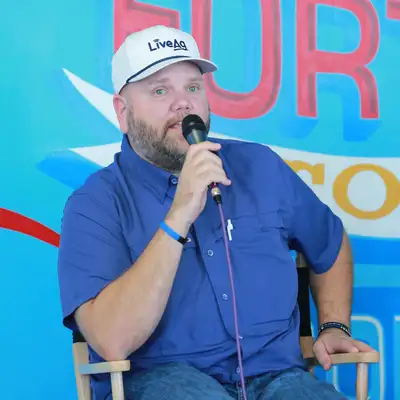
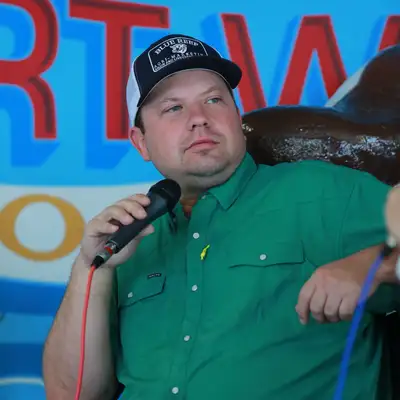
Welcome to the "We Live It" ranch and livestock marketing podcast, where cattle market intelligence meets ranch-ready wisdom. Join hosts Ty deCordova with LiveAg and Casey Mabry with Blue Reef Agri-marketing as they bring you straight-talk market analysis, proven strategies, and insights from industry leaders who understand ranching isn't just a business - it's a way of life.
From livestock market trends to cattle management practices, each episode delivers actionable knowledge to help take your ranching operation to the next level. Whether you're in the saddle or in the truck, tune in for conversations that matter to modern cattlemen. Because we don't just talk about the cattle business...we live it.
It's just one more thing that we can add to the menu. I know for you guys, it's another bug to put on the lots and you're going to run out of room one of these days. But it's another one that they can participate in. And you know, it's another buyer. You know, that's the way it is.
Doug Stanton:It's, you know, we encourage as many and it just takes, you know, one more buyer can do a lot.
Announcer:That's a head off. We live it. The live ag podcast. Quality cattle deserve premium prices. Consigned to a live ag video auction and capitalize on today's strong market demand.
Announcer:Our upcoming auctions are on your screen and available online at live-ag.com. Contact your local rep to get started. Now here are your hosts, Ty De Cordova and Casey Mabry.
Ty deCordova:Welcome back to We Live It podcast where the recording here in Denver at the Truist Field Of The Rockies. Today it's myself, Todd E Cordova, co host, Casey Mabry, and Doug Stanton with IMI Global has joined us today. So we're gonna visit a little bit about some of your new programs you got going, some of y'all's third party verification stuff, kinda how to go about doing some of that, and y'all have come out with new Raise Well program, we wanna kinda touch on that for sure. But first, we'll kinda start out talking about kinda how you've been, Casey, what you've been doing, what y'all you and the kids been doing, it's been a while
Casey Mabry:Yeah, since we caught just chasing those kiddos around the same thing you are, Ty, you know, just trying to keep everything floating for sure.
Ty deCordova:Yeah, my oldest just turned 17 and my youngest is fishing to be 14, my gosh.
Casey Mabry:Yeah. So Reese is she turned 16 in April and I took her down to college station. She went to FFA leadership deal this week. And I let her drive from Weatherford to Waco and that's about as
Ty deCordova:That's that's odd you could handle?
Casey Mabry:Then on the way home, yeah. It was better for our relationship if I drive, think. Yes, I understand. But she's learning how to drive, we gotta that's gonna be something that's monumental in our house, you know, here coming up pretty quick, but
Ty deCordova:it's blowing by. No, I'm telling you. I'm telling you. Doug, just kinda just kinda get right into it, dive right into Okay.
Doug Stanton:You bet you bet I'm gonna say real quickly that I'm on the other side of life. I got grandkids now. So Oh. We're doing the all over the thing. Yeah.
Doug Stanton:It was Christmas. We had them for a week. Three three girls, six, five, and two. Yeah. So Three girls?
Ty deCordova:Yeah. Wow. How many kids did you have?
Doug Stanton:I had two.
Ty deCordova:Two daughters? Two?
Doug Stanton:Two sons.
Ty deCordova:Two sons.
Doug Stanton:Two sons. And the oldest son's got three daughters. And my youngest son has one son.
Casey Mabry:Wow. Yeah. So I need to hang out with your oldest one because I've got three daughters.
Ty deCordova:I've got two daughters.
Casey Mabry:And I'm giving him a little foreshadowing.
Doug Stanton:There he is. He could use it. Believe me.
Ty deCordova:He could use it. You're telling me they don't get no better.
Casey Mabry:Yeah. Well, they say there's I
Doug Stanton:was talking sons and we you know, so much of what their these granddaughters is all new for us.
Ty deCordova:Yeah. I'm telling you.
Casey Mabry:Let's wait till
Ty deCordova:they're It's a
Casey Mabry:new Somebody said when they turn 14, it's
Ty deCordova:Oh, just it's a changer. You just nuh-uh. Yeah. Whatever.
Casey Mabry:Yeah. I was just We Katie's probably getting mad at us over there talking
Ty deCordova:about that. Okay. So anyways, let's get back to business.
Doug Stanton:You bet.
Ty deCordova:Y'all doing a third party verification system, been doing it forever, and we've partnered up y'all for a long time. Kind of give us a run of the mill of some of your programs, and then we'll just dive into the raise well y'all can explain kind of a little bit about what that is.
Doug Stanton:Okay. Sure. You bet. Yeah. We've been, you know, as you know, we're in the verification world now for twenty years, ever since the BSE Cal in 2003.
Doug Stanton:And we got in the first USDA PVP program in 2005, had the first, feed yard in Southwest Kansas that was approved in The US. And so since then we've grown and evolved into the other programs. Source and age is still our base program. Now we worry about at that time it was for cattle under 20 of age. Now it's cattle under 30 of age is all we really focus on and both domestically and on export markets.
Doug Stanton:Then so as we evolve, we we've kept that as our baseline because and requiring EID tags be applied before the cattle leave the ranch of birth. And then so we have traceability and that's the key to any program really. And we're starting to see more people start retailers and others, you know, it's a big scuttle now, traceability. And we feel like that's where we've always been. We've done it before traceability was cool, we were doing it and with EID tags.
Doug Stanton:And so we continue to do that, and that's the base of all of our programs. And then from there we evolve and then we got into the NHTC program, our non hormone treated cattle program, for the EU. COVID kind of hurt that program a little bit. You know, COVID hurt everything. And but that's been recovering now, and we're starting to see some growth in the European Union for US product.
Doug Stanton:And so we see that to continue to grow. And then our Verified Natural is the next step up in in the chain and where no antibiotics, no hormones, and no animal byproducts. And those three programs, Source and Age, NHTC, Natural, kind of been our base program, what a lot of our customers will do. And we encourage that they bundle because you never know what buyer's looking for. And so the more claims that we tell people, you know, go for as many of the programs that you're eligible for because you never know who's going to be out there and catch a new buyer and spike on the price.
Doug Stanton:And so
Ty deCordova:Like a good insurance company. Yeah. Do abundant.
Doug Stanton:Yeah. Exactly. Do everything. And so then, from there, you know, those were our base programs. Then and then we've kind of added some new programs in the last couple years.
Doug Stanton:Our care program, our sustainability platform. We started our fifth year now. We last year, we I haven't seen 25 numbers, but in '24, we were like 1,200,000 head, like 1,200 ranches, and we were like 35 states. So we build it. And we continue to talk to retailers, and we have a retailer, an upper end retailer in the Midwest that has got in their stores and they have care on both their beef and the pork and their chicken in their stores.
Doug Stanton:And that's been kind of our flagship retailer for the care program. Prime pursuits makes it part of their program also. They're building the supply slowly, and that's a large supply chain, so it takes time. So they're slowly getting that supply more and more CARE approved because Walmart, who is the partner in that project and buys all that beef for them and put it in their stores, they've got a sustainability platform that they have with their shareholders that they've got to meet. So they're pushing it on that side.
Doug Stanton:And so that's kind of where care is from that standpoint. And then we just got a new program this year, certified US product and certified product of The US, I guess, is officially how it is. And so we can use that logo now. And if any cattle are source verified, they're automatically going to be able to carry that logo. And we think that's important because there there's a power of meat is a is a thing that's done at the meat conference every year.
Doug Stanton:And it's basically for retailers to see what the consumers are wanting. And it's a good benchmark. They look they do a real thorough, test of all the of the consumer and come back and composite that and show to the retailers what the consumers are looking for. And one that comes to the top is product of The US. And so we felt like that's a good one to add, and so we've added that.
Doug Stanton:And let's see, another great one that we've done. We just finished our third year in our partnership with the Angus Association and their Angus Link program. We've signed an exclusive agreement with them and just renewed it here for another three years. That program, there's two aspects of that, either the Angus Verified, which means that they were out of registered Angus bulls, or their GMS program, which I feel like has more value even than that does, in that they're getting a score based off the EPDs of the bulls. And they get a GRID score, a feedlot score, a beef score, and now they've added a maternal score.
Doug Stanton:So you'll see it in in, you know, a lot of the video sales. All you guys do a great job of getting those scores in the catalogs. And, that gives the buyers it takes away some of the part, you know, that they the unknown, and it's less risk for them. If there's two groups of black cattle and one of them has got GMS scores and the other one doesn't, then he's got a better idea how they're gonna perform in the feedlot and how they'll perform on a grid. And so that that is a big one for us.
Doug Stanton:And we've been in that partnership now and they just added one this last several months, maybe six months ago. They added one for projected GMS scores, which will be for bred heifers. So now we're looking at the genetic potential of that calf that's not even born yet. And so we've done that on a couple of guys. And then as we start to rebuild this cow herd over the next couple of years, we feel like that one for bred heifers and bred cows will be a big one too.
Doug Stanton:And so you're buying bred heifer and she's good. You can tell by her what her makeup is, but you don't know what that calf is yet. And, this will help take that risk out of it a little bit and tell you a little bit more about what's that calf's genetics are. So that that's, been a great program for us and that and the enrollment's been really good on that and and it's built over time. They're great partners and we've had a great relationship with them.
Doug Stanton:So that's something we offer to our customers now. And, and then the newest one that that, you talked about was raise well. RaiseWell is a program we just launched, here. Really, we had our first press release on January 6, to the industry a little bit, and we'll have another one, later in the month. And, that was a program that is the first Whole Foods has approved that program as one of their animal welfare standards.
Doug Stanton:So there's already been some other standards that they had. There are three of them. And we wanted to get back into Whole Foods, and so we worked with them. It's been over nine months working with them and our tech service group going back and forth with their group and looking at, you know, here's what we want and is what we want to see in the standard. And so now we've got it.
Doug Stanton:It's got three components. The first one is an animal welfare standard, and it's a little different than the CARE standard because CARE is animal welfare, environmental stewardship, and people in community. So the pillar is very similar to what it is in CARE. And the program is similar. It's scored program, so it's similar from that aspect.
Doug Stanton:But the second component of Racewell is Verified Natural. So it's going into Whole Foods' natural beef product line, And so they wanted it to be third party natural. So we kind of baked it in, we call it, into the standard itself, along with source and age and EID tags for traceability. So that, so RaiseWell is basically, animal welfare, natural and, the traceability side of it. So that's where we're at.
Doug Stanton:That's the newest one. And we, we can bundle those. We encourage people to bundle them. It doesn't replace care. It's a different program than care.
Doug Stanton:Care is a sustainability program. You can still implant, you can still treat cattle and it stays in that program. It's not a natural program so that we have customers that are looking for sustainability and in in their product lines. And then you have, natural grocery chains like Whole Foods. We expect we would you know, we expected to have other grocery chains, in addition to Whole Foods in their natural product line look at Raiswell, from that aspect.
Doug Stanton:And then Country Natural Beef is a co op and they're buying RaizWell approved cattle. They're moving those into their supply chain because they are a supplier also to Whole Foods. And so they've been a big adapter right now to the standard. And so we look for others to do the same. So it's just one more thing that we can add to the menu.
Doug Stanton:I know for you guys, it's another bug to put on the lots and you're going to run out of room one of these days. But it's another one that they can participate in. And it's another buyer. That's the way it is. You know, we encourage as many and it just takes you know, one more buyer can do a lot.
Ty deCordova:Y'all been busy. My goodness. It's a lot of going back and forth, bet, to get one of them programs started.
Doug Stanton:Yes. Was.
Casey Mabry:That's taken me several years to get that one probably approved. Yeah.
Doug Stanton:Well, was a start. Know, way back in the day, we had a relationship with, Whole Foods, and then that, five years ago, they that changed. And and, so we're glad to be working with Whole Foods again and and getting back in there. So we've been busy and because we feel like, you know, and you look at the premiums, you know, and that's one of the things we talk about. We get our account managers get the questions all the time of these guys, you know, when they're renewing and they're looking and say, Hey, you know, I don't know the price of cattle, I'm not going to worry about the premiums or the programs because I don't feel like there's no added money there.
Ty deCordova:If they got it, they need to stick with it because it's not always going to be this
Doug Stanton:way.
Casey Mabry:Well, who doesn't want more? Exactly.
Doug Stanton:And then, you know, you make a little extra money. Why not try some of these things? You know, it's a good time to try things too. And you don't want to lose those buyers. If you had those buyers, you know, and you were natural for instance, and then all of a sudden you decide not to do it.
Doug Stanton:Well, that natural buyer doesn't you know, if you jump in the next year, he may he's not doesn't know who you are anymore. You know? You got out of that and he doesn't know what you're going to be doing. And so you don't want to lose buyers. You want to keep those that you've been building for a period of time.
Doug Stanton:And once you get into programs year after year, you know, the guys that have done it year after year, they'll say, you know, it's pretty easy. It's become part of our operation. It's part of what we do. We know how to do it now. Know?
Casey Mabry:Yeah. In most situations, those guys are doing all this stuff anyway.
Doug Stanton:Yeah. Are. They are. It's just a matter of documenting some things and that type of thing. It's not changing their operation.
Doug Stanton:And if it does require them to change, then, you know, they they need to evaluate that. But in most cases, it doesn't. And so there was a you know, and people ask us, what are the premiums? What are the premiums? And so we had a deal Cadillacs, you mentioned you were there earlier today.
Doug Stanton:Cadillacs did a study of video data and it showed that there was about $71 a head premium last summer in the summer sales for cattle that were in these programs on a five fifty pound steer. And so if it costs $10.12 bucks a head, depending on what programs you're in, depending on your head count, some of those kinds of things, But that's probably a ballpark average with the EID tags and everything. That's a pretty good return on your money.
Casey Mabry:You bet. If you get $70 and spend 10. Raise Well is all encompassing. So from a waterfall standpoint, that one would cover pretty much it all. Right?
Doug Stanton:It would cover the only thing it does not cover is NHTC.
Casey Mabry:Okay.
Doug Stanton:From our base programs. NHTC has a little bit different requirements, but we can the big thing now, you know, we can do is it's an easy add on. So, you could start with RaiseWell if you wanted to, or if you already had natural NHTC and care, you could add RaiseWell to that. So it's kind of a grab different things and depending on what you want to build and where you were at now too, looking at from that standpoint. But yeah, we've got to list this long when you start looking at all the different programs because you can get into non GMO, you can get into grass fed, you can get you know?
Doug Stanton:And some guys are doing all of it, you know? And, I've seen some of our customers that have been doing it year in, year out, and they do all the programs. And we come out a new program, they add it. They feel like it's always it's someone else, another buyer potential that we don't know could be there looking for those cattle.
Ty deCordova:Yeah. Well, that's cool, man. We appreciate you coming on. Katie will put a link at the bottom of this
Doug Stanton:K.
Ty deCordova:Of this podcast to to go right to y'all to to look y'all up, or y'all can go to the website at imaglobaldotcom..com. Imaglobal.com. Y'all can find them there. I urge you guys out there that that are already doing all the work. Nine out of 10 of the ranchers out there are already doing all the agent source work and stuff like that.
Ty deCordova:I urge y'all to get with them and and and look into their programs.
Doug Stanton:We're gonna have the first slot tomorrow for the sale. The first the first one with Ray's Well.
Ty deCordova:Doug, we thank you for coming and joining us. Appreciate the partnership with you guys. We appreciate you. Thank you everybody out there in social media land for joining us today, and on behalf of me and Casey, be careful out there and God bless.