Subscribe
Share
Share
Embed
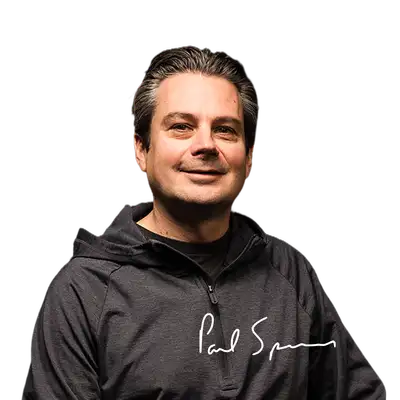
From Paul Spencer of Second Nature Solutions, a conversation about the complexities and nuances of building resilient family enterprises, especially in the face of economic and political uncertainties that loom on the horizon. See more at secondnature.solutions.
Welcome to Resilience Talk hosted by
Paul Spencer of Second Nature Solutions.
Let's dive in.
Brandon Giella: Hello and
welcome back to another episode
of the Resilience Talk podcast.
Today we are talking about our faith
series as it relates to togetherness.
So Paul, you work with families,
you work with family businesses,
and you know that togetherness.
Is an extremely important
component of being successful
in living a life well lived.
So I wanna start with this question that
I think would be really great for folks
to consider in the background as you're
listening to this episode, which is,
what are you doing today that your great,
great grandchildren we'll thank you for.
So with that, Paul, what is togetherness?
What do you mean by that?
Paul Spencer: Well, togetherness
is, uh, something that we feel,
uh, when we are living our lives,
so we have a sense of how isolated
we are or how together we are.
And I'm, and let's just think
about it, about it from our
family and when we're together.
That means that, um, not that we
agree on everything, but it means
that we have an understanding about
how to communicate with each other,
how to make decisions together, how
to have difficult conversations with
each other, how to go places with
each other, not physically places.
I mean, it could be going on vacation
and going and visiting things, but
it's really moving the family forward.
And who are we and what are we about?
What's our family purpose?
What's our family thread?
And when we think about our family thread,
we have to look backwards and like.
Like when, um, ancestry.com
first came out,
Brandon Giella: Hmm.
Mm-hmm.
Paul Spencer: really, cool concept.
And people, I think
it's, it's fun actually.
It's a lot of fun and some, some
families are stronger in knowing their
family history, like with photos and
stories and all that than others.
Um, but when you're able to understand
your family thread and who you come from,
where you come from, uh, even culturally.
What's in your background
that forms who you are, right?
We always tell the stories
of where I grew up.
Where, where did you grow up?
Are you, are you from, right?
Are you from Texas?
Did you grow up in in Dallas?
No, I grew up Right.
I know where I grew up and I'll
tell the story of my family.
And so that's togetherness.
That, that whole thing is the,
is the big umbrella above.
Who we are as a family, and hopefully
we all strive to be together as a
family and to go somewhere as a family.
And that's difficult to do.
It's really hard to do and
it takes a lot of discipline.
Like the things that we've already
been talking about does take a lot of
discipline and sometimes members of
our family aren't too excited about.
The discipline of being together.
And it doesn't have to be something
stuffy, it doesn't mean you
have to have family meetings,
although those are helpful.
But a family meeting doesn't have
to mean like a professor lecture.
Uh, it could be something fun.
It could be a cookout, right?
It could be a retreat, it could be
a, uh, a family gathering, right?
Uh, a family reunion.
And it can be something fun that
fits again into your family.
Story, your family thread, right?
You may have families who love
getting dressed up and go into
the fancy restaurant and they
love, they love the ballroom.
And you may have families that like
shorts and sandals and, uh, getting
out the briquettes and grilling right.
Hot dogs and burgers,
and that's good enough.
Going fishing, right?
We all have an understanding of what our
family in, uh, what our family thread is
and what it means for us to be together.
Uh, one other thing to that too
is, um, and I've gotten this 'cause
I've been talking about families
and charters and togetherness for.
Uh, several years now.
And when I say the things I just said,
some people, even just by looking
at me in their body language, I can
tell that they vehemently disagree
Brandon Giella: Hmm.
Paul Spencer: with what I'm saying
about the importance of family and
the the joy you get from family.
And if we're together and we can move
forward with family, then that's good.
Um, and so I asked them about
those things and they, their
family stories are not fun.
Yeah.
And they, um, maybe
don't even have a family.
I don't know.
My dad, I never knew him,
and my mom really struggled
with alcohol and my siblings.
We raised ourselves, right?
Or maybe I didn't even know my parents.
I was raised in a foster home and
I was raised in multiple foster
homes, and I don't even know
what it means to have a family.
Um, other stories are more, um,
I was abused as a child, or, um,
my family, um, is a long line
of alcoholics and so I can't see
where family is even remotely good.
Brandon Giella: Hm.
Paul Spencer: Um, so it's not to
say that, uh, those things don't
exist and everything's Pollyanna.
Because those do things.
Those things do exist.
And that's what we've talked
about before is faith and hope.
Right?
And even looking back at our
threads, our family story may not
be pleasant to think about, might
not be fun, it might be hurtful.
Um, but we all have an opportunity to go
somewhere different if we want, right?
We can change the path of our family.
Um, we can change the
direction, the place it's going.
And just going back to the, the
question that you asked, we right now,
in this moment in time, can change
the, the history, the forward looking
back history of our grandkids, kids.
Right.
And uh, and they may not really
know who Paul was right, or who
Brandon was or who Sarah was, but
we were the ones who intentionally
said, we're breaking that family
history and we're gonna be wholesome.
We're gonna get, um, a different
human capital within our family,
a different social capital and
a different spiritual capital.
And we're gonna go a different place and.
There's a guarantee that all
of our families, every single
one of us have that thread.
Some of us may not know it because
that history is too far back.
Right.
Um, but we've all had family members
in our lineage who have made that
decision and changed our family history.
And we've also had people in our
family lines who took something
that maybe was on a good path.
And turned it to a different place.
So, uh, again, the, like what we always
say, creating some awareness, creating
some understanding, um, that we are
here today in order to affect the
children, our children's children in
our families that we will never meet.
Brandon Giella: Hmm.
Paul Spencer: And those are the
sacrifices, those are the things that
we're up to today, is to set them on fire.
Right?
Right.
Uh, from a, from a gospel
perspective, right.
Set them on fire, give them the
light and let those families,
uh, be a big part of the world.
Brandon Giella: Hmm.
In therapy circles, if you're,
you know, starting with a new
therapist or, you know, reading
books, trying to do some deep soul
work, one of the earliest questions
is, what's your family of origins?
That's the phrase, your family of origin.
Where do you come from?
Because that so deeply impacts who
you are as a person today, your, your,
you know, parents and their struggles
or successes and, you know, even, uh,
there's a lot of language around like
generational sin, you know, trying to
break that curse and things like that.
Um, I, I get this sense, um, that.
We are living in this kind of more
modern time where family, especially
like the nuclear family or the family
unit, is deemphasized at the expense of
independence and freedom and movement.
You know, having a lot of like
mobility and career mobility and
experiences, whatever that looks like.
And in the midst of that, I think
we're having a lot of division
Society league, uh, culturally,
you know, maybe there's some.
Family members that are moving in
the, you know, Trump administration
direction or others are moving in the,
uh, progressive political direction
and there's like this tension.
Do you sense that, do, do you
see that kind of arc as, as a
kind of the history of families?
Do you see that kind of like how
families have changed over the past
several decades or like, what's your
comment on that and how, how can we kind
of place ourselves in history there?
Paul Spencer: Um, so when we think
about the fourth turning, um.
And then the George Friedman book, which
I always forget the name of that, but,
uh, and just look about the patterns
Brandon Giella: Mm-hmm.
Paul Spencer: the world.
I would say that we're on the back
end of that whole individualism
and the splitting of the family.
And we're, and we're in this time
where, again, like of course, like
what we've always been talking about
is the, the age of turbulence, right?
The age of change.
And things are, things are always things.
Con, even today, right now, as
we sit here, are just crazy.
Things are crazy.
Um, and that's gonna happen,
that's gonna keep going for some
time, like maybe a decade or less.
Um, but I would say that it feels to
me based, just based on my observations
and the people I talk to, that family
is becoming more and more important.
Brandon Giella: Hmm.
Paul Spencer: Faith is becoming more
and more important and there are
more and more people talking about
it and asking questions about it
and setting real, tangible, personal
and family goals around it, both in
those categories, faith and family.
Um, so I, I feel like
we're at a place where.
That is resetting and we're having
kind of a, um, re-enlightenment
area, I guess you might call it.
And I would say that the, um, the Gen
Z maybe might, might be leading some
of that and a little, there's a little
bit of that in the fourth turning.
I forget exactly, um, how he describes
it, but he does, he does talk about in
those turns, meaning in those generations.
There is a spiritual awakening,
Brandon Giella: Yeah.
Paul Spencer: so to speak.
Um, and it normally comes out of
the crisis, which we're in that
cri what he labels as a crisis,
Brandon Giella: Yeah.
I could see that there's a, there was
a, I think it was in The Guardian a
few weeks ago that talked about how
the church in the UK is, is sent, is
getting this kind of revival like,
like church attendance is way up,
especially in younger demographics.
And I believe either Gallup or Barna
really some similar data here in the UK
among younger demographics, which is a
complete opposite of what people were
predicting just even a few years ago.
Um, and I, I think it is some
of that sense that people are
wanting to be more rooted.
Even in my own generation, I'm in, I'm
a mid thirties, two kids and my friends
and peers, colleagues are giving up
career trajectories and moving and
all that kind of stuff to stay more
rooted, you know, have more of a local
community and, and create stronger bonds.
Paul Spencer: I think, uh, yeah, uh,
I think that matches to what I would.
What I'm observing.
And then I would also say too, even
for me, uh, just the prediction of
becoming more local, more localized, um,
because of the technology that we have.
The advancements that we're like, you
and I only know each other because of
this thing that we're talking on here.
Brandon Giella: I know.
Yeah.
Paul Spencer: Uh, otherwise we
would never know each other.
Um, so we have this, this way of
communicating and, and meeting
each other and connecting and then
having face-to-face conversations.
Not only do we have we met,
but we know each other.
Uh, and we know what what
we each other looks like.
Brandon Giella: Mm-hmm.
Paul Spencer: How each other behaves.
Um, just as if, obviously it's
not as awesome as being in person,
but it's pretty high fidelity.
Um, and so that that technology
is giving us an opportunity
that we don't have to move.
You don't have to move to Cincinnati
to work for p and g anymore.
Right, and you don't have to move to
Brussels to continue to work for p and g.
I don't know, maybe they still do,
but, uh, those things, the, the idea
of, uh, even for the sales guy, right?
If you, if you think about even 10 years
ago, 20 years ago for sure, if you were
part of any kind of business and you
were in the sales group, you, uh, almost
80, 90% of what you did was travel.
Brandon Giella: Hmm.
Paul Spencer: On the plane or
in the car because you had to
go meet people to make sales.
You couldn't do it right on the phone.
Right.
Or through mail or email.
Um, and a lot of that is reducing,
which then reduces our demand to get a,
uh, a job that we're seeking or a new
career advancement or a new promotion.
And I can still do it remotely.
Brandon Giella: Yeah.
Yeah.
Paul Spencer: Uh, another thing.
Cool.
That's, that's happening too.
And this kind of started with the whole,
uh, organic food movement, um, and the
ta uh, the farm to table concept and the
farmer's markets, which are really big.
I don't, are those, I mean, those
are all over the place here.
I would imagine there's same
Brandon Giella: Yeah.
Paul Spencer: Um, so the, the whole
idea of industrial farming and,
um, even like the industrial, um.
Chicken, right beef and all of
those things, those are becoming
more and more localized as well
Brandon Giella: Yeah.
Paul Spencer: because the technology
is advancing for that to happen
Brandon Giella: Yeah.
Paul Spencer: and for it to have a higher
quality, for it to be smaller footprint.
And so it's possible for us to just live
in a certain community and have all the
things that we need, plus the things
that are coming outside of our community.
Brandon Giella: Yeah.
Paul Spencer: Right.
Um, so anyway, uh, there is a
new world we're gonna experience
and the timing of that.
I don't know what the timing of that, but
that's sooner than, it's closer than not.
Brandon Giella: Mm-hmm.
Paul Spencer: Um, and that's
going to, that, that gives us
all an opportunity to build a
community, to build a family, right?
And then we don't get splintered
apart 'cause we never see
each other, all those kinds of
Brandon Giella: Yeah, Yeah, yeah.
I'm, I'm sensing that even in the
business world where folks are
wanting because of, let's say like
the fast food of business accelerated
by ai and there's all kinds of.
You know, social media,
tearing people apart, whatever.
There's like so many conversations that
go into that, but I'm, see, I'm feeling
this or I'm, I'm reading and seeing
and, and go seeing what's going on in
the business world where people are
wanting to return to like a smaller.
Higher quality, craftsman, artisanal
kind of business, if you will.
Um, even the, the kind of things that they
produce that's neither here nor there.
That's a whole tangent you and I could
talk about for hours about AI and return
to office debates and all kinds of stuff.
But, um, but let's say, okay, so
somebody is seeing the importance of.
Let's say, uh, creating this kind of
family charter of sorts, you know,
thinking about the mission of the
family, thinking about 200 years from
now, what do I want my great, great
grandkids to, to experience and know
of me or of our family, which is so
important, like I said, about like the
art of living and being a, a successful,
you know, quote unquote successful,
um, you know, kind of healthy, thriving
person, flourishing, shalom kind of life.
What do we do?
You know, let's say I make that decision.
I want to do that, you know, today.
Wednesday in September, I'm ready
to like not have the generational
sins of my past or the family of
origin story that has shaped me.
I want to go somewhere different.
You've got some, some kind of tenants
or themes, um, uh, around like the four
threads of the enterprise are, are,
can you talk about those and is that
the path forward for wanting to create
this kind of family going forward?
Paul Spencer: Uh, yeah.
So the threads of the family
are, are, um, more my constructs.
So you may end up with
something different.
Um, but I think that these
are relevant for everybody.
And so the four of those
are, are faith in God.
And what does, why is that?
Well, that's a family
vision that transcends.
and Enhances many generations, right?
So it's not about today, it's not
about being in the moment, right?
Being in the present.
Um, it's about understanding that,
that we are beyond ourselves, right?
God transcends everything
and time is infinite, right?
But we're just like one
little tiny speck of,
of that.
So in order to really understand that.
What you do today has an impact a hundred
years from now or 200 years from now,
or our family's children's, children's
children who we will never meet.
You have to have, you have
to believe in transcendence.
You have to believe in God.
So that's the first one.
The second one is togetherness.
Which is the topic of today, and really
that's a family that makes to, makes
decisions and works together, right?
That's what we strive for.
Um, because when we're together,
we go places when we're separate,
this is not much different
than we talk about in business.
If we can get.
Thinking about the, the business owner
or maybe the business executive where
they're used to kind of really white
knuckle in it, meaning they hold on to
the decisions and the conversation is,
uh, what, what would you rather have
you and your two trusted advisors in
the back room making all the decisions?
Or would you rather have a hundred
people, your employees making small
decisions on continual improvement?
Which one is gonna take you?
Places.
The second one is, and you may not
believe it, but it's guaranteed the second
Brandon Giella: Mm-hmm.
Paul Spencer: right.
So it's the same thing here.
Uh, togetherness is a, is a really
important part of the family.
To make those decisions together, but
also for the longevity aspect of it.
If we want longevity across generations,
we have to understand what togetherness
means and how we model it for our
family so that our kids understand
what it means to be together
Brandon Giella: I,
Paul Spencer: they can, they can
take those practices because that
becomes their thread going forward.
And they teach their kids,
their kids, their kids.
Brandon Giella: this is a, a
point you could Google later, uh,
if you're listening, um, is the,
the principle of subsidiarity
from Catholic social teaching.
If you're, uh, this is a new one
that I discovered recently, but
that phrase or that, that, that term
subsidiarity is to move that decision
making power down to the lowest, uh,
uh, unit of the organization or the
team or the family or something, which
I've found actually really helpful.
Paul Spencer: Yeah.
That's great.
So that's togetherness.
The last two is learning, right?
So, uh, so this is the tagline with that.
A family that seeks to be
lifelong learners who share and
act on what they learn, right?
It's just another ingredient.
in to going somewhere.
If we're not really learning and
we're just drinking beers in the
backyard and grilling burgers and
watching football games, that's okay.
But what are we learning?
How is that, how is that
affecting our family over the long
term?
And then the last one is flourishing,
and this is one where, um, we can
do the first three fairly well.
The last one is really hard because
what, that's what that means is that
each individual in our family is thriving
and flourishing, which means that if we
know or understand, one of us is not.
Then we, again, we come together, we
have faith in God, we learn and we decide
how do we enhance each other's lives,
even for those who are not flourishing.
Um, and that's hard too because a lot
of times, especially for the bigger
families who have a, a strong family
history and there's always one or
two outliers in the current family.
Right.
They don't wanna be in the
family cookie business.
They're not, they're not
interested in manufacturing
and they're never going to be.
But, uh, and so are they really
enjoying themselves when the family
gets together and talks about recipes
or the new manufacturing equipment?
No.
So how do we include them and then how do
we help them thrive and flourish with some
of the things that they're interested in?
So those are, those are the four threads.
Brandon Giella: So getting more practical.
What, what, how have you seen this
work out maybe in your own life or in
your client's lives or, or maybe some
more practical, like, what do I do?
You know, let's say like, I make this
decision next week, next month, next
year, you know, January, I'm making a
commitment to, to changing my trajectory.
Yeah.
What do you recommend?
Like, is, is like maybe the, um.
Maybe like a family devotional.
It would be a great idea.
Or like set up like a Sunday
dinner, you know, with everybody.
Like I know some folks that they
do Sunday dinner or they do Friday
movie night, you know, and that's
just what they do as a family.
And create that kind of like
a kind of ritual or, or um,
kind of tradition together.
Is it?
Things like that.
I mean, how do you, how
do you break that down?
Paul Spencer: Yeah, that's it.
So if you're starting from zero.
Which I would say that, uh, for me,
and I'm a Gen Xer, and I would say
just, um, as a stereotype of our
generation, my generation is the
whole individualism is, is very strong
during our time of living, right?
So we did whatever we wanted to do.
Um, and if there were any family
rituals or traditions, we tended to, eh.
Brandon Giella: Yeah.
Paul Spencer: So those, those things
don't really exist, I would say
for, for my generation as a whole.
Right?
So I would say for me, a lot of those
things have to be started from scratch.
So, and let me ca caveat all that.
That doesn't mean that I had a poor family
history and tradition and all of that.
It just wasn't a cohesive togetherness.
That's how I would describe my family.
There wasn't a
Brandon Giella: Same.
Same.
Yeah.
Paul Spencer: And so, so if I'm
starting from there, then I start,
I, you just start really small.
Like you don't need to create this massive
thing like we do Friday pizza night.
So normally we have maybe a sports game
or, uh, maybe just the kids are off
school or they get off school, and then
we'll, we will find a new pizza place
and we go to all different pizza places,
not just the same place every time.
And we don't order it
in, we go out somewhere.
So something like that.
Um, now if you wanna get
more formal into it, um.
There are just some different
questions that you could ask yourself.
Like, what is, what is it
you that you strive for?
Like, what is, what is the
mission of your family?
And you, this is, this can actually
be a lot of fun, uh, depending
on who you are, but you can
look backwards into your family.
And if I look backwards into my family,
um, I had a lot of entrepreneurs
in my family, so we had, um.
We had, uh, out in Wyoming,
um, they were, they owned, um,
um, grocery stores in Wyoming.
Um, and then, uh, there were
ranchers in my family, sheep
ranchers out in Idaho and Utah.
Uh, we had a Greek, uh, restaurant.
In my family, right?
This is not me,
this is like in the history, right?
Um, and my grandpa Spencer was a,
uh, out of the basement gunsmith
and ran a little business there
and had all these different things.
And so I think if you were to look
back and with specific things and
then kinda open up the aperture, you'd
say, oh, look, it's a history of.
People creating businesses, right?
I didn't know any of that
when I started my business.
I just did it.
Um, but would that have changed
my trajectory or, um, what I had
done, if I would've known that?
I don't know.
But I think it helps.
I think it helps to understand some,
I've had this conversation with lots
of different families and some of
'em will look back and say, geez,
we're, we're a family of priests.
Brandon Giella: Hmm.
Paul Spencer: Um.
Not necessarily Catholic priests, but
just ministers and um, and evangelists.
And not to mean that they started
churches, but that's just who they were.
And you kind of look and, and there's
like, I can count 5, 6, 7, 8 of them
that were, that were in the ministry,
just call 'em in the ministry.
And so that could be a thread too, in
your family and you're like, oh yeah.
And that's another, I think an
important ingredient is that.
Our family threads, uh,
are more aligned than not.
Brandon Giella: Hmm.
Hmm.
Paul Spencer: And so it does mean
something when you can look back.
And also part of my family history is
military like, like a lot of my family
members in the past were in the Air Force.
And so does that uh, mean
that I went in the Air Force?
No.
But it does, it does create a thread
on what we do on Memorial Day.
Brandon Giella: Yeah.
Paul Spencer: As a family, and
it does create a, an interest in,
uh, history of World War II and
the Korean War and Vietnam, and
those are threads of our family.
Um, and so anyway, that's a fun thing
to kinda look backwards and then you get
to decide what that means for you, and
then that's the vision of your family.
So going forward.
What is the vision of your family?
What's the mission of your
family that you strive for?
Right?
And you can put those things down, um,
and then you can see what that looks like.
What are the baby steps to that?
The atomic habits of togetherness for
your family to achieve whatever your
family mission is, or what your family
story is that you want in the future.
Brandon Giella: Like you, I, I had
parents grew up in the sixties.
They were born in the sixties and
they, it didn't create that kind of.
Tradition or kind of ritual
cohesion, if you will.
And so I do have to
create that from scratch.
And I have this colleague who is big
on family longevity and cohesion.
And he asks his kids every day they're
driving to school, who are you?
And they have to recite this thing about
who they are as their their family member.
And it's led me to do that with my kids,
where every night I pray over them that
they would be healthy, wise and strong.
That's what I want them to know about.
Being in this family, and I wish I we're
strong enough where I could create some
kind of like Family Crest, but I'm solidly
middle class and that will not happen.
But monogram towels is about as
close as I'll get, but I do think
that kind of like clear mission and
vision of who you are and what you're
about as a family is so, so key.
Paul Spencer: Yeah, I think there's
something there too as well, which
I've experienced on my own, meaning
kind of thinking about this and
doing some of these things is, um,
a lot of times there's not enough,
um, strength or muscle memory
Brandon Giella: Mm-hmm.
Paul Spencer: me or in my family
to really achieve the mission.
Brandon Giella: Yeah.
Yeah, I feel that.
Paul Spencer: So I, I think what you
just said is, is a perfect example
is sometimes we can observe friends
and families and they're like, and
you're like, oh my gosh, so amazing.
Like, that is really so fruitful and
so like, almost to a jealous, like a
Brandon Giella: I was about to say,
it's a little envious in there.
Yes.
I feel that all the time.
Felt that this morning?
Paul Spencer: I I think but though
for us to realize is their family
story and history is different.
Brandon Giella: Yes.
Paul Spencer: Right.
And it's, it's grown
over and over and over.
And their muscle memory
is what creates that.
Brandon Giella: Yeah.
Paul Spencer: And so I think there's
something for us and everybody, right,
depending on where you are, um, is to
give yourself a little grace and then to
also understand that even just what you
just said, uh, praying over your children.
For strength, wisdom and
Brandon Giella: Healthy wanna
be healthy, wise, and strong.
Paul Spencer: health, healthy, wise,
and strong, um, is the first part
right of creating that muscle memory.
And you may not, your family may
not reach its vision or mission
Brandon Giella: hmm
Paul Spencer: for two or three
generations, but they wouldn't have
been able to do it without you starting
something again, the atomic habits.
The working out.
I can't, I can't, I can't beef
up, I can't get the muscles right
Brandon Giella: No Gaines.
Paul Spencer: go to the gym and
if I'm not going to the gym.
Right.
Right.
So all those things I think are all
part of just understanding where we
are and where we fit with all that.
Brandon Giella: Yep.
Yeah.
Atomic Habit says just start by
putting your shoes on in the morning.
Paul Spencer: Yeah, that's right.
Brandon Giella: And it's
like, I can do that.
I can put my shoes on, and
then it goes from there.
Which is, which is great.
Okay.
Well, what, what should, what would
you wanna leave listeners with?
What's, what's something that, um,
Paul Spencer: Uh, yeah, I
think I have two things.
I have two things.
So another, another important thing
to, to really get a grasp on is
that, um, family business is also
a lot of talk about family assets.
And so we hold really dear
the business that we have.
'cause that's our family asset.
And I learned this early on with second
nature is sometimes families will
hold onto the fa, the business much
tighter than they will the family.
Brandon Giella: Yes.
Paul Spencer: Um, and so anyway,
what came, what came outta that
is just my realization is that
there's actually two family assets.
There's the members of your family,
which is the human capital, right?
And then the time you have with them.
Brandon Giella: Mm
Paul Spencer: Family members and
time, those are your family assets.
So if you consider that as, these
are the two tangible things that I
own within my family, my children,
my, uh, immediate family, right?
Uh, mom and dad in-laws.
Uh, and then you go to your
extended family, right?
And even your neighbors as well.
You can, you can include
them into your family, right?
But those are the things that.
Propel longevity within your family.
Brandon Giella: Hmm.
Paul Spencer: Um, and you only
have a finite amount of time,
and really, you only have a
finite amount of family members.
And so having an understanding of who the
members are in your family, what are their
God-given talents and how do we create a.
Togetherness, knowing what makes
up each one of us to go forward and
propel the longevity of the family
in the time that we have together.
Brandon Giella: Hmm.
Paul Spencer: So that's, that's the
one thing that I think is important
for everybody to understand.
Um, and then I just wanna read
something that I think is, um,
that's important here too, is
I'm, I'm gonna read this.
We must change our family
mindset to be eternal.
Brandon Giella: Hmm.
Paul Spencer: To embrace eternal hope.
Our daily lives are for the children of
our families that we will never meet.
So everything that we're doing right
now that you and I are talking about
and putting our words onto tape.
Brandon Giella: I don't
know what that is, Paul.
That's before my time.
Paul Spencer: I know I love,
I love our generational gaps.
I was listening to, uh, I was this
sidetracked, but I listened to the, to
something the other day and you were
correcting me on, on doom scrolling,
and I was saying infinite scrolling.
You're like, doom scrolling.
So anyway, uh, it's, I
am gonna read it again.
Our daily lives are for the children
of our families that we will never meet
Brandon Giella: Hmm.
Paul Spencer: and.
The importance of that is that
when we are in the moment and the
things that we're doing, uh, we,
it doesn't mean we can't have fun.
We enjoy ourselves.
We have joy in our life.
We have happiness.
That's what we strive for.
We don't always get it.
Um, we live a virtuous life, but we
know that the things and the decisions
that I'm making today to pray over
my children, to give them that muscle
memory for the longevity of my family.
Will not be for them, it will
be for their children's children
Brandon Giella: Hmm.
Paul Spencer: and we will never
meet them, not in this world.
Um, and then one other thing too.
So each family member provides unique
talents that propels the family longevity.
And ultimately we make decisions
together today that have Im implications
for our family in the next C century.
Brandon Giella: Hmm.
Paul Spencer: So.
Uh, so he asked, what does it look like?
What's the practical part?
I know I tend to think in
big philosophy, big things.
Um,
but you, you get this into your brain
and you spend some time devoted to it
and you pray and you let God talk to you.
He will tell you what it means for you.
Brandon Giella: Hmm.
Paul Spencer: Um, and even if you're
a little dry in that area, um.
You'll noodle on it and you'll,
you'll figure out what are those,
those little pieces for you to
create the, the family charter.
The family longevity for
your, for your family.
Brandon Giella: Just put your shoes on.
Paul Spencer: Just put your shoes
Brandon Giella: That's right.
There's this, uh, term I heard recently
called cathedral thinking, and that
was the idea that you get these group
of people to build something that
they will not see the completion of.
Paul Spencer: Mm.
Brandon Giella: And I find that so
interesting when you think about
Notre Dame or any major cathedral
took hundreds of years to build.
I'm laying stones and building a column
or a door that I will never walk into,
but I'm laying the stones that'll, that
Paul Spencer: That is beautiful.
That's exactly it.
That's exactly it.
That is,
uh, that's that eternal thinking.
And I would say, we were talking about
there the times today and individuals
and maybe the family's not as important.
Um.
That is something that
we struggle with today.
I would say in our society,
everything is immediate.
We have the technology that it's now,
now, now, um, and we really struggle
to understand that the storms that
we're having, the things that are
going on in our world, like what's
it going to be like in 10 years?
What are the things that I'm doing
today that will make 10 years
from now great or at least better.
Um, and we, a lot of people
really struggle just for tomorrow.
Brandon Giella: One could argue that
this podcast is that very thing.
We've got 36 episodes now of your
brain on tape that your grandchildren
could listen to, you know, and learn.
Like, who, who was my grandfather?
What was he like?
What did he think about,
what did he care about?
And I, I think it's
such a beautiful thing.
Paul Spencer: I think
about that a lot actually.
Brandon Giella: Hmm.
Paul Spencer: There's so many cool things
where, I'll go back on the things that
I've written, like this topic I wrote this
podcast topic I wrote back in early 21,
Brandon Giella: Mm-hmm.
Mm-hmm.
Paul Spencer: maybe even, probably
all really started in 19, but then
I put it all together in 21 and
then I go back and I read it and I'm
like, oh yeah, that's kind of cool.
And then even just listening to some,
this is not just about me, but for
all of us, there are things that we
have in our minds that, um, that when
we do get 'em on paper or on tape,
that uh, we forget about 'em.
Brandon Giella: Yeah.
Paul Spencer: And then we
go back and we're like, oh,
geez, that guy's brilliant.
Like, what, what happened to that
Brandon Giella: I am so smart.
Paul Spencer: Yeah.
Uh, but those are, those are a
nice compendium of really, of
who you are and your thoughts,
and those things are fleeting.
So a lot of people are
very good at journaling.
I am not.
Um, but those, those
are, they're fleeting.
Um, and that's another part of the family
thread history is how do you record
some of the things that you're up to?
Brandon Giella: That's right.
That's right.
Yeah.
I've known folks that do a family podcast.
Literally, they get their
grandfather, who's 90 to
just sit and talk for a little while to
get out his stories and, and put 'em on
tape so they can listen to him later.
Or journaling, you know, many,
many people that are, are big
into entrepreneurship and success.
And how do you, how do
you live a good life?
Journaling is like one of the top
things, especially gratitude journaling.
Just write, write down your
thinking every single day.
And, uh, it's, it's really powerful.
Paul Spencer: Yeah, we
talked about that last time.
It's, yeah, it is.
Uh, yeah.
That gets you out of the
moment, out of the, the rush.
The rush.
The rush, and you have to kind of,
we talk about this as well, right?
The ability to slow down and in order
to really write those things down and
like, you can't just do it in two seconds
and then head out the door, right?
You have to spend 20 minutes and
reflect and then put, put it on paper.
Brandon Giella: That's right.
That's right.
Well, Paul, thank you.
This, again, is just amazing wisdom
that I hope people take away and
like really get it down deep because
it will change your life and it
will change you for the better.
Change your kids' lives, your grandkids
lives, your great grandkids lives.
It's, it's really key.
So
Paul Spencer: Yeah.
And if, yeah, and if you've been blessed
with, uh, a family muscle memory, family
story, and a family thread that you're
proud of and that, uh, you kind of
reflect on and you say, geez, it is,
I never really appreciated it, but I.
Now that I see it, I do
really appreciate it.
Then it's up to you, right?
Keep it going,
and to improve it or advance it
Brandon Giella: That's right.
Paul Spencer: as you see fit, right?
As God has you in store, right?
He's given you gifts to keep
that thing going in your own way.
Brandon Giella: And if you're also
blessed with an internet connection,
go to Second Nature Solutions.
Sign up for our newsletter and re respond
back to Paul, this monthly newsletter that
you have with some ideas, some stories,
some things that you're adopting and,
and implementing in your own family.
And, uh, find Paul on LinkedIn.
Chat with him, share his stories.
Paul Spencer: Yeah.
I love to hear from you guys.
It's fun to, fun to hear
what, what you guys are up to.
Brandon Giella: Well, Paul,
thanks as always, and we'll
see you on the next episode.
Paul Spencer: All right.
See ya.
Bye.