Subscribe
Share
Share
Embed
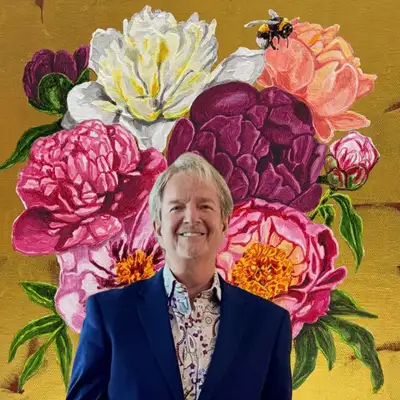
Whether through writing, broadcasting, or word-of-mouth, stories have always forged a connection between people and places. Nowhere else is this truer than in The South. Southern artist, influencer, speaker, and author Mark Ballard will weave stories of life in Macon, Georgia, and stories of the South. Tales told as only Mark can, will be interwoven with guest interviews and listener questions, and requests.
Mark Ballard (00:01)
Hi, I'm Mark Ballard. This is my Genuinely Southern podcast where I will share Southern stories and perspectives that show just how unique our South is. Growing up in the South gives people a little different perspective to life. I've always used the South to inspire me and my artwork, my writings, and even my food. I've been telling stories about the South for years in my newspaper articles.
My magazine. I even had a television show. The South is more than a region to me. It's genuinely a way of life. That's why I'm excited to share these Southern stories with you and introduce you to interesting people. I'm proud to be genuinely Southern and I can't wait to tell you why.
I'm Mark Ballard, and I'm really excited. I am now fixing to do a podcast. This is my first, very first one. And I've got a very special guest with me, but I was telling my wife the other day, this is the only time that I have ever just talked, and it didn't have to be creating a wreath or cooking something or whatever. So this is gonna be fun. Sitting in front of me, I'm gonna use my notes for this because it was too much to say. I've got Chuck Lavelle of make a night.
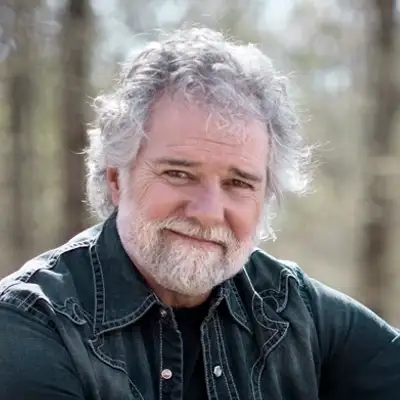
husband, father, grandfather, musician, author of numerous books, internet presence, I'm tree farmer, philanthropist, and one of the nicest southern gentlemen you'll ever meet. I've bumped into you in the Kroger before. I'm thinking, is that Chuck in the Kroger? Yeah, there he is. He's in the Kroger. So I'm really excited about it. And I'm I'm honored. I'm sitting in front of greatness to have ⁓ my first one be you.
Chuck Leavell (01:33)
So you
Pleasure to be with you, my friend. Perfectly.
Mark Ballard (01:49)
Okay, let's start with 'cause I d just because I don't know any of this. When did you learn to play the piano?
Chuck Leavell (01:56)
I learned from my mom. she could play. She was not a teacher, not a ⁓ instructor or anything like that, not a professional. We grew up in Alabama and I was the youngest of three children, and oftentimes me and mom in the house when I'm five, six years old with my older brother and sister in school and dad out working, so tug on her skirt, mama play me something. Yeah she would oblige and I would just get all excited, you know, watching her hands go up.
and down listening and so she was my first inspiration.
Mark Ballard (02:31)
Mine was the same. You want to tell you this real quick. I mother wanted us, both my sister and me, to take ⁓ piano lessons. So when I took mine, I could not read music. I could hear it and I could play a rough version of it back, but that lady wanted every note played, you know. yeah. I was it was frustrating to her. I didn't even want to do it. I didn't w I dreaded the day to come. And so finally she said, You are wasting my time and your parents' money. And I said, Good, I don't want to be doing it anyhow because I can't.
I can't breathe the music and so I guess what she gave the refund back and she So I think now we got I mean, I can't read it. I want we want our cash back. Okay, so what age did you start playing the piano?
Chuck Leavell (03:04)
Did she really okay?
Very gracious of her.
Well, it you know, j just fooling around with it, Mark, probably age five, six, ⁓ and it was nothing serious, ⁓ just sitting with my mother, ⁓ letting her show me s very simple things. I stuck with the instrument, even though very much as you described, I took lessons for a brief six months.
had the same problem you did with reading music. ⁓ I could hear things pretty easily and imitate, but gave up the lessons. But I always gravitated back to the instrument. And then of course ⁓ rock and roll came into the picture when I was a little older and the
13, 14 years old. ⁓ my cousin played guitar, showed me some things on guitar, had my first band at that age, 14. It's unbelievable. And it became an enterprise for me pretty early. our band, The Misfits, M-I-S-F-I-T-Z. Of course. Of course. ⁓ The Misfits played the YMCA every Friday night. We had a steady gig. Then the first television station came to Tuscaloosa, where I grew up mostly.
And they wanted to emulate American Bandstand. They initiated a program very cleverly and creatively called Tuscaloosa Bandstand. And we were the band. ⁓ so we had Friday night at the Y, Saturday morning. We got paid in both instances and it became an enterprise. And that I was like, wow, you can actually make money and then when you're 14, 15 years old doing this.
Mark Ballard (04:49)
You have to be
a bad boy at the grocery store.
Chuck Leavell (04:52)
No. And and I just fell in love with making music. And this was the era w one of the fortunate things about growing up in the South is not only did you have the influence of country R and B, soul music, ⁓ gospel, but you had British British invasion during that era in the sixties. And so, you know, there was all these influences and wonderful musics coming from all different directions and our band
played with a little bit of all of it and that was a great thing for the experience and for learning.
Mark Ballard (05:28)
So I I read something about the the moment you decided you wanted to turn that into your life, you know, career was when you after seeing Ray Charles.
Chuck Leavell (05:38)
Very true, yes. my sister had a date to go see Ray. I was already interested in music. I guess we're going back to twelve, thirteen years old maybe. We had that wonderful album called Modern Sounds and Country and Western Music that Ray did and they had I Can't Stop Loving You and and all this
wonderful music on it and we heard it in our house. And I love that voice, that husky, deep, incredible voice, you know. And so Judy had a date to go see Ray at the Tuscaloosa Coliseum. My parents had another engagement. They didn't want to leave me at lo alone at home. And so they asked Judy, Can't you take Chuck? And she very graciously agreed to do that. And so I went with them.
Mark Ballard (06:20)
That's sort of like a little babysitter.
Chuck Leavell (06:27)
And was just absolutely blown away. You know, it was not only Ray, who was amazing and ⁓ always and always will be amazing. But you had ⁓ Fathead Newman on Sachs, you had the Raylettes singing, you had Billy Preston playing organ at the time, who another one of my heroes. Right. And it was just a life changing experience. I walked out of that room ⁓ saying, you know, doctor, lawyer, ⁓ salesman, no, musician.
If I could ever be in a band or a situation, not necessarily playing that exact kind of music, but if I could ever be in a be in a band that would move people the way that that just moved me, that's not a bad goal.
Mark Ballard (07:12)
is beautiful.
That's the way I feel about my artwork. You know, when somebody or something I write when I have the column, if it's touch somebody then we we got a double. You got you're you've you're fulfilled and you've helped somebody else and you don't you don't ever know how many people you've really touched, you know. What would you say to someone that was young and maybe they liked music and maybe they wanted to play the piano or some other instrument. I heard you play the tuba too.
Chuck Leavell (07:40)
That was junior high school for a short period of time, but but it it did help me understand something about ensemble playing, you know, learning to listen to the other instruments in the orchestra while you're doing your own part. ⁓ and that was that was helpful at a young age. So
Mark Ballard (07:57)
What would you say? Because people come up to me and ask me that all the time, see somebody, because you had a strong mother that was very and your biggest cheerleader like me, mine was with me. But if they didn't have that, what would what would what advice would you give them if they s dreamed big and wanted to do something?
Chuck Leavell (08:13)
Well look, you know, ⁓ no matter what you're calling in life, hopefully you find a passion for it. ⁓ but it's it's work, man. You know, y you don't just fall into it. ⁓ i it takes focus, concentration, it takes heart and soul and and you gotta be interested in it, hopefully and enjoy it. ⁓ but you gotta spend the time ⁓ y in learning your craft, whatever that craft is, you know. And
That can be difficult at times, but it can be very rewarding when you have some breakthroughs, you know, as a musician when you that's what that chord is. ⁓ man. And if
Mark Ballard (08:55)
We
were exposed to a lot of different kinds of means, I think they had to help.
Chuck Leavell (08:58)
Well yeah, it has been helpful, the diversity, you know. And the fact in my career that I've been very fortunate to work with a lot of different artists, you know, to work with the almonds early on. ⁓
you know, ⁓ Greg is a solo artist and ⁓ Dickie is a solo artist. The other artists that came through Capricorn R studios during those years, Bonnie Bramlett, Bobby Whitlock and and so many others. But then later on, working with Eric Clapton and and George Harrison, thank you. Wow
to David Gilmour and and the Black Crows and Blues Traveler. That's that's been the real joy of my career is being able to be in these different situations and do my best to contribute ⁓ to whatever that is.
Mark Ballard (09:48)
So Capricorn records here at Makon was a big, big deal back in the 70s, 60s, 70s. So you were all tied in with that.
Chuck Leavell (09:54)
Yes, it was. Absolutely.
It's the reason I came to Macon, Mark. You know, I was in Alabama growing up. ⁓ spent a little time in muscle shoals. As you know, that was also a hotbed of recording, but
Mark Ballard (10:08)
But she was there
very young, I heard that was real impressive for somebody your age to even be ⁓ there.
Chuck Leavell (10:13)
It was ⁓ it was a a learning experience. I I didn't get a lot of work because there were older, more experienced musicians there when I was fifteen, sixteen years old from the
Mark Ballard (10:23)
Hey, ⁓ huh?
Chuck Leavell (10:25)
I had kind of hit a brick wall there because the older musicians, the more experienced musicians, were gonna get the cream of the recording sessions, and you know, I would get the dribbles, the crumbs. But I did have some good experiences there, but I I had this realization, well, you know, if I want to try to make it in muscle shows, it's gonna take a long time. And I had heard about Capricorn Records, I had heard about Capricorn Studios. Of course, I was very familiar with the Alman Brothers band, they had already released.
their first album and ⁓ even the second album, ⁓ I Idle While South.
⁓ at this time. Now I had a mentor, a good friend named Paul Hornsby. Paul's still a great friend. Right. Paul was actually in the precursor of the Allman Brothers band called the Hourglass. They had gone to it was Greg and Dwayne, Paul and some other musicians. They had gone to California and they had done two records. Things weren't really working out great. The band broke up. Dwayne came back east and started doing these incredible recording sessions
Mark Ballard (11:09)
Yeah.
Chuck Leavell (11:32)
sessions with Wilson Pickett and Aretha Franklin eventually formed the Allman Brothers Band.
Paul ⁓ spent time with me and formed a band with me called the South Camp in Tuscaloosa and we were playing clubs and but Paul had become a mentor and a and a friend. So Paul gets called to come to Macon, Georgia. You know, he he gets a call from ⁓ the company and because of Dwayne's association with Capricorn, and he I'm losing my guy. He's leaving Tuscaloosa to go to Macon. I said, What the heck is going on in Macon, Georgia, you know?
I better go check this out. So I got in my sixty-five holes cutlass station wagon with a a friend, bass player, and we drove to Macon, Georgia. We were given the tour of of the studio, state of the art studio at the time. there was a booking agency called Paragon, so they were booking the bands for live concerts. we were given a a tour of the offices on
you know, pretty fancy stuff and personnel in there. Phil Walden, the president, and Frank Fenter the vice president.
The trip, that first initial trip was so impressive to see all this stuff, you know, to see the recording studio, the offices, everything was official and and they were looking for musicians. You know, they were like, Chuck, come on over here. We're looking for people. As opposed to ⁓ the situation in Alabama, which would have been spending a lot of years trying to move up that ladder. But ⁓ so that's that's what attracted me to Macon and I'm glad it did.
I said, looks like opportunity to me. I think I better come on over here. Now that was 1969 that I had the first visit, and then I moved over in earnest in 1970 and ⁓ made my way up the ladder. Yeah, I met Rose Lane. You know, fact was when the doors of Capricorn offices opened up, there were two beautiful women, one of which is my wife of 53 years now.
Mark Ballard (13:25)
Matt Roseline.
Chuck Leavell (13:39)
One was this gorgeous African American woman named Carolyn Brown. She was Phil Walden's assistant. And the other one r was Rosaline White. White and Brown. And they were great friends and you know they th here comes this kid, I think I was seventeen at the time, and
Mark Ballard (14:01)
You got an early start, that's for sure. And so this
is a guy from Alabama coming in there and you're thinking, ⁓ my gosh, I've got I gotta get a date with this girl, so y'all start a dating.
Chuck Leavell (14:10)
The first date we had was New Year's Eve of nineteen seventy-two going into seventy-three. Rosalane had been responsible for putting together one of the first ever simulcasts which involved ⁓ radio stations all across the country coordinating
a live event and the event was the Almond Brothers band playing at the warehouse in New Orleans on the New Year's Eve. And so Rosaline had been largely responsible for coordinating all of this. And ⁓ the company said, well since you work so hard on it you need to come down to New Orleans for the show. Which she did. There was a dinner which we sat together and we've been together ever since that dinner.
Mark Ballard (14:56)
Yeah, definitely. It was meant to be, right? I do believe that kind of thing's happened. All right, tell me about how the roll how you got involved with the rolling stone.
Chuck Leavell (15:05)
Well, I guess nineteen well, let me back up and say that one of the biggest fans of the Allman Brothers band was a promoter named Bill Graham. A lot of people may know that name. Bill ran the Fillmore East and the Fillmore West. They were very famous venues for r rock and roll players of of ⁓ every genre you can imagine. ⁓
And he loved the Allman Brothers band, Bill did. And Bill became tour director for the Rolling Stones in 1981. The band wanted to try some new blood, and Bill, having been a fan, said, Well, there's this guy down in Georgia. Maybe you ought to put him on the list. So I get a call out of the blue from his office, and within thirty-six hours I was on a plane for an audition. How about that?
Mark Ballard (15:58)
That's where you
call you know, putting yourself in the position for something great now.
Chuck Leavell (16:02)
And
I did not get the gig immediately. I had a great audition. It was supposed to be one day. It wound up being three days. I felt like things had gone really well. But the band decided that they had a tour that was eminent at the time of the U.S. And they had been ⁓ using a guy that was very close to Ronnie Wood, ⁓ a guy named Ian McClagan, great piano player, that played with the faces. Of course, Ronnie Wood was in the faces. And so Mac had
as we call him, had done the previous tour with the band, previous couple of tours, I think. And so while there was you know, two different thoughts going on, some some of the guys wanted me obviously Ronnie wanted to keep Mac, and they decided to play it safe and keep Mac for that tour. But at the end of it, I get the call saying we're gonna tour Europe in eighty two next year in the summer.
And you're wrong. So that's when the gig fell How did that? It felt great, it really did. ⁓ as just a little caveat, during that eighty one tour, and some people may remember this, the Stones came to Atlanta and they played an unannounced show at the Fox Theater.
Mark Ballard (17:03)
Fail.
Chuck Leavell (17:19)
And I think the the marquee might have read The Cockroaches, right? And and of course the secret got out the morning of the event, but I got a call the day before from Ian Stewart, who was a confidant of the band and had become a good friend. And Stu, as we called him, Stu said, ⁓ we're going to be in your backyard. Would you like to come have a have a bash? So I went up and sat in with them ⁓ on that show.
And that kind of rekindled the relationship and I think eventually resulted in getting the g
Mark Ballard (17:54)
Have you ever had mit jug or any of the stones out here too?
Chuck Leavell (17:58)
No,
there was a time Mick was in a film, ⁓ not one that people would know much about, a a not so good sci-fi film called ⁓ Free Jack, and he was filming in Atlanta, and we had a plan for him to come and spend a day on a day off. Well it absolutely poured with rain. And so we spoke that morning and he said, What do you think? I said, Well, you can see some mud, you know.
Mark Ballard (18:27)
Georgia Mudd, Georgia Mudd.
Chuck Leavell (18:28)
And
we we cancelled it unfortunately. That was the only time. But we came close anyway.
Mark Ballard (18:35)
So when you think about making from how what was going on in the late sixties, seventies, Capricorn, all fieldwald and all that, how do you think all that played a part in what's happening now with all the you know, renovation and w all the stuff the Otis Redding foundations do and all that? I mean, you've seen a full gambit of
Chuck Leavell (18:58)
Well shout out to Zelma and Carla and and Justin and all the Reddings. What a beautiful family and what a great thing, ⁓ philanthropic ⁓ that they do for the community, the new Otis Redding Center for the Arts, which is fabulous. And they've always been engaged as you as everyone knows. Well, you know, it it feels good to be a part of that
community, the musical community that existed from the late sixties and on through nineteen eighty. And then of course ⁓ Capricorn went bank bankrupt the the ⁓
the the record company went bankrupt and the studio went dark for a long, long time. And and it was ⁓ those were sad years for Macon. You know, I mean for me it were great years because I wound up playing with the Rolling Stones, with Eric Clapton, with a lot of other artists, and I was able to maintain my career.
⁓ but now to see it be revived, I am so elated and happy to see the revival of Macon, Georgia, downtown especially. Mercer University's been a great driver. Mercer was largely responsible for renovating and reopening Capricorn Studios, which I'm very, very happy about. And ⁓ to see it being used ⁓ by
a younger set of musicians and artists. ⁓ Brent Cobb has been using the studio. He's his name is pretty well known around. Marcus King has done a couple of records there.
⁓ I've you know, I have a television program called America's Forests and I do all my voiceovers there and have done some other you know, bits of music at Capricorn Studios for that program. So to be a part of it still now, to see it revive, to see it come back, to see the legacy continue in Macon, that's a beautiful thing.
Mark Ballard (20:53)
It
is a beautiful thing. How often do you perform now?
Chuck Leavell (20:58)
Well, ⁓ the my association with the Stones is now forty-three years. Sorry. now that's not to say that we do something every year. There's been ⁓ times when we don't work for a year or whatever. ⁓ the band did have plans for a European tour in twenty twenty-five, but they got called off. And then again in twenty twenty-six. That's not to say that ⁓ everything is over with. I think there's a good chance we may do something perhaps next year. ⁓
For my own career, ⁓ I have a documentary that maybe you're familiar with called Chuck Lavelle The Tree Man. Right. which I was very grateful to be able to get done. And ⁓ so I have been able to do some performances where we take an edited version of that documentary, 15-20-minute version, and then I take the stage with a piano and a moderator.
And ⁓ we talk about my career. I play certain songs that I'm known for from different artists. And that makes for a lot ⁓ a a very fun presentation. And so I've been doing those shows. I've also been doing shows with my band, which I always try to get my good friend Randall Bramlett. ⁓
was with me in the band C Level and who has an amazing career of his own and is, in my opinion, probably the best singer, songwriter ⁓ from the South these days, or from the country, really. Randall's just an amazing artist.
And ⁓ so we do shows together. We have one coming up, and we'll have more in the future this year. So I remain active and able to do these different things when I'm not touring with the stones. I get the occasional call for a recording session, ⁓ which I enjoy doing, mostly at Capricorn. Plug plug. ⁓ yeah, in downtown Macon. So you know
Mark Ballard (22:53)
The plug in downtown.
Chuck Leavell (22:59)
Mark, i I use the word balance a lot. And one of the things that I've been so fortunate about is to have a balance of two different careers. You know, I love my career in music, I've been very fortunate. But to have this career in in environmentalism, forestry, outdoor issues, nature, the T V program, the books that I've written, children's book called The Tree Farmer. ⁓
Book called ⁓ Forever Green: The History and Hope of the American Forest, a book that's focused on smart growth called ⁓ Growing a Better America. You know, I have a deep, deep passion for the outdoors and for natural lands. And ⁓ so
To have that balance, you know, when I'm out on tour, what happens? Well, you're traveling, you're in big cities, you're with beep beep honk honk, electric energy all the time, big crowds. And to be able to come from that hear the sound of wind in the pines, ⁓ that's that's a wonderful balance for me. And think it helps keep my head screwed on straight.
Mark Ballard (24:13)
Sanctuary. It is where you come back and refuel I guess.
Chuck Leavell (24:17)
Very much, very much. And ⁓ so I'm very fortunate to have both of those things.
Mark Ballard (24:22)
So tell me a little bit about where we are, Charlene. This this considered this is a strings campaign?
Chuck Leavell (24:27)
This
is Twiggs County. I'm proud to be a Twiggs County resident for since 1981. Now love our county and love all the people that live here. You know, when we first started dating and it came time to we decided to get married, and she said, You gotta meet my family. And I said, You know, you've never really told me anything about your family. She said, Well, you'll see. She didn't reveal anything.
Mark Ballard (24:38)
But this was Rosaline's family.
That's always scary anyhow, right?
Chuck Leavell (24:56)
Come to find out, ⁓ they were all farmers. They had a legacy of stewardship of the land. They there was row cropping going on, cattle farming, ⁓ forestry, anything to do with the outdoors, with nature, they were connected. And I found that to be incredible, and I l could feel the love and passion that they had for the land. I I'll tell you a quick story though. Her father was was named Al, Al White, Alton.
And when I first came out, you know, here I am, long haired hippie boy hair down to here, you know, playing in a rock band, Mr. Al got all the boys together, and I I heard this through an uncle that told me this story.
He said, ⁓ Chuck, Mr. Al got all the boys together and he said, Look here, Rosaline's bringing this boy out here, and he's a little different. He's he's he's in a band. It's not a country band. Right. It's one of them rock outfits up in Macon. And ⁓ apparently he's a little different. I understand he's got long hair, might might have a beard, I don't know if he's got tattoos or whatever. But ⁓ apparently they're getting pretty serious boys.
So I don't want y'all making fun of him. So thank you, Mr. S. But they ⁓ graciously opened their arms to me. They really did, right from the beginning. And ⁓ it it's just been a beautiful thing for me to become a part of that family, which I am very much of now. And of course, and we have nieces and nephews and great nieces and great nephews, and ⁓
Mark Ballard (26:17)
That's right.
Chuck Leavell (26:40)
Just proud to be a part of this ⁓ this family from Twitch County.
Mark Ballard (26:44)
You hooked up with the right family, right? How many acres do you have out here?
Chuck Leavell (26:46)
Ha ha.
Well, Rosaline inherited about a thousand acres in eighty-one from her grandmother. ⁓ since then ⁓ we've made acquisitions and we have jet right up about four thousand acres now. We have several events that we have here. We do offer ⁓ quail hunting. ⁓ the traditional southern quail hunt here at Charlane during the season. Of course that's a seasonal thing from middle October till the middle of March. But we also have retreats.
that we ⁓ support here and have folks come out here to ⁓ have business meetings and some time ⁓ you know it's it's away from the hustle and bustle and people can focus on whatever their issues might be, whether it's a business retreat or whether it's a retreat for fun. We have families to come out and stay. We can take people on a forestry tour and explain to them ⁓ what we're doing with our land. ⁓
Mark Ballard (27:27)
A beautiful place.
Chuck Leavell (27:47)
help educate them a little bit on natural issues, environmental issues and so forth. ⁓ also, you know, the importance of forestry to all of us. Right.
Mark Ballard (27:58)
For our for our offspring as well. I mean you d you're planning for the future.
Chuck Leavell (28:02)
Yeah, so so we even yoga retreat. Yeah, we have tomorrow morning we have a yoga retreat coming, so we're excited about that. And ⁓ so we we've found ways to use the land, hopefully for positive ⁓ results for people to educate themselves a little bit, help educate them, and to just enjoy the outdoors.
Mark Ballard (28:05)
I heard that they were coming tomorrow.
Well, you know, the minute you turn into the dirt road to get here, you can just feel a peace taking over you. ⁓ especially when you're in some of the bigger cities. Like I I can see how that would just be okay, wait to get back.
Chuck Leavell (28:38)
I do. I I ⁓ I wrote a song, ⁓ nice instrumental one year. This was right at the end of a Rolling Stones tour, and we had been out for, ⁓ God, months on end, you know, and it would have been a great tour, but it was coming to the end and I was thinking about home. I was thinking about Charlene and
and the family and everything. And so I wrote a piece called Comin' Home. And that's the ⁓ the theme song that you hear at the beginning of of my television program. So Home is always in my heart my
Mark Ballard (29:11)
You're able to incorporate
your musical stuff with your new your new life. And that is ⁓ unbelievable. So I guess you're just as comfortable on a tractor as you would be a piano on a piano bench.
Chuck Leavell (29:21)
I
love my tractors, Mark. I do. I love and ⁓ you know, we have other machinery out here, skid steers, and ⁓ I just I just bought this machine that we call the beast. And some people will know what this is, but a lot of people won't know. It's called a dedicated forest mulcher. It's one of these things you sometimes see on the side of highways that has a rotating drum head and it'll just clear land, and it does such a beautiful job that's organic.
because it ⁓ shreds ⁓ the debris that you're trying to get rid of and it just remains on the earth and ha you know, creates organic matter in the soil. ⁓ and so we're you know, and and I love the machinery, man. I I love being on those things and trying to in improve the land as we go and ⁓ see the results of that improvement.
Mark Ballard (30:03)
Exactly.
Right. So how many just one more question about that, how many I know that we passed lots of houses and things, how many was on the property initially?
Chuck Leavell (30:24)
Well, really, it was just Rosaline's grandmother's house that we live in now. That's the house that we live in. We've done several renovations through the years. It was built in eighteen ⁓ fifty-five, I believe. It is on the historic register. ⁓ so it was really just that one building. Now we have about ten.
Mark Ballard (30:44)
Yeah, I kept pass
we kept passing the the thicker we got into
Chuck Leavell (30:48)
We have some rental properties. we have ⁓ houses that some of our employees live in and work with us on. ⁓ we were able to buy this track ⁓ back in ninety one and it had a wonderful old house that we called the Bullard House. This community is known as Bullard, and it was settled by a gentleman named Dan Bullard. ⁓ the Bullard House was built in eighteen thirty-five. ⁓ we were able to renovate it. took about a year to do so.
and it's also now on the historic register as well. So we enjoy that aspect of ⁓ trying to make old things new again and and keep history alive.
Mark Ballard (31:29)
That's fantastic. The work you're doing is fantastic. We're sitting in the lodge which is incredible.
Chuck Leavell (31:35)
This is what we call the lodge. We built it in 2005. ⁓ it is built ninety-eight percent out of all of our own wood, ⁓ mostly dead or dying pine trees. You know, when I'm driving around or walking around or ⁓ getting around the place, I'm always looking up to see if there's any dead tops of pine trees.
if I see that ⁓ if it's feasible I'll take them down. And my it was my brother-in-law for a time, now it's my nephew, has a sawmill about five miles from here. So we cut the trees down, delim, buck them up, put them on a trailer, take over there and get them sawn into lumber. And that's the result of ⁓ th not only the lodge here, but our barn, horse barn, ⁓ all of our pasture fencing and s the renovation of our own.
Mark Ballard (32:31)
Just for people that might not know or reference, this is not very far from making you're just out about how many miles.
Chuck Leavell (32:37)
twenty-five miles southeast of Macon, ⁓ off of ⁓ of Interstate sixteen on the way to Savannah. ⁓ people might know the Sagoda Road exit or the Jeffersonville Bullard Road exit. there's the Bullard name again. Jeffersonville Bullard Road. That's an exit. One letter. Exit there you go. Ballard Bullard. We're cousins, man.
Mark Ballard (32:55)
from Allah.
Bullard, I've I've been called everything. Right.
Well this has been a pleasure. I he I mean Chuck, as you can tell, he is a busy, busy, busy, busy man. And to have you it's such an honor for me to have you spend this time with me on my first next adventure for me. We're always in reinventing ourselves. Well look at what you've done for making an in making.
Chuck Leavell (33:22)
Well, it's been a joy. Macon's been good to me and you know, it's been a wonderful place to live and to work and to meet all the wonderful people that are in the community like yourself and to interact and and to ⁓ you know, have fun, ⁓ enjoy the community. It's a wonderful community.
Mark Ballard (33:41)
You're like me in the respect when you get to do something that you have like you mentioned earlier, the passion for. It didn't like work. Right. When you retire, we w we will be doing that until the last we take our last breath. ⁓
Chuck Leavell (33:54)
That's right,
man. You know, I don't know what the R word means really. That's right, that's right. ⁓ but yeah, it's been it's been ⁓ a real joy and ⁓ great opportunity and love my life here, man.
Mark Ballard (34:07)
And I couldn't think of a better place to be than this beautiful land and to hear you talk about your early times and making ⁓ you were in the middle of that when it was in the moving and shaking period with Capricorn. And I can't forget Rosalane, I love her.
Chuck Leavell (34:22)
Thank you. Well thank you. And Mark, listen, you've been a great asset to Middle Georgia and the Macon area. You're a great artist yourself and have made your own mark. I think it's wonderful now that you've got a podcast to share some of your talents with others. So ⁓ been a pleasure, my friend. All right, man. You got it.
Mark Ballard (34:36)
So sweet. Pleasure. That was all mine. Thanks so much.
Thanks for joining our conversation. One of my favorite things to do is share tales of our unique South. I hope you're going to come back because there's always more. Thank you to our sponsors at Carlisle Place at Home. Check out at Mark Creates on Instagram and shop my artwork on Etsy.
Hosted by Mark Ballard, Genually Southern is a podcast by Creek Media. The show is produced by Mark and Deborah Ballard and produced and edited by Stephanie Shadden. Follow us on social media at Gen South Pod and message us with questions you'd like to hear discussed on future episodes. Engage with us, like us, subscribe, share with a friend. Be sure to stream this and more podcasts you may love at StreamTheCreek.com.