Subscribe
Share
Share
Embed
Welcome to the Amplify Good Podcast, brought to you by Anthem Creative. We’ve spent the last decade helping hundreds of nonprofits build stronger brands, launch engaging campaigns that raise millions, and navigate how to tell their story in a rapidly changing digital world.
In this podcast we share what we’ve learned along the way and feature conversations with expert guests on the leading edge of nonprofit marketing tackling topics like leadership, storytelling, exponential technology, strategy, fundraising, and how to navigate change to amplify impact and become more human.
Welcome to the Amplify Good Podcast, a podcast for nonprofit leaders brought to you by Anthem
Creative. We've spent the last decade helping hundreds of nonprofits build stronger brands,
launch engaging campaigns that raise millions, and navigate how to tell their story in a rapidly
changing digital world. Now, on this podcast, we share what we've learned along the way, but we
also feature conversations with expert guests who are on the leading edge of nonprofit marketing. We
tackle topics like leadership, storytelling, exponential technology, strategy, fundraising, and
everything in between and focus on how to navigate change in order to amplify impact and
ultimately to become more human.
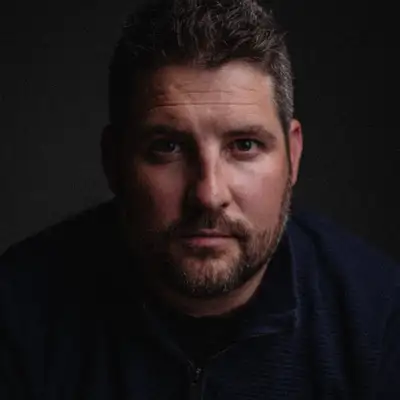
In today's episode, we're talking with Salvatore Sal Pietro from de Taro, where we explore the
collision of fundraising and AI. So if you have been thinking about AI and trying to figure out
how to approach it, you're not going to want to miss this conversation. So this is very exciting
for me. I've been wanting to have this conversation for quite some time on our end. We've
been talking a lot about the impact of AI on fundraising and the nonprofit sector. And as we
were thinking about people we could have conversations with on the podcast that have
something to say about this, that are kind of immersed in that world and neck deep in it. Sal,
you were at the top of my list. So excited to have this conversation. Thanks for making the time. Sal,
you and I met, I don't know, 3 or 4 years ago when you were at fundraise up, and I was just so taken
by your excitement, your energy, your passion. I love the like just the vibe that you bring and
how excited you are about little things like fundraising, optimization, but just how much you
care about the sector and the space in general was really impressive to me. So I wanted to have
you on the show to talk about the collision of AI and fundraising. So you actually you mentioned to
me I didn't know this, but you were employee number one at Fundraise Up and were along for the
ride and watched the organization go from 1 to 3500 and then wanted to kind of immerse yourself
more into this next wave of AI and get back into the startup space. Um, so really excited to dive
into all these things. I've been saying this for quite some time in our world and talking to our
clients about this as well, but there's this great collision that we're at the beginning stages, kind
of the early innings of with, you know, I think 4 to 5 exponential technologies that are all
colliding with one another at the same time that I think are creating the conditions for rapid
change, rapid disruption in every sector of society. And of course, the nonprofit sector is not
immune to that as well. And so you've got the collision of AI and robotics and, you know,
blockchain technology and lifespan extension and, you know, biotechnology. And then you set that on
the backdrop of the largest transfer of wealth that the world has ever seen. And then you combine
that with, you know, the current economic realities of the K shaped economy and all of these things
happening at the same time. I wanted to just kind of dive into this, you know, the the, the
fundraising world is colliding with the AI world right now And from my experience, you know, over
ten years now of working with hundreds of non-profits. Non-profits tend not to be the
earliest adopters of technology and can be sometimes resistant to change. So I wanted to just
start there. You know, for you, having made the transition from fund raise up now into an AI
fundraising platform, what are the trends that you're seeing? What do you think that nonprofit
leaders should be paying attention to, and how should they be responding to this onslaught of AI?
Hmm. Well, so much there to unpack. Uh, let's dive into a little bit of it here. So I'll start with
kind of like what you first mentioned there, how, um, you know, I get I get passionate and excited
about about little things. Um, the reason I get passionate excited is because I don't see them as
little. I see removing friction from the online donor experience. You know, a fund raise up when I,
when I, when I jumped in there, uh, as a big thing, as a huge thing that if we can double the number
of children were feeding or we can double the number of animals that we're going to like. That's
a big thing we can do. We can do that and we can do it. Um, you know better. Um, but, uh, to
circle back to kind of where you, you, um, you know, mention there at the end what we need to be
looking out for, what the trends are. You mentioned the k shaped economy. I, I have gotten 2 to 3
emails a week over the last month or two from non-profits saying, hey, is this normal? We're
seeing the number of donors dropping off, but the average gift is going up and we're seeing larger
gifts like, what are we doing wrong? And I feel like that's, you know, um, a view that's taken a
little bit in a bubble because we do have a K shaped economy. I reply them, I go, I send them
links from Forbes and Wall Street Journal and I'm like, this is not you. This is not the sector. This
is society. This is humanity. This is what's happening. We're getting, you know, those that have
more are spending more and on those that have lesser spending less. And we're seeing that show
up in all of the data, uh, the fundraising effectiveness project, um, you know, any benchmark
you look at is showing that that is a thing that's happening. Um, and what's that doing
that is increasing focus on the mid and major donor at many organizations.
I even set, uh, with, uh, an executive from Doctors Without Borders, US massive organization.
Right. One of the largest. And she said we actually don't
want small dollar donors right now. We're trying to not acquire donors. We need
to move the ones we have through the funnel. Find the gems, find those that can support us in a
larger capacity. So I thought that was interesting that a big organization like that wasn't even
looking at acquisition as a priority. It was more, how do we adapt, which is the right thing to do?
How do we adapt to the economy and how it's shaping. Yeah. And just for context. Like the K
shaped economy is essentially wealth concentration in one segment of society and then
economic suffering on the other side of things and the hollowing out of the middle class. And so,
like you mentioned, I think this puts way more emphasis on major donor fundraising and that kind
of mid-tier category as well. And we talked about this in the conversation we had yesterday. But, you
know, I think retention is one of the biggest priorities in kind of, you know, areas that
non-profits need to be really focusing on as well, because, you know, loyalty to organizations, you
know, brand loyalty is on the decline, especially with younger generations. And so one of the areas
that we see needing to be emphasized and really focused on is donor culture, cultivation and
retention and taking the donors that you already have and finding new and more meaningful ways of
engaging them. Right. And sticking with the old ways of doing that isn't going to work
for us. Right? Um, RFM. Great use RFM to stand up your first campaign. It's
not built for scaling. Um, you know, it's not built for personalization and forward looking. It's a
look back. Hey they gave last year. Let's put them on the list. Right. Um, so, um, we need to evolve. I
think the way that we approach all of it and the trend of AI, if we can even call it a trend now,
it's just like the way it's not at the trend. It's the future. Um, to be jargon and and cliche, but,
um, it's I try to take those words out of the conversation often and I go, this isn't about AI.
This is about how do we build capacity and resiliency for organization so we survive. You
know, so I think, um, that's just a way to frame it and look at it. Um, yeah, there's a lot of positive
and negative, uh, to, to, to look at in that process. But, um, you know, we can unpack those as we, as we
talk. Yeah. For sure. I mean, so now you're you're the, um, chief growth officer at
Taro. Am I saying that right? That's right, that's right. You are what you are. One of every zoom call
that asks how is it pronounced? Yeah. Yeah. You made the joke. Terrible at naming, but great at,
uh, at fundraising. Yeah. I want to do a little video spot that just has a clip of everyone
mispronouncing it. And then just at the end, just say we're horrible at naming companies, but great
at predictive fundraising AI. We'll get there one day. So talk a little bit more about that. Like
what are the impacts of AI on fundraising, both positive and negative. Because I think there's a
lot of of fear and uncertainty around this. I think, you know, we're hearing a lot of executives
and nonprofit leaders that are saying, is this going to strip the humanity out of our
organization when, you know, at its core, you know, fundraising hasn't changed throughout history? I
think there are certain core elements of fundraising that will never change, which is that
that human aspect, that human to human, you know, connection and, you know, aligning with people
along shared values and inviting them to participate in the transformation that you're
creating. Those are deeply human things. But, you know, AI is is coming and it's creating the
opportunity to automate a lot of things. And so I think a lot of organizations are afraid that it's
going to make them, you know, more static instead of dynamic and less human instead of more human.
And, you know, our our fundamental thesis and encouragement to organizations is use these tools
to free up your people's time to do the work that actually matters and become fundamentally more
human. Because at the end of the day, I think the organizations that remain the most human and
connected to that with their donors are actually the ones that are going to thrive at the end of
the day as well. So what are some of the negative impacts and maybe positive impacts in ways that
you're seeing clients and organizations that are implementing, you know, your software, seeing the
benefits of it in real time? The organizations that adopt AI thoughtfully
and in a staged approach are going to see the biggest wins. Um, you know, um, there's going to be a
challenge in finding that balance of how do we not lose the human element, as you mentioned, but
how do we create efficiencies internally? And, um, I heard from John Wilson over at Arbor, uh, a month
or two ago about the 1080 ten rule, but keeping the human part at the first 10% in the last 10%,
at a minimum, um, is going to protect that human connection. So what's in the 80%? The 80% we
hear from organizations every day? Um, it used to take me a day and a half to create my list for
direct mail or for this campaign, or for my mid-level, uh, prospecting list. Um, and now
I do it an hour. Right. Uh, and that's because we're shifting from arbitrary attributes to
signal and behavior. You know, behavioral context and signaling to create predictions. So it's a
very different thing. Right. Just because they gave last year doesn't mean that they're going to give
this year. And we can look at signals to to predict that. So one efficiency kind of example
that we see all the time that's a benefit is the mid-level program. And it's kind of one that's
ripe for uh, making more efficient. Most organizations that I talk to and I'll
do sessions at conferences and I'll do a show of hands. Hey, who who here? If somebody gives 500
bucks, is going to be put on your mid-level prospect list automatically, almost
every hand goes up. That could be the entire giving capacity of that department
store manager. Right. And they gave their entire bonus 500 bucks. But they're on your list. And then
you have another donor that gave 500. And their capacity is endless. But they all kind of have
equal footing because they all met that $500 attribute. And using the AI prediction modeling
to stack, rank and sort them by most likely to be a prospect for mid-level giving is going to
have so many benefits for the organization, not just now. I have a better list that I can
address more thoughtfully, because I didn't just spend two hours like you and I, we probably have
hundreds of emails we got to get to in our inboxes, and you don't have time to do it
thoughtfully. Imagine a major gift officer that's got a thousand people on a list they got to get
through. I just saw a stat today that said, um, the average major gift officer
has time to meet with less than 15% of their portfolio in a year. We're never going to
close the gap, right? Right. Um, so by using AI to do that, we get better lists, we get more,
um, uh, positive results. We have better morale, we have less burnout. So the results and the
efficiencies and benefits compound when we start doing these things. Um, better campaign performance,
better ROI, work satisfaction, all of that. So, Um, the benefits are are really endless, and you need
tech to do it. You can't do this as a human. Yeah, manually. That doesn't work. I mean, historically,
you pull the list, you've got all your $500 donors. And we were saying, you know, every $500 donor is
not created equal. And so you have some that's the high end of their capacity. And then you have
others that that's the low end of their capacity. It's a private gift. It's, you know, an initial
donation. But then their capacity is endless. So using the predictive AI modeling you can identify
the ones that have increased value. And then the major gift officer or mid-tier giving officer can
focus their energy and their time on those particular donors. Yeah. And if we want to talk
about the human element, like what is the retention likelihood of calling up a donor that
gave their everything and felt amazing. And then you just ask them for another larger gift and
they're like, ha, that's that is the largest thing I've ever done in my life. Um, now, speaking on a
strictly human level, that might make them feel pretty bad and alienate them from your
organization. So I think AI can help us address the human part in ways that are unexpected. Yeah.
That's interesting. Well, the 1080 ten principle, you know, like it's been around for a long time. It
initially was, you know, as a, as a, a leader of an organization, as a founder. You come
in at the front end for the 10%, then your team executes the 80% in the middle. You come back in
the 10% at the end and kind of polish and give additional direction. I think now what you're
saying and what we're seeing as well, is that you can have that human in the loop at the front end,
use AI tools to automate the middle, which is kind of the grunt work, and then come back in at the
end, take a look at what it's done, give additional directions and polish with, you know, increased
efficiencies that are significant. And I mean, this is the nature of nonprofit work. Like, I can't
think of a single client that we've worked with over the last ten years that, you know, has had too
much capacity from their team and you know, whose resources were abundant. It's like you're always
trying to do more with less. And I think that's been one of my, you know, fundamental theories
about the value of AI for the nonprofit sector is like, you know, a sector that is chronically, um, you
know, often unskilled, under-resourced and stretched thin. Everyone's wearing three hats. You
know, you're the marketing director, but you're also doing fundraising, and, you know, you're you're,
um, you know, doing everything else in between, the ability to use these tools to take a lot of that
manual work and automate it then frees your time for higher value activities, which create more
value for the organization, which ultimately moves your mission forward. And at the end of the day,
like that's the North Star. That's the primary goal. And objective is like, how can we get more
efficient as an organization? And I think, you know, on the fundraising side of things, if
organizations can wrap their heads around it and like you said, I think effectively and
thoughtfully implement it. The potential is huge for the organization to do things they've never
been able to do before or always wanted to do, or free up capacity as well. So, Sal, what would you
say is the right way for non-profits to be thinking about AI and moving towards
implementation and this idea of, you know, AI enablement and potentially even becoming an AI
native nonprofit. Like, what does that look like for a nonprofit to make that transition into
adoption, enablement and then becoming kind of AI native in terms of thinking about their workflows
and processes as AI first? Yeah. In fact, I was just going to say, and you beat me to it. I
like to use AI first instead of AI native. Um, you know, if you look at Latin, right? Native. It's
nascent. You were born in AI. Uh, unless a nonprofit is founded today, they don't really have that
opportunity. But they can be an AI first and shift their thinking into, um, uh, an AI first
approach. Um, but I think the first steps there, um, are upskilling your team, um, to
use AI tools. And we're doing this right now at Data Pro even. Right. Like, we just realized that
being an AI tech company, a lot of our team don't use AI tools on the daily to help themselves with
the grunt work and help write emails and, you know, sort lists and and prioritize tasks and write
code. So we're embarking on that internally as well. Um, I just discovered a
tool I just posted this morning about it called prophet AI, actually, and it's a free tool you put
in the context of your organization and your role, and it will train you and certify you in using AI
in your job on a day to day basis. So it's an amazing little tool. I love it, I'm going to get
certified in it, but it's going to help nonprofits. I think, you know, these kinds of things. Uh, there's
the human stack that does a lot with AI, uh, upskilling and so on. But first, the step is like
kind of upskill your team, make sure they understand what it is, how it can help them, and
then decide if you want incremental change or a step change for your org.
I think most of us will lean towards incremental just by nature of the sector in the industry. And
that means, piece by piece, using tools that are AI enabled but don't require us to change our flow.
Plugging in tools to our existing workflows that don't disrupt things data falls into
into, uh, either of those buckets, really, because we can plug in to your existing workflows
and sort and prioritize based on predictive analysis and and modeling. Or you can
go with an AI first approach where you say, this organization needs to change by the end of the
quarter. We all need to get, you know, upskill and certified and so on. But here's the distinction. I
really kind of want to make sure it's clear for the listeners and for the sector is that larger
for profits are going for step change. I was reading how does Netflix use
AI for churn prediction? They will monitor when you stop logging in,
or stop looking at it so frequently and they'll start changing. You may not have known this, I
didn't. They'll change the cover art of the different shows, to be
reflective of a time that are more nostalgic to when you signed up,
so they're looking at your behaviors and changing what the content that they show you to trigger
feelings. Right. And then you say, oh, you know what? I haven't watched Star Trek Deep Space Nine in a
couple of years. Let me go check it out again. It worked for me. I did that right. And that's a real
example. So larger nonprofits are going for step change. Small businesses are going for incremental.
I think that's directly reflective. You know, the small business, the pizza shop, the hardware store,
they're using AI and fraud detection and credit cards at their cash point and so on. And the
bigger companies are going all in. So what this means for us is that these larger organizations
are typically the ones that are creating Likely not intentionally, but definitely ignorantly, the
problems that we are setting out to solve as a nonprofit industry.
So the better and more efficient they become, the wider the gap is and the bigger the
problem is that we need to address. I mean fact, right? Like if we are the rainforest, you
know, conservation organization and the lumberjacks are chopping down trees with AI
efficiency, saying, here is your path, path of least resistance. We now have a lot more work to do to
conserve the rainforest and to catch up to them. So I think it's imperative that we do that. And I
think if we think about it in some of these ways, it might give us a new angle. I think the word
imperative is key. Like it's it's almost becoming not optional. Like if you want to remain relevant.
And I think, like you said, a lot of, you know, the work that is being done by nonprofit
organizations, they're solving problems that are being created in society, in other places. And if
they are using AI to accelerate their progress, which is deepening the problem and creating, you
know, a bigger gap in solving that problem. Then you continue to fall further behind. And so I
think, you know, imperative essential. Like we're wrestling with this as an agency, you know, on our
end, like it's it becomes mission critical that we learn how to use these tools to create additional
efficiency and not just efficiency, but even transform the way that we think about the
problems that we're trying to solve. You know, for us, our entire business is is about creating value
for nonprofit organizations through storytelling and branding and, you know, digital engagement and
campaigns. And so the landscape of that is changing. So how do we adapt? How do we adjust? How
do we use these tools, like I mentioned, you know, to maximize a budget, to create a better product
that is going to have a greater impact on the audiences of these organizations as well. And so I
think, you know, it's not really optional. And I think that's part of, you know, we sometimes I said
to one of my team members just this week, I'm like, if there's an element of grief in this. There's an
underlying element of like the world we've known is going away, and things are changing so quickly
and it's hard to keep up with. And it's a little bit dizzying and disorienting. And there's this
disruption and these dystopian themes that are out there. And so how do we stay
relevant? How do we adapt? How do we change? And so and that's a huge reason for this, this podcast
and why we're wanting to do it as well, is like, how can we help nonprofit leaders navigate, you
know, exponential change? And, you know, how can we point them towards the right tools like De tarot
and the work that you're doing in order for them to close that gap and to make more progress
towards the mission that they have committed themselves to as well. It's it's existential for
the sector and for the specific organizations individually. I think it's it's true. And and we've
seen not to oversimplify, but, you know, newspapers went away and
then Meeting friends at the mall went away because now there's social media. This is another
wave of it there. These waves are coming faster and more frequently of change. The instinct is to
resist, and at some point we don't have a choice, but we're all
going through it. So talk. Talk to me a bit about risk factors because I think that's, you know, one
of the big questions we get is oh, well we're going to wait. We're going to sit on the sidelines,
we're going to hold off, and we're going to wait until there's, you know, better security protocols,
more regulation around these things. And, you know, we're dipping our toes in the water, but we're not
really fully going all in because, you know, what about security risks? I mean, if you look at Open
claw and the, you know, rapid rise of that and all the security risks that come with it, and now
we're moving into this next phase of AI, which is the authentic side of things, where AI agents are
actually working on your behalf and going, you know, using your computer and clicking around and
crawling the internet to perform tasks. What are the risk factors there? You know, do organizations
need to start with an AI policy? Like how do they implement that? These are all conversations we're
having with executive leaders that we're working with. But we'd love to hear your thoughts about
that. Kind of like Red flag. Or is it maybe an excuse that's being used to not really embrace
this? Right. It's like, what are the risk factors? And it's too risky. So we're just going to wait.
We're going to stick with our old methods. I would love to hear you talk about that. I think there is
a big dollop of looking for reasons not to instead of reasons too. I try to bring the reasons
to move forward to the forefront, not for business reasons. I
don't have quotas. I don't have sales KPIs. I have a nine year old daughter that I want to see. Polar
bears, you know, existing in when she's an adult and her and her children. Right. That's my personal
drive. And I think that's where you see me get fired up about things. Um. So there is,
uh, a general looking for, uh, certain search for reasons not to or excuses if you want to
say a policy. Sure. If it makes you feel comfortable developing a policy, hey, we don't
upload data to tools we don't pay for, etc., etc., etc.. Develop your policy. Then again, where is the
cloud storage policy? All of our data is on the cloud. If Claude agents
want your data, they're going to get it right. If Salesforce or Amazon want your data, it's already
theirs on their servers. Sure, you sign some terms. It says I can't touch it. Has that helped us in
the past with a lot of these other companies? Right. Breaches. Mehta et cetera, etc.. So okay. Yeah.
Have a policy. Don't get tripped up by it. Your data is already out there. So yeah. Is there a
risk the donor getting data gets out there? Yeah. Is there something that your organization knows
that the wider large internet doesn't know about your donors? Probably not,
except that they gave a $50 gift to this particular campaign. That might be a certain piece
of information. So the risks are there. We all know them. They were in the movies since the
90s. They've played out on social media 20 years ago, how it replaced certain things. And we have
all of these challenges with it. And then we had social media policies and so on. But I think the
benefits far, far outweigh. And I think it's time to stop
deliberating and and take some actions on it. We could go deeper into the I policy and all of the
risk stuff if you like, but it's a lot. Like I'd rather focus on the optimistic side too. Like you
just said, the benefits far outweigh the risks. So like paint a picture for me and for our listeners
of what does it look like? How does an organization benefit really, practically and
tangibly by going this AI first route and really embracing these technologies and figuring it out
along the way. Um, you know, even with some of the, you know, clients that you have, what are those
those benefits? What's the upside? Paint a picture for me. I'll paint a picture. I'll give you three
examples. So data platform plugs in, looks at your donor data historically runs those
correlations against millions of donations and organizations around the world medium, large, etc..
Um, and it it optimizes every channel plan giving gift in kind mid major
monthly, so on and so forth. So the benefits for the sector are there for the
taking. It's less busy work, more meaningful work, full stop right. That's the whole thing. So let's
look at the mid and major. You know how much more fulfilling would their work be
if they had success rates three times higher than what they're getting now. A donor that says I'll
give. Right. I feel so much better about my work. My fulfillment level is high
and I stay. So what does that mean? It means better retention, less churn of employees. You're keeping
them longer. They're happier. You're not off putting donors that can't give as frequently as
you might. So there's a mid major kind of kind of scenario right. Let's look at your
monthly donor database. If we can cut that churn in half by predicting through behavior signals
who's likely to cancel their gift in the next 60 days. And just make a phone call and say, hey,
thanks for being a monthly donor. Nothing else. Churn cuts in half, but you can't do that because
you got 5000 monthly donors or 50,000, and you can't detect who is going to because it's
impossible to correlate. Email opens, website visits, campaigns, zip code economic correlations
and then say, here are the people that are likely to cancel their monthly gift. But if you had some
technology that say, hey, I looked at all that wild sea of data and here are the top 50 that are
likely to cancel. Just give them a call. Say thanks. Write retention goes up. Compounding
benefits of your monthly giving program grow. Now you've got more for your mid and major funnel and
so on. Third example let's say you can reduce your direct mail
campaign spend or paid ad campaign spend by a third. And organizations I've heard them
say, well, that's already budgeted. So I don't want to spend less. I want to spend $100,000 on direct
mail. Well, yeah, I'm telling you, you can spend $60,000 and not lose any money. Take that extra 40.
Let's put it somewhere else. Let's put it to the mid team, the major team, etc. because using AI
again, you can trim out the 30% that RFM says they gave last year, but predictive says they're likely
not going to give again. So there's three, right? Your monthly team, individual donors, smaller gifts,
your mid your direct mail campaigns and where AI can really create tangible differences
in the organization's bottom line ROI spend retention for staff. I mean, it's all there.
It's all there. Graham. Yeah, that's powerful. And just by implementing like a single tool. Right.
That is cost effective to I think that's what's what's becoming difficult to almost wrap your
head around is, you know, you start using these tools and you go, oh my goodness. Like this was
never possible. And so it's really like we're entering into a new world. And you have to reframe
your thinking. That's what we're finding, you know, on our end with our team and the work that we do,
but with the clients that we work with as well, it's like it requires a mindset shift entirely on
what you've known and how you've done things and reframing things you know, in a new way. Um, sure.
What's what's not changing. So a couple of things. You got to keep the pipeline flowing. So
acquisition still needs to be there. Otherwise we're going to find ourselves in ten, 20 years in
the same place where our our wealthier donors are drying up. So we have to keep that pipeline going,
elevate the brand through brand awareness. People connect with the brands. They want to see their
brand. They want to be proud of their brand. They want to be a fan and promote you. Right. So brand
awareness is going to help that happen. And then what's not changing is personalization in the
human touch. Uh, it's give me content that's relevant to me when I get an email
that feels like it's speaking to a college graduate, and it's filled with
emojis, and it's got, you know, language that's not relevant to me in this stage of my life. I already
know that that's not personalized for me. They didn't look at who I am. Same thing with your
donors. Like you can segment. Let's be more personal. Let's create content. Now that we're not
spending two days on creating an RFM list, we can now spend an hour doing the list, and let's spend
the other time creating three variants one for your small dollar, mid dollar, heavy dollar donors
and give them language and a presentation that suits them. And you know those things will always
be the same. What's also not changing gram is the resistance to change. And
we've got to find ways to overcome that. You know I will share a quick
example. I was at a conference doing a session on AI, and someone
rightfully so in the environmental space said raised hand. What about the
environmental impact? And I quickly asked her, did you
fly, drive or walk here to this conference? Right. And
obviously she flew there even though it has a ten times carbon footprint than driving or walking.
But why? I'm not saying that flying is wrong. I'm saying the justification of your efforts being
there and your carbon footprint. You believe that you can do more good by being there. And what you
learn at that conference. Then the carbon footprint, you know, you can you can, you can make
up for that in multiples. That's the belief. Same thing with AI. What is the carbon footprint of
spending two days in your computer doing something versus an hour. Right. So we can take
that example, create your version of it and we can deconstruct it because there's no way to go
backwards. Now we have to figure out a way to go forward or into oblivion. I mean, to be really kind
of blunt about it. Yeah. Fair enough. No, that's a that's a great example. You know, for us, we keep
talking about storytelling and being being human. You know, that that human centric storytelling
is the lifeblood of your fundraising and your organization. You know, there's a huge move in
corporate circles towards companies, large companies, publicly traded companies becoming
media companies. So they might be a product company, but they're making this pivot in, you know,
like a lot of these organizations are making this pivot right now towards seeing themselves as
media companies. And so production of media, whether that is, you know, um, you know, written
articles, whatever they're publishing, whether it's magazines, there's a return of some, you know,
physical print, um, mediums as well, and then film and, you know, social content, organic, all of these
things. There's a huge resurgence in that. And so I think, you know, how do nonprofit organizations
redeploy their efforts, their energy and their budgets? One of the things that we have been
saying is start thinking yourself as a media company. I just read this morning a fundraising
benchmarks report that came out that shows that in 2025, 65% of all donor acquisition was through
digital channels. And so this move to media you were mentioning before we chatted, sell that now
over 50% of online giving is now through mobile. And so creating media for mobile consumption,
that is, you know, the the translation of your mission and your story into those channels and
mediums has never been more vital and important. And so how do you maybe take the savings on your
direct mail campaigns, because you're using predictive AI technology to be more efficient
with those and then redeploy them? Well, pour those into media. I think brand is another area. We keep
saying that brand in this new world will be the last defensible moat. People knowing and trusting
your organization is going to matter more than ever. And so investing in brand, investing in media,
investing in content and storytelling, I think is our biggest encouragement to organizations.
Alongside this huge theme of become more human, use the technology, use the robots, use the AI
to automate the busy work, but then focus on being more human, making that phone call, hand-writing
the note, and producing media that tells human stories, that connects with the heart of an
individual and leads them to want to give. Graham I saw a video annual impact
report from the World Wildlife Federation. Oh nice. In Australia and wow. In two minutes, I
digested the key hits from the impact that they had in the in the prior year, as opposed to a 20
page PDF that I'm going to download and never read. Right. It was video, it was AI generated, it
kind of zoomed through the forest and it saw koala bear, and then it paused and said, x percent
of, you know, koala habitats preserved. And then it kept going. It was an amazing, like ride. It felt
like a Disney ride. I was on this impact report. But that goes to your point. Like it's got to be
media. It's got to be engaging. That is where this next generation in this next era is going for
us. So we could talk for hours. I could have this conversation all day, every day. I think it is the
most important conversation that needs to be had in every sector, but I think especially in the
nonprofit sector, I remember. You know, in the well, ten years ago when we started anthem, the big
debate was should we use social media or not? And we painfully watched organizations wait years
before they really leaned into to social media and and social and online fundraising. You
probably saw that at fundraise up. Right? Like the conversation of should we move our fundraising
online? Should we focus on online channels? You know, there's such a slow move and adoption of
those things. And I just think organizations don't have the luxury of sitting on the sidelines in
this era with how quickly this is all moving. So really thankful for this conversation and you
making the time to to join me and have this conversation. Where can people go to to find out
more about you and engage with you and learn more about data? Yeah. LinkedIn is where I spend time in
the network. It's my only social media platform. By the way, I only use LinkedIn. Um, and then you can
email me Salvatore at data. So happy to dive into these conversations one on one with any of your
listeners to. I've got so many thoughts. Obviously love it and I'm excited. Anthem is is signing up
to be an agency partner with De Tarot as well as I'm learning more about the platform and the work
that you're doing. I think it's an incredible tool that we want to be able to implement with, with
our clients in the work that we're doing as well. And, you know, having that be the backbone of of a
campaign, you know, acquisition is only one part of the story. And what you do after that initial gift,
I think, matters far more in terms of lifetime value and driving and moving the mission of an
organization forward. So grateful for the work that you do. Your commitment to the sector over
the years has been phenomenal and grateful for this, this friendship as well. Birds of a feather
flock together, my friend. Good to see you. Thank you so much. Thanks, al. Thanks for listening to the
Amplify Good podcast. And hey, if you found this episode valuable, would you share it with someone
that you think would benefit from it? And don't forget to subscribe so that you don't miss an
episode. It would also mean the world to me if you would drop us a review on whatever platform
you're listening on, so that we can reach a wider audience. Thanks again for listening, and we'll see
you next time.