Subscribe
Share
Share
Embed
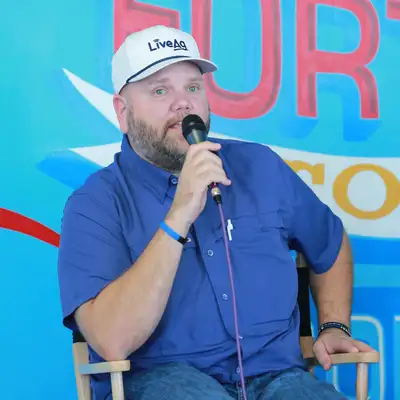
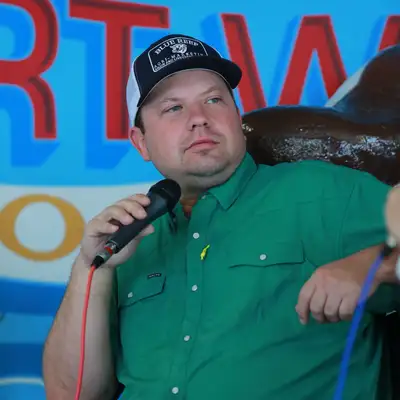
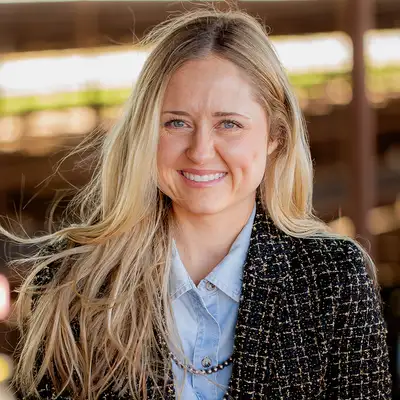
Welcome to the "We Live It" ranch and livestock marketing podcast, where cattle market intelligence meets ranch-ready wisdom. Join hosts Ty deCordova with LiveAg and Casey Mabry with Blue Reef Agri-marketing as they bring you straight-talk market analysis, proven strategies, and insights from industry leaders who understand ranching isn't just a business - it's a way of life.
From livestock market trends to cattle management practices, each episode delivers actionable knowledge to help take your ranching operation to the next level. Whether you're in the saddle or in the truck, tune in for conversations that matter to modern cattlemen. Because we don't just talk about the cattle business...we live it.
That's not hey. Whenever you're from Texas, I'm just gonna be straight up with you. Ohio and Pennsylvania is the same thing.
Ty deCordova:Yeah. Right?
Casey Mabry:So, like, geography is not a good thing. It's Like, when you're when you grew up in school in Texas It's over there. It's over there. That big arm that helped me. And
Hollie Bunn:then having done a lot of lending, a lot of different formats over the years, what is really cool and unique to me here at UTI is that depth of understanding that we have in the livestock industry with those producers. And the reason for that is at the core, we're a livestock company, you know, I kind of get to ride along and be like, hey, you know, we're a livestock company and we offer financing. Why that's so important to me is that relationship is much deeper than just a lender. Being just a lender is fantastic, right? I've done, I spent most of my career doing that.
Hollie Bunn:Super unique when I might be partnering with the guys within the same organization that are also helping you buy that livestock, sell that livestock, hedge that livestock, sort that livestock. All of those things give me a unique insight to what that relationship, what that opportunity really looks like.
Speaker 4:That's a head off. We live it. The live ag podcast. Quality cattle deserve premium prices. Consigned to a live AG video auction and capitalize on today's strong market demand.
Speaker 4:Our upcoming auctions are on your screen and available online at live-ag.com. Contact your local rep to get started. Now here are your hosts, Ty De Cordova and Casey Mabry.
Ty deCordova:Welcome back to the We Live It podcast. Recording here with Casey Mabry and myself, Todd De Cordova, and we are joined today by guest Holly Bunn with United Producers Inc. She's going to visit with us today about the financial arm within the UPI. As a lot of y'all well know, UPI and Tennessee Farmers Co op and Ox had come together and created a company, Live Ag, which we operate on a daily basis now with livestock auctions and purebred sales and equipment sales. So they've been a great partner of live ags.
Ty deCordova:They've been behind us 100%. Board's been behind us. Mike, the CEO, he's a great partner to work with. And I got to know Holly through this deal as we was talking about financing things and we was talking about when we brought the equipment deal in and then we got to know Holly real well through that and she's created some stuff for us through the equipment sector. So we wanted to just sit there and visit with her today a little bit.
Ty deCordova:She is remote today. This is a remote recording. We wanted to visit with her a little bit today about what they have to offer, kind of what the financial sector looks like. Casey, we've had some guys on before in the finance world, and there's nothing like having a good relationship with a good banker. And nowadays with interest rates cost or the cattle cost, you need a good relationship there.
Ty deCordova:And that's what we want to introduce y'all to Holly and let her tell you where she's at and where she's from. So Holly, if you'll kind of introduce yourself, kind of give us a little background, what's your upbringing and where live and what you do there.
Hollie Bunn:Awesome. Well, I'm glad to be here. I'm coming to you from UPI Headquarters, which is in Columbus, Ohio. However, I hail from Southern Ohio outside of Cincinnati. My background, my story, I'll give you a little bit here.
Hollie Bunn:Hopefully, I won't go too long, but I was born on the East Coast, so I'm pretty far from where you guys are and where I originated. My mom and dad had a dream to buy a farm, so we moved way out West compared to Philadelphia and New Jersey to Ohio. Bought a farm with a dream to start a vineyard and maybe at some point expand that into a winery. This was forty some years ago and very forward thinking on my parents' heart, coming from no farm background whatsoever. Moved out to Ohio, bought that farm, got the vines planted, and five years later we had a polar vortex.
Hollie Bunn:What that did was kill the vines at the peak of when they might really start producing and generating some income. You might be able to see where the story is going, is that we ran into some financial troubles. My entire career has been in ag finance out of a passion to help provide credit where it's really needed for farmers, both in a rural environment, but just at the core of the base of where they come from. What got us out of that and turned that around was actually live stock, so it was kind of full circle for me to now be at UPI, which is a live stock organization that happens to have a finance arm that I have the opportunity to lead. I'm not here by default or looking for a good job.
Hollie Bunn:I'm here because there's a deeply rooted passion to provide this service to those that really need it. So that's a little bit about my background. I've spent most of my career in Indiana and recently came home to came back to the home farm and built a house there, which worked out great for the opportunity that opened up here with UPI.
Casey Mabry:Well, I think I'm glad you're on here, Holly, because Todd and I've talked quite a bit about over the last really nine to ten months, how important the financing thing is and having most guys, and we talked about this before, most of our guys are really, really good producers and most of the people that do this are good operators. Finance has always been something that's been not as important, but as the cost has risen, as the dollar amount that we're dealing with has gotten up, the most important thing is, you know, we've had, you know, different people on here that are different regional lenders and things like that. But as we go forward here, it's so important to have the right relationships, with the right banks. I mean, a lot of these guys are dealing with some of their regional players, and as their credit lines have popped up and whether we're talking about risk exposure and margin calls and things like that, I mean, have really had to learn a lot about finance. And let's be honest with ourselves, most of the producers out there that we have are in this industry, they probably didn't study finance in school.
Ty deCordova:Correct. So
Casey Mabry:it's important to have people on there. I think it's something that's important to shed light on. So we're glad that you could I mean, I think it's awesome that you got on here with us.
Ty deCordova:Yeah. So kind of what we want to talk about is ag equipment financing arm today. I mean, we can lead into the livestock part two, but really want to concentrate on what do they need to bring you? What do you look for when financing this used form equipment and stuff like we will be selling on December 16? What does that look like?
Ty deCordova:I mean, what do they need to expect when they call you?
Hollie Bunn:Well, first off, they won't be calling me. So, and this particular service is online, which is pretty fantastic, where most people for point of sale are looking for that kind of service. So, you know, Ty, I partnered with Justin on your team.
Ty deCordova:Oh, that's right.
Hollie Bunn:Set up Sorry?
Ty deCordova:Yeah, go ahead.
Hollie Bunn:Yep, sorry. To set up a tool where your producers could go online and be able to acquire financing for that purchase right there at the time that they need it. Interestingly enough, a piece of equipment is one of the most simple pieces of financing that you can get. Your collateral, the thing that you're securing with, is typically that piece of equipment, so it's very easy to identify, versus when we start talking about cattle, we'll talk about how that's much more complex and a little bit more risky, if you will, on the surface. So if folks are looking for financing on the equipment side of things, you're typically looking for high level financial information, solid credit score, ability to perhaps, depending on the situation, put some cash into it, 10, 15%, and roll through that all in a very streamlined manner with that online portal.
Ty deCordova:I believe we have a link on our equipment site that you helped put that deal together with Justin and remind me. AgDirect. AgDirect. That's right. AgDirect.
Ty deCordova:So there's a link on our site that goes straight to AgDirect and then you just fill out this form and they pretty much Like she said, it's not the lot to getting financing for this equipment. Mean, just go in there if you want to be financed, fill out the paperwork, submit it in and they'll respond right back to you.
Hollie Bunn:You'll get a very quick turnaround on that.
Casey Mabry:And so this is something you want to do. I mean, so like sale here is coming up in about seven, eight days, nine days, something like that is when the sale is, it's popping up here. So you probably want to do that in the next couple of days and get pre approved for it. That way you're bidding on the equipment, you know you're going be able to buy, right?
Hollie Bunn:Yeah, absolutely. The best thing to do, especially when you're looking at an auction, any kind of auction is, you know, make sure you know where that money's going to come from ahead of time and do a little bit of due diligence. Absolutely.
Speaker 5:Thinking about buying cattle or expanding your herd, you need a financial partner who understands the cattle business. Ag Texas Farm Credit offers flexible loans for pasture, rangeland, and operating expenses. Their local lenders understand agriculture because they live it too. As a cooperative, their borrowers share in the success through patronage dividends. Whether you're buying your first set of cattle or growing a legacy operation, Ag Texas is your partner every step of the way.
Speaker 5:Visit agtexas.com to learn more and get started today. Looking to buy or sell farm equipment and ranch equipment? Join us for the live ag equipment auction December 16 featuring quality machinery and trusted sellers from across the country, all in one place. Browse listings, bid online, or make an offer without ever leaving your home. Save time, save travel, and find the tools your operation needs with confidence.
Speaker 5:Have equipment sitting idle? Can sign by December 8 to be part of this nationwide sale. Call Justin Stelzer today at (817) 533-6699, then press 3 or visit liveag.com to get started.
Ty deCordova:Yes, you wouldn't be very excited about me. I kind of fly by seeing my pants and I can get it bought, I like, okay, hey, I need money. Will you help me pay for this?
Hollie Bunn:That's not our favorite kind of producer to work with, Ty, but usually we try to come through. Could probably
Casey Mabry:do a whole segment on what not to
Ty deCordova:do. Exactly.
Casey Mabry:Why is there such a big difference? I think I know the answer to this, but I think it's probably just something to go through. What's the big difference between ag lending when you're talking about, let's talk about equipment versus land, for example?
Hollie Bunn:Well, equipment, again, it comes back to a very identifiable piece of equipment that you're purchasing. Land gets a lot more complex. Typically, Ray, you're going to look and see what the return might be on that property. That can be a piece of equipment, depending on the impact on the operations. Buying a combine today, you're putting out a lot of dollars, so that impact is significant.
Hollie Bunn:But when you're talking about a piece of land, your investment is so much larger. Then you also need to see, does that property potentially stand on its own? For a lot of operations today, doesn't. It's a blended effect of what they're doing in the entirety of the operation to be able to pay for that land. Then, of course, you get into the complexity of what is that land going to be worth.
Hollie Bunn:What is it going to appraise for, and is that reasonable for a creditor to put money out against?
Ty deCordova:So
Hollie Bunn:there are times when it may be worth more than what a creditor is going to be able to evaluate it and take that risk to be able to pay.
Casey Mabry:So there's probably a lot of people that are watching this that might be younger or starting out in this business, or maybe it's even like somebody like your parents forty years ago that were moving into some other venture besides what they were and they've never done this before. A lot of people are gonna already have their operating note, but the ones that are looking for financing, what are some things that they need to do to make sure that What are some mistakes that people fall into?
Hollie Bunn:Well, this may not serve you the best way when you think about that equipment auction, but one of the things is not loading up on equipment that you don't need. I don't say that in any regard, That one gets a little bit easier sometimes because it's a smaller purchase, so you might feel like, Hey, I can just do that. When you're coming in and looking at your total operation, you want to make sure that those payments will line up for you to be able to meet the obligations you want to do in the future, not just right in the moment. Those operations that can have foresight, really thinking through that process, knowing forward where do they want to be. So, what I'm talking about there is equity.
Hollie Bunn:That's a technical term, but that's what we're looking for, is that you can build up some ownership in the things that you own. If you're buying a piece of equipment, that's where I said you might be putting some money down. It's of tremendous value if you do that at the time of purchase, so when the next thing comes along, it's going to show that your equity is higher, which will further enable you to either make that next purchase or that further investment. So
Casey Mabry:probably a good thing to do is, like you said, go through your business, understand the P and L of your business and the projection of the performer and things like that. So you're saying a mistake would be buying something possibly that was maybe too big of an equipment or another piece of equipment that you couldn't afford and kind of getting yourself in a bind. So like, what are some options out there that are for I know that the USDA has come out with some different things and specifically around young farmers. So what are some things that are some programs that are out there that you guys may be able to help young farmers or beginning producers with?
Hollie Bunn:And that's always the challenge we get, right? Everywhere you go is what can we do to help get young people to be able to have an opportunity. And I will say it depends a lot on the state that you're in. There are a lot of state level programs that we will steer people to take a look at. There is the USDA programs, which also are of value, but then when you can layer that up with some state opportunities, it's fantastic.
Hollie Bunn:From our perspective, we're a co op, so we are always looking at how can we help our members and help that next generation. It's kind of looking at each deal. I don't know how exactly It's not technical, if you will. What do you feel is the aptitude and the potentiality of that prospective new young person coming in? If they aren't quite hitting one of the financial indicators that we're looking at, is there something else that can overcome that?
Hollie Bunn:Do they really understand the industry they're in, or the particular piece of property they're looking to buy, equipment, or whatnot? There's a lot that will come into play for what we would describe as our management ability, their understanding. If you're young and have no experience, quite frankly, it's going be difficult. You want to probably partner with somebody that's in the industry. Look for organizations that can give you a foot in the door so when you walk in to get that loan, you really do understand what you're doing.
Hollie Bunn:You understand what that pro form a will look like more than just, Hey, I've got this idea. So, there's a little bit more onerous when you come in with no experience to really prove that you've thought this through. We're going to fall back and look at those financials. But again, sometimes if you don't meet all of them, you can overcome some of that if you really understand what you're doing and convince us and show us, you know, what the real opportunity is, which again is going to mean you have really depth of understanding in the industry.
Casey Mabry:Yeah, I'm working with somebody like you that's, I mean, obviously your experience, I mean, you've done this and you've got lots of experience out there and probably could be a tremendous resource for that for sure. So what can you tell us kind of
Ty deCordova:going looking five years down the road, ten years down the road, kind of some services that you are looking at trying to get into? I know y'all finance equipment, y'all finance livestock, but there's other things you are trying to get into as well. Kind of can you expound on some of that of what you see UPI's footprint in? I mean, right now y'all finance a lot of cattle and a lot of stuff up in the Midwest. I mean, the Mid East or whatever, however you want call that.
Ty deCordova:You're Middle East. Yeah. Not the Middle East.
Casey Mabry:That's not right. Hey, whenever you're from Texas, I'm just going be straight up with you. Ohio and Pennsylvania is the same thing.
Ty deCordova:Yeah. Right?
Casey Mabry:So like geography is not a good thing. Like when you grew up in school in Texas, it's over It's there. That big arm that's Yeah. Over So
Ty deCordova:Anyways, you know what I'm trying to ask, Colleen. I'm kind of bad with words today.
Hollie Bunn:Yeah, no, no. I'm tracking with you. I'll give you a little bit of background of why I'm going share what I am. I came here to UPI, again, when I was a kid, we sold our hogs to the local stockyards, and it's something that's under UPI's umbrella today. Then having done a lot of lending in a lot of different formats over the years, what is really cool and unique to me here at UPI is that depth of understanding that we have in the livestock industry with those producers.
Hollie Bunn:The reason for that is, at the core, we're a livestock company, and I kind of get to ride along and be like, Hey, we're a livestock company, and we offer financing. Why that's so important to me is that relationship is much deeper than just a lender. Being just a lender is fantastic. I spent most of my career doing that. Super unique when I might be partnering with the guys within the same organization that are also helping you buy that livestock, sell that livestock, hedge that livestock, sort that livestock.
Hollie Bunn:All of those things give me a unique insight to what that relationship, what that opportunity really looks like. My ability to serve that segment is through the roof in comparison to what it's been when I've worked at other organizations. Really, the core of what I want to be able to do, why I'm here, has just escalated by being in an organization such as UPI. And at the core, again, being a cooperative, being here truly for our members' benefit, that really resonates with me. When I can take that relationship with the background of understanding what you can do for someone in finance, I get really pretty jacked up about it.
Hollie Bunn:The relationship that UPI has with Live Ag, I think about down the road, how can we bring that further beyond what our current footprint is? What do those relationships look like? How can we capitalize on that for the benefit of those producers out there? I'm really serious about digging into that and figuring out how can we provide that level of service. Casey, as you mentioned, the amount of capital that you need today, specifically on the cattle side, the price is high, so your capital needs go up.
Hollie Bunn:You'll find some local regional finance arms, if you will, that don't understand the industry like we do, and we can go further on that because we know what's happening in the market on a daily basis. We're out here buying, we're out here selling, so when the market goes way up, it doesn't necessarily scare us and suggest, Hey, you need to back off on those lines of credit. We'll increase those in accordance with the current prices. We'll able to take
Ty deCordova:a look at what
Hollie Bunn:that could mean, you know, across beyond what our footprint is today, it's going take some work to figure that out.
Casey Mabry:So you think in the future you guys are going to want to get deeper into the cattle thing outside of your area? Outside of
Ty deCordova:the Well, the thing is the vision I see that one day that how we can get on the site now for the equipment and click the link and go direct to AgDirect and get whatever you need as far as financing for your equipment. What's going be cool is when we get this all tied together that you can get on Live and no matter where you are, you can reach out to one financial institution if you feel so you need to, if that's what you want to do, we can tie it direct with Live Ag and UPI.
Casey Mabry:Oh, think that's a huge I mean, I didn't necessarily realize that beforehand, but I mean, Holly, one the things you touched on, I mean, obviously Blue Reef's a little bit different than what Live Ag is. We work with a lot of producers and tie and I crossed paths across the way through that. But the one thing that you talked about and we've seen in the last nine months is when the market's flat, it's no big deal, everything's great, guys, their operating notes work, and whenever we start hedging cattle and we make the decision to sell when price gets high, and then guys have margin calls and they look at that like a negative and really you should be looking at that as a cash position and an offset to your cash position. It's a breath of fresh air, honestly, to listen to the way you use the terminology that really kind of resonates with me because I've had to get on the phone with bankers, a guy that's a cattle feeder that maybe started out feeding a handful of cattle, now he's got 20,000 on feed and he was using the same banking relationship. He's hitting I mean, through this whole deal right here, we've gotten to where people have run into their lending limits and run into lending limits for that institution, and then they've got to go try to find another banker, but then they're on margin call for a couple $100,000 that day and you don't want to blow them out because we've seen the way this market reacts.
Casey Mabry:I mean, there's been tremendous amount of volatility from starting feeder cattle where they were even a year ago at $2.27 up to where we hit this peak this summer at 3.7 or $3.8 futures, and then settled back there in the November to where they settled back and things have just gotten extremely volatile and wild and really drives the market that way. And so if somebody's able to I mean, the thing I always use the word of is taking chaos and trying to make it calm. And obviously, if you have the right banking relationship and you have the right lending structure and you have the right thing, then it's not starting to interrupt your business practices. You still gotta make sure you're feeding cattle every day or doctoring cattle and doing everything within the livestock sector that you can, and it's not necessarily a perfect world. I think that's a breath of fresh air.
Casey Mabry:If UPI and live act can bridge a lot of those things together and bring that resource out there and that's huge, you know.
Hollie Bunn:Yeah. And again, you know, Casey, it comes back to that deeper relationship, right? I mean, again, there's nothing wrong with having the relations bank or with other institutions just for that financing side of it, but when, as the finance organization, when everyone in that company lives and breathes it and understands all the nuances of it, it gives you the ability to go further and more quickly with customers. Now, don't I want to have anybody misunderstand that to think that we're going to take on necessarily more risk than what others do, but we are able to understand and see those operations in a way that others can't. So I feel like we can see that risk more accurately than some of the others.
Hollie Bunn:Now you're just looking high level numbers versus we are involved in those operations, and it just gives us a much keeter level of confidence and insight. Sometimes you can put a loan in where you're hedging at the time that that loan is originating as well. You know, taking those things into account and having that deep knowledge across, say, you know, UPI and Live Ag and individuals there, it just gives you an edge in being able to really meet those needs.
Ty deCordova:We thank you for joining us today. Thank you for all the insights. We love, I kind of like to get into this finance stuff and dig deeper because we think that there's a want for more education out there. Our viewer base, want to know more, and that's what we try to do here is be educational and bring people on that can educate in different aspects of our industry. So once again, you for what you're doing for us and thank UPI for being the great partner that they are.
Ty deCordova:And I guess y'all need to stay warm up there. It's just getting cold up there. Y'all need to come down here and warm up if you need to.
Casey Mabry:Yeah, if come to Fort Worth for the winter, you can get down there.
Hollie Bunn:Right, not a bad idea. It's warmed back up here. We did have a really cold day there, but we're coming back out of it. It's But been great to be able to talk with you guys and help encourage the folks that are listening here that knowing that you have real partners that understand this part of the business and are ready to help out where we can. That first step is on that equipment product, giving you, if you will, an online access to be able to provide quick and convenient credit for them when they purchase those pieces of equipment.
Ty deCordova:Deadline for that equipment sale is December 8, and the auction is a live virtual online closeout December 16. So it'll interesting what we get on there and be sure to go in there ahead of time and click that AgDirect link for any financing needs you need for that sale that day. So once again, thanks Holly for joining us. Everybody out there in social media land and YouTube, don't forget to hit like and subscribe. You got any questions for us or want to get involved, can email Katie at katielive ag dot com or just go on our website liveag.com and kind of look around.
Ty deCordova:Have listing page for our equipment. We have online listings there so you can shop equipment all day long every day. Thank you, Holly, once again, and God bless, and we live it.