Subscribe
Share
Share
Embed
Welcome to The Boardroom Path, the essential podcast for aspiring and newly appointed Non-Executive Directors navigating the journey from executive leadership to the boardroom. Hosted by Ralph Grayson, partner at Sainty Hird & Partners, each episode offers insightful conversations with industry leaders, seasoned board directors, and governance experts. Our guests share practical strategies, valuable perspectives, and actionable advice on how to effectively transition into board roles, maximise your impact, and build a rewarding NED career.
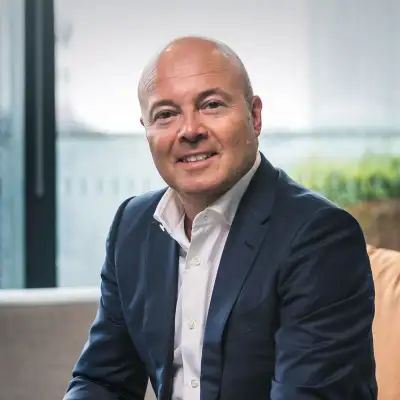
Ralph Grayson: Welcome to The Boardroom Path by Sainty Hird & Partners. I'm your host, Ralph Grayson, a partner in the board practice. In this series, we'll offer practical steps and useful perspectives for aspiring and newly appointed NEDs. Throughout its 30 year history, Sainty Hird has recruited senior board members across the City, Industry, the Public Sector and NGOs.
We're now also evaluating those boards, as well as coaching and mentoring those seeking to transition from an executive career into the boardroom. So we'll be speaking to some leading figures in the board advisory and NED world. Specifically, we'll seek their counsel about how and where to spend time and energy to make an effective transition into the boardroom. The goal is to equip recent and aspiring NEDs with tips, tactics and strategies to be most effective and build a successful career as a board director. In the process, we aim to help you to think more about who you are, how you operate and how you can make this work in the boardroom.
Today on The Boardroom Path, we're stepping outside the boardroom to understand how boards are really judged, because while boards often assess themselves internally through governance, networks, evaluations, and compliance, the reality is that their effectiveness is ultimately judged externally by investors, by markets, and increasingly by the wider political and economic environment and that raises a fundamental question: What does the markets see about boards that boards themselves often miss?
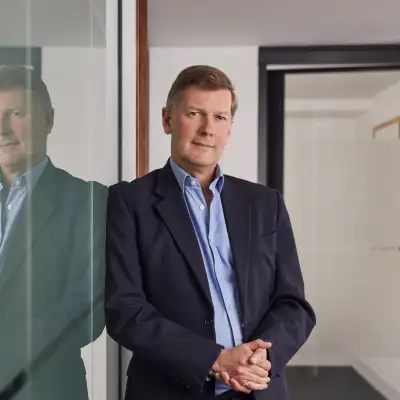
My guest today is Steven Fine, Chief Executive of Peel Hunt, one of the UK's leading investment banks and a longstanding observer of board performance across public markets. Steven has spent decades working with listed companies advising boards, and operating at the heart of capital markets. He also brings a unique governance perspective through Peel Hunt's role as co-founder of the Non-Executive Director Awards. Now in their 20th year, which recognise excellence in board leadership across the UK.
For board members listening, his perspective is critical, it is not shaped solely by boardroom experience, but by how boards are perceived, valued, and tested in real time by markets and by shareholders. In a world of increasing volatility, political, economic, and geopolitical, that external lens is becoming just as important as internal governance. So, Steven, a very warm welcome to the Boardroom Path.
Steven Fine: Thank you very much indeed.
Ralph Grayson: Steven, why didn't we talk a little bit about your role at Peel Hunt, how Peel Hunt got involved in the NED Awards and maybe your perspectives on the most recent awards?
Steven Fine: Sure. The NED Awards slightly predate my arrival at Peel Hunt, which was around about 2007. They started 2006, that was the first edition, and it was the brainchild of the current, business editor of the Sunday Times and one of our corporate financiers, and they felt there was an opportunity here to figure out how to recognise boardroom excellence.
To be fair, it started slow and it wasn't really until the financial crisis where the focus on governance, best practise, stewardship, oversight, et cetera, really took off. And that's where I felt there was a terrific opportunity and worked very closely with Dominic O'Connell, who was the business editor of the Sunday Times then and Sir John Parker, who was the chair of our judging panel and we really took a very cold, hard look at what we wanted and what we felt could really become a go-to natural event on an annual basis to really highlight and recognise those leadership qualities.
And weirdly, you could wrap it up in one word, it was perspectives. So we felt that actually a judging panel made up of individuals from a broad church of disciplines, each having a different perspective on what a good non-executive could or should look like, would give us a level of group think that would be very different to any type of first pass the post competitive recognition that we'd seen in other awards.
So we narrowed the scope, we kept it very tight, and we only had half a dozen categories. In order to make your way to the short list, let alone win it, was a cumbersome, difficult exercise. So there'll be an initial nomination. " Ralph's great. I think he should be nominated for his role at Sainty Hird." We then would call the Chief Executive of that company and ask them to fill out a long form, which could be as long as 15, 1800 words on what that individual had done? What their achievements have been? Why they were so recognisable? What they were so noticeable? Why they were so important?
And that in itself is quite a lengthy exercise. Some Chief Execs don't want their Chairs nominated. Some actually are really quite keen and very excited. Some give brief answers, some give very detailed answers. And then to sift through those, we put on a very strong academic overlay and if I jump forward to today, that academic overlay is done by judges from the Cranfield Business School and also the Judge Business School in Cambridge.
So they look at all of those long forms, sift through them, use their own skill and recognition to come up with a short list of five candidates per category, which are then defined to the judges. So then you have a short list. So already you've jumped through several hoops just to get on the short list. And then it gets even more complicated.
So the sponsor of an individual category, let's say it's the FTSE All Share, will then interview each of those five candidates themselves. They'll call them up and they'll interview each one of them. They can spend as long as they like, as short as they like, and those sponsors find that a very rewarding exercise themselves because they get a very good understanding of what that individual may have done beyond what's written on the form. They then summarise and bring those five candidates interviews to our judges' dinner, and where about 16, 17 judges that sit around the table. The sponsor will then present those five individuals in their own words.
We've had a judging pack with the long forms, all the details as well on there. But the sponsor will present those five with some bias or not. "This is the one I preferred." "This is one I thought was very good, but..." and then we will debate around the table and we'll toss ideas around and we'll go back and forth and back and forth and then each judge has 50 points. That could be 10 per five candidates, that could be all 50 to one, and that's then filled out effectively by secret ballot. And then number of points at the end, you have a winner.
So you can see there's a multi-stage process and it's complex. It's very thorough. It's almost forensic in the way we approach these and unlike a lot of other sort of first pass the post type competitive situations, you end up really with the right result. And when we announce those winners, there's a real sharp intake of breath that actually, you know, these are good people and they really deserve it. And I think what that's led to over the years is a great sense of, achievement from the winners. If I'm being candid, when we first started this, 2006, 2007, 2008, the hall will be packed with, lawyers, accountants, pr, there'll be very few board members. Now when you come to Claridges it's heaving. You can't get in and the non-execs bring their exec teams, they bring their families sometimes. There's a real sense of achievement and whooping and hollering when names are read out in the shortest.
So, you know, I think we've really worked hard at this and got to a terrific outcome.
Ralph Grayson: Gosh, there's a lot to unravel there. I guess my first question is, 20 years of the NED Awards, what's changed? Let's start with a quote. I saw you'd made at the last dinner. "What you do is harder than it looks, and it matters more than ever." So let's unravel that quote a little bit.
Steven Fine: Pre-financial crisis and I'm not generalising here, there was a sort of perception that non-execs were definitely of the pale, male, and stale that were largely, I'm not going to say at the mercy of what the Chief Exec or the Exec Team wanted. But there was a very different level of challenge in the boardroom to that which we see now.
And if you go from the crisis onwards, we've been through numerous changes. Whether that's a financial crisis itself, whether that's the concerns over regulation and regulatory creep, whether that's things that operational resilience, whether that's things like diversity, inclusion, sustainability, the list goes on and on and on. I think for boards, this evolution has been a journey that is in many cases quite hard to keep up with. Even now, we've got AI and we've got cyber, we've got war, we've got economic security, we've got national security, tariffs, liberation Day last year. You know, it's almost a sort of an ever increasing number of issues that boards have to cope with.
So I think that evolution is important. That's why it matters more. It's harder than it looks. You are deemed to be an expert in a whole host of areas, and you aren't, or you can't be. But your job is guardianship and stewardship and best practise and oversight and challenge and therefore you need to have a far greater sense of awareness and heightened sense of understanding than at any time before.
Ralph Grayson: I'd love to get your view then on what good looks like today and maybe how that's changed over the last 20 years, and what you think distinguishes those that are good as opposed to those that are average?
Steven Fine: Well, Dame Ruth Cairnie, our Chair used a very good descriptor in her opening speech at the 20th anniversary. She said, a key word was courage, and I think courage is quite an emotive word, but I think it's highly relevant because you've got to ask questions, you've got to challenge, you've got to have the courage to speak up. You can't just assume someone else on the board knows more than you do. They probably do. But you, at least you need to understand this.
In many cases, board members have their own areas of specialisation, but that sort of common understanding that collective, wisdom or spirit is so important. So there's a courageous element to it where it's not you running the company, you have an exec team to do that. But you are helping steer, you are supporting the execs, you are making sure that they've understood all areas before they move into certain areas and you want to genuinely be helpful, but in a constructive way. So I think that word courage is really important and it, covers a whole host of areas. And as I said just before, given what's happened even in the last 12, 13 months, you know, February, March, 2025, tariffs, liberation Day, suddenly economic security and everything we'd known prior to that had gone out the window. In March this year, war in Iran, Straits of Hamos, oil prices, energy prices, and national security has suddenly gone out the window. Let alone five years ago, COVID pandemics. So, goodness me, there's a whole host of areas. So as everything is changing and evolving, that courage word I think is really important.
Ralph Grayson: I think Archie Norman also said in receiving his award, I don't care what people think about me anymore. Just in that context, I'm interested in your view of, my perception is that, the visibility of board members and particular chairs has grown exponentially.
Chairs are almost as high profile now as the CEOs are. If we think about BP, for example, how do you think that's changed behaviour of board members in your mind?
Steven Fine: I think boards have clearly become far more diverse. I think that's a function of a move towards, let's take gender diversity, for example.
But they've definitely also become more international. And I think as London is seen as an international city, and most FTSE 100 companies are far more international than you would think. But the chair, the role of the chair has become more important in those larger global multinational companies and I think for very good reason. There's complexity. There's huge geopolitical change. There's huge economic uncertainty. The number of factors that sort of throwing themselves at these companies has increased almost exponentially, let alone the whole D&Istrategy and ESG.
It's a whole host of areas that have put the spotlight more and more on the chair. Funny enough, a lot more responsibility on the SID as well. That is just starting to permeate and become more recognised.
Ralph Grayson: Let's just stick with this theme of permacrisis for a second. What is it about crisis or uncertainty that reveals the difference between an effective board member and ineffective board member in your mind?
Steven Fine: We're roughly on about the 12th or 13th crisis that I've had in my career. They do seem to be increasing in speed or the gaps between them seems to be shortening. But I think there's a stoicism, there's a calmness under pressure. There's a not going to say I've been here before, but I've dealt with crises in the past. You might not get through it the way you want to, but you get through it. Life goes on is a sort of cliche, but life does go on and you have to get through it.
So those that I think recognise that and maybe it's just the calm head on or the on the wise head I think become elevated in their level of respect that you would have for them. When things happen for the first time, they can be extraordinary. Let's take a pandemic. If it's happened once, the likelihood of it happening again is a lot higher than the chances of it happening the first time round. So we did not plan for a pandemic. Now we've had one. Well, if another one happened, you've got some precedent. You'd know what you might do in the circumstances.
So, I think living through extreme and extraordinary circumstance, it helps obviously in a strange way. I'm not sounding weird in that. But it helps and that wise head, the board understanding, recognition, their perspectives, their experience? To help the exec team through that is irreplaceable.
Ralph Grayson: Has the governance mind or the board member's mind muscle improve proportionately with those crisis? Are board's acting better, worse, average?
Steven Fine: I don't have the data. I would have to say probably not. I think definitely in some cases because I don't think you can generalise and say across the board, yes, everyone's upped their game because I don't think life works for simply as that.
But what you can definitely say is there's some extraordinary demonstrations of capability out there.
Ralph Grayson: I do want to turn to governance through the lens of capital markets because you've got a unique perspective on that, and you look at boards, I think through a certain prism. So how do investors actually judge boards and how does that differ from how perhaps boards judge themselves?
Steven Fine: Well, you could do your board effectiveness review and you can spend two hours going through different pages on your Microsoft forms and give somewhere between 7, 8, 9 and 10 out of 10. Just to go through the motions and I'm not trivialising, I'm just saying that's what a lot of firms do.
I think there's a lot more interaction that boards now have with shareholders. I think that's actually quite important. And there are those that actually want to engage with shareholders and there are those that are perhaps less keen on it. But I definitely think shareholders welcome the non-exec view of the exec. I think shareholders, if offered the opportunity, would take it, and there are those that make it a pre prerequisite. They would like to do this and others that kind of wait to have to be offered.
I was always slightly concerned where a lot of the big buy-side shareholders had their own governance teams where you've sort of got a blanket, "This is the way we operate and this is the way we will always vote." And I definitely think that has come under its own challenge in the last few years because I do feel that the governance teams would have a different view to that of the fund manager themselves. So I think that's an interesting conflict that I think is unravelling in some places. Things like REM, a whole host of areas, ESG, et cetera.
So, I think that connectivity between shareholders and the boards is actually increasing in importance. But I think that personal touch? Rather than just to the governance teams, could go a very long way.
Ralph Grayson: I did a podcast recently with Kimberly Lewis at Schroeders who runs stewardship there, and she was impressing on the listeners the importance of the quality of the dialogue between the board members and the investors and the need to be focused on quality, not quantity.
You obviously have some of the best analysts in the city talking to boards as well as the executive team. What is it they pick up on that maybe boards themselves miss?
Steven Fine: Gosh. I mean, look, we operate in the mid cap and growth company segment, so I think we're going to be slightly different in the touch points where you have companies that have substantial investor relations teams that tend to take much of the heavy lifting away from either the boards or the execs and we tend to go straight into C-suite level. I think analysts have less contact with board members. It's definitely a c-suite level of connectivity where we operate.
But we do an awful lot of work with boards. We host panels and lunches and breakfast. We pick particular topics, it could be M&A, it could be defence, it could be any of these things that you would look at. And I think for the boards themselves to get the sell side investment bank approach to how we look at these things is very valuable for them too. So I think it's joining the dots approach.
Ralph Grayson: Is there a link between valuation and good governance?
Steven Fine: I think it probably has to be. Although, it's a question of how that's recognised by the outside world. And again, I think with capital markets it's not without its challenges. So if I exclude certainly the top 50 of the FTSE 100, once you get to that bottom 50 and the FTSE 250 and below, one of the problems the UK's had recently has been this devaluation and the lack of recognition and de-rating of companies because of the exodus of funds, whether it's, domestic retail, whether it's domestic pension funds, et cetera.
So you can have the best governance in the world and no one cares. It's not reflected in the share price. So it needs to be highlighted somehow. And I think what we've seen in the UK together with the consequences of things like MiFID II and the absence of sell side research is a general lack of ability for the bulk of the sell side to highlight key situations that should come to shareholders' attention.
Ralph Grayson: Does that imply a priority for the board to be aligning their focus on strategy with how they understand the market might react to the articulation of that strategy?
Steven Fine: Yeah, I think that's very true. But you can't do that yourself as a board. You need an advocate.
So one of the things we've tried to do here at Peel Hunt has been to maintain an extraordinarily high level of connectivity to shareholders in every guise at the same time as we maintain an extraordinary high level of connectivity to the corporates. Now what tends to happen is it's very difficult to make money out of shareholders with the pressure on commissions and the electrification of equity execution and trading, et cetera.
So a lot of our larger competitors, a lot of the other banks in the space, have juniorised or generalised. So they'll get a 21-year-old Ralph, rather than a 37-year-old, aren't you? Or they'll make a specialist become a generalist and they say, "Ralph, you know, you're a great real estate analyst covering 12 stocks, but we want you to pick up media and healthcare and cover 40 stocks." And you'll say, "Well, I can't possibly do that." They'll say, "Well, if you won't, then the 21-year-old Ralph will."
So what we've seen is a general de-emphasis of connectivity to shareholders. I think that has manifested in an opportunity for us to materially grow the corporate client base that we look after. We now have six in the FTSE 100. We have 56 in the FTSE 250. The average size of our client base is about 1.1, 1.2 billion sterling. And if I go back to when we founded the NED Awards, I think we've probably had something like 50 clients, average size a hundred million. So there's a wholesale change.
But really do not underestimate how important that connectivity to shareholders really is because you think you know somebody at BlackRock, or you think BlackRock are a shareholder, but you don't know there are eight different fund managers in three different jurisdictions all under the BlackRock umbrella that all of whom could own your stock or could vote in a key transaction, whether it's M&A or an acquisition that you need to be in contact with.
Don't underestimate how important shareholder connectivity is becoming, and will continue to become, in a market that's derated in a market where you have activism in geopolitical events, where you've got fund flows. This importance can't be underestimated.
Ralph Grayson: And putting a corporate broking hat on. I'm probably being a bit geeky here, but what's the difference? How would you advise a board or corporate on its active versus passive shareholdings? How does stewardship differ?
Steven Fine: There's clearly a place for passives, tracker funds, index trackers, et cetera. I think the exponential growth in them has been a consequence of significant pressure on fees. The correlation that's existed in certain areas of the market. So let's take Tech and AI and the consequence of that is you become beholden to maths, and just let me explain.
So the UK's waiting in the global MSCI index, I think go back six or seven years was about eight or 9%. It's now about three and a half. So are we less than half as good as we were seven or eight years ago? I don't think we are. But because of the boom and the index weightings of the Apples and the Metas and the Nvidia and the Googles of this world, that market cap has grown and ours hasn't. So therefore mathematically they are bigger waiting and that weirdly becomes almost self fueling. So the more Apple goes up, the more you have to buy. I think some of you listening to this may remember in the .com boom, when Vodafone was the biggest company in the UK bar mile it was about a 14% waiting in the FTSE 100. Utterly wrong, but it just was because it was going to rule the world and change and then things blew up and everything came back to normal.
But passives are built on tracking these indices and they just follow the maths. So a lot of that has meant fund flows have moved towards the larger areas at the expense of others. And I think that's something that boards need to really understand.
Ralph Grayson: Just before we leave the market, you and Charlie Hall have been quite vocal around what needs to be done to the market to encourage retail investment, to encourage more active ownership.
Where are we, in your mind, in terms of this whole public to private, re-listing in the US? Have the reforms addressed the issue or is there more work to be done? And when board members are thinking about where are we listed? Are we public, are we private? Have you changed your narrative on this at all?
Steven Fine: If I take the US versus the UK first, I think that has changed dramatically. We have a predictably unpredictable leader of the free world across the Atlantic, and I think what that's led to is a significant rethink in the excessive concentration of assets in a single jurisdiction. So if the US waiting is 63%, do you really want 63 pence in every pound in the US? Bit of a rethink.
The other thing that I think boards have recognised is that, for the largest companies, it could definitely be appropriate. It's very opaque how you get into the S&P 500. It's not clear. But for the largest companies where you are talking 20, 30 billion plus. If your business is overwhelmingly US and whether that's a CRH or whether that's a Ashtead or these sort of things, then you can make a case that yes, this makes sense to Ferguson, these sort of things.
But quarterly reporting, if you're not a big company, that's a pain. Litigation risk, I think it's very, under appreciated. The litigation risk in the US is significantly higher there than it is here and UIPO or you list in the US and something goes wrong. You will have lawsuits landing on your doorstep, within minutes of the announcement going up and hitting the tape.
So I think those things you need to be careful of. And also I think in the US small cap is sort of 10 billion. You're well into the FTSE 100 here. So the potential for you to become an orphan stock is much higher. Thanks very much. We've listed you, we've pocketed a significantly larger fee. Fees over there are way higher than they are here, five, six, 7% in some cases. And then you are left. So they don't have the corporate broking model that we have here where you really are wedded to the client you're looking after. So that's one point.
As far as regulation's concerned I really do believe that the regulators have done a terrific job taking a cold, hard look at the regulatory environment for listings and prospects and follow-ons, et cetera here, and making it way simpler. Way simpler. So I'll give you a very good example. Coats raised, I think I mentioned this on the night, Coats raised a quarter of a billion pounds of equity to buy a US business back end of last year. It was a 19.9% placing, and they did that without needing shareholder approval because of the changing to the prospectus rules. That meant they could compete on a level playing field with private equity on speed and certainty. Suddenly it means the strategic, the listed strategic, has got a chance again. Rather than being stuck, having to wait and file papers and speak to shareholders and get their approval, et cetera. So those things I think are important.
If you talk to most senior regulatory lawyers and they do a side-by-side analysis of the UK versus the rest of Europe, there's significantly less friction now in the UK than other European jurisdictions in order, if you want to list your company. Do you really want to comply with the Dutch corporate governance code? These sorts of things. So there's material change that's taken place. Where we're lacking still is fund flows and fund flows are, without question, the biggest problem and that's actually, weirdly a domestic problem. There is no shortage of money out there, none at all. Every secondary transaction that's happened recently has flown off the shelves.
Rosebank a couple of weeks ago, raised nearly one and a half times their market cap in a single raise, 1.9 billion pounds. It was done in an afternoon. We've seen some significant secondary fundraisers. They all get done. And I say categorically, any FTSE 100 and most of the FTSE 250, doing anywhere near a 10% plus placing, it will get done. There's a lack of awareness from execs and boards that this capital market does function and being backed by long-term supportive shareholders does work and the money is out there. The problem, the sad problem is, most of that's international money.
So what's happened? Well, pension funds, domestic pension funds, particularly DC funds. When I gave you that MSCI waiting for the US at 63.5%, domestic funds in the US have about 63% allocation to the us. The Australian waiting of the MSCI is about 1.5%. They have about a 42% domestic weighting. Italy's 0.7, they have something like 25%, 30% domestic weighting. France about the same. UK's domestic weighting MSCI is 3.5. Our domestic weighting is 2.8.
Now, corporate governance wants those that talk about, fiduciary duty. I would be prepared to fund an all expenses paid trip for the trustees of UK domestic pension funds to go to Australia to tell them why they're wrong and why we are so right. But I just want to see the deck they're going to show them first. Because if Australia is doing such a bad thing by having a 40% waiting to the domestic market versus their waiting in MSCI of roughly one, one and a half. But we're so pure, to me it doesn't make any sense.
And then we also cry foul about, corporate governance standards in the UK. It needs to be at the absolute high standards, but 95.5% of your equity assets go to overseas jurisdictions, where the stands are lesser. It's kind of hypocrisy. So I don't get it.
So I think we need to bust through this vested interest and try and make some sense of it because we have such a huge amount of domestic capital here. You've got infrastructure that needs help. You've got building. You've got technology, particularly startups. We're so good at Venture Seed Series A, B, C, and then we lose them. And when you lose them forever.
So this just needs addressing and it's a absolutely a fund flow issue. It's definitely not a regulatory issue that is working and moving. There's more that they can do. But they have moved a very long way. This is a fund flow issue bar none
Ralph Grayson: So let's just address that on a practical level. So somebody's sitting on a board today, maybe a unicorn council member or any P backed company and it's come to strategy. How do we exit? Do we float here, US, or do we stay private? If somebody's thinking about an IPO, apart from beating their way to your door as soon as possible, how far out do they need to start thinking about that? How do they need to think about governance as a PLC rather than a private company?
Steven Fine: Well, board construction's obviously going to be very important. You know, the more headline the company, the stronger board you're going to want. Those are areas that we've helped on. I know there areas that you help on and there's this whole industry out there to help with board construction.
Preparedness is generally normally the finance function. That's normally the biggest hold up to any type of IPO and being public market readytakes some time. But there's also a bit of myth busting out there as well. And I'm not sure who's going to break the mould on this, but you don't need an F Triple P and you don't need a working capital report to IPO. It's sort of built up as a, "Well, you probably should." But there's no regulatory requirement to have one. So there are things that you don't need to do, but you probably have been advised you should just because.
I think there are some changes afoot on that front. But I think for those companies, understanding and recognising that there is a capital market out there that does work irrespective of the narrative that exists, that this is all form and we're de-rating and we're losing companies is quite important to understand. Unless you are trying to ring the bell at the maximum valuation and get out at the top, which I think is just a wrong strategy. The public markets are actually open for business. They really are.
Ralph Grayson: So FRC Comply or Explain, the FRC has been very vocal on good leadership on the board means that there should be a stronger desire to explain rather than just comply. What's Peel Hunt's view on this? What do your analysts come away thinking on that?
Steven Fine: Look, I had Richard Moriarty in my office talking about this and he threw his hands up in the air saying, " Celebrate your explanations." And actually I think, he's right. I've said to him, I think what you should do is rename it Explain or Comply rather than the other way round. I think suddenly there's a big mindset shift. But I think from a board's perspective, we've been so hammered down on regulation. We've been so hammered down on protection. We've been so hammered down on not doing the right thing but doing everything that there's a sort of reluctance to take your foot off the gas on this.
I always give an example of, they don't do them anymore but the FCA used to write these DCO letters, they're now far more concentrated and you know, it is the biggest drop pens moment in an exec's life. And you look at it and you read it and you analyse it like Shakespeare and you go through every intonation, what do they mean? And you get to the end of it and you go, "Oh, thank goodness it doesn't apply to us." And then it goes into your board pack and the audit share says, "Yeah, I know, but just do a paper on it please and some gap analysis and make sure we're covered." It is that sort of thing.
So one of the things the FCA are looking to do together with what you said on Comply or Explain is this myth busting. So what don't you need to do? And again, I think that courage word is quite interesting because you're not asking boards to say, "Nah, everything is a free for all." But it's actually "What do we really need to do this? Do we really need a paper on this? Do we really need this extraordinary level of disclosure. Do we really need 350 pages in our annual report that no one reads anyway?" It's that sort of thing. So I think there's a bit of a wake up call to say we should at least ask these questions and that goes back to that courage point as well.
Ralph Grayson: I'll just stick with this theme of board leadership. Board Leadership versus board composition. There's a lot of tick boxing and focus on skills, experience, knowledge in terms of the way the board is structured and then the way the board process works.
But I think that is often too much of a priority rather than good judgement and good leadership. I'd be fascinated from your years of watching boards what to you does board leadership mean?
Steven Fine: We can talk for hours on that topic. I mean, look, leadership is understanding, recognition, and awareness that your colleagues are there to help you as well, not to do what you tell them to do, okay? I think, leadership is an art in itself very different from the exec side to the non-exec side. So chair versus CEO and you do flip from one to the other. I'm very fortunate that I sit on a couple of boards, and a great example, I had two days of our own board governance at Peel Hunt where we had a risk committee, a non committee, a REM committee, a board meeting, and I was there in the exec capacity. And then the following afternoon I was in a non-exec capacity and I thought, "Right, I can get my revenge and ask a lot of annoying questions." Again, I'm trivialising. But there is a difference. There is definitely a difference.
So I, think that leadership is important, but you've got to be a great listener. You know, you've got to steer the ship. You've got to move from one topic to the other seamlessly. You've got to make sure the right questions are being asked. You've got to make sure everyone has a voice. You've got to make sure everyone is heard. Basic things that a good chair should do from a leadership perspective. But very often you find they're lacking.
Ralph Grayson: And when you've been scoring in the NED Awards, where's the balance between a board chair and a board member? Is there a difference in terms of how you would score them in terms of that board behaviour? In terms of that judgement over structure?
Steven Fine: Well, funny enough, the two amendments that we made to the categories in the NED Awards were to introduce a "NED to Watch" category, which we then named in memory of Dame Helen Alexander, who was our chair at the time, sadly passed away. I'll come back to that and the second one was a FTSE NED, so not a chair. We were finding that the FTSE 100 award was invariably always going to a chair. But there were some very strong NEDs and SIDS that needed recognition because they'd also performed remarkably well. So the "NED to Watch" tends to be those up and comings, two or three years only into some form of plural career, more likely two years or so, where they've taken on a position on a complicated board and demonstrated great capability. It's been a great sense of recognition and probably more importantly for the chairs or SIDS of those boards to have those people recognised because they're the ones that have nominated them.
Ralph Grayson: I spend a lot of time talking to existing and prospective NEDs talking about where they would add most value, either in terms of market cap or in terms of sector. How do you think about that? You look at FTSEs you look at 250s you look at AIM boards, you advise on pre IPOs, how should NEDs think about where they're going to add most value? Where they're going to sit best?
Because success isn't defined, whether you are a FTSE board member or a 350 there's not one better or worse. So where is the best fit in your mind?
Steven Fine: I think one key point here is one of proportionality because, a plural career for a non-exec is not three FTSE 100 positions. It could be a FTSE 100, it could be a FTSE 250, it could be a private company startup. The board on each of those three cannot operate the same way. There are different demands on governance standards and disclosures and I think recognising you don't need to be FTSE 100 standard, even though you are a public company, you've got to do this, this, this, and this. Butlet's be mindful here, I think is also quite important. And I think in many respects, those that are sitting on larger company boards can be immensely helpful to smaller companies. Those that are ambitious and smaller companies and growing up get a chance to appear on a larger company board. It's like, "Gosh, this is very different." So I think there's an education both ways.
Ralph Grayson: So if you are a FTSE 250 CEO, who for whatever reason has decided to go plural, that doesn't read directly across into you should be a board member of a 250?
Steven Fine: No, definitely not. If you are a FTSE 250 CEO, you'll have significant experience of board members of a FTSE 250 company and you are thinking, "Okay, I quite like sitting the other side of the fence and asking a lot of questions and, prodding here and pulling there and et cetera, et cetera." And you also know from an exec perspective, what are good board members like or what's not proportional or what holds you back and what really stimulates you and pushes you on.
So all of those are great life learnings, and I think that's why execs moving to non-exec life work. But it's not a prerequisite. If you're a 250, you go to a 250 or even a hundred or a small capital or a private company.
Ralph Grayson: And how does that read across into behaviour? So somebody who's a CEO their power, their authority is hierarchical. Follow me, do what I tell you. Then you get in the boardroom and it's about influence and it's about peers. How do you measure when you are scoring these NEDs in the NED awards? How do you look at board behaviour?
Steven Fine: A lot of that is covered in that long form report because that's the CEO really explaining why their board member made such a material difference to them.
And again, it goes to the heart of the methodology behind the awards because, Bob gets 50 votes and Jane gets 35. That doesn't mean Bob's the winner, but it does in a first pass the post. But when you talk to Jane's CEO and you talk to Bob's CEO and they really explain what each of them did and why they did it, you get a far greater level of detail, knowledge and understanding as to why that person was so good.
So I think that relationship between the board and the exec is so important and it can work or it can not work and my God, we've seen a number of cases where it doesn't work. But when it does it's very powerful. And then when you get the recognition from your CEO as to why a board member has done such a good job that's even more powerful.
Ralph Grayson: I spoke to a Head of Stewardship the other day who said they'd never seen a bad external board appraisal.
Steven Fine: Yeah.
Ralph Grayson: Comment.
Steven Fine: I don't know, you're marking your own homework in some respects. You send a board evaluation questionnaire out. You look at skill sets of your colleagues I mean, even the external ones. I don't know. Look, to be honest, either boards are well-formed and they're there for a purpose and actually people fit and people gel. In aggregate, you'd like to think every board has got some good characteristics behind it doesn't mean every board member is faring in all cylinders.
Ralph Grayson: And just staying on the characteristics then have the categories and the characteristics changed over 20 years of the NED Awards?
Steven Fine: Yeah, I mean, I think when I started, as I said, board members were pale, male, and stale. We took a view, our judging panel had to evolve faster than the changes in the boardroom. So we were very quick on diversity, and that was gender, that was ethnicity, that was age, that was even geographical location.
We even had Francis O'Grady from the Trade Union Council on our judging panel for a couple of years. The perspectives you get when you do that are extraordinary. And it sort of goes to why diversity is so important. So that's probably the biggest change that I've seen that we've kept our judging panel at least in step with the changes of what's happening in the broader world.
Have we led it? Not clear, I don't think we'd like to be seen as leaders. But I still think, going back to our process, you look back at the past winners and you look back at who's been recognised, and very often in some awards if you win something, it's normally the peak and some skeleton comes out of the cupboard. Touch wood, we've never had that. And I think that goes to the process, the methodology and the whole approach.
Ralph Grayson: So a listener can't change their diversity, but they can change their judgement, their behaviour, their process. You've looked at a lot of different people, the goodens and the badens. So what makes a gooden
Steven Fine: I don't think you can generalise to be honest. You've got silent but deadly and you've got loud and proud. You've got the whole host. When we judge, we take so many inputs and we discuss at such length. The cream rises to the top. It's already risen to the top in the short list. You then got to take it even further to get your winners.
Ralph Grayson: And what's the biggest misconception about becoming a NED then?
Steven Fine: That you are taken for granted and you fly in and you ask a load of annoying questions and you disappear off again. That's sort of the generalisation characterisation and it couldn't be any further from the truth.
Ralph Grayson: Thank you. Fascinating, insightful, I hope we have listeners who are going to be future winners of the NED Awards.
Steven Fine: Well just make sure you get yourselves nominated.
Ralph Grayson: Today's conversation offers a powerful reminder that board effectiveness cannot be judged solely from inside the boardroom. First boards are tested most in periods of uncertainty, not stability. Second, the market provides a constant external assessment of governance quality. Thirdly, politics, perception and narrative are now inseparable from business decision making and finally, the very best non-executive directors bring judgement perspective and the ability to support and challenge an equal measure.
The real lesson is this, governance is not static. It is dynamic, contextual, and increasingly shaped by forces beyond the organisation itself.
Steven, thank you so much.
Steven Fine: Thank you.
Ralph Grayson: I hope that you've enjoyed listening to this podcast and have found it helpful when thinking about how to approach your own path to the boardroom. If you would like to push this a little bit further, Sainty Hird runs a bespoke one to one programme designed specifically to this end. For more information, please visit our website saintyhird.com, follow us on LinkedIn, and subscribe to the Boardroom Path to receive new episodes. Thank you for listening.