Subscribe
Share
Share
Embed
In this episode, Jason Littrell and I face the challenges of listing drinks brands in bars and restaurants. We deep dive into the steps from selling one bottle to one case. How do you start from being on the back bar to be on the menu? What are the triggers in the conversation between a salesperson and a bar manager? How do you start from the glass and build brand pull rather than brand push?
I hope you enjoy the conversation. Share it with friends, click follow and rate it if you liked it.
About the Host: Jason Littrell
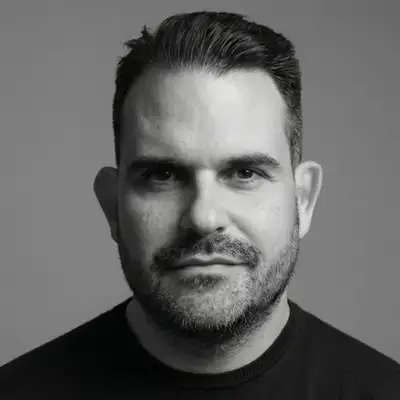
About the Interviewee: Chris Maffeo
All rights reserved: The Littrell Show
In this episode, Jason Littrell and I face the challenges of listing drinks brands in bars and restaurants. We deep dive into the steps from selling one bottle to one case. How do you start from being on the back bar to be on the menu? What are the triggers in the conversation between a salesperson and a bar manager? How do you start from the glass and build brand pull rather than brand push?
I hope you enjoy the conversation. Share it with friends, click follow and rate it if you liked it.
About the Host: Jason Littrell
About the Interviewee: Chris Maffeo
All rights reserved: The Littrell Show
The MAFFEO DRINKS Podcast is a leading drinks business podcast delivering actionable insights for drinks leadership.
For founders, directors, distributor MDs, and hospitality leaders navigating the tension between bottom-up reality and top-down expectations.
20+ years building brands across 30+ markets. Each episode features drinks builders: founders, distributors, commercial directors, sharing how the drinks industry actually works. Not the conference version. Honest conversations.
Insights come from sitting at the bar.
Beyond episodes: advisory for leadership teams, subscription with episode deep dives and principles to navigate your own reality.
Beer, wine, spirits, Low and non-alcoholic.
Bottom-up Insights & Episode Deep Dives at https://maffeodrinks.com
You know? And some people are like, just like these marketing geeks that are like,
Jason Littrell:oh, no. No. No. It doesn't go in an old fashioned. Like, you know, like, don't like what this guy, Jason, is doing.
Jason Littrell:And it's just
Chris Maffeo:like, yeah. But Jason is selling three bottles per night, know, making old fashions. Well, if you want them to make all these complicated things that by the way, our business is slowing down his bar on making profit because it takes ages to make your drink, know, you like he's never gonna sell it and he's gonna sell another one. So this is the thing that these are the trade off of thinking as an ecosystem so that basically everybody grow and scale in.
Jason Littrell:What's up, guys? My name is Jason from Who's My Rep. And today, have Chris Maffeo, from Maffeo Drinks, and he has this amazing program called, Winning With Drinks, and I get his newsletter, and it's pretty amazing. I highly recommend you get on it. So please welcome Chris McPhail.
Jason Littrell:Chris, how are doing?
Chris Maffeo:Thanks. Thanks, Jason, for having me. All good here here in Prague.
Jason Littrell:Good. Good. That's Prague, that's like a bucket list destination for me. Hear it's a beautiful place.
Chris Maffeo:Yes. You have to come and join me. Like, we we can do some trade tour together.
Jason Littrell:That sounds fun. Happy. Into it. Very much into it. Alright.
Jason Littrell:So so, just by virtue of the fact that you're in Prague doesn't mean that you don't know what's going on here in The States. I get your newsletter and it is absolutely jam packed with very actionable, very down to earth, step by step handheld, like, you know, paint by numbers advice. Can you tell me about your newsletter?
Chris Maffeo:Yes, absolutely. So the newsletter that I'm writing is pretty new, actually it's like six weeks. So I've been doing it for, know, that's the sixth issue that you just received on Saturday. It's something that I've changed in my approach. I'm following one of my favorite guys.
Chris Maffeo:It's a man my mentor, Welch. He's actually based in Tennessee. And basically like the way I've rechanged my approach is that I I was writing I mean, you know, I was writing a lot on LinkedIn every day. Like I I write daily tips on drinks founders and drinks owners, like the whole the full ecosystem of the drinks world and and hospitality. But I felt that the content was a little bit like scattered and all over the place.
Chris Maffeo:So I was writing about different kind of topics, different kind of aspects of our world And I thought like, okay, let me reshape it and reframe it and let's start always like each week from one problem that people are having, so drinks owners usually are having and let's write about it, let's deep dive into this. And then basically I'm using my everyday LinkedIn and Twitter posts to actually mention some of these elements. And then I resend all the people to the newsletter if they want to deep dive because I felt that I had a bit of a friction between being very short and snappy on a tweet like thing. And then I felt the pressure of actually explaining myself because in two eighty characters, there's only as much that you can say. And people were asking, but you didn't write about this and what I didn't understand this.
Chris Maffeo:So basically like now I am very short and snappy in my tweets and LinkedIn posts. And then I resend all the people that want to deep dive into that. And if you want don't want to deep dive, then it's up to you. And if if it's fine for the with the 280 character, that's that's that's also okay for me.
Jason Littrell:Yeah. You seem to have mastered the content game and your strategy appears to be just give, give, give, give, give, give, give, and then and I I don't know. But like you just seem to keep on giving away this like extremely valuable information. Is there a is there a strategy there or you or you just love giving your knowledge away?
Chris Maffeo:No. I mean, like, honestly, I mean, of course, I need to make a living, so that's that's why we're all here. But honestly, I I I don't I'm I'm not in a rush, so to say, to monetize. So I really, I genuinely like to help people. So people who contact me and DM me, they usually get a reply within less than twenty four hours because I just like to be in touch with people and help them.
Chris Maffeo:And that's actually the reason why I've left the corporate job because I felt that I didn't want to give all my value to only one company. I wanted to spread myself to more than one company because there's a lot of problems that actually are the same everywhere. And you touched upon it like I have quite a few US customers because ultimately, 80% of the game, especially when you're talking about entree and drinks, it's actually the same. And then there's a 20% that could be the treat your system in The US or different kinds of things in different countries around the world. But for most of it, it's actually pretty straightforward and similar.
Chris Maffeo:So there's a person going to a bar or during a drink and there's a drink brand that wants to get listed on the back bar and on the menu. So that's pretty the same everywhere around world.
Jason Littrell:Well, mean, but you laid it out there in like, I think it was five different steps. So what are the five steps to getting your brand listed on a back bar or on menu? How does that work?
Chris Maffeo:Yeah, so basically, I mean, like you, of course, start to get into, need to frame the, let's say the ability to win into your target occasion. You need to deep dive into your target location. So what is your brand about? You cannot be a jackable trade with your brands. And then the moment you streamline what are the best outlets for you, you need to focus on the ones that are most likely to list you.
Chris Maffeo:And then once you're in, you need to basically like step up the game on the rate of sales. So you sold in one bottle or one case, I mean, if you can like it, but most likely it's going to be one bottle or a couple of bottles. And you need to basically remind the people that they bought it, first of all, because maybe only the buyer knows about your brand. So you need to let all the staff know about it. You need to go there and have a drink.
Chris Maffeo:You need to basically build your way into a bigger presence into that place. So everybody's talking about being on the menu, but that's a bit of an end game. You don't start by being on the menu, you start by being the right drink for that particular occasion. So serving a need that the bartender has and the consumer has. And then basically you build your way into the back bar, then you are visible in the back bar because you could be hiding in the back bar.
Chris Maffeo:And then you can basically pitch to be on the drinks list, the cocktail menu, and then trying to make your way in a bigger presence and be in a couple of drinks in that menu. So it's a bit of like, I call it like the sellout ladder from basically being there and maybe there will be sellouts, but most likely you're collecting dust on the shelf to or maybe in the seller to actually being a high rotating SKU into that bar that is generating revenue not only for you but for your distributor and for your customer.
Jason Littrell:I mean, these things are easier said than done. I mean, you can say this is what you should do step by step. But you're constantly referring back to this is like your catchphrase, that brands are built from the bottom up. What does that mean?
Chris Maffeo:Absolutely. I mean, started a bit as a bit of a joke because I just like wrote it there in a couple of posts. And then I realized that when I was talking to people and to clients, they were actually referring to the line and it became a bit of a, you know, it actually came bottom up because it came from customers that liked it. And then I started using it more and more. So what I mean is that we tend to think of building a brand.
Chris Maffeo:I mean, I've been years in the corporate world of drinks, especially beer. And we tend to think, okay, we create a brand and then we talk to distributors, we build it with the, so we first build it with an advertising agency designers and so on within a distillery or in a brewery, we create this fantastic product and then we start pushing it into the market and trying to convince people to have it. What I mean about brands that build bottom up is that it's all about brand pull rather than brand push. So you need to start from the glass and from the liquid in the glass and then build it upward back to the distillery or back to the brewery because people need to understand why they should drink you instead of another brand and why the bartender should recommend it to those people and why the sales guy from the distributor or the wholesaler should recommend it to the buyer and so on. And so you kind of like walk backward from the end and that's the only way to build brands because that's the only way to actually get to the granularity of understanding what it means.
Chris Maffeo:So one bottle is roughly twelve, thirteen drinks. I mean, at least in The US more or less.
Jason Littrell:Yeah. Seven fifties mostly. Seven fifties or liters. Yeah.
Chris Maffeo:Yeah. And and that's that's what it is. I mean, it's like 12 drinks. So let's make it easy. Like 12 drinks, let's call it like a six week week, it's two drinks per night.
Chris Maffeo:That's it. That's how we finish a bottle. So I always say you have to help them, customers get rid of your brand. It's not about buying you, it's about getting rid of your brand as soon as possible so that they can buy another bottle and deplete it as fast as possible. So when you talk about bartenders, I mean, you've been in the street longer than me probably.
Chris Maffeo:It's about how do you convince them to actually make drinks. So it's not about like, Jason, can you please sell more on my brand? It's about like, Jason, you're currently selling roughly one drink a night. Can you make it two drinks per night? And that's how you finish the bottle.
Chris Maffeo:Like you were doing half a bottle and now you do one bottle. And then you multiply that to that scale of 12 and then basically it becomes two bottles, three bottles, four bottles. That's how it's done. And most people think about the million dollars and the thousands of bottles that they want to sell, the thousands of cases that they want to sell, but they get lost into the, you know, it's about like those two ounces that make the difference. It's a bit like the inch by inch, you know, of Al Pacino kind of thing.
Jason Littrell:Well, I mean, when you say that, it sounds so simple and it sounds simple, but it doesn't sound easy. And it just reminds me of some of the strategies that in my clients and my employers in the past that have given me, which is like, hey, Jason, I want you to find these 50 accounts. So what would you say to the person who is an entrepreneur owned brand, they have one employee themselves and they have a bunch of agencies around them that are doing stuff, but it's incumbent upon them to sell their own brand because the distributors aren't gonna show any excitement until they see some movement of velocity. What would you say to that person? What should they do on a daily, weekly basis to actually move their move their the needle for their brand?
Chris Maffeo:So I mean, that's a that's a that's a great question. I mean, first first of all, let me let me answer to what to your point about the simple and not easy. It's like, it's not that I came up with this idea because I want to be smart. It's just like it's basically like working every day and analysing things and trying to make it simple because I've been doing coaching sessions, mentoring sessions. I've been doing trainings with big multinationals and I was always wondering why are people struggling with this?
Chris Maffeo:Is the training not enough for people? Because people think that they call me in, I do a training and then 20 sales people are enlightened and now they will actually get those 50 accounts that you're asking about. So it's not about it, it's a journey. So it's a journey of consistency and really like getting better and better 1% every day. So the first thing that people should do is that doing their homework.
Chris Maffeo:So they need to understand what is their commercial proposition. So you get a fantastic brand positioning. But how do you translate that? How do you explain that to a random salesperson in Philadelphia? How do you translate that thing?
Chris Maffeo:Because the issue is that either big brands have got like brand managers that fail to translate that into a sales guy or the founder is failing to translate that into his or her own team and translating it into then distributors and so on. So I've been managing distributors for, you know, like with 30 markets for like a couple of like a few years the issues were always the same. I mean, doesn't matter if it was in Chile, in Mexico, in Sweden, in Iceland or in Israel, it was always the same. It's just like you need to do your homework and understand like you cannot be a jack of all trades. Everybody wants to scale but my point is that you can only scale if you really understand the handful of bars and restaurants that are good for your specific occasion.
Chris Maffeo:I mean, at for example what Aperol has done, they are just consistent into the occasion, the aperitif occasion. You don't see them in clubs, like you don't go dancing and sipping an Aperol Spritz. You just like go there on the terrace, in the sunshine, especially in summer or in winter during a like on a ski resort. So it's like the natural thing is a bit counterintuitive because you say like, oh, come on now, how many people are having an Aperitivo? Like I want to make this brand big, but ultimately if you scale that from a niche from within, there's millions of people that are actually drinking that.
Chris Maffeo:And it's the same thing, you can name it with bitters and amados and whiskeys and gin and sonic and support. So you need to be, first of all, credible into that occasion. A lot of brands are trying to tap into the gin and sonic occasion here in Europe. You have to be credible. I mean, the gin and sonic wasn't born yesterday.
Chris Maffeo:I mean it's like it has two hundred years of history. So of course like it's inside the head and the back of the head of people. So to go back to your point about the 50 outlet is about like trying to understand what are the two, three types of outlets, of bars and restaurants that can buy you, analyze, do the homework before. So now we are lucky. I mean, I was a sales guy, there was no Google, no Facebook, no nothing.
Chris Maffeo:I mean, was just like pen and paper and a scrapbook. Now, I mean, you've got Google Maps. I mean, you say it in your videos. Like, how do you study that? Like, go on the website, search for the keywords, what are the things on the menu, look at the pictures, what kind of brands do they have in the back bar, what is the cocktail menu looking like?
Chris Maffeo:Is it like a whisky forward, is it a galley forward? Is it gin forward? Try to understand, I mean if there's a lot of gin brands, of course there's an opportunity for you as a gin brand but then it's also like a crowded space. So try to find the sweet spot and maybe like a place that has a couple of gin. So it means that it's gin aware but it's not gin fatigued on that menu and consumer.
Chris Maffeo:So it's a little bit of trial and error. I mean, I'm not trying to be smart. It's more like trying to understand like studying. This is like the fruit of months and years of analysis. The reason why I'm so clear in what I'm saying.
Jason Littrell:So, I mean, it seems pretty clear to me that clarity is what you offer your clients. Like very simple, strategy, this is what to do, this is how you do it, right?
Chris Maffeo:Pretty much, pretty much. I mean, it's about simplicity because I'm not a big fan of big PowerPoint presentations. I've done tons of them in the past and I don't want to do them anymore. I use Notion as a platform. My reports are like a PDF like, so it's like an executive summary kind of thing.
Chris Maffeo:That's what it is. Of course I use visuals when it's needed, but
Jason Littrell:Well, you mentioned two specific cocktails as examples. Like this question is coming from a place where we used to use a half a teaspoon as an ingredient one time, in several drinks. So, but the two drinks that you mentioned were gin and tonics and Aperol spritzes, both of which can be recited, the recipe can be recited by a customer on a napkin in three seconds. They don't even have to think about it. You know, the gin and tonic is two times like one to two maybe of a ratio and then Aperol spritzes to three.
Jason Littrell:Something that anybody can remember. So what would you recommend for a cocktail strategy for a side? So you've picked the right accounts. What would you recommend for a cocktail strategy for a new brand that you work with?
Chris Maffeo:So the first thing, that's a fantastic question and I like how you simplified it in nutshell. You said it, I mean, the cocktail has to be easy. That's simple, so to say, simple to remember and simple repeat at home. That's the other key point because otherwise if it's very complicated, know why people love Negronis because it's easy to make. Mean it's one third, one third, one third.
Chris Maffeo:I mean you cannot get it wrong kind of thing. So the first thing is that there's always like what I like to think, I'm a big history and geography lover, so I always like to go back to traditions and how historically people were drinking. And for any category, there is always a traditional way of drinking and a modern way of drinking. So let's say like tequila, of course it goes and all the agave spirits, they go well with Mexican food, so that's the main occasion originally and then they scale down, they scale up into being in a skyscraper on 5th Avenue, know, in the top bar and then you're sipping tequila. But it originally didn't start like that, you know.
Chris Maffeo:Same thing is like take an Italian amaro, like the Italian bitter. It's an after dinner thing. So traditionally you would go into Italian restaurants because that's an after dinner thing. You've had a pizza, pasta and a steak, a bottle of wine and now you want to have a digestive and have an amaro and then it goes back to being on a fancy cocktail that can be a teaspoon, kind of like modifier or a main ingredient. So to answer to your question, you need to build that kind of scale from the original occasion in which the serve is actually higher.
Chris Maffeo:So if you take an Amaro, it's actually like a proper on the rocks kind of thing or if you take a tequila or a mezcal, it's like it's something neat that it's a sizable, of course always drinking responsibly, but it's a sizable pour And then you go back to the modifier, like with the Mezcal Negroni and then you become one third of a cocktail, but you're not the main ingredient, you're one of the main ingredients. Or you could be a little dash at the end of a normal Negroni with gin and then you put a sip of Mezcal to just have the smoky effect to it. So you always need to think because a lot of these cocktail lists and cocktail menu are built in design agency, in a branding agency and people don't think granular in that. That's like, oh, this would be a fantastic drink. Yeah, but it's complicated to make, the serve is complicated, the ritual doesn't exist, even the ingredients are like the garnish.
Chris Maffeo:I mean like does the bar have mint in it? Do they have a cucumber? You know, or do they just have oranges, lime and lemon?
Jason Littrell:Yeah. This just brings me back to my days as a buyer and pardon me if I'm speaking for some buyers out there, but when people used to come up to my bar and say, hey, Jason, I have this new spirit. I have this new rum. So if it's a rum or pretty much anything like a rum, like light spirit, light 80 proof spirit, I'm gonna be like, okay, well let's try this out in a daiquiri or whatever, a gimlet or whatever it is because it's the context that I'm looking for. The gimlet, the specs and the ratio are the thing that I understand.
Jason Littrell:And so when I input your brand in it, that's the thing that I'm looking for that's different, not the thing that I'm looking for that's the same. Now if it's a whiskey, I'll probably try whiskey or any other spirit like 80 proof spirit, I might try it as an old fashioned. But I'm not gonna go in there and make your drink that you came up with that you think is amazing and then try to figure out and find ingredients you think that would be better for me as the expert to to to make for you. So, yeah, I've had I've had some very difficult conversation with suppliers before where I'm just saying, like, like, allow me to allow me to evaluate this for myself in my own way.
Chris Maffeo:Absolutely, absolutely. And you need to give the guidance to the bartender to basically like come up with those solutions, especially because what I always say is that I always think of the drinks industry as an ecosystem. So it's like there's distributors, wholesalers, importers, buyers, bartenders, waiters and so forth. So it's like you need to make it so that basically everybody is selling on your behalf. So when you are leaving that place, if I leave your bar, I want to walk away knowing that Jason is gonna sell that brand.
Chris Maffeo:Not that I look cool because I've convinced Jason and Jason said yes, yes, yes, just to get rid of me as soon as possible and then you're gonna do the old fashion anyway. Know? And some people are like just like these marketing geeks that are like,
Jason Littrell:oh no no no, it doesn't go in an old fashioned like you know, like I don't like what this guy Jason is doing. And it's
Chris Maffeo:just like, yeah, but Jason is selling three bottles per night, you know, making old fashions. Well, if you want them to make all these complicated things that by the way are busy slowing down his bar on making profit because it takes ages to make your drink, like he's never going to sell it and he's going to sell another one. So this is the things that these are the trade off of thinking as an ecosystem so that basically everybody grow and scale in revenues and brand building and so forth.
Jason Littrell:Okay, one last question before I let you go, but what would be your reaction if somebody, if a buyer immediately went to compensation and and and just asking for money, basically? What would your what would your reaction be on behalf of your your clients' brands?
Chris Maffeo:I mean, like, of course, it's this is a tricky one because it's also like a legal kind of know, there are there are legal remarks. Depend depending where you know, of course, depending where the the the market, if it's legal, if it's illegal and so on. But my first reaction is to walk away. That is not the kind of conversation that I wanna have. The ultimate thing is that brands should basically like it's ultimately the consumer that is going to basically bring that revenue stream to all of us within the ecosystem.
Chris Maffeo:So let's not try to rip off each other in the value chain all the links, let's try to build value for everyone so that actually the consumer sees that there's value and they are incentivised into spending more for their treats. There's always this kind of conversation about I can't have whatever, like my margarita is like $15 and with your mezcal or with your tequila, I can't make it happen. It's just like, okay, but you know, make your margarita for $15 and then make like an upscale margarita for $18.19 bucks. And I may be willing to pay that extra $4 just because I know that you're not putting a well tequila or well mezcal into it but you're doing something more special on it. Then of course, there are some cocktails that by definition are kind of like mainstream.
Chris Maffeo:So maybe you don't want to do it with the Paganzza but you want to do it with a Mezcal Negroni or you want to do it with another kind of cocktail that has, let's say, let's call it like a better reputation so that it incentivizes people that are not seeing that cocktail as a commodity, as a sparkling water basically, but they see the added value of tasting the flavours and tasting those ingredients in a better way. So this is what I'm always explaining to my clients.
Jason Littrell:Well, how do you how does one get on your email list? Because I know you put a ton of work and effort into it and it's extremely valuable. How does one get on your email list and how do we find you on Twitter and LinkedIn?
Chris Maffeo:So my website is called winningwithdrinks.com. That is the best way of finding me. Then you can look for Chris Maffei on LinkedIn and Maffeiodrinks on Twitter. And everything is all interlinked. So once that you go into one of the platforms, I mean, you will see all the other places.
Chris Maffeo:But if you subscribe to winningwithdrinks.com, basically, will make sure that every Saturday in your inbox, there's a there's a nice newsletter and it's and it's an actionable newsletter that you can take from the Monday onward and and work on it.
Jason Littrell:Brilliant. Well, thank you for making the time. I appreciate you coming by. Thanks, Chris.
Chris Maffeo:Absolutely, Jason. Thank you.