Subscribe
Share
Share
Embed

Real talk. Smart strategy. Women’s health marketing, served straight up.
If you're a brand leader, marketer, founder, or investor in women’s health or FemTech, pull up a stool — this is your podcast.
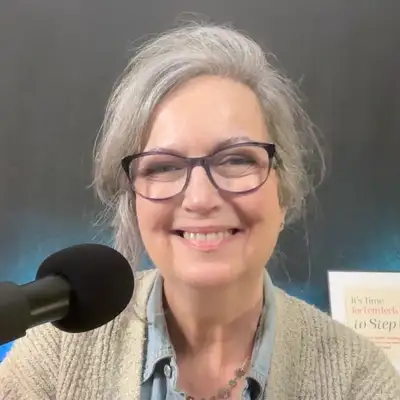
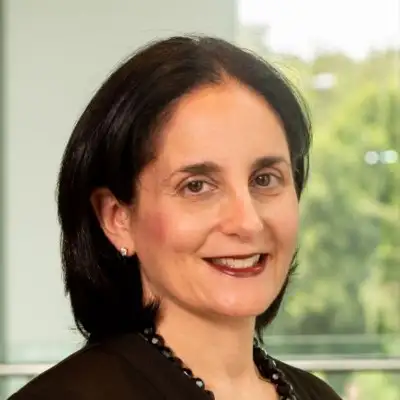
Hosted by Gabrielle Svenning and Karen Flynn of GrayMatter Agency, this Perimenopositive™ podcast explores the brand strategies driving success, featuring candid conversations with founders, brand strategists, healthcare professionals, and industry disruptors about what it really takes to market products and experiences built for women today.
Gain insight in how to:
• Position your health brand with authenticity and impact
• Build trust in the age of influencers and misinformation
• Design marketing that resonates with the women driving care decisions
• Elevate your voice while staying regulatory-smart
• Future-proof your brand for what’s next in women’s health
9 episodes. Zero fluff.
Mocktails included.
Follow & be notified when episodes drop!
Gabrielle (00:00)
When your Salesforce doesn't reflect the women that you serve, that's not just a gap, it can be a real barrier.
Karen (00:06)
So how do you equip your reps to sell with credibility? Today we talk with Debbie Garner from Femselect about what it takes.
Karen (00:21)
Welcome to Two Uteruses Walk Into a Bar, where we spill the sauce on brand strategies that win in women's health and fem tech.
Gabrielle (00:33)
Welcome back to Two Uteruses Walk into a Bar. I'm Gabrielle Svenning.
Karen (00:36)
And I'm Karen Flynn. Today we are diving into a challenge that faces many FemTech companies. Sales enablement.
Gabrielle (00:43)
Yeah, let's be honest, it can be a little tricky when your sales team may be primarily men, your end users may also primarily be men, but your product is for women. There can be a disconnect there that could potentially stall your commercialization efforts before they even start, unless you think a little bit differently about how selling is done.
Karen (01:01)
Yes, which is why we are very excited to have had this conversation that we're going to be sharing today with Debbie Garner, ⁓ our guest today. She knows firsthand how to prepare sales teams to bridge that gap, move innovation forward. It's going to be a great listen. I'm looking forward to sharing that with you. So but before we get going, it's very important to introduce today's mocktail. Our mocktail of the day today is the classic blushing Arnold Palmer. Let me see yours.
Very pretty. It's very simple, very pretty. Half tea, half lemonade, and a splash of grenadine. It's bold, but it's balanced, and it has just a blush of rebellion, which is why we chose it for today.
Gabrielle (01:39)
Yes, perfect choice, perfect compliment for today's conversation. Listeners, please grab a glass. Join us at the bar. Let's get into it.
Karen (01:47)
Let's get into it. Cheers.
…
We are stirring up a topic that does not get nearly enough attention, sales enablement in FemTech. Because no matter how amazing your product is, if your reps can't sell it, it doesn't get into the hands of the women who need it.
Gabrielle (02:02)
Exactly. And let's be honest, this is where a lot of companies stall. Your product may be disruptive, your buyers are definitely diverse, and your sales team might be having some trouble getting started.
Karen (02:14)
That's why we were thrilled to have Debbie Garner with us today. She's the president of Femselect, a trailblazer in minimally invasive solutions for women's pelvic health. And she's led commercialization across multiple medical device companies and knows firsthand what it takes to empower a sales team, especially in women's health.
Gabrielle (02:32)
Debbie, welcome to the bar.
Debbie Garner (02:34)
Great, thank you. Glad to be here. Thanks for your time.
Gabrielle (02:37)
I think before we jump in, let's give our audiences, our listeners some context. Tell us about what Femselect does, who your audience is, and most importantly, what problems are you solving for.
Debbie Garner (02:50)
Sure, sure. Femselect is a women's health company, a medical device company in the area specifically of pelvic floor disorders. Our first product is a minimally invasive approach to the treatment of pelvic organ prolapse. Now, pelvic organ prolapse is something that not a lot of women have heard of, but it's the sagging or dropping of the uterus or the ligaments of the pelvic floor. Could be after childbirth, it could be during menopause and gradually with the aging process. So it is something common to women more by the symptoms, perhaps a bulging in the pelvic area or as we all know, leaking that happens at this age as well as it could be incontinence, could be overactive bladder, it has a multiple of symptoms associated with it. And we have developed a method that's very quick, rather simple, it is the procedure but a very quick one.
could be done in a day surgery center that can bring those ligaments back to where they need to be and help the woman get back to her daily activities as quickly as possible.
Gabrielle (04:02)
And Debbie, will you talk about your audience and specifically the women? What ages are we talking about? ⁓
Debbie Garner (04:10)
So it could be in your 40s, typically more often it's 50s, 60s, and even older. We've had some women who've had this procedure done in 70s or even 80s. know, because it does, as I mentioned, can...
increase with menopause, with aging. Gravity of course pulls down on the pelvic floor just like everything else, you know. We all see sagging of chest, we all see sagging, know, wrinkles in the face, and it's all coming from the same place, right.
Gabrielle (04:42)
And before we move on, and it's just so fascinating, but when you talk about women in their 80s having surgery, can you talk about before this procedure that FEMSELECT has, the end place procedure and system, before that, what are the traditional ways that people are addressing these problems?
Debbie Garner (05:02)
So typically, I would say women don't address them. And maybe that's kind of a bold statement for your bold podcast here. if you have three million women in the United States who have pelvic organ prolapse, there are only about 350,000 procedures a year. So you're talking about 10 % of women are taking care of this problem surgically. So unfortunately, that's kind of the default.
Beyond that, there are surgical approaches, but sometimes those are reserved for really extreme cases or a woman who's really ready to take action. There are combination of vaginal procedures, as well as abdominal procedures and laparoscopic procedures, all from slightly more invasive to what we do to significantly more invasive to what we do, with a variety of recovery options and lengths.
but usually six to 12 weeks in recovery time. So rather invasive procedures. There is also an option that's sort of the middle ground, which is not a procedure. It's called a pessary. It's a piece of plastic, almost like a diaphragm that a woman would insert into the vagina to hold up the sagging organs. And I think what's rather sad, I would have to say, is there really has not been much innovation in this space at all. I know that's going to be addressed in one of the questions that we talk about later.
But there's been very little innovation in the gynecological space over the last few decades, but certainly the last decade. And only options that have been removed because transvaginal mesh was taken off the market due to some lawsuits to that. So there really aren't so many options. And unfortunately, women tend to say, I'll take care of it ⁓ later. I'll wait till it gets worse.
Physicians often say, let's hold on and see where you are in a year. And unfortunately, it doesn't get any better. It only gets worse.
Gabrielle (07:04)
And perhaps that's a good segue into talking about the commercialization of Endplace because clearly there's a problem, but you have you're up against behavior change on both the patient side and the physician side. So there are a lot of this is a very complicated cell and I'd love to get into that because I think for our listeners and particularly those who are perhaps in a similar place where they've got a solution you've come very far now. How long has the company been in existence?
you
Debbie Garner (07:34)
The company's
been in existence 12 years, but we've been commercial only the last, I would say about four. It was around the beginning of COVID, which was a very bad time to launch a device and elective procedure area. But we've been, it's about the last four years.
Gabrielle (07:51)
So with that, could you talk about perhaps what have been, and I don't know it's gonna be hard to limit it to just a single biggest challenge, but what have been some of the challenges you've faced over the last four years? ⁓ And perhaps how has that evolved a little bit, your commercialization strategy?
Debbie Garner (08:09)
Yeah, a couple of different things. would say first and foremost, the actual method of distribution we began during COVID times in a partnership with a larger company in the gynecological space. That company had primarily sales contractors on their team and not reps who were dedicated to the launch of Endplace. I think initially it was ⁓
It worked well for us in the first year where it was COVID and it was sort of difficult to get in front of physicians anyway. But over time, I think what we saw that really in this space, particularly to get in front of physicians and try to challenge their thoughts and training and lifetime of experience in a certain area, we really needed our own representatives. really needed our W-2 reps, as I call them.
and we have just completed a round of funding and have now a team on the ground that is dedicated to Endplace. Hopefully there'll be more products in the future, but they are reps that are dedicated to FEM select products. And that gives us a variety of opportunities. One is to be able to target which positions we go to, spend the time that we need with them, training them and getting them comfortable with the procedure.
and then making sure that they continue on with the procedure even after we leave. So we really have much more control over the team and over the commercialization by using a W-2 sales force. I would say also, you know, the challenge ⁓ is really, as you mentioned, Gabrielle, challenging established norms. A few things stand out for me, you know, as I've been out in the field talking to different physicians.
⁓ One physician, a female one actually, who's been in the field quite a while, had told me that she, for her older patients in particular, as you mentioned, you know, in maybe late 70s or 80s, she will do a procedure called copal kleasis. Copal kleasis is actually the surgical closing of the vagina. Now, to me, that is a horrible thought. I don't care what age you are. You know, my mother is 80 and I would not want to suggest that for her.
Doesn't matter if you're married or sexually active or with a partner. It just seems like not a good solution. But somehow this is acceptable in gynecology. And I had to challenge her a little bit to say, know, well, what if you had a procedure where she doesn't have to have general anesthesia? Because to be honest, general anesthesia as you get older with other medical vulnerabilities can be challenging. And physicians often want to have just a much more streamlined procedure.
And our procedure does not require general anesthesia. So that is something that I really have to try to challenge this position on. But it is something that is still done in this day and age to vaginally or surgically close off the vagina. And it's irreversible. It is irreversible. I'll say that again because that's tough.
Gabrielle (11:13)
It's just the opposite end of innovation, right? So it's amazing that we're still in this day and age when we're talking about generative AI and all of the fascinating things that happen. We're talking about sewing up a woman's vagina to prevent her uterus from falling out as the only option. Right, right. Until, isn't the only option. We have to change mindsets. yes.
Debbie Garner (11:40)
So that is one. Now I'll bring another anecdote from another position. ⁓
Because I find this really brings it to life, you know, when you're able to talk about patients and patient benefits. ⁓ Because that's what changes the discussion is a physician said to me, I can smell the pestery patients when they come in the office. Now, what does that mean? She's had a pestery in for too long. She hasn't changed it or cleaned it or taken it out. ⁓ Probably needs the physician to do there are versions of pestries that can be manually, you know, changed at home and now there's disposable ones and there's
There's a lot of variation, but there are some women who come to their physician's office once in three months to have their pestle rechanged and cleaned. Now that is a terrible thing to say. If you can smell them in your office, what do you think is happening when she's going to the family Thanksgiving dinner? And what is happening when she's going out with her girlfriends for lunch? What is happening for this woman to be walking around with a smell forgetting about, you know, in the privacy of her bedroom with a partner? I mean that.
That's unacceptable to me as a solution. So that's the spectrum.
Gabrielle (12:49)
We're having these kind of difficult conversations. I mean, I'm comfortable having them. I know Karen is and you are, but what about your Salesforce?
Karen (12:57)
How do
you equip your reps with more than just product knowledge, especially when the conversation is going to be touching on really personal aspects of a patient's health?
Debbie Garner (13:06)
So I would say we equip them with patient stories, just like I'm telling you. Patient testimonials. We have some videos. We have some testimonials on our website. We have some videos that we've shared with the team.
⁓ We really have to bring the patient benefits to the conversation and as well both to the rep and to the physician because the physician many times, I mean, they won't see it as an issue. They'll say, well, I've been doing vaginal dissection which is just the cutting of the vaginal wall to get down to the ligament and that's the most invasive part of the procedure, part of the procedure that our device, Endplace, is trying to skip over.
But they will say, I've been doing that for years. very comfortable with it. I know how to do it. It's very quick for me. There's not a lot of bleeding. It's okay. Well, it may be okay for you, doctor, so and so, but for the patient, what that means is more bleeding, more discomfort, more time sitting before you could go back to work. You know, in some of our videos we've had with patients who've gone through the end place procedure, one woman talked about how her family came to help her and she said, I was up.
making dinner for my family that night. Now, I don't expect every woman to be going home making dinner for her family, but by sharing what are the outcomes for your patients and what do they say when they come back in the office, that helps it come to life. And I do think as much as male reps may feel uncomfortable in this space and we only hire people who have experience in uroganicology, they're almost all male.
And they're pretty comfortable talking about vaginas during work. It's just something we do. So we do have to bring it to life in terms of what are the issues. But it's what if it were your wife? What if it were your mother? What if it were your sister? What if it were your daughter? And that's the conversation that will happen.
Gabrielle (14:51)
Just another body part,
you mentioned these stories, what's the best way for these stories to be communicated? Can you kind of walk us through what your, ⁓ you know, the rep, it sounds like they're probably multiple calls that, you know, it's, this is not just a cold call and it's done. What kind of materials or things that you do you use to get these stories across in limited time?
Debbie Garner (15:31)
So, you we do share patient testimonials. We have a patient brochure. I would say when we're face to face with a doctor, however, then we do get into that nitty gritty of the procedure and getting them comfortable with the procedure. Because even if they like what we're doing in theory, they won't be presenting it to their patients unless they feel comfortable with the procedure. And that's where sort of the rubber meets the road and they start feeling, I need to learn a new procedure. I'm not sure if I'm willing to go to my hospital and ask for this.
through the value analysis committee, which is part of MedTech. It's a reality of MedTech today. And so there are steps that we ask them to take ⁓ in order to do that. So first it's, yes, I want to go forward. Yes, I want to understand how to do this procedure. But then are you willing to go to your hospital and ask for this to be put on the shelf? And then can you help identify patients? And then we need to get you going so that you know how to do the procedure. ⁓
We have a variety of tools that we use to engage them both as they're learning the procedure. know, cadaver labs are thing of the past, right? They're not flexible. They're very expensive. They're not flexible in time or space. So we have both a tabletop model that our reps walk around with and they bring into the office and can show the physician how to use the device. We also have partnered with a company out of Boston called Guinuson that
makes animal tissue models where the physician can actually practice the entire procedure with suture, et cetera. And those are shipped frozen to a representative. They set them up on a tabletop and because it's all animal tissue, they can be thrown right in the trash. So ⁓ we have a variety of different tools that we use to teach them our procedure. And then I think, you know, that's a little bit more the rubber meets the road in that after they're comfortable with that.
It's helping them identify the right patient. And even if they understand what we're doing, that is the conversation that is the toughest to have. So we have, of course, some leave-behinds and collateral that we use. have a now a pessary campaign that we've used with some physicians who've gotten comfortable with a device where they will send some material to all the women in their practice who've been on a pessary.
And they might even go ahead and send a letter to all of their Pestery patients, say, come on in and check out this new option that I'm offering to my patients. And that's where we see the best partnership between Femselect and the physicians when they really understand my Pestery cabinet is closed. And we have more and more of those every day.
Karen (18:12)
That's great.
Gabrielle (18:14)
There's a lot of attention right now on ⁓ menopause, perimenopause, I think empowering the patient and the female patient. And so in one hand, I think the patient market is probably more primed for innovation, ready for innovation for sure. ⁓ And then you've talked a little bit about coming up against a bit of old school thinking with your doctors, your physicians. I want to just maybe two-pronged. One is you mentioned you call it the end place procedure. So are you marketing us?
⁓ procedure versus say a product because it's not really a product right it's more of a technique using sutures and ⁓ how do you where do you come in with the more conservative doctors because you have a couple of levels that you have to overcome so what what's the first entry
Debbie Garner (19:02)
Well,
you touched on a bunch of different things. I'll just answer the piece about the procedure because we are in the land of the FDA, right? And unfortunately, the FDA does not see this as a procedure. They see it as a tool. And that is consistent across the gynecology division in the FDA, maybe even in other divisions. they say, you know, physicians learn how to do procedures in medical school. You are bringing a product.
So we have to be very delicate there. And if we do share a procedure, we say this is a suggestion of one of our clinicians of how they do the procedure. And to be honest, there are different ways. have physicians who will come posteriorly and anteriorly. getting too anatomical here, but it depends on the approach to the uterus. And there are different ways to suture. And so we don't dictate on how they should tie things down. But it is a product that offers, we call it a new approach. And I think that's a softer, gentler touch.
How we deal with physicians, would say, look, and this affects all femtotech companies, gynecologists are traditionally not so innovative. They're not on the cutting edge. mean, this is not cardiology, right? Cardiology, like you give them a new device and trying it tomorrow. Orthopedists, they're used to like devices all the time. In gynecology, at least in surgical urogynecology, I haven't seen a new device launch where there have been some launches of other.
products and non-invasive products and maybe more, ⁓ they've been neuromodulation, ⁓ and those kind of, you know, some kind of implants, but in this space, there really haven't been any procedures as we mentioned earlier, only mesh coming off the market. And now physicians will go to what they call native tissue repair. Native tissue repair is what it sounds. They're just taking skin and lifting it up just like you would with other types of plastic surgery.
what you're doing in the vagina. So I think this is so backwards. You know, here we are using AI to generate, you know, all kinds of tasks for us. And we're still back in the dark ages in gynecology. So the mesh lawsuits put people on edge. And I would say, you know, we have a lot of customers even ask us for absorbable sutures. Now, why do they ask for absorbable sutures? Because they are afraid of leaving something behind.
that might cause a complication. Now I can tell you that's a guarantee for a new procedure in another few years because the majority of the time it won't scar enough. There won't be enough scar tissue to hold the prolapse in place. So we'll fall again. But the physicians are more concerned about a lawsuit than they are about having to bring the woman back for a repeat procedure in a few years. it's a very, and it's not all, of course it's not all physicians I'm saying, it's a very delicate balance between
bringing a new product to market and being aware of where you're coming from. And I would say we really approach that in three different ways, I would say. One is transparency. We try to be very transparent about everything that we are doing, all of our clinical data, what has been tested, what are the materials used, everything should be out there. We also have a very, very clear, we call it professional education.
process of how a physician is to get trained. have an online module. We have some of the modules that I mentioned in the modalities that I mentioned earlier. And we don't let anyone touch the product who hasn't been trained. If it's on the shelf and you've not been trained, we don't want you using it. I'd rather you not use it, in fact. And then clinical data. We have now eight publications and hope that there will be more on the way. So we really try to approach it as a new era in urogynecology of bringing
bringing solid products to market.
Gabrielle (22:53)
I
love, you you mentioned an example of how a doctorate physician and start reaching out to his patients who are on the pestery or using a pestery and really saying, Hey, there's a new innovation here. That sort of marketing for the business itself, I would imagine is a very strong incentive, particularly in this day and age where, you know, the bottom line is everyone's looking at it. And unfortunately, to your point, like patient health and patient outcomes sometimes falls below priority.
Ideally, everyone's making money when everyone's ⁓ outcomes are great. So for this case of the gynecological offices around the country, ⁓ are there any sort of reimbursement issues or questions that come up? I mean, because to me, it sounds like a no-brainer. You've got an audience that is in desperate need of help.
You've got a physician base that's looking for new ways to stay relevant and make money and hopefully, you know, do well by the patient. So, ⁓ yeah, seems like a no-brainer. What are you seeing? Obviously, you guys just got some money, so I want to say congratulations. Obviously, all of the work and data. ⁓ What's next? What's stopping more?
Debbie Garner (24:06)
Look, you know, we are still a startup in a very early commercial stage, you know, which means that we are not yet the podium talk at every major conference. We are still working on getting key opinion leaders to share the gospel, if you will. And there are still obstacles, everything from I know this current procedure better to the reimbursement is OK, but could be better, particularly in the ambulatory surgery center.
The hospital reimbursement is pretty good. ⁓ But in ambulatory surgery center, sometimes there's opportunities for the ASCs to be doing higher reimbursement procedures, because in general gynecology, it's not a high reimbursement. ⁓ To your competitor, even though it's dissection, sells it for cheaper. So we don't have any direct direct competitors, but there are, if it includes even dissection.
There are devices that are cheaper. I ⁓ think there's endless numbers of objections we can get, and we still get many of them because we are still so early stage. And we need for more of that snowball effect to be taking place before we can really sit back in our seats, if you will.
Gabrielle (25:23)
Okay, so Karen's frozen, so I'm just gonna go ahead and ask the question, which is it sort of parlays into what you just said. You know, if you could wave your magic wand, if you had all of the resources at your disposal, ⁓ how can femtech companies like yours advance women's health, push the needle, continue success? Not just, of course, your company specifically, but I really think that you are sort of,
company in this space and a lot of people are going to be looking at you and looking for models of how to do things.
Debbie Garner (26:00)
Sure, thanks. So I think I'll approach it in two different ways. One is really at the company level. The other is maybe more the industry level, the femtech industry. So if I first look at the company, ⁓ you know, one of the things we are very aware of is it's very difficult to have a W-2 sales force and have one product, right? I mean, we have all of our in-house from operations and manufacturing, R &D, QA, know, finance.
and sales of course, and then one product. And so in order to really make that much more successful, we need to more products in the bag, whether that's developing them on our own or bringing in products from the outside. And I think the same goes for all FemTech companies that I see a lot of good science, a lot of good products coming out, but at the end of the day, if each one is selling their own product, it's going to be very difficult for all of us to succeed. And obviously,
You know, it's not so easy to merge. There's boards, there's investors. ⁓ But there are innovative deals to be made and there are ways to join hands and there are ways to collaborate, cross promote, whatever it may be. are lots of, you know, that could be a whole podcast in and of itself of strategic partnerships in this space. The other I would say is to be pushing collectively.
the financial community because I think this is chicken and egg, right? Why are women's health companies struggling so much? Because they have difficulty raising money and when they have difficulty raising money, it's hard to commercialize appropriately. And so, you you keep going over and over and then there's chicken and egg. You know, we have talked to many VCs and PEs about much needed roll up in the femtech industry and everybody agrees. They say it's prime for roll up or the consolidation is coming.
But nobody really wants to take that first step and they, I would say most of them come back to us and say come to us with 10 million in revenue and then we can talk. And obviously there are financials behind that and I understand, you know, the business model of a private equity firm. But I think if there were one or two that were willing to go out on the edge and do some consolidation of the market or roll things up together or put some money into a couple of different companies innovatively.
and bring them together that we could see more of this FEMTECH technology succeed. And I think it's going to take someone to go out on the risk curve a little bit and say, I believe in these technologies. I believe in the consolidation. And I believe what this can bring and the value this can bring to make that happen.
Gabrielle (28:36)
If anyone can do it, know that.
someone with your experience can and you're leading the company. I know you've made some big changes lately with your company and you're continuing to grow. So I wish you a lot of luck. I'm excited because we are seeing more. We're going to continue to have conversations on this podcast. And so I look forward to continuing to watch where Femselect is going and the work that you do. Is there anything before we get off ⁓ that you want to cover or is there anything else our listeners, think any advice?
You you're a co-CEO, you've you've spent your career helping commercialization strategies. You've been at big companies, you're now at a smaller company. What advice can you give for someone in a similar position that you are in with a company that is on the precipice, takes a lot of work, a lot of dedication, you can't take your foot off the gas. What sort of kind of gems do you have for our listeners to give them that encouragement to keep going or just insights to make it a little easier?
Debbie Garner (29:39)
Yeah, it's certainly not an easy process and just when you think you've the worst obstacle, something else new comes up. And not too long ago, I gave a talk at a university to students and it was really all about different, politely I'll say, mess ups that have happened along the way. And I think sometimes it's, you know, it's good to kind of look back, see where you started, where you've gotten to and know that those mess ups are going to come and they're part of the process. It's just, you can't get over it. I actually
listen to several different podcasts, founders podcasts, because it's amazing to listen to all the things that people who we know as famously successful founders. And the things they went through for some of them for 10 years, some of them for 20, some of them for 30 years before they became the household name. I listened to the podcast of the founder of IKEA. He was running the company for 30 years, you know, before he saw a fabulous success. So I think we have to remember that we're in a process.
and Rome wasn't built in a day. But ⁓ especially here where I'm based in Israel and we see cybersecurity companies that up and running in three months and then they're sold for billions of dollars within six months, I think you can really feel, wow, what am I doing here? But you have to remember in healthcare, we're touching people's bodies. We are giving the opportunity to improve someone's life. At the same time, there's a lot of risk.
in order to do that safely, it takes time.
Gabrielle (31:12)
Well, thank you. I wish you all the best ⁓ and thank you so much for lending your wisdom, your experience, sharing your voice on our podcast. It's been a real pleasure.
Debbie Garner (31:22)
Thank you, thank you for the discussion.
Karen (31:23)
Thank you very much.
This has been Two Uteruses Walk Into a Bar, a perimenopositive podcast powered by Green Matter Agency. ⁓ Find us wherever you like to find your podcasts and on YouTube.
Debbie Garner (31:40)
⁓