Subscribe
Share
Share
Embed


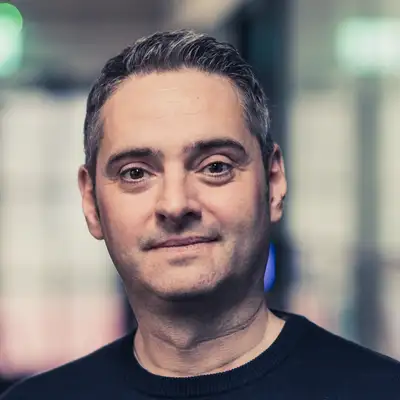
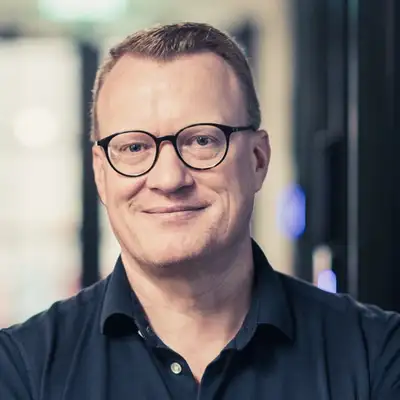
From the award‑winning team behind Cloud Realities, Realities Remixed explores what happens when people, culture, industry, and technology collide, because real breakthroughs rarely come from technology alone.
In each episode, hosts Dave Chapman and Rob Kernahan dig beneath the surface of innovation to understand what’s truly shifting. They speak with leaders, practitioners, vendors and thinkers across industries to explore how technology reshapes human behaviour, organisational culture, and society, for better and sometimes for worse.
Web - https://www.capgemini.com/insights/research-library/cloud-realities-podcast/
Email - realitiesremixed@capgemini.com
(00:00.278) Arguing with us now, Dave. By the way, do you know each other in person? Yes. Yes, we do. We do. Okay, it looks like a lot of beers have been shared. There's a lot of beers and minor breakdowns and food and various things. W when we go to the big conferences, we share an Airbnb house. no, that's it. That's it. Don't need any. That's too much information now. That's purely professional. (00:41.506)
I'm Dave Chapman. I'm Esmee van de Giessen, I'm Rob Kernahan. And this is Realities Remixed, an original podcast from Capgemini. And this week we return to the Joint European Disruptive Initiative, or Jedi. And this time we return to how they actually go about their extraordinary mission of trying to drive innovation across Europe. If you want to go straight to our conversation with Andre Loesekrug-Pietri from Jedi. You will find the time code in the show notes. But before that Esme, you're back. It's good to see you. Yes, likewise, likewise. I missed you guys. We missed you too. Where have you been? What have you been up to? I've been doing a lot of I think a lot of deep work to be honest. But especially my work as a systemic facilitator. How can you create days for teams that that have enough structure that also provide room and space for letting things happen? Sounds sounds a bit vague maybe, but I I've been more into a lot of days that it's been facilitated by somebody else and then they fully follow the program. Like yeah, on on the time t so completely on time. But then at the end you're like, Okay, so we you know, we checked all the boxes, we did all the exercises and then, you know, nothing really happened besides looking forward to having some drinks. And also for me as a facilitator, I also like to be surprised on a day and not just roll out a program. so I've been working on that topic a lot. And to be honest, I used a huge amount of AI to help me wrap my head around the concepts, to challenge me on the concepts way of executing the the stuff that I need. What was the moment in one of the ones you were facilitating that you were like, really smashed that. Pleased with that. Mm-hmm. well, I don't know if you know a Team Canvas, but in in the agile world they use a Team Canvas a lot, in which you state your purpose and then say this is our these are our work agreements and this is who we are. But it really feels like, okay, now we're gonna fill in the left the the the left side and the right side. It's like an exercise that you do and then it ends up in a drawer and nobody really uses it. So I did a complete transformation to like you're in an editing room of a newspaper and you're gonna write the magazine of the future. (03:04.812) So I've had that with all with editorial tables and I had predictive or fake newsletters coming in from stakeholders. And so I did a lot of prep work in front of it and I was like right before the team came in, I was like, Sh is this really gonna work? Right. I'm excited and I put in a lot of effort in it. But what if moments what if everyone just thinks like what the but it yeah, it was amazing. They started to create their own pages in the magazine with a lot of funny stuff in there as well, like missing API found and they you know, they and there was a lot of cost and found API. Yeah. and they did interviews. It's brilliant. I love it. And I if I disgu if I thought that I'd be laughing for twenty minutes in the corner. Yeah, and that that is actually what happened. And And then you see they they start to build on each other's jokes, but they also did like a a a headline on the front page, this is where we want to be known for the next year. And now that's their North Star. so now we have like every six weeks you have editorial meetings as well to see how much closer did we get to, you know, the magazine of the future. And it was amazing to see the energy in the room. Even after six hours in the room, they were still discussing, having jokes and I and all the the newspaper just filled up. right in front of me in the room because we all had it like just on paper. They were writing and s putting sticky notes on them and I had a lot of photos and pictures that they could use as well to fill up the magazine. So yeah. And that brilliant actually left me to this is just people work. We didn't use AI. So I did a lot of you use a lot of AI in the prep, but not during the session at all. So that was also interesting. Where do you use it and where where do you leave it out? Where the yeah, exactly. Well it's good to have you back. It's good to have you back, certainly. Missed your perspective on the show. And the colour, because we're all in black on the show, and you're in this bright fuchsia coloured top bringing some sunlight into what is a very dreary toilet world. A dark, dark world. Hello, darkness, my old friend record. Love that song. Robert's here, everyone. Hello, David. I'm here. Thank you for having me again. Even though you're forced to. It's new contract now, isn't it? Yeah. Right. So (05:24.972) We have a return this week, I think, to a topic that you're close to on a daily basis, Rob, which is what's going on in Europe in particular, around sovereign technologies and and keeping pace with the rest of the world. I'm delighted to say that Andre Los Krug Pietri, who's head of Jedi, is returning to the show for the second time. Now, in the first episode, we d delved very deeply into the mission. of Jedi and what it's about. And it was based off initiatives like DARPA in the US, where major technological programs were undertaken without necessarily clarity of things like business cases or short-term return. It was done because, you know, it was required to to move things forward. And it's it it it requires decision making and prioritizing that sits somewhere between traditional private and traditional public sector. Decision making processes, ways of working, things like that, Rob. How does that how does it resonate with you when you look at it from say like a sovereign perspective? Well, when you look at how technology has evolved, you have the American technology stack and you have the Chinese technology stack, and they've both done very well. And Europe sits in the middle and we don't have a seat at the table because we don't actually have much to offer those technology Goliaths. So what What I find very exciting about Jedi is we're going to find a thing that gets Europe a seat back at the table and delivers our influence into that technology futures game where we have a big voice. At the moment we're playing catch up, but it's it's these types of organizations with huge ambition that are gonna get us back in the race properly. And that is what I find most exciting about it. And when you boil it all down, that's at the core of sovereignty. You need to have a seat at the table to be able to dictate How the situation plays out. Yeah, and and Andre and his team, you know, in terms of executing on this mission, are having to deal with, you know, the heads of government, heads of large scale private sector organizations all across the world, and just engage with this at a you know, the most macro level possible to then identify what they think might be leapfrog technologies. And in part one of the show. (07:47.074) We will link part one of the show in the show notes of this one. You know, he talks about there's no point in us trying to, from a European perspective, catch up. No. This sh shouldn't be about catching up. It should be about jumping across. And culturally, I think that creates a series of challenges. You have to have a particular sort of way of executing that mission. And and what we're going to talk with Andrew today about is actually how he gets after that. because Organizationally, that's a non-trivial question to say. Massively. Massively. Esmee, what what what strikes you from a cultural perspective here in terms of you know, you're you're you're dealing with at one level heads of government and then at another level you're having to make decisions about programmes and prioritization. And at another level, try to set a culture that's got to include You know, very forward thinking technologists and scientists and researchers. How d how do you how do you create a culture that's gonna harness all of that powerfully, do you think? I think in the core you need people that carry a culture that is inclusive, that is able the people that are able to hold different perspectives at the same time, that are creative, but also know what they're talking about, their communication needs to be v head-on, very strong, but also internationally broadened because if you have the other otherwise you'll have silos again. And this is something that I see over and over. Even in reorganizations, you create new silos. And I think that's the biggest challenge when you look at also within the European perspective. Everyone's, you know, silos on their own way of thinking and their own way of doing research, maybe, even if you talk about Jedi. But making it inclusive. So lev have an artist talk to a technologist, let it create together with a theorist or a medicine oriented p person and really join forces. I think that's the key. But you need people that carry that type of culture and that are focused on we and ego instead of I and a lot of egos that are there only to, you know, hunt their own agenda. So and and that's I that sounds easier than I think it is. (10:06.902) I think that's almost handpicked to find those people. And I think they have to gel behind a purpose, right? It's that intrinsic motivation that is the purpose has got to be bold and strong. And what I think about Jedi that's very key is they're handed a you know, they they find the purpose and then they're handed the capital to be able to go and say, Right, let's see if we can make this purpose true. Absolutely, absolutely. Yeah. And I think and that's something that sticks, you know, that works. It then then it's it's us before me. And if I think if you have those people together in a room that can be so incredibly powerful. Yeah. I think that's right. And and and I think that's acute in this particular case because you are dealing with problems that require significant investment. And we all know the way of the world at the moment is that fast return on investment, fast action. Now some of these returns on investment might be like fifteen, twenty year horizons. So the dynamics that are going on there, which are private sector in sort of type, but then public sector and societal good and outcome and perhaps time frames. Very difficult set of dynamics to balance, I think. You do wonder with that point, David, about the short-sightedness associated with the culture in organizations today and this chasing quarter by quarter type stuff. And we get wrapped around that axle and we lose vision. But the consequences of not chasing it and succeeding can be quite catastrophic for an organization as well. So we've kind of created this pressured system where It's very difficult to be able to think in the long term unless you're under a very particular condition. I think that's what Jedi is creating, a different condition that means you can avoid the pitfalls of having to work within that system and society. And I think you are you are right about the way that sort of innovation and return cycles seem to have got tighter and faster and tighter and faster. And I won I wonder how much of that is actually productive and useful or how much of that is actually just an illusion. I I think I think you're gonna get there are some more bold things going on in the world, but yeah, I I'm hoping at some point we'll get a bit of a reset on the thinking, but I can't see it yet. I think we're stuck in this horrible position of short termism, and then you get political cycles are quite short and very disruptive at the moment, you know, we're getting less stable as a world, not more. And you add all that up and you need a Jedi in the middle of it that to cut through all that crap and to be able to go and do something bold. (12:34.19) Do these are not the initiatives we're looking for. Hey. Now on that note, let us go to our mind expanding conversation with Andre Loesekrug-Pietri, Chair and the Scientific Director of the Joint European Disruptive Initiative (12:57.536)
Andre, I am delighted to see you back. How are you? How have you been since we last talked? Well, cracking like always. I bet. Europe needs needs a magic one more than ever. More than ever. And I think you were off to do some prime ministerial and governmental level touring around the last time we talked. How did the trips go? Well, look, I spend probably 80% of my time running programs. And twenty percent of the time trying to make sure that the Jedi remains what it achieved, a true pan European organization. And the tendency of everybody to look national is incredible. So I need to see national leaders and to convince them that we need to think, you know, pan European continental at scale. Not for ideological reasons, but really because scale matters in tech. If if we're gonna compete it from a European context with China or America, we must break down those boundaries, right? 'Cause like it's not g there's just not enough scale behind each nation state. But there is still that tendency the nation states too tend to want to go alone sometimes, don't they? Which isn't the way we should be thinking. Well you know, there's one myth in Europe. I mean just look at every decision that is taken is expressed in in billions of euros or pounds. And and you can our Our hypothesis is actually you can draw as much money as you want if in if the risk is the same everywhere in the US, in London, in Munich, in China, but then the upside is continental in China and the US, but remains national in all 27 European countries, in the UK and Switzerland and Norway, well, you will have a risk-reward ratio, which is so much more fa less favorable in Europe. So it's actually totally natural that every year three hundred billion of our savings get invested in the US tech. So what we need is to have a real integrated market. That does not mean breaking down things, but having a bit of courage to saying, well, when you know a drug is a a agreed upon in in Germany or a medical device drugs now it's getting better. But a medical device is accepted in Germany, it should (15:20.44) get its you know passport in France or in the UK. Well that is not the case. Same thing with cyber. I mean, no more cyber company in the top ten European cyber company in the top ten cyber leaders in in the world. I mean, and this at at the time where we saw the impact of of of Mythos, of of new models like that. The reason is is you have twenty seven cyber watchdogs. And that is just a little bit of political courage to say, okay, let's kind of consider that what the Germans did we we can accept in France, what the Danes did we can accept in Czech. so it's not a money issue. Of course more money is always better than less money. But so this is what we need is the the scale. Otherwise we will always lament about the fact that as soon as companies get a bit big, they they look for continental markets. They don't necessarily look for yes, the money is there because the the you know the prospects and the risk reward is is is more interesting. And this goes a little bit the the conventional wisdom that that tends to think okay it's it's a it's a money issue. No, we have savings like we don't know what to do with it. Well look we've we've dived right in a little bit there and it's really good to have you back Andre but r for for listeners who might not have heard the first part, just remind us about Jedi, what its mission is, where it's up to the Look it's a very ambitious mission. It's our mission is at at the joint European disruptive initiative in short Jedi is to develop the technological bricks that will make building blocks that will make Europe's competitiveness and sovereignty in the future. So it's it's huge. it's it's our assumption is that today technology is at the core of of course competitiveness, prosperity of our nations and our society. It's at the core of geopolitics. You can see today. all geopolitical confrontation and unfortunately we're in a world where they seem to be multiplying everywhere, are also driven by tech. It's drones in Ukraine, it's unfortunately missiles and AI in the Middle East, it's robots between the UN or AI and space between China and and and the US and and Europe's is a little bit on the on the sideline and watches the the watches the future being decided by (17:48.046) By others than us. And the third thing, it's also at the core of our democracies. So that's what Jedi wants to do. that is what we are doing. we are a pan-Europe foundation. That means we're present in all 27 EU members' states. We're also present in the UK, in Switzerland, and in in Norway, so 30 countries. And we our core activity is to launch technology programs to precisely crack these These bottlenecks that that will allow us to to be ahead of the game. In three big areas, life sciences, computing that encompasses AI, cyber, quantum, space, as well as in energy. So a critical agenda, I think it's fair to say. And is is it also fair to say that it's an agenda that's been sharpened in the current political atmosphere, Andre? It's I mean, I have in my And here I'm in the meeting room, but I I have in my office kind of a wall of politicians saying we need to set up a European agency for advanced research, because what Jedi is doing is is building kind of an equivalent to a an absolutely mythical US agency which is called DARPA, which was at the core of most of the breakthroughs that happened in the US in the last fifty years. GPS internet was called ARPANET at the beginning. stealth, autonomous driving, MEMS, I mean memory, memory chips, et cetera. So you see it has been absolutely instrumental. And so every leader has realized how technology is at the core of of the success of a nation or of a continent like like Europe. And we seem to be engulfed in processes, and I think that's going to be the topic of today, in processes that actually prevent deploying the two success elements of of of of of twenty twenty six and beyond, which is speed and scale. we are still very process-oriented. I mentioned to you in our mission, we are very mission-driven. So we are looking for the outcome, for the impact. And we're also driven by speed, because today (20:11.082) Is it has become obvious. It was not obvious when we started Jedi three years ago that the future will be defined by those who who created. I mean it's it's an obvious thing to say, but today more than ever, you determine your future if you are ahead of the game. And the positive message is also that there's no situation which is irrecoverable. You can always reshuffle the cards, but again, you need to think about the next big thing. What do what will be do will be the next big thing in AI? beyond the large language models. What will be beyond critical minerals? What will be beyond constellations like Starling today? It's not the end of the game. At the contrary, this acceleration of science and technology today, which is a bit overwhelming, if not very overwhelming for for all of us, is an opportunity we need to seize also to push our values and to make sure our societies and our democracies remain remain strong. Very well said. Now we delved very deeply into that subject matter in the first part of this conversation. So I'd really encourage you, if you haven't heard that, to go back and have a listen to how we got here and how we might get out of that and how we might move forward in a way that Andre describes, which is like sort of profound next steps beyond cloud and beyond Starlink and and those sorts of things. But what we thought might be worth digging into this time around is the nature of Jedi itself. It sits somewhere in between being a It's not a private sector organisation nor is a public sector organisation. How would you do how would you define it, Andre? And what are the tensions and and you know, what might be interesting in in what you've had to set up there? Well, just one thing, I one precision. It's not science fiction, huh? what we are doing needs to have an impact in the next one to five years. which to in today's world where we don't know what's gonna happen next next week. It seems to be already very long term. But we basically want to prepare today, not to be surprised strategically, societally in in one, two, three, three, three years. So so it's it's it's not science fiction, but it goes a little bit beyond the immediate. So that being said, yes, probably Jedi is what you could call an unknown political object, because we are basically doing a UPO just made it up here, (22:33.912) But It's good. I like it. I'm gonna use that. Can we copyright that please, Cloud? realities remix. That's our Please do UP UPO by Jedi and remix. I'm I'm fine I'm totally fine with that. you know it's not all it's not about the IP, it's about the execution. So it's going to be the first one, Rob, who who use it widely. We'll see. and and to come back, we are basically having a common good mission. Because we are extremely disciplined in only tackling topics which are too risky for the private sector. And most of the and our goal is to do ten X to change an order of magnitude in everything we do. Can we do refining or rare earth ten times less environmentally damaging? Can we do batteries which have ten times the energy density of the best batteries of today? Can we have the next generation of positioning systems which are 10 times better or more than GPS? These are examples. And these leapfrogs are often not investable because they don't have a business case. And two things which probably will be interesting for most organizations, public or private, is that it it is has become clear for most of us that we have entered a a a world of big bets is where when you wait for the for the full information, you're always late to the game. So you need to make bets, but calculated bets. And and in in in in the most daring bets, the ones that we do, you often don't know what is going to be the business case. I have one example which is today obvious is when in 2018 Microsoft invested in in OpenAI. there was nobody had an idea what would be the business case out of it. And and and the the the the cruise for that. Yeah well some could argue but what now when you see the big IPO projects, you could say that at least some people see a prospect and are ready to pay a very, very high valuation. Just look at the tropic and the upcoming also open AI IPO but (24:56.098) The the interesting thing is that OpenAI was a foundation, and by the way, is still a foundation. And we are also a foundation. Because basically the idea was to say in for these real breakthroughs, there is no business case. Another data point, and fortunately, unfortunately, it's another US example, just to show that that this mentality of big bets is is today more widely spread in the US and China than in Europe, and that is what we try to change. Bill Gates, when he was very much into investment in the environmental space, created breakthrough energy ventures. And his his whole thesis was to say most of the the major breakthroughs in energy and environment are not financial on the traditional five-year period where a big corporate, some of us will probably listen to us, or venture capital funds, they they often And some on three years, some on seven years, but it's more or less this cycle. But that's one of the failings of the European corporate system. Yeah, you get the companies that do the big bets. But actually, you win no prizes in corporate culture in the core for taking risks. So it's the I've used data to define the most obvious path, and therefore there's a business case and nobody's gonna sack me type thing. No, absolutely. You could you could expand that to the corporate world in general, which is I mean, some would go to the extremes and say the quarterly earning system where you need to have quarterly earnings is is totally going against the capacity of investing long term. some would or almost argue that that's maybe one of the failures of liberal democracies because they actually nudge short term thinking, contrary to more authoritarian systems, which I would not agree to be on, but who have the luxury, if I may call it like that, to think long term. Going back to the even in the culture of investment funds, traditional investment funds don't take 15-year big bets. That's why, for example, the the clean tech revolution of the early 2000, 2010 is a word that is not used anymore because very few people actually made returns out of that. And when you look at Gates, to finish on this example, his assumption was to say there's a green premium, which requires either to lower the return expectations or to increase. (27:12.898) The duration. So his bets on fusion or on on green hydrogen or on new materials, alternative to plastics, were rather 15-year bets. And so we are a little bit in this tradition of saying, well, if you need to to really disrupt the sector, you cannot follow the traditional return on on investment mantra, even if it's a very high rate of return that you that you expect, even seed funds will not do it. The only ones that are currently doing it, who is doing big bets today in the world, either you see, you know, s city states or or or state state driven capitalism, or you see big tech companies, interestingly those where also the the the the capital structure is often not necessarily the equity structure, but the ca the the the the voting power is still very concentrated. Mark Zuckerberg may only have, I don't know, six or ten percent of meta, but as you know, he still have either the majority or large part of the voting. So he's able to do these bets like Metaverse, who didn't go out well. But now he's he did also others did bet l bets like open A like OpenAI for Microsoft or Google is doing bets or Bezos is doing bets in the space domain, that will turn out probably to be extremely successful. So this is a bit the tradition in which we are. Entering and it's very different from the t traditional, if I just can finish on that way in Europe, where people are either public, that means it's the state, or private. We are basically the third world, and not the third world in terms of developing world, but the third category that has a common good mission. That means we invest for society. We're not here to do returns. But we have the agility of the private sector. I'm sure we will go into that. I think this this hope that so many still have in Europe that suddenly governments can become agile, fast and bold, is just it's just an illusion. And I think we should not spend too much time on that. Well one of the things that I'm gonna use the word superficially 'cause it's not always the case, but it can be the case that makes (29:36.632) private sector organizations operate faster than say public sector organizations is it's a much more straightforward goal making money. So that you know the it might be what gets done to make money is a very complex set of activities, but the goal is very clear in a commercial organization. It is there fundamentally to make profit. public sector organizations are there fundamentally to govern. And for the public good and for societal good, that's a much less clear situation that's often changed every four or five years with a new political wind or a new political cycle. Are you saying that what you're trying to do is some way negotiate your way through those th through those tensions? Yeah. And act with the agility of it's a very common, straightforward thing, you know, but at the same time, actually the If it isn't that clear and the return might be a 15-year cycle. See what I mean? Absolutely. The fact that private organizations have demonstrated in the last decades how powerful they can be to optimize the resources, to develop products, to stick and to evolve with their markets, with market demand, I mean this is undisputable. where probably traditionally private enterprises fail at. is to navigate an exponential curve. And this is where we are. I mean, the ex the word exponential has been a bit a buzzword, but there is a reality to that. If you just look at the number of data that humanity accumulated since humanity exists, you can evaluate that's approximately two it's called zettabytes, I I think it's 10 factor 18 until the year 2000. We are 20 zettabytes in 2010, and we expect to be at 200 or 250 zettabytes in 2030. That means you have an exponential curve. You see, each time you change orders of magnitude, so you see really the exponential curve. And this is increasingly incompatible with long-term plans like (32:02.168) Companies used to have their three-year plan, their five-year plan. This has bi basically disappeared in the last couple of years in large organizations. It is increasingly incompatible with the volatility of the world. I mean, imagine a c a company in, I don't know, the semiconductor business three years ago. No problems on supply chains, no problems on critical minerals. no problems on memories. Today you have disruptions in supply chains everywhere, not only on maritime routes, but also you don't have your helium that comes from Qatar to produce your semiconductors. You don't have memories anymore because everybody's building data centers. You have countries like China who are putting export control on germanium or gallium that are critical for your semiconductors to be produced. I mean. You have big i you have entered full so it's very difficult to plan anything ahead. So how do you do your capex? How do you recruit your talent? How do you even give a forecast to your investors? Because that is the capacity of holding your forecast is so critical to have a to have a a a proper stock price. And so increasingly this comes in contradiction with the world in which in which we are. Regarding the state. You could also say that the problem is is is more structural. It's it's not ideological. It's not that public servants are lack ambition. Many are extraordinary. It's that the state in its institutional form was built for a very different purpose. It's here to administer, it's to arbitrate between different components of the society or ministries, to ensure due process, justice, etc. These are virtues, but these are not the virtues that are required. To run faster than the industry. Again, if we want to be in this mindset of setting the agenda and not having others to set the agenda for you. So we are left with this curious situation which that the mission we have at Jedi is irreductably public. We want to advance continental capabilities in ways that the market will not. But the execution of that mission can no longer belong to a ministry because (34:26.082) This ministry will be very process-oriented. So this is why we have set up Jedi as as a foundation, because it the foundation conveys this image, perception, and reality that we are acting for the common good. We only give out grants. We never take equity. Because as soon as you take equity, you will have a stake in a specific project. Now we give out grants, but we are structured outside of, I would say, the the the ministries because otherwise we would spend ninety percent of our time you know trying to to change the processes and fight with with the other silos of government. So so that taxonomy then can you just dive a little bit deeper into it? Is it like banners where you push the money into a thing that's created and it's self governing? Or is there a more integrated structure that brings these programs together? So is it I'll create a stovepipe and that'll go fast with a single mission or is there is there more sharing how how how how does it work from a sort of macro structure perspective? Okay let me let me maybe give you a very quick overview of how a DARPA program or a Jedi program works. First we spend half our time asking ourselves what is the right question. What are the topics which will allow us as a society to be ahead of the game and to basically influence the the way the future is gonna be shaped. And this is absolutely not trivial. The success here is also to have a quantitative measure of what success looks like. Because if you don't have a quantitative measure, you end up doing what too often in a in a state environment you do, you spray and and and pray it works. Yeah and so you you you spray too thin. So you cannot choose and so you try to please everybody and so you please nobody and at the end you have spent billions But with no no impact. if I want to be a little bit provocative, I would say the tradition the most of the budget of the EU right now, which is huge, 95 billion euro, is sprayed over 35,000 projects. When you spray 95,000, 95 billion, there's always something good c would come out. Then you have fantastic researchers and technology being funded. But then you ask yourself, what is the (36:46.356) what is the outcome of it? Have we transformed these 95 billion in any sort of technological leadership? I would argue in space, no. In semiconductors, no. In AI, too early to tell, but when I see the the difference with the other continents, it's it's a hard one. Quantum is probably still open. cloud, the largest provider of cloud in in Europe, has 1% market share. So I don't I don't want to depress everybody here, but the situation is a bit bleak, despite all the money that we invested. So first we ask ourselves the right question, and I think it's actually at the core of a democracy is try to, or a government is try anticipate what will come and make sure that as a society this is aligned with what we want to do. Where do we want to go in the energy sector? What kind of digital infrastructure do we we want to have? What do we want to share in terms of data? So once we have defined where we're going, and this is a process which is not a one i at Jedi, every three months we think three, five years ahead in 40 different sectors. That sounds very complex, but actually it tries to solve this contradiction that if you only think once, well the problem is that technology evolves so quickly that you are very quickly outdated. So we need to do that every three months and think about AI or drones, where every three months you have a new generation of models of technologies. But if you think only short term, you end up reacting. And when you react, it's always more expensive, and you are always kind of in the field of somebody else's decision. So we spend half our time forecasting, and that allows us, and these these these we call that moonshot councils, 40 streams, AI and energy, fusion, new materials. antibiotics, these are the kind of streams we have. And these groups every three months give us one, two, three ideas of topics that could really change change our lives. And so every quarter we decide what are the two or three priorities that really are game changers. So this is our way actually of identifying which programs we launch. And what are you using to prioritize that? Is that like (39:10.956) A s a set of criteria you have or the criteria for us is the impact and and really depends. It it it means we need to do are we able potentially to do things ten times better than they are done today? Think about the the the battery sector. Think about how important it is. Today people buy the electric car by asking a question that they never asked when it was a terminal engine is what is the autonomy? Will I be r driving two hundred miles, three hundred miles, four hundred miles with a with a with a car. So this is this is a game changer. And today also it's it's it's it's close to a third of the value of a of of of of a car if if if if not more. So this is an example. So we are looking for a for for in this case could we do a battery that would be actually eliminating this this issue of of of of shorter autonomy than we we're used to with a with a traditional car. On materials The reason why we're not refining all these rare earths anymore in Europe is that it's a very toxic process. when you refine rare earth you have a bit of radioactive waste, you use a lot of solvent, you use a lot of water, and it's not a new story. When when gold miners were you know, sorting golds in the in the gold rush in California, they were using very, very toxic lead or or arsenic. to to separate the gold from the rest. So this is this so we are looking for something which would be ten times less environmentally damaging. That can be a broad spectrum of things. And that would allow us to to actually justify to put again a refining in Europe, something that we have completely outsourced and where we are also where we are today completely strategically dependent on all topics, electric cars, windmills, missile systems, they all depend on these on these your mobile phones is full of these of these critical minerals so this this is is absolute so this is the way we prioritize what is the strategic and competitiveness impact of these programs? Andre we've been we've been talking a lot about AI in the executive boardroom. if you're talking about strategic bets and having all these (41:35.576) parameters you're talking about. Are you using AI for this as well? Just you know, to spark some conversation or even really let it do the analysis to predict moonshots or how far are you with using AI? Well first we have for us when we launch a program and I'll probably spend a minute on that afterwards so after we s we we find the right question then we launch a program. And in our case we don't do People do not apply. Our KPI is do the best brains in Europe from science, from the deep tech community, but also from industry participate. And there we use AI because they are the obvious players. Think about battery manufacturers when you talk about batteries. But actually, we will, with the help of AI, scan all the research papers to try to see who actually has an interesting angle. And It is precisely what what was one of the big failures in the past is that most of the people who were outliers in in frontier science had a huge issue of being recognized by their peers because the whole scientific community today is evaluated by peer review. That means that if you are an outlier, well you don't have peers. You know, accepted. Yeah, yeah. And you're not accepted. You're a little bit and and I think we're so so that is one way. And there's a Amazing example that will talk to everybody listening to us. The person who developed, who really was at the core of the RNA technology or discovery, is is is American Hungarian origin scientist called Katalin Kariko, an absolutely amazing woman. We are very lucky to interact a lot with her, and she got the Nobel Prize in 2024 for this. For 20 years, she was basically more or less alone with one or two postdocs, so very little teams, I think at Penn State University, because most of the I would say the the life science community did not really believe in her work. And luckily she was there and developed it because it allowed us in 2020 to develop what was kind of a miracle, to develop a a vaccine from basically very fundamental. (44:00.362) Scientific bricks that she developed in March 2020, and we had a vaccine in October 2020. So you see, he we want to make sure that this does not need a pandemic of the scale of COVID-19. And so we're using AI for that. We're using AI for another thing, is that AI is by definition a transversal technology. That means it cuts across all the silos. And let's face it, most of us and most of our organizations are vertical. So ministries are organized with industry and commerce, and then you have sometimes education organizations, or think about the EU commission. You have the people who think about ships, the people who are talking about digital, and those who are thinking about research. Well, actually, today if you don't have a transversal view, that's where the real Disruptions happen. Another example, which is is is in the UK, Demis Asabis, I always give this example because it's a fascinating one. He's a computer scientist, so the boss of Deep Mind, got the Nobel Prize with one of his colleagues and a third gentleman in chemistry for a discovery on protein folding, which is in life sciences. So when you don't have this transversal approach. That's really where the the the magic today happens. So so we could say that we have entered not only the era of big bets, which is so difficult for a traditional organization to tackle, we talked about that, but also the era of I would say polymath. So you need to have people. I mean, the most famous of it was Leonardo da Vinci. He was you know a physician, a mathematician, an industrialist. I mean, he was building things, he was an artist. We will not have Leonardo da Vinci's everywhere. But to come back to your question, Esme, on on AI, we often we ask ourselves a lot the question today, well, what remains important for us? Well, I think that is where AI can be a very powerful tool for human creativity to focus on what makes us human, to make these relationships, and building on the expertise that now AI will be able to give us. (46:22.744) So that's an that's an excellent characterization of how to get to a what do we want to do and understanding on impact. He's sort of got to the right, we're now ready to launch a program. what happens next? What's the what's the approach you take to s sort of get something started and then you judge it? And it'd also be interesting to know about how you sort of as you're going through, how you measure it and maybe Shut things down when they're not working. So you had an idea it didn't work, fail fast type approach. I just really keen to understand your ethos in that part of the structure as well. Well, let me talk about the now the the the organization that we put in place. So so we have come to the you know to conclusion that well, space is becoming I give it a very concrete example, space is becoming basically the third dimension of the digital infrastructure we have on Earth. We will probably have Data centers in space because it makes sense. Number one, you have unlimited amount of energy potentially potentially. Data center manager in space is my job. That's the job I want. I want to be the data center manager in space. Perfect. That's for me. He's been working I'll make sure that you you y we shoot you up in the next in the next rocket. You might actually have just said that s to somebody, Rob, who might actually get you to do that. And then you'd be like, you know when I said that thing about data centers in space? I was only joking. Careful, huh? Careful. You're getting a sticker for that, Rob. Lads, finally. Sound said they want to do the data center manager in space thing. I've got him. We've found him. Yeah. Nobody was answering to the to the profile. Anyway, so we we have we have seen that this is potentially transformational because with the amount of data that is collected right now by constellations, we need to process a lot of the data because shooting everything down. will will be just too much with the current communication systems and the fact that you know when you are low earth orbit you have basically nine minutes to shoot down because then you're already over the horizon. And so so it's it's something which will probably be the next big thing for cloud computing. Think about that like that. So once we have that, before rushing, we first and often he or she has participated in the thinking process, we need a program manager. (48:40.482) Basically the success of mission driven organizations like ours is yes, you can have great ideas, yes, you have the funding, yes you are at continental scale, but most importantly, you have one guy, and he's often or she is often a polymath, who has three characteristics, and we call him program manager, who will run the program from A to Z and who has entire decision power on the program. All autonomy within that structure. And this is completely the opposite of what you see in traditional organizations today. Be it in science where you have scientific committees, be it in venture capital where you have investment committees, which all makes sense because in VC or in particular in private equity, it's yes, you need to look for the upside, but one in private equity in particular, one or two laggards or or failed investments will kill your return for the for the whole fund. You know you you need to avoid that. Here it's the opposite. We need to have one person who who is able to to do bets, because the more people you have around the table, the more will have a good reason not to do it. So he needs to be very good technically, because if you are not technically at the top of your game and one of the best in your sector, you will never know what is impossible science fiction, so not even worth trying. But the problem is when you are not experienced, think about a lot of people who just get you know fascinated by a pro a project and it's it goes nowhere. Or at the contrary, something that is already in the lay the labs or in the papers, so that would not help you to have a strategic advance. So you he needs to or she needs to to navigate the fine line of of what you know the the the pilots or the the people in the air force would call pushing the envelope, right? for those who have seen Maverick, that's exactly, you know, when he passes Mach ten at the very beginning of the of of Top Gun two. That's you know, he he went to Mach ten and then, no, Maverick, don't do it, and he pushed it too much. So you need to remain at this level. So he has three characteristics. Technically very good. he needs to be interdisciplinary, which means curious (51:02.816) Also a good teammate because he will be accepted by other communities. So maybe he's very good in data centers, but he needs to be able to buddy with the guys from space and the guys from laser communications. I just give you some some examples. And the third characteristic, he needs to be or she needs to be opinionated. He needs to be able to say, Okay, this stream I believe in, these approaches to this problem, and in the case of data centers. I am I'm I am I'm writing it down. One of the big problems is heat dissipation in space. You know, we all think okay, we put data centers fantastic. You have the you have the the the s the you know the cosmos cold and no, the problem is there's no atmosphere, so the heat stays. So how do you s that is the big problem that we are currently trying to solve. And that would be a game changer, obviously. So he needs these three characteristics. When you look around you, people who have these three characteristics in one is are very rare. In in French we call that the the mutton with five legs or the ch the sheep with five legs. Second time I've heard that in two weeks, that phrase. It got used for me with me the other week. So yeah, I'm willing to have to start to adopt it. Maybe the five legs. Maybe it's because we're in this bizarre world where you need to have actually these outliers, which it's a bit it's maybe not the revenge of the sit, but or but it's the revenge of the of the outliers, those who the outcast. They are our future. And this is also maybe a lesson for organizations. We need to cultivate these guys because they often don't fit well in traditional organizations. That's another box ticked, Rob. I mean, this this is right in my job description. The future. I don't fit in. I want to do uncomfortable things. I'm future focused. I mean, where where do I sign? Where do I sign? You have a future. It's the first time that's ever been said to me, if I'm brutally honest. It makes me quite happy. We like for all mankind. Okay, so the second thing is the is the program manager. First thing is asking the right question. Second thing is the program manager. And then again, we do something which is non-traditional. Instead of waiting, the today the whole research funding in Europe, in the world is grants and and and and and and calls for proposals. We don't do that. We reach out because again our KPI is do the best teams from wherever they come from. (53:29.176) Participate. That's the c w we cannot guarantee that we will succeed because it's exactly our mission. Our mission is to push the limit. So if we set ourselves targets, we need to succeed 50% of what we do, that would be defeating the very purpose of our mission. But what we want to make sure is that we give ourselves all chances and for that you need to have the best. And the paradox is that in today's world, the best brains don't have a money issue. They They have a time and excitement issue. You need to make sure that they are con they they get excited on your problem. That's why it's so important that we tackle the problems with the biggest potential impact. And all scientists, all tech founders want to change the world. And the other thing is you don't want to bother them with bureaucracy. And that's one of the incredible characteristics of traditional research programs is. You will try to pick the winner if you are government because you want to make sure that money will not be wasted. And so you will ask upfront people to to write hundreds of pages of proposal in average for H Horizon program, which is a European program, which again I'm supporting, but which has become a horrible bureaucratic monster. you spend in average between fifty Between thirty and fifty days writing it over a six to nine months period. a Nobel Prize in Quantum told me recently that he spends forty percent of his time writing grant proposals. And he's not an arrogant man. Forty percent. Is that the best use of a Nobel Prize time? No, of course not. Well I I I saw something recently where it was describing how culture of an organization shifts into something I don't necessarily want to use the word toxic because that is maybe overstretching it, but certainly something that's not focused on the right thing. And the people within that culture then spend most of their time trying to operate within that culture rather than necessarily do what they were there to do in the first place. I think I think most large organizations should keep a track on that, frankly. Absolutely. And and it's and and it's you this famous sentence, you don't know what you don't know, you actually don't see it. what we (55:49.728) Our our the hypothesis we're doing, but which is backed by a lot of empirical data, is that the best brains don't bother anymore to apply to these programs. Yeah. Yeah. exactly. At the contrary, they get attracted by magn like magnets by large organization like the big tech who is investing massively since a couple of years in fundamental research, in in PhDs. I mean, you have them in and the Minificent Seven have hundreds, if not thousands, of PhD that they finance, they chair. And they don't do that out of philanthropy. They n just know that putting I mean it's the famous Steve Jobs sentence, if you hire somebody somebody great, don't tell him what to do. Right? Leave him to space. Well I w Well I wonder if we can bring today's conversation to a bit of a close by reflecting on some lessons learned that you've had over the last couple of years. It must have been I mean it sounds daunting. The the the agenda that you talk about is daunting. The personalities and the level that you're having to interact with at the top of governance and organizations are all and let's just put it very softly, highly opinionated and highly driven by p perhaps sometimes very diverse agendas. So going into it, how did Andre start to tackle this? And maybe what are your top two or three Big lessons learned that peop we might be able to take away and apply to other situations. Hmm. I I told you about my wall with the num I I probably have forty press clippings of people saying we need to set up a a European DARPA. There is the French president, 2017, there's a German chancellor, there are the heads of the large of many large corporates in in in Europe, etcetera. And at the end nothing happens. And it's not a lack of bad faith, but three three lessons learned. One, a powerful idea. (57:51.666) is nothing if you don't have it does not need a to be a l a big group, but a group of extremely tenacious and I don't want to say it's a good or a bad virtue. It's just it's just a straight of of you need to be tenacious. you know right now I don't know when the podcast will be aired, so maybe it's not completely in sync, but on the on the stadium of Roland Garros where the French open. happens and the final happens. You have a word by Roland Garros, who used to be a he was not a fighter pilot, he was a pilot, crossed the Mediterranean first in in his plane, and he had this beautiful, beautiful sentence Victory belongs to the most tenacious. And I think that is the biggest lesson learned. And the number of odds, the power of conservatism Is is the most difficult to overcome. I'm obviously stating the obvious, but I think tenacity is the first lesson. The second lesson is you would think that with a European Union who has its biggest cloud provider having 1% of market share, who has sent 0.2%, 0.2% of total tonnage sent to space last year was from Europe. Scary, huh? You would think it's code red, all hands on deck, let's do it. It's actually the opposite. When we are in a desperate situation, I hear often people, yes, but when the situation, when we will be the wall, the the the the back to the wall, we will now react. Well, actually, I've come to the conclusion that when people are really under pressure, mankind Can I mean some people can also react by becoming even more conservative, more process driven, because process is very reassuring. And I I I totally get it from a from a from a human point of view. So how do you and third, how how do you you get a spark? And the third one, on that one I will make a US reference. I think the importance of of the mission. Too often you hear about quantum programs, AI programs. (01:00:14.318) Cyber programs. This is this is a tool. Technology is a tool. The question is, what do we do with it? And the reference I want to make is the way Kennedy was able in 62. I mean, in 62, the the situation in of the US was not great. It was not clear who was winning, and it was just after the the the Cuba crisis. Kennedy was not at the strength of his of his presidency. And he delivered this unbelievable speech. And he didn't deliver it in front of a few elite guests at the White House. He did it at Rice Stadium in front of forty thousand people in a football stadium in Texas. His famous moonshot and let's go to the moon program. A very simple goal, a quantitative goal. By the end of the decade, we will go to the moon and bring back the astronauts safely. Managed just in time, july sixty-nine. And that triggered Thousands and thousands and thousands of technology programs in healthcare and material and propulsion, et cetera. And it was really a leap of faith. I mean, you have a load of books who were written about that, which were written about that, saying that all his advisors were like petrified, saying, Mr. President, we have no clue how to do this. And he had these sentences, I I personally think they're very inspiring, saying, We do this not because it's easy, but it because it's hard. And you had the crowd cheering. My message here is. Where is the the inspiration? Where is the vision? I I hear too often people saying, Yes, we need to protect our citizens. Of course, you are you're you're addressing, I would say, the very basic needs of people. But actually when you really pull them up is to give them the vision. And I think that is I I wanna finish on a on a positive note, but let's face it, right now you don't hear y where is the European North Star? Right? Where do we want to go? It's absolutely unclear for for for me. This is what we at Jedi are too. (01:02:28.268) Now we end every episode of this podcast by asking our guests what they're excited about doing next. And that could be something in their personal life, like go to a nice restaurant at the weekend, or something in their professional life, or maybe a little bit of both. So Andre, what are you excited about doing next? Look, I'm super excited because the end of the podcast will will mean that I will be rushing to the French Open. Look at the half final of the man single. And you know, we talked about the tenacious thing. I think the w the one of the things with sports today, but you see that also with scientists is that we just begin to realise that the physical part, I mean, our physical envelope is one thing, but those who really make the cut, you know, they are able to push it to the limit. And sports people have totally understood that. I mean, look at marathon or tennis players. I mean, how can you do a four or five hour match which I had the chance to be at the final last year. It was the longest ever game in history. Five hours, fifteen minutes. It was incredible. And the guys were like slamming like the first in the first minute in the fight in the fifth set. So that's what I'm excited about because I think it's also a symbol. Esme asked the question about about AI before. I think we are just at the beginning of understanding how we can power charge our creativity. of our scientists, of our brain, of our we were we are a lot clogged by the I would say the traditional way of working. But I think if everybody can kind of be you know you know multiplied, liber liberated, liberated from I would say the contingencies. There's maybe a linkage as well back to the point you were making about talented individuals like scientists and researchers and such like that that are then pulled into the bureaucracy and madness of large organizations and it it blunts their edge or it prov it stops them going forward as fast as they'd like. When you're a when you're an athlete, for example, it's clear what the path forward is. You have to be very talented, you have to work very hard, but the path forward is clear and uno and and you know you clear goals around it as well. Yeah, no, absolutely. So I think we're just at the beginning to understand (01:04:50.51) How we can completely change the way we do science, how we completely change the way we also learn and get our k kids also become adults and and making the best of their abilities. And I think we are in a fascinating age where that could be extremely powerful for many, many, many people. So I'm I'm very hopeful about the future, provided we we we have this North Star that help us guide where where we want to go. We we it's like in sailing, you know, when when when you never know what is going to be the next turn, but you need to make sure you know which port you want to to go to. Well, Andre, thank you so much for coming back and spending some time with us this Friday afternoon, just before you head off to the tennis. The provocation in that and the large thinking and I loved the you know, Where's the North Star call to action? it was a real pleasure talking to you again.
Thank you so much. It was a pleasure seeing you all. Thank you, Dave. Thank you, Esmee. Thank you, Marcel. Thank you, Rob. See you in space.
If you would like to discuss any of the issues on this week's show and how they might impact you and your business, please get in touch with us at realitiesreemixed@Capgemini.com. We're all on LinkedIn, we'd love to hear from you, so feel free to connect in DM if you have any questions for the show to tackle. And of course, please rate and subscribe to our podcast. It really helps us improve the show. A huge thanks to Andre. Our Sound and Editing visits Ben and Louis, our producer Marcel, and of course to all our listeners. See you in another reality next week.