Subscribe
Share
Share
Embed

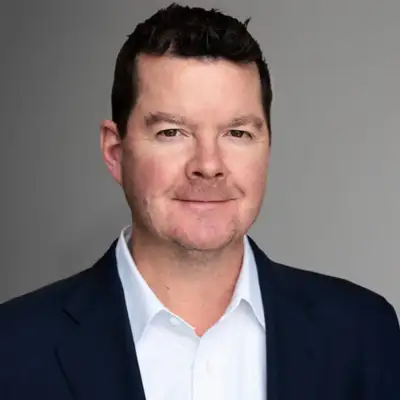
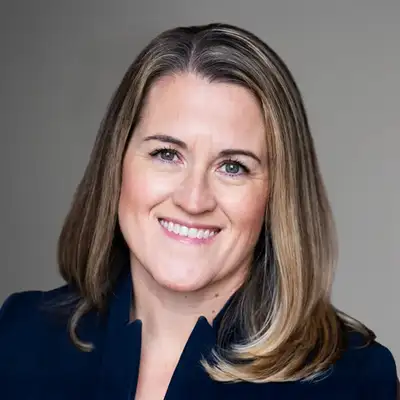
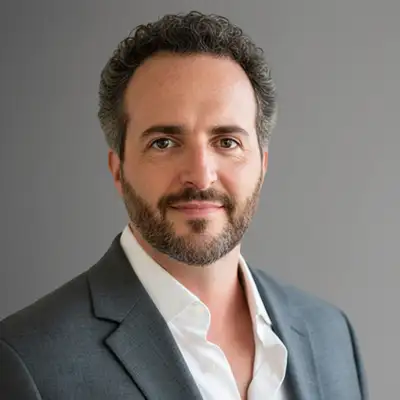
Meet the Insiders rewriting the rules of influence. Pulitzer Prize-winning journalist Brody Mullins and veteran DC strategist Lisa Camooso Miller interview the leaders who shape perception, move policy, and win when it matters. Not pundits or commentators – these are the operators driving some of the most critical strategies and outcomes in today's Washington.
Steve: As a participant in the system for a long time, I'm with a lot of voters, and I'm not happy with the system. I think there's too much money in politics. Human nature would say that there is a qualitative difference between the person who gave you five million dollars and the person who gave you $5,000.
ANNCR: Behind every major policy decision, every corporate strategy, every Washington power play, are the insiders shaping the game and the new rules to win it. The Deciders, with Pulitzer Prize-winning journalist Brody Mullins and veteran DC strategist Lisa Camooso Miller.
Lisa: Welcome to The Deciders, where we talk to the insiders rewriting the playbook for effective advocacy in Washington, DC. Today, we're joined by Steve Elmendorf, who is the co-founder and managing partner of Avoq, and he's also one of the top Democratic lobbyists and strategists in Washington, DC. Thank you for being with us, Steve.
Steve: Good to be with you.
Brody: So Steve, everyone watching the show probably knows you, but they may not know your origin story. How'd you get here?
Steve: I started out as an intern in politics in New Jersey, uh, working for a county executive, and the, the person who hired me in that office, uh, s- went on to become the national field director of the Mondale for President campaign. And, uh, she, a little-known story, discovered me after college. I was bartending, and, uh, I had been an intern for her during college, and she came into the bar I was in and to have lunch and said, "Why are you here?" And I said, "Well, 'cause I don't have a job yet." And she said, "Well, I think you should, uh, come work for the Mondale for President campaign, uh, as a field organizer." So, um, I left the bar, and I went to Florida.
Brody: And you guys have a lot in common, the New Jersey roots up to working for the Speaker. Parallel tracks, right?
Lisa: Absolutely. A couple of kids from New Jersey making their way in Washington, DC, right? But I want you to talk to us a little bit today, Steve, about your experience. You worked for Dick Gephardt. Talk to us a little bit about that experience and what it was like to work for him.
Steve: He was a great leader and a, and a great public servant. I think the, the most important thing I learned from, from Dick Gephardt is listening. His style of leadership was not top-down. It was not to tell people what to do. The House of Representatives is a big group. There's 435 people, of which you, as minority leader and majority leader, uh, he was in charge of 200-plus of them, and if you're gonna move 200-plus people in, in a, in one direction, you really have to listen to all of them. And I think that's true in business as well. As much as we would like to spend our day telling people to do what we want and have them follow through and do it, but that's not how the world works.
Brody: So you mentioned the Mondale campaign in '84. You also worked for John Kerry 20 years later on a presidential campaign. W- what were the differences, and what did you learn on those campaigns?
Steve: The difference was in the Mondale campaign, I drove around in a rental car with a, with a roll of dimes 'cause you had to go to the payphone and call in your numbers from your field organizing. Uh, in the John Kerry campaign, we had a little more technology around and, and obviously since then, a lot more. But in both campaigns, the thing I learned in presidential campaign is you learn about the country. You learn about how big the country is. You learn about how different the country is. And I spent time in places that I would otherwise never spend time in, whether it was Indiana or Iowa or Maine. You'd live in a place for three months and meet people and learn about what they care about and learn about their politics. It, it's a invaluable, uh, education for anybody who wants to be in politics or government to sort of learn more about the country and how big and diverse it is.
Lisa: In 2005, you left government, and you joined a firm, and then two years later, you went out on your own. Talk to us a little bit about that.
Steve: It was, it was the hardest thing I ever did. I did not start out in business. I started out in politics and then in government. Uh, I never went to business school. I never studied economics in college, but I decided to try and go out on my own and see how I could do as being in charge, getting clients, hiring people, and it was a great experience, but it's hard. It's particularly, I think, for those of us who grew up in politics and government, uh, and you've had a lot of people on this show who've done it successfully. I'm sure there's some who haven't done it successfully.
Brody: They don't make the show.
Steve: They don't make the show.
Brody: You're only at a firm for two years. You've got the safety net. You're learning how K Street works working at a law firm, right? W- what made you think that you could do it on your own?
Steve: I was lucky. The Democrats won the House, and I was, uh, one of the few, I think, senior former House Democrats who were downtown. Um, and so I would like to say it was because I was brilliant, but I think a lot of it was that I, I was, uh, one of the few people who knew Nancy Pelosi well, who knew Henry Waxman well, who knew John Conyers, and I had real relationships with them. And so it wasn't as hard as it probably coulda been if I'd started out on, you know, when Republicans ran the world. And I think the other lesson from that is it was a moment, and I seized the moment. Sometimes, you know, you're presented with circus- with circumstances that you decide, like, it's time to do this. And, and you have to be willing to fail, and fortunately, I didn't fail, but I, I was ready to fail if I had to.
Brody: So in the 20 years since you've started your firm, you've evolved a bunch of times. T- tell us about what you've seen, maybe different moments that have caused you to change your firm.
Steve: Well, we started out as a Democrat-only and, and primarily House Democrat-only, uh, and over and that was good for the first two years, but over time, we realized that you have to, i, in, in order to serve clients, they want more. Uh, and so the moment was good to be a House Democrat, but we became, uh, bicameral, House and Senate, and then we became bipartisan, and then we added communications. Over time, I just realized that we needed to do things differently, whether that's a new product, a new person, a new offering. Like, otherwise you're just gonna become, you know, tired old Steve who's been doing this for 20 years and, and hasn't changed, and I think the one thing that's constant is change.
Lisa: Is that why, Steve, at Avoq you have, uh, a broad range of government affairs, public affairs, and all of those other features under one umbrella?
Steve: Absolutely. There's an older member I know who, if I wanted to impact them, I would get an op-ed written in The Wall Street Journal or The New York Times because they actually sit in the Rayburn cafeteria and read the hard copy of those papers, and an op-ed would be meaningful. And there are younger members I deal with who live on this and live on X, and, you know, they're never gonna see the op-ed in The Wall Street Journal unless it appears, somebody retweets it. And so I think you really have to know the members. You have to know the individuals, that there are some old school people who are operating in one way, but the vast majority are operating in a different way, and they're getting their information in so many different places.
Lisa: So you have to have a little bit of everything in order to affect change.
Steve: Yeah. Yeah.
Brody: So Steve, you talk about the various iterations of your firm over the years. Tell us about Avoq.
Steve: Avoq is a, uh, 200-person, uh, four-office firm, uh, that focuses on, on moving public policy, on moving public affairs. Um, and, you know, we created the firm because I, I saw and my partner saw that just doing one thing was not enough to move, uh, the dialogue, that just lobbying or just running ads or just doing grass tops or grassroots was not enough. You had to do all of it, and that companies increasingly don't wanna go find five different people to do it, that they, they would like to find a comprehensive answer, and that if you could figure out how to put that comprehensive answer, bipartisan, bicameral communications advertising, uh, under one roof, uh, that it would be attractive to people, and that's what we've done. Um, it's also, you know, important, I think, again, to, to not just be in Washington. We're in New York and Chicago and New Jersey. We could be in other places in the future. Um, I think it's important to, to have that geographic reach, the substantive reach.
Brody: Public affairs is still blowing up in DC, but tell us about the importance of shoe leather lobbying. It's still an important part of the whole advocacy game.
Steve: Absolutely. I think that people will always look for a trusted person who they know, who they know knows something about the situation and is, is giving them that information. I think elected officials also have people who they know and they trust, and as a lobbyist, that's my job, is to take my client and take their information and take it to someone who, who trusts me and believes I'm not gonna mislead them.
Brody: So you're obviously a, a paid lobbyist, but you're talking about the importance of trust. How do you build that trust up?
Steve: I think it comes from being, having been in government for, for 20 years before I was in the private sector for 20 years. Sometimes I meet young people who come and say, "I want to be a lobbyist." And I say, "Well, first you should go work in the government, and you should work in the government longer, uh, not less." Because I do think you learn about the people and what motivates them and, and what they do every day, and I think that's really important. You know, if I had left government after four years or eight years, I would've known less than I did from 20 years.
Lisa: Steve, let's talk a little bit about advocacy. I'm curious about your thoughts about how it looks today and how it's evolved over time.
Steve: I think it's changed because politics has changed and campaigns have changed, redistricting and money in politics and all the things that have changed how somebody gets elected to office is very different.
Brody: So you mentioned earlier campaign finance. You know, in your 20 years, you know, this huge change in campaign finance, which is still evolving as we speak. You know, it used to be that corporate PACs were sort of the, the most important fundraising tool that companies had. We've seen in the last 20 years a decline in the importance of corporate PACs, a decline overall in the amount of money coming from corporate PACs. How, how does that change in campaign finance affect advocacy?
Steve: As a participant in the system for a long time, uh, I'm, I'm, I'm with a lot of voters in that I'm not happy with the system. I think there's too much money in politics, and there's not enough rules. Corporate PACs are actually a very transparent system that has a, has limits. It's $5,000, $10,000 for the whole cycle. Um, it's very transparent. You know that company X is and their employees are the people giving you the money. Uh, C4s and super PACs are not transparent necessarily. Uh, and the, uh, and the sums of money are so large now that I, I've worked for a lot of elected officials, I've been around a lot of elected officials, and you can't tell me if you are aware that somebody has written a $5 million check to your undisclosed account, that that does not change in some way your view. I know that the elected officials will say it doesn't, it has nothing to do with it. Um, but human nature would say that there is a qualitative difference between the person who gave you $5 million and the person who gave you $5,000. And I think we'd be better off if we could figure out how to have, how to have more $5,000 and less $5 million.
Brody: We'll be right back.
Brody: Welcome back to The Deciders.
Lisa: I'd like to talk a minute about the Trump effect. Tell us a little bit about that.
Steve: I'm not a supporter of President Trump. I'm not a fan of President Trump. Uh, but I do think we have to recognize there's a reason he was elected, and there's, there's, uh, people out in the country who, who deeply believe in him. My biggest problem with him is his disinterest in the system. Uh, you know, sometimes having a, having a system and guardrails is not a terrible thing, and I think, um, uh, Maggie Haberman of The New York Times made a very good point that Our country really runs on norms in many ways more than laws, and his violation of the norms has been, uh, I think really unfortunate. I look at my friends in the Congress of both parties, and I think it's very unfortunate that people have let him sort of run over them. Um, Congress is a co-equal branch of government. Now, ma- many presidents of both parties have-- don't like that. Uh, I've seen Democratic presidents who didn't like that. Uh, I think we've seen it in war powers of both parties for a long time. But we would be better off if Congress of both parties sort of reasserted themselves as a co-equal branch of government.
Lisa: How do we get back to that balance? How do we-- Is ev- anyone going to actually give any of that power back, or is Congress gonna have to reassert themselves differently?
Steve: I think Congress is gonna have to reassert themselves. Uh, I think the next Democratic president is gonna have to think hard about, "Do I want, do I wanna keep all this power, or would I, would I be a better leader and would the country work better if I listened more to the Congress and the courts," frankly. Uh, that, that building more trust among voters in how this all works would be better. I think part of Trump's problem is he doesn't listen to Congress. He doesn't li- doesn't wanna listen to the courts. Um, you know, we have, we have sort of government by fiat, which I don't think is a good way to run the government, and I don't think it builds confidence in people, in the vast majority of people, that, that, that Washington is working for them.
Brody: So Steve, you talked about the lack of oversight by Congress in the last two years when Republicans were in charge. Democrats are coming. What can Democrats do to try to exercise more oversight over the executive branch?
Steve: I think they have to try and hold, uh, elected officials accountable as best they can, but I think they have to do it in the context of, um, not just corruption, but in the context of we're holding you to account because what you have been doing doesn't work for the American people. I think politically, if we're gonna be successful and elect a president in '28 and reelect a Democratic Congress in '28, people have to think that the Democratic Congress did something to help them. So I think they have to tie it to things that people actually care about. There's gonna be a tendency to just focus on, on pure ways people are putting money in their pocket, and that's important. But I think they've got to show that by putting money in their pocket, um, uh, it wasn't good for the American people and it wasn't good for the core issues they care about.
Lisa: Steve, what should companies be doing to prepare for the Democrats coming back into power in the House and potentially the Senate?
Steve: Well, I, I think they shouldn't just prepare for oversight, but I think they also should be preparing for how could we work with Democrats to, on their agenda. I mean, are there things that Democrats are, are trying to do that are good for business? I'd argue there are gonna be things where Democrats are gonna work with Trump. But think about are, what are the issues that this person talked about in their campaign that we can work with them on?
Brody: Do you think there's areas in the next two years where Trump can work with Democrats?
Steve: Absolutely. I think a lot of Democrats are gonna be elected, uh, in tough races, are gonna face, uh, tough reelections '28 because they got elected in tough places. They're gonna wanna go home, uh, and tell their constituents that they did something. And the, and the answer can't be, "We didn't do anything because we don't like Donald Trump." The answer has to be, "We tried. Uh, we tried hard. Uh, maybe we succeeded on some things." And as we know, Donald Trump is not a core conservative Republican. Uh, he's a transactional person. Um, and I think if he sees the opportunity potentially to build a legacy to, to get, you know, good TV or, or good sound bites, I think he's gonna, he's gonna work with some Democrats.
Brody: And w- what are those, those areas?
Steve: I think there's gonna be significant potential bipartisanship on healthcare because I think people are gonna, are gonna show up in Washington and realize that a lot of members and senators got elected or defeated, uh, because of people's unhappiness with the cost of healthcare. I think there's clearly gonna be a discussion about energy. Uh, again, a, a big driver of people's unhappiness, a big driver of people's, um, cost of living. What can we do better on energy? Permitting probably won't happen this year, uh, but I think that's another discussion. Can you build new projects that are gonna get them cheaper electricity? If I'm a Democrat in Congress and I can figure out, show people that I did something on healthcare, I did something on your energy prices, gas prices, and I did something on your housing prices, I will have gone a long way, um, towards addressing people's concerns. Are there some things outside of oversight that we can do that are proactive, uh, that help people in the country?
Lisa: Let's stay on oversight for just a minute more. It once was that companies would be brought to Washington to testify because they'd done something illegal. It looks like now they will be brought to Washington to be asked questions about things they have done that are legal, such as giving to the president's super PAC, the ballroom, some of these other, uh, exchanges that i-inspire curiosity, but aren't perhaps illegal. Does that represent a change in the way oversight will, will be done in this next Congress, do you think, Steve?
Steve: I think it's not gonna be purely you gave money to the ballroom. It's gonna be, "I gave twenty million dollars to the ballroom, and then I went to DoD, and I got a contract, um, from the government." It's gonna be, "I gave ten million dollars to the ballroom, and then I went to the Commerce Department, and Howard Lutnick gave me a, a tariff exclusion." They're gonna look for efforts where the money that flowed into these entities that were important to the president led to official government actions that otherwise might not have happened.
Lisa: I've also heard it said on K Street that this is a new way, a new approach to how we might be trying to find, uh, daylight between the president and companies, because rather than going directly to the administration, we're going to go to corporate America and ask those kinds of specific questions.
Steve: I think where companies are gonna run into some real trouble, uh, is that, as we know, the Trump administration is not going to answer any subpoena. The Trump administration is gonna assert that they don't need to answer anything. And so Congress is then gonna go to companies, knowing that companies don't have the protection from the courts of saying no, and many companies will potentially be squeezed between Trump and his, his administration saying, "Don't answer them, don't answer them," and a court or a Congress saying, "Answer them, answer them." Uh, and that's gonna be a very difficult situation.
Lisa: We'll be right back.
Brody: Welcome back to The Deciders.
Lisa: Steve, you know more about the House Democratic leaders than most people. Tell us a little bit about Hakeem Jeffries and what kind of leader he is.
Steve: I think he's shown himself to be a very good leader. He's gonna be the chief foil to Donald Trump, uh, and he's gonna have to manage a progressive group in his caucus, and he's gonna have to manage these new people who wanna get something done, and it's gonna take, uh, a lot of time on task, and it's gonna take a lot of listening. Uh, and I, I think he's totally up to the job. Um, it's gonna also require, I think, a team.
Brody: Tell us about his team.
Steve: I think, you know, the three top leaders are all relatively new. Uh, the generational change that people argued for, the House Democrats did, without, you know, without blood on the floor. They, the, the top three leaders moved aside, and we elected three new leaders, and I think a lot of corporate America needs to, you know, really internalize the fact that half of the Democratic caucus is gonna be a member of the Tri-Caucus, either Congressional Black Caucus, Congressional Hispanic Caucus, Asian Pacific. Um, so there's a, there's, there's a, a group of people who care a lot about diversity and have fought hard to get at the table.
Lisa: Do you think the White House is going to be willing to work with this leadership when they come into power?
Steve: I think if they wanna get anything done, they're gonna have to. I mean, you can't operate by fiat. You're not gonna get anything done unless you negotiate. And, you know, when I was there, we had a Democratic president for part of the time I was there and a Republican president for part of the time. And, you know, we fought with the Democratic president. Uh, Bill Clinton and Dick Gephardt didn't agree on everything, and but we had a constant staff-level and member-level dialogue about what to do. And when George Bush was president, we disagreed about a lot of things, but we also had a very open relationship where we met often and we talked often. Trump has not done that. His people have not done that, and I think that's a big failing that they're gonna have to correct if they wanna get anything done.
Lisa: In that vein, though, let's talk a little bit about, uh, you have said that it will be interesting to see if the leadership, if Jeffries, will act more like Gephardt or like Pelosi. I don't know what the difference is. Will you help us understand that?
Steve: Gephardt, again, was never speaker, so he was majority leader under Tom Foley, and then he was, he was minority leader. But part of his leadership style, which I think is very similar to Jeffries, is he spent a lot of time with the members, meeting with them, getting to a result. I think Speaker Pelosi, she didn't start out as Nancy Pelosi, the, the, you know, iron fist speaker. She, you know, it took time to get there, and she got there because of the trust of her members, because they liked her style and they saw that she, uh, particularly against Donald Trump, became a unique leader and foil for them. I think he's gonna have to blend the two. Um, and I think she also showed that sometimes you had to, you know, be tough on some members who, who misbehave. I think he's gonna have to make an example of some people who don't go along with the leadership. Um, I don't know w- who those will be or when that will be. Uh, that moment will come, though. I think he'll have a slightly larger majority than Mike Johnson has, which is always helpful. Uh, it's always good if you can tell two, three, four, five of your members, "I don't need your vote. It's okay for your district. You can go do something else." Mike Johnson has not really had that, um, luxury. Um, so, you know, uh, each leader is different, but I think he has the innate political skills and legislative skills to do the job.
Brody: Steve, we ask every decider the same three questions. What's a decision for the past year that you're especially proud of?
Steve: I'm a believer from when I started out in politics that the schedule, uh, really drives your priorities. Uh, and at the beginning of this year, um, I made a decision, you know, that I need to spend more time, uh, on the Hill and more time on the Hill with new people. COVID was a huge disruptor in every sort of way, but I found in my own case, it was a big disruptor of my routine of going to the Hill every day and g- and actually going to the Rayburn Cafeteria and the Senate Shop and running into people and reaching out proactively to newer people who I don't know and staff I don't know and trying to spend time with them, and I think that's, you know, so much of what I do is based on, on understanding these people, and I have to go spend some number of hours and days every week on the Hill talking to people because ultimately, people pay me, um, for my knowledge of Capitol Hill and how it works.
Lisa: That's one thing AI won't be taking away anytime soon.
Steve: That's right. A- and, yes, and it provides you with a, with an answer when people say, "I can replace you with AI."
Lisa: Steve, what's one thing you'd do over?
Steve: Trying to figure out how to get more and better information from outside of Washington. I do think that, uh, those of us in Washington who do what I do really need to think about how can we get out more. I think some of my best clients are people who do factory visits and, and office visits and site visits to get out and see what a, you know, if you go meet the employees of, of a company, not just in a factory, but in an office, and, and hear what they think about and, um, what they're concerned about in terms of policymaking, you, it's, it's very different than what you learn here. I live in a world in which I read and watch probably blue-leaning media 'cause we're all self-confirming, but, like, getting out of your bubble and, you know, maybe I should watch Fox for two hours every week.
Brody: It's funny, uh, the, the Wall Street Journal used to send me to Columbus, Ohio, uh, in October every election year to say, like, "What are people thinking?" If you go to Columbus, Ohio, in October every year, they're talking about Ohio State football. They're not talking about the election. It's in November that they switch to the election for one week, and then they go back. Um, what is something that, uh, people in Washington are not thinking about but should be?
Steve: The post-Trump world. I think that, uh, you know, Trump, as we know, is so consuming, and that's his strategy, is basically I, I, you know, I was reflecting in August. We're used to normally a two to three-week, Congress is gone, the president goes on vacation. Barack Obama, Bill Clinton, George Bush, they, uh, they all went on vacation. This guy never left. He is in our consciousness constantly, and that's part of his strategy. But he is gonna be gone. Uh, he's not gonna be president forever. I'm not a believer that he's gonna stay past '28. And what's gonna come afterwards? What's gonna come of the Republican Party afterwards? What's the reaction of the Democratic Party afterwards? And I think, you know, Trump has been such a profound moment, uh, 10 years now since he came down the escalator, that, uh, we've, we, we haven't spent enough time thinking about what's gonna come after Trump in, in b- either party.
Brody: And what do you think is gonna hap- come?
Steve: I wish I knew. Uh, you know, I have hopes and dreams that it's gonna be different and that we'll return to, you know, a less powerful presidency, a more, uh, a more respect for institutions, more respect for the Congress, but maybe not. Um, I think a lot of that will be dependent on how we do in the next two years, and do people perceive that Democrats, um, heard them and that they did something to make their lives better? Because I think the fundamental unhappiness out there, the, the wrong tra- I wish we could, we could turn that wrong track number, which pollsters look at, around. I m- for too long it has been people think the country's going in the wrong direction. Um, and trying to figure out what could we do to get them to think it's going in the right direction. I, I just th- I'd feel better as an American if I saw that number cross over the 50% line again.
Lisa: Steve, this was a great conversation. Thank you so much for joining us on The Deciders.
Steve: Great to be here.
Brody: Thanks for joining us.
Brody: Welcome back to The Deciders. That was Steve Elmendorf. Uh, Lisa, what'd you think?
Lisa: Brody, that was the first conversation we've had about oversight and, from a Democratic point of view, about how important it's going to be to make sure that that, that there's a balance, to make sure that, that they don't overstep, because everything they do is really a dress rehearsal for winning back the White House.
Brody: That's right. You know, uh, he also talked about moving beyond Trump, and it sort of made me realize it's almost time to move beyond Republicans also, that just in the congressional basis, we've spent the last two or four years focusing on what Republicans want in Congress. Well, we're a week or two away from the script being flipped. And so talking about the key Democrats and what they want to do is fascinating. And then, you know, we've talked, a lot of guests have talked about the dangers of following conventional wisdom. Well, here's another one. We all think that nothing's gonna happen in the next two years, but what Steve was saying is that Democrats need to win in 2028, which means they need to do things in 2026 and 2027 and 2028, which means they may try to work with Trump on issues that help affordability of re- regular Americans. So it could be possible that the next two years are completely different from what we expect, and Democrats and Republicans and Trump to work together to get things done. That would be kind of amazing.
Lisa: It's gonna be interesting to see how big the margin is in, in the majority in order for that to happen, though. That's gonna be cr- incredible to watch. Thanks so much for joining us on The Deciders. We'll see you next week.
ANNCR: The Deciders is hosted by Brody Mullins and Lisa Camooso Miller and produced by Dave Tobey. Subscribe wherever you get your podcasts. Find more online at deciders.show, and follow The Deciders on YouTube, LinkedIn, and X.