Subscribe
Share
Share
Embed
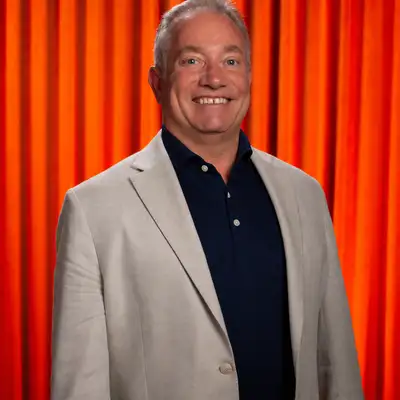
The Spark Podcast amplifies Nashville's creative voices, showcasing diverse talents and fostering growth through shared journeys. By exploring the unique experiences and stories of the city's agency owners, innovators, and creators, the podcast inspires connection and collaboration, reflecting Nashville's rich creative culture.
Listen to The Spark Podcast: Nashville on Spotify, Apple Podcasts and YouTube, or at creativeassembly.agency.
Every meaningful change starts the same way, with a spark.Sometimes it's noticing you've been racing past your own life.The easy version of a founder's story ends with a sale.You build it, someone big buys it.The version nobody tells starts after, when the company runs fine without you, and you have to find out who you are.Today's guest has lived both versions.She started a PR firm at her kitchen table in Fayetteville, Arkansas in 1995.18 years later, one of the largest agency networks in the world bought it, and somewhere in between, on a motorcycle, she learned to look through the turn.On Creative Assemblies, the SPARK podcast, our mission is to amplify Nashville's diverse creative voices, foster growth through shared journeys, and inspire a city that thrives on collaboration.And now, here's the SPARK.Welcome back to the SPARK.I'm your host, Mark Scrivner, and today I am joined by Elise Mitchell with Mitchell Communications Group.Um, Elise, thank you for being a part of the SPARK.It's great to have you on.She is the one who learned to look through the turn, so I can't wait to hear this story, and I can't wait to hear about your journey, Elise.Yeah.Thank you.Thanks, Mark.I'm so excited to be here.I love the SPARK.I love what you've been doing, love all the stories, and I'll share a few of my own today.Thanks for having me.Well, yeah, it's gonna be great to hear your journey, and you've built some, uh, a very big agency, and, um, have had a great, uh, great journey along the way.So, but let's, as we get started, maybe, uh, you call yourself a destination person.Um, when did you first notice that about yourself?Oh, gosh, that's a great question.Yeah.Destination of the journey is kind of a theme for me, really through all of my career, but it's interesting you ask that.I think I was kind of that way from the beginning.You know, they sort of talk about are entrepreneurs- Mm-hmmborn or made, and I think for me, I was just born very driven and very, excited and ambitious.Like, I remember when I was a kid in my neighborhood, um, I used to organize Monopoly tournaments, 4 square tournaments, summer bike rides.Like, I was always getting all the kids together, you know, to do things, and, uh, for me, it just sort of came naturally.I, I suppose when I was in college too, um, very driven by grades, but I had ambition even then.I dreamed someday, I wanna make it big in the business world.I didn't know exactly what or how it would- Mm-hmmyou know, what it would look like, but I think I was just always made that way.Yeah.Well, you, uh, you just mentioned ambition.So I'm interested, uh, before there was a company with your name on it, uh, what did ambition look like?Hmm.Yeah.Well, that's funny.So, you know, I suppose it really took off when I started, you know, my career, when, and I started right here in Nashville.Mm-hmm.That, this is where it all began for me.I went to college in, uh, in West Texas at Abilene Christian University, found my way to Nashville.It's where I got my first job working for Dye, Van Mol, Lawrence, and Erickson.Back then, that's what it was called, and now it's all part of Finn Partners.But Hank Dye, John Van Mol, Tom Lawrence all gave me my first start right here in Nashville, and- Wowoh, I was so ambitious.I remember too, Hank was kind of my, my mentor boss, you know, and every year in our annual reviews, he would tell me the same thing.He'd say, "Elise, you are so impatient.You"'Cause I would say, "When can I get promoted?""When can I move up?"You know?I suppose that's common for young professionals if you're really hungry and have ambition like I did, but I just, I never seemed to get there fast enough.But, um, I learned so much.Mm.Loved Hank and John and Tom.They taught me so much.And from there, then I wentI was in Memphis, so I fell in love with a Nashville boy.He was in medical school in Memphis, and, uh, we got married, and I moved to Memphis.And then I worked for a couple of ad agencies then.Um, I don't know if you're familiar with the names, so Ken Saussman had- MmSaussman, Bateman, Mucady, deLoss Walker, Walker and Associates, worked.Then they were both so, so much larger than life in so many ways.Great mentors to me.Worked for them.Then I stepped into the corporate world.I was the corp- director of corporate communications for Embassy Suites, Hampton Inn, and Homewood Suites- Wowhotel chains.They used to all be part of Holiday Inns.Then at that time, were called the Promise Companies Incorporated.They had the hotel group, and then they had the Harrah's casino chain.And, uh, that was a wonderful time to be there.I loved corporate life, and but it was lucky enough, so back to the question of ambition, I remember lucky enough to be there when they split the 2 companies in 2.Mm-hmm.So they had the hotel group and the casino group.I went with the hotel group, and that was when I was the director of corp comm.But I remember, Mark, oh my gosh, standing- we, we got to go to Wall Street and do the whole ringing the bell.I got to go, you know- Wow.to do the photo shoots and all the PR around it.And I remember standing there thinking, "This has gotta be the pinnacle of my career right here, right?Isn't this as good as it ever gets?"And of course, I was wrong about that.It really hadn't hardly even begun.But at that age and that time, I thought that was such a pinnacle experience.Wow.Well, I think, uh, as I was doing more research on you for the show, I saw that you left the big corporate when you had to move with your family.Like, I, I would be interested in hearing maybe what'd you, what'd you lose at that point?And then what'd you gain at that point?Yeah, that's a great question, too.What'd you lose and gain?Well, you know, I had no vision to go to Northwest Arkansas.That was where I always say my husband drug me kicking and screaming the whole way-to Fayetteville, Arkansas.Because, you know, Mark, I'm a big city gal, and coming from Nashville, of course, and then in Memphis, I sort of really hoped, oh, we'd maybe go back to Nashville, you know- Mm-hmmor, you know, some great American city like that, like Dallas or someplace.And, um, and my husband just, he was at that point interviewing, uh, for orthopedic group.He was an orthopedic surgeon, and he had finished his training, uh, medil- medical school, residency, and a fellowship in Memphis and was interviewing with a lot of groups and just fell in love with this group in Fayetteville, Arkansas.And I was like, "Oh my gosh, you've got to be kidding me.""I don't, I don't want to go there.I- what's gonna happen to me," I remember thinking, "and I know this sounds great for him, but gosh, my career, it'sI think I'm gonna be bumped off the fast track."And that was sort of what felt like the big cost to me, walking away from a, what I thought was a really great corporate job, and I thought, "I'm going to the middle of nowhere.What now?"But you know, Mark, it's so interesting when I think about that time, it was really a pivotal time.It was, it was an important time, growth opportunity for me, as I like to think about it.But I have this, uh, story I'll tell you real quick.Yeah.I remember being, you know, we were deciding to go to Northwest Arkansas.My husband was all set on it, and I was really disappointed, and I, uh, would drag this lawn chair out of the garage at the end of work every day while I was waiting for him to come home from the hospital, and I would just sit there, and I'd just be so mad.So I would be like, "This is not the plan," right?And, um, oh, he would come home, and I'd say, "I'm not talking to you.You go in the house."And my neighbors would come over.They'd say, "Hey, have you all figured out where you're gonna go?"And I said, "Yes, yes, we're going to Fayetteville, Arkansas."They were like, "Oh, my goodness, I'm so sorry."And it wasn't that they thought Fayetteville, Arkansas, was bad, but they knew what I wanted.They said, "That's not what you want."I said, "No, it's not."But it was, um, I remember sitting there and thinking to myself, "Okay, you know, you love this guy.You're gonna go with him.You got a choice.You're either gonna go and be bitter about this change, or you're gonna go and let change make you better.So bitter or better, what's it gonna be?"And I sort of realized that moment, you know, most, it's all up here, Mark.You know, it's your mindset and how you think about, oh, this was plan A, but that ain't happening, so this may be plan B or plan C.I might even be all the way to plan D.Mm-hmm.And I've gotta figure out how to make something work from this.So it was a realIt took a mindset shift for me to get excited- Mm-hmmthat it wasn't just gonna cost me something, but maybe there could be opportunity for me there.Yeah.Did you, was that, like, within the first month, or do, were you, were you bitter for a period of time?Oh, for a while.I wish I could tell you, "Oh, you know, I was such a big person," you know?I, I was sad, but the funny part of it was, even before we left Memphis, when I sort of had the aha moment, was, oh my goodness, you know, I've worked for these 3 great agencies, you know, Dive Bomb- Mm-hmmwhile here in Nashville and then the 2 advertising firms in Memphis, and I thought, gosh, I sort of always wanted to have my own firm.Maybe this would be the time to try.Which of course, looking back, you realize most of the time when we're founders or entrepreneurs- Mm-hmmyou have to be opportunistic.There's no sort of perfect time.You're not prepared.You don't know when it's gonna happen, but here it is.And so I remember g- walking into my boss.I, you know, I said, "I've got bad news and good news.Bad news is I'm, I'm leaving," "moving away," holding back the tears, you know, "But the good news is I'm gonna start my own agency, and I want you to be my first client."Wow.I remember my boss kinda looked at me, you know, and I slid a proposal across the table to him, and sort of the blood drained from his face.I'm sure he was thinking to himself-"Well, either she leaving, or she thinks she can have an agency, and I'm gonna be her client."You know, I'm not sure now which one it was.But, uh, he came back the next day, Mark, and said yes.Wow.And then of course, yeah, I was so excited, and then I remember thinking, oh, what do I do now?Like, I better get a business card and figure out how to write an invoice 'cause I d- I didn't know how to start an agency.But here I was, going off to the middle of nowhere, and I needed to figure out what to do.And so getting to Fayetteville, I, I think I was still disappointed for quite a while, but you know, you have to, again, it's, it's up here.It's your mindset.Hmm.You have to get past that.And here I was.I was able to take them with me as the first client.It, I did have some opportunity.I need to make the most of it.Mm-hmm.And I think the biggest challenge for me was figuring out, like, I didn't know anybody.And so when you find yourself in a situation where you don't know anybody, you have to do something.You have to begin to build community.And so went down to the chamber of commerce and introduced myself and said, "Put me on a committee.Make me a member."You know, I sort of threw myself into nonprofit and, um, just social and civic activities to just try to meet people- Mm-hmmand begin to build community again.And that was maybe when it turned, you know, when I began to say, "Oh, I think I could make it here.I think I could fit in.I think I feel like I belong."But you, you kinda have to keep pushing yourself out there to- Mmto try to build something new.Yeah.What a, what a gift of your former employer to be able to, you know, sign that contract.I'm sure that helped you with, from a confidence standpoint.Oh, gosh, yes.And I'm sure it was a gift to him that you stayed on and helped, uh, continue to work for him.But, you know, in 1995, Fayetteville, Arkansas, isn't a place that you would think, "I'm gonna build a world-class PR firm."Oh, yeah.And as you were getting involved in everything there, like, what did you see that just made you know, "Hey, I think I can build something here"?Yeah, I, I, I remember when I sort of got past my, "Oh, no, this is where we're going," it was like, "Oh, wait a minute."Like, there's 3 companies there you might have heard of, Walmart, Tyson Foods, J.B.Hunt.Mark, all 3 are based in this- Mm-hmmbeautiful place in the Boston Mountains in northwest Arkansas.It was, it, at that time, it was kinda off the radar.You know, like, nobody was really paying that much attention to the region.And so when I got there, that was when I also kinda realized, "Oh, wait a minute," you know?It's an opportunity to be a first mover.It's an opportunity to be a builder.There wasn't a lot of sort of economic infrastructure other than maybe the local chambers of commerce.But several of us that began to meet and, and become acquainted and begin working together, um, started trying to build things, you know, and create a bit of an ecosystem around those companies.Each one of those big companies very fortunately did become clients, believe it or not.And I know I couldn't believe it.I would always sit there and shake my head going, "I cannot believe""I'm working with" what became the world's largest company, Fortune number one.I mean, Walmart was the most incredible ride.Mm-hmm.And we were lucky enough to have them for over 20 years as a client.Yeah.I mean, they were just phenomenal.Tyson was great, J.B.Hunt.And then in the decade of the 2000s that came after that, northwest Arkansas actually became one of the fastest growing regional economies in the United States- Mm-hmmthanks to Walmart, Tyson, J.B.Hunt.And I don't know if you've heard that story about the, all those vendors started m- all the vendors to Walmart and Sam's Club started moving and locating- Mm-hmmoffices there, Procter & Gamble, Rubbermaid, on and on and on.There's today over 1,000 vendors- Wowwho have offices there.And so all that happened, and I would sit there going, "Wow, this is really great."P&G, they became a big client of ours for many years.Like, when would that have ever happened- Yeahif I had not been in this incredible place?Yeah.Support for The Spark comes from our sponsor, Snapshot.Building something that matters takes more than a good idea.It takes a brand people trust and a system that reaches the right people.Snapshot is a performance-driven marketing agency that helps businesses grow with strategy, creativity, and measurable results.To learn how to build scalable systems for sustainable growth, visit the link in our show notes.Well, it doesn't seem like you built a lifestyle business, and I know that, uh-there, I mean, it's not like you built a little bitty old PR company.I mean, it was pretty substantial.In fact, you know, I saw that you had 500% growth in 5 years, and I mean, that's pretty unbelievable.I don't know how you handled it.Mm-hmm.But I guess, you know, my question would be, like, what, what did that growth cost you?Oh, well, uh, that's a good question, too.You know, we didn't know we were doing half the time.But I guess that's probably what- Like most agencies.Well, yeah, like most agencies and most founders, if they're honest, will say, "Well, gosh, I didn't have a playbook.I, I thought everybody else had a playbook, and somehow I- Mm-hmmmissed the, you know-be in line for that."I didn't know what I was doing.It, you know, it, there was, there was some, certainly some things we gained.What, what it cost me was, um, oh, I think, uh, I threw myself in so much into building the business that I became a classic workaholic.I really did.And again, m- probably most founders would say it's, admit that's part of the journey, too, is that you, you are trying so hard to put it all together, you know?And as we, you know, we didn't grow, we didn't have rapid growth until we'd been bumping along for a while, you know- Mm-hmmand sort of figuring things out, and then all of a sudden, here itAnd it was funny, Mark.It happened right at the Great Recession.2008, 2009 was the beginning of the growth for us, which made it even more unusual- Mm-hmmthat we were growing hand over fist, and everybody I knew was not, except those of us who were working with companies like Walmart.Of course, they did fantastic in that time.And we picked up another big client, Southwestern Energy Company, and they had just discovered the Fayetteville Shale play, and that was right when, they were a natural gas exploration production company.That's right when hydraulic fracturing was sort of taking off, and the technology was allowing a lot of that to happen.They became a huge client in that time.And, like, again, who could have predicted it?But my, because I wanted it to be so successful, and I didn't want it to fall apart on my watch, I became a classic workaholic, and perfectionism set in.I had, I think a lot of people probably loved me but didn't like me very much.You know, I just was not, I had no perspective.It was just, I was myopic view- Mm-hmmof the world.It was all about making sure the company was gonna be successful.Yeah, man.What, who were those first few key hires, and was there justWhat was the talent like in Fayetteville when you launched this?'Cause, you know, you're trying to figure it out as a business, but also trying to attract the right talent- Yeahthat's gonna help you handle that 500% growth.I think it was the biggest challenge, honestly.When we moved there, there wasn't any local talent.Very few people at all, because the region was still, uh, n- not- Mm-hmmhad not developed.And as the region grew over time, um, talent started trickling in.A lot of times they'd be trailing spouses of somebody who was going to work at Tyson or Walmart, and I'd get a phone call or an email from somebody saying, "Hey, I used to work at Edelman in Chicago," or, "I wor- used to work at this big firm in Dallas, and, you know, I just moved to the area."And I'm like, "How quick can you get down to my office?I wanna talk to you right now."Because getting people into the region was very difficult, so it was kind of funny when IThe first early years of building my firm, I, it was all virtual, which was of course, you know, years before that became a thing.Mm-hmm.But I did it out of necessity, Mark.Nobody was there.Mm-hmm.And so I just sort of built this network of about 10 to 15 people, people I knew in the industry, and I would just pick up the phone and call them, "Hey, I'm doing work with Walmart.Would you like to do some work for me?"So I built this virtual network, which kind of got me going in those sort of early years, and that was key.When the talent started coming to the region, then it, it changed everything.We, we ended up sort of keeping the hybrid model of building a full-time team, but we kept this virtual network- Yeahwhich turned out to be a real good strategy for, of ours to be able to scale and handle a lot of big assignments- Mm-hmmbecause we'd sort of, I called them our surge capacity.We'd lean into the network when our team was full up, but you had this ability to press into your network to help you.Mm.And then when the project's over, you could go back to your full-time team.That worked beautifully for us and for them.A lot of, a lot of those folks said, "I don't wanna work full-time, but I'd love to, I'd love to do project work for your firm if I can."So the talent was key.I did get, um, a couple of key people.My, my, my longest time business partner I stole from another agency.He was wor- he was working for his brother's agency out of Little Rock, and I was able to talk him to coming to work for me.I don't think his brother forgave me for years, but that's okay.Yeah.In the end, it worked out really well.And then one of my clients at Walmart, she was my client for, like, 9 years at Walmart, and she left Walmart.She was gonna adopt a little boy from Russia.She was a single parent, wanted to ha- be a parent, and she adopted a little boy from Russia, and she realized she could not probably go back to work full-time as a single parent for Walmart.And she left Walmart, and she and I started talking, and she came to work for me.Wow.Yeah.She ended up being my eventual successor when I left the firm.That's- Isn't that funny?such an honor too, to have, uh, somebody that is a client that wants- Oh, yeahto come and work with you.It just meant you were doing such good work.Well, she was an incredible client, and she brought to us that really valuable client perspective- Mm-hmmthat you need, right?And she had such incredible credibility with our clients, especially of course our Walmart clients, who had loved her when- Yeahwhen she was there.So yeah, it, it all worked out, Mark, over time, but man, there were some years it was really challenging, because there just wasn't the talent in the market- Yeahyou would've liked to have seen.I can only imagine you picking up the phone and saying, "Hey, we need you to move to Fayetteville, Arkansas," at that time, right?How many takers would you have?No, not very many.Yeah.But it was funny.When people got there, then they were like, you couldn't, you couldn't pull them out.Really?Because it was such a wonderful place.Mm-hmm.It was beautiful.It's sort ofI tell people, in Nashville I say, "It's kinda like, you know, the Smoky Mountains."It was in the Boston Mountains.It's beautiful, but it had 3 corporate giants, and so it became this beautiful 4 seasons in the mountains, beautiful place to live, but a fantastic place to work.And of course for me, wow, I got really lucky.I was able to be an entrepreneur and build a company there.Yeah.Well, you, um, you started riding a motorcycle when the company was at, like, full speed.Why a motorcycle-and, like, why then?Well, I'll come clean and tell you the story behind it.You know, I said I was the classic workaholic, and, um, man, I, I remember very specifically the day it all turned.It was, I was, it was a Walmart project that I felt like the team just wasn't performing, and I think they were probably, looking back, they were doing great.It was not where I thought they needed to be, right?When you become a workaholic, you lose perspective, and I was setting my sights higher and higher and higher on the standard of excellence fir- you know, first for myself, but then the rest of the team.I was like, "Why is everybody not keeping up with it?Why are they not performing?They need to be here."And so one day I took my 2 top people with me to lunch, and I remember we were sitting in the, the corner, the corner table at Thai Diner on College Avenue in Fayetteville, Arkansas.I always went there for these conversations 'cause it's kinda quiet.And I said, "Okay, you know, this is just not working.The team needs to be performing better, better, better."And, uh, Mark, I remember sort of working myself up into this tizzy where I actually started pou- I was pounding my fist on the table.Wow.And I'll never forget the look on their face, both of them.They just sat there, didn't say a word, and I remember we left and went back to the office.I was like, "Good, you know, my message has really gotten through.Like, everything's gonna change now 'cause boy, they got it loud and clear.I know they heard my message."They didn't push back at all.So I went home, and after dinner my husband said, "Hey Elise, we need to talk."I said, "Okay, great.What do we need to talk about?"He said, "Well," he said, "I got a, I got a call from your office today."I said, "Oh, you did?Well, what was that about?"He said, "Well, Elise," he said, "everybody loves you, but nobody really likes you very much now.I mean, you have, you've just lost who you are.We don't even know who you are.And even the kids and I, we love you, but nobody really likes you at home very much either."Oh, wow.And he said, "Something has got to change."And I remember, Mark, it was just this sinking feeling, and I thought to myself, "I know he's right, but I don't know what to do," because I was so afraid.If you are not pedal to the metal all the time, like, what if the business falls apart, right?And this was my biggest fear, fear of failure.I don't really know what I'm doing.I probably a, a little bit of imposter syndrome.Maybe I can't pull it off.And so I was afraid not to give it everything.Mm-hmm.And in the process then I was starting to lose my people, and I was starting to lose my family.And you know, that night I just remember sitting there, and I looked at him, I said, "I know I need to change, Ray, but I don't knowAnd it was, it wasI'm so glad.You know, I look back on this and I tell these very 2 dear l- lieutenants of mine, who are still to this day very dear friends, I said, "You all saved me.You saved my life.You probably saved my marriage.You probably saved our company because you loved me enough to intervene."And, and I sort of, uh, remind myself too, when you love other people and they love you enough to tell you truth, you need to listen.And fortunately for me, that was a moment- HmmI actually listened.And you know, it was, it was not a problem I could solve overnight.I didn't change overnight.But I remember my husband sort of looking at me saying, "Well, we've got to figure this out."Long, long conversation that evening, and we sort of had this aha moment, which was, you know, we haven't been on a vacation together, just the 2 of us, in a long time, and we probably need to do that.And of course my first reaction was, "Oh, well gosh, I can't take a vacation," 'cause of course c- company's not gonna be able to survive without me.And he was like, "I think everybody's gonna be really glad if you go on vacation."And so we planned a trip, and long story short, we ended up taking a motorcycle trip for 10 days in the Alps.And I remember thinking, "This is a bad idea.This is, like, not how I wanna do Europe," you know?And he'd never been to Europe.This was his first time to go.And um, but we went, and I got on the back of his motorcycle on that trip, and I was hooked, Mark.I was hooked on motorcycling.I'd neverBackstory, you know, I'd never been on a motorcycle before.But he'd always been into sports cars and motorcycles.And so I, I got on it, on the back of his bike, and it was just so intoxicating.You know, do you ride?Have you ever ridden a motorcycle- Mm-hmmor a bike?Yeah.You're not, you're a, you're a- Mm-hmmfellow rider.Yeah.I love that.You- Well, a long time ago.A long time ago.But that wasBut do you know what I'm talking about, right?Mm-hmm.It's like, and I tell people, it's not the same as when you're in a car.Kind of when you're in a convertible, but on a motorcycle, you experience the sights, the sounds, the smells of the wholeYou experience the journey with the wind in your face, all those things.It just makes you come alive, you know?And I of course look back and I say, I think that was when I rediscovered the joy in the journey.Because you know, when you ride, and you know this being a rider, when you ride, you don't ride to get anywhere.You ride to ride.Mm-hmm.You ride for the experience of riding.You ride for the journey, which, oh my goodness, you know, what a concept, right?I was always a destination person.I had to get to there, but I think I just forgot the whole journey.And on that trip, I just came back, I said, "Oh my gosh, like, I love motorcycling.I, I love to ride."And my husband said, "Yeah, I think you were meant to ride."Wow.Well, I've got 2 questions out of that.One is, do you think it was, like with your high drive, was it the adrenaline rush that you get- Mm-hmmfrom being on a motorcycle?I mean, I know you settle into it and it's a, the journey.Mm-hmm.But was it at the beginning, do you think it was that adrenaline that- Oh, for sureyou felt?Yeah, if I'm honest, right.It was, it was super fun because it's also, you know, you're like 60 miles an hour on the edge of, you know- Yeahkilling yourself at any moment, right?So it's, it's kind of, um, you know, high risk, but it's high reward too because it's so exciting.It's very exhilarating.And I will tell you the other thing that for me worked, which was motorcycling is a hobby, you know, if you can learn how to do it well, and I, I remember when I learned to do it, it's very, um, mind clearing, mind consuming and mind clearing all at the same time.Mm-hmm.Right?You have to fully concentrate on where you're going, how you're leaning, what, what's, what's happening in the road around you, looking into the turn, all of those things you have to pay so much attention that it just pushes everything else way back here, and that, for high stress jobs and high stress people, that's a, that's a gift.Mm-hmm.Because you get in flow, right?And I tell people now, you don't have to ride a motorcycle to not be a workaholic.I mean, you have to live a whole life.Find a hobby.You know, find something that you love that consumes your mind and you find yourself in that state of flow when you're like, you lose track of time, you lose track of the destination.You're just in the moment.You know?Mm-hmm.It's so, it's so incredible.When, and you know, motorcycling, it's really hard.You have to l- you have to really learn it.But, but you practice and you get a little bit better, and then it feels really rewarding.So it's a little bit of the adrenaline, but I also think it was the mind clearing too.Yeah.Well, there's a lot of high drive first time entrepreneurs that listen to this show and, um, you know, I think we've all been through what you wentBut, you know, I would be interested to hear like, you know, beyond just the motorcycles, did you, like to be able to change, w- I know that hard conversation, your husband, your, you know, your lieutenants, but what, did you, what, did you go out and get a coach or a mentor or a counselor?Like what avenue did you take- Yeahto really like lean into that?To, to make the change?Yeah.Yeah, that's a good question.I, I had a couple of people that were advising me along the way.Like for example, my, had a, a lawyer in New York.He was long- my longtime lawyer, worked for a big firm that they specialized in, in our, in one of many industries they specialized was our industry.And so I, he was with me for many, many years and I sort of leaned on him a little bit like my consigliere and I would call him with questions or problems, and he was so wise and had worked with so many agencies.And so leaning into people like that who had been there, done that, who really have s- have seen, have seen your problems before and can give you advice.but Michael Lasky was his name.Michael never pushed me.You know, he would just say, "Elise, you know, you should think about this and, you know, you might consider this as an option," which a good coach will do for you, right?Mm-hmm.They will help you sort of step back, see the bigger picture, give you third party perspective, especially if they've been there, done that.But they g- they'll open your mind to possibilities and give you more a sense of potentially finding clarity, which I, I think for very driven, um, focused founders, that- that's where they get stuck, right?They're in, they're in their business.So it's really hard to step back and sort of see that bigger picture and somebody that can pull you back like that and help you see bigger, broader things, challenge your mindset.You know, are you being better?Are you being better?Are you a workaholic?You know, how do you lean in?How do you listen more?Whatever it may be.Mm-hmm.You kind of need somebody who can tell you truth.Oftentimes that isn't always your people, and sometimes your spouse is like, "Time out.I don't wanna I don't wanna hear about that anymore."Which is why- Yeahyou know, what I do now, a lot of my coaching work is, you know, trying to be that safe place where people can talk to you, and I think you need it.You know, you just need that, that confidential safe place to be honest and say, "I, I need to learn.I need help.Please help me."Yeah.Well, I can't wait to dig into your coaching, but before we get there, I mean, you grew a very big, very well-ran PR shop and agency, um, in Fayetteville, and then you found yourself selling it off to Dentsu.And, uh, I mean, what wasLike, what was that conversation with yourself that you had-when you were going through that?Yeah, I know, Mark.I- when you t- say that, I'm like, "I still can't believe that all"Could you believe that was our, our experience?I never could have ever imagined.You know, I supposeAnd people have asked me that a lot, too, the, you know, "How did you decide to sell, and what was it like?"And well, that was a whole nother part of the journey, right?Mm-hmm.We got much bigger, and I think the first conversation I had with myself was a conversation that at the time I didn't wanna s- admit to.Uh, now I'm 0 obviously m- more willing to share it.The conversation with myself was, "I think I'm bored."Which, you know, w- why would you ever- Mm-hmmsay that out loud, right?It makes you sound ungrateful, you know.Are you bored?Like, look at you, Mark.Well- You have s- you have so much success, too.If you said, "Oh, I think I'm bored" you know, your people would be hurt, your clients would be hurt.You know, 'cause youI would just keep it inside, going, "I think there's something wrong with me because I, I should be loving this," which I was, but honestly, by that time, I had been running the firm about, it was 18 years when I actually did sell.So 15 or 16 years in, and we were, uh, things were going very well, and we had gotten to some size at that point, and I began, uh, thinking, you know, the question was, "Is this all, is this all I'm ever gonna do?"And that's a kind of a crazy question to ask yourself, too, but I kept feeling like there was something else.Uh, I didn't know what, but I thought, "It just doesn't seem like this was all I ever do."And of course, looking back now, I think, I think I just was bored.I needed another challenge.And so that was probably the first conversation is, "Mm."And then sure enough, um, at that point we had started winning some awards and things like that, and the phone started ringing, and people were calling to try to buy us.And I remember thinking, "Well, I would never do that.Why would you ever sell?"I mean, I-I did feel like I had the greatest job in the world.Great culture, great clients, great people.We were financially doing very well.I remember thinking, "Why would you ever sell?"But then this voice inside me was, "But you're kinda bored" and long story short, after, probably it was maybe 2 years of conversations with different pe- different buyers at times, which I would s- I in the end would say, "I don't think that's right for us," I did finally sell.I sold to Dentsu, Tokyo-based, um, holding company.The, at the time that they bought us, they were globalizing.They were buying- Mmcomp- uh, agencies all over the world in all different spaces, but they didn't have anything in PR, and I think that's why they came after us.They wanted a more entrepreneurial company that had gotten to some scale, that had some pretty, you know, notable clients, and then they wanted us to grow and expand.And so, um, I, I did.I sold to them.Um, we then opened up s- offices in New York and Chicago and began to do international work, which was, that was the other part of it.Mm.Not just me being bored, but I also knew that I was probably only gonna be able to take the agency so far, and I wanted to give my people upside, and some of that was I thought, "Well, you know, maybe that's international work."There's no way I could have pulled that off.I, I would not known the first thing about how to do business internationally.And so they were offering us a chance to- Mm-hmmbuild more of a global PR, uh, network for them, that they created a job for me to do that, so that was my new challenge.I, I was gonna be able to pivot and do, uh, corporate development work, mergers and acquisitions work for them to help try to acquire other PR firms and build a global PR network for them, and I thought, "Well, that could be kinda cool.I don't know anything about M&A" Yeah.But they had a whole team of people that did.They said, "We don't know anything about PR, so, you know, we'll put you together with that team."And so gave my people upside.We kept our brand, kept our culture.We just expanded offices, and then I sort of based myself out of our New York office for a number of years after that.But I did M&A corporate development work for several years after that.I know.Crazy, isn't it?How many years did you stay with them after the, after the- Well, so, um, I stayed 7.Okay.Which I know is a pretty long time.Yeah.Uh, our earn-out was 5 years, which is longer than most, but that was partly because they were incentivizing us to, to grow a bigger, um, global network for them.But I stayed 2 years past our earn-out, which I did because I wanted so badly to set my people up for success.And, you know, it's funny when you're a, a founder, you go through that stage where the firm is very centered around you, right?It's very founder-centric in those early days, and you at some point, and you asked this question earlier, how you build that team, you have to trust that team.You have to hand things off, and that founder's journey is at some point you're probably gonna leave.And how good of a job did you really do empowering and equipping and giving your people opportunity and authority to take the company when you're gone to the next level?Mm-hmm.And so you have to start that before you leave.And that was when I did the transition into my role with Dentsu is when I really handed off a lot of the day-to-day to the team and was focusing more on the M&A work.And by the time I left, I think they were, oh, they were off to the races.Wow.They didn't need me anymore.I know.Isn't that so funny?Well, and I think you handed the CEO role over, and the company continued to grow at a pretty good clip.It did.It did.And, like, how did youWell, did, was that just a, like, joy to see that happen?What was the feeling?Yeah, so then you asked about a conversation earlier.That was another conversation I had.I'll never forget that.Wow, that was probably a year-and-a-half conversation with myself.You know, so the first conversation was, "I'm bored."The second conversation is, "Oh my gosh, am I really gonna sell?Wow, this is gonna be such a grand adventure," right?The third conversation came a couple of years later before I left, which was, "Oh my goodness, who am I going to be if I'm not the," fill in the blank, "president and c- CEO of Mitchell Communications Group?Who am I going to be then?"And that's an existential crisis that I think, and that's, again, part of the founder's journey, is how you navigate through being able to walk away.Mm-hmm.And maybe then onto your next adventure or whatever it is you're gonna do after that, that part of your journey.But that took me, I would say, a good year and a half, because it was an emotional separation from, here was the realization: I'm not my company.And I actually used to have to tell myself, and Mark, I couldn't accept it for the longest time.I'm like, "But I am my company."Like, because the real question is, because who would I be if I'm not?Mm-hmm.And I didn't have an answer.And it wasn't until you begin to, to separate the emotion of it to say, "Oh, wait a minute."So the, this is the good, the, the good ending was I finally got to the point when I said, "Wow, you know what?I think when I walk out the door, I still take all that knowledge and wisdom with me," right?Like, I don't have to check my brain behind at- Mm-hmmthe desk when I leave.I, just my laptop, but not my knowledge and my wisdom.I thought, "Wow," like, "I get to take all those years of experience with me when I leave, and hopefully maybe that'll prepare me for whatever comes next."And it was, that was a huge insight for me.And a lot of the, the founders I coaches, or founders- Mm-hmmthat I coach now and work with, I see that, and they are on this side.Like, "Oh well, I don't know what I would ever be on the other side."I'm like, "Oh, well guess what?There's so much life after that."Like, you don't know it though.In it, you can't imagine, is life gonna be better or worse?Maybe I'm gonna regret it if I sell or if I leave.Maybe it won't be any better than this, is your deepest fear.Mm-hmm.And I get it.That's where I, it took me a while to kinda work through that.Wow.Well, you've clearly reinvented yourself.I mean- You've wrote a book.You've created, um, I mean, you're one of the top coaches, uh, when it comes to, like, agency PR, I know coaching.There's, we got introduced through a great mutual friend, Lauren Reed, and- Oh, I love LaurenI was so thankful that she introduced us.And, um, I mean, now you have programs that you go in and also teach the, um, agency employees different skill sets.Mm-hmm.And so, um, I mean, you've clearly reinvented yourself.Why, what brought you back to Nashville?Yeah.Well, I remember Ray and I had a conversation.So our kids had, our daughter, McKenzie, she actually went to college here at Lipscomb.My husband- Okaywas a Lipscomb grad.She went to Lipscomb and then on, went on to law school at Penn State after that.Our son Jackson finished his high school years at Lipscomb Academy, and then went on to the Naval Academy for his, um, his college years.And w- we were sort of had this thought of, like, are the kids gonna come back to Arkansas?And I, we both said, "I don't think so."Not that they didn't love it.I think they both really loved their upbringing there, but they were onto bigger things in the world and working, you know, in bigger places, bigger cities for oppor- bigger opportunities.And, um, so we kinda sat down and said, "Where do we want to live that we think we have a chance at getting the kids to come to?""Where would that be?"Well, Ray's from Nashville, and this is where I started my career.And so we, s- took us about 2 seconds to look at each other and said, "Let's go home to Nashville."And I was like, "Yay."I was so excited.Yay, we're going back to Nashville.Finally, we're going back to Nashville.And so then it was the departure from the firm, saying goodbye to Dentsu and all my people that I loved, and then figuring out how to start over again, and what was I gonna do then?And I'll tell you, so conversations, right?Another conversation I had with myself, I remember distinctly this idea of what would I ever do if I'm not with my firm?I remember w- it was, um, I was in a, in New York.I was, I was laying in my hotel bedroom that night, and I was so disappointed 'cause this big M&A deal I had been working on for almost 2 years fell apart at the last minute.It was so sad and so frustrating.And I remember thinking, "I just don't think I can do this anymore."I mean, it's very interesting work, but I don't think I really love M&A.Mm-hmm.And it's probably not really the best use of my talents anyway.I thought, "I've got to figure out something else to do."And so there were 2 questions I asked myself in that moment that proved to be very helpful for me.The first question was, "Gosh, can I just sit here and remember a day when I was really happy in my work?"Like, in recent years.Mm-hmm.You know, what's that day?And instantly, a day came to mind.was like, "Oh my gosh, I remember that day.Oh, it was such a golden day."Like, who I was with, working with, the clients, the setting, what talents I was using.And in my mind, I thought, "How do I get more days like that?"Right?That was a day that brought me joy using my gifts and talents with people that I love, with clients that I love.I was like, "Oh, wow, how do I get more days like that?"So that was the first question.And the second question was maybe the harder one to wrestle with, which was, "Oh, my goodness, you know, I guess at this stage in my career, there's probably a lot of things I can do.I mean, I could go back, back and do PR," which honestly I really hadn't done the craft of PR in many years 'cause I'd been sort of running the company.But I thought, "I could go back and do that andBut do I really wanna do that?"I said, "I don't think that's what I wanna do."So sidebar to all of this, I actually built a second company while I was building my agency with a very dear friend of mine, and that company did, uh, executive coaching, training, facilitation, like retreats and strategic- Mm-hmmplanning and things like that.And we built that company for about 8 years, and it kinda grew to the point we had to do something with it.We actually sold it into my firm, and she came and as a full-time employee and built a whole center around that.That part of our business was really great.Um, I loved that work, and it had been many years since I'd done it.I was like, "Huh."And that was the day I had thought about that brought me so much joy, was that day doing that work with that, with, with Blake, that business partner.And, uh, I thought, "Gosh, maybe that's what I wanna do now."So the second question that's so important besides the joy is there's a lot of things I can do.What should I do?What should I do that could bring the greatest, would be the greatest contribution I could make to the universe at this stage in my career?Mm-hmm.And I thought, "You know, I'd been through a lot.Started it at my kitchen table, grew it, sold it, went through all the ups and downs of that.I've l- I've been through a few things.I wonder if that could be valuable to anybody else."All the mistakes I made, all the lessons I learned, wow.Gosh, maybe I could help other people.And it was this thought of, "I don't really wanna be the leader anymore."And Mark, that was a great insight.I was happy with my entrepreneurial experience.I didn't wanna go build another big enterprise.Mm-hmm.I wanted to help other people who were building big enterprises to help run alongside them and help them be the best leader they could be, and I thought, "That feels meaningful."Yeah.That feels meaningful.How do I do that?So that was kind of the aha moment of I think there could be life on the other side.Wow.Well, that is amazing.That, what a great way to get to where you're gonna be or where you are at now.Yeah.So the, um, the coaching aspect of it is amazing.You also wrote a book.Maybe talk a little bit about the book 'cause I'll, we'll drop it in the show notes too- Okayso that people can go out and get it.Yeah.So the book.So, um, I ended up writing the book several years later, but it all went back to the intervention moment- Mm-hmmand getting on the back of my husband's bike.And we came back from that trip and he said, "You know, you were meant to ride."And I said, "Oh yeah, right there on the back of your bike."And he said, "Oh no, you were meant to ride your own bike."And I thought, "Oh my gosh, like, you mean learn to ride a motorcycle myself?"And of course, then I was like, "Oh my goodness, I don't know if I can do that.That sounds really hard and scary."But you know what?It was a few weeks later, I found myself on a Friday night in a motorcycle dealership in Springdale, Arkansas, there for the motorcycle safety course.And so for anybody who's ever thinking about riding a motorcycle, I say take the course because you'll either decide you can't do this or you'll learn how to not kill yourself when you're doing it.And, uh, on that Friday night, you like, you take a written course.You have to pass that written test on Friday night.Saturday is the driving day where you're on, you're on a motorcycle- Mm-hmmactually going through, like, 14 or 15 different skills to prove you can do it, which is a pretty scary day.But Friday night you gotta pass the written test first.So we, um, we had this instructor, his name was Big Mike, and he had the black leather t- vest and the tattoos, you know, kinda looked like you thought, but he was a excellent teacher.And he taught us this fairly important principle that kind of became the impetus for the book.He said, he said, um, "You're going toAll the different things are on the test," but he said, "I'm gonna teach you something that'll save your life."So we're all like, "Oh, okay, like, what's that?We, yes, we should listen to that."He said, "Yes."He said, "The most dangerous you could be on a motorcycle is in an intersection," for obvious reasons, you know, everything coming and going.But he said, "The second most dangerous place is in a turn."And we're all like, "Why a turn?What's the big deal with a turn?"He said, "In a turn is where all the hazards of the road tend to gather, like gravel and oil slicks, cow manure-" Mm-hmmanything that would make your bike slide as you go into the turn, not to mention the trajectory of the turn itself.So that's trickier than you think because as you approach a turn, if you guess wrong on how to position your bike, you could end up in the ditch, or worse yet, in the oncoming lane.Neither place is a good place to be.Or your bike slides if you're not careful.So he said, "This is what you do.As you approach a turn, you look into the turn, you assess the hazards that are there, but you don't stare straight at them," because there's actually a name for that.It's called target fixation because your bike follows your eyes, so where you look is where you go.He says, "You look in the turn, you assess the hazards, you make a plan for how you're gonna navigate through the turn using your instincts and your experience," but he said, "You keep your eyes focused On where you want to end up.He said, "It's called looking through the turn."And I remember that moment going, wow.Like, that's kind of a- Mm-hmmkind of a powerful metaphor for business and life.Like, how can you, and of course you could tell this became my mantra, how can I look through the turn in life and leadership?How do I look through the turn in entrepreneurship?Sort of see the hazards that are there, don't freak out by them, make a plan for them, keep my eyes focused on where I want to end up, and you're gonna enjoy the ride so much more, right?And it's not gonna be all about the destination, 'cause you're sort of going back and forth between- Mm-hmmwhat's happening in the here and now and where you want to end up.It would just, it worked for me.It just clicked.You know, sometimes a visual or an idea just- Mm-hmmclicks.Yeah.And I was like, "Oh, I wanna look through the turn."And so years later when I wrote this book, and the book was on how I built my company from scratch and s- how to scale it and selling it and all, so it's a lot about entrepreneurship, but it's also really a book about leadership.And for me, honestly, it was a leader's journey from not knowing very much at all to f- just figuring it out.All the mistakes, all the challenges, all the great mentors and advice that I got, I just put it all in there.And the book is called Leading Through the Turn.So McGraw Hill was my publisher, and they were the ones that kinda pushed for that.They said, "We love the motorcycling, you know, uh, ideas and visuals, and this hook is so powerful for you.Let's build the book around- Mm.Mm-hmmthis idea of leading through the turn."Wow.So that's how it came about.What a great title.Yeah.Well, so you coach people now on leadership.Like, let's say today you're coaching the Elise in, back in the day when you had the intervention.Have you ever thought about the conversation you might have?Oh,Yeah.Probably it would be, "Don't be so driven."Which is, yes, be driven, that can be very good, but a strength can become a weakness, right?Be careful, right?So have that destination in mind.That's all good, but gosh, you've got to enjoy the ride.And of course, what I learn now through, when I became a trained coach, I learned so much about neuroscience and how the brain works and all that, and there was ma- so much science behind mindset and being more present, and this idea of we- we're constantly looking so far away, you're not present in the moment.You miss the clues.You don't read the room.You don't pick up on the signals.You're not listening to yourself.You're always in this hyper state, right?You're not at your best.And so a lot of times in my coaching with, with clients now, and I have, I have a lot of founders that I work with, I say to them, "Let's just pause and step back."It's that same idea of picking yourself up out of the moment, stepping back, and really thinking here and clearing your mind because of course we have that rumination and that inner critic that's constantly going.I don't know about you, but, you know, you wake up in the middle of the night and it's just going and going and going, and you're just thinking, A, I need to sleep, And B, how do I turn it off, you know?Mm-hmm.The worry, the fears, the hopes, the dreams, all of that just reallySo I think I would look back to my younger self and say, "It's gonna be okay.Yes, it's okay to be all about the destination, to be driven, all, but don't go to an extreme.You've got to learn to be more present and enjoy the ride along the way," 'cause, you know, gosh.Wow.What a great lesson.Well, entrepreneurship is, you know- Yeahis the greatest ride there is to have.Mm-hmm.Yeah.And we've got to slow down and be grateful and appreciate a little bit more of whatever it is.Yeah.I'm, I'm in the moment more, and I'm not always looking so far away.This has been a, uh, fabulous episode.I'm, appreciate all the great insights you've, uh, you've given.Is there anything as we start to wrap up maybe that I didn't ask you or that you'd like, wanna share?Well, gosh, thank you to so many people who helped me along the way.It's, you know, success is a team sport as you well know, right?You're great people.I could never have done any of this without the great people I was lucky enough to have.They were so loyal and so good for so long.I was so blessed.Great people, the team, the mentors that I had, Hank and John and Tom, all from those early days, oh my gosh, I still love them so much 'cause they took a chance on a green kid who didn't know anything at all.They gave me a chance, you know?And, but I guess, um, you know, just enjoy the ride.There's just so much wisdom in that, that very simple thought of, um, we just don't know the detours that life is gonna take us on, right?Have the courage to stay on the journey, you know?Go where the road leads you.It might be someplace far more exciting than you really thought- Yeahin your original mind, right?It could be someplace really great.Mm-hmm.Well, Elise, thank you for being on the show, and thanks for the honest conversation you've had about building the agency, about letting it go, and about looking through the turn for your next adventure.Thank you.And we're so thankful that you're on the show, and we're thankful you're a part of the Nashville community too.Oh, thanks.And we appreciate all you're doing for agency owners and founders, and I know you work with other clients, maybe not all in the agency space, but, you know, this is your expertise.So I can only imagine what, uh, what you give to those agencies.Um- Oh, I think I'll always have a special place in my heart for people who are doing what I did, you know?Hopefully they're doing it much better than I did it, but it's such, it s- brings me so much joy to watch- Yeahother people succeed, so thank you for having me.It's great to be home in Nashville.Awesome.Well, thank you.And thank you all for joining us too.If you would, please rate, review, and subscribe to the channel just so we can get this message out to more people.I enjoy so much meeting with so many great, uh, founders and builders, uh, and creatives in the Nashville community, and I would never have this opportunity if we didn't have the audience coming back week in and week out.So we'll see you next week on The Spark.And that's a wrap on this episode of The Spark from Creative Assembly.Thanks for spending time with us and exploring the mind shaping Nashville's creative future.If you're walking away more inspired, connected, and energized, that's exactly the point.A big thank you to our sponsor, Snapshot, and the incredible team behind the scenes who make this show possible.Your support fuels every conversation and keeps collaboration alive.So if you haven't already, subscribe wherever you get your podcasts and leave us a review.Thanks again for tuning in.Until next time, stay creative, stay curious, and keep that spark.